HDFS201 EXAM 3/FINAL UNR
 Studied by 0 people
 Call Kai
 Learn
Learn Practice Test
 Spaced Repetition
 Match
Match Flashcards
 Knowt Play
1/143

There's no tags or description
Looks like no tags are added yet.
Name | Mastery | Learn | Test | Matching | Spaced |
|---|
No study sessions yet.
144 Terms
Alcohol Dependence
-AKA: alcohol use disorder.
-A maladaptive pattern of alcohol use that leads to clinically significant impairment/distress.
-indicated by tolerance, cravings/withdrawal, and inability to reduce drinking.
Binge Drinking
-Heavy episodic alcohol drinking.
-Five or more drinks in one sitting for men.
-Four drinks in one sitting for women.
Cognitive-affective Complexity
-A form of mature thinking that involves emotional awareness.
-increases from early adulthood through late middle adulthood.
-I.e. Adults better understand others, including their perspectives, feelings, and motivations, influencing their social relationships.
Dualistic Thinking
-Knowledge and accounts of phenomena are viewed as absolute facts, either right or wrong with no in-between.
-Polar reasoning.
-individuals (typically college students) tend to have difficulty grasping that several contradictory arguments can each have supporting evidence.
-I.e. The entering college student may sit through class lectures, wondering, "Which theory is right?" and become frustrated when the professor explains that multiple theories each have various strengths and weaknesses.

Epistemic Cognition
-The ways in which an individual understands how they arrived at ideas, beliefs, and conclusions.
Free Radicals
-A highly reactive, corrosive substance that forms when a cell is exposed to oxygen.
-Through chemical reactions, free radicals destroy DNA, proteins, and other cellular materials.
-May increase the likelihood of many age-related diseases, such as cancer, cardiovascular disorders, and arthritis, and predict mortality.
Isometric Muscle Strength
-Subtle contractions in which the length of the muscle does not change; is maintained through adulthood.
-Muscle development and strength, tends to improve throughout the 20s, peaking at about age 30.
Postformal Reasoning/Thought
-A stage of cognitive development following Piaget's formal operational stage.
-Thinking and problem-solving are restructured in adulthood to integrate abstract reasoning with practical considerations.
-I.e. Adults with post-formal reasoning recognize that most problems have multiple causes and solutions, that some solutions are better choices than others, and that all problems involve uncertainty.
Pragmatic Thought
-In Labouvie-Vief's theory, a type of thinking where logic is used as a tool to address everyday problems and contradictions are viewed as part of life.
-I.e. At home, adults have autonomy and are able to carve out their own niche, whereas at work they must follow the directions of their employer. Coordinating dynamic roles as spouse, parent, friend, employee, and manager requires flexibility.
Reflective Judgement
-Most mature type of reasoning that synthesizes contradictions among perspectives.
-The most mature type of reasoning as it synthesizes contradictions among perspectives (yet few adults demonstrate it).
-I.e. He or she recognizes that options and opinions can be evaluated—and generates criteria to do so.

Relativistic Thinking
-Type of reasoning in which knowledge is viewed as subjective and dependent on the situation.
-Recognize that beliefs are subjective, there are multiple perspectives on a given issue, and all perspectives are defensible, at least to a certain extent.

Senescence
-A pattern of gradual age-related declines in physical functioning.
-Measurable age-related changes in functioning occur by age 30, but most people do not notice these until middle adulthood.
Telomeres
-Tiny caps of DNA located at both ends of the chromosomes.
-Human cells have the capacity to divide about 50 times in their lifespan. Each time the cell divides, telomeres become shorter.
-Immensely short telomeres may lead to increases in disease, cell death, and body aging.
-Stress contributes to the shortening of telomeres, as well as oxidative stress, which results from free radicals.
Wear and Tear--Theory of Aging
-It was once believed that the body "wore out" from use, thus ages.
-However, research suggests that we must "use it or lose it"—that is, regular exercise is associated with longevity.
-Some of aging is thought to be influenced by DNA + heredity, caloric restriction, immune system, and cellular mutation, free radicals, and limited capacity for human cells to divide.
What are the Physical Developmental Characteristics of Early Adulthood?
-Physical development continues into the 20s, when all of the organs and body systems reach optimum functioning.
-Physical strength peaks at about age 30, then gradually declines.
-Men are capable of reproducing throughout life, but sperm production is impaired.
-In women, ovulation becomes less regular with age and is impaired by behavioral and environmental factors.
-Age-related changes in the skin emerge at age 20. Less elastic skin, grays, hereditary baldness, and some visible wrinkles around the eyes occur by age 30.
-Muscle development and strength, tends to improve throughout the 20s, peaking at about age 30. Activities that require body coordination and bursts of strength peak in the early 20s; activities that require endurance peak in the early 30s.
What is the Range of Perspectives on the Causes of Aging in Early Adulthood?
-It was once believed that the body "wore out" from use, However, research suggests that we must exercise regularly for longevity.
1) DNA + heredity: (Parents' lifespans predict those of their children, identical twins share more similar lifespans than do fraternal twins, suggesting a role for heredity in aging).
2) Cellular mutation: (aging relies on cellular mutation, damage to DNA and chromosomes--some of this damage may be due to free radicals).
3) Caloric restriction: a nutritious diet that is extremely low in calories is associated with a longer lifespan.
4) Immune system: influences the body's adjustment to external stressors and pathogens encountered.
5) Free radicals: destroy DNA, proteins, and other cellular materials
6) Limited capacity for human cell division: human cells have the capacity to divide about 50 times in their life span. Telomeres.
How do Obesity, Physical Activity, and Stress Contribute to Young Adults' Health?
-Obesity is influenced by hereditary and contextual factors and is a serious health risk, associated with a range of illnesses and problems.
-Regular exercise increases longevity, enhances immunity, and promotes stress reduction.
-Alcohol and substance use tend to peak in emerging adulthood and decline, but they do not disappear in early adulthood.
What is the Prevalence, Effects, and Treatment of Alcohol and Substance use in Early Adulthood?
-PREVALENCE: Substance use tends to rise during emerging adulthood as young people live away from their parents for the first time. Pressure to complete their education, begin a career, peer drink, and find a mate contributes to substance and alcohol intake.
-EFFECTS: Obsessive alcohol intake increases the risk for cardiovascular disease, intestinal problems, neurologic impairment, liver disease, and several types of cancer. Brain damage can lead to memory and concentration problems, confusion, and apathy. Substance use interferes s with reaching education and career goals, forming intimate relationships and marriage, and taking on adult roles.
-TREATMENTS: individual and family counseling, group support, coping skills, and possibly aversion therapy (the use of medication that produces negative reactions to alcohol, such as vomiting) to spur a distaste for alcohol.
What are the Features of Emerging Adulthood, as Identified by Jeffery Arnett?
-All of the organs and body systems, including digestive, respiratory, circulatory, and reproductive systems, peak in functioning from emerging adulthood into early adulthood.
-Measurable age-related changes in functioning occur by about age 30, but most people do not notice these until middle adulthood.
-Aging entails gradual changes in appearance, strength, body proportions, and fertility.
How Does Attending College Influence Young Adults' Development?
-Attending college is associated with advances in moral reasoning, identity development, and social development.
-First-generation and nontraditional college students experience a high risk of dropout.
-Students of color and those of low socioeconomic status are disproportionately likely to be first-generation and nontraditional college students, and they may perceive a cultural mismatch between their home and neighborhood context and the college environment.
-Emerging adults with developmental disabilities are less likely than their peers to immediately enroll in 4-year postsecondary institutions after high school, and the social and emotional challenges of entering college are often amplified for them.
-Young adults who enter the workforce immediately after high school have fewer work opportunities than those of prior generations.
Identify Influences on Vocational Choice and Occupational Expectations in Early Adulthood:
-In addition to the development of occupational goals and personality, contextual factors such as family, socioeconomic status, and educational opportunities influence our choice of career.
-The transition to work is often challenging as workplace responsibilities, expectations, and rewards are very different from the demands of high school and college and often deviate from young adults' expectations.
-Discrimination in the workplace is often displayed as microaggressions. Workers' perceptions of discrimination are related to poor physical and mental health.
-Work-life balance is a challenge for many young adults, especially those with young children.
-Adults who feel a sense of control over their work workload and schedule tend to show greater satisfaction with work-life balance and lower levels of work-life conflict.
Cohabitation
-An arrangement in which a committed, unmarried couple lives together in the same home.
-More than half of adults in their 20s have lived with a romantic partner.
-70% of U.S. couples live together before marriage.
-Tends to decline across early adulthood.
Emerging Adulthood
-A developmental period between adolescence and early adulthood, extending from the completion of secondary education to the adoption of adult roles.
-Characterized by diversity in lifestyles, identity development, and the subjective sense of being in-between.
-Roughly age 18 to 25.
Intimacy V.S. Isolation
-Erikson's sixth psychosocial stage in which individuals demonstrate the capacity to feel closeness and bond with another individual to make a permanent commitment to a romantic partner.
-From ages 18 to 40
-Those who do not attain a sense of intimacy and not making personal commitments to others results in isolation, entailing a sense of loneliness and self-absorption.
Intimate Violence
-Physical, sexual, and psychological abuse within a romantic relationship.
-Bisexual and transgender adults experience higher risks for intimate violence than other sexual orientations.
-Factors contributing to intimate violence include poverty, unemployment, drug and alcohol abuse, and cultural norms.
Role Overload
-High levels of stress resulting from balancing the demands of multiple conflicting roles.
-Attributes to increased risk of divorce.
Social Clock
-A timetable based on social norms for age-related life events such as occupational entry, marriage, parenthood, and retirement.
-I.e. Delayed parenthood is one example; today, few people blink at a 40-year-old first-time parent, whereas a generation ago, late parenthood was unusual.
Describe Erikson's Stage of "Intimacy V.S. Isolation":
-The crisis of early adulthood--from ages 18 to 40.
-Involves developing the capacity for intimacy and making a permanent commitment to a romantic partner.
-The formation of intimate relationships is associated with well-being in young adults
What are the Differences Between Male-male, Male-female, and Female-female Friendships?
-Women tend to have more intimate and long-lasting friendships and rely more on friends to meet social and emotional needs than do men
-Men's friendships tend to center around sharing information and activities, such as playing sports, rather than intimate disclosure.
-Male friendships endure to become long-lasting ties, self-disclosure increases, and the friends become closer.
-Men and women often become friends. Different-sex friendships can be important sources of social support but tend not to last as long as same-sex friendships.
-Men's friendships with women tend to decline after marriage, but women, especially highly educated women, tend to have more friendships with men throughout adulthood, especially in the workplace.
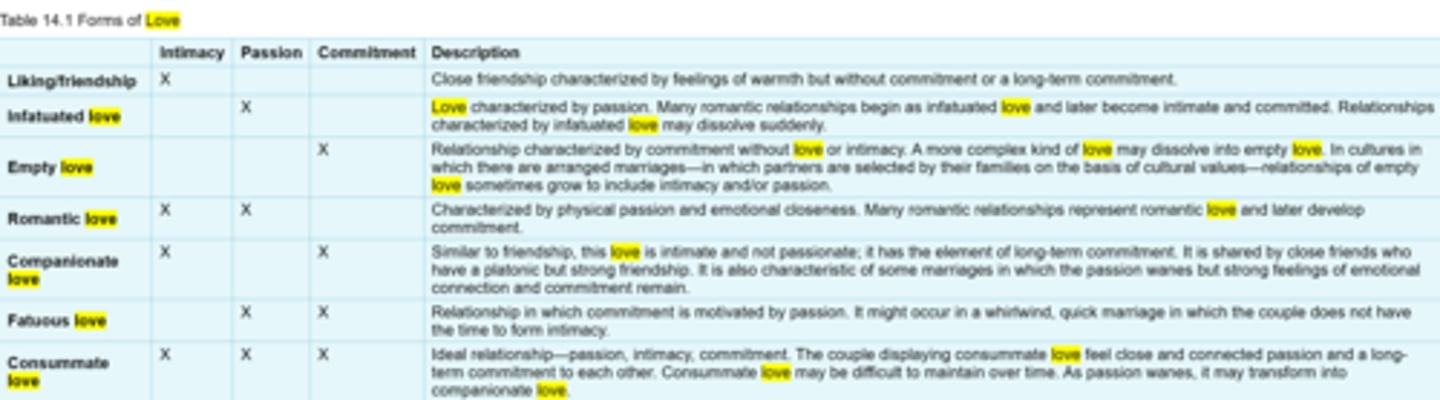
What are the Three Aspects of Love, according to Robert Sternberg?
1) Passion.
2) Intimacy.
3) Commitment.
Identify Characteristics of Intimate Partner Violence:
-includes physical, sexual, and emotional abuse directed at a romantic partner.
-Victims frequently experience several forms of violence.
-Physical violence, such as throwing and breaking possessions, punching holes in walls, and hitting, tends to be accompanied by emotional abuse, including threats and coercive behaviors such as humiliation, control, and isolation from friends and family.
-Violence that is severe and chronic, characterized by coercive control and repeated battering of a partner, is known as "intimate terrorism," the most damaging form of intimate partner violence.
What are the Influences on Intimate Partner Violence and ways of Addressing it?
-Contextual factors that contribute to intimate partner violence include economic stressors, such as unemployment and poverty, and lack of community resources, such as poor access to services.
-Intimate partner violence increased by as much as three times in many countries during the COVID-19 pandemic.
What does the Research on Cohabitation Reveal about Divorce Rates?
-Although cohabitation is common, it usually does not last long, does not end in marriage, and is consistently shorter than marriages.
-About one-half of young adults' first cohabiting relationships last just over two years.
Describe the Transition to Marriage and Predictors of Marital Success + Divorce:
-Cohabitation has become increasingly common in the United States and is very common in most European nations.
-Most North Americans marry. Marital success is predicted by maturity and similarity in demographic factors.
-Successful marriages are based on realistic expectations, flexibility, communication, and joint conflict resolution.
-Risk factors for divorce include being at an economic disadvantage, experiencing multiple life stressors and role overload, and having poor communication and conflict resolution skills.
-The process of divorce entails a series of stressful experiences. Recently divorced adults are prone to depression, anxiety, and a variety of risky behaviors.
What are the Effects of Parenthood on Young Adults?
-Young people who drop out of high school, experience early parenthood, begin working at a job immediately after high school, or live in low SES homes and communities may experience only a limited period of emerging adulthood or may not experience emerging adulthood at all.
-The loss of freedom and high cost of raising a child.
-Many new parents report not feeling prepared for their infants' constant needs for attention, affection, and care or for the roller coaster of emotions ranging from joy to frustration and exhaustion that accompany parenthood.
Compare and Contrast the Experience of Stepparents, Never-married Parents, and Same-sex Parents:
-New parents are greeted with a host of new responsibilities and changes.
-The transition to parenthood is associated with declines in marital satisfaction.
-In dual-earner couples, the greater the degree of shared parenting responsibilities, the greater the couple's happiness.
-Nonmarital parenting is often accompanied by cohabitation and the effects vary depending on maternal and contextual factors.
-Stepparents are often placed in the position of providing discipline without the warm attachment bond that characterizes most parent-child relationships.
-Same-sex parents do not differ from different-sex parents in competence or commitment to their roles as parents and their children do not differ in adjustment, gender identity, or sexual orientation.
-Adults who are childless by choice tend to be as content as other adults. Involuntary childlessness is associated with poor adjustment.
Crystallized Intelligence
-Intellectual ability that reflects accumulated knowledge acquired through experience and learning.
-Consist of memory of spelling, vocabulary, formulas, and dates in history.
-People who score high on measures of crystallized intelligence not only know more but also learn more easily and remember more information than do people with lower levels of crystallized intelligence.
Dermis & Epidermis
-DERMIS: Middle layer of skin consisting of connective tissue that gives skin its flexibility.
-EPIDERMIS: The outer protective layer of the skin that produces new skin cells.
-Skin becomes less taut as the epidermis loosens its attachment to the dermis.
-A thinning/loosening in the dermis contributes to wrinkles such as crow's feet and smile lines.
Expertise
-An elaborate and integrated knowledge base that underlies extraordinary proficiency in a given area.
-Are not distinguished by extraordinary intellect but by a combination of inherent ability and extensive knowledge and experience
-I.e. As expertise grows, experts find that their responses become so automatic that it is hard for them to consciously explain what they do. Adults are better than children at tying shoelaces, yet children are far better than adults at explaining how to tie shoelaces
Fluid Intelligence
-Intellectual ability that reflects basic information processing skills, including working memory, processing speed, and the ability to detect relations among stimuli and draw inferences.
-Permits flexible, creative, and quick thought, which enables people to solve problems quickly and adapt to complex and rapidly changing situations.
Hardiness
-Personal qualities, including a sense of control, orientation toward personal growth, and commitment to life choices, that influence adults' ability to adapt to changes and life circumstances.
-I.e. Individuals who display hardiness tend to have a high self-efficacy, feeling a sense of control over their lives and experiences. They also view challenges as opportunities for personal growth and feel a sense of commitment to their life choices.
Hormone Replacement Therapy (HRT)
-Compensating for reductions in hormones, such as in menopause, by taking hormones.
-Younger menopausal women age 50-59 (or within 10 years of menopause) show benefits of HRT. I.e. reduction of hot flashes and reduced risk for cardiovascular disease without an increased risk of breast cancer or stroke.
Hypodermis
-Innermost layer of skin composed of fat.
-Leads to wrinkling and loosening of the skin.
Inhibition
-Part of executive function, the ability to control and stop responding to a stimulus.
-With age, adults show more difficulties with divided attention and inhibition.
-Attentional inhibition makes it difficult to tune out irrelevant information, which then leaves less space in working memory for completing a given task.
-I.E. Middle-aged and older adults are less able to recall lists of words and numbers than are young adults; memory for prose shows similar, though less extreme, decline.
Menopause [READ TEXTBOOK, pages of information]
-The end of menstruation and a woman's reproductive capacity.
-At about 51 years of age on average, but starting as early as age 42 + as late as 58.
-Bone loss increases in the 50s, especially in women who lose the protective influence of estrogen on bones after menopause.
-Occurs earlier in women who smoke, have not given birth, are malnourished, are exposed to pollutants, and are of lower SES.
-HRT is prescribed to women in early menopause.
Osteoporosis
-A condition characterized by severe loss of bone mass, leading to increased risk of fractures.
-Bones become thinner, porous, and brittle as calcium is absorbed. As the bones making up the vertebrae become thin and brittle, the disks collapse and adults lose height, about an inch or more by age 60, and more thereafter.
-HRT can help women with conditions like osteoporosis.
Perimenopause
-Transition to menopause in which the production of reproductive hormones declines and symptoms associated with menopause first appear.
-Extends approximately three years before and after menopause.
-SYMPTOMS: hot flashes, shorter menstrual cycle, erratic menstrual periods.
-Causes difficulty in getting pregnant.
Presbycusis
-Age-related hearing loss, first to high-frequency sounds (such as consonants), gradually spreading.
-Becomes apparent in the 50s.
-Caused by natural cell death that results in the deterioration of the ear structures that convert sound into neural impulses.
-Contextual factors, such as exposure to noise, play a role in age-related hearing loss.
Presbyopia
-AKA: farsightedness.
-An age-related condition in which the lens of the eye becomes less able to adjust its focus on objects at a close range.
-By age 50, all adults display presbyopia and require reading glasses or other corrective options.
-Causes a decline in night vision.
Selective Optimization with Compensation
-The ability to adapt to changes over time, optimize current functioning, and compensate for losses in order to preserve performance despite declines in fluid abilities.
-Enables middle-aged and older adults to compensate for declines in processing speed and memory.
-Occurs naturally.
What are Age-related Changes in Vision and Hearing in Middle Adulthood?
-Presbyopia and presbycusis become common over middle adulthood.
-PrebyOPIA + presbyCUSIS occurs around age 50.
What are Normative Patterns of Change in the Skin During Middle Adulthood?
-Age-related changes in the skin are gradual and predictable.
-Most adults in their 30s notice lines developing on their foreheads, by their 40s, these lines are accompanied by crow's feet around the eyes and lines around the mouth.
-Skin becomes less taut as the epidermis (outer protective layer of the skin) loosens its attachment to the thinning dermis (middle layer of skin) consisting of connective tissue that gives skin its flexibility.
-Declines in elasticity are accompanied by the loss of fat in the hypodermis (innermost layer of skin composed of fat) which leads to wrinkling and loosening of the skin.
-Aging is influenced by many factors, i.e. oxidative stress, DNA damage, inflammation, and telomere shortening.
What are Normative Patterns of Change in the Muscles During Middle Adulthood?
-Declines in strength and endurance become noticeable, but the rate and extent of change is influenced by physical activity.
-Men and women tend to gain body fat and lose muscle, but these changes can be offset by reducing caloric intake and remaining physically active.
What are Normative Patterns of Change in the Skeletal System During Middle Adulthood?
-Bone density peaks in the mid to late 30s, after which adults tend to experience gradual bone loss, advancing in the 50s, especially in postmenopausal women.
Compare and Contrast the Reproductive Changes that Middle-age Men and Women Experience:
-Menopause is reached at about age 51 and is most commonly accompanied by hot flashes.
-The timing of menopause is influenced by heredity but also by lifestyle choices.
-Women's experience of menopause is influenced by many factors, including culture and the use of hormone replacement therapy.
-Men's reproductive ability declines gradually and steadily over the adult years, but most men continue to produce sperm throughout adulthood.
What are the Common Health Conditions +Illnesses During Middle Adulthood?
-Cancer and chronic health conditions, such as cardiovascular disease and diabetes, are the result of a complex web of genetic and environmental influences.
What are the Risks and Protective Factors of Conditions + Illnesses During Middle Adulthood?
-Risk factors for cardiovascular disease include heredity, high blood pressure, poor diet, smoking, and psychological stress.
-Diabetes, marked by high levels of glucose, increases the risk for heart attack and stroke.
-Chronic stress is associated with acute and chronic illnesses--so training in coping, social support, relaxation and stress reduction, nutrition, and physical activity can increase feelings of control, challenge, and commitment that are central to hardiness.
What are the Available Treatments for Conditions + Illnesses During Middle Adulthood?
-Advances in medicine have changed the nature of disease.
-More people survive cancer than ever before.
-Medication and behavioral changes may reduce hypertension, and cholesterol and glucose levels.
How does Stress Affects Wellness in Middle Adulthood?
-Chronic stress is associated with acute illnesses, such as cold and flu, as well as chronic illnesses, such as hypertension, arteriosclerosis, cardiovascular disease, cancer, and autoimmune diseases.
-Stress from problems such as unemployment, illness, marital problems, children leaving home, or sexual inactivity can cause reductions in testosterone, which decreases sexual desire and responses.
-People under stress may overeat, start smoking, or smoke more than they otherwise would.
-Adults vary in their sensitivity to stress. Some adults are more reactive and show greater responses to stress than other people. Stress reactivity.
What are Ways to promote Wellness in Middle Adulthood?
-Training in coping, social support, relaxation and stress reduction, nutrition, and physical activity can increase feelings of control, challenge, and commitment that are central to hardiness.
What are Changes in Cognitive Capacities During Middle Adulthood?
-With age, it becomes more difficult to divide attention to engage in two complex tasks at once and focus on relevant information as well as to inhibit irrelevant information.
-The capacity of working memory declines with age because of a decline in the use of memory strategies and changes in attention.
-Processing speed declines from early adulthood through the middle to late adult years.
-Cognitive changes are less apparent in everyday than lab contexts.
-An expanding knowledge base, experience, and growing expertise permits most adults to show few changes in cognitive capacity within everyday contexts and demonstrate selective optimization with compensation, compensating for declines.
Androgyny
-The gender identity of those who score high on both instrumental and expressive traits.
-A great deal of research has shown that androgyny predicts positive adjustment and is associated with high self-esteem, advanced moral reasoning, psychosocial maturity, and life satisfaction in later years.
Big 5 Personality Traits
-Five clusters of personality traits that reflect an inherited predisposition that is stable throughout life.
1) Openness.
2) Conscientiousness
3) Extroversion
4) Agreeableness
5) Neuroticism.
Generativity
-The seventh stage in Erikson's theory "Generativity versus Stagnation."
-Adults seek to move beyond a concern for their own personal goals and welfare in order to guide future generations and give back to society.
-Generativity increases from the 30s through the 60s in adults of all ethnicities and socioeconomic backgrounds.
-Adults who fail to develop a sense of generativity experience stagnation and self-absorption, preventing them from contributing to the welfare of others.
-I.e. associated with life satisfaction, self-acceptance, low rates of anxiety and depression, cognitive health, and overall well-being.
Life Structure
-Levenson's theory.
-A person's overall organization of their life, particularly dreams, goals, and relationships with significant others as well as institutions, such as marriage, family, and vocation.
1) During ages 17 to 22 we construct our life structure by creating a dream/image of what we are to be in the adult world, which guides our life choices.
2) Ages 22 to 28 then work to realize their dreams and construct the resulting life structure.
3) The age 30 transition (28 to 33) reconsiders the life structure in which adults may shift priorities from career to family, or vice versa.
4) Men tend to experience the mid to late 30s (34 to 40) as a period of settling down.
5) As adults transition to middle adulthood (40 to 45), they become aware of the passage of time, that half of life is spent.
Midlife Crisis
-A period of self-doubt and stress attributed to entering midlife once thought to contribute to a major reorganization of personality in midlife.
-Now thought to occur in a small minority of adults and to be related to history more than age.
-Occurs middle 40s.
-Surveys of adults over age 40 have revealed that only about 10% to 20% report having experienced a midlife crisis.
Possible Selves
-Future-oriented representations of self-concept into the future; who an individual might become, both hoped for and feared, that guides and motivates choices and behaviors.
-Many in their 20s describe idealistic and grand aspirations—visions of fame, wealth, exceptional health, and athletic prowess.
-By middle adulthood, most then become motivated to balance images of their possible selves with their experiences in order to find meaning and happiness in their lives.
-Over their lifetimes, adults revise their possible selves to be more practical and realistic.
Seasons of Life
-A set of life phases that Levinson concluded adults progress through in which life structures are constructed, tested, and modified, based on experiences and opportunities.
-Comprised of the "Life Structure."
-Based on interviews with 40 men aged 35 to 45 and, later, 45 women aged 35 to 45, all of whom worked in a wide variety of occupations.
-Likely does not apply to all men and women across ethnicity, socioeconomic status, and social context.
Alzheimer's Disease [READ TEXTBOOK, pages of information]
-A neurodegenerative disorder characterized by dementia and the deterioration of memory and personality.
-Marked by the presence of amyloid plaques and neurofibrillary tangles in the cerebral cortex.
-The risk doubles approximately every 5 to 6 years in most Western countries.
-6.2 million Americans, including more than 1 in 9 people over the age of 65 have Alzheimer's.
-Diagnosed in about 5% percent of people aged 65 to 74 ( 14% of those 75 to 84 + 35% of those 85 or older).
-People younger than 65 can also develop Alzheimer's dementia, but it is uncommon.
Amyloid Plaques
-Found in the brains of patients with Alzheimer's disease, deposits of beta-amyloid accumulate along with clumps of dead neurons and glial cells.
-Disrupt the structure + function of cell membranes and contribute to the formation of neurofibrillary tangles (twisted bundles of threads of a protein called tau that occur when neurons collapse).
-MRI scans can capture images of amyloid plaques and tangles associated with diagnoses of Alzheimer's disease.
Cataracts
-A clouding of the lens of the eye, resulting in blurred, foggy vision and can lead to blindness.
-A result of hereditary + environmental factors associated with oxidative damage and illnesses (i.e. diabetes and behaviors such as smoking).
-By age 80, more than half of adults have cataracts.
Cognitive Reserve
-The ability to make flexible + efficient use of available brain resources that permits cognitive efficiency, flexibility, and adaptability.
-Cultivated throughout life from experience and environmental factors.
-Allows some adults to cope with age-related changes better than others and show more successful aging.
-A protective factor against the brain atrophy characteristic of Alzheimer's disease.
Compression of Morbidity
-A theory in which suggests reducing time spent in poor health at the end of life, ideally leading to a longer period of health living before rapid decline.
Dementia
-A progressive deterioration in mental abilities due to changes in the brain that influence higher cortical functions such as thinking, memory, comprehension, and emotional control.
-Reflected in impaired thought and behavior, interfering with the older adult's ability to engage in everyday activities.
-The Diagnostic and Statistical Manual of Mental Disorders (DSM-5) has replaced the term dementia with "Neurocognitive Disorder."
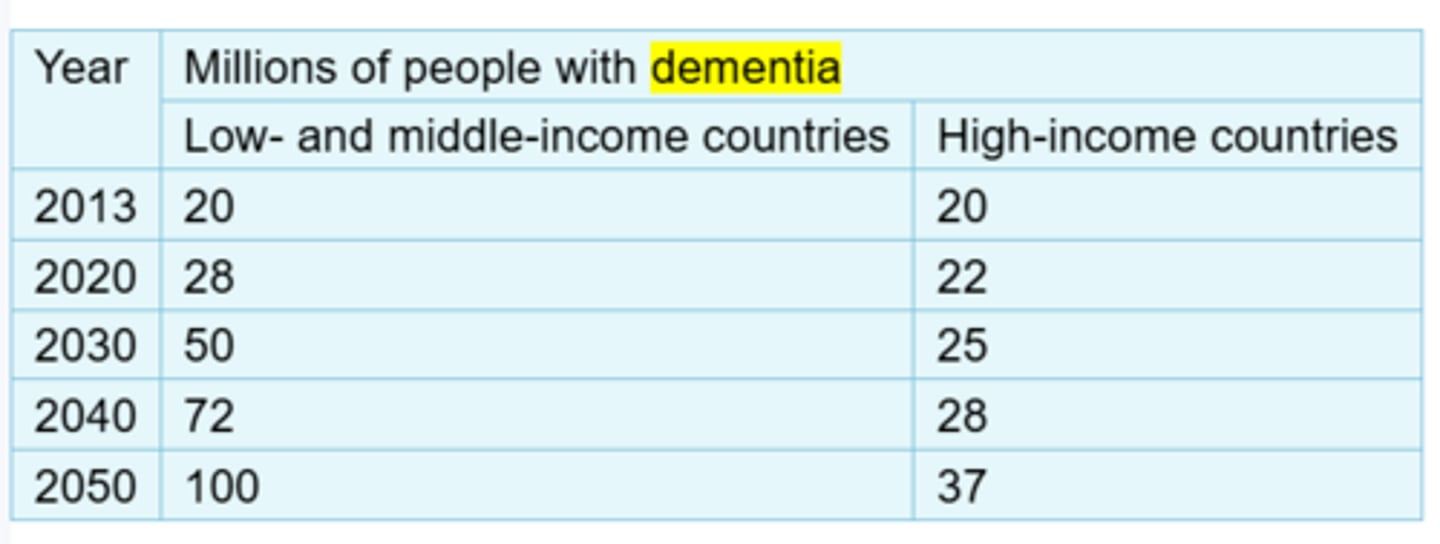
-50 million people worldwide live with dementia.
-May reach over 150 million in 2050.
-Worldwide, currently 60% of people with dementia live in developing countries; by 2050 this will rise to over 70%.
-The fastest growth in China, India, and their south Asian and western Pacific neighbors.
-RISK FACTORS: poor access to education, health care, and nutrition contribute to geographic differences in dementia rates.
Diabetes
-A disease marked by high levels of blood glucose that occurs when the body is unable to regulate the amount of glucose in the bloodstream because there is not enough insulin produced (type 1 diabetes) or the body shows insulin resistance and becomes less sensitive to it, failing to respond to it (type 2 diabetes).
-Symptoms include: fatigue, great thirst, blurred vision, frequent infections, and slow healing.
-Are sometimes associated with cataracts.
-A risk factor for vascular dementia.
-Common among Black and Latinx adults.
Macular Degeneration
-A substantial loss of cells in the center area of the retina (the macula), causing blurring and eventual loss of central vision.
-Its onset is influenced by heredity and environmental factors.
-Good nutrition (i.e. a diet high in vitamins A, C, and E) may protect the retina.
-Laser surgery, medication, and corrective eyewear can sometimes restore some vision and treat the early stages of macular degeneration.
-However, macular degeneration is the leading cause of blindness.
Neurofibrillary Tangles
-A twisted bundle of threads of a protein called "tau" that occur in the brain when neurons collapse.
-Found in individuals with Alzheimer's disease.
-MRI scans can capture images of tangles.
-Several chromosomes are implicated, including the 21st chromosome. Individuals with Down syndrome, trisomy 21, are at high risk to develop Alzheimer's disease as many show plaques and TANGLES in their brains as early as age 40.
Oldest-old
-Adults aged 85 and older, who are most likely to depend on others for physical and social support to complete daily tasks.
-Some adults in their mid-60s show advanced signs of aging characteristic of the oldest-old.
Old-old
-Adults aged 75 to 84, who typically live independently but often experience some physical and mental impairment.
-Others in their late 80s function similarly to old-old adults.
Osteoarthritis
-The most common type of arthritis (2nd most common type: rheumatoid arthritis).
-Affects joints that are injured by overuse.
-Most commonly the hips, knees, lower back, and hands, in which the cartilage protecting the ends of the bones where they meet at the joints wears away, and joints become less flexible and swell.
-First appears in about one- third of adults ages 45 to 64, but it becomes more common and worsens in severity during late adulthood.
-About half of adults aged 65 or older report a diagnosis of arthritis, and it is likely that many more cases remain undiagnosed.
Parkinson's Disease
-A chronic progressive brain disorder caused by deterioration of neurons in the substantia nigra.
-Characterized by muscle rigidity, tremors, and sometimes dementia.
-Symptoms appear when at least 50% of the nerve cells in the substantia nigra are damaged.
-Est. that 25% to 30% of adults with Parkinson's disease will develop dementia within 10 years of diagnosis.
-Likely influenced by the complex gene-environment interactions characteristic of epigenetics.
Proactive Interference
-A phenomenon that occurs when information that has previously been remembered interferes with memory for new information.
-Occurs when the supposedly forgotten material interferes with older adults' ability to store new material.
-Older adults are more susceptible to interference effects than are younger adults, even when they have learned the material equally well
Sarcopenia
-The age-related loss of muscle mass and strength.
-Average losses of 10% to 20% by 60 to 70 years of age + 30% to 50% from age 70 to 80
Vascular Dementia
-AKA: multi-infarct dementia.
-Neurocognitive disorder in which sporadic and progressive losses occur, caused by small blockages of blood vessels in the brain.
-Tend to show sudden, but often mild, losses with each stroke.
-As vascular dementia worsens, the symptoms are similar to those of Alzheimer's disease (But vascular dementia is neurologically different from Alzheimer's disease).
-influenced by both genetic and environmental factors.
-More common in men.
-RISK FACTORS: Obesity, diabetes, hypertension, and cardiovascular disease.
Wisdom
-Expertise in the conduct and meanings of life.
-Characterized by emotional maturity and the ability to show insight and apply it to problems.
-Requires metacognition, being aware of one's thought process, creativity, and insightfulness.
-I.e. One study of people who came of age during the Great Depression of the 1930s found that, 40 years later, older adults who had experienced and overcome economic adversity demonstrated higher levels of wisdom than their peers.
Young-old
-Older adults aged 65 to 74, who tend to be active, healthy, and financially and physically independent.
Activity Theory
-The view that older adults want to remain active and that declines in social interaction are not a result of elders' desires but are a function of social barriers to engagement.
-I.e. A 13-year longitudinal study following more than 2,700 adults aged 65 and older found that civic engagement in social and productive activities reduced mortality as much as did physical fitness.
Advanced Directives
-A document or order that allows patients to make decisions about their health care, death, and what happens to their bodies and possessions after death.
Bereavement
-The process of coping with the sense of loss that follows a loved one's death.
-Triggers emotional responses such as grief.
-Associated with the mourning process.
-Complicated grief may occur in 10% to 15% of bereaved people.
-Over 40% of youth offenders have experienced child bereavement.
-One-quarter of adults over age 20 who commit suicide have experienced childhood bereavement.
-Accompanied by two types of stressors: loss-oriented + restoration-oriented.
Continuity Theory
-The perspective that older adults strive to maintain continuity and consistency in self across the past and into the future.
-Successful elders retain a sense that they are the same person they have always been despite physical, cognitive, emotional, and social changes.
-Older adults tend to seek routine: familiar people, familiar activities, and familiar settings.
Disengagement Theory
-The view that declines in social interaction in older age are due to mutual withdrawal between older adults and society as they anticipate death.
-Research has shown that the central tenet of disengagement theory is not true. Most older individuals prefer to remain active and engaged with others, and they benefit from social engagement.
Death with Dignity
-Refers to ending life in a way that is true to one's preferences, controlling one's end-of-life care.
-Oregon was the first U.S. state to legalize assisted suicide--under Oregon's Death with Dignity Act, enacted in 1997.
-Hospice services permit death with dignity that honors a loved one's wishes.
-Most U.S. adults in 2016 (69%) agreed that euthanasia should be legal. Moreover, 51% said they would consider ending their lives if faced with terminal illness.
Ego Integrity V.S. Despair
-The final stage in Erikson's psychosocial theory.
-Older adults find a sense of coherence in life experiences and conclude that their lives are meaningful and valuable.
-Adults who do not develop a sense of ego integrity experience a poor sense of well-being and depression.
-Relies on cognitive development. I.e. complexity and maturity in moral judgment and thinking style, tolerance for ambiguity, and dialectical reasoning.
-I.e. Adults who achieve ego integrity can see their lives within a larger global + historical context and recognize that their own experiences are only a very small part of the big picture.
Grief
-The affective response to bereavement that includes distress and an intense array of emotions such as hurt, anger, and guilt.
-There are no rules to grieving.
-Some might feel intense but short-lived grief. Other people may find that grief lingers for many months. Sometimes grief may seem to resolve only to resurface periodically and unexpectedly.
-Complicated grief may occur in 10% to 15% of bereaved people.
-May affect the immune response and manifest as health problems.
-Grief is experienced and expressed in many ways: in emotions, physical sensations, and behaviors
Hospice
-An approach to end-of-life care that emphasizes a dying patient's need for pain management; psychological, spiritual, and social support; and death with dignity.
-Does not emphasize prolonging life but rather prolonging quality of life.
-Services are enlisted after the physician and patient believe that the illness is terminal and no treatment or cure is possible.
Life Review
-The reflection on past experiences and one's life, permitting greater self-understanding and the assignment of meaning to their lives.
-Terminal illness may speed the process, adding stress, so that the adult may find it difficult to do the work involved in life review.
-Integral to developing a sense of ego "Integrity vs. Despair."
Mourning
-The ceremonies and rituals a culture prescribes for expressing bereavement.
-includes special clothing, food, prayers, and gatherings.
-People may traverse through several phases of mourning, from shock, to intense grieving, to establishing a sense of balance, accommodating the loss into one's sense of being.
-One of the first steps in mourning is to organize a funeral or other ritual to mark the occasion of the loved one's death.
-Jewish custom of sitting shiva, ceasing usual activity and instead mourning and receiving visitors at home for a week.
-The final task of mourning is to establish a new life that recognizes the enduring connection to the deceased, who will not be forgotten.
-Mourning a child appears to be a lifelong event for most parents. Older adults who have lost a child many years ago report the loss as their most negative life experience.
Reminiscence
-The process of telling stories from one's past, to oneself or others, whether vocal or silent.
-Older adults who engage in knowledge-based reminiscence recall problems that they have encountered and problem-solving strategies they have used.
-Can help adults in managing life transitions, such as retirement or widowhood.
Socioemotional Selectivity Theory
-The perspective that as the emotional regulation function of social interaction becomes increasingly important to older adults, they prefer to interact with familiar social partners, accounting for the narrowing of the social network with age.
-Most older adults prefer to age in place.
Compare Erikson's and Levinson's Perspectives of the Psychosocial Tasks of Middle Adulthood:
-Erikson's Perspective: the psychosocial task of middle adulthood is cultivating a sense of generativity, fulfilled through volunteering, teaching, and mentoring others in the workplace and community.
-Levinson's Perspective: proposes that midlife adults reexamine their life dream established in early adulthood, reevaluate their goals, and modify their life structures accordingly.