OB Exam 3 - NL & ABNL Multiples Diagram | Quizlet
 Call Kai
 Learn
Learn Practice Test
 Spaced Repetition
 Match
Match Flashcards
 Knowt Play
1/49

There's no tags or description
Looks like no tags are added yet.
Name | Mastery | Learn | Test | Matching | Spaced | Call with Kai | Chat |
|---|
No analytics yet
Send a link to your students to track their progress
50 Terms
Multiples are at greater risk for...
Premature delivery
Low birth weights/FGR
Congenital anomalies
Fetal demise
Cord knotting
Placenta abruption/previa/vasa previa
Preeclampsia/HTN
Bleeding/post-partum hemorrhaging
Dizygotic Twins
Fraternal twins
70% of twins
2 of everything
Sonographic Appearance of Dizygotic Twins
Twin peak sign
Thick membrane
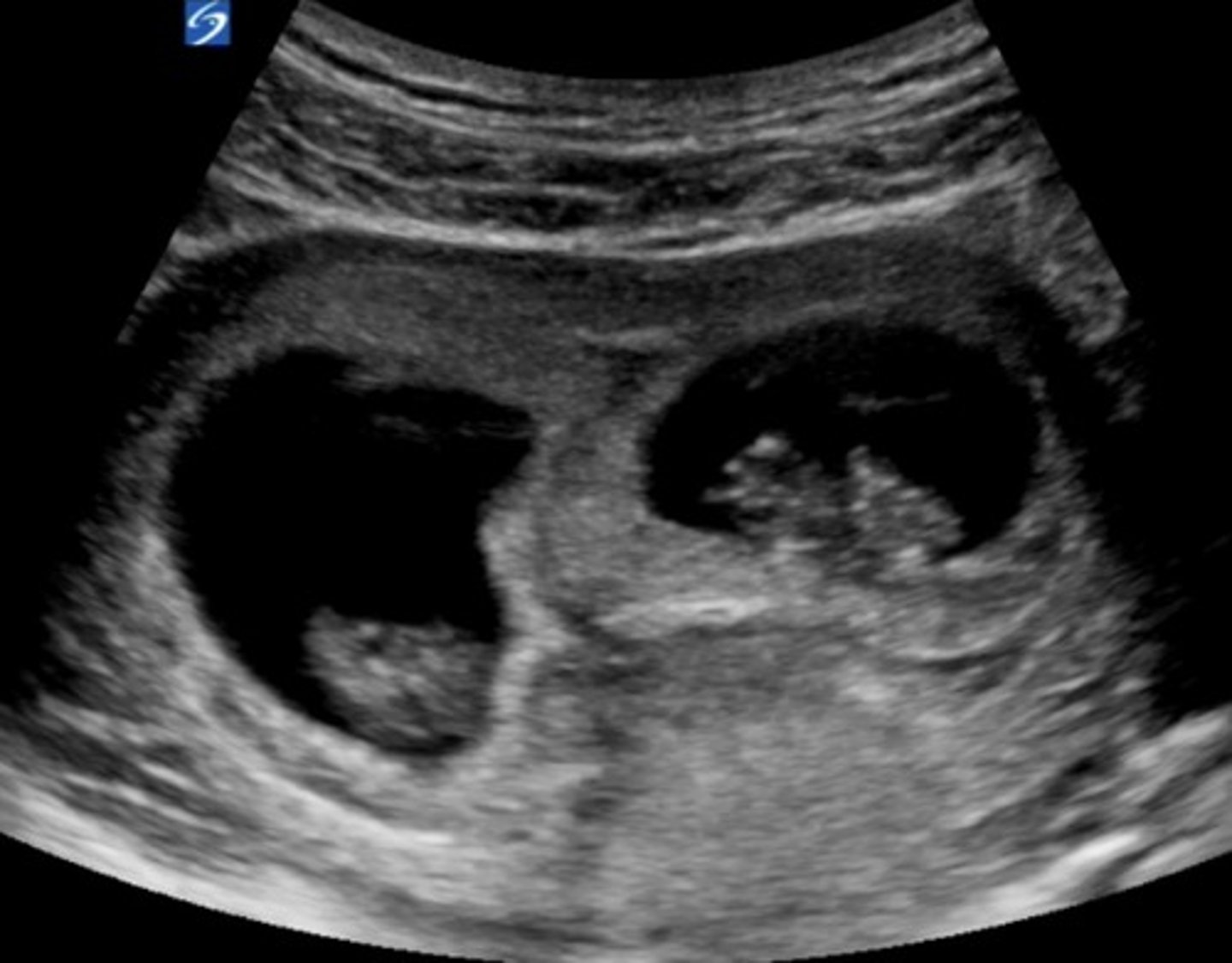
Twin Peak Sign/Lambda Sign
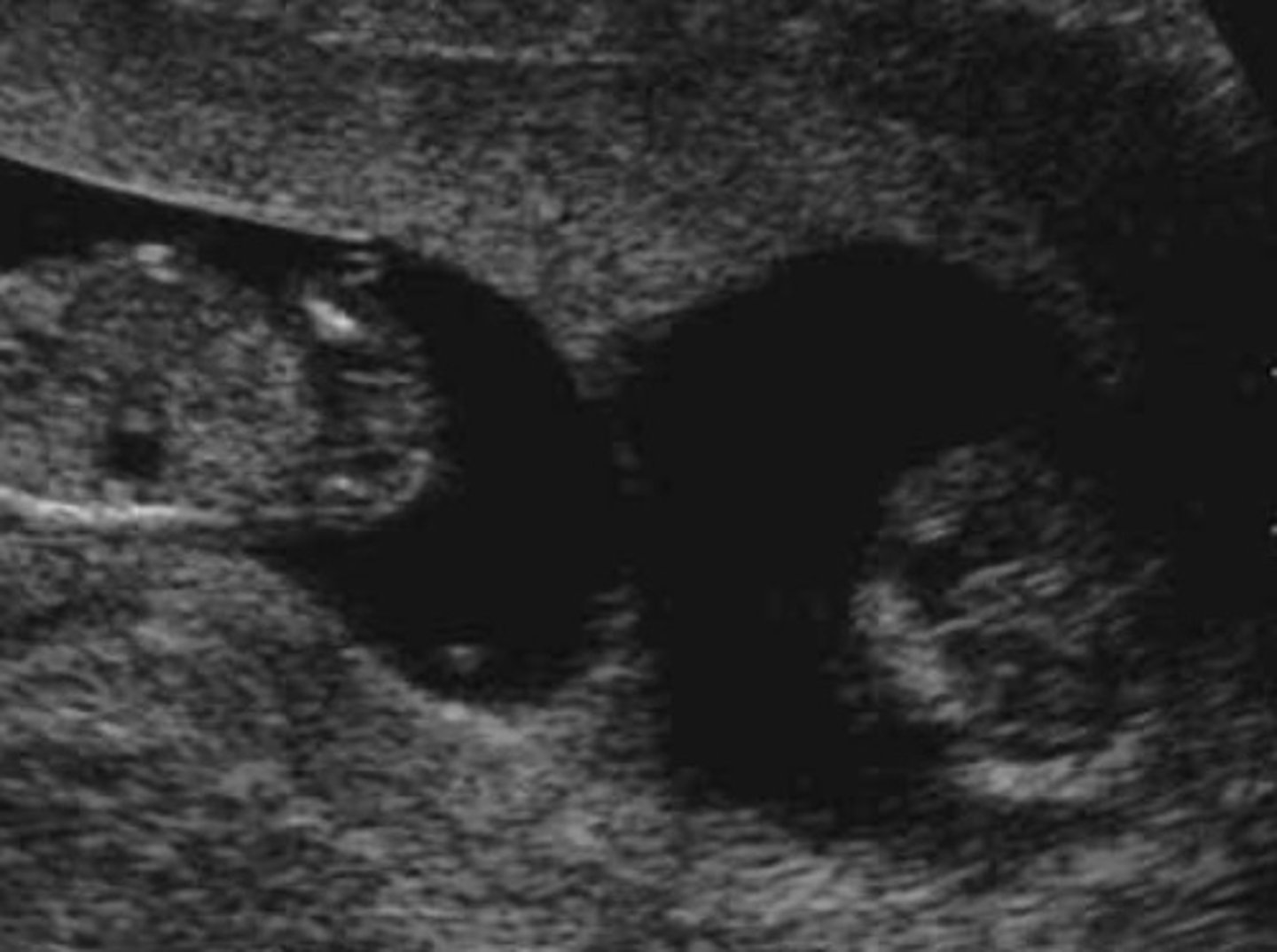
All Dizygotic Twins must be classified as...
Dichorionic diamniotic
Monozygotic Twins
Identical twins
Single ovum that divides
Dichorionic Diamniotic
25% of monozygotic twins
Divides between 0-3 days
10% mortality rate
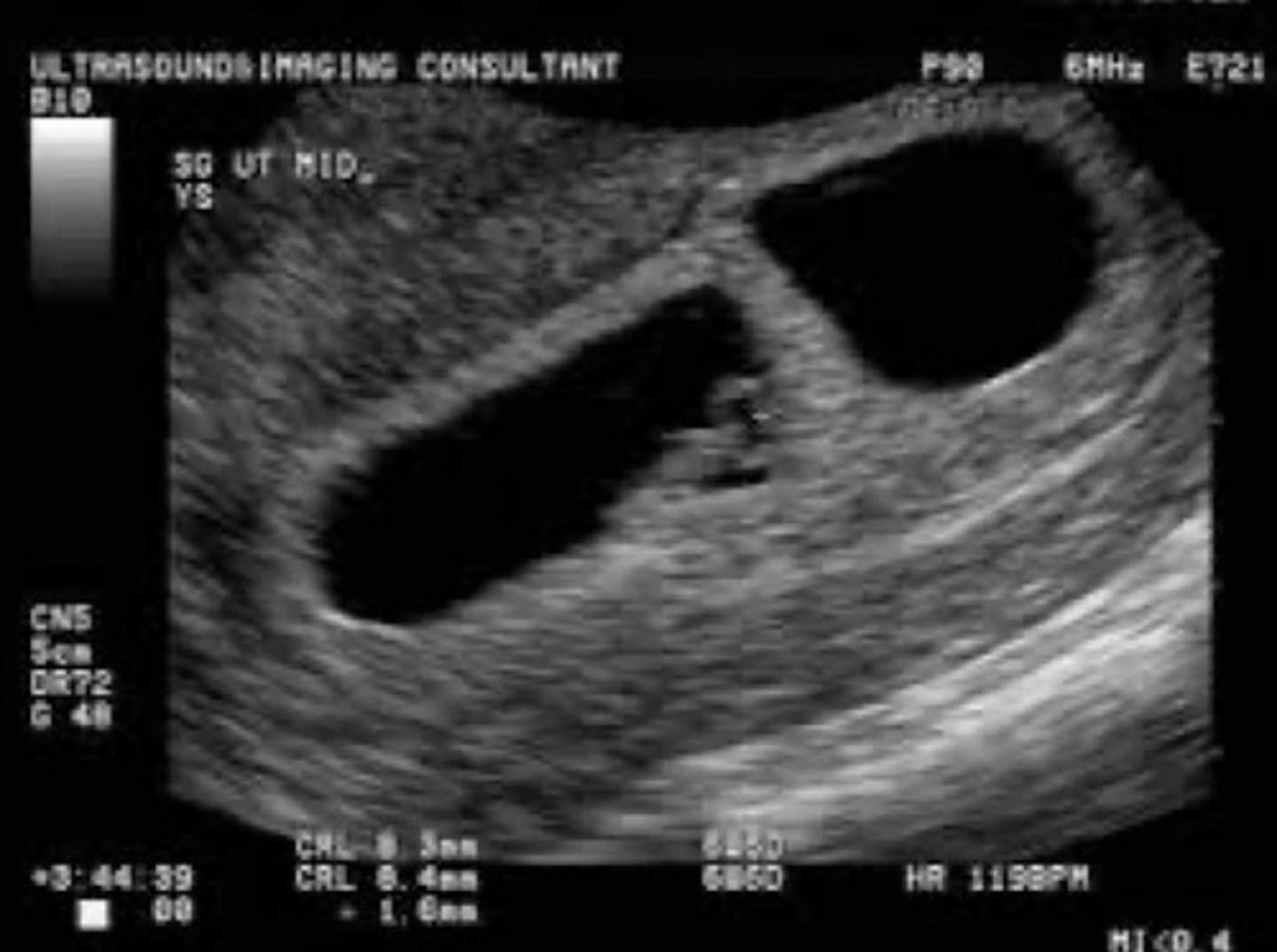
Monochorionic Diamniotic
75% of monozygotic twins
Divides between 4-7 days
25% mortality rate
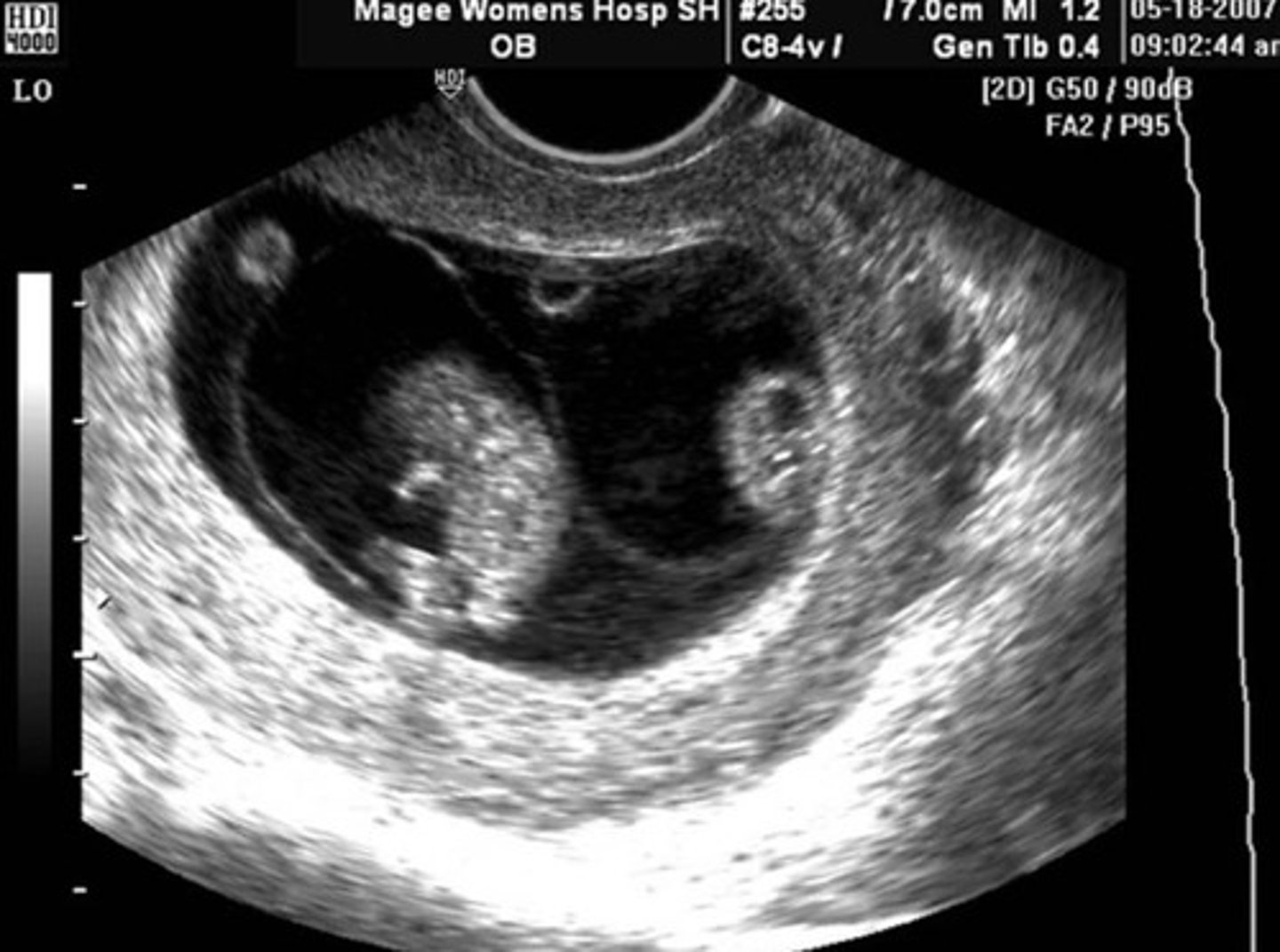
Monochorionic Monoamniotic
Divides after 8-13 days
50% mortality rate
High risk of conjoined twins
Monoamniotic twins must be classified as...
Monochorionic and monozygotic
Monoamniotic twins are associated with...
Cord knots
Conjoined twins
Monochorionic twins must be classified as...
Monozygotic
Can be monoamniotic or diamniotic
Sonographic Appearance of Monochorionic Twins
Thin membrane
Monochorionic twins are associated with...
TTTS
TRAP
FGR
Sonographic assessment protocol for twins
Number of sacs & fetal poles
Number & location of placentas
Membrane thickness and movement
Gender of the feti - after 16 weeks
Biometry comparison
Umbilical cord Doppler
Fluid assessment
Presence of anomalies
Assign a letter to each baby - baby A is always closest to the internal os of the cervix
Vanishing Twin
Early twinning with a demise of 1 twin
Demised twin is reabsorbed
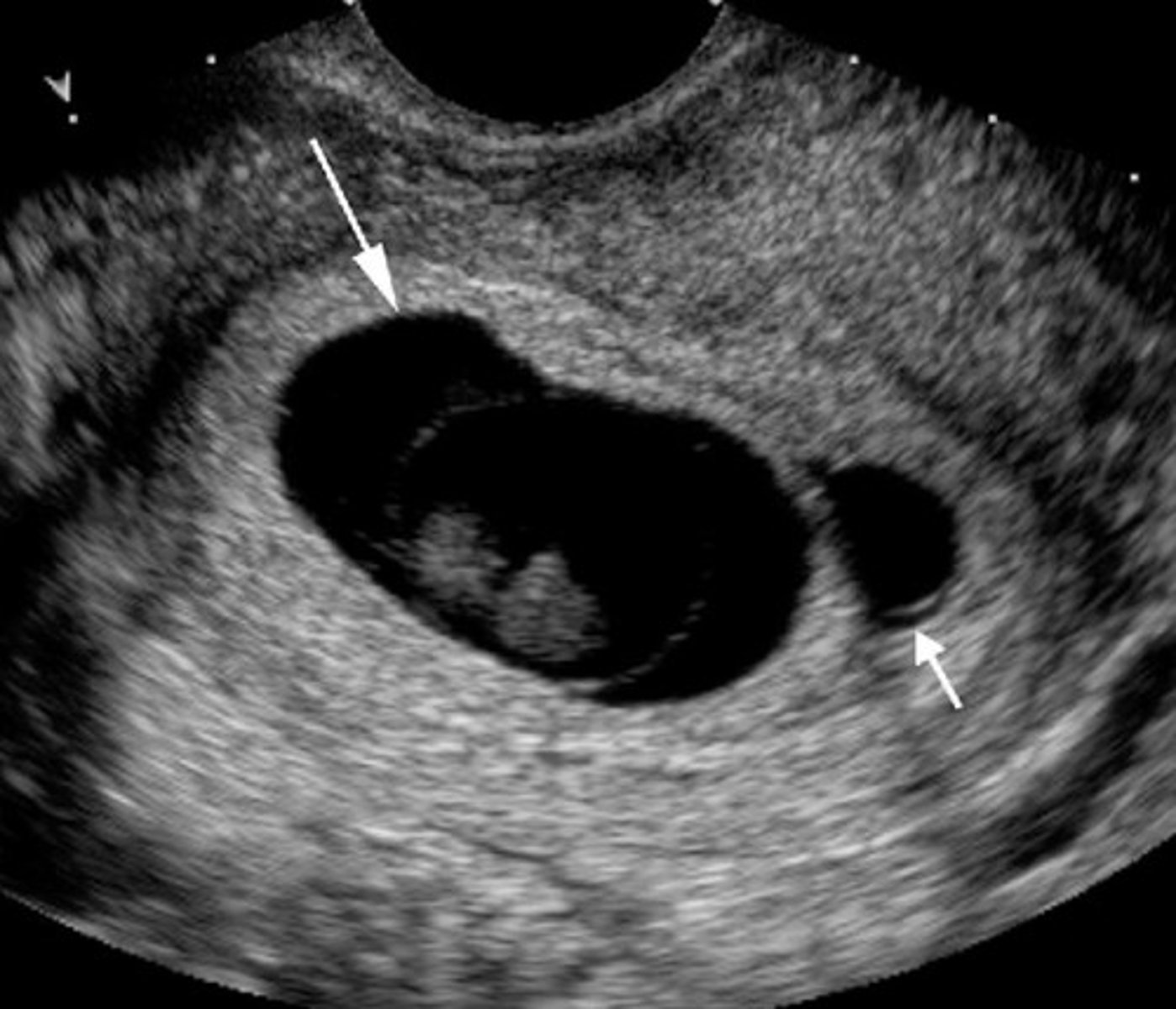
Appearing Twin
Only occurs when scanned prior to 6 weeks
10% of dichorionic twins
80% of monochorionic twins
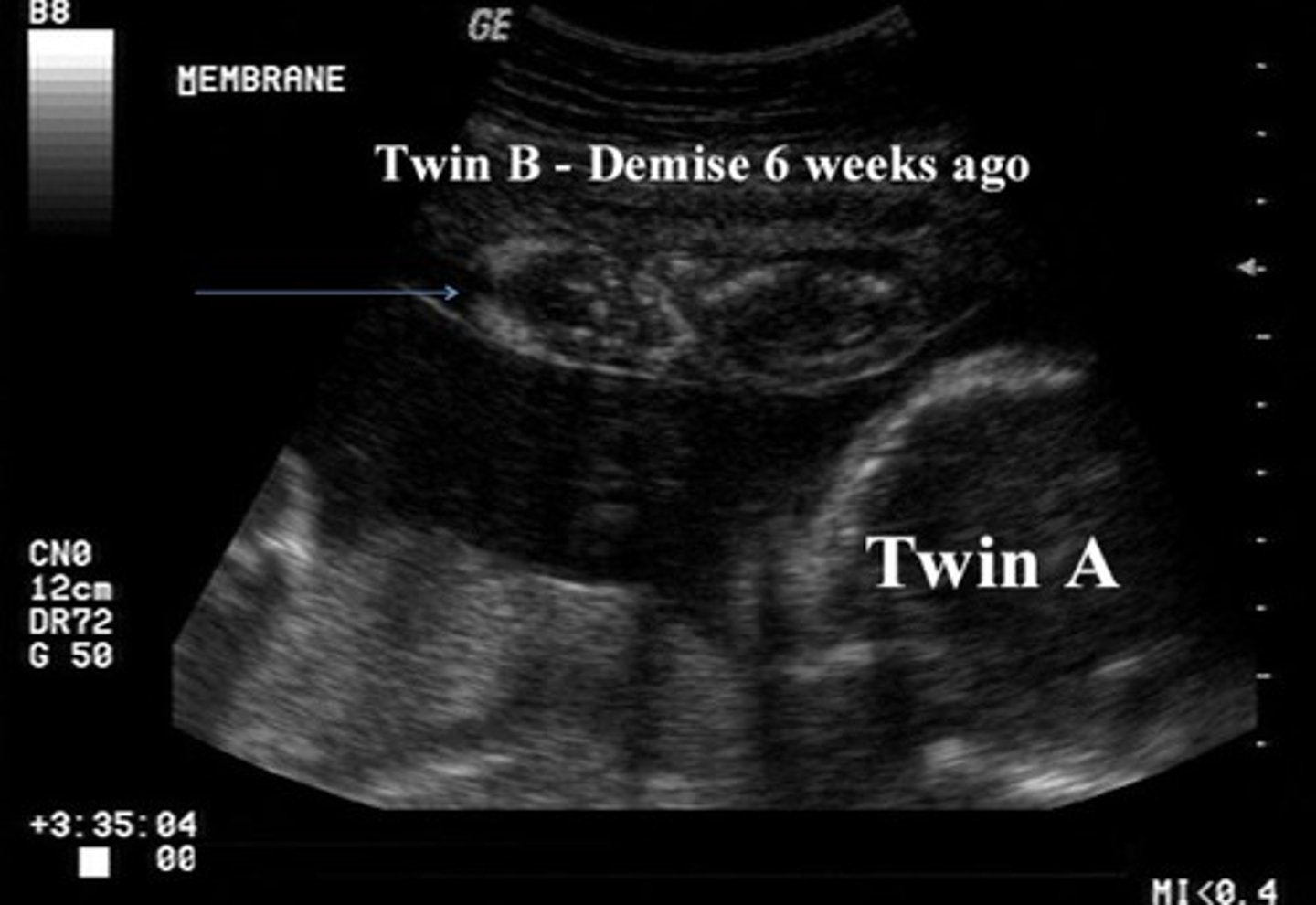
Fetal Papyraceous of Twin
Fetal demise too large to be reabsorbed
Fetus appears flattened due to oligohydramnios
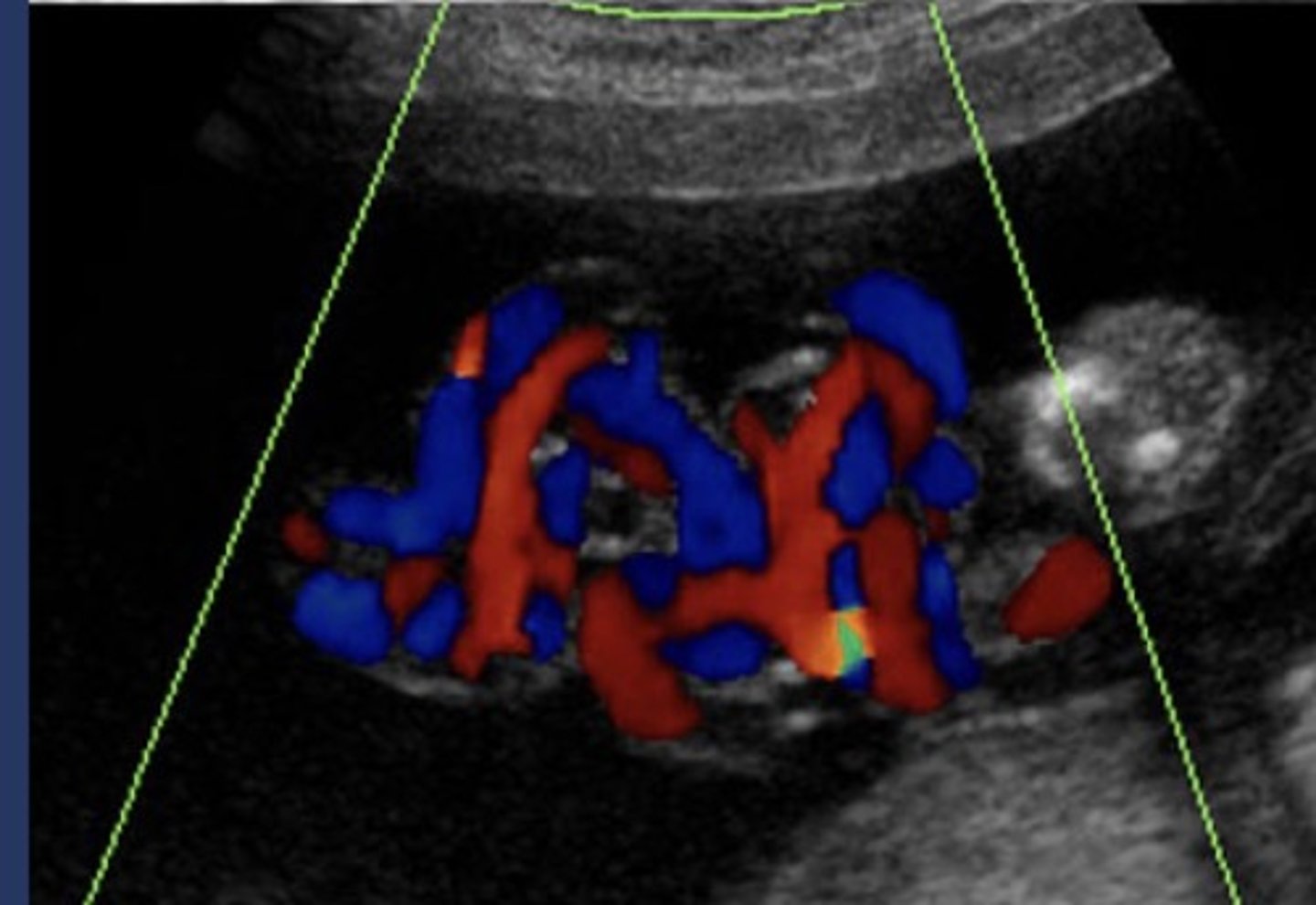
Cord Entanglement
Occurs only in monochorionic monoamniotic twins
50% compromise blood flow - end in fetal demise
Growth Discordance
>20% overall difference between the twins
AC difference of 20mm
BPD difference of 6mm
Femur length difference of 5mm
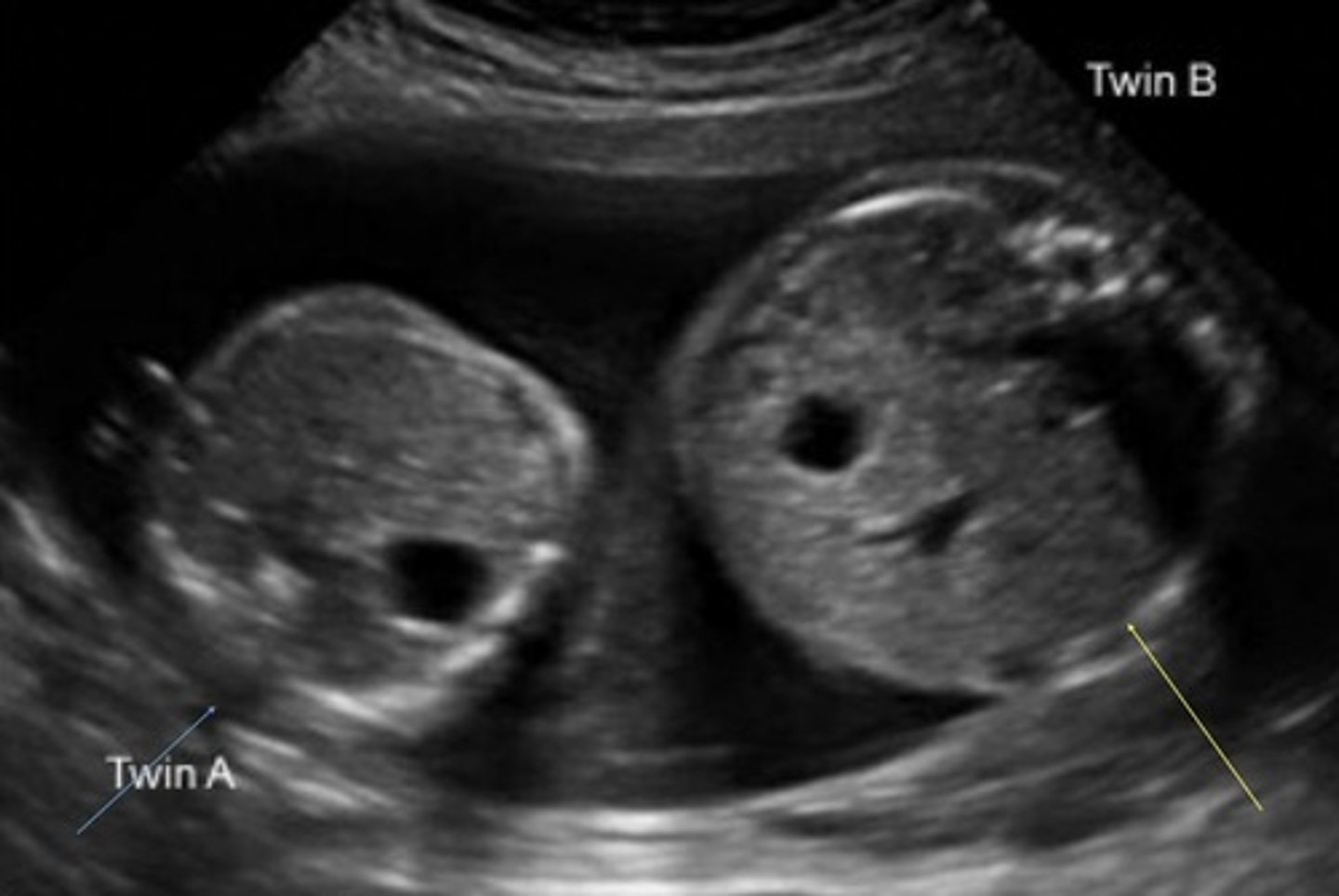
Causes of Growth Discordance
Idiopathic
Placental issues
Twin to twin transfusion
Tight Membrane
Amnion is wrapped tightly around the smaller twin
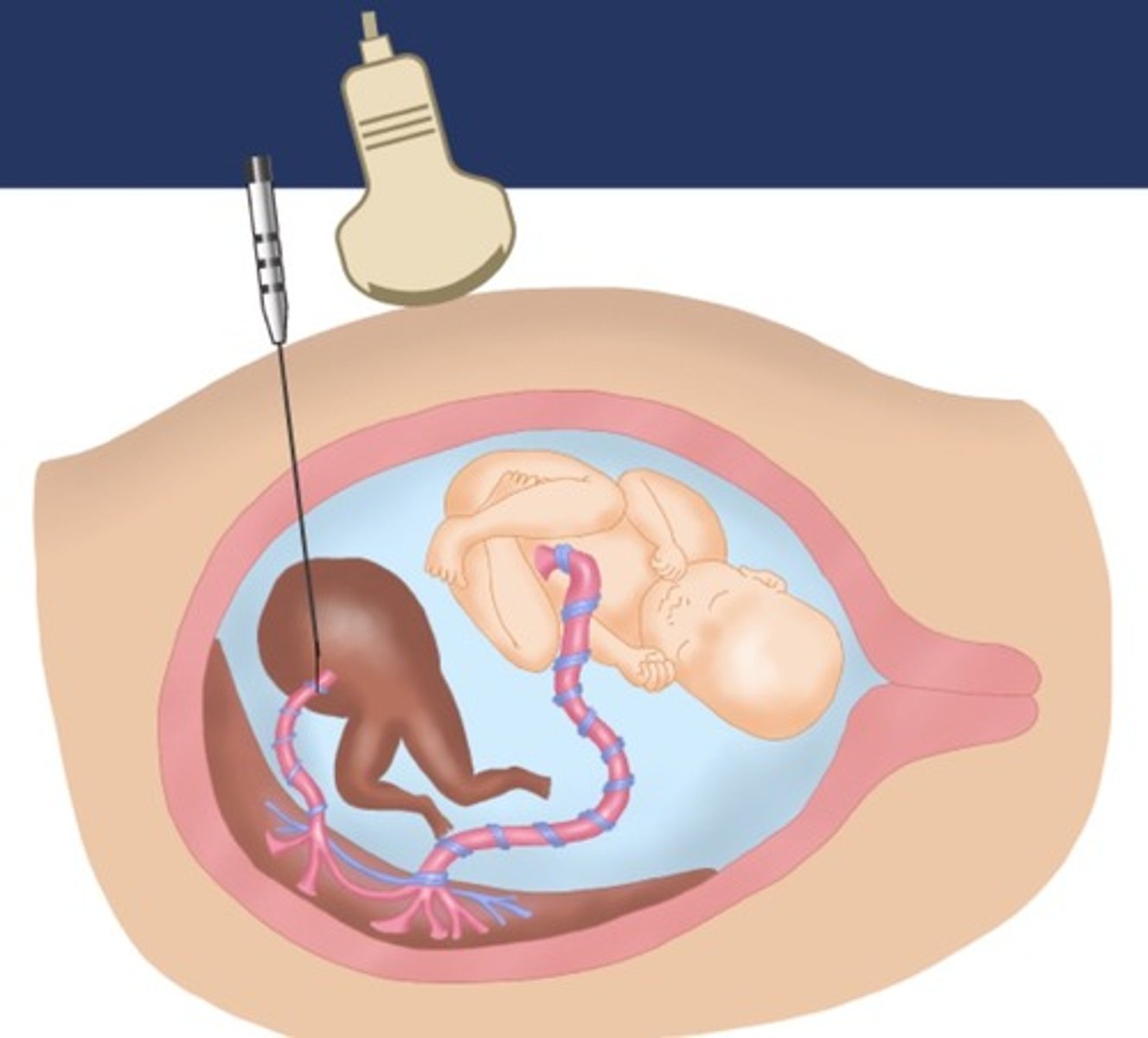
Twin to Twin Transfusion Syndrome (TTTS)
Occurs in monochorionic diamniotic twins
AV shunt in placenta pulls blood away from one twin and toward the other
Donor Twin in TTTS
Poor nutrition and oxygen
Anemic
FGR
Oligohydramnios
Recipient Twin in TTTS
Normal to macrosomic
Excess blood in kidneys and heart
CHF
Hydrops
Polyhydramnios
Stage 1 TTTS
Amniotic fluid discrepancy
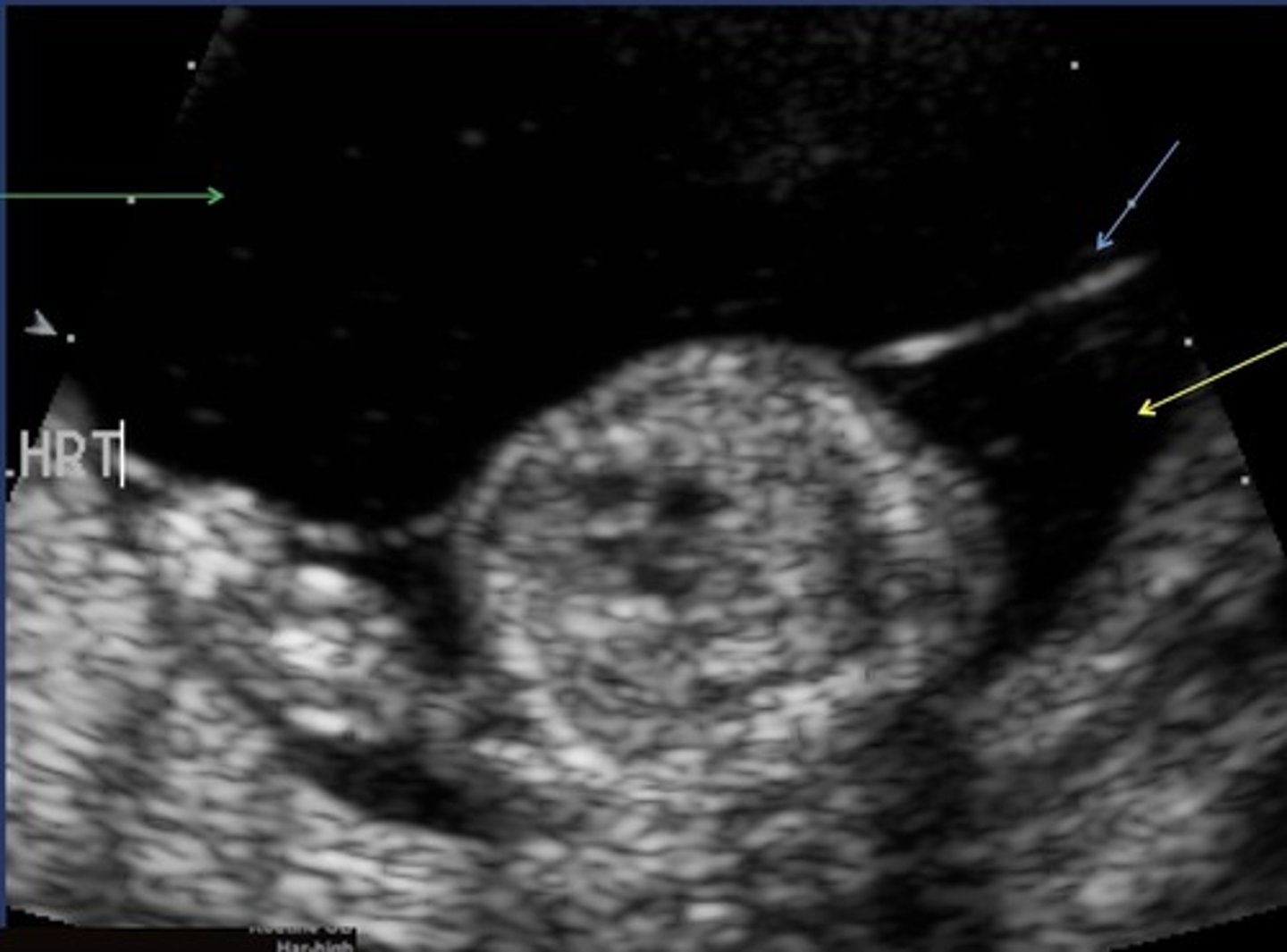
Stage 2 TTTS
Amniotic fluid discrepancy
Absent bladder in donor twin
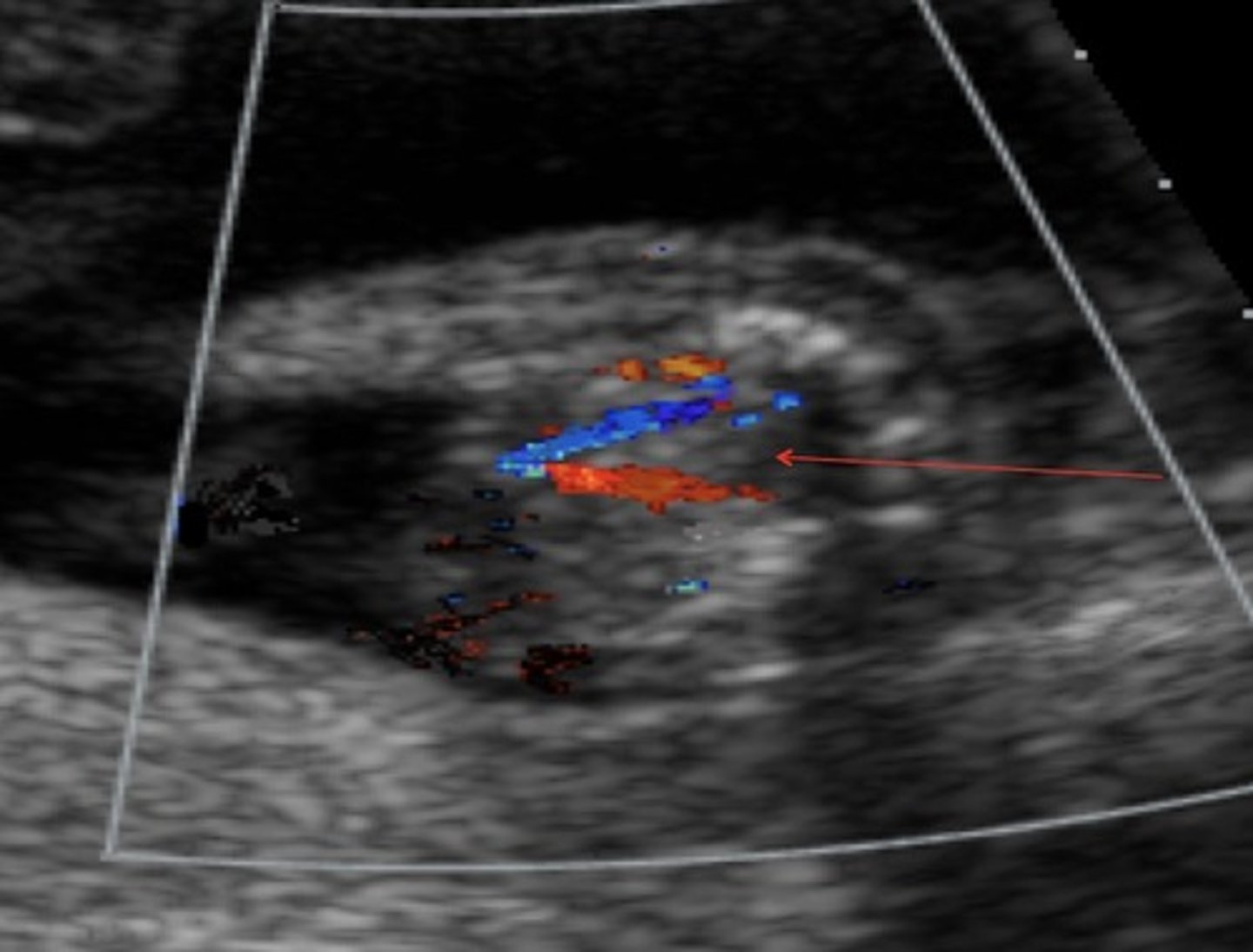
Stage 3 TTTS
Amniotic fluid discrepancy
Absent bladder in donor twin
ABNL umbilical artery S/D ratio in donor twin
Ductus venosus flow reversal in recipient twin
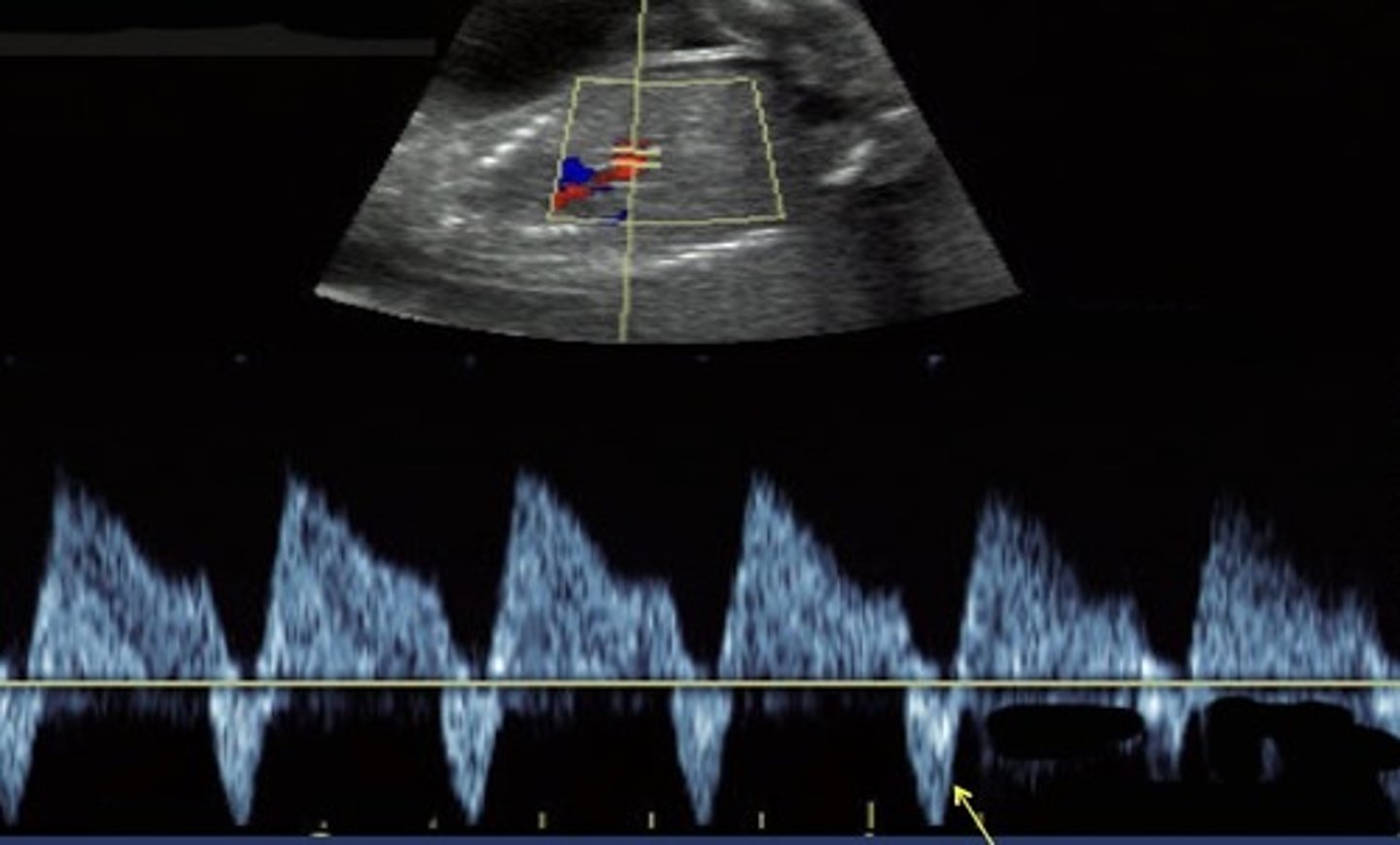
Stage 4 TTTS
Amniotic fluid discrepancy
Absent bladder in donor twin
ABNL umbilical artery S/D ratio in donor twin
Ductus venosus flow reversal in recipient twin
Hydrops in recipient twin
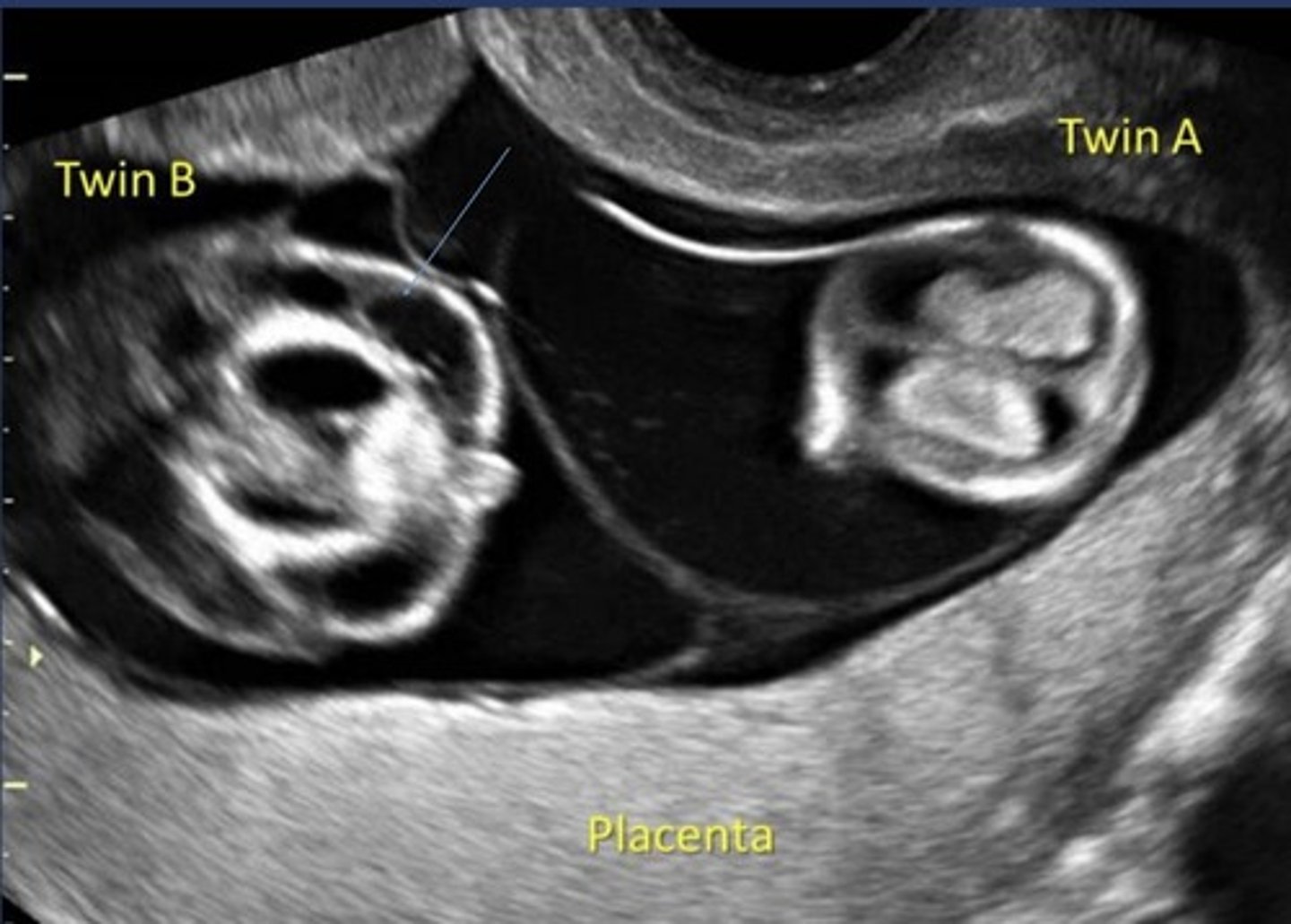
Stage 5 TTTS
Death of at least 1 twin
Untreated TTTS
70-80% mortality rate of at least 1 twin
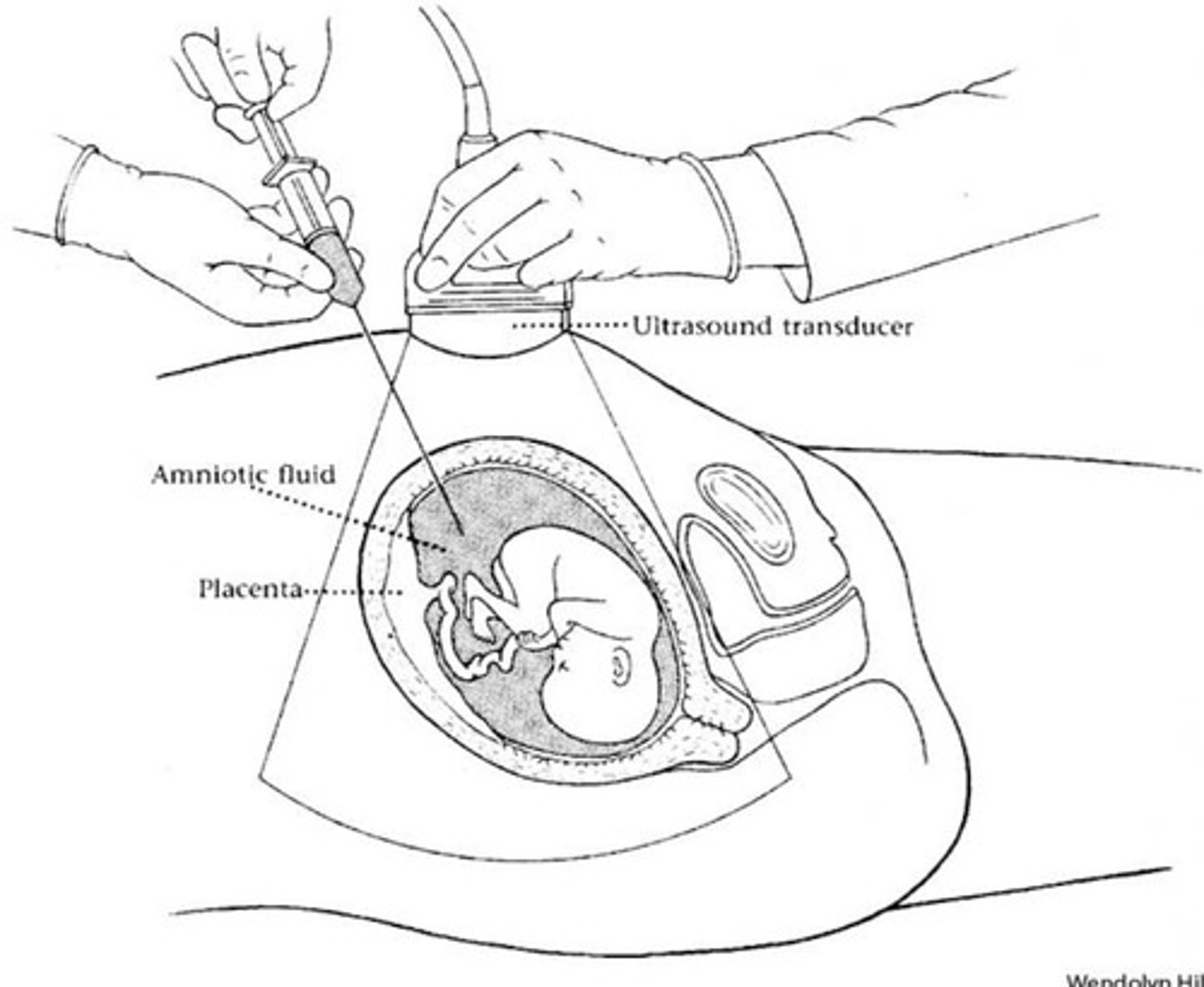
Serial Reduction Amniocentesis
Reduces polyhydramnios
No more than 3L at a time
60% survival of 1 twin
Not effective in severe stages of TTTS
Septostomy
Hole created between twins to equalize pressures
80% survival of 1 twin
60% survival for both twins
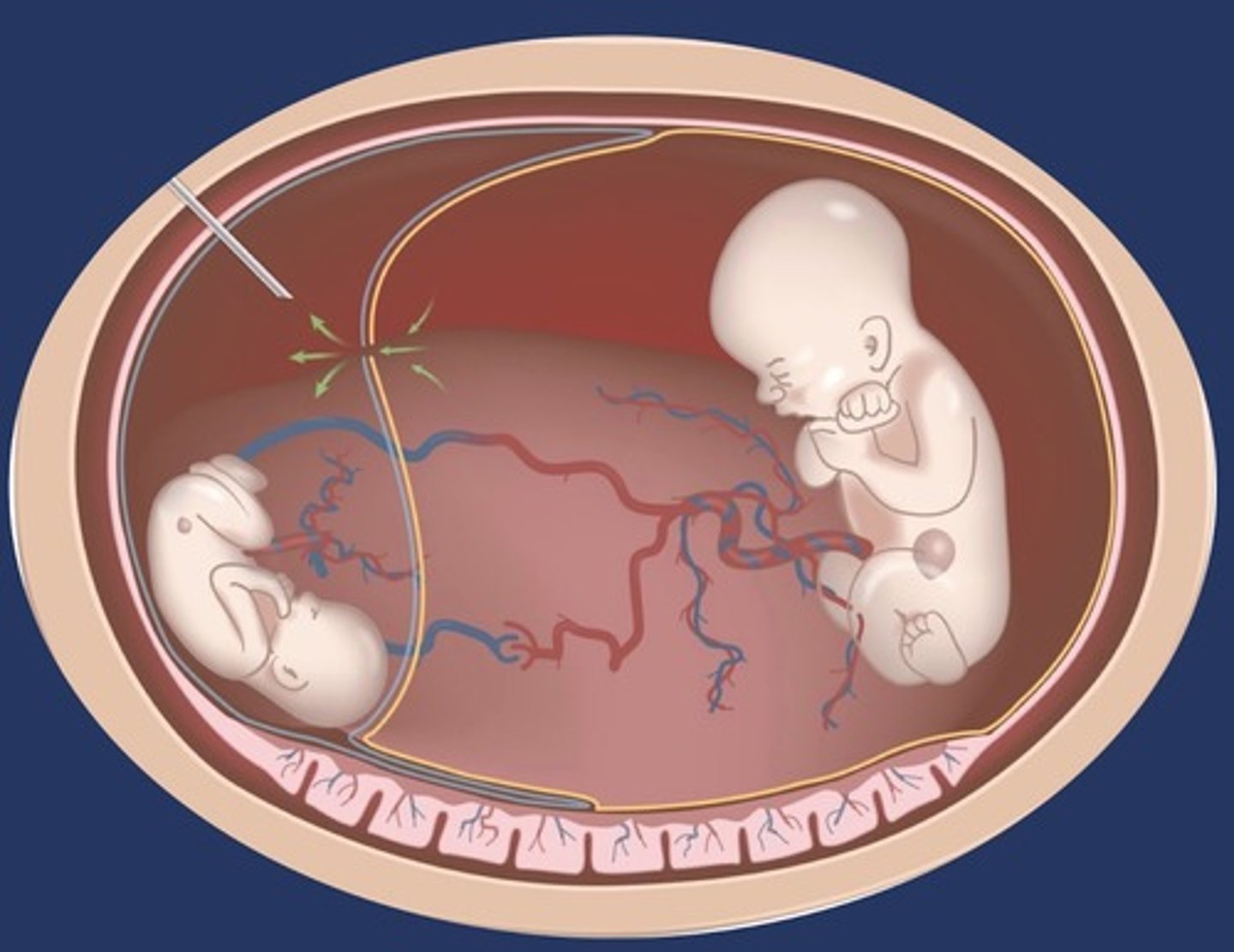
Possible complications from septostomy
PROM (premature rupture of membranes)
Premature labor
Infections
Hole enlargement - cord entanglement
Ablation of Placental Anastomotic Vessels
Laser used to coagulate anastomosing placental vessels
75% survival of 1 twin
60% survival of both twins
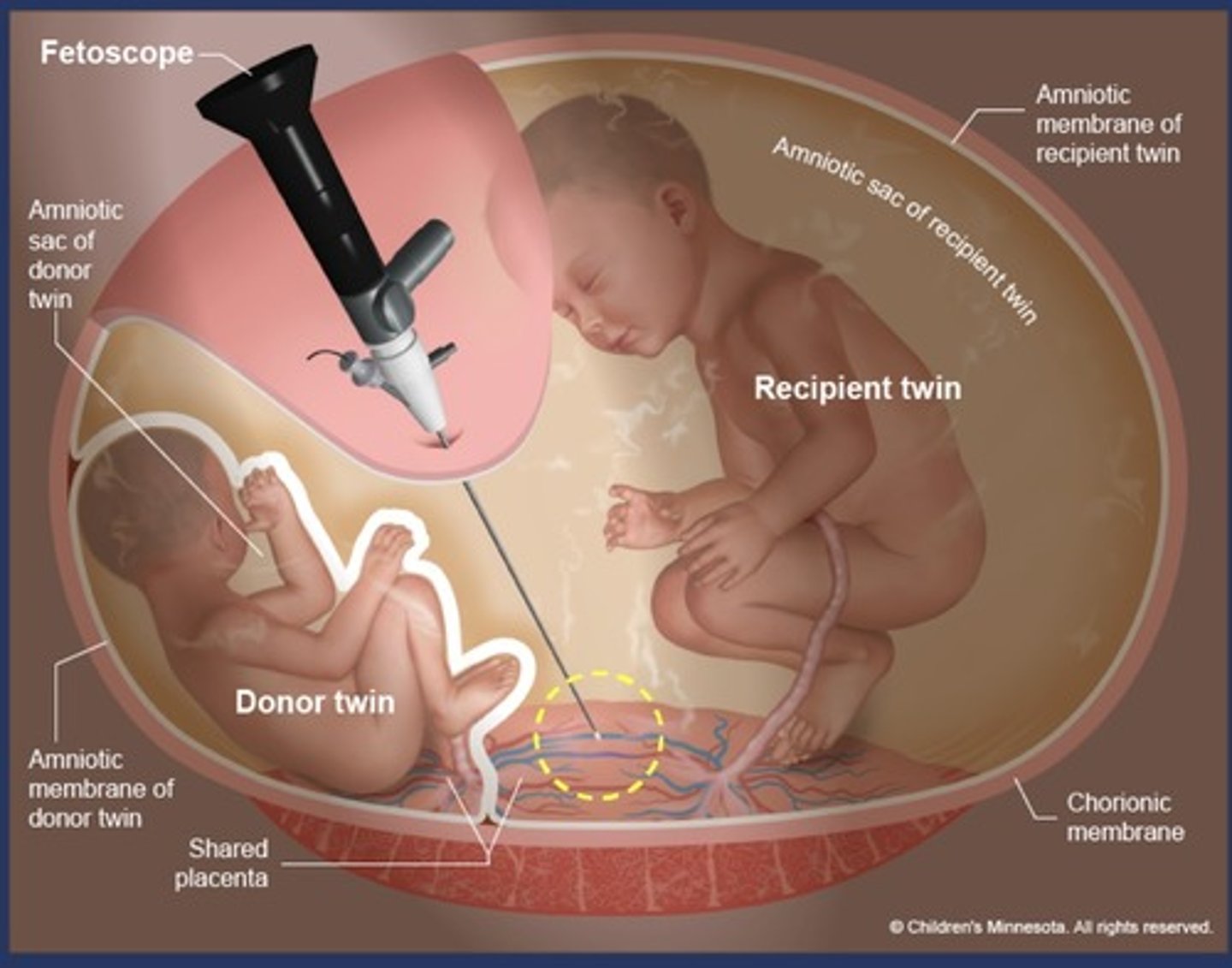
Possible complications from ablation of placental anastomotic vessels
PROM
Premature labor
Infection
Bleeding at ablation site
Recurrence of TTTS
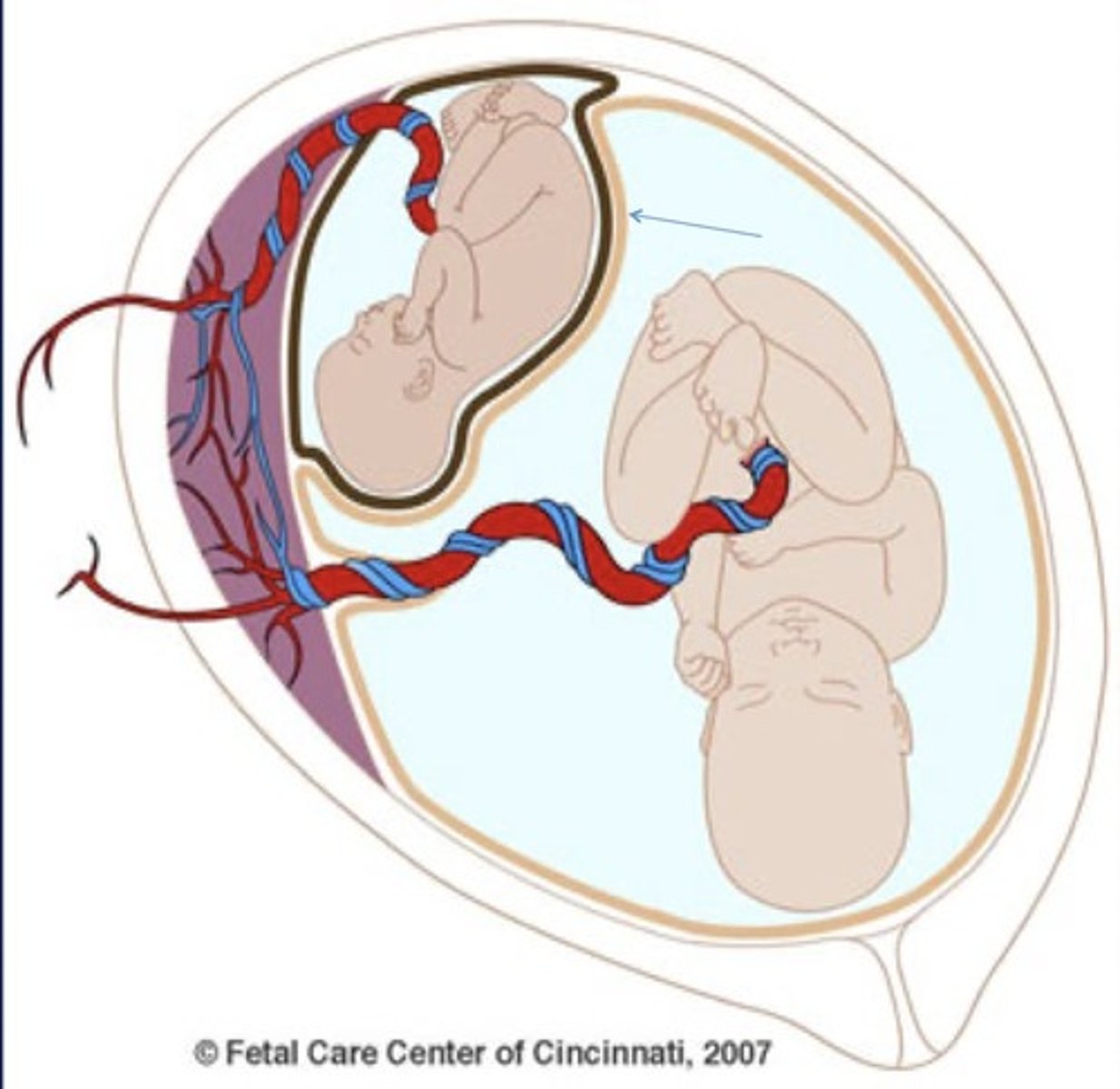
Stuck Twin Syndrome
Seen in monochorionic diamniotic twins with TTTS
Severe polyhydramnios of 1 twin, and oligohydranmios of the other
Little/no movement of babies
TRAP Sequence
Occurs in monochorionic twins
Artery-to-artery connection
TRAP Twin
No heart
Absent upper body
Reversal of flow in umbilical artery
TRAP Sequence with no treatment
Loss of TRAP twin
50% mortality of normal twin
TRAP Sequence with radiofrequency ablation
95% survival of normal twin
Conjoined Twins
Incomplete division of embryo - division after 13 days
Occurs in monochorionic monoamniotic twins
TERM
Thoracopagus Twins
DEFINITION
Conjoined at thorax
TERM
Omphalopagus Twins
DEFINITION
Conjoined at anterior wall
TERM
Craniopagus Twins
DEFINITION
Conjoined at cranium
TERM
Pygopagus Twins
DEFINITION
Conjoined at buttocks
TERM
Ischiopagus Twins
DEFINITION
Conjoined at ischial region
TERM
Cephalopagus Twins
DEFINITION
Conjoined at back of head
Fused in the upper portion of the body
TERM
Rachipagus Twins
DEFINITION
Conjoined at the vertebral column
TERM
Parapagus Twins
DEFINITION
Conjoined at the abdomen and pelvis