GCSE CHEM (c1)
 Call Kai
 Learn
Learn Practice Test
 Spaced Repetition
 Match
Match Flashcards
 Knowt Play
1/49

There's no tags or description
Looks like no tags are added yet.
Name | Mastery | Learn | Test | Matching | Spaced | Call with Kai | Chat |
|---|
No analytics yet
Send a link to your students to track their progress
50 Terms
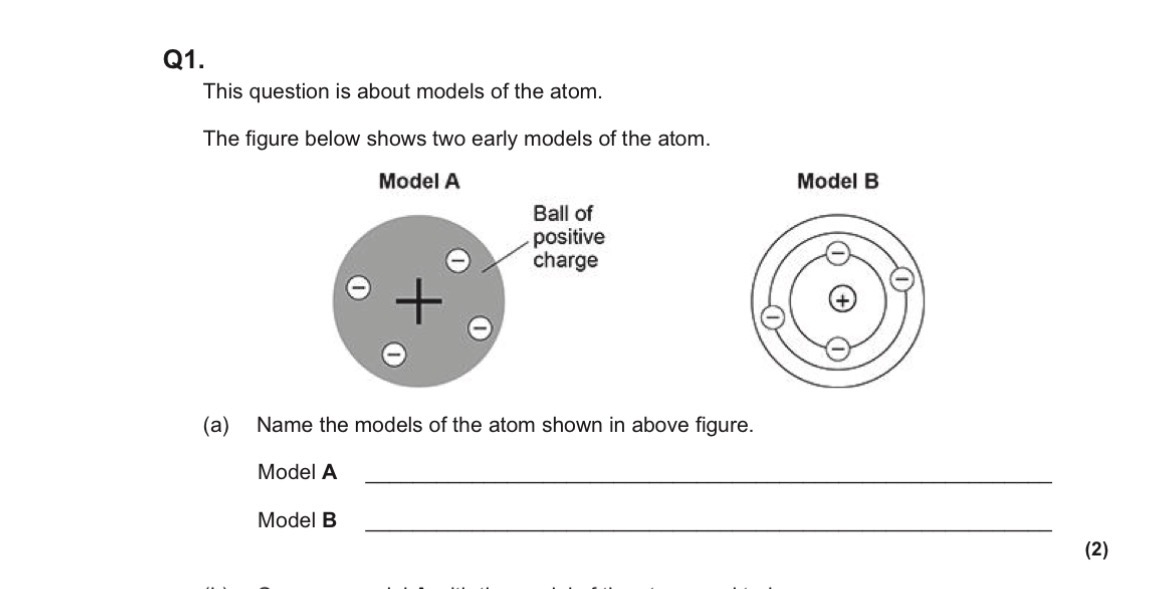
Name the models of the atom shown in above figure.(F)
A=plum pudding
B=Bohr
Compare model A with the model of the atom used today.
Use the figure above. (F)
(Plum pudding)
Similarities
• both contain electrons
• both are neutral overall
Differences
• model A has no nucleus
or
the model used today has a nucleus
• model A has no protons
or
the model used today has protons
• model A has no neutrons
or
the model used today has neutrons
• model A has positive charge spread throughout the atom
or
model A is a ball of positive charge
• the model used today has the positive charge in the centre
• model A the electrons are distributed randomly
• the model used today has electrons in shells / energy levels
• the mass was spread throughout model A
• the mass is concentrated at the centre of the model used today
• model A does not have empty space
Modem used today is mostly empty space
Chadwick’s experiments showed the existence of neutrons in an atom.
This led to an understanding of isotopes.
Define the term ‘isotopes’.
Refer to subatomic particles in your answer.(F)
atoms with the same number of protons
allow atoms of the same element
allow atoms with the same
atomic number
1
with different numbers of neutrons
Which particles have the same relative mass?(F)
a neutron and a proton
The formula of a compound is N2O
How many of each type of atom are in one molecule of N2O?(F)
nitrogen) 2 / two
(oxygen) 1 / one
An atom of element Z contains:
• 3 electrons
• 4 neutrons
• 3 protons.
(d) Give the name of element Z.
Use the periodic table.(F)
lithium
Describe the plum pudding model of the atom.(F)
a ball of positive charge
do not accept references to protons, nuclei,
neutrons
1
with (negative) electrons embedded
An atom of element Z contains:
• 3 electrons
• 4 neutrons
• 3 protons.
(d) Give the name of element Z.
Use the periodic table.(F)
lithium
Very few atoms of the element tennessine (Ts) have ever been identified.
The atomic number of tennessine is 117
(c) Predict the number of outer shell electrons in an atom of tennessine.
Give one reason for your answer.
Use the periodic table.
Number of outer shell electrons _______
Reason (F)
(number of outer shell electrons) 7
1
(reason) (tennessine is in) Group 7
1
Tennessine was first identified by a small group of scientists in 2010.
Suggest one reason why tennessine was not accepted as a new element by other
scientists until 2015.(F)
(time needed for) peer review
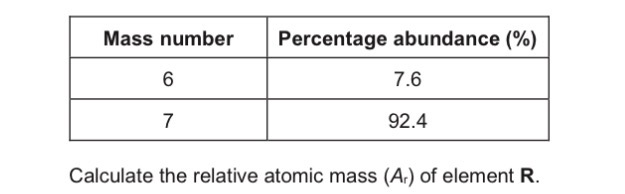
Calculate the relative atomic mass (Ar) of element R.
Give your answer to 1 decimal place.(F)
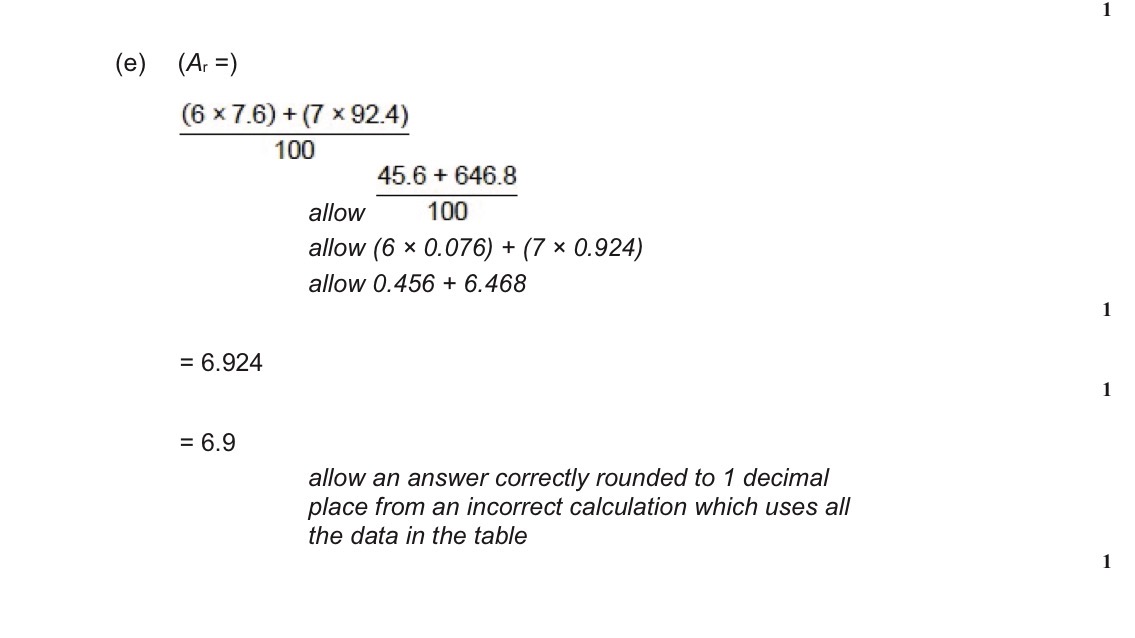
An atom of element Y has:
• an atomic number of 9
• a mass number of 19.
Give the number of electrons and the number of neutrons in this atom.(F)
number of electrons) 9
1
(number of neutrons) 10
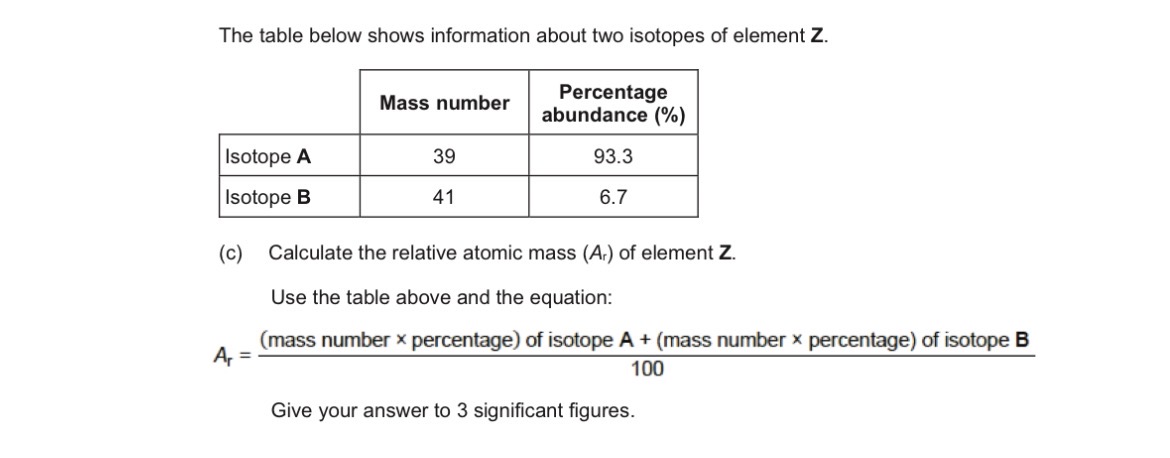
Calculate the relative atomic mass (Ar) of element Z.(F)
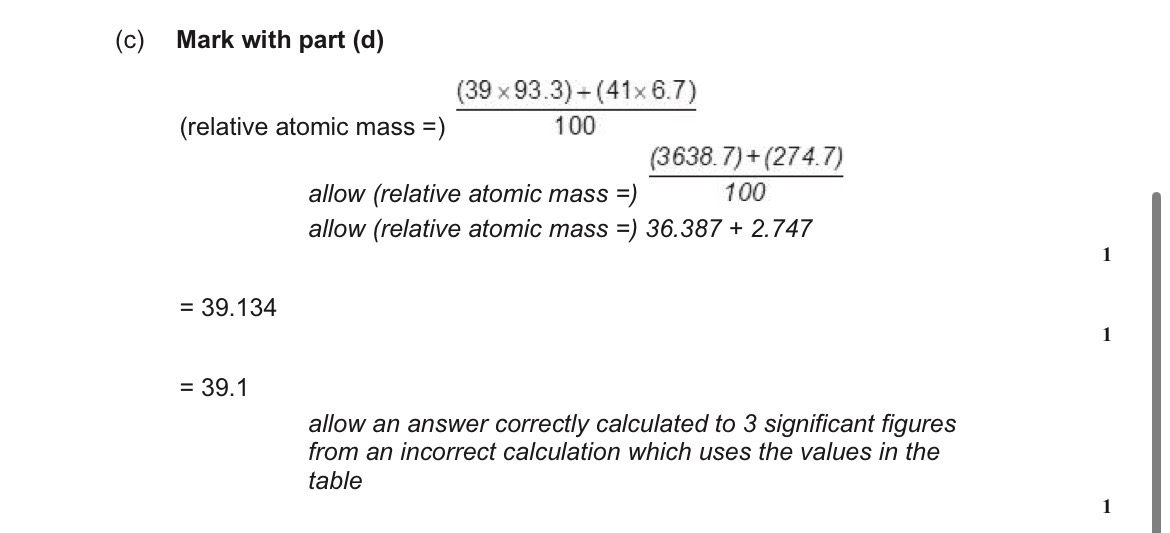
Suggest the identity of element Z.(F)
potassium / K
Isotopes of the same element have different mass numbers because the isotopes
have different numbers of _______________.(F)
Neutrons
This question is about the periodic table.
Sodium and potassium are in Group 1 of the periodic table.
(a) Give one similarity and one difference between the electronic structures of sodium
and potassium.(F)
Similarity __________________________________________________________
___________________________________________________________________
Difference _________________________________________________________
___________________________________________________________________
(similarity)
both have one outer (shell)
electron
allow energy level for shell
allow same number of outer (shell) electrons
1
(difference)
sodium has 3 shells but
potassium has 4 shells
Group 1 elements react with water.
(b) Give two observations made when potassium reacts with water.(F)
any two from:
• effervescence / bubbles / fizzing
ignore gas produced
• (potassium) floats
• (potassium) moves around
• (potassium) becomes smaller
• (potassium) melts
allow (potassium) forms a ball
ignore colour of flame
• flame
• explosion
Potassium hydroxide solution is produced when potassium reacts with water.
What is the colour of universal indicator when added to potassium hydroxide
solution?
Give one reason for your answer.(F)
Colour of universal indicator _________________________________________
Reason __________________________________________________________
blue / violet / purple
(the solution is) alkaline
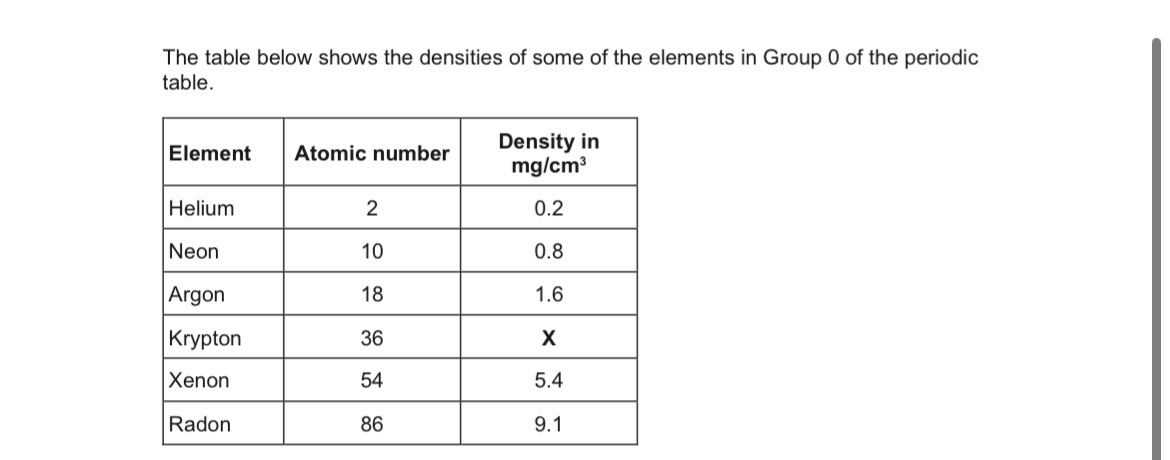
Estimate the density (X) of krypton.
Use the figure and table above.(F)
3.4
The elements in Group 7 are called the halogens.
A more reactive halogen can displace a less reactive halogen from a solution of its
salt.
Which combination of solutions will produce a reaction when mixed?(F)
chlorine and potassium bromide
Which of the following describes the trends going down Group 7?(F)
relative molecular mass increases and boiling point increases
The scientist left gaps in the periodic table in the figure above.
Each gap is represented by a question mark (?).
Give one reason why the scientist left gaps in this periodic table.(F)
for elements that had not been discovered (at that time)
allow for missing elements
or
so that elements with similar properties are grouped together
The modern periodic table is different from the periodic table in above figure.
One extra group of elements has been added.
What is the name of the extra group of elements in the modern periodic table?(F)
noble gases
Why do the elements in Group 1 of the modern periodic table have similar chemical
properties?(F)
the elements all have one electron in the outer shell
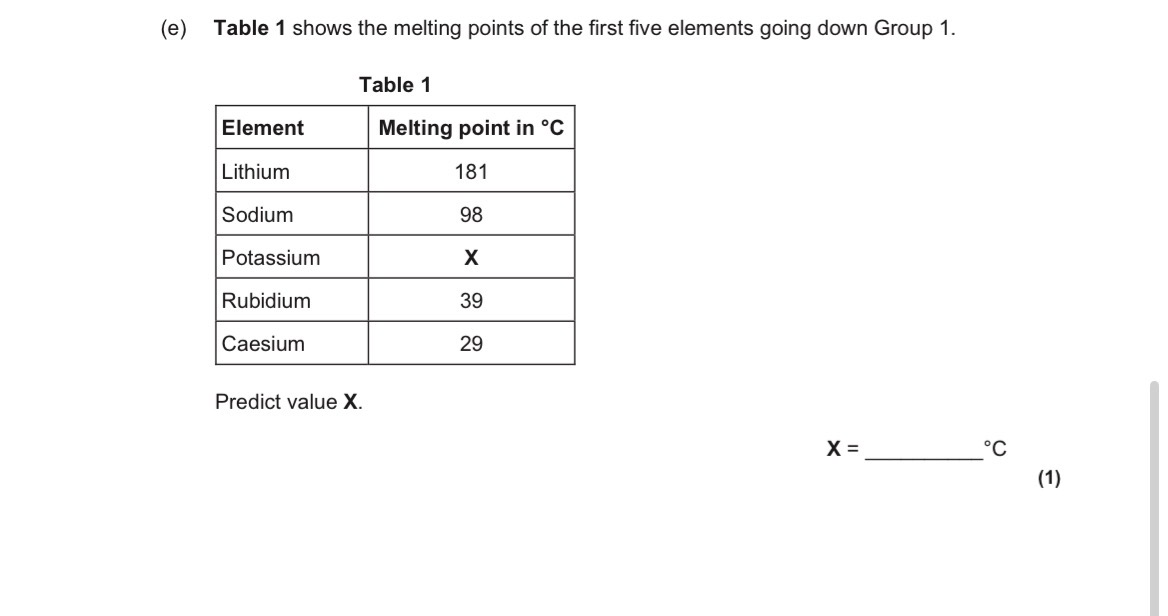
Predict value X.(F)
63 (°C)
allow a value in the range 49 to 88 (°C)
Give one observation you would see when a small piece of potassium is added to
water.(F)
any one from:
• floats
• moves (on the surface)
• melts
allow forms a ball
• fizzes / bubbles
• flame
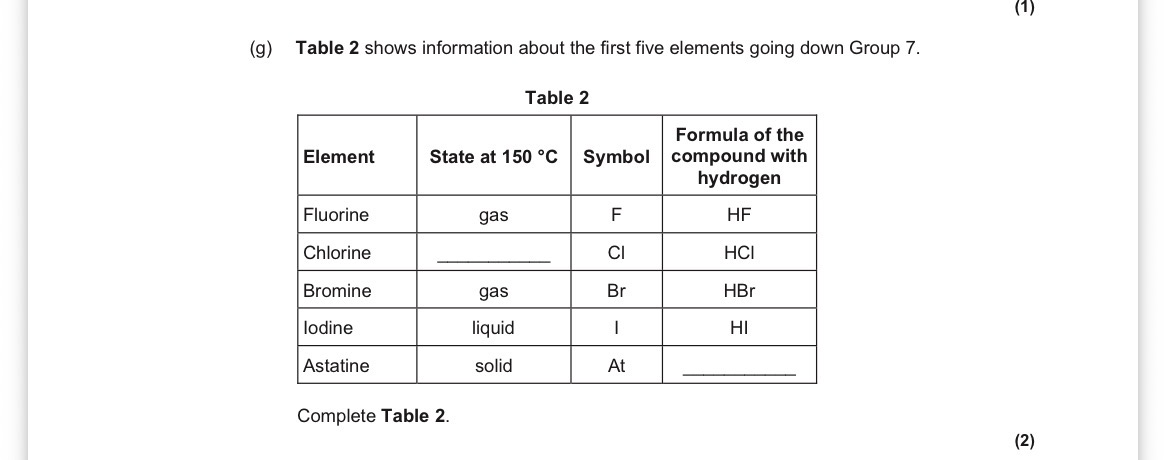
F
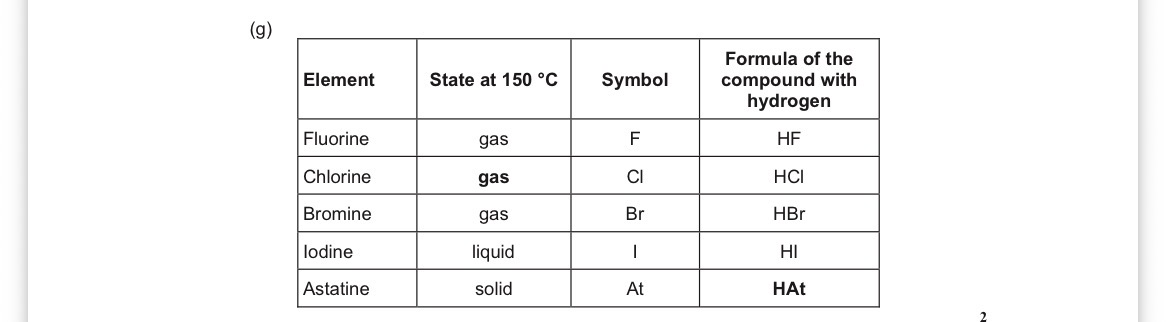
This question is about elements in the periodic table.
(a) Argon has the atomic number 18
Explain why argon does not form compounds.
Answer in terms of electrons.(H)
(a) (atoms of) argon have a stable arrangement of electrons
allow (atoms of) argon have a full outer shell (of
electrons)
1
(so) argon (atoms) do not share / transfer electrons
Phosphorus (P) is the element below nitrogen in the periodic table.
Predict the formula of the compound formed between phosphorus and hydrogen.
Formula = _(H)
PH3
Tellurium is the element with atomic number 52
Predict whether tellurium reacts with metals.
Explain your answer.
Answer in terms of the position of tellurium in the periodic table.(H)
yes, because tellurium is towards the right of the periodic table
allow yes, because tellurium is in Group 6
1
(so) tellurium is a non-metal(1)
Or
yes, because tellurium is in the same group as oxygen / sulfur (1)
(and) oxygen / sulfur will react with metals (1)
Or
cannot predict as tellurium is towards the bottom and to the right of
the periodic table (1)
(so) don't know whether tellurium is a metal or non-metal (1)
Barium (Ba) is an element in Group 2 of the periodic table.
Barium reacts with hydrochloric acid.
(d) Suggest two observations that could be made when barium reacts with hydrochloric
acid.(H)
any two from:
• effervescence / fizzing / bubbles
ignore produces a gas
• barium disappears
allow barium gets smaller
• forms a colourless solution
• temperature increases
Write a balanced symbol equation for the reaction between barium and hydrochloric
acid.(H)
Ba + 2 HCl BaCl2 + H2
This question is about groups in the periodic table.
The elements in Group 1 become more reactive going down the group.
Rubidium is below potassium in Group 1.
(a) Rubidium and potassium are added to water.
Predict one observation you would see that shows that rubidium is more reactive
than potassium. (H)
any one from:
• more vigorous bubbling (for rubidium)
• bigger / brighter flame (for rubidium)
allow converse statements for potassium
allow (rubidium) catches fire more quickly
allow (rubidium) moves around more quickly
allow (rubidium) explodes
allow (rubidium) disappears more quickly
allow (rubidium) melts more quickly
Explain why rubidium is more reactive than potassium.(H)
(rubidium’s) outer shell / electron is further from the nucleus
allow the (rubidium) atom is larger
allow (rubidium) has more shells
1
(so) there is less (electrostatic) attraction between the nucleus and the
outer electron (in rubidium)
allow (so) there is more shielding between the outer electron
and the nucleus (in rubidium)
1
(so) the outer electron (in rubidium) is more easily lost
allow (so) less energy is needed to remove the (outer)
electron (in rubidium)
allow energy level for shell throughout
allow converse argument in terms of potassium
Complete the equation for the reaction of rubidium with water.
You should balance the equation.
Rb + H2O + (H) (3)
2 Rb + 2 H2O 2 RbOH + H2
The noble gases are in Group 0.
(d) Which is a correct statement about the noble gases?(H)
the noble gases have boiling points that increase going down the group
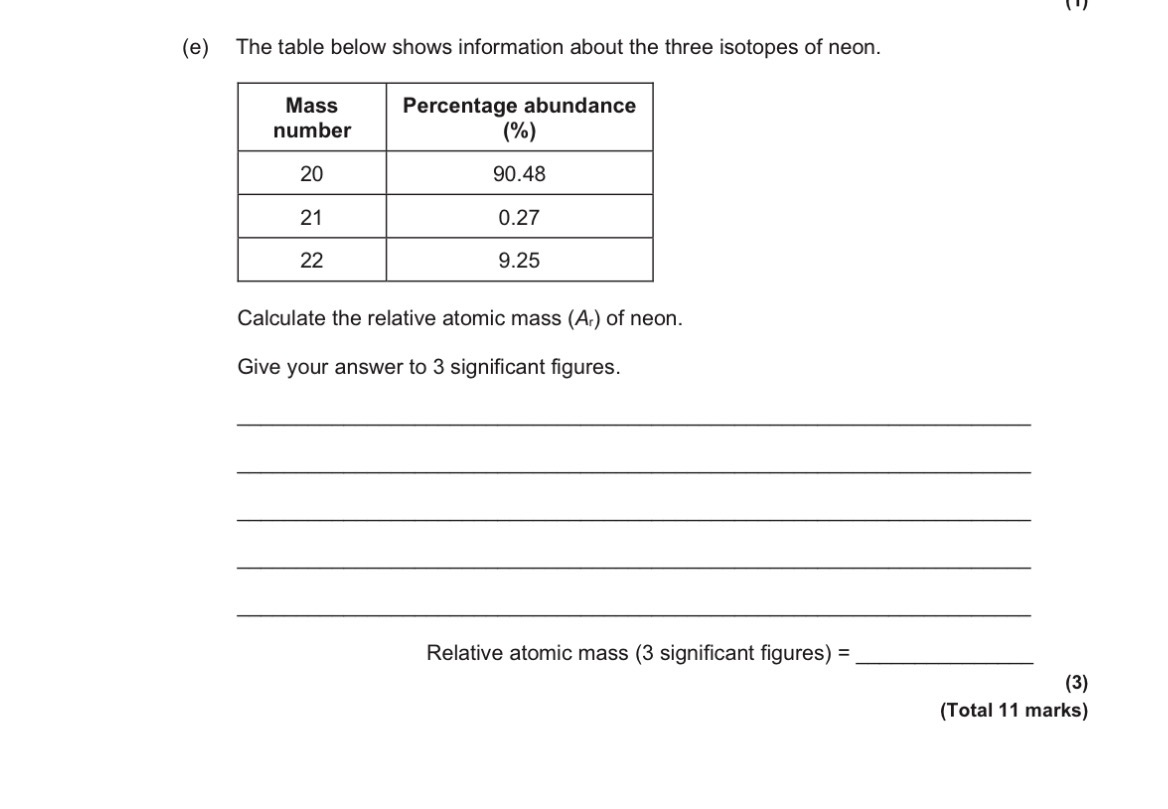
H
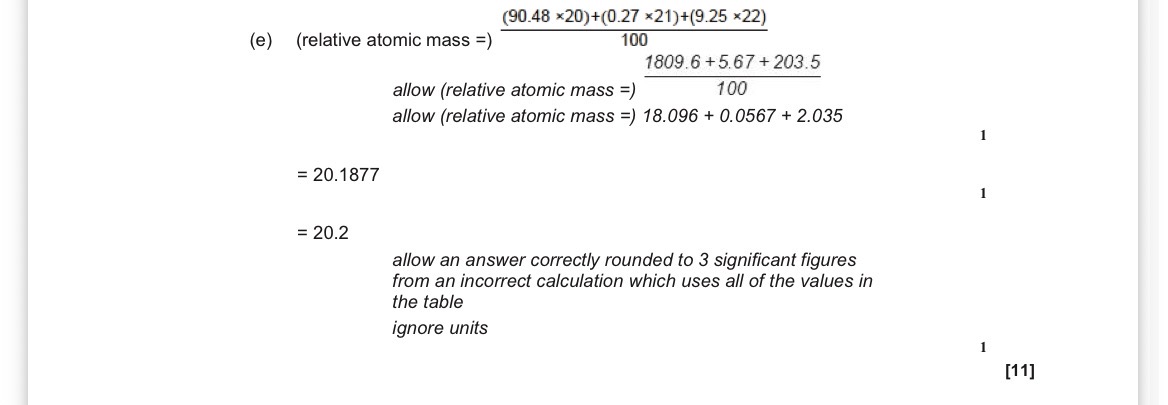
F
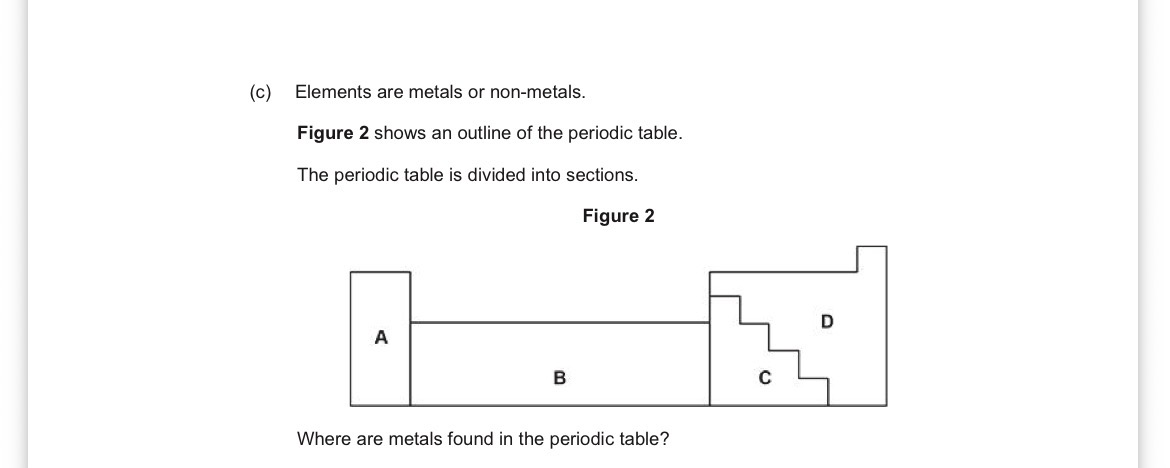
SECTIONS A B AND C
Which two of the following are typical properties of a transition metal? (chemistry
only)
can be bent and shaped
good conductor of electricity
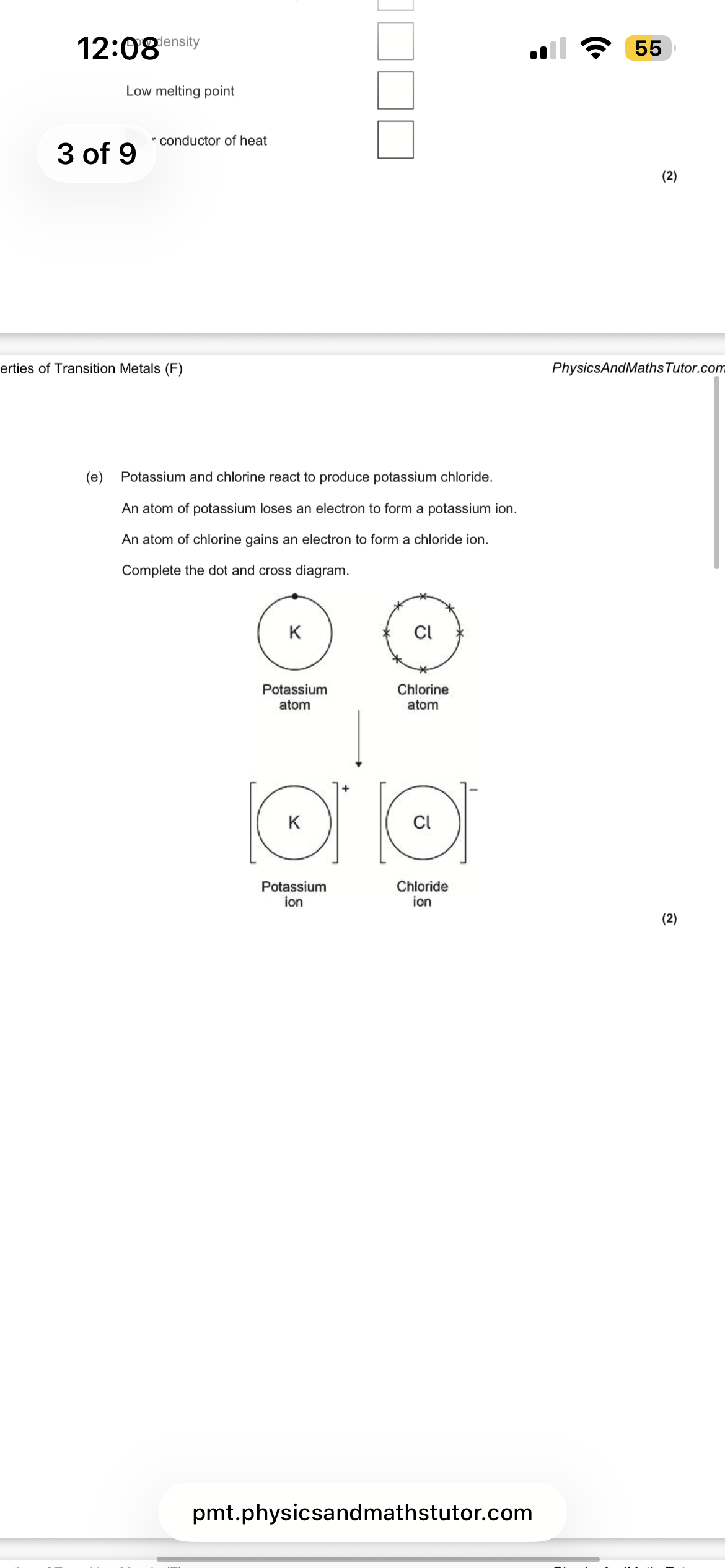
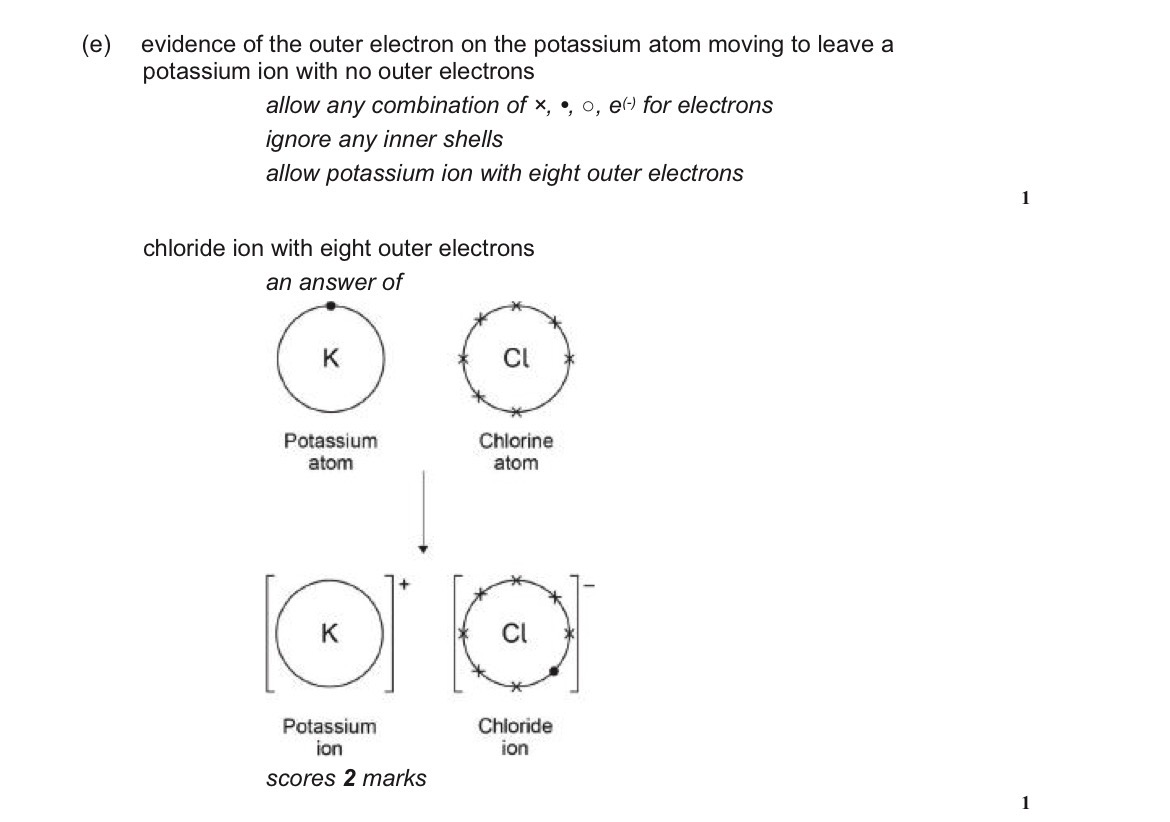
F
1.B
2.A
This question is about metals.
(a) Platinum is used to make jewellery.
Suggest one reason why platinum is used to make jewellery. F
any one from:
• unreactive
allow does not react with air / water / skin
allow does not tarnish
• appearance
allow aesthetic reasons
• easily shaped
allow malleable
allow easily moulded
ignore references to cost
ignore references to hardness / strength
ignore references to melting / boiling point
Give two observations that could be seen when sodium is added to water. F
any two from:
• bubbles
• moves
• floats
• melts
allow forms a ball
• disappears
allow catches fire
(c) Copper is a transition element.
Sodium is a Group 1 element.
What are two differences between copper and sodium? (chemistry only) F
copper is harder
1
copper is less reactive
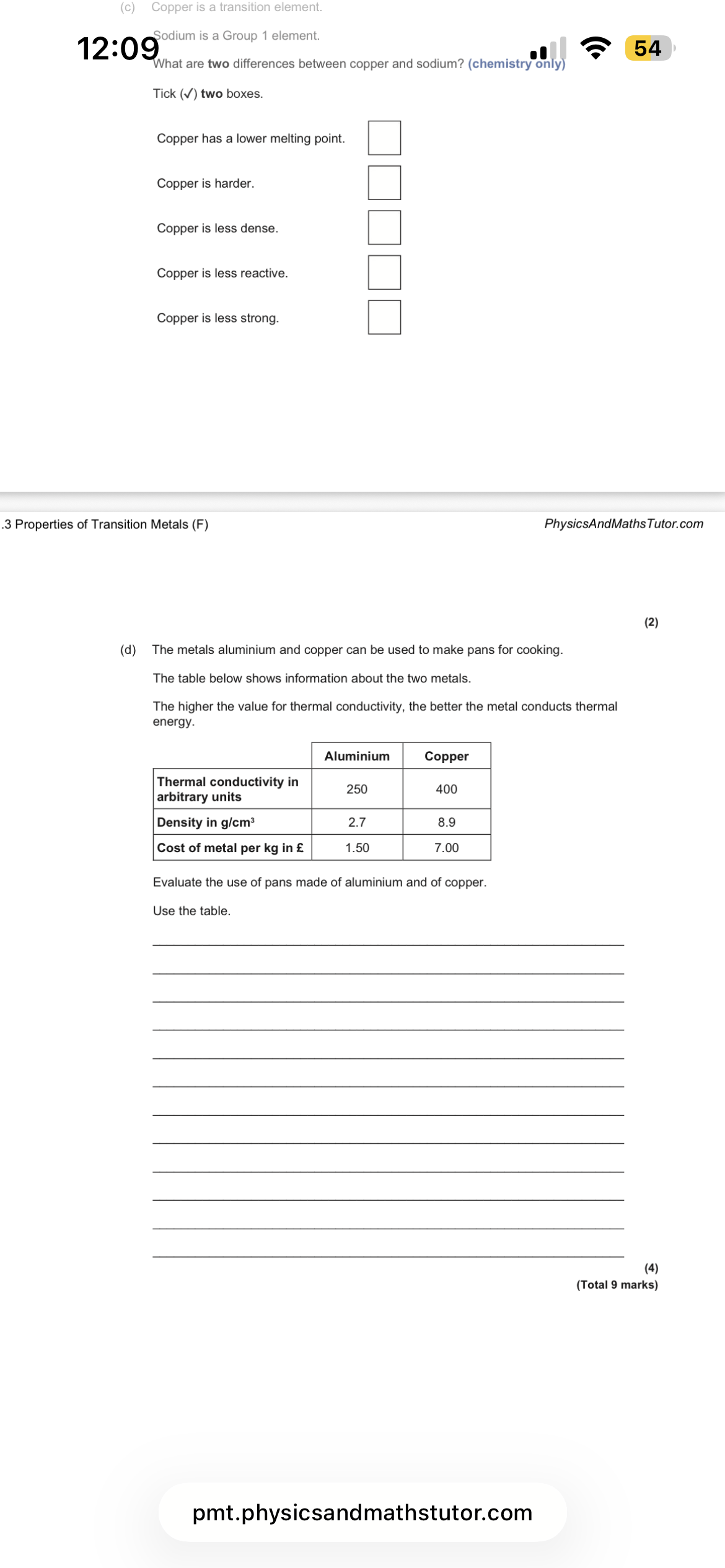
The metals aluminium and copper can be used to make pans for cooking.
The table below shows information about the two metals.
The higher the value for thermal conductivity, the better the metal conducts thermal
energy.
copper is the better conductor
• so heats food more quickly
• copper has the higher density
• so the pan is heavier
• copper costs more per kilogram
• so the pan is more expensive to buy
• simple judgement
Give two differences between the physical properties of the elements in Group 1
and those of the transition elements. (chemistry only) F
(Group 1 elements)
• have lower melting / boiling points
• have lower densities
• are less strong
• are softer
allow (Group 1 elements are) more malleable / ductile
allow (Group 1 elements) are not useful as catalysts
ignore transition elements form coloured compounds
ignore transition elements form ions with different charges
ignore references to chemical properties
allow converse statements for transition elements
Aluminium is a metal.
Describe how metals conduct electricity.
Answer in terms of electrons.
delocalised electrons
allow free electrons
1
(the electrons) carry (electrical) charge
ignore current / electricity for charge
1
(the electrons move) through the metal / aluminium / structure
Name the type of bonding in compounds formed between metals and non-metals.
ionic
Magnesium oxide is a compound formed from the metal magnesium and the
non-metal oxygen.
Describe what happens when a magnesium atom reacts with an oxygen atom.
You should refer to electrons in your answer. F
magnesium (atom) loses electrons
1
oxygen (atom) gains electrons
1
two electrons (are transferred)
1
magnesium ions and oxide ions are formed
This question is about elements, compounds and mixtures.
(a) Substance A contains only one type of atom.
Substance A does not conduct electricity.
Which type of substance is A?