Lab 9
 Call Kai
 Learn
Learn Practice Test
 Spaced Repetition
 Match
Match Flashcards
 Knowt Play
1/52

There's no tags or description
Looks like no tags are added yet.
Name | Mastery | Learn | Test | Matching | Spaced | Call with Kai | Chat |
|---|
No analytics yet
Send a link to your students to track their progress
53 Terms
What does the zone of inhibition represent?
The area surrounding a disk where bacteria do not grow due to an antibacterial substance.
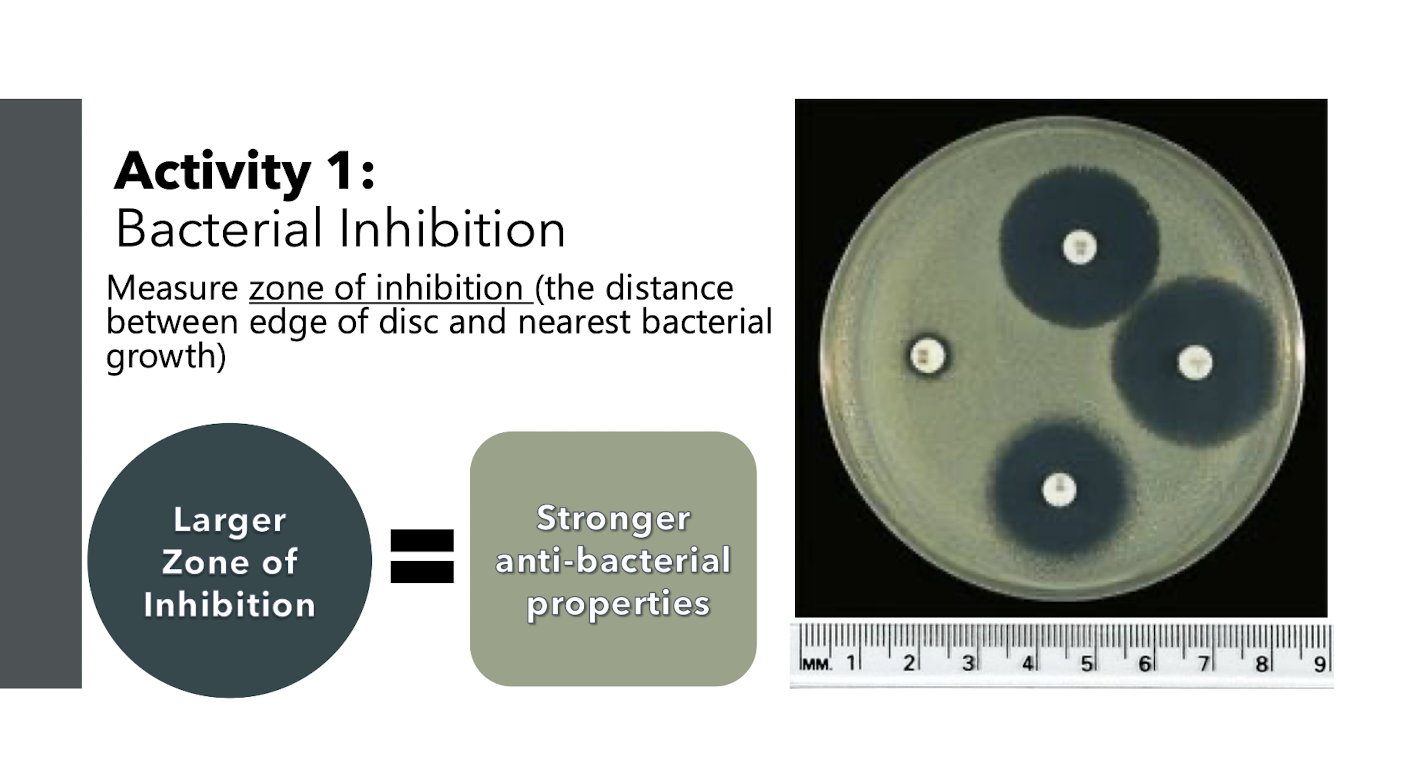
How is the zone of inhibition measured?
Measure the distance (radius) from the edge of the paper disk to the nearest bacterial growth.
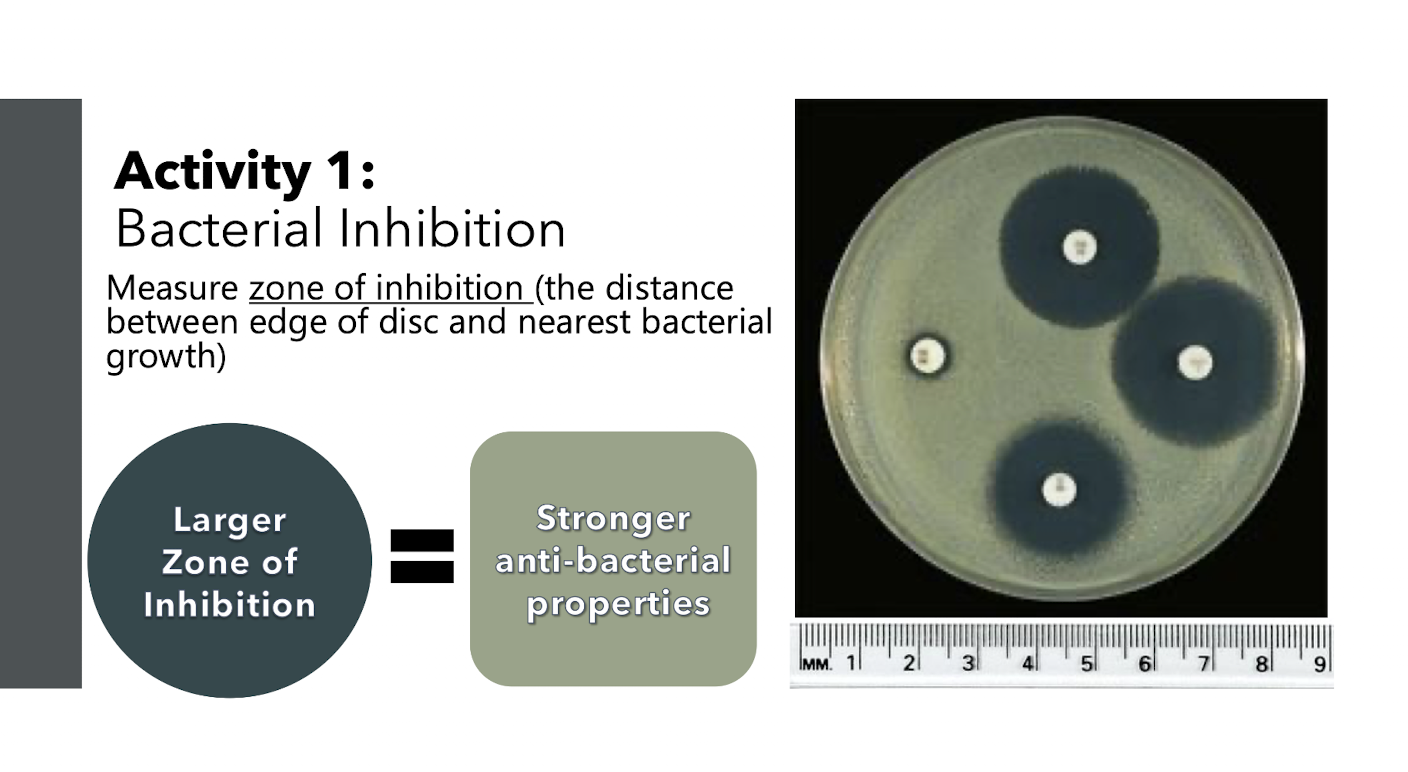
What does a larger zone of inhibition indicate?
Stronger antibacterial properties.
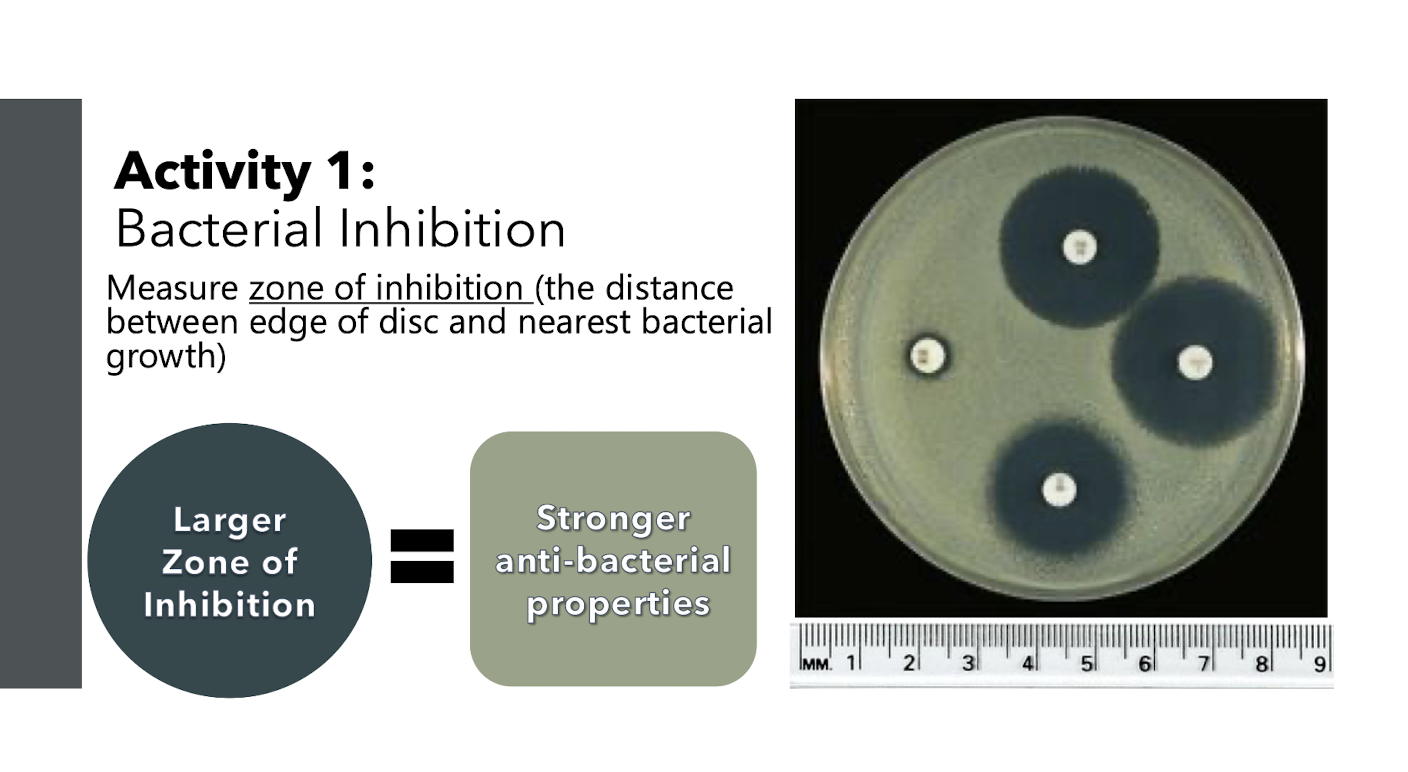
Which human secretion was expected to produce the largest zone of inhibition?
Tears
Why are tears expected to have strong antibacterial properties?
Tears contain lysozyme, an enzyme that breaks down bacterial cell walls.
Which human secretion was expected to have no zone of inhibition?
Saliva
there may even be bacterial growth on the paper disk.
Why might saliva show no inhibition or bacterial growth?
Saliva naturally contains many bacteria from the mouth, which can grow on the agar and outweigh its antimicrobial effects.
saliva has enzymes that encourage sugar breakdown & happy bacteria
Which human secretion was expected to produce a small zone of inhibition?
Sweat
Why does saliva have a small zone of inhibition?
sweat typically has salt in it & that can inhibit bacterial growth
Where is bone marrow located?
Inside many bones, especially flat bones and the ends of long bones.
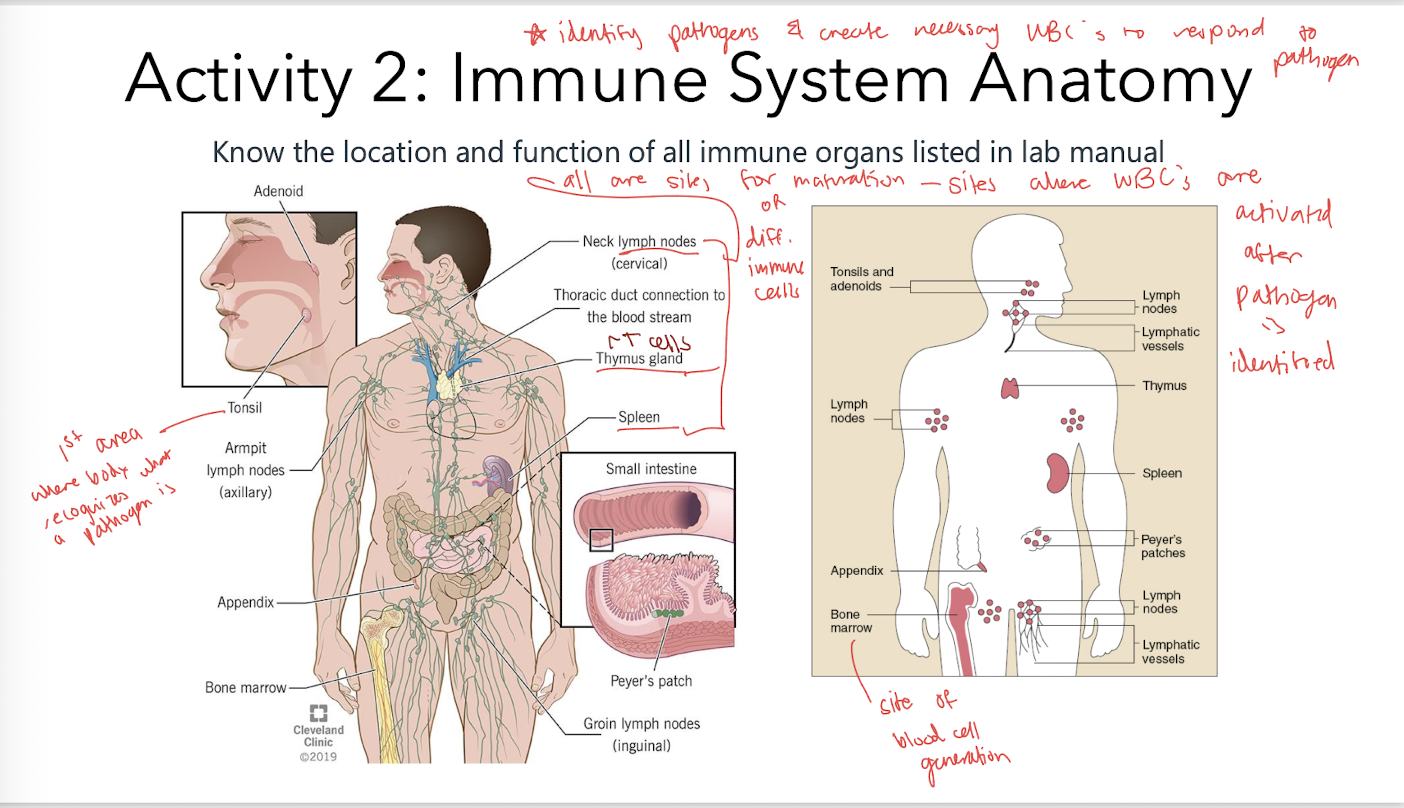
What is the function of bone marrow?
Site of hematopoiesis (blood cell production); produces all blood cells, including leukocytes.
What are leukocytes?
White blood cells that defend the body against pathogens.
Where is the thymus located?
Superior to the heart, behind the sternum.
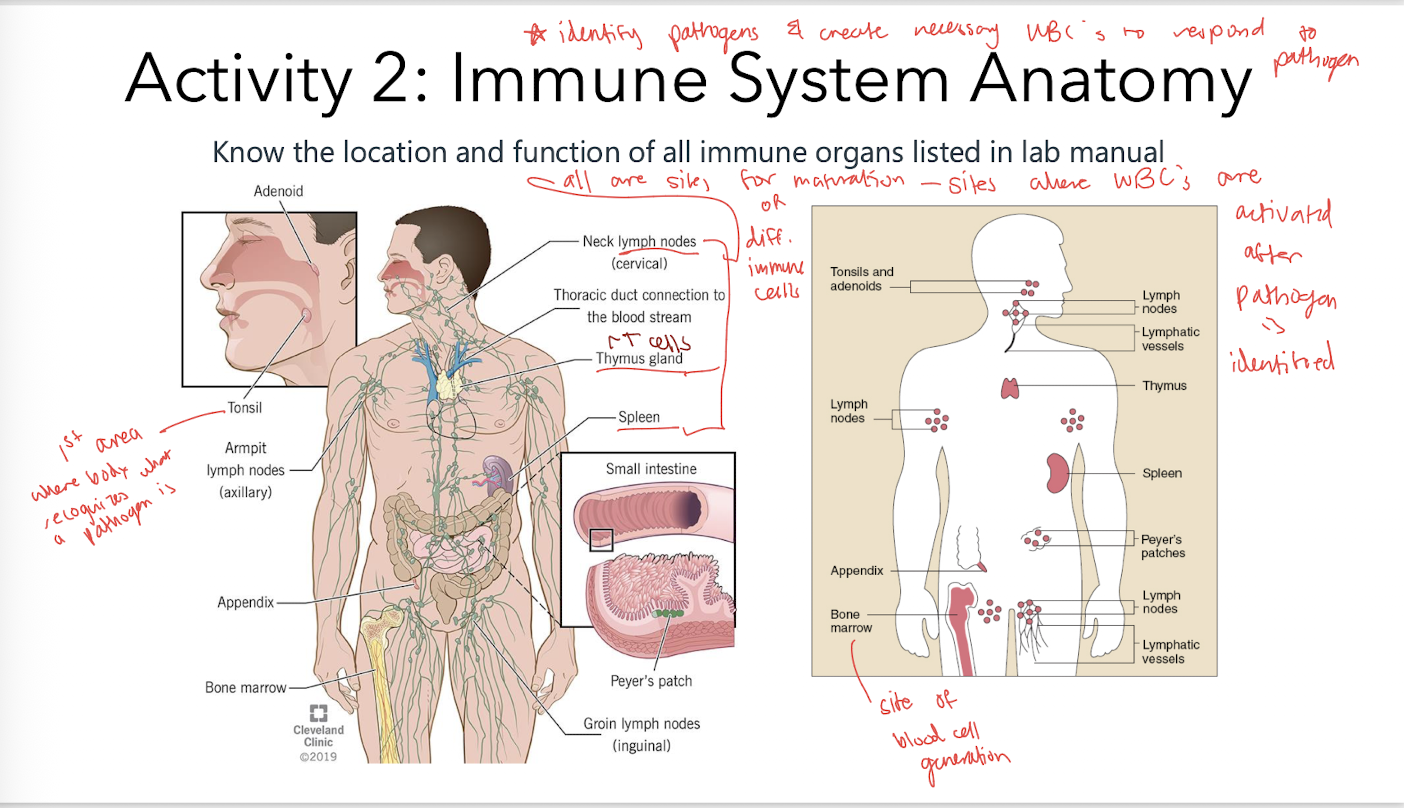
What is the function of the thymus?
Site where T lymphocytes mature.
Where are lymph nodes located?
Along lymphatic vessels throughout the body.
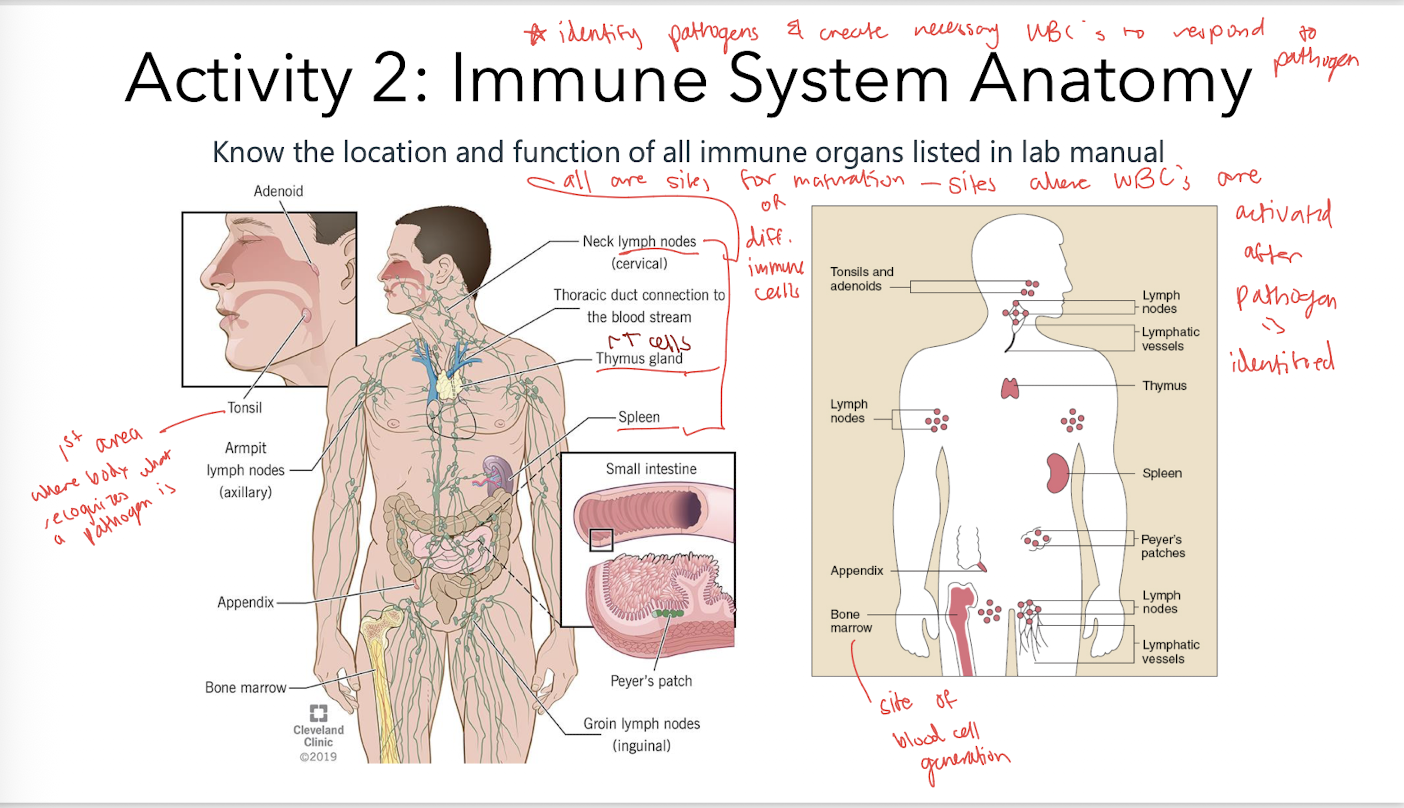
What is the function of lymph nodes?
Filter lymph and provide a site where immune cells encounter pathogens and become activated.
Where is the spleen located?
Upper left abdomen, near the stomach.
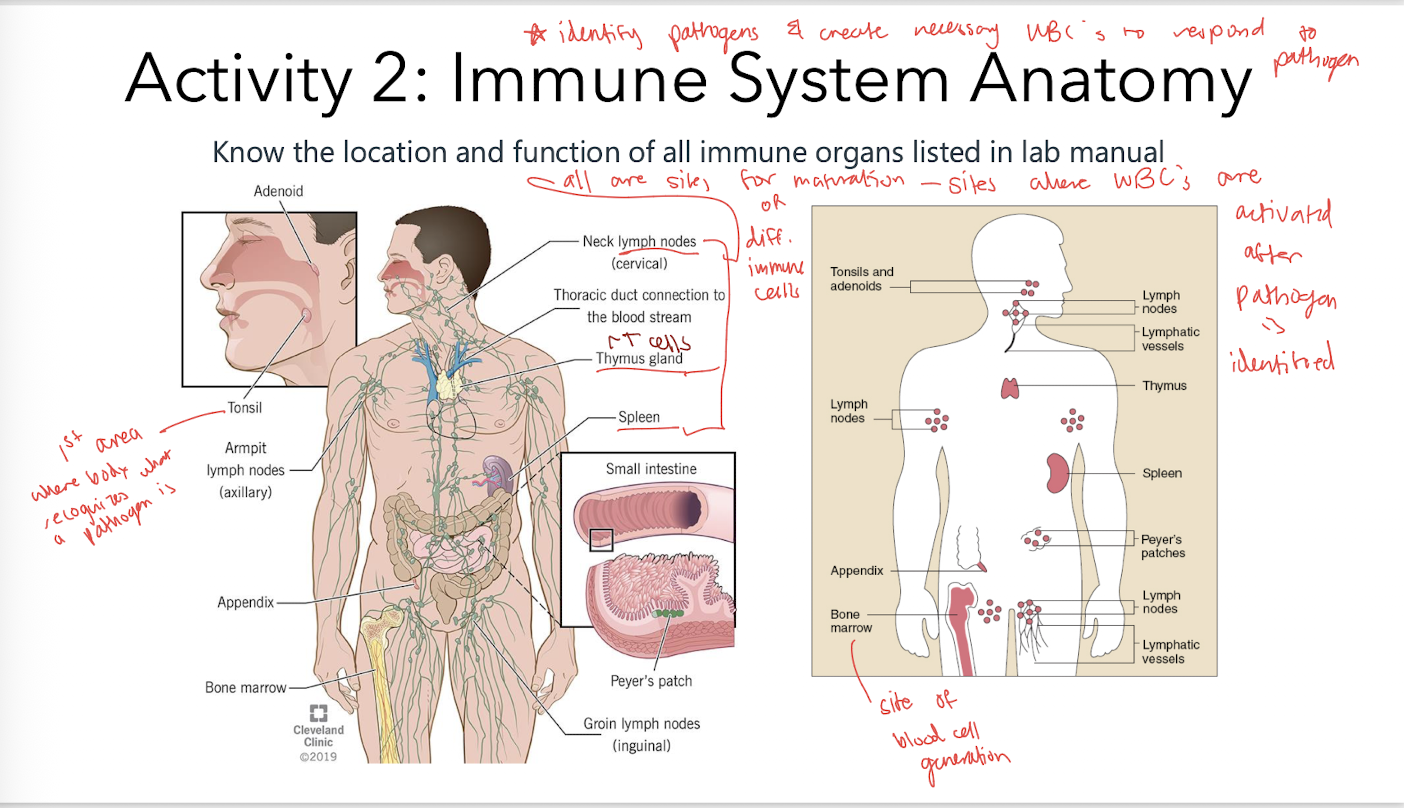
What is the function of the spleen?
Filters blood, removes old red blood cells, stores immune cells, and initiates immune responses to blood-borne pathogens.
Where are the tonsils located?
Back of the throat (pharynx).
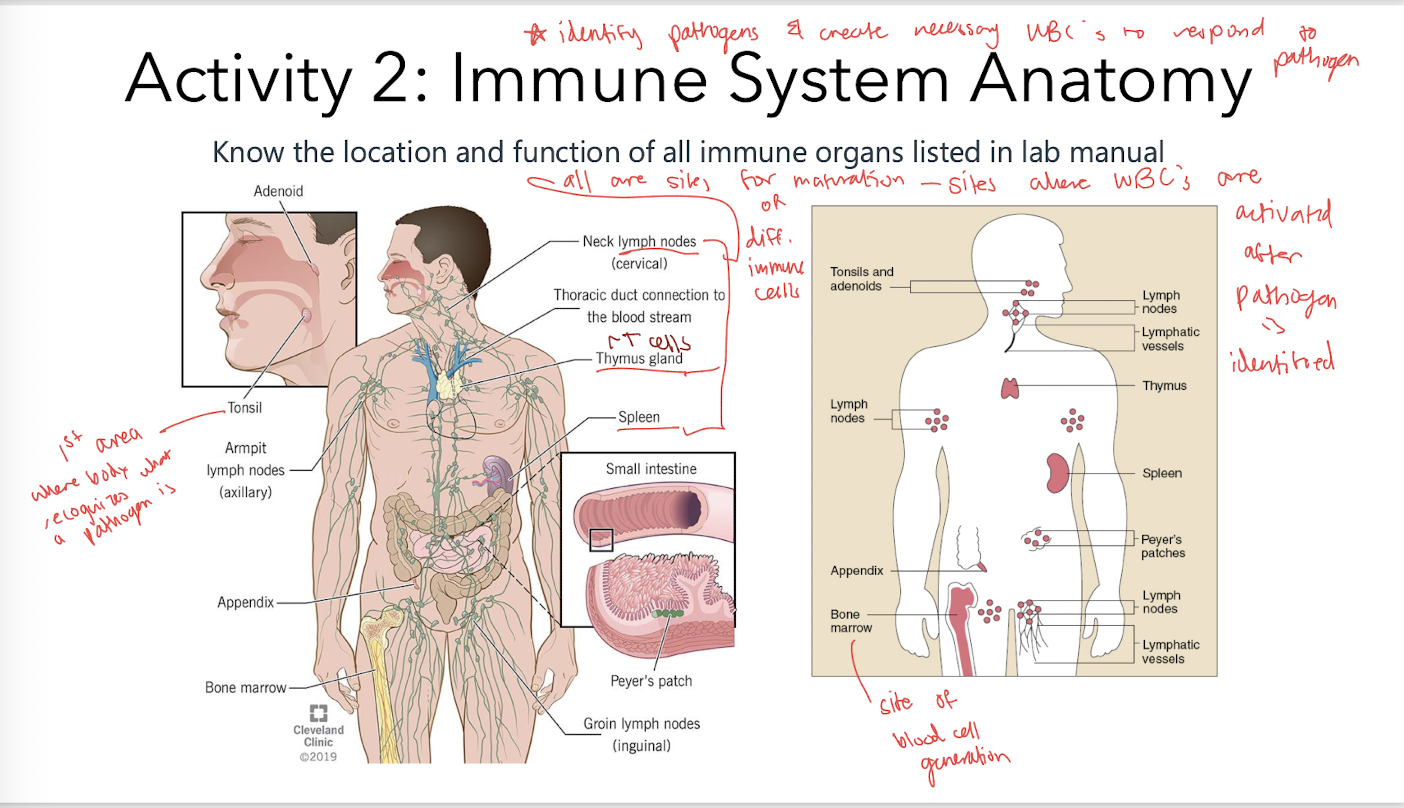
What is the function of the tonsils?
Trap pathogens entering through the mouth or nose and initiate immune responses.
How do you identify erythrocytes?
Small, pink, biconcave discs with no nucleus.
What is the function of erythrocytes?
Transport oxygen and carbon dioxide.
How do you identify platelets?
Tiny cell fragments much smaller than red blood cells.
What is the function of platelets?
Blood clotting.
How do you identify neutrophils?
Multi-lobed (3–5 lobes) nucleus with pale cytoplasm containing fine granules.
What is the function of neutrophils?
Phagocytose bacteria; first responders during bacterial infection.
How do you identify lymphocytes?
Large round nucleus occupying most of the cell with a thin rim of cytoplasm.
What is the function of lymphocytes?
Adaptive immunity (B cells produce antibodies; T cells coordinate or kill infected cells).
How do you identify monocytes?
Largest white blood cell with a kidney- or horseshoe-shaped nucleus
What is the function of monocytes?
Differentiate into macrophages and phagocytose pathogens and debris.
How do you identify eosinophils?
Bilobed nucleus with large red/orange granules.
What is the function of eosinophils?
Defend against parasitic worms and participate in allergic reactions.
How do you identify basophils?
Dark blue-purple granules often obscure the nucleus.
What is the function of basophils?
Release histamine and heparin during inflammation and allergic responses.
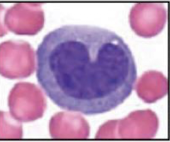
What is this an image of?
Monocyte
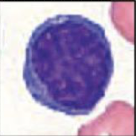
What is this an image of?
Lymphocyte
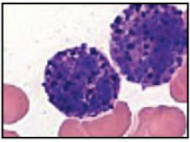
What is this an image of?
Basophil
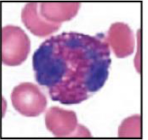
What is this an image of?
Eosinophil
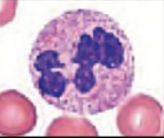
What is this an image of?
neutrophil
Pick the lymphocyte image.
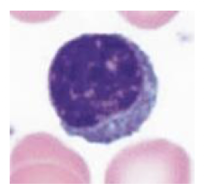
Pick the monocyte image.
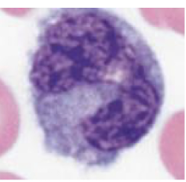
Pick the eosinophil image.
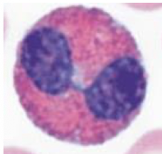
Pick the basophil image.
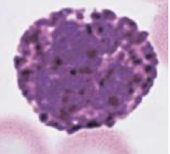
Pick the neutrophil image
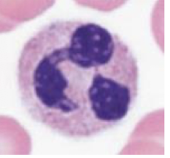
Which blood cells are primarily involved in the adaptive immune response?
Lymphocytes (B cells and T cells).
Which blood cells are primarily involved in the innate immune response?
Neutrophils, monocytes (macrophages), eosinophils, and basophils.
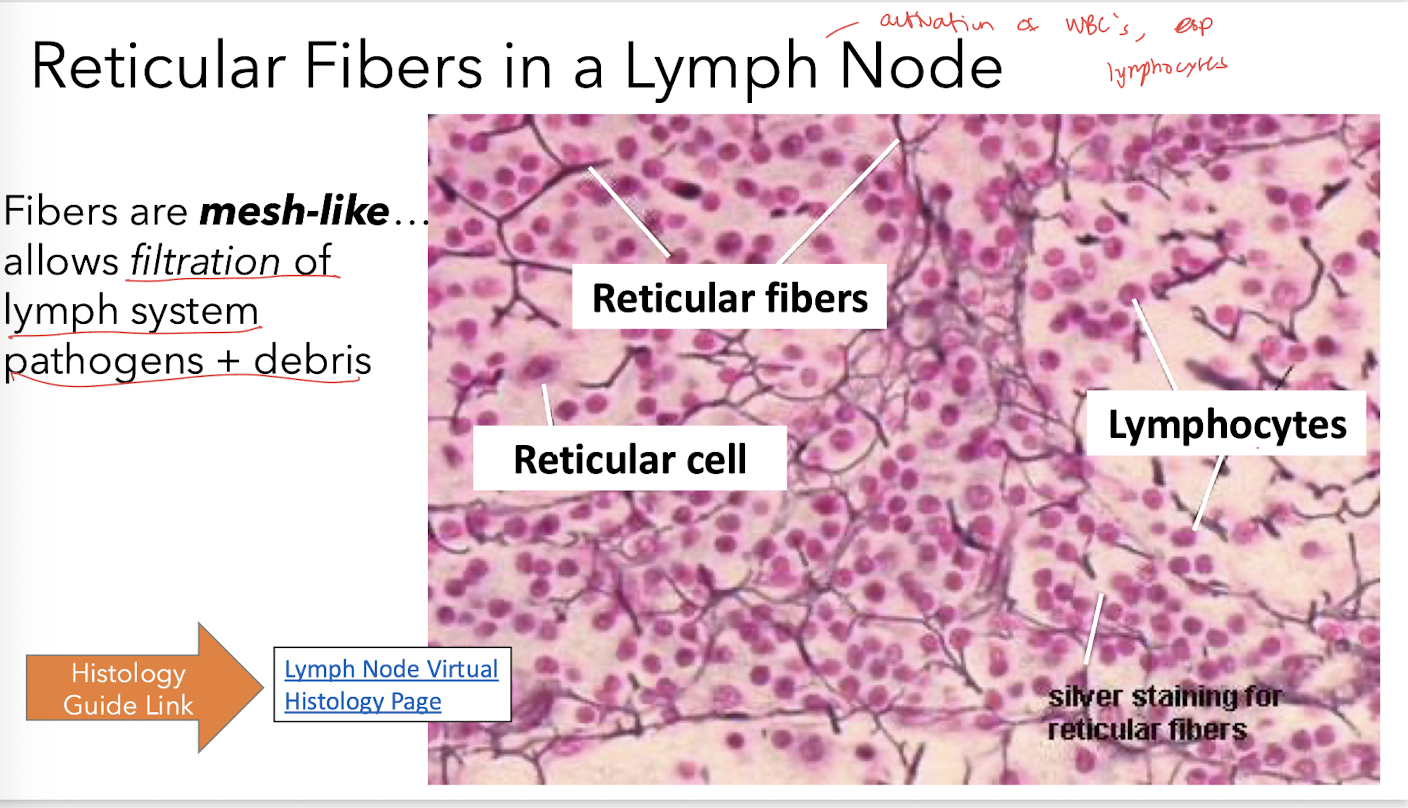
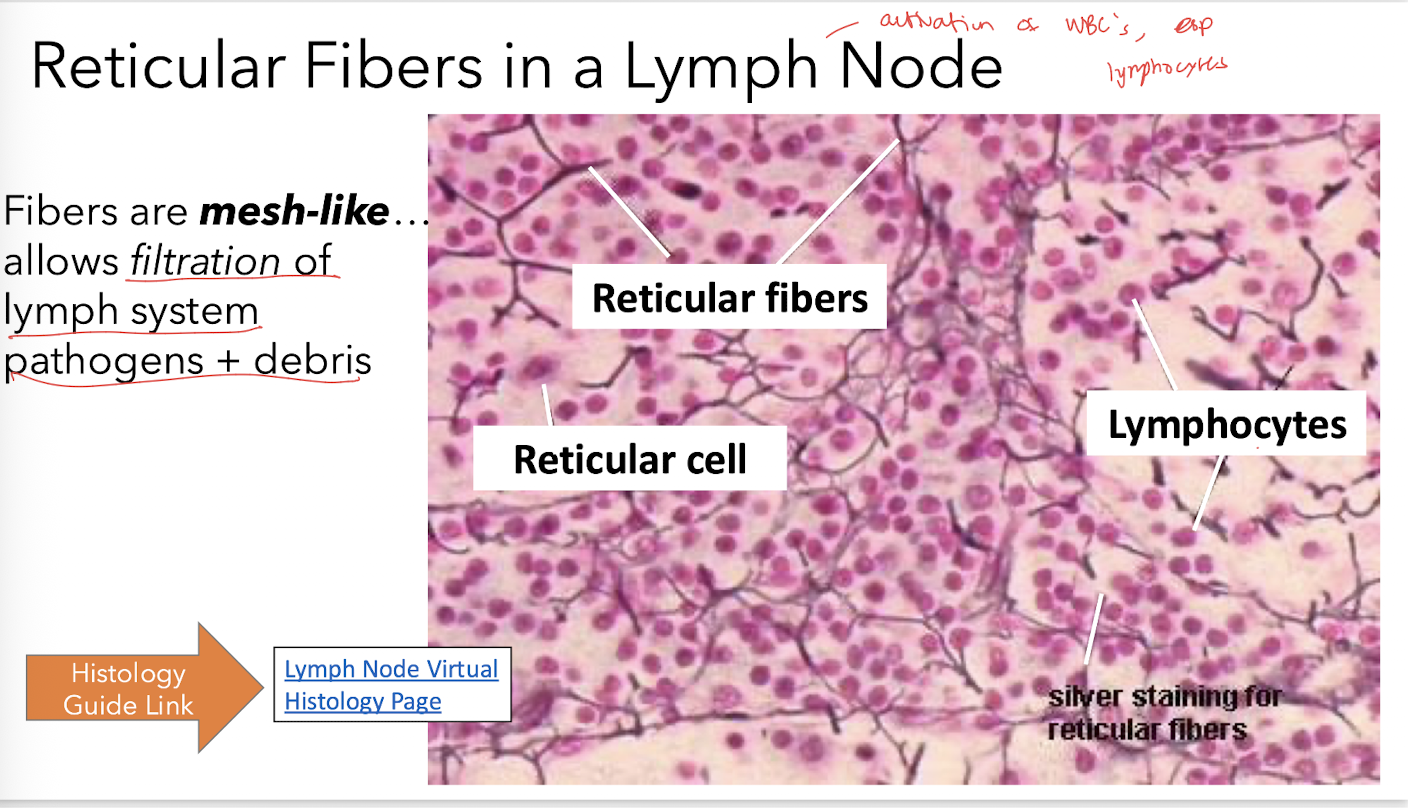
What are reticular fibers?
Mesh-like connective tissue fibers found in lymph nodes.
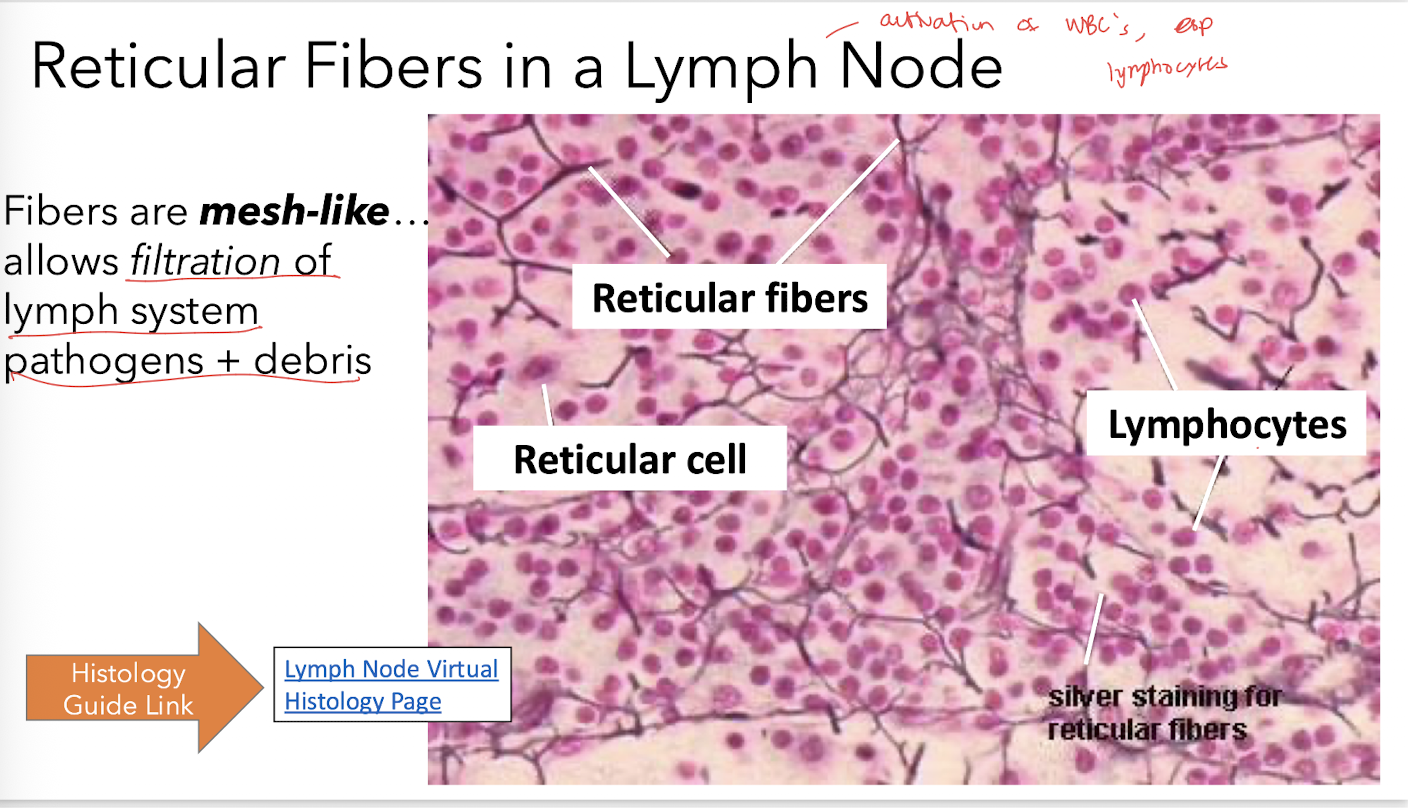
What is the function of reticular fibers?
Form a supportive mesh that filters lymph, trapping pathogens and debris while supporting immune cells.
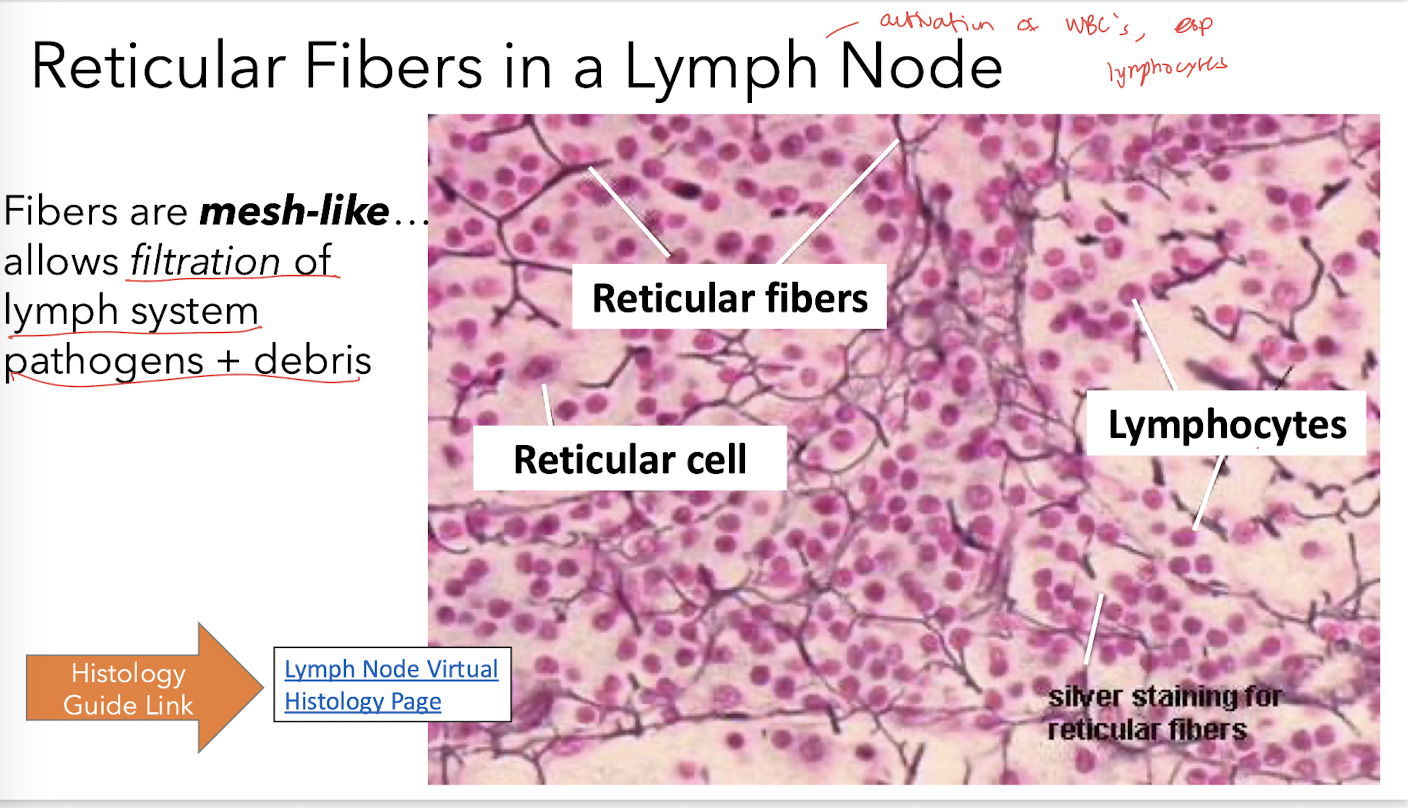
Why are reticular fibers well suited for lymph node function?
Their mesh-like arrangement slows lymph flow, allowing pathogens to be trapped and increasing contact with lymphocytes and macrophages.
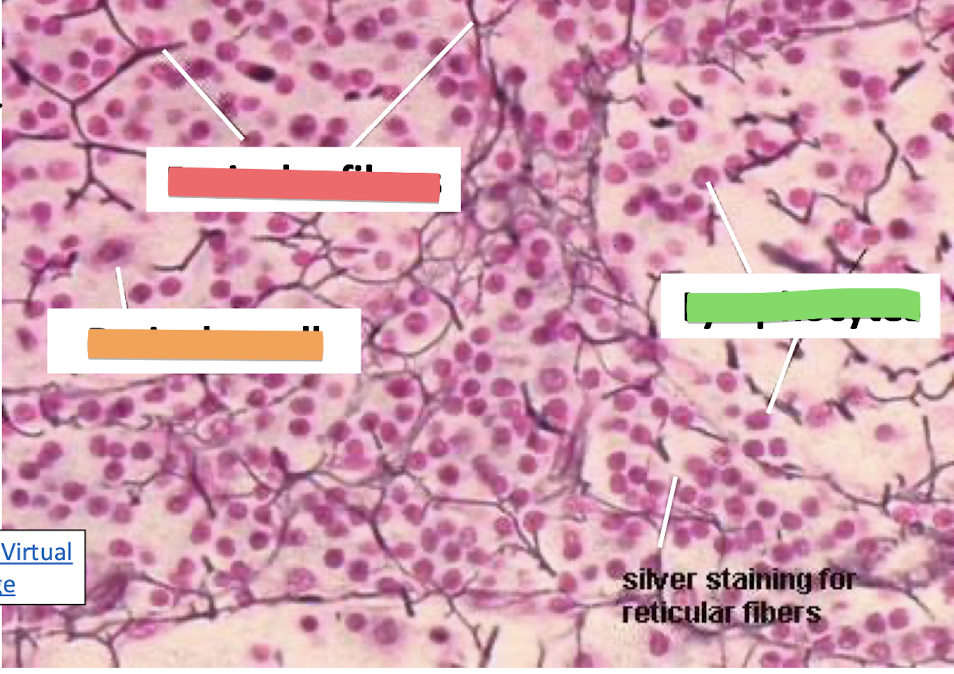
What is the red tape?
Reticular Fibers
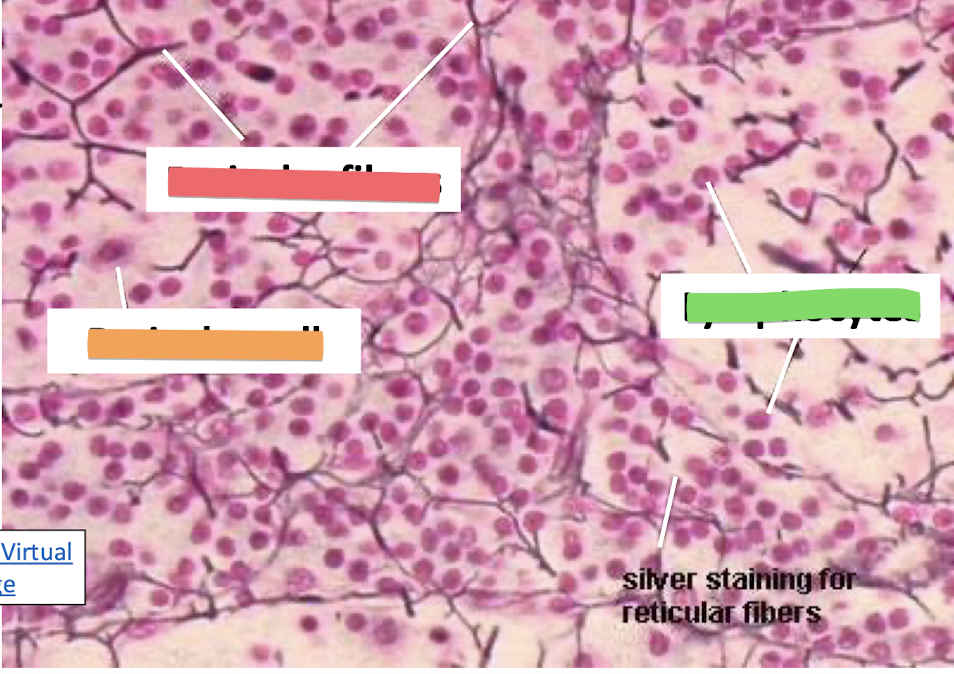
What is the orange tape?
Reticular cell
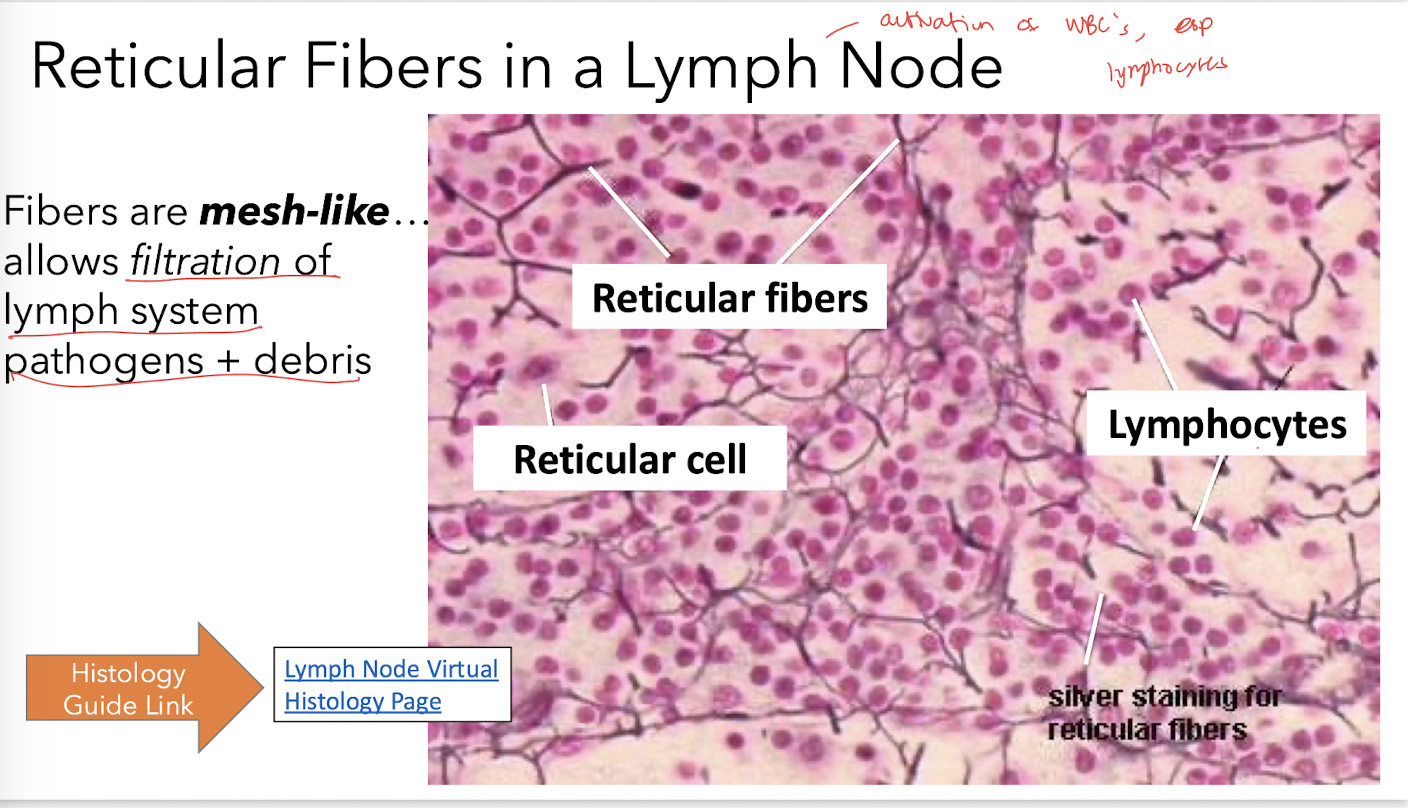
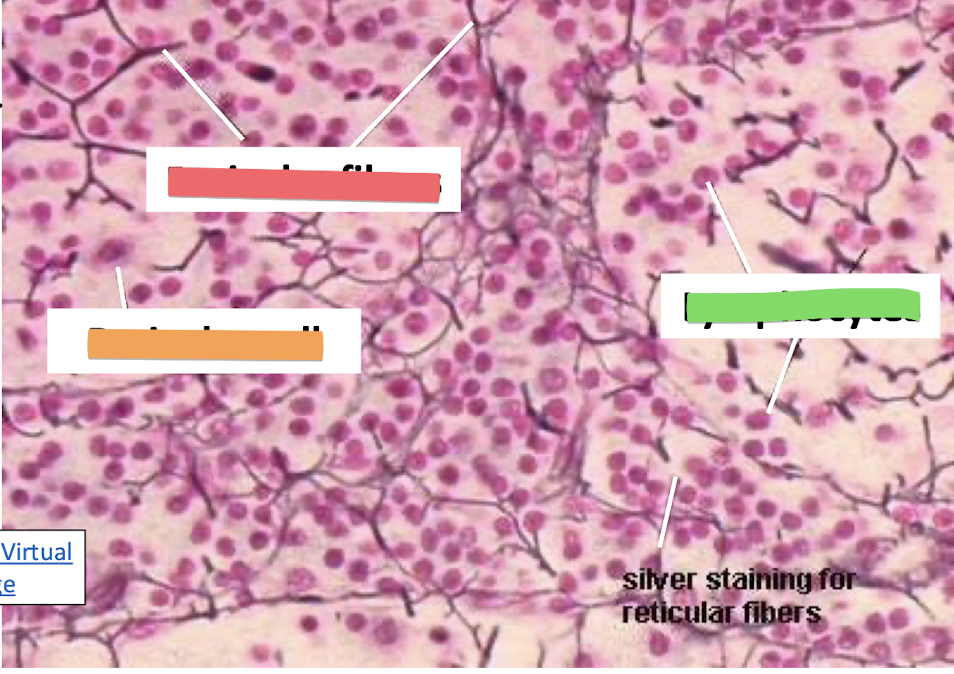
What is the green tape?
Lymphocytes
Which leukocytes are considered phagocytes?
Neutrophils, monocytes, and macrophages (derived from monocytes).