Cardiac Disorders
 Call Kai
 Learn
Learn Practice Test
 Spaced Repetition
 Match
Match Flashcards
 Knowt Play
1/69

There's no tags or description
Looks like no tags are added yet.
Name | Mastery | Learn | Test | Matching | Spaced | Call with Kai | Chat |
|---|
No analytics yet
Send a link to your students to track their progress
70 Terms
Atherosclerosis
Plaque builds up in arteries and reduces bloodflow to the heart

Untreated atherosclerosis leads to
ischemia and MI

Leading cause of coronary artery disease?
atherosclerosis
Atherosclerosis risk factors
HTN, diabetes, smoking, obesity

good cholesterol
HDL (happy)

bad cholesterol
LDL

Metabolic syndrome
Cluster of conditions increasing heart disease risk

Lipid lowering meds
statins,
Statins MOA
lower cholesterol by blocking liver enzyme that makes cholesterol

Statins harm what organ?
Liver

What labs do you check before starting statins?
Liver enzymes AST/ALT
Statins cause what adverse reaction?
rhabdomylosis (skeletal muscle breakdown)

Nicotinic Acids (Niacin)
s/e: increase blood sugar
do not take if severe gout or peptic ulcers

Fibric acids
given with statins, GI upset and rnhabdomylosis

Bile Acid Sequestrants (Cholestyramine)
adjunct therapy, GI upset

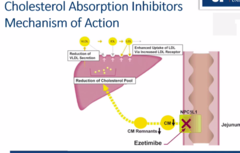
Cholesterol Absorption Inhibitors (Ezetimibe)
Less GI upset than fibrates, OTC fish oil capsules
Angina Pectoris
recurrent chest pain caused by heart ischemia
no permanent damage or cell death
caused by atherosclerosis of major artery

Stable angina
caused by exertion or stress
Relieved by rest and/or NTG

Unstable angina
occurs at rest
NOT relieved with NTG (nitroglycerin), can lead to MI
AKA acute coronary syndrome (ACS)

Variant angina
coronary arteries spasm, occurs at rest
triggered by smoking

Angina interventions
stop activity and rest, nitroglycerin tablet under tongue every 5mins up to 3 doses
Call 911 if not relieved

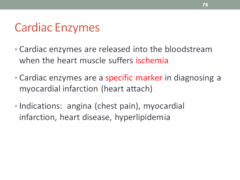
What are cardiac enzymes?
chemicals released into the blood when heart is damaged
blood is measured to look for MI
3 Major Cardiac enzymes?
Troponin, CK-MB, Myoglobin

Troponin
most specific protein for MI, remains elevated 7-14 days
Normal = < 0.5 ng/mL
Positive = > 2.3 ng/mL
Most important cardiac biomarker
Highly specific for cardiac muscle injury
Begins rising: 3-6 hours
Peaks: 12-24 hours
Remains elevated: 7-14 days
Used with ECG and clinical symptoms to diagnose MI
Key point: Troponin = most specific + stays elevated longest
Elevated troponin indicates myocardial injury, not automatically an MI.

CK-MB
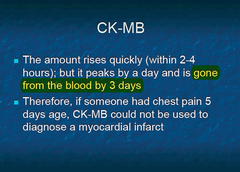
less specific than troponin; returns to normal in 48-72 hours; useful for reinfarction
Because it returns to normal quickly, a second rise can indicate reinfarction.
Myoglobin
rises first but is not cardiac-specific; returns to normal in about 24 hours

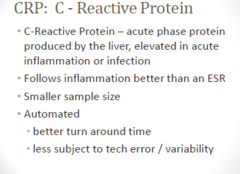
C Reactive Protein
marker for inflammation
elevated in ACS
normal
Angina Meds
- Nitrates
- Beta blockers (-olol)
- Ca channel blockers (-pine)

How to take SL nitroglycerin?
place under tongue every 5 mins, 3 doses
GO TO ER after 3rd dose

NEVER take nitroglycerin with __, leads to shock
Sildenafil (Viagra)

Beta blockers
lower HR and BP by blocking beta receptors

Ca channel blockers

Antiplatelets MOA (aspirin, clopidogrel)
stops platelets from sticking together and prevents blood clots

Anticoags MOA (heparin IV)
target clotting factors and stops blood clot from progressing

MI Tx: MONA stands for
Morphine
Oxygen
Nitroglycerin
Aspirin

Myocardial Infarction (MI)
coronary artery is blocked, causing ischemia and death of heart muscle tissue

Types of MI
STEMI and NSTEMI

ST-elevation MI (STEMI) - EMERGENCY
complete blockage of coronary artery, rapid MI death
ST elevation on EKG

Non-ST Elevation MI (NSTEMI)
partial blockage of coronary artery

Most common cause of MI?
Rupture of atherosclerotic plaque causes blood clot to block artery

MI Meds
MONA, beta blockers, ACE inhibitors, Anticoags, Thrombolytics
What is the IMMEDIATE intervention for a STEMI?
Cath lab within 1 hour for immediate PCI
(balloon inflates artery and stent is placed to keep it open)

Thrombolytics (-plase)
Clot busters dissolve clot, give within 30 mins
Alteplase (tPA)

MAJOR risk of thrombolytics?
Intracranial hemorrhage and severe bleeding

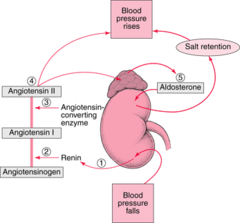
ACE inhibitors MOA (-pril)
Blocks conversion of angiotensin I to angiotensin II
ex. Lisinopril

ACE inhibitors: 3 side effects?
A: Angioedema
C: Cough
E: Elevated K+

ARBS (angiotensin II receptor blockers) (-sartan)
Blocks action of angiotensin II at receptor
ex. Losartan
PTCA Post Op Care
Same as cardiac cath
Vitals q30mins for 2 hours
LAY FLAT in bed with affected leg straight
Monitor site for hematoma

CABG (Coronary Artery Bypass Graft)
Vein taken out of body and used to bypass blocked artery

CABG Pre Op Care
inform about chest tubes, ventilator, foley cath
CABG post op care
Heart → rhythm + cardiac output
Chest tubes → bleeding/drainage
Lungs → incentive spirometry + coughing/deep breathing
Incisions → infection
Kidneys → urine output + renal function
Recovery → pain control
Chest tube >200ml indicates __ ?
Internal bleeding, check for fluid overload from HF

What does Hemodynamic Monitoring measure?
Pressure, flow, and oxygenation within the heart

Types of hemodynamic monitors
- PAC (Pulm artery catheter)
- CVP (Central venous pressure cath)
- Arterial BP monitor

PAC (Swan-Ganz catheter) measures __
Left sided heart pressure (PAWP)

Normal PAWP (Pulmonary Artery Wedge Pressure)?
6-12 mmHg

CVP (central venous pressure) measures __
Right-sided heart pressure and fluid volume

Normal CVP
2-6 mmHg

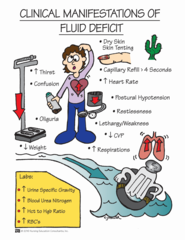
High CVP indicates __?
fluid overload

Low CVP indicates __?
not enough fluid
Arterial blood pressure monitoring care
immobilize body part, ROM, assess site every 1 hour

Heart Failure
Heart is unable to pump blood efficiently

HF Diagnostic Labs
Ejection fraction
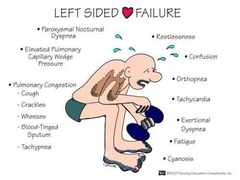
Left sided HF (LUNGS)
pulmonary edema, dyspnea, crackles
Right sided HF (BODY)
peripheral edema, JVD, weight gain

LifeVest
Wearable cardioverter defibrillator for high risk heart failure patients

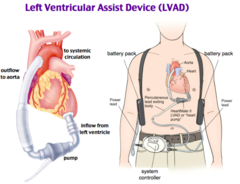
Ventricular Assist Devices
Manually pumps the ventricle while waiting for heart transplant
Intra-Aortic Balloon Pump (IABP)
balloon inserted into aorta that inflates and deflates with the cardiac cycle in order to decrease afterload and increase coronary perfusion.

Cardiogenic Shock
Shock caused by inadequate function of the heart, or pump failure.

Cardiogenic Shock signs
Low BP, rapid weak pulse, rapid respirations, cool/pale skin, decreased urinary output
