Lipids
 Call Kai
 Learn
Learn Practice Test
 Spaced Repetition
 Match
Match Flashcards
 Knowt Play
1/20

There's no tags or description
Looks like no tags are added yet.
Name | Mastery | Learn | Test | Matching | Spaced | Call with Kai | Chat |
|---|
No analytics yet
Send a link to your students to track their progress
21 Terms
What are lipids?
Lipids are the one class of large biological molecules that does not include true polymers, and they are generally not big enough to be considered macromolecules
fats (triglycerides)
phospholipids - structural
glycolipids
sterols - structural
—> other lipids play crucial roles as enzyme cofactors, electron carriers, light absorbing pigments, hydrophobic anchors for proteins, emulsifying agents in teh digestive tract, hormones, and intracellular messengers
Properties: 1. insoluble in water 2. high solubility in non-polar solvents
Classifying lipids
Simple lipids (FA + alcohol — triglycerides)
Compound lipids (FA + alcohol + other groups - phospholipids)
Lipid derivatives
Simple lipids
consist of an alcohol (usually glycerol) linked to one or more fatty acids via an ester linkage
1 glycerol + 3FA = triglyceride
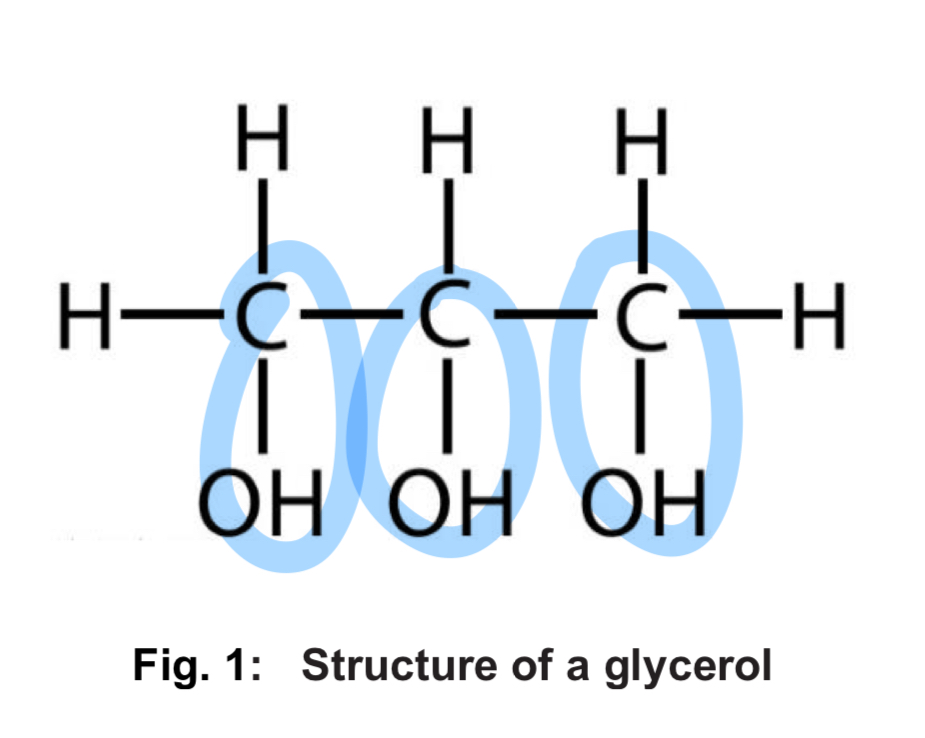
Triglycerides - structural components - Glycerol
Glycerol
C3H8O3
(S) three-carbon alcohol, with each carbon bearing a hydroxyl -OH group
(P) soluble in water cos of polar -OH group
Triglycerides - structural components - fatty acids
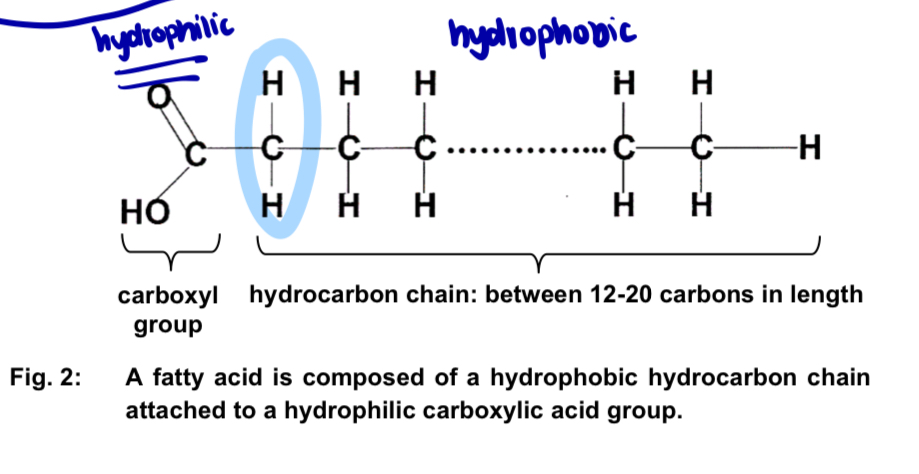
Fatty acids
(S) carboxylic acids composed of an acidic carboxyl (COOH) functional group at one end and an attached hydrocarbon chain
COOH + hydrocarbon chain = FA
possess long carbon skeletons (btw 12-20 carbons) with each carbon joined to a hydrogen atom
(P) abundance of non-polar C-H bonds = hydrophobic
How do fatty acids differ
Length of hydrocarbon chain
Number and locations of double bonds (C=C) along their carbon skeletons
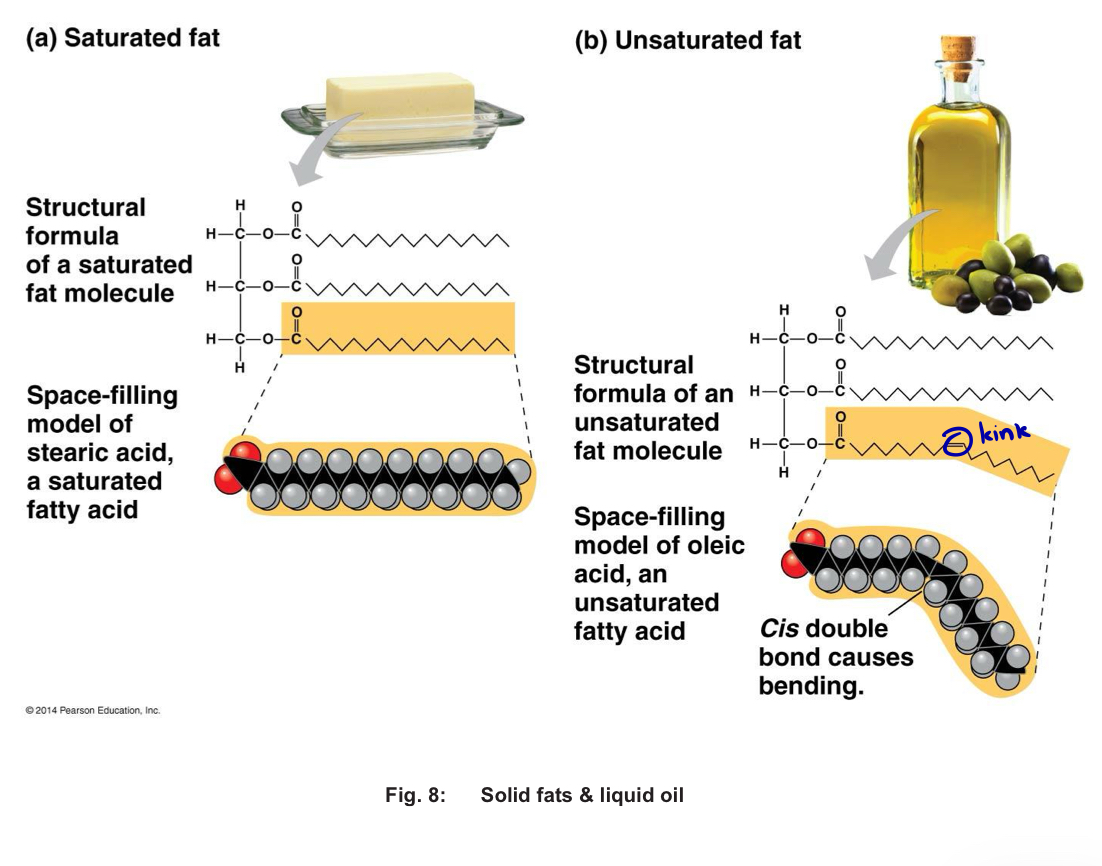
a saturated fatty acid has no double bonds (every carbon atom is maximally bonded to hydrogen atoms)
unsaturated fatty acid has 1 or more double C=C bonds - FA will have a kink in its tail wherever a double bond occurs
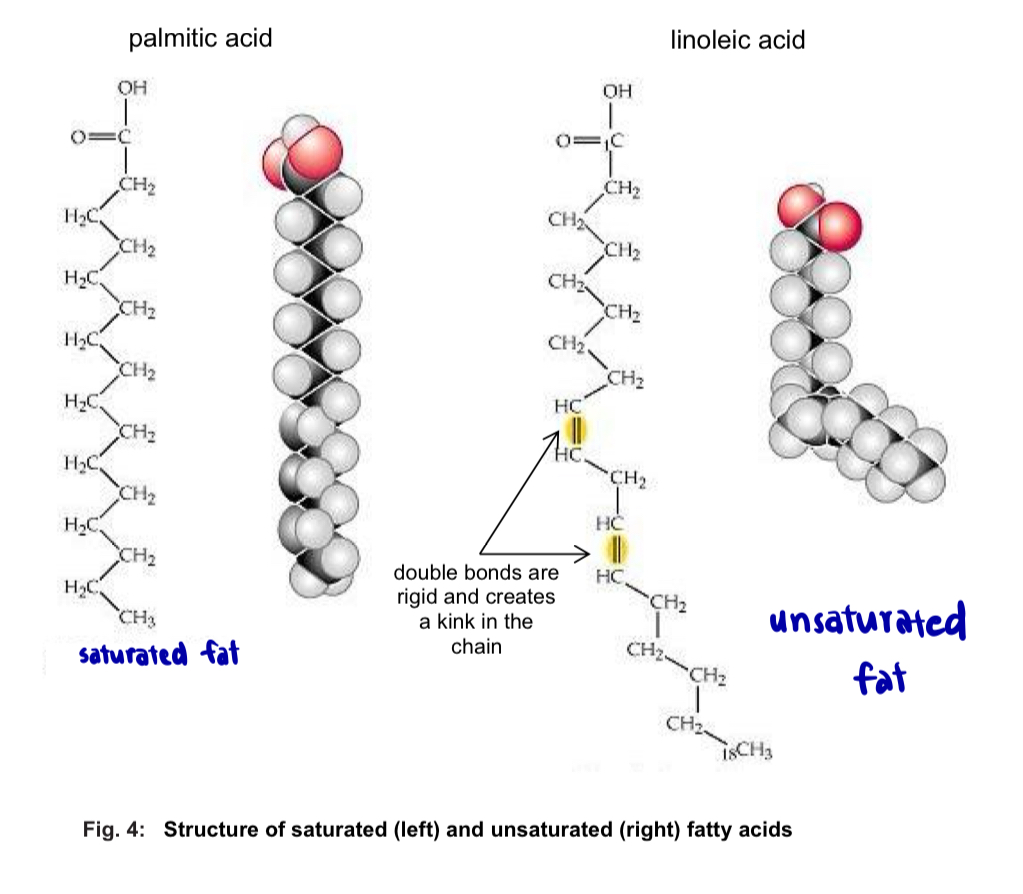
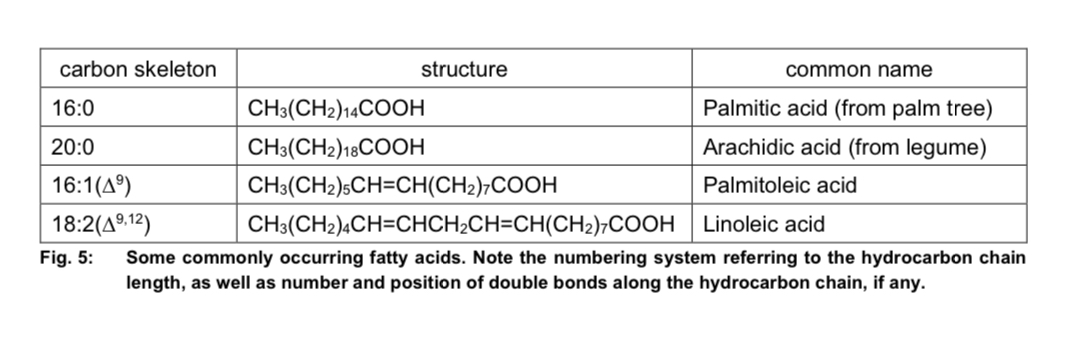
table showing commonly occurring fatty acids
Formation of glycerides
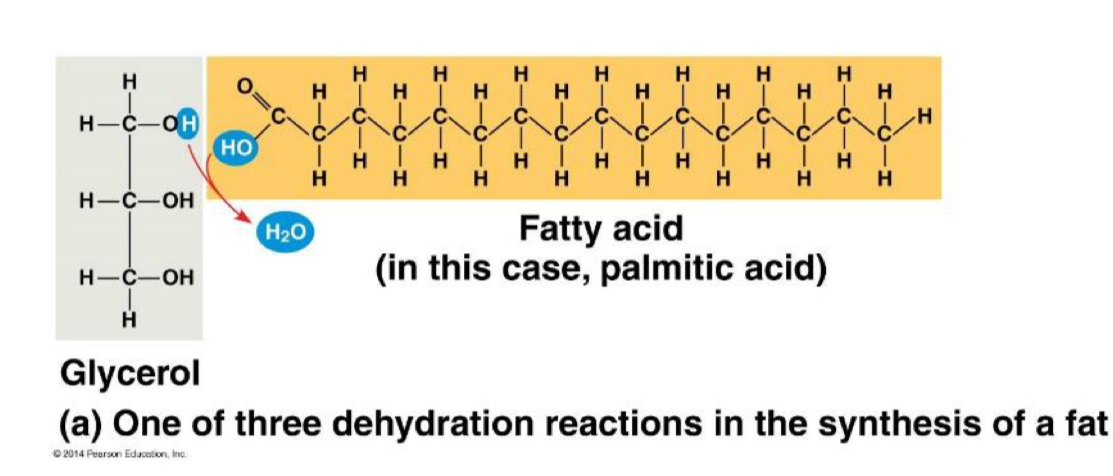
A glycerine is formed when glycerol is linked to one or more fatty acids, resulting in the formation of an ester linkage
ester linkage between a hydroxyl (OH) group of glycerol and carboxyl group (COOH) group of a fatty acid —> condensation rxn, where one water molecule of water is lost
each glycerol has 3 -OH groups, has the potential to form up to 3 ester linkages
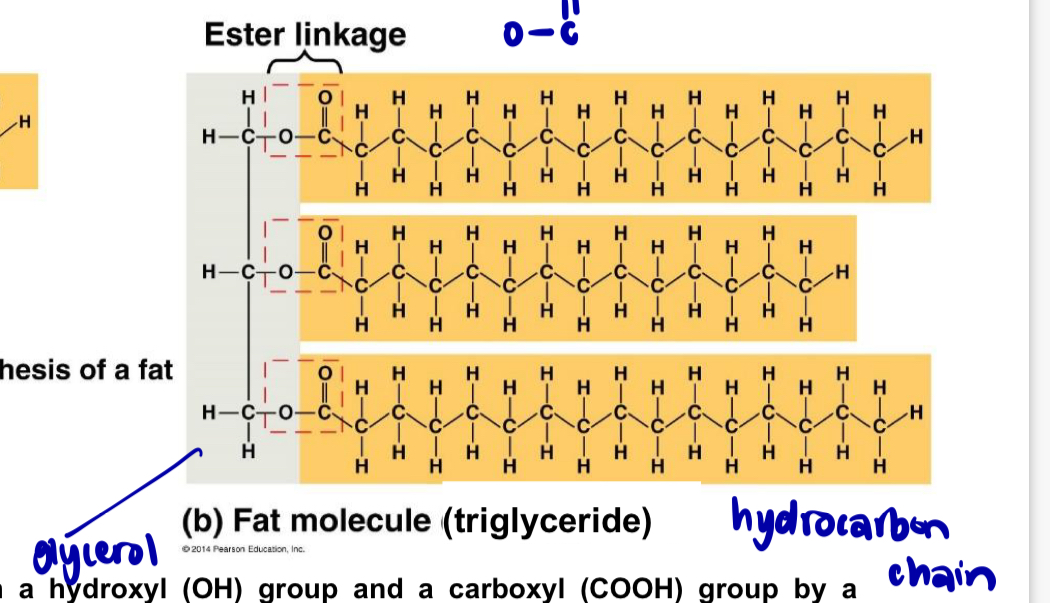
glycerol link to ? fatty acids
glycerol + 1FA = monoglyceride
glycerol + 2FAs = diglyceride
glycerol + 3FAs - triglyceride = fats
Properties of triglyceride
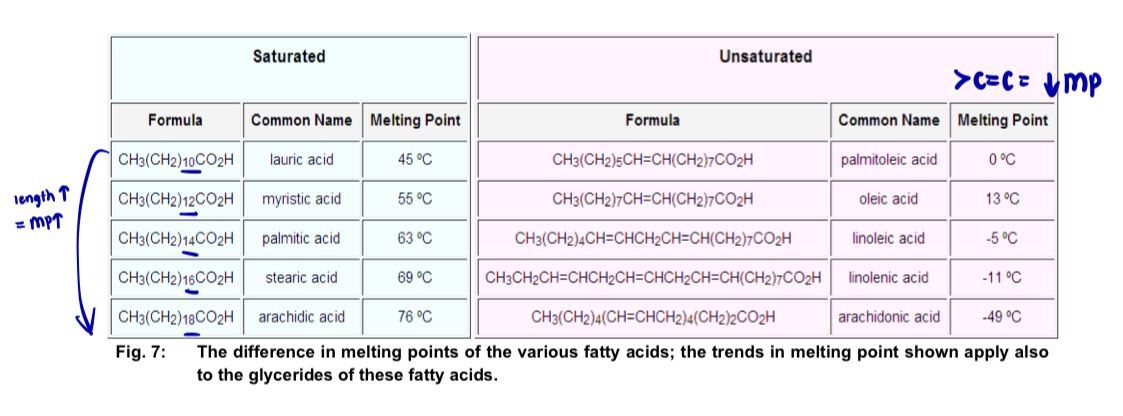
as hydrocarbon chain length increases, MP of fats increases
longer hydrocarbon chains, more extensive hydrophobic interactions btw the chains = higher MP (more thermal energy is required to break the bonds)
hydrophobic interaction is a weak bond that exists btw hydrophobic molecules. force of attraction btw non-polar molecules
as degree of unsaturation of fatty acids tails increases, (more C=C), MP of fats decreases
kinks where the double bonds are located prevent the molecules from packing closely
when fatty acid tails are less closely packed, hydrophobic interactions are less extensive
less thermal energy is required to break enough of these interaction to liquefy the triglycerides
saturated and unsaturated fats
made from saturated fatty acids —> saturated fat
most animal fats e.g. butter, are saturated and are solid at room temperature (H/C packed)
unsaturated fats
e.g. fats of plants and fishes, cooking oil, fish liver oil
consist of one or more types of unsaturated fa, usually liquid at room temp, referred to as oils
Structure of triglycerides & Function
Triglycerides have a higher proportion of C and H atoms compared to O atoms
Triglycerides contain a greater number of carbon atoms per unit mass than carbohydrates
—> Function: Upon oxidation, triglycerides release a large amount of energy
— one gram of fat releases more than twice as much energy (38kJ/g) as a gram of carbohydrates (17kJ/g)
— triglycerides are more efficient energy stores than carbs
Triglycerides are highly reduced molecules (contain two-fold more hydrogen atoms per unit mass than carbs)
—> Function: release more water when they are oxidised during cellular respiration compared to carbohydrates
— water, known as metabolic water, is extremely impt to desert animals like camels
The C-H bonds are non-polar and hence triglycerides are hydrophobic
no associated water molecules are stored along with triglycerides and thus triglycerides have no extra weight due to water of hydration
—> Function: triglycerides do not affect water potential of cells when stored in large amounts
— absence of water of hydration in triglycerides fulfils the requirement of an animal’s body mass to be kept to a minimum to facilitate locomotion
— good thermal insulator and hence a layer of fat beneath the skin (subcutaneous fat) insulates the body
— this layer is especially thick in whales, seals and most other marine animals living in cold climates —> blubber
hydrocarbon tails are non-polar
weak hydrophobic interaction occur between triglyceride molecules
—> Function: Triglycerides can slide under pressure
— adipose tissue (contains fats) around vital organs helps to cushion and protect the vital organs against physical impacts
triglycerides have a lower molecular weight than water per unit volume
less dense than water, fats aid buoyancy of aquatic animals (e.g. blubber in whales)
Compound lipids
compound lipids are esters of fatty acids and an alcohol plus other chemical groups, such as phosphate and sugar
e.g. phospholipids and glycolipids
Phospholipids
most important function of FA in cells is in the construction of cell membranes
phospholipids are major constituents of cell membranes
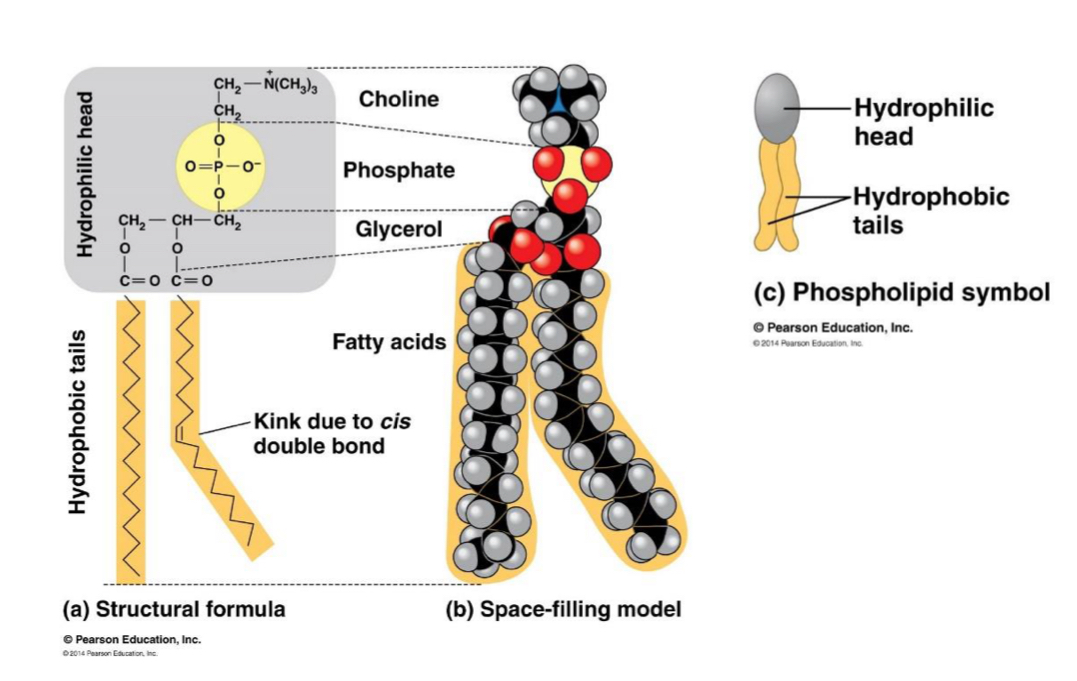
1 glycerol + 2 FA + third OH group of glycerol joined to a negatively-charged phosphate group = phospholipid
additional small molecules, usually charged or polar (e.g. serine, choline and inositol) can be linked to the phosphate group to form a variety of phospholipids
Formation of phospholipids
2 FA linked to glycerol by ester linkage
while phosphate group linked to third OH group of glycerol by a phosphoester linkage
Properties of phospholipids
Phospholipids show ambivalent behaviour towards water (hydrophobic and hydrophilic)
FA hydrocarbon tails are non-polar and hence hydrophobic (but can form bond with hydrophobic molecules or among themselves)
phosphate group and its attachments form polar/charged hydrophilic head that has an affinity for water
molecules such as phospholipids with both hydrophobic and hydrophilic regions are described as amphipathic
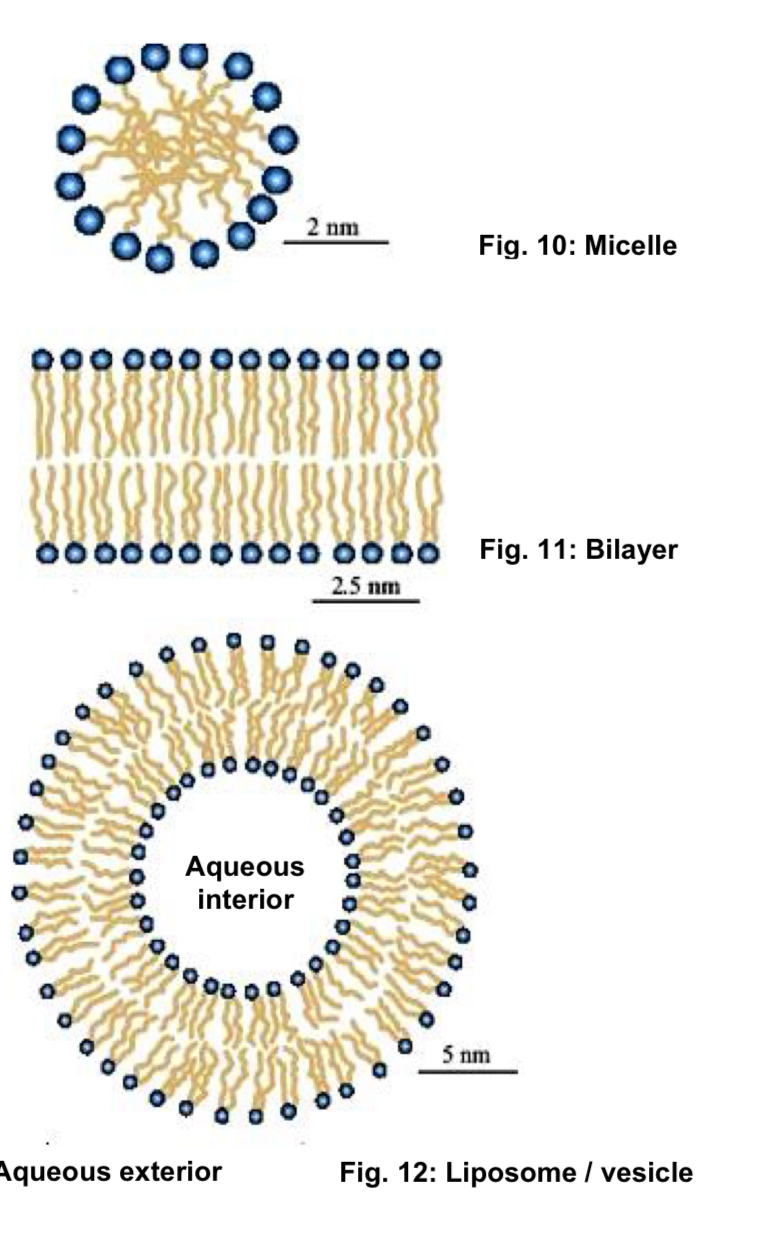
3 types of lipid aggregates can form when amphipathic phospholipids are situated in aqueous environments - serve to shield the hydrophobic tails from water/the aqueous environment
micelle - small, spherical droplet consisting of a phospholipid monolayer, with the phosphate heads on the outside, in contact with the aqueous environment
bilayer - 2 lipid monolayers combine to form a two-dimensional sheet
hydrophilic heads are exposed to the polar exterior while the hydrophobic tails are in contact with those of neighbouring molecules but excluded from water in the non-polar interior of the bilayer
liposome/vesicle - formed when a lipid bilayer folds back on itself to form a hollow sphere
by forming vesicles, bilayer sheets avoid exposing their hydrophobic edge regions, achieving maximal stability in their aqueous environment
enclose aqueous solutions, creating a separate aqueous compartment
Structure and function of phospholipids
Phospholipids are amphipathic molecules each with 2 non-polar, (P) hydrophobic fatty acids tails and a charged (P) hydrophilic phosphate head
—> Function: (bilayer) phospholipids form a selectively permeable cell membrane where hydrophilic heads are exposed to aqueous medium while hydrophobic tails are in contact with those of neighbouring molecules but excluded from aqueous medium in the non-polar interior of the bilayer
= forms effective barrier/boundary between cell and its external environment
—> (liposome/vesicle) phospholipids form liposome/vesicle when a lipid bilayer folds back on itself to form a hollow sphere
— liposomes are used as vesicles for storage and transport of cellular products (e.g. proteins, lipids) as well as for digestion of waste (in vesicles known as lysosomes); liposomes also serve as vesicle for drug delivery in humans
—> (micelle) phospholipids form micelles used for the transport of fats between the gut and the body tissues
— hydrophilic heads of phospholipids are in contact with aqueous environment and hydrocarbon tails are restricted to water-free interior of the micelle
hydrophobic interactions exist btw fatty acid tails
—> Function: integrity of the membrane bilayer/liposomes/vesicles/micelles is maintained due to large number of interactions
— individual hydrophobic interactions are weak, permitting lateral movement of phospholipids, which account for membrane fluidity
most phospholipids contain choline
—> Function: most abundant phospholipids in c.m. contain choline, represent large proportion of the body’s store of choline
— choline is impt for the synthesis of acetylcholine, a neurotransmitter
Compound lipids - Glycolipids
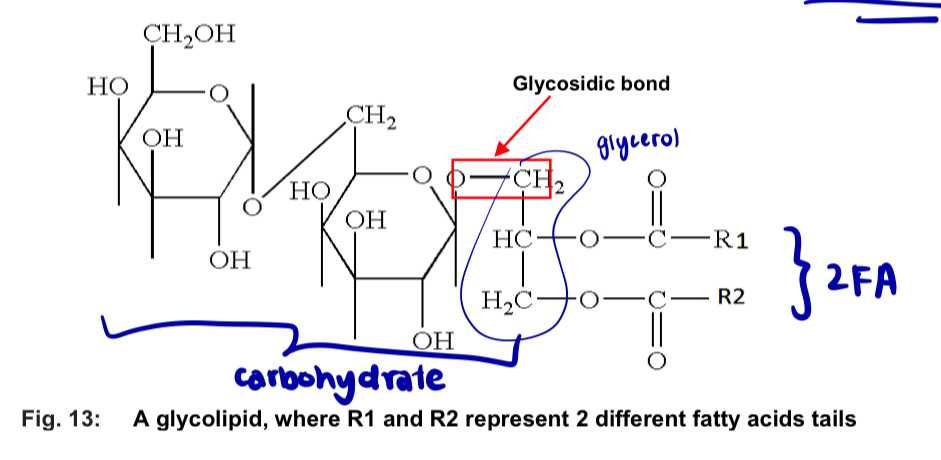
glycolipids are composed of 2 hydrophobic hydrocarbon tails + a polar, short carbohydrate chain (less than 15 sugar residues) with no phosphate
short carbohydrate chain is joined to the glycerol’s -OH group by a glycosidic bond, which is a covalent bond
Structure and function of glycolipids
carbohydrate chain is attached to the glycerol
found at the cell surface membrane facing the exterior environment
serves as a marker that distinguishes one cell from another in cell-cell recognition - cells recognise other cells by binding to these carbohydrate chains
hydrophobic interactions exist between fatty acids tails
hydrophobic interaction btw fatty acids tails serve to anchor the entire glycolipids at the cell surface membrane
Lipid derivatives
e.g. steroid hormones, ketone bodies, fatty alcohols, terpenes and carotenoids
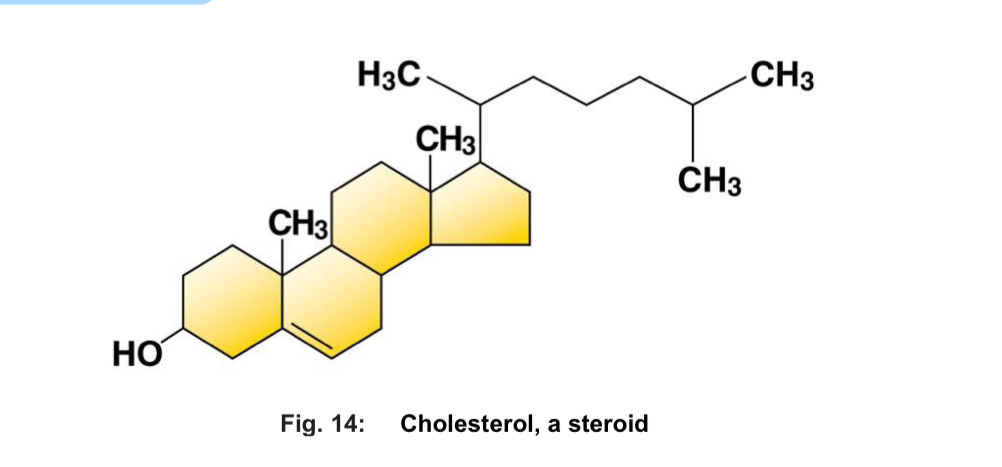
steroid cholesterol***
cholesterol
possesses carbon skeleton made up of 3 fused six-membered and 1 five-membered ring
regulate membrane fluidity
precursor for synthesis of bile acids, steroid hormones (e.g. oestrogen and testosterone) and vitamin D
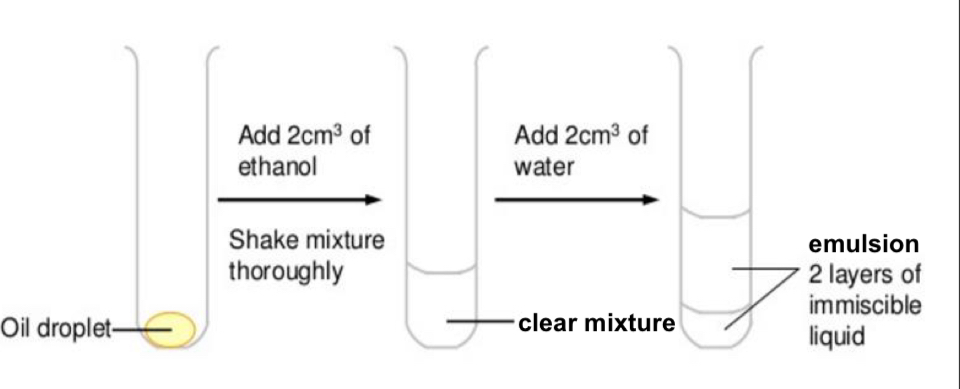
emulsion test
Principle: lipids are soluble in organic solvents such as ethanol, but not in water, with which they form emulsions on vigorous shaking
Method:
add 2cm3 of absolute ethanol to sample and mix well
decant the ethanol into another test tube containing an equal volume of water
if lipid is present, dissolves in ethanol to form a clear solution, which then forms an emulsion with water
if lipid is absent, a clear solution is still formed with ethanol, which remains clear when added to water