plasma membrane
 Call Kai
 Learn
Learn Practice Test
 Spaced Repetition
 Match
Match Flashcards
 Knowt Play
1/34

There's no tags or description
Looks like no tags are added yet.
Name | Mastery | Learn | Test | Matching | Spaced | Call with Kai | Chat |
|---|
No analytics yet
Send a link to your students to track their progress
35 Terms
plasma membrane 3 main componenets
lipids, proteins, carbohydrates
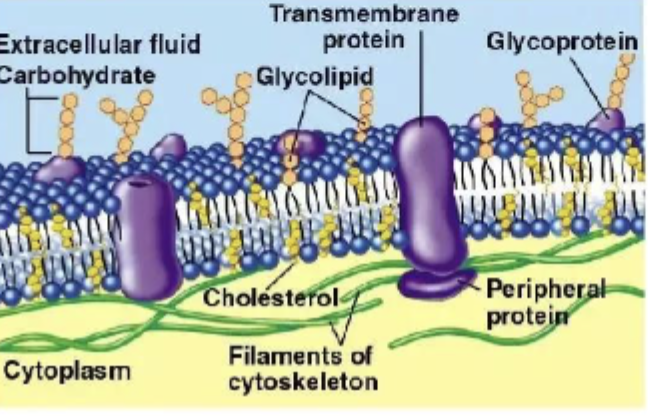
fluid mosaic model
mosaic refers to the phospholipids, proteins, carbohydrate chains, cholesterol in the lipid bilayer
phospholipids
two fatty acids attached to glycerol, third hydroxyl group of the glycerol is attached to a phosphate group, form bilayer
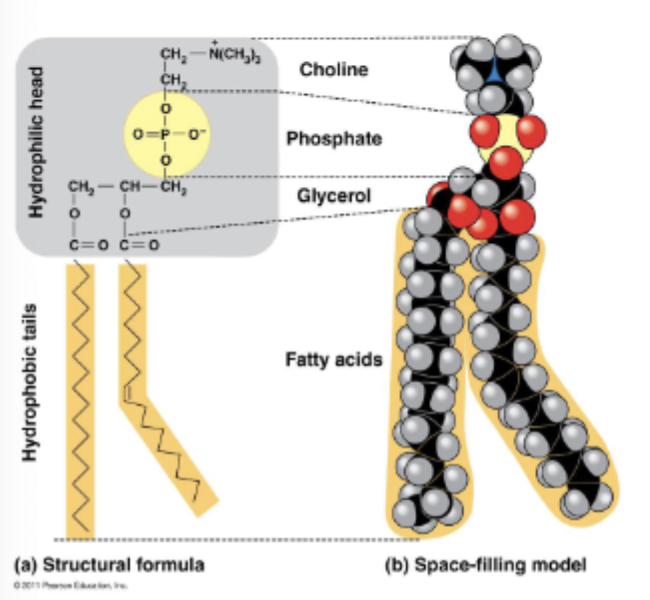
Amphipathic
both polar and non polar end
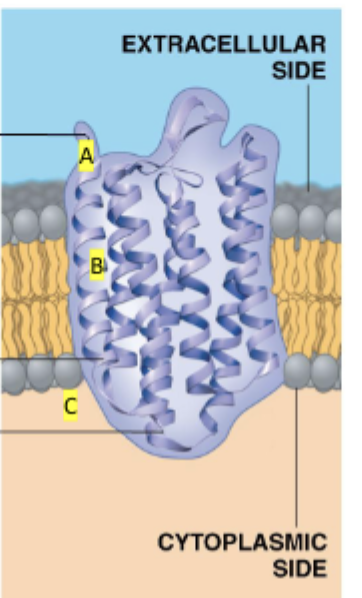
integral membrane protein
span the membrane
carbohydrates
Short chains of carbohydrates (sugars) attach to the lipids and proteins on the outside of the membrane, form a cellular finger print (blood type)
glycolipids
sugar chains attached to a lipid
glycoproteins
sugar chains attached to a protein
fluidity of membranes ______ as temperature drops
decreases
how does cholesterol buffer the fluidity of the plasma membrane
makes it thicker at high temperatures
selective permeability
plasma membranes allow some substances to cross more easily than others
passive transport
diffusion, osmosis, facilitated diffusion, no energy needed
active transport
moves against gradient, requires ATP

hypertonic
higher solute concentration than inside the cell, cell shrivels, water diffuses out
Hypotonic
lower solute concentration than inside the cell, water diffuses in, cell swells

Isotonic
equal concentration inside and outside the cell

animal cells like _______ conditions
isotonic
plant cells like ________ conditions
hypotonic
normal pressure state for plant cells
turgid
plasmolysis
in hypertonic environment, water leaves the cell causing shriveling
osmoregulation
regulation of solute concentrations and water balance by a cell or
organism
contractile vacuole
organelle that functions as a pump to force water out of the cell as fast as it enters by osmosis
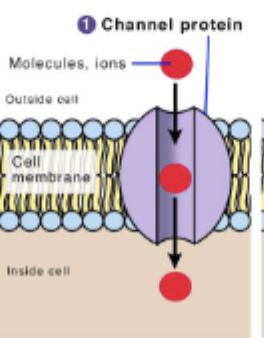
channel protiens
hydrophilic channel that molecules pass through
aquaporins
allow 3 billion water molecules to pass through the plasma membrane per second
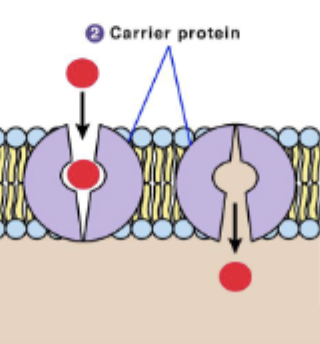
carrier protein
protein binds to specific molecules and changes shape allowing the molecules to transport
Antiporter
membrane protein that moves at least two different molecules in opposite directions across the cell membrane
Na+/K+ pump
antiporter that uses energy to move Na+ and K+ ions across plasma membrane against concentration gradient
The sodium potassium pump moves ___ positively charged Na+ ions
out of the cell and only ____ positively charged K+ ions into the cell, this creates a net ________ charge on the outside of the cell
3, 2, positive
Electrochemical gradient
diffusion gradient of an ion, affected by concentration gradient and membrane potential
exocytosis
secretion of biological molecules by the fusion of vesicles containing them
with the plasma membrane, mediated by transport vesicles moving from the golgi along microtubules

Endocytosis
Cellular uptake of biological molecules
and particulate matter via formation of vesicles from
the plasma membrane

types of endocytosis
phagocytosis, pinocytosis, receptor mediated
phagocytosis
cell absorbs substances, (cell eating)
Pinocytosis
when a cell ingests extracellular fluid and its dissolved solutes (cell drinking)

receptor mediated endocytosis
engulfment using receptor sites
