Dilated Cardiomyopathy (DCM) Part 4
 Call Kai
 Learn
Learn Practice Test
 Spaced Repetition
 Match
Match Flashcards
 Knowt Play
1/17

Earn XP
Description and Tags
Flashcards covering the pathophysiology, clinical signs, diagnosis, and treatment protocols for Dilated Cardiomyopathy in small animals.
Name | Mastery | Learn | Test | Matching | Spaced | Call with Kai | Chat |
|---|
No analytics yet
Send a link to your students to track their progress
18 Terms
Dilated cardiomyopathy (DCM)
The second-most common heart disease of the dog, primarily affecting large breeds, characterized by myocardial dysfunction leading to
decreased contractility
compensatory eccentric (dilated) ventricular hypertrophy.

Doberman pinscher lifetime risk
The probability of this breed developing Dilated cardiomyopathy (DCM) is 58.2%, which is significantly higher than other breeds like the Great Dane (25%).
Secondary DCM etiologies
Non-inherited causes of the disease including
prolonged tachycardia
toxicity (doxorubicin)
infections (parvovirus)
metabolic causes
nutritional disorders such as taurine deficiency or grain-free diets.

Eccentric ventricular hypertrophy
The specific type of ventricular dilation that occurs in DCM as a compensatory mechanism for myocardial dysfunction and loss of myocyte contractility.
DCM Auscultation findings
Includes a soft (low grade) left apical murmur, gallop rhythms, and potential arrhythmias; muffled heart sounds may be heard if pleural effusion is present.
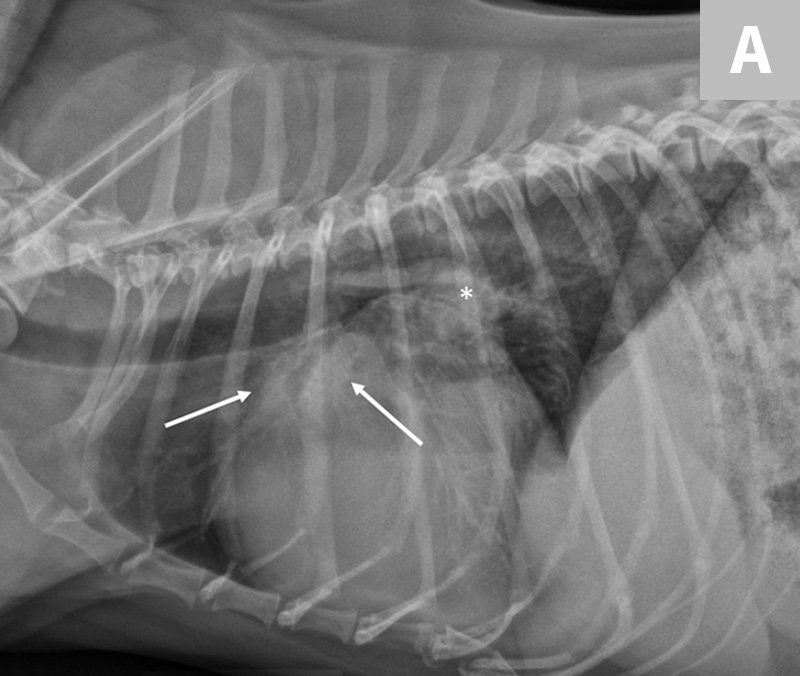
Left-sided Heart Failure clinical signs
Symptoms including
respiratory distress
pulmonary crackles
cyanosis caused by pulmonary edema.

Right-sided Heart Failure clinical signs
Symptoms such as
abdominal distention (ascites)
jugular pulses, which are less common than left-sided signs in DCM patients.
Modified transudate
The classification of DCM-related effusion cytology, defined by a total protein less than 4.0g/dL and a cell count less than 2500/μL.
NT-proBNP and cardiac troponin
Blood biomarkers used as markers of myocyte damage to assist in the diagnosis and monitoring of cardiac disease.
Echo and 24-hour Holter monitoring
The gold standard diagnostic combination for DCM, used to visualize chamber dilation and identify more than 100 VPCs in a 24-hour period.
PROTECT study
A study demonstrating that the use of pimobendan prolongs the pre-clinical period in Dobermans and Irish wolfhounds showing evidence of systolic dysfunction.
Acute DCM treatment
Emergency management consisting of
oxygen
furosemide boluses (IM or IV)
pimobendan
dobutamine CRI for severe edema, centesis of effusions
anti-anxiety narcotics (butorphanol).
Beta blockers contraindication
These medications are avoided in DCM patients because of their negative inotropic effect, which would further decrease damaged myocardial contractility.
Sotalol +/- mexiletine
Medications typically used for the chronic management of significant ventricular arrhythmias in DCM patients.
Diltiazem +/- digoxin
Medications typically used for the chronic management of supraventricular arrhythmias, such as atrial fibrillation, in DCM patients.
“R on T” complexes
Rapid, overlapping VPCs seen on ECG that represent a high risk for progression into ventricular fibrillation.
Taurine
An essential amino acid in cats that they cannot synthesize; deficiency leads to secondary DCM which may have a good prognosis if the patient survives the first 2 to 3 weeks of supplementation.
DCM Prognosis (Cats vs. Dogs)
Grave in cats with a medium survival of 2 weeks; in dogs, average survival is 6 months after clinical signs, though 75% of Dobermans die within 3 months.