Chemistry - The Periodic Table
 Call Kai
 Learn
Learn Practice Test
 Spaced Repetition
 Match
Match Flashcards
 Knowt Play
1/25

There's no tags or description
Looks like no tags are added yet.
Name | Mastery | Learn | Test | Matching | Spaced | Call with Kai | Chat |
|---|
No analytics yet
Send a link to your students to track their progress
26 Terms
[5.1.2.2 - Development of the Periodic Table]
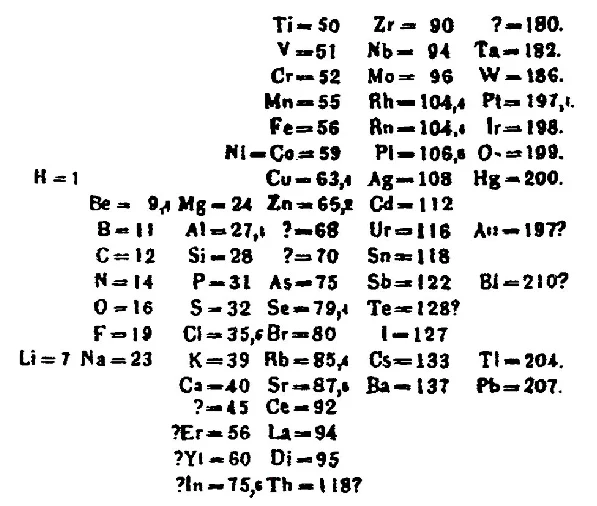
Who created the first periodic table of elements and when?
Dmitri Mendeleev created the first periodic table in 1869.

![<p><em>[</em><strong><em>5.1.2.2</em></strong><em> - Development of the Periodic Table]</em></p><p>What were two properties of the first periodic table?</p>](https://assets.knowt.com/user-attachments/fddeeca9-bf0c-4850-a0f1-d6b8b308726f.webp)
[5.1.2.2 - Development of the Periodic Table]
What were two properties of the first periodic table?
The table contained gaps which were used to correctly predict the properties of unknown elements.
Elements with similar chemical properties were lined up in groups.
[5.1.2.2 - Development of the Periodic Table]
What was the main fault of the first periodic table?
Elements were arranged in order of their atomic weight, some pairs of elements next to each other were placed in the wrong order to match chemical properties.
[5.1.2.2 - Development of the Periodic Table]
The discovery of what fixed Mendeleev’s pair reversals (elements in the wrong order)?
The discovery of isotopes.
![<p><em>[</em><strong><em>5.1.2.1</em></strong><em> - The periodic table]</em></p><p>What are the <strong>rows</strong> of the periodic table called?</p>](https://assets.knowt.com/user-attachments/385c763b-9e91-4752-9526-b1832ac7e747.webp)
[5.1.2.1 - The periodic table]
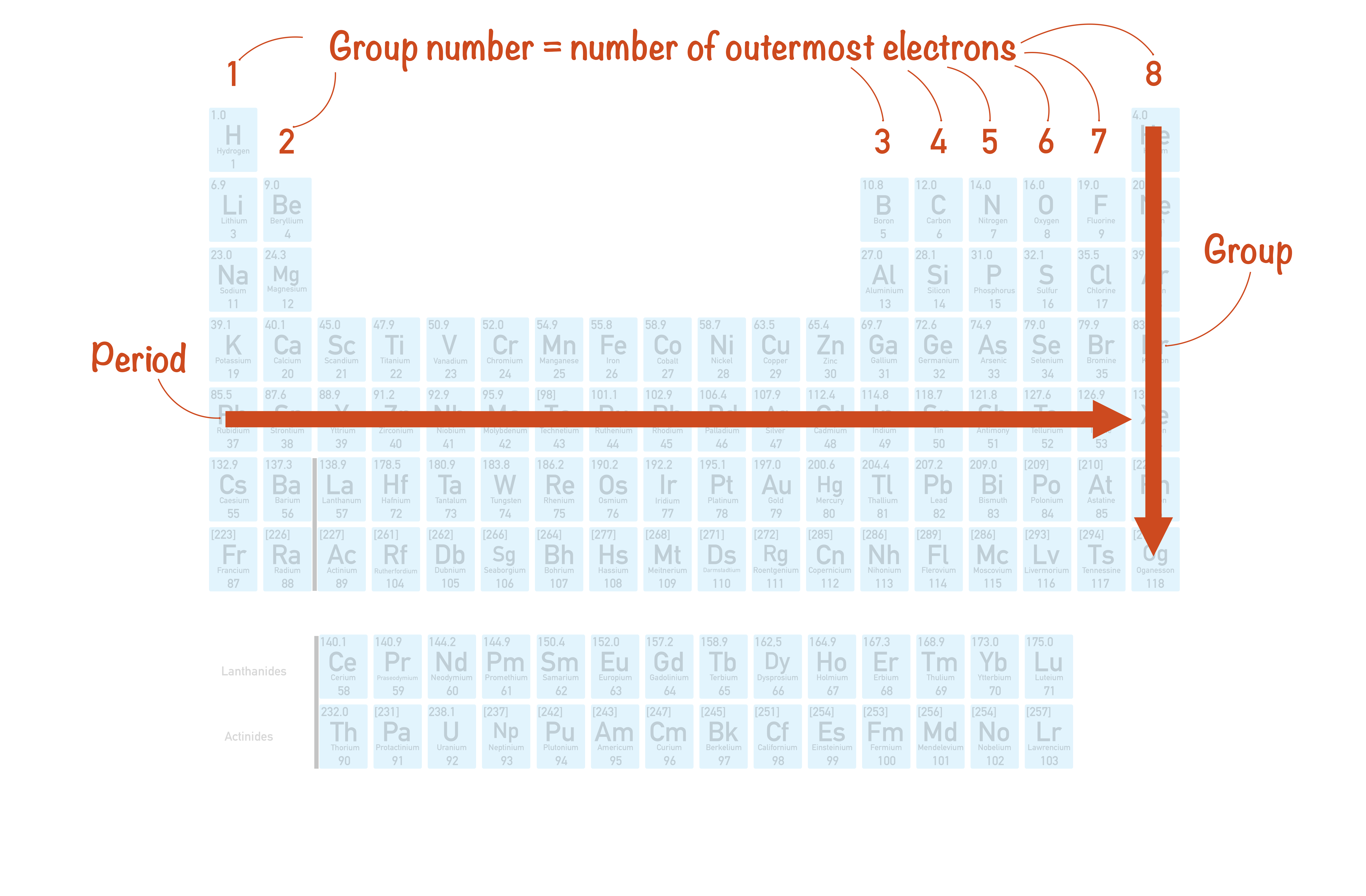
What are the rows of the periodic table called?
The rows in the periodic table are called Periods.
![<p><em>[</em><strong><em>5.1.2.1 </em></strong><em>- The periodic table]</em></p><p>What are the columns of the periodic table called?</p>](https://assets.knowt.com/user-attachments/a30a9952-4364-4b04-85d9-3754fb5484ac.webp)
[5.1.2.1 - The periodic table]
What are the columns of the periodic table called?
The columns in the periodic table are called the Groups.

![<p><em>[</em><strong><em>5.1.2.3</em></strong><em> - Metals and non-metals]</em></p><p>Are elements who form <strong>positive ions</strong> non-metals or metals.</p>](https://assets.knowt.com/user-attachments/8aebb47b-1261-46b0-b2d8-8d599ef182db.jpg)
[5.1.2.3 - Metals and non-metals]
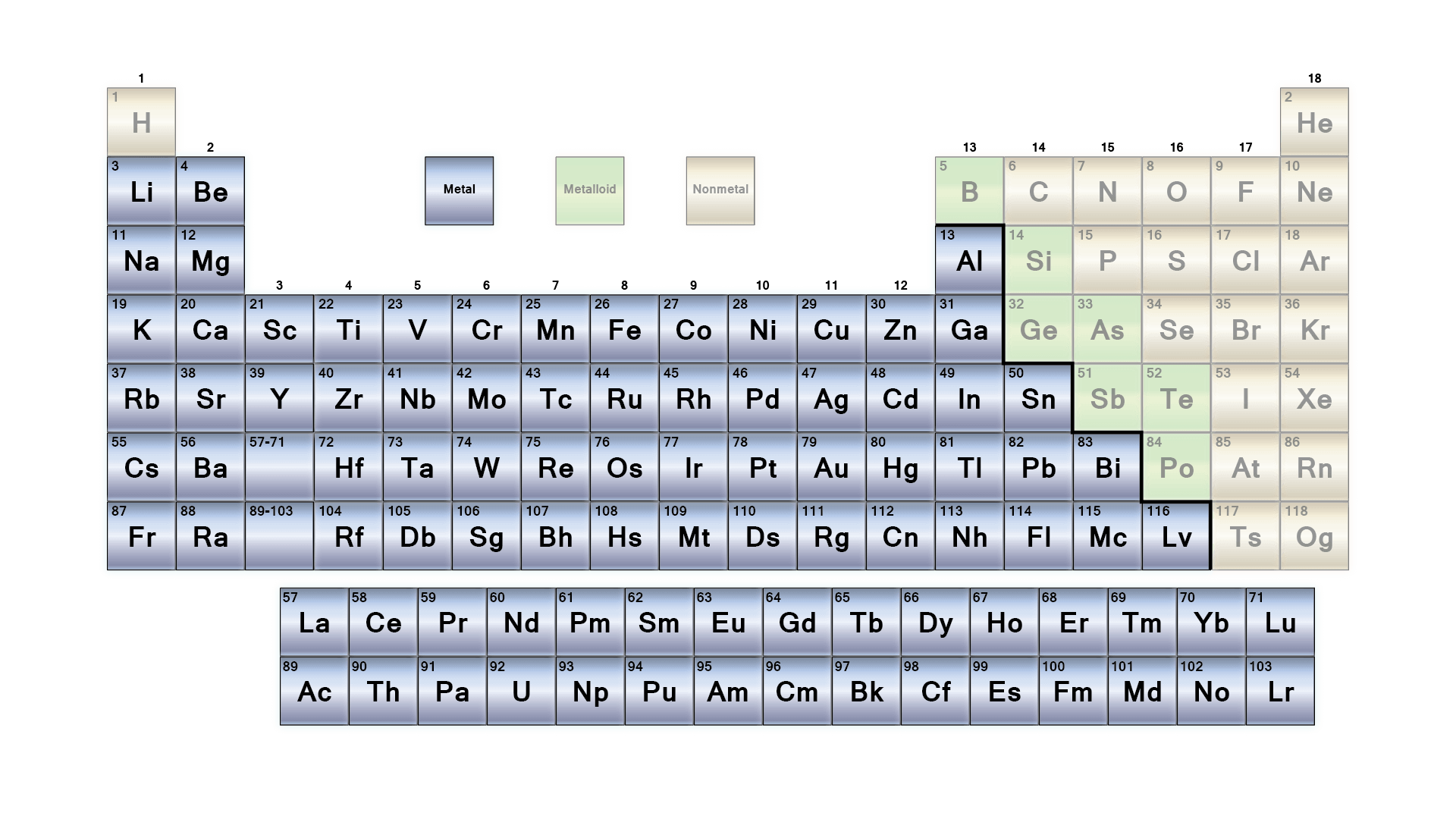
Are elements who form positive ions non-metals or metals.
Elements who form positive ions are metals.
[5.1.2.3 - Metals and non-metals]
Do metals at the bottom of the table become more or less reactive?
Atoms at the bottom of the periodic table become more reactive because they’re more likely to lose their electrons.
![<p><em>[</em><strong><em>5.1.2.3</em></strong><em> - Metals and non-metals]</em></p><p>What are the <strong>physical properties</strong> of <strong>metals</strong>?</p>](https://assets.knowt.com/user-attachments/eefcb1eb-6cf5-4a0a-aa7e-fa30c9408911.webp)
[5.1.2.3 - Metals and non-metals]
What are the physical properties of metals?
Metals are very strong
Metals are malleable (can be bent without snapping)
Great conductors of heat and electricity
Very high melting and boiling points
Sonorous (create a ringing sound)
Shiny
![<p><em>[</em><strong><em>5.1.2.3</em></strong><em> - Metals and non-metals]</em></p><p>What are the <strong>physical properties </strong>of <strong>non-metals</strong>?</p>](https://assets.knowt.com/user-attachments/211e889b-7c94-4cf3-8b52-733bbb83e98b.webp)
[5.1.2.3 - Metals and non-metals]
What are the physical properties of non-metals?
Non-metals are brittle (easily break)
Poor conductors of electricity
Low melting and boiling points
Lower densities than metals
Dull in colour
![<p><em>[</em><strong><em>5.1.2.3</em></strong><em> - Metals and non-metals]</em></p><p>What are the properties of <strong>transition metals</strong>?</p>](https://assets.knowt.com/user-attachments/88234352-9e59-49dc-b55f-b2aadc329a7b.jpg)
[5.1.2.3 - Metals and non-metals]
What are the properties of transition metals?
Can form more than one ion (which are usually coloured)
They make very good catalysts
![<p><em>[</em><strong><em>5.1.2.4</em></strong><em> - Group 0]</em></p><p>What is the name of Group 0?</p>](https://assets.knowt.com/user-attachments/82e77105-090b-4180-ae57-cf9846e4092d.png)
[5.1.2.4 - Group 0]
What is the name of Group 0?
Group 0 elements are called Noble Gases.

[5.1.2.4 - Group 0]
Does the boiling point of Group 0 elements become lower or higher down the group and why?
The boiling point of group 0 elements increases as you go down the group.
This is because:
The atoms become larger.
The intermolecular forces become stronger and more energy is needed to overcome these forces.
[5.1.2.5 - Group 1]
What are the six main alkali metals called?
Lithium
Sodium
Potassium
Rubidium
Caesium
Francium
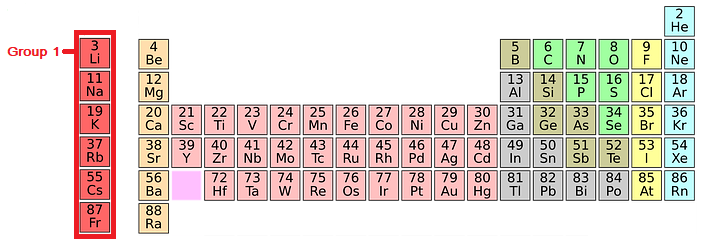
[5.1.2.5 - Group 1]
What are the physical properties of Group 1 metals?
Soft
Low in density
Low melting point
More reactive than other metals
React violently with water
As you go down the group:
Reactivity increases (this is because the electron in the outermost shell becomes further away, losing attraction, and can be lost more easily)
Melting and Boiling points decrease
[5.1.2.5 - Group 1]
What is produced when Group 1 elements react with water?
When reacting with water, group 1 elements produce a metal hydroxide and hydrogen.
Example:
Sodium + Water —→ Sodium Hydroxide + H
2Na(s) + 2H₂O(l) —> 2NaOH(aq) + H₂(g)
[5.1.2.5 - Group 1]
What occurs when Lithium (Li) reacts with water?
The lithium releases effervescence steadily and slowly becomes smaller until disappearing.
[5.1.2.5 - Group 1]
What occurs when Sodium (Na) reacts with water?
The sodium effervesces rapidly, quickly becoming smaller and disappearing.
[5.1.2.5 - Group 1]
What occurs when Potassium (K) reacts with water?
The potassium burns violently with sparks, quickly melts to form a ball and disappears rapidly, often with a small explosion.
[5.1.2.5 - Group 1]
What is produced and what occurs when Group 1 elements react with oxygen?
When reacting with oxygen, group 1 elements produces a metal oxide.
Example.
Sodium + Oxygen —> Sodium Oxide
4Na(s) + O₂(g) ——> 2Na2O(s)
When reacting with oxygen at room temperatures, a white oxide is formed on the surface of the metal.
When reacting with oxygen in a gas jar, the alkali metals burn vigorously and oxide is formed as white smoke.
[5.1.2.5 - Group 1]
What is produced and what occurs when Group 1 elements react with chlorine?
When reacting with chlorine, group 1 elements produce chlorides. These chlorides are white solids at room temperature and colourless solutions whe dissolved in water.
Example:
Sodium + Chlorine —> Sodium Chloride
2Na(s) + Cl₂(g) —> 2NaCl(s)
[5.1.2.6 - Group 7]
What are the four main Halogens called and how can you recognise them?
Fluorine - poisonous yellow gas
Chlorine - poisonous green gas
Bromine - poisonous brown liquid
Iodine - antiseptic solid
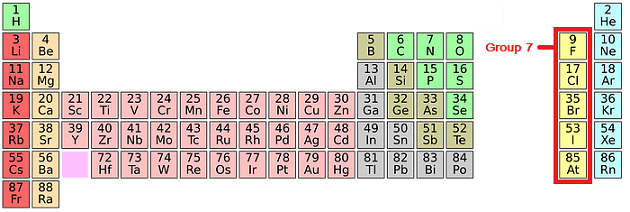
[5.1.2.6 - Group 7]
What type of molecules are Group 7 elements?
All Group 7 elements are diatomic molecules, containing two atoms with covalent bonds.

[5.1.2.6 - Group 7]
What happens to Group 7 elements going down the group?
Reactivity decreases (this is because it is harder to attract electrons into the outermost shell)
Melting & Boiling point increases
[5.1.2.6 - Group 7]
What is produced and what occurs when Group 7 elements react with metals?
When reacting with metals, group 7 elements produce Metal Halides (salts),which are held together by ionic bonds.
The rate of reaction is slower for halogens further down the group.
Example:
Sodium + Chlorine —> Sodium Chloride
2Na + Cl₂ ——> 2NaCL
[5.1.2.6 - Group 7]
What is produced and what occurs when Group 7 elements react with non-metals?
The halogens often reach with hydrogen.
When reacting with hydrogen, a compound is produced called a Hydrogen Halide.
Hydrogen halides are gases at room temperature and dissolve in water to produce acidic solutions.
Example
Hydrogen + Chlorine —> Hydrogen Chloride
H2(g) + Cl₂(g) —-> 2HCl(g)