digestive system - physiology
 Call Kai
 Learn
Learn Practice Test
 Spaced Repetition
 Match
Match Flashcards
 Knowt Play
1/13

There's no tags or description
Looks like no tags are added yet.
Name | Mastery | Learn | Test | Matching | Spaced | Call with Kai | Chat |
|---|
No analytics yet
Send a link to your students to track their progress
14 Terms
what is the function of the oral cavity?
this is where the teeth, through chewing and grinding, begin mechanical digestion, while saliva acts in chemical digestion - which lubricates the food, forming the food bolus. it also plays a role in speech and taste.
what is the function of the pharynx?
it serves as a pathway that carries swallowed food to the esophagus and air to the larynx
what is the function of the esophagus?
it is a muscular tube that, through continuous contractions and relaxations (peristalsis), carries food to the stomach
what is the function of the stomach?
it acts like a muscular mixer, blending food with digestive acids and enzymes, breaking it down into even smaller molecules and forming chyme – which is released into the intestine for absorption
what is the difference between the digestive tract and the digestive system?
the digestive tract is the tube through which food passes, from the oral cavity to the anus. the digestive system includes, in addition to the digestive tract, the accessory organs - liver, gallbladder, pancreas, salivary glands.
what are the supradiaphragmatic and infradiaphragmatic organs of the digestive tract?
supradiaphragmatic: oral cavity, pharynx, esophagus
infradiaphragmatic: stomach, small intestine, large intestine, rectum and canal anal
what are the main functions of the digestive system?
perform ingestion, propulsion, mechanical and chemical digestion, absorption of nutrients and water, secretion and elimination of waste, as well as participate in immune protection.
what is absorption and where does most of it occur?
it is the passage of nutrients, water, electrolytes, etc. from the digestive lumen into the blood or lymph in the small intestine
what is the definition of nutrition?
it is the set of processes that encompass the obtaining, breakdown, absorption, and production of energy.
explain the different functions of nutrients
plastic function: builds and repairs tissues.
energy function: it provides fuel for daily activities and cellular function.
regulatory function: controls chemical reactions and vital processes
what is the difference between peristalsis and mixing motion?
peristalsis: its main function is propulsion.
mixing movements: homogenize the contents and increase their contact with secretions and the mucosa.
what is the function of teeth?
to perform the chewing and mechanical breakdown of food.
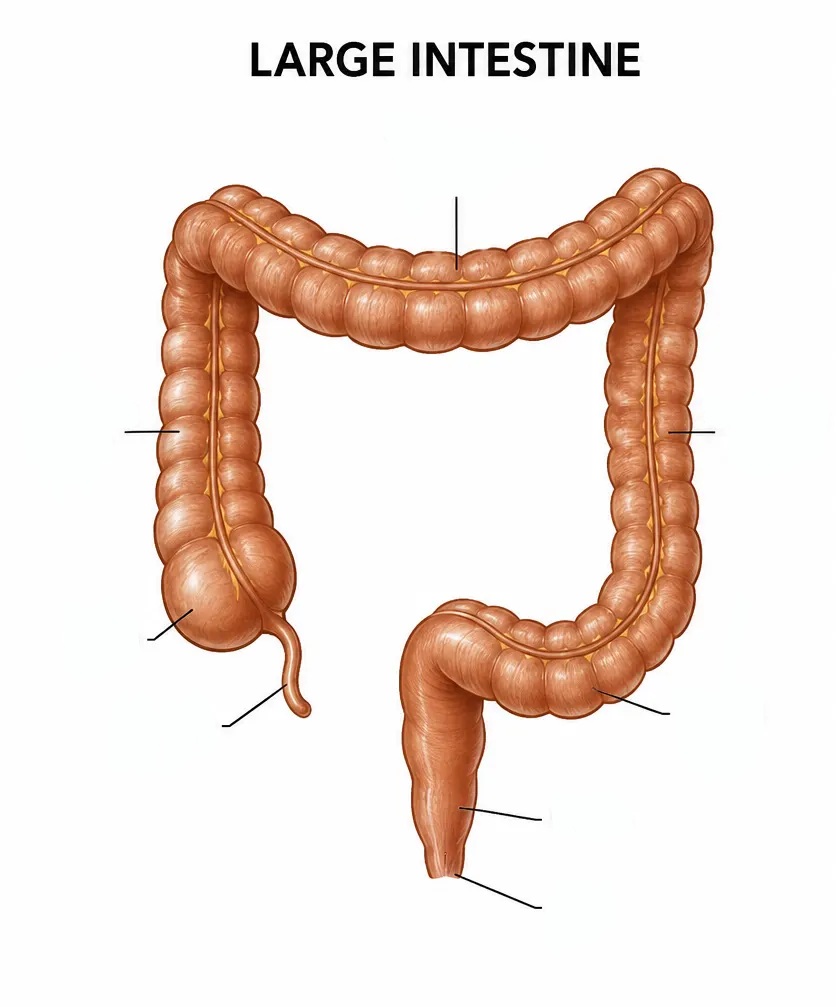
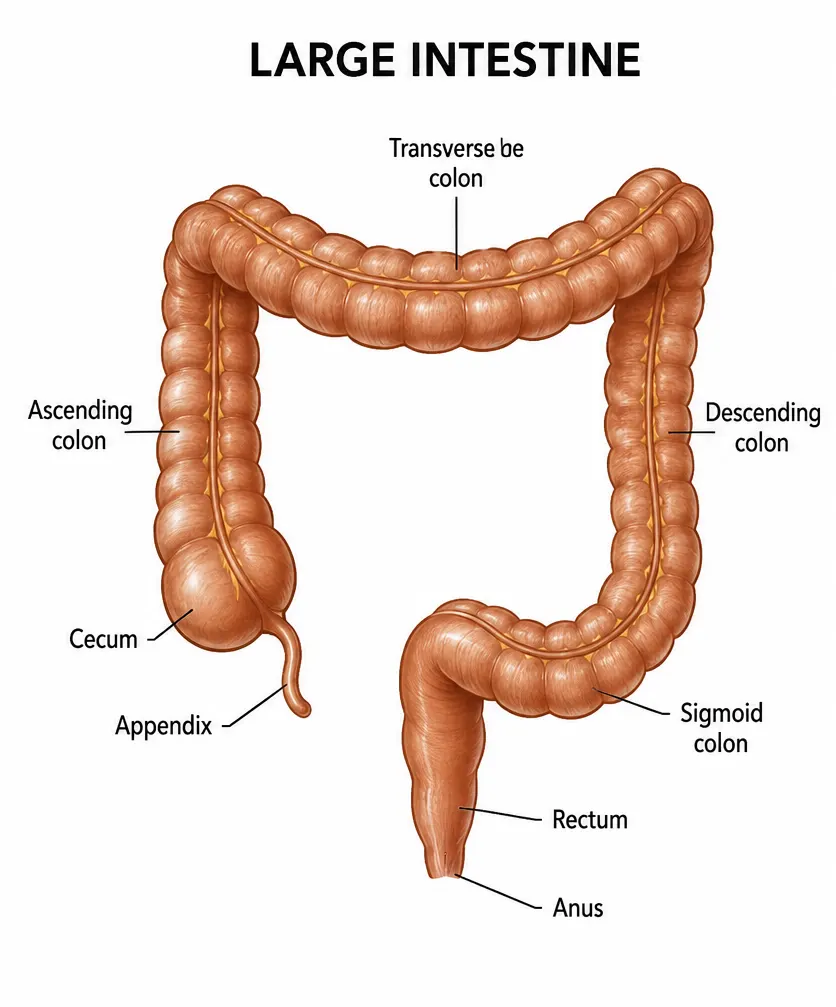
name the structures in the large intestine
what are the functions of the cheeks and lips?
cheeks: help keep food between the teeth during chewing and participate in the formation and manipulation of the food bolus.
lips: participate in food apprehension, sealing of the oral cavity, facial expression, and speech articulation