Calc 3 Notes (Professor V)
 Call Kai
 Learn
Learn Practice Test
 Spaced Repetition
 Match
Match Flashcards
 Knowt Play
1/81

There's no tags or description
Looks like no tags are added yet.
Name | Mastery | Learn | Test | Matching | Spaced | Call with Kai | Chat |
|---|
No analytics yet
Send a link to your students to track their progress
82 Terms

(Video 2 of Calc 3 Playlist)
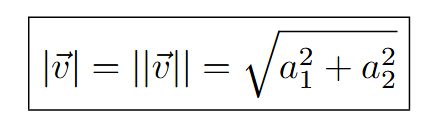
How do you add vectors qualitatively (with components given)
Add the corresponding components into 1 vector (Video 2 of Calc 3 Playlist)
How do you know if two vectors are parallel to each other
Two vectors are parallel if there is a scalar multiple c such that (s.t.) b=ca (b and a are vectors) (Video 2 of Calc 3 Playlist)
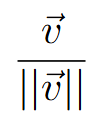
For a vector v, a unit vector in the direction of v is what
(Video 2 of Calc 3 Playlist)
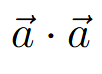
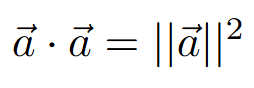
What is the image equal to
(Video 3 of Calc 3 Playlist)
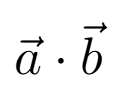
What is the image equal to
(Video 3 of Calc 3 Playlist)
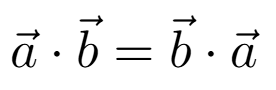
What is the image equal to
(Video 3 of Calc 3 Playlist)

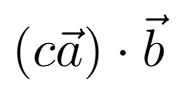
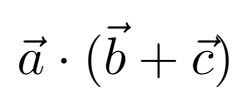
What is the image equal to
(Video 3 of Calc 3 Playlist)

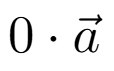
What is the image equal to
(Video 3 of Calc 3 Playlist)
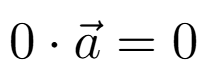

(Video 3 of Calc 3 Playlist)
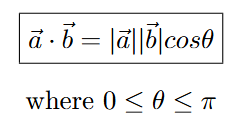

(Video 3 of Calc 3 Playlist)
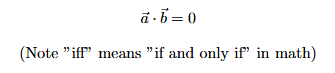
The direction angles for a vector are what
alpha=cos-1(x component/magnitude)
beta=cos-1(y component/magnitude)
gamma= cos-1(z component/magnitude)
(Video 3 of Calc 3 Playlist)
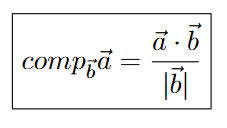
The scalar projection of a vector a onto a vector b is what
(Video 3 of Calc 3 Playlist)
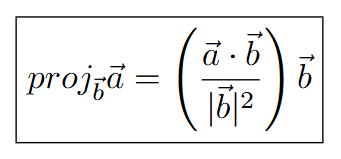
The vector projection of a vector a onto a vector b is what
(Video 3 of Calc 3 Playlist)
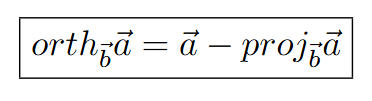
The orthogonal projection of a vector a with respect to a vector b is what
(Video 3 of Calc 3 Playlist)
The vector a x b is orthogonal to what
Vectors a and b. (Video 4 of Calc 3 Playlist)
what is |a x b|
|a||b|sin(theta) (Video 4 of Calc 3 Playlist)
If |a x b|=0, what must be true
Vectors a and b are parallel. (Video 4 of Calc 3 Playlist)
How do you find the area of a parallelogram given two vectors, a and b
Calculate |a x b| (Video 4 of Calc 3 Playlist)
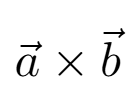
What is the image equal too
(Video 4 of Calc 3 Playlist)
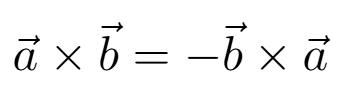
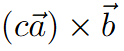
What is the image equal too
(Video 4 of Calc 3 Playlist)

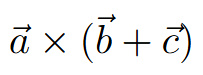
What is the image equal too
(Video 4 of Calc 3 Playlist)

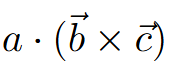
What is the image equal too
(Video 4 of Calc 3 Playlist)

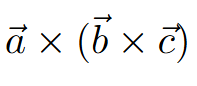
What is the image equal too
(Video 4 of Calc 3 Playlist)

How do you find the area of a triangle using cross products
1/2*|a x b| (Video 4 of Calc 3 Playlist)

(v is a direction vector, P is a point)
Where t is a scalar (Video 5 of Calc 3 Playlist)


(Video 5 of Calc 3 Playlist)

Two lines that do NOT intersect and are NOT parallel are called what
Skew lines (Video 5 of Calc 3 Playlist)

(Video 5 of Calc 3 Playlist)

Video 6 NOT DONE
What is the arc length of parameterized curve in 3 dimensions
(Video 9 of Calc 3 Playlist)

Curvature formula involving unit tangent vector
(Video 9 of Calc 3 Playlist)
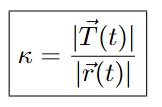
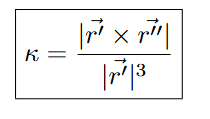
Curvature formula involving just the original vector
(Video 9 of Calc 3 Playlist)
Principal unit Normal Vector
(Video 9 of Calc 3 Playlist)
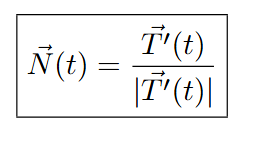
Binormal Vector
(Video 9 of Calc 3 Playlist)
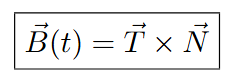
SOME VIDEOS BETWEEN VIDEO 9 and VIDEO 15 ARE MISSING PARTS
What is the limit definition of a function of 2 variables.
(Video 12 of Calc 3 Playlist)

To prove a multivariate limit does not exist, what is sufficient
It’s sufficient to show the limit is not equal along 2 different paths (Video 12 of Calc 3 Playlist)
What are the 3 methods main methods in computing multivariate limits
Epsilon-Delta Definition
Squeeze Theorem
Polar Coordinates
(Video 12 of Calc 3 Playlist)
What is Clairaut’s Theorem
(Video 13 of Calc 3 Playlist)

What is the normal vector for tangent planes
(Video 14 of Calc 3 Playlist)
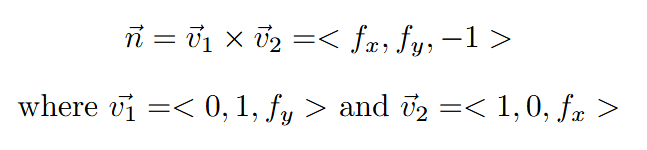
The linear approximation (or tangent plane approximation) of f at (a,b) is what
(Video 14 of Calc 3 Playlist)
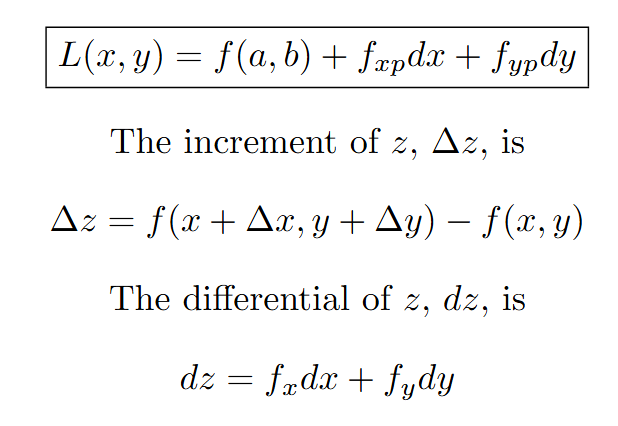
The linearization of f at (a,b) is the linear function given by what
(Video 14 of Calc 3 Playlist)


Which chain rule applies for this scenario
(Video 15 of Calc 3 Playlist)
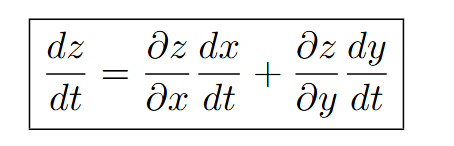

Which chain rule applies for this scenario
(Video 15 of Calc 3 Playlist)
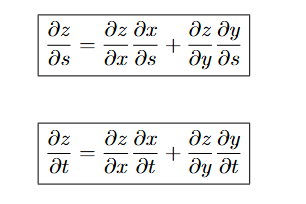

(Video 16 of Calc 3 Playlist)
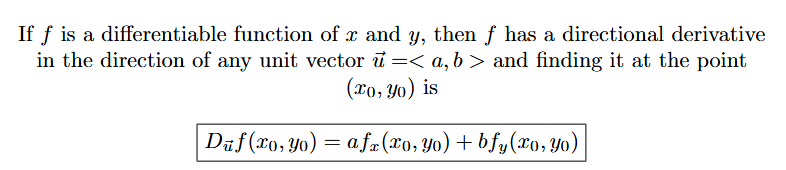
How is the directional derivative related to the dot product
u is the unit vector (Video 16 of Calc 3 Playlist)

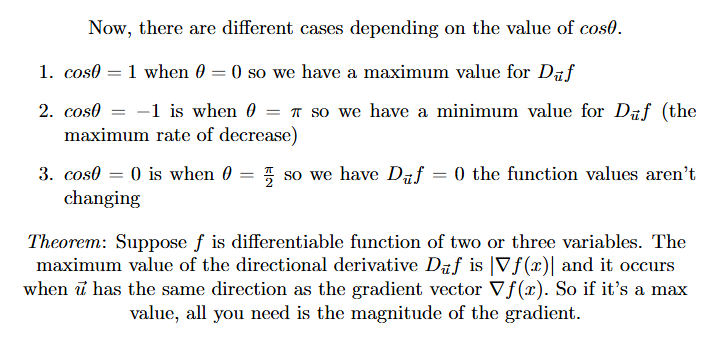
Depending on the value of cosine, the directional derivative will behave differently. Explain all the cases
(Video 16 of Calc 3 Playlist)
Consider z = f(x,y). When do critical points occur
When fx=0 or fy=0.
Or, when either derivatives are undefined. (Video 17 of Calc 3 Playlist)
Often used in the D test, what is the quantity D equal to when trying to find maximum and minimum values of multivariate functions
(Video 17 of Calc 3 Playlist)

What conditions need to be met for a multivariate function to have a relative min, relative max, saddle point, or for the D test to be inconclusive.
(Video 17 of Calc 3 Playlist)
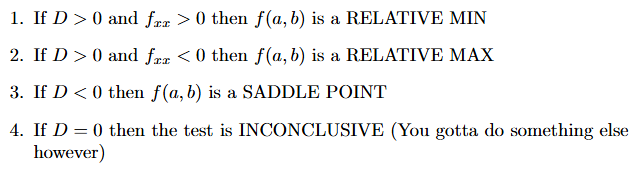
What should you do to find the maximum or minimum of a function when the D test fails
Analyze the behavior of the function and use logic or reasoning (Video 17 of Calc 3 Playlist)
If you want to find the relative extrema of a function bounded by other curves, what must you do
Test those bounds by plugging it into the function and solving for the other variable (Video 17 of Calc 3 Playlist)
How do you do the method of Lagrange multipliers.
Take the gradient of the function, usually called f, and take the gradient of the constraint function and multiply that result by a scalar. It will usually look like the one shown in the image. Then you solve that system and plug the obtained variables back into the function. (Video 18 of Calc 3 Playlist)

In the method of Lagrange multipliers, if there’s more than one constraint function, what must you do
Keep adding the constraint functions and multiply them by different scalars. It might look like the image given (Video 18 of Calc 3 Playlist)

What does Fubini’s Theorem state
If f is a continuous function and a rectangular region, you can switch the order of integration and get the same result. (Video 19 of Calc 3 Playlist)
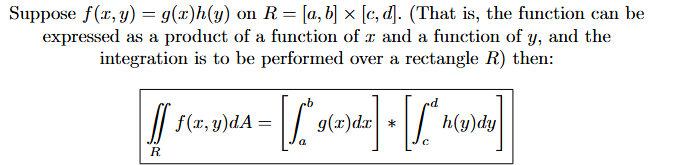
Suppose f(x,y)=g(x)h(y) on a rectangle R. What can the double integral be rewritten as what
(Video 19 of Calc 3 Playlist)
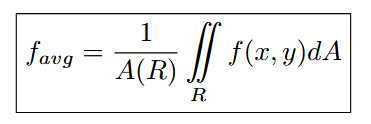
What is the average value z = f(x,y), on a rectangle R on an interval [a,b]
Where A(R) is the area of the base region (Video 19 of Calc 3 Playlist)
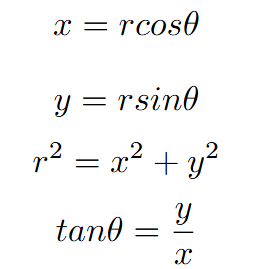
Suppose you have a right triangle with hypotenuse r that makes an angle theta with the horizontal. List some important relationships between the rectangular coordinate system and polar coordinates system
(Video 21 of Calc 3 Playlist)
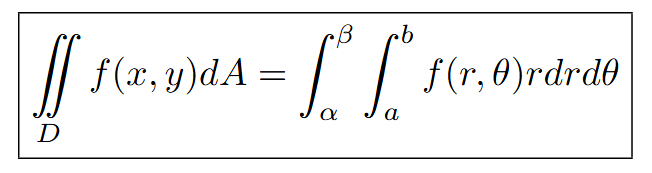
If f is continuous, then how can you rewrite a double integral in polar coordinates
(Video 21 of Calc 3 Playlist)
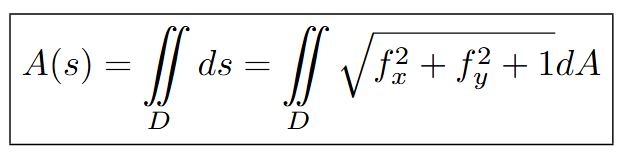
The area of a surface with equation z = f(x,y) is what
(Video 22 of Calc 3 Playlist)
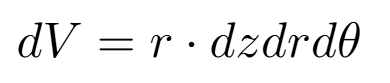
What is the differential volume dV in cylindrical coordinates?
(Video 24 of Calc 3 Playlist)
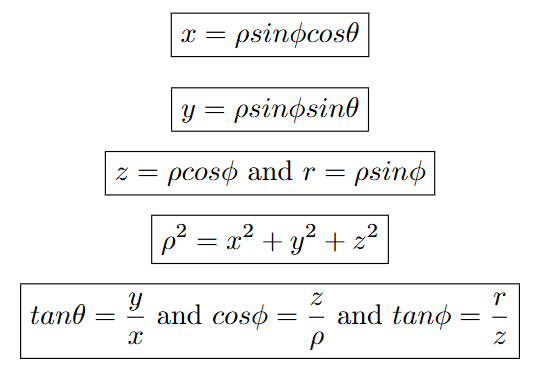
List the relationships between rectangular and spherical coordinates
A point is represented by (rho, theta, phi) (Video 25 of Calc 3 Playlist)
In spherical coordinates, what values can phi be
Between 0 and pi including both (Video 25 of Calc 3 Playlist)
What is the differential volume dV in spherical coordinates?
(Video 25 of Calc 3 Playlist)

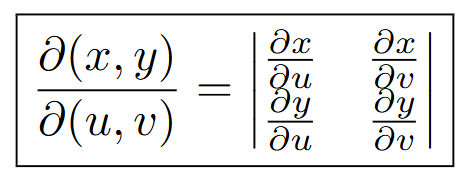
The Jacobian of the transformation T given by x = g(u,v) and y = h(u,v) is what
(Video 26 of Calc 3 Playlist)
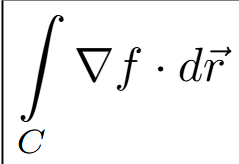
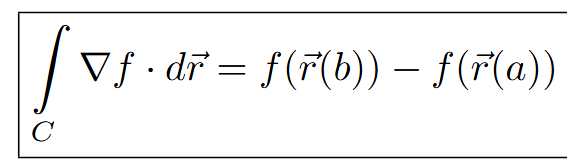
The Fundamental Theorem of Line Integrals: If C is a smooth curve given by r(t), then what is the image equal to
(Video 29 of Calc 3 Playlist)
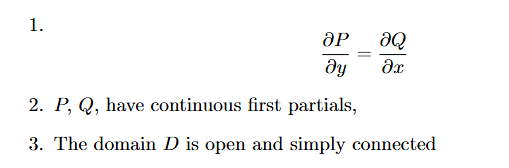
If a vector field F = <P,Q>, then what conditions must be met for F to be conservative.
(Video 29 of Calc 3 Playlist)
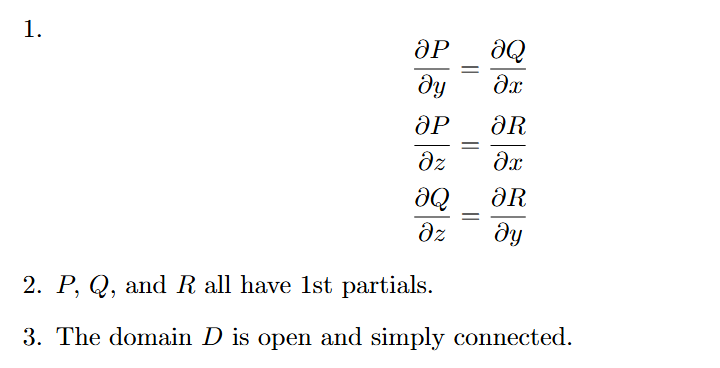
If a vector field F = <P,Q,R>, then what conditions must be met for F to be conservative
(Video 29 of Calc 3 Playlist)
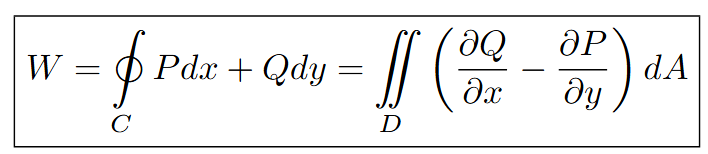
Let C be a positively oriented, piecewise smooth, simple closed curve and D is the region it contains. What is Green’s Theorem?
(Video 30 of Calc 3 Playlist)
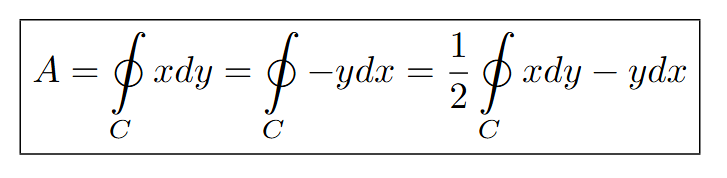
What is the area using line integrals
(Video 30 of Calc 3 Playlist)
If F = <P,Q,R> then what is the curlF
(Video 31 of Calc 3 Playlist)

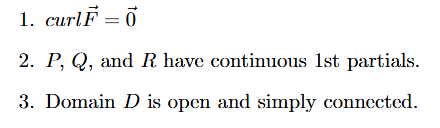
Suppose F = <P,Q,R> and suppose you want to use the curl to see if F is conservative or not. What conditions must be met if F is conservative
(Video 31 of Calc 3 Playlist)
If F = <P,Q,R> then what is the divF
(Video 31 of Calc 3 Playlist)
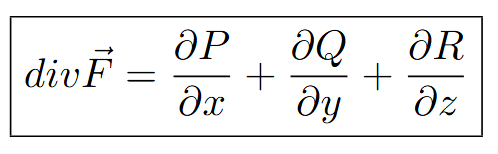
What is the value of div(curlF)
Always 0 (Video 31 of Calc 3 Playlist)
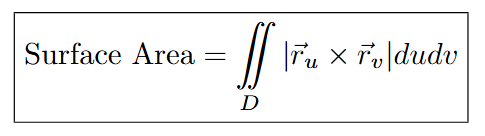
The surface area of a vector valued function r(u,v) is what
(Video 32 of Calc 3 Playlist)
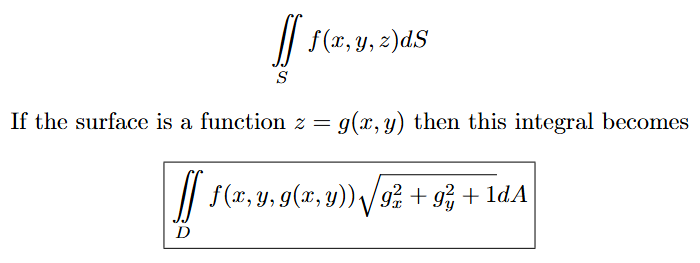
If z = g(x,y), what is the surface integral of f(x,y,z)
(Video 33 of Calc 3 Playlist)
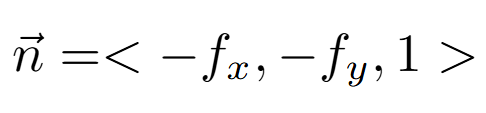
If our vector field F is oriented downward, then what is the unit normal vector n
(Video 33 of Calc 3 Playlist)

If our vector field F is oriented upward, then what is the unit normal vector n
(Video 33 of Calc 3 Playlist)
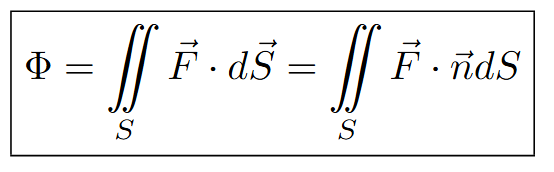
If F is a continuous vector field defined on an oriented surface S with unit normal vector n, what is the flux
(Video 33 of Calc 3 Playlist)
What is the formula of Stokes’ Theorem
(Video 34 of Calc 3 Playlist)

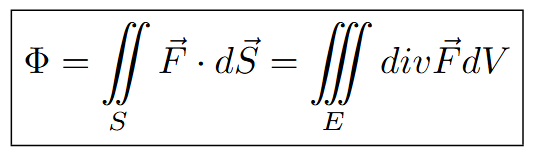
What is the formula of the Divergence Theorem
(Video 35 of Calc 3 Playlist)