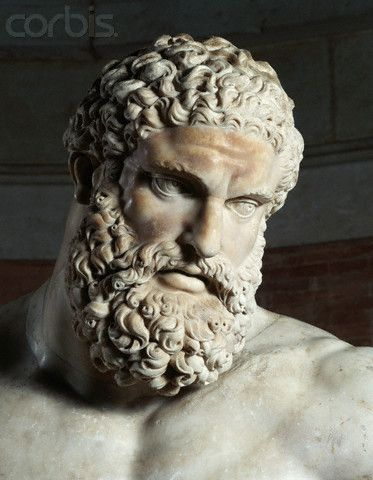
3.7 Late Classical Greek Art & a Sense of the Inner Life in Marble
 Call Kai
 Learn
Learn Practice Test
 Spaced Repetition
 Match
Match Flashcards
 Knowt Play
1/3

Earn XP
Description and Tags
The Eyes as the Window to the Soul
Name | Mastery | Learn | Test | Matching | Spaced | Call with Kai | Chat |
|---|
No analytics yet
Send a link to your students to track their progress
4 Terms
the psyche and connecting to art for what it conveys emotionally--this is the change we'll see in sculpture of the 4th century associated with the Late Classical period in Greece.
.
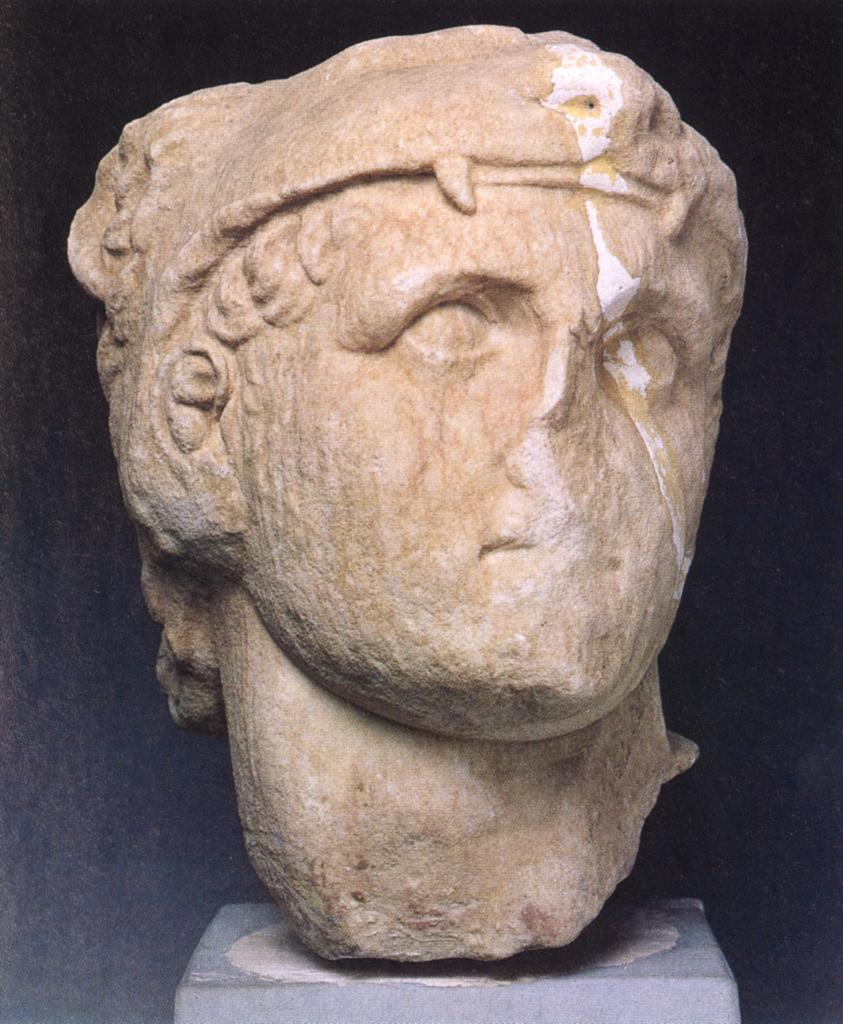
Skopas, Herakles, ca. 340 BCE
-brought intense emotionalism to his statues, of which none survive except a grave stele
- a psychological look that's easy to recognize with those deep-set eyes and fleshy brows that are meant to convey more of the inner life of the subject.
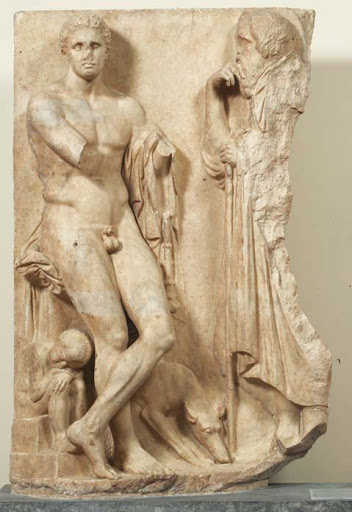
Grave stele of a young hunter, ca. 340-330 BCE; marble, 5.5'
-sculptural relief, Grave stele of a young hunter, is an emotion-filled depiction of mourning. The young man gazing out at us the viewer seems healthy--he's depicted as a heroic n*de after all. Next to him is an older man--communicated in this era with that beard. He has his hand raised up to his chin as if in contemplation about what he "sees" before him
-This older man is a father who is gazing at the memory (like a vision) of his dead son, the tragedy underscored by the hunter's youth and vitality to us, the viewers. Both have the deep-set eyes and fleshy brows associated with Skopas to convey that emotionalism and garner our sympathy.
-urn up the sadness and grief expressed in this memorial, a child sits, head in lap in sorrow, while a dog similarly has its head lowered in grief
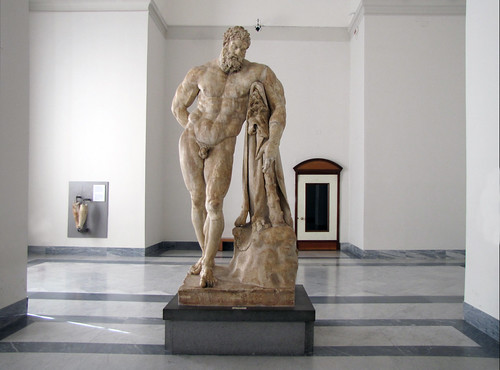
Lysippos, Weary Herakles. Roman copy of a Greek Late Classical statue from 320 BCE.
Marble; 10’ 5”high
shows the god having just completed one of his Twelve Labors—obtaining the golden apples of the Hesperides which are shown in his hand behind his back. need to take a break
-the weariness, or mental and physical fatigue that is expressed through those "Skopas Eyes." This statue is another example of the Late Classical trend to humanize even their gods and heroes in art—increase in appealing for emotional and empathetic response from the viewer