AS MECHANISMS
 Call Kai
 Learn
Learn Practice Test
 Spaced Repetition
 Match
Match Flashcards
 Knowt Play
1/9

There's no tags or description
Looks like no tags are added yet.
Name | Mastery | Learn | Test | Matching | Spaced | Call with Kai | Chat |
|---|
No analytics yet
Send a link to your students to track their progress
10 Terms
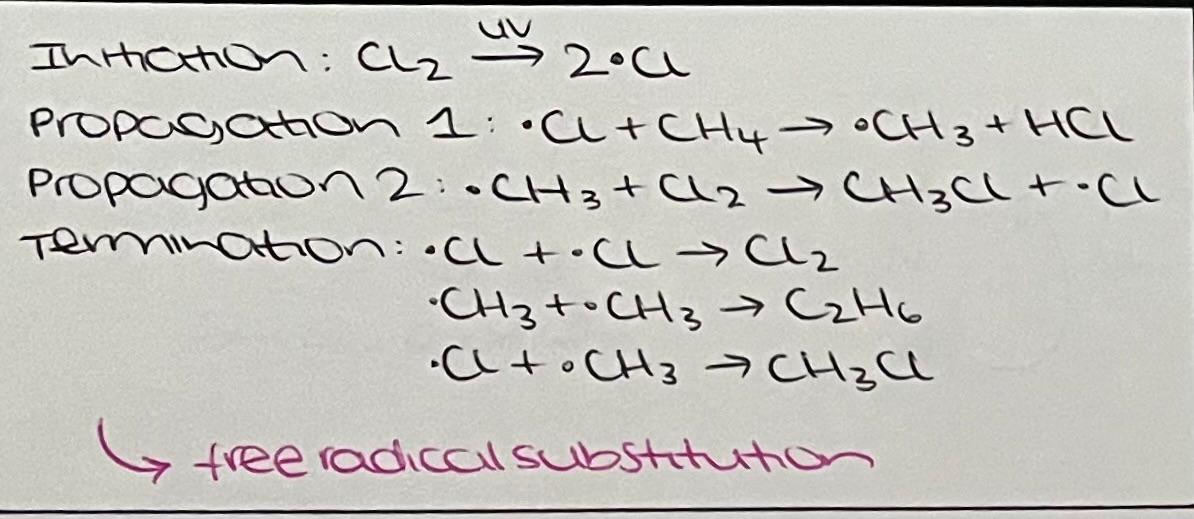
Name and draw the mechanism for methane + chlorine. And what is the reagent and condition required?
Mechanism: Free radical substitution.
Reagents: Cl2
Conditions: UV light
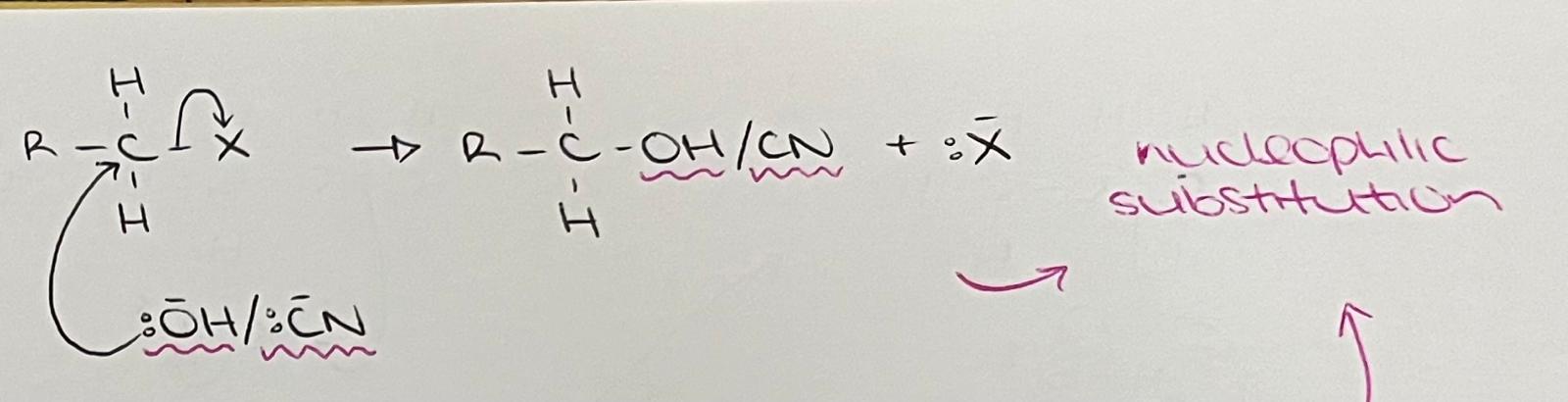
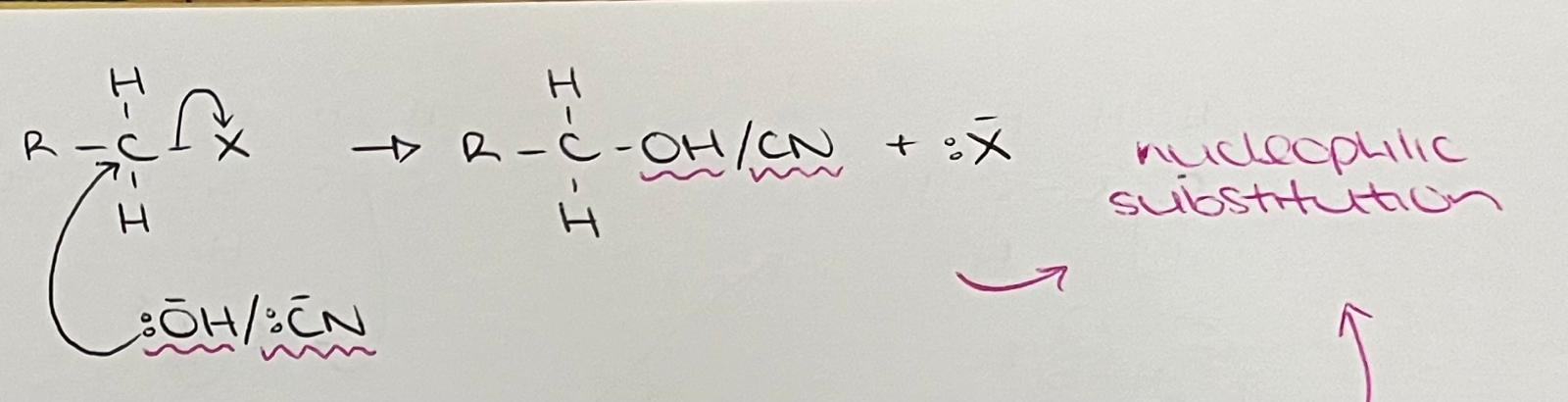
Name and draw the mechanism for halogenoalkane → alcohol. And what are the reagent and conditions [3] required?
Mechanism: Nucleophilic substitution.
Reagents: NaOH or KOH.
Conditions: Warm, reflux, aqueous.
Name and draw the mechanism for halogenoalkane → nitrile. And what are the reagent and conditions [2] required?
Mechanism: Nucleophilic substitution.
Reagents: (acidified) KCN.
Conditions: Heat under reflux, ethanolic.
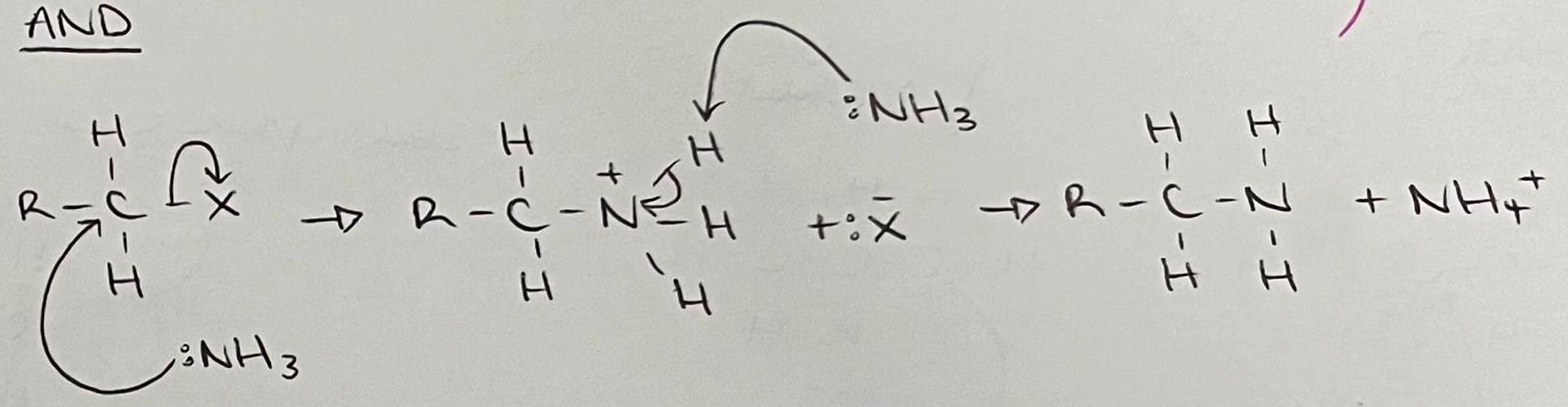
Name and draw the mechanism for halogenoalkane → amine. And what is the reagent and conditions [3] required?
Mechanism: Nucleophilic substitution.
Reagents: Ammonia.
Conditions: Excess ammonia/NH3, hot, ethanolic.
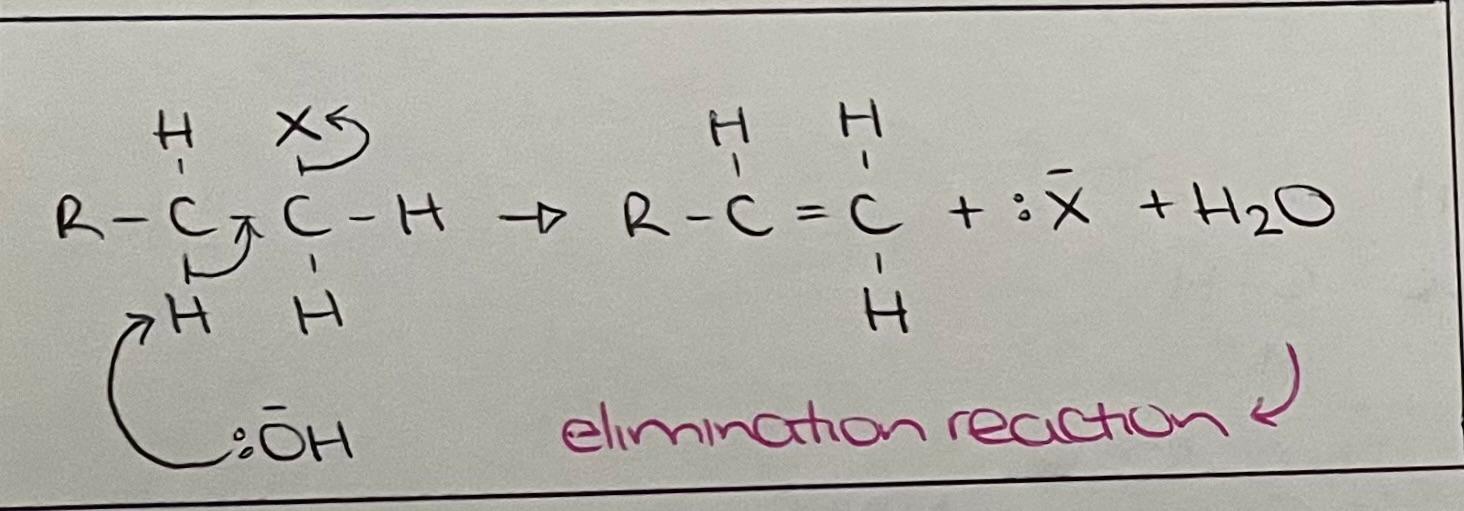
Name and draw the mechanism for a halogenoalkane → alkene. And what are the reagent and conditions [2] required?
Mechanism: Elimination reaction.
Reagents: (acidified) KOH.
Conditions: Heat in reflux, ethanolic.
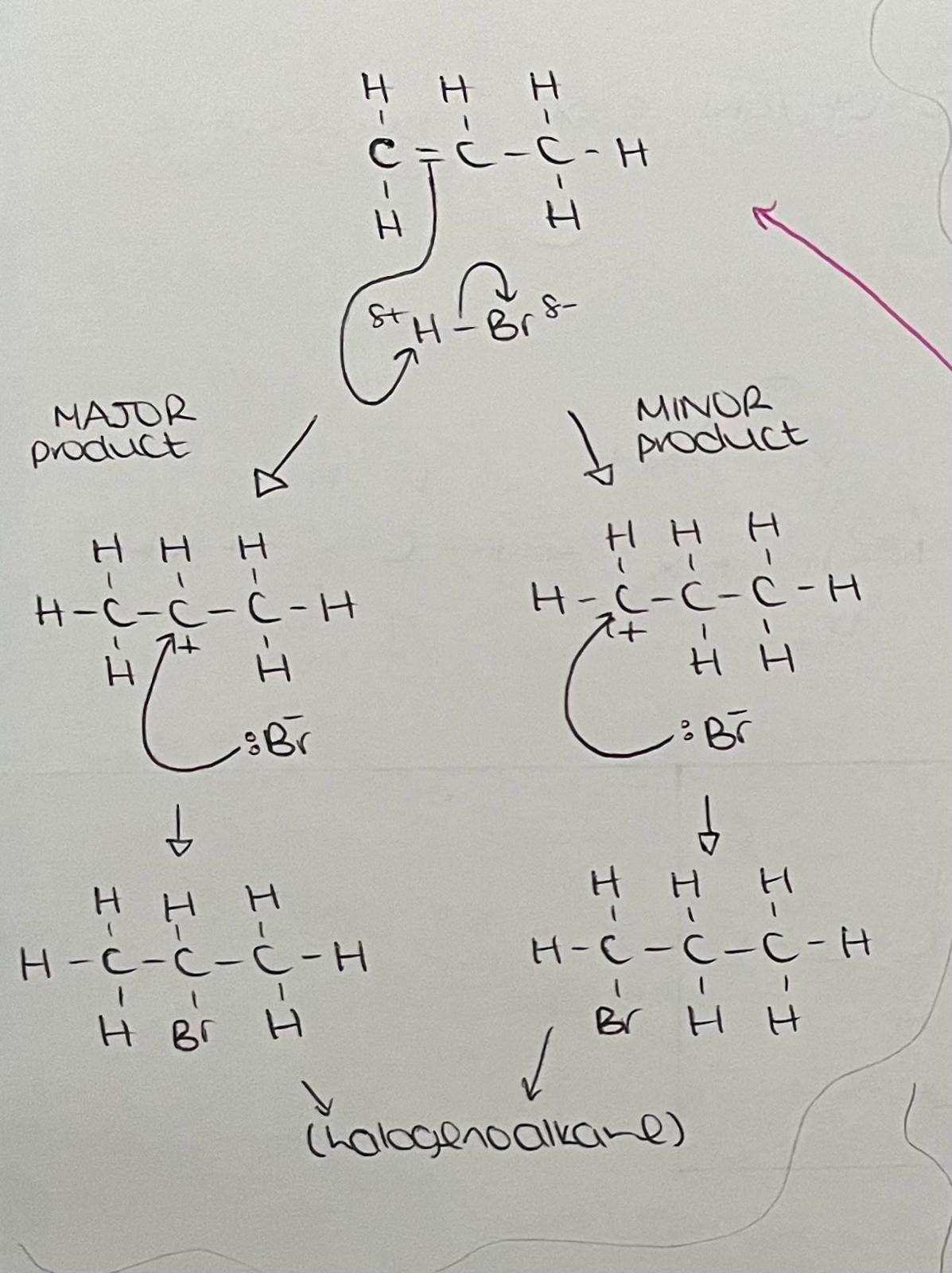
Name and draw the mechanism for an alkene → bromoalkane. And what is the reagent & condition required?
INCLUDE BOTH MAJOR + MINOR PRODUCTS.
Mechanism: Electrophilic addition.
Reagents & Conditions: HBr gas.
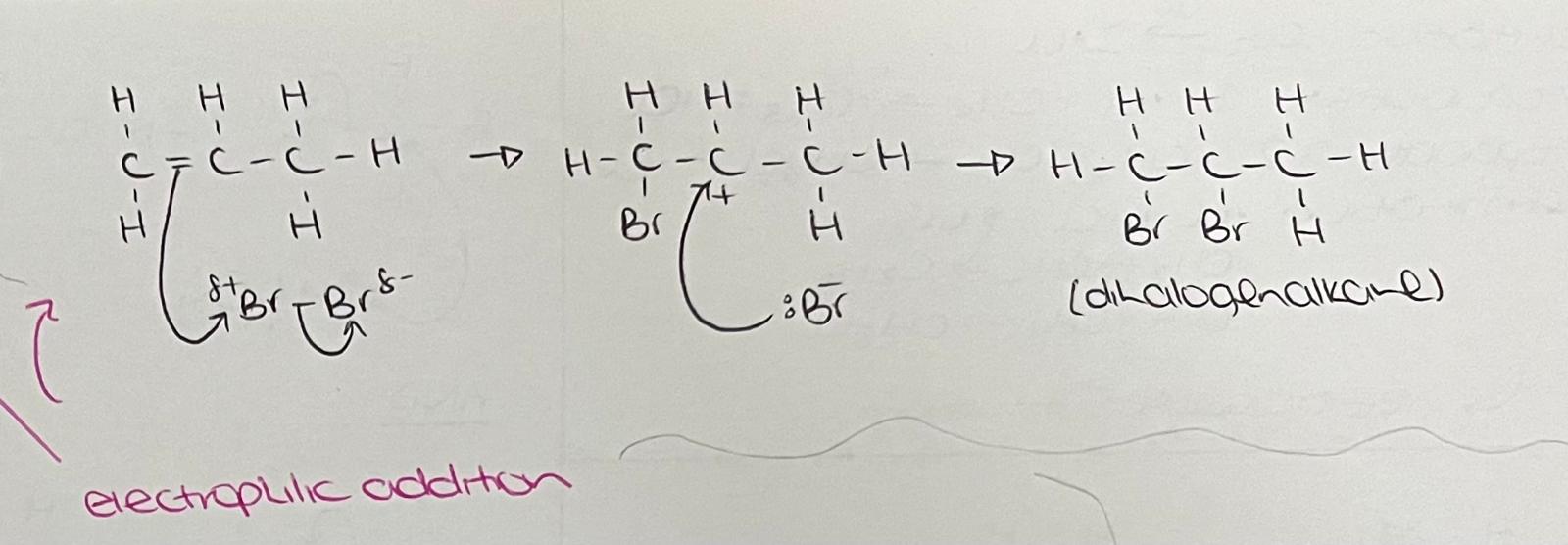
Name and draw the mechanism for an alkene → dibromoalkane. And what are the reagent and condition required?
Mechanism: Electrophilic addition.
Reagents: Br2.
Conditions: Aqueous.
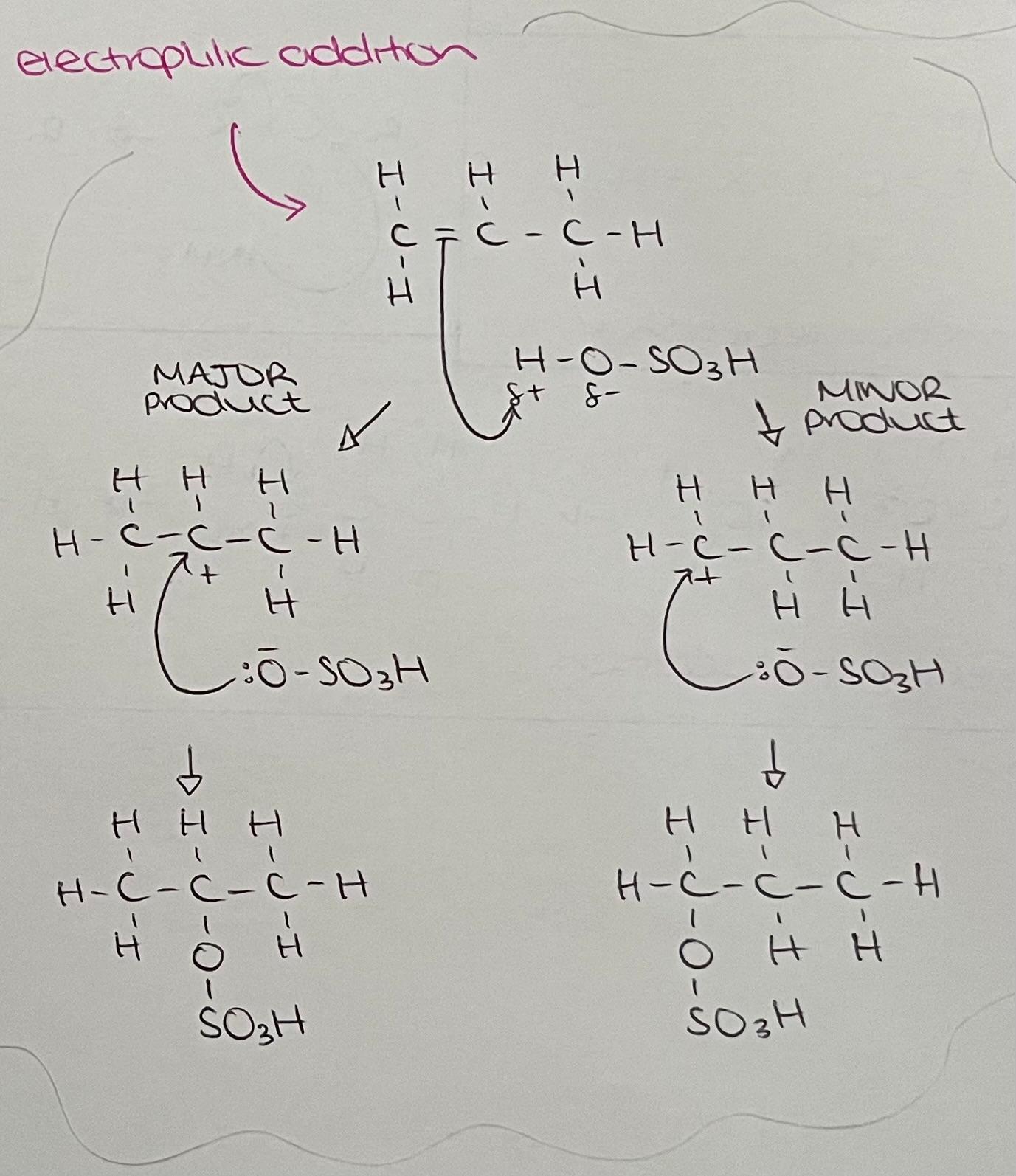
Name and draw the mechanism for an alkene → alkyl hydrogensulphate. And what are the reagent and conditions [2] required?
{INCLUDE MAJOR AND MINOR PRODUCTS}
Mechanism: Electrophilic addition.
Reagents: H2SO4.
Conditions: Cold, concentrated.
Name and draw the mechanism for an alkene → alcohol. And what are the reagent and conditions [3] required?
Mechanism: Electrophilic substitution.
THIS HAPPENS DIRECTLY AFTER ALKENE + H2SO4.
Reagents: H2O (steam).
Conditions: 300⁰C, 60 atm, H3PO4 catalyst.

Name and draw the mechanism for the elimination of water from alcohols. And what are the conditions [2] required? Whats the general name for the product formed?
Mechanism: Elimination reaction.
Conditions: Concentrated H2SO4, heat.
Product: Alkene & water.
