Exam 4
 Call Kai
 Learn
Learn Practice Test
 Spaced Repetition
 Match
Match Flashcards
 Knowt Play
1/80

There's no tags or description
Looks like no tags are added yet.
Name | Mastery | Learn | Test | Matching | Spaced | Call with Kai | Chat |
|---|
No analytics yet
Send a link to your students to track their progress
81 Terms
Hippocampus is part of the ___
temporal lobe
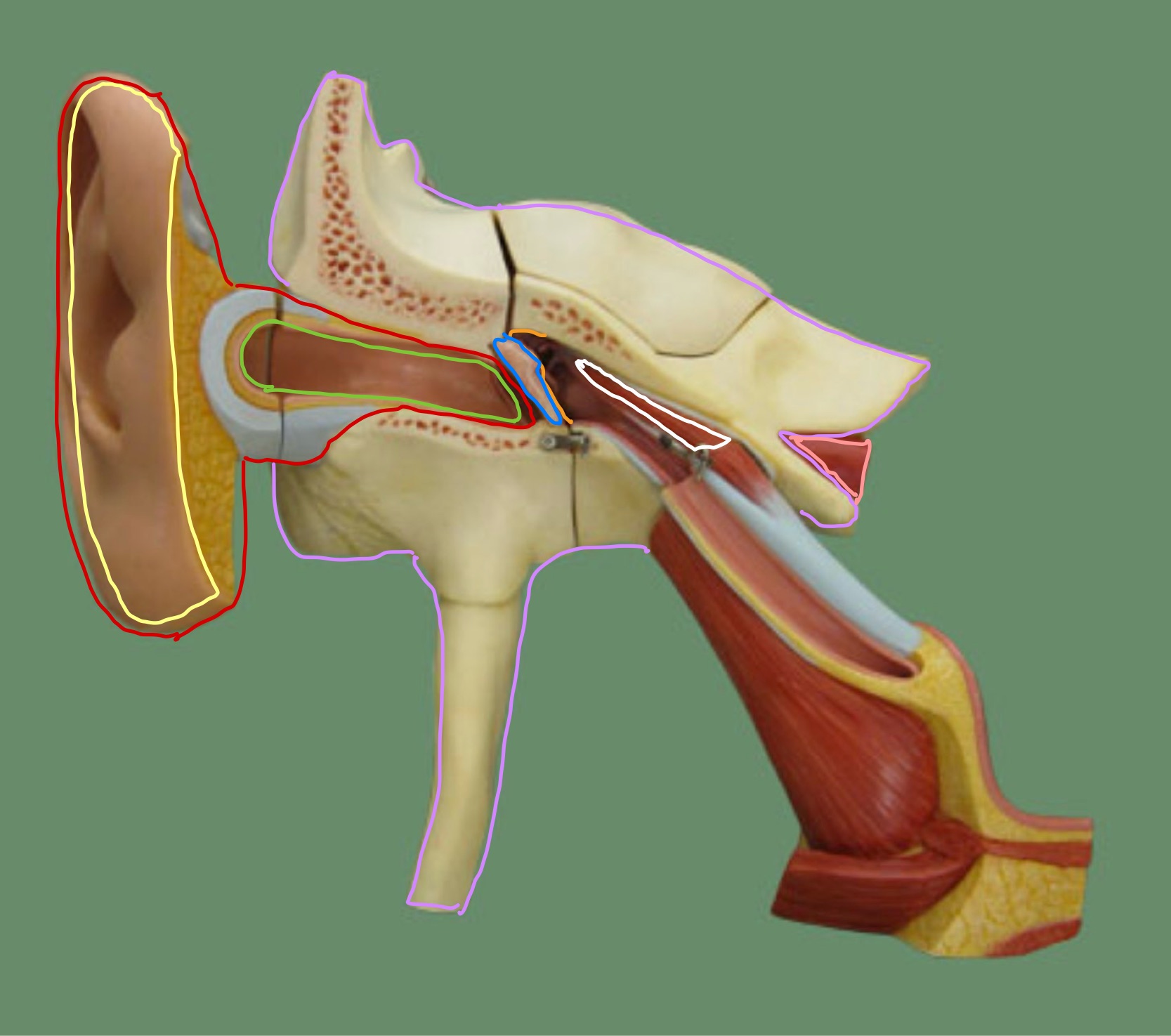
red
yellow
green
blue
purple
pink
white
red = external ear
yellow = auricle/pinna
green = external auditory meatus (canal)
blue = tympanic membrane (eardrum)
purple = temporal bone
pink = internal carotid artery
white = tensor tympani muscle
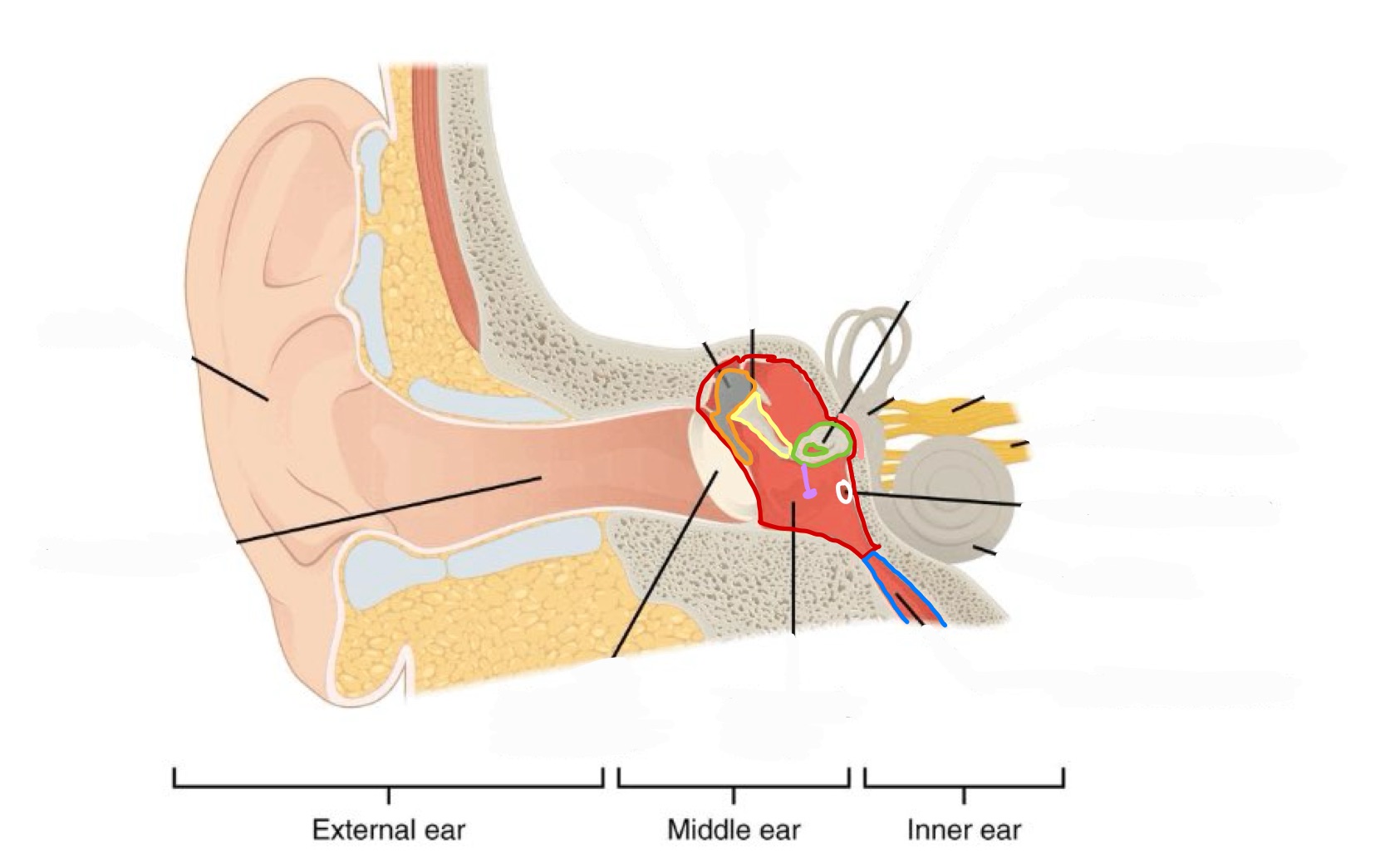
red
orange
yellow
green
blue
purple
white
pink
red = tympanic cavity
orange = malleus
yellow = incus
green = stapes
blue = eustacian tube
purple = stapedius muscle
white = round window
pink = oval window
What makes up the auditory ossicles?
malleus, incus, stapes
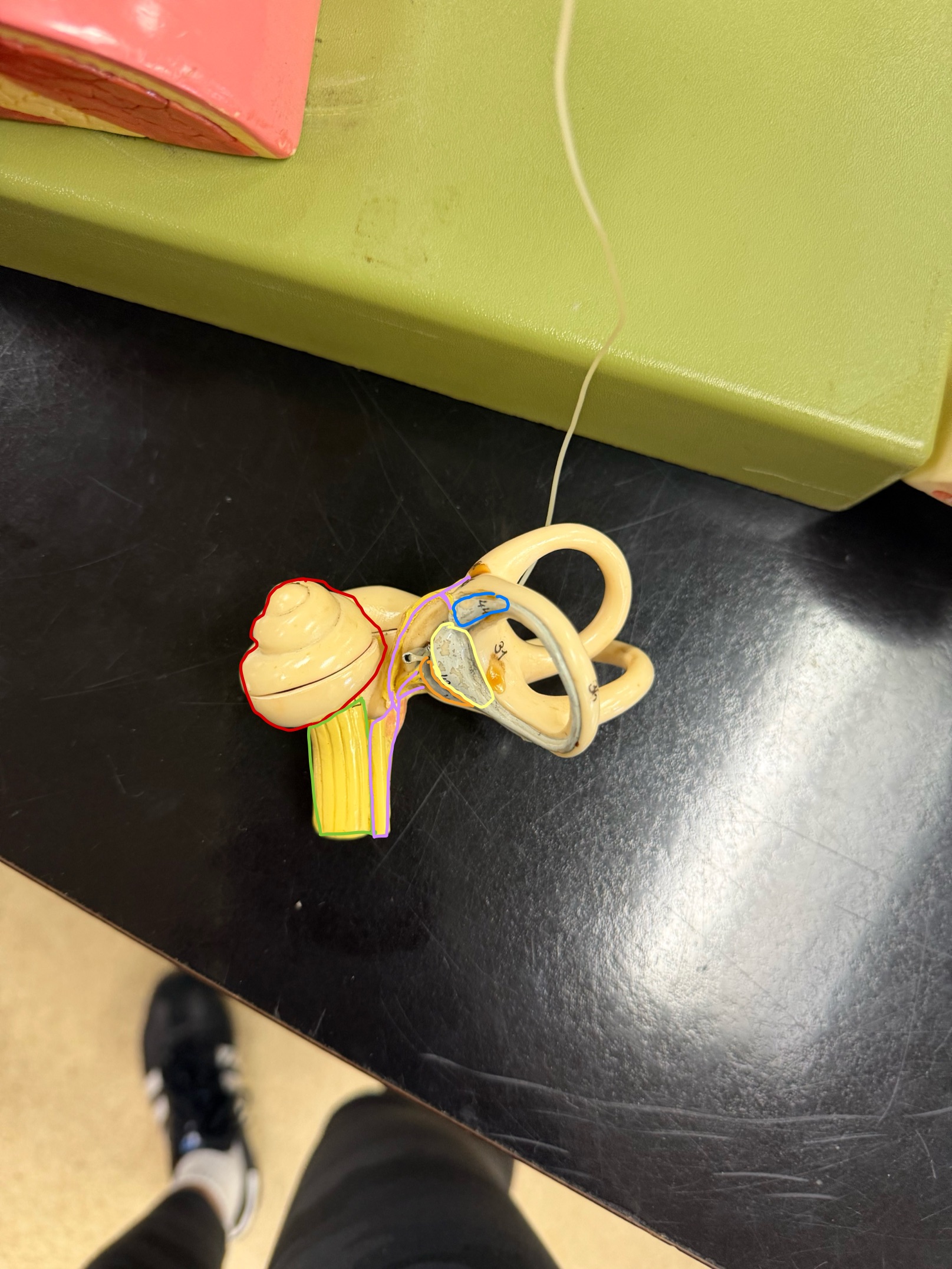
red
orange
yellow
green
blue
purple
red = cochlea/bony spiral lamina
orange = saccule
yellow = utricle
green = cochlear branch
blue = ampulla
purple = vestibular branch
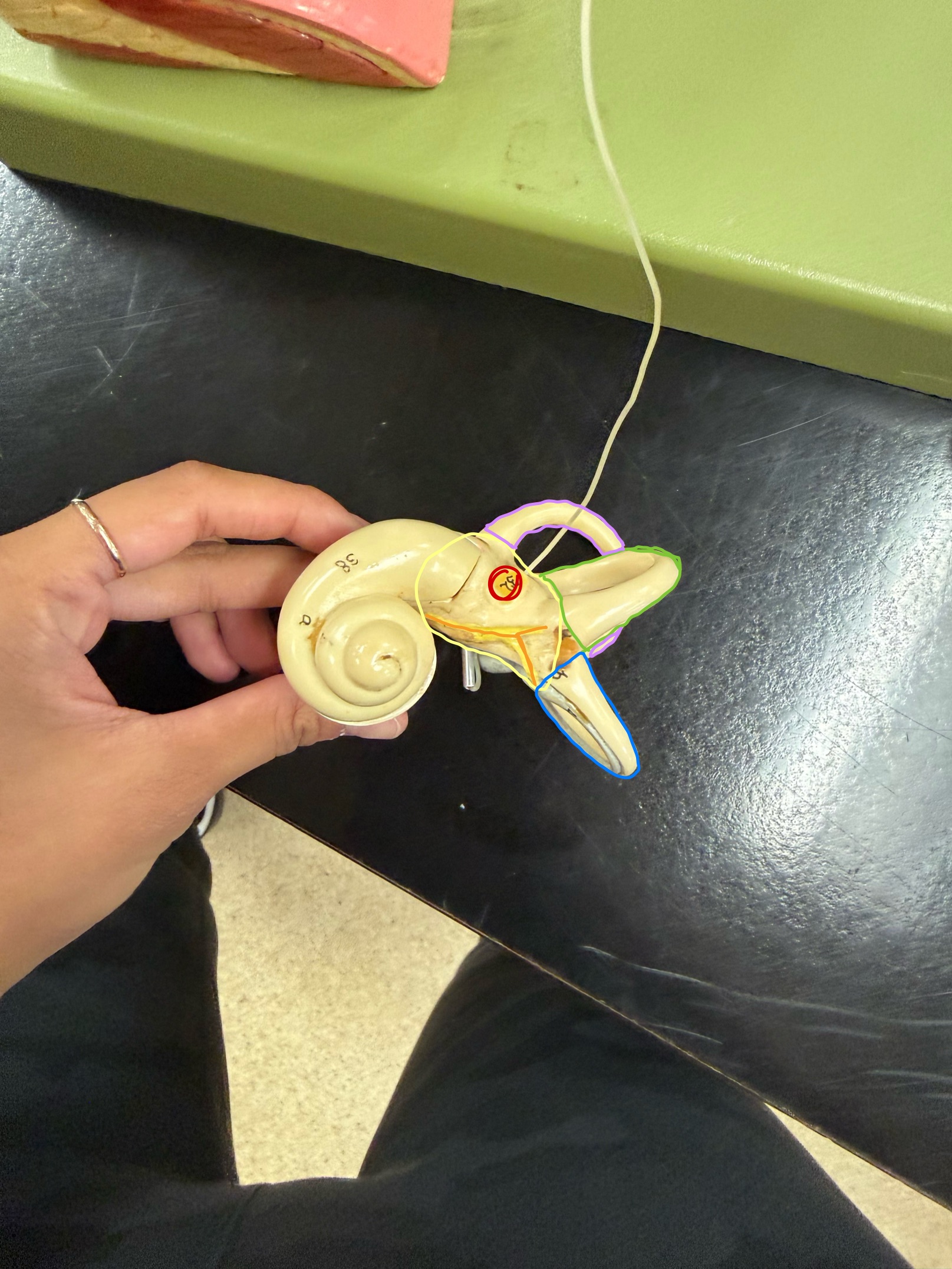
red
orange
yellow
green
blue
purple
red = oval window
orange = vestibular branch
yellow = vestibule
green = external semicircular canal
blue = upper semicircular canal
purple = posterior semicircular canal
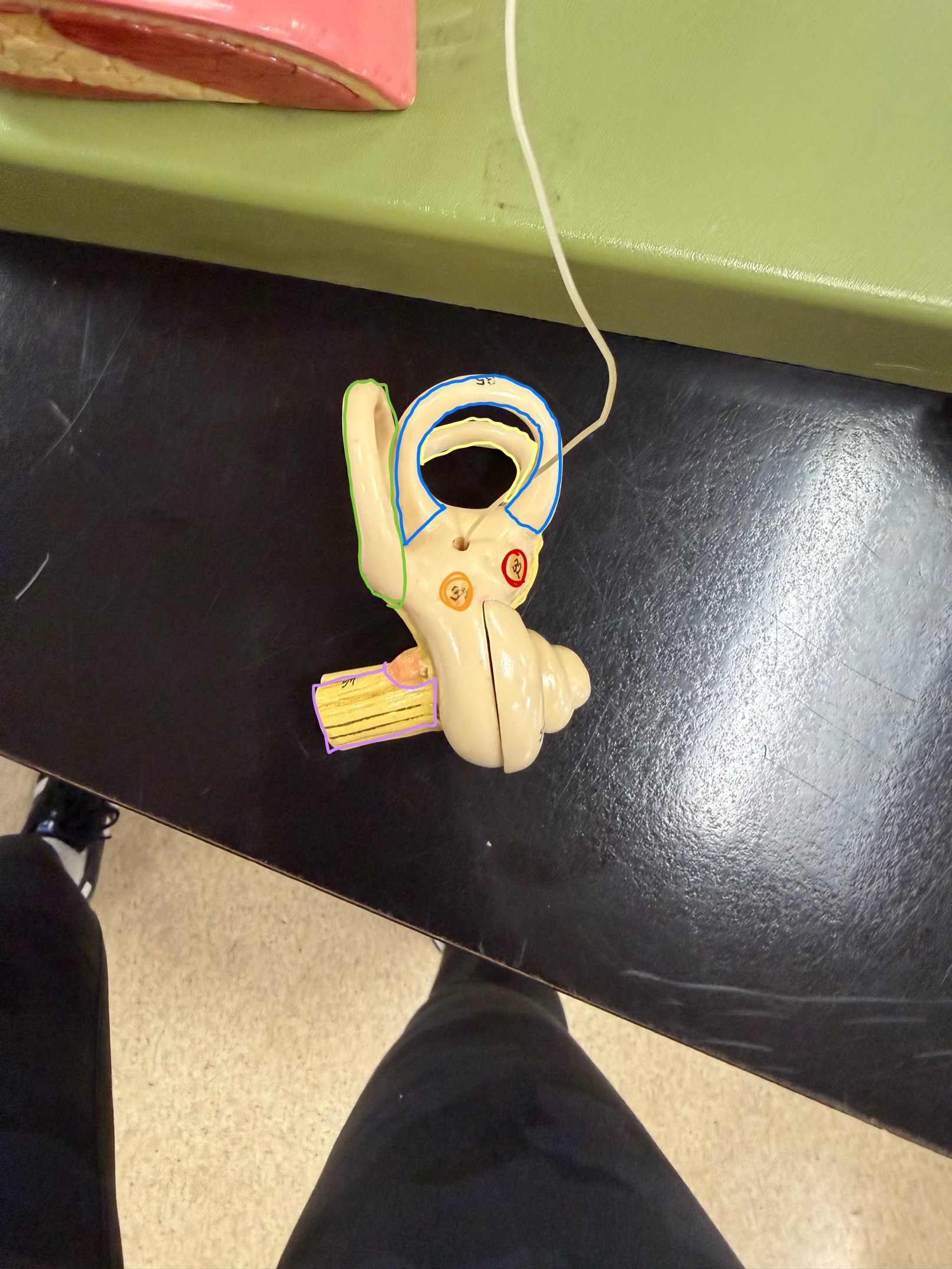
red
orange
yellow
green
blue
purple
red = oval window
orange = round window
yellow = upper semicircular canal
green = posterior semicircular canal
blue = external semicircular canal
purple = cochlear branch
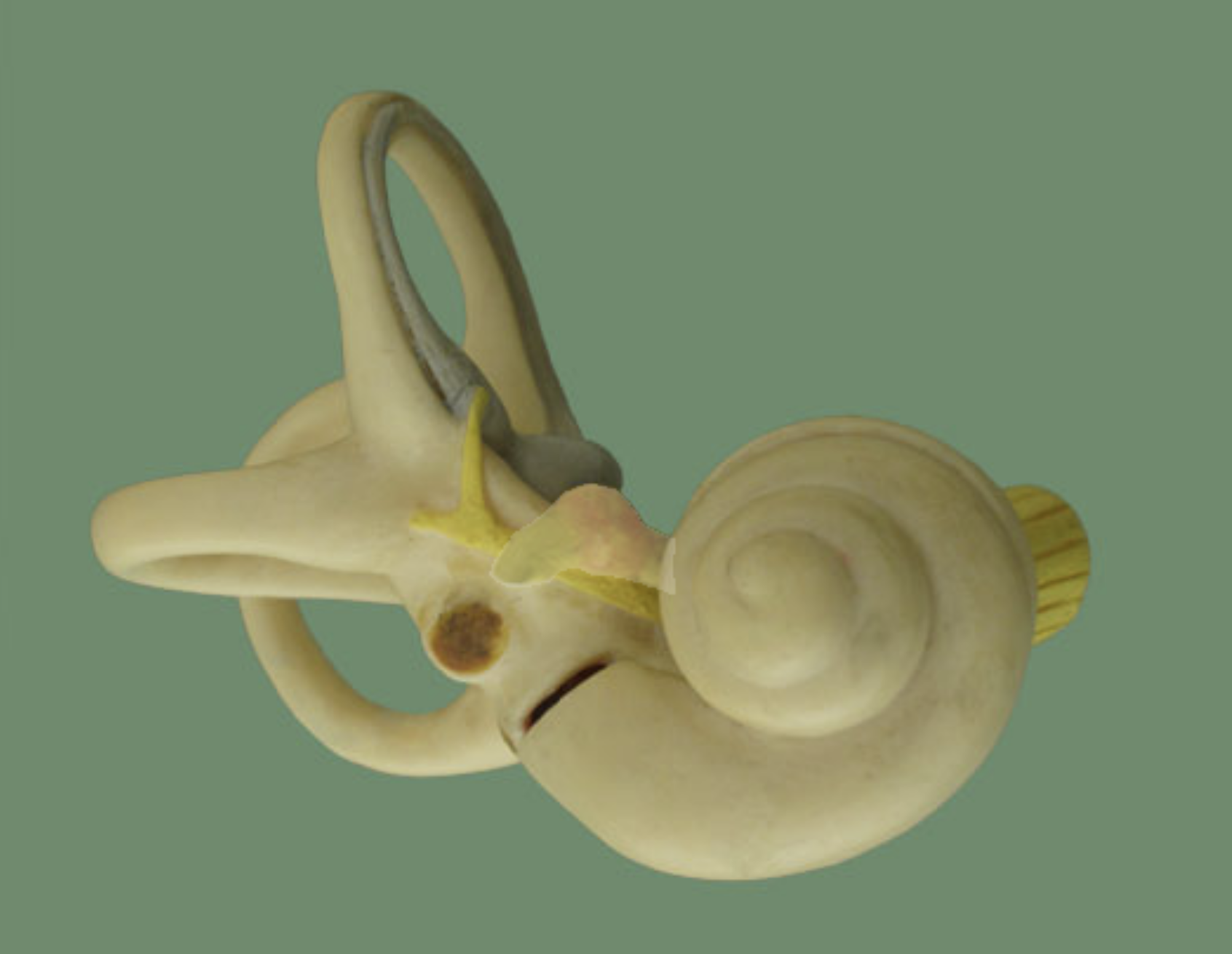
facial nerve (missing in model)
What are the 6 extrinsic eye muscles and their functions?
superior rectus - moves eye up
inferior rectus - moves eye down
medial rectus - moves eye inward (towards nose)
lateral rectus - moves eye outwards (towards ear)
superior oblique - rotates eye inward and helps with depression and abduction
inferior oblique - rotates eye outward and helps with elevation and adduction
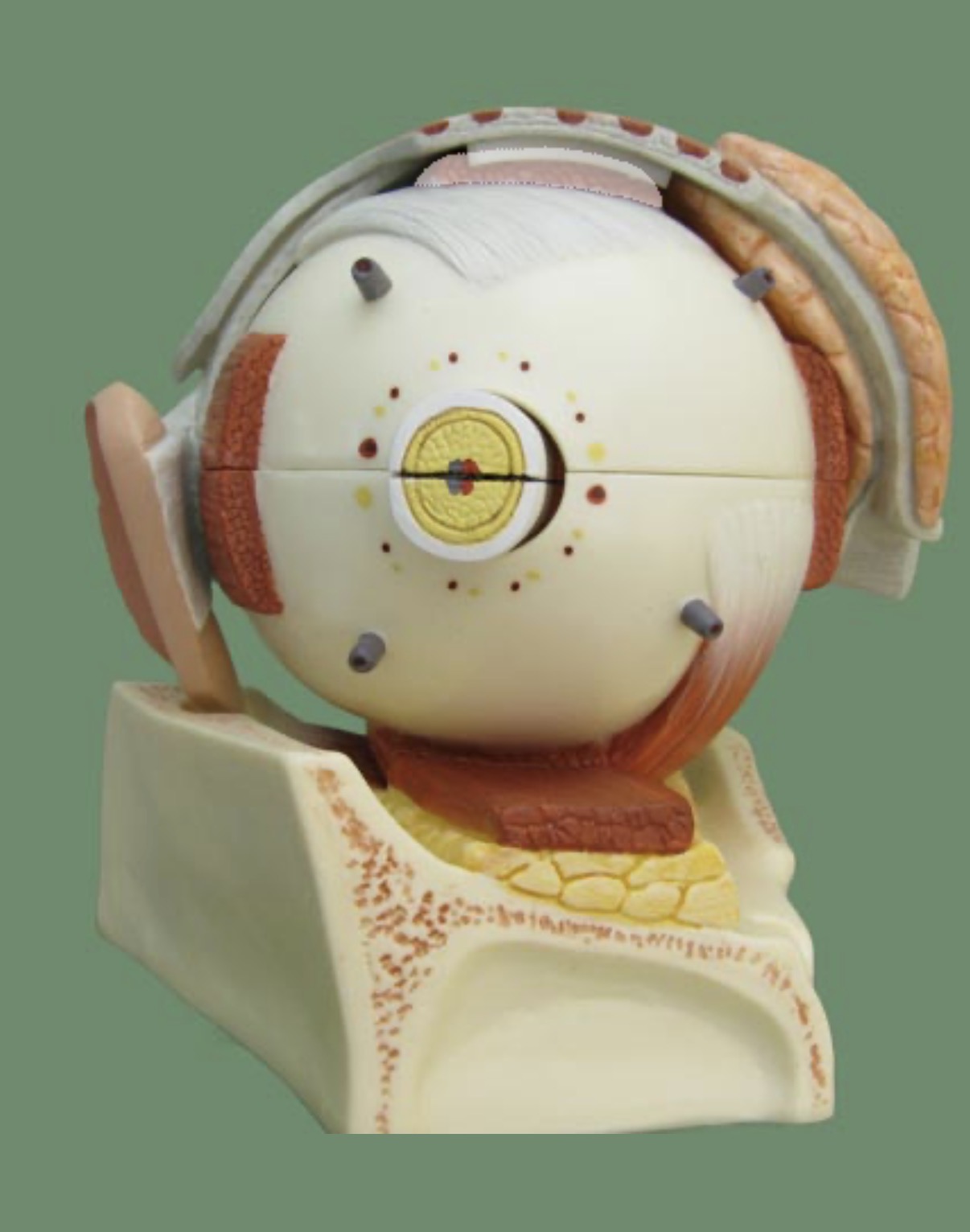
Superior rectus
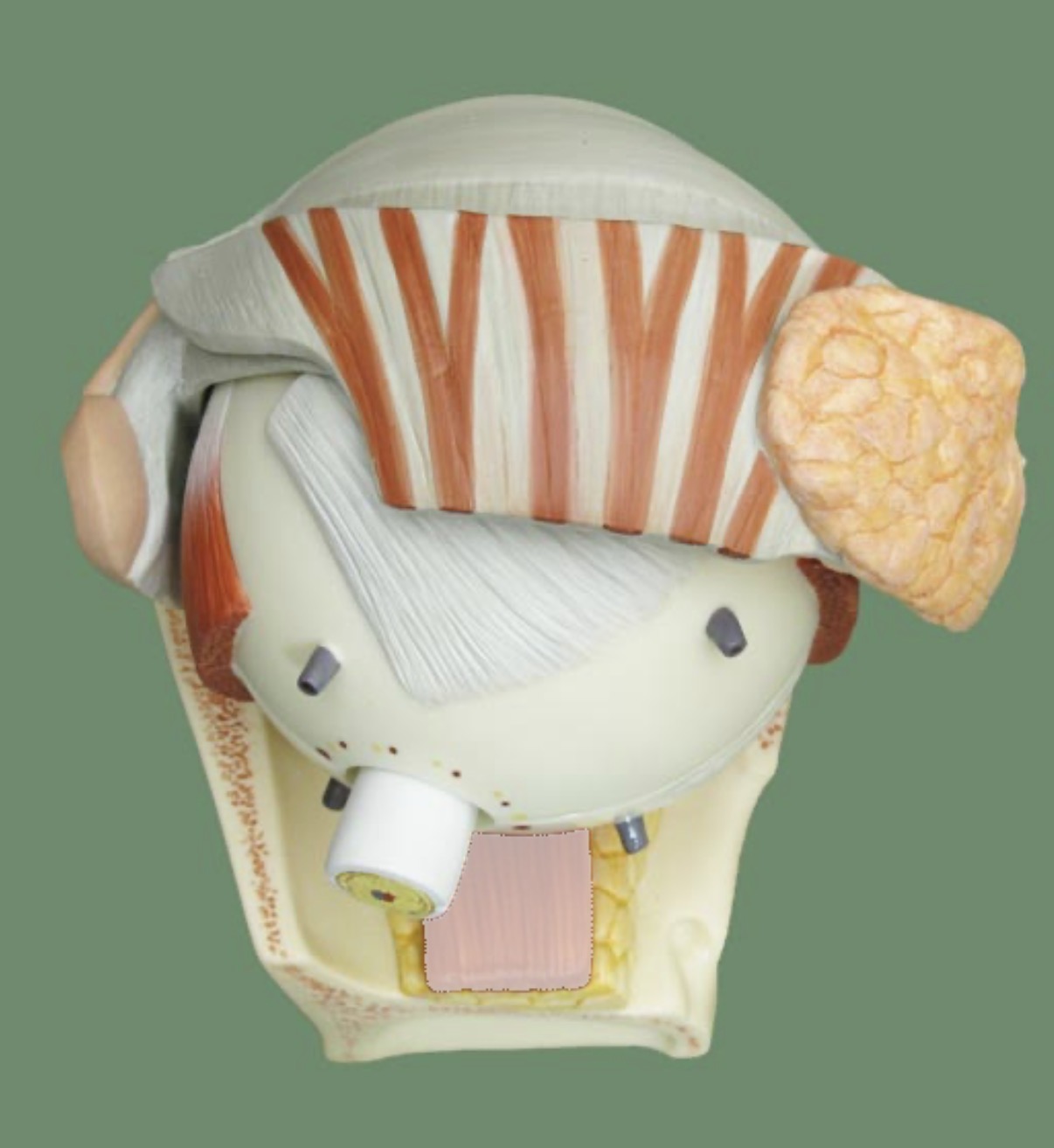
Inferior rectus
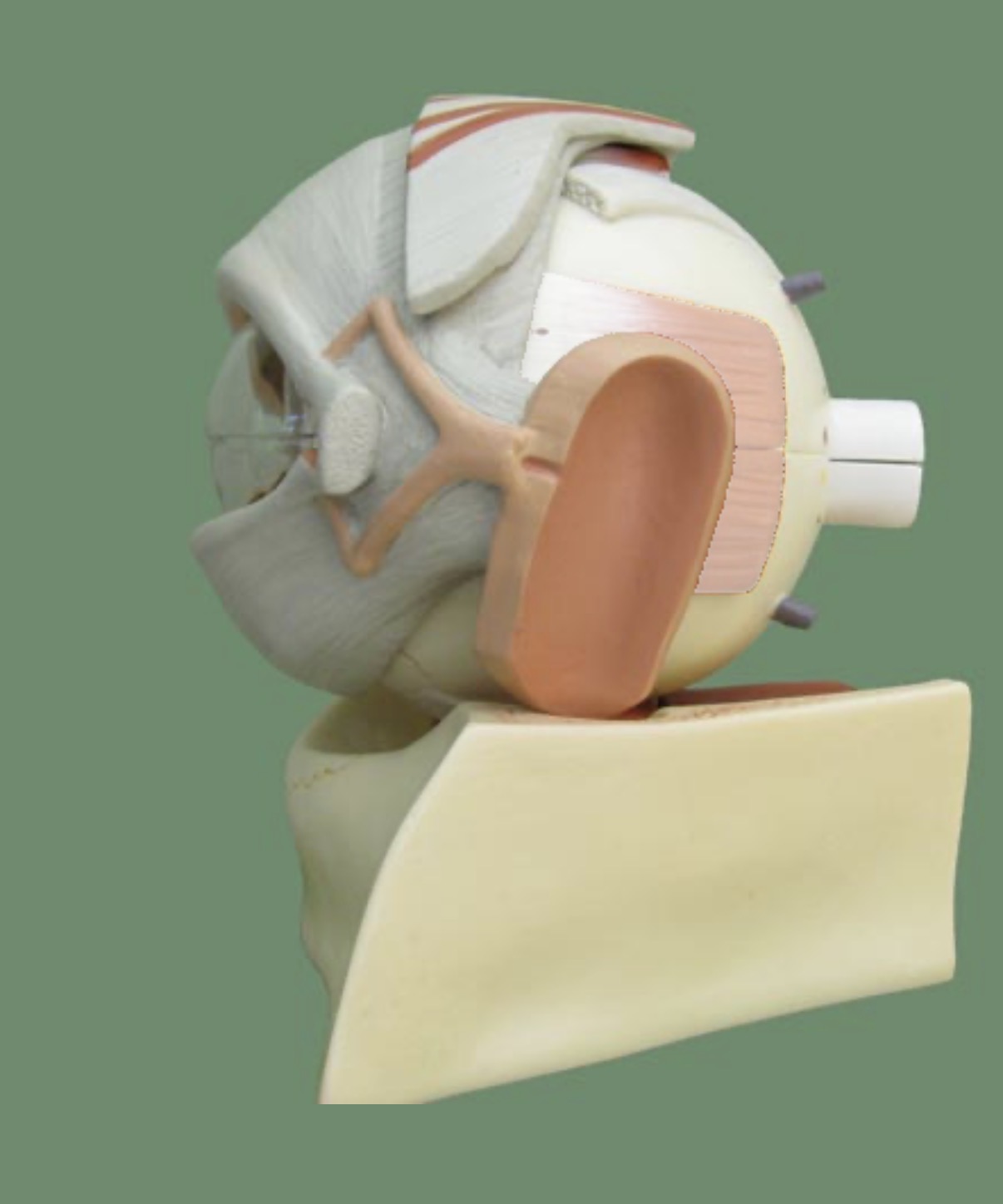
Medial rectus
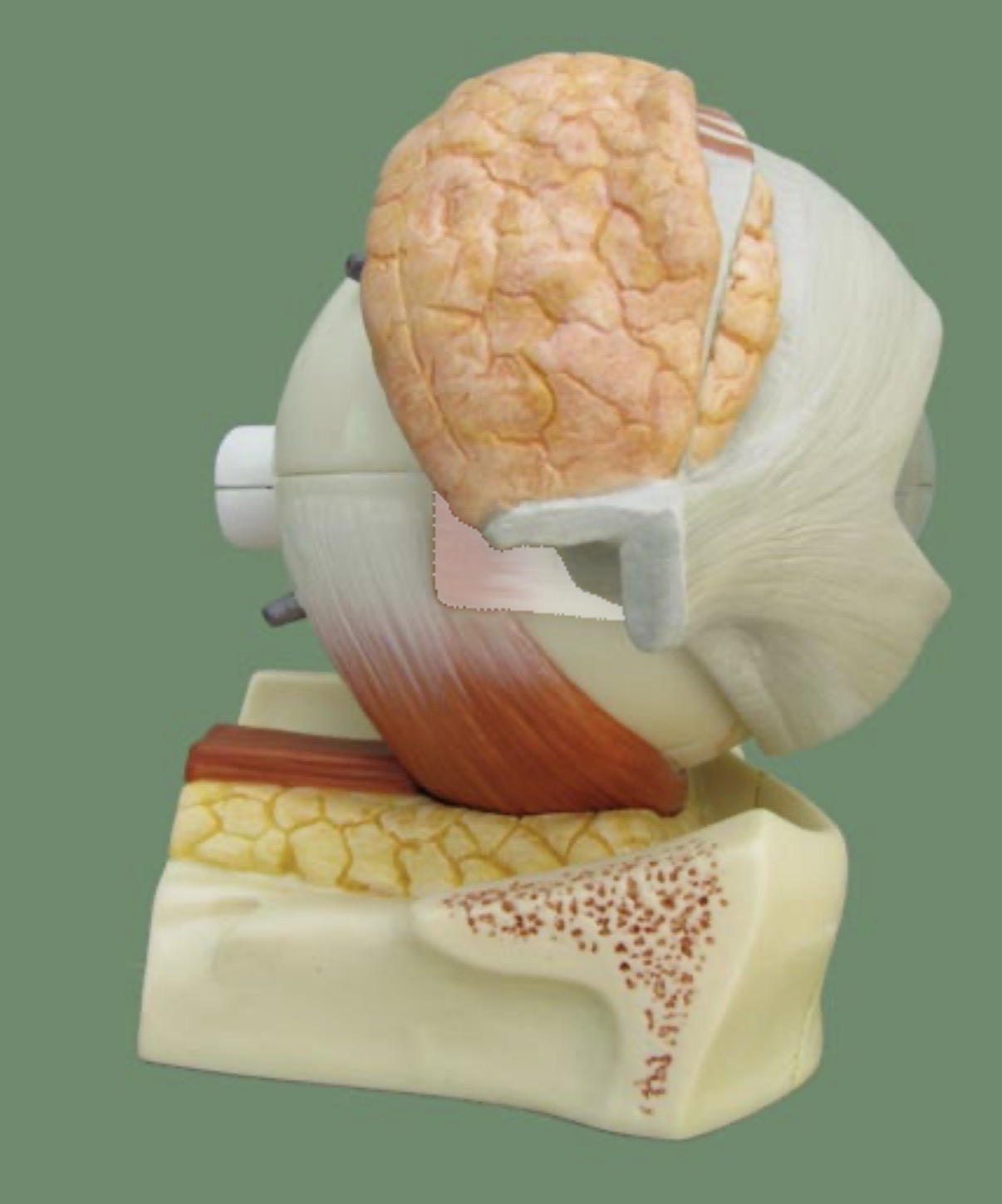
Lateral rectus
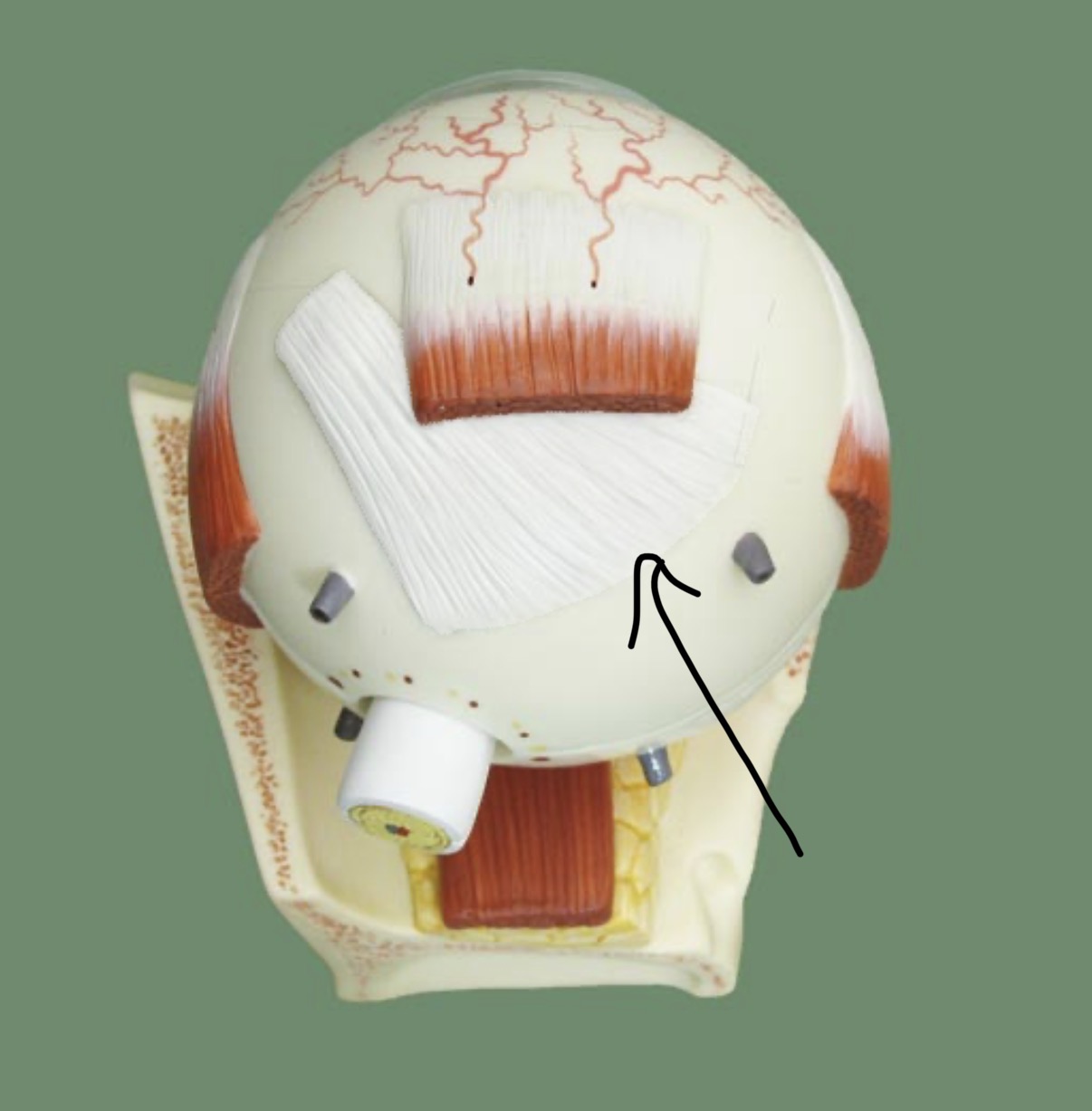
Superior oblique
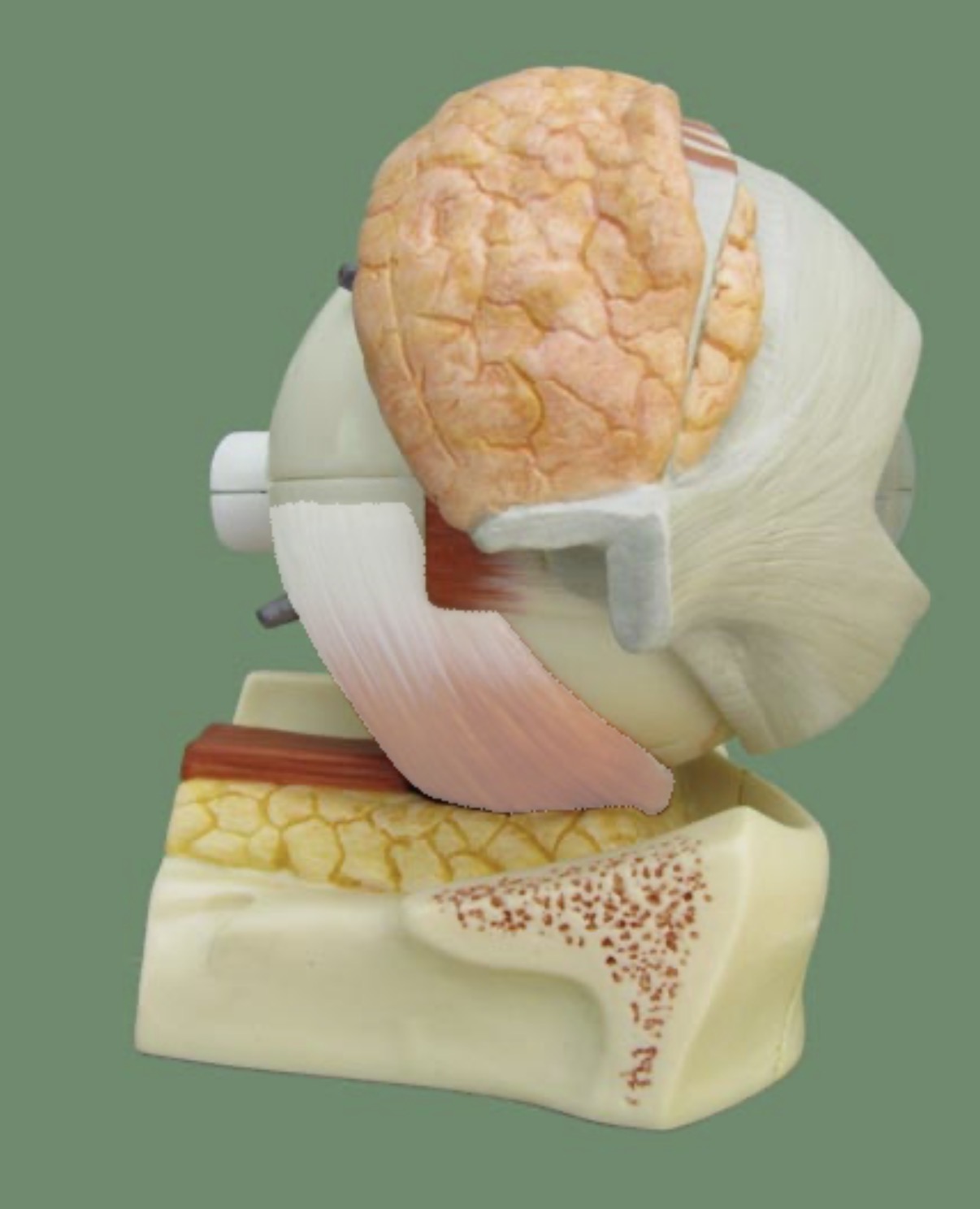
Inferior oblique
What are the function of eyelids and eyelashes?
protective structures to keep debris out
What is conjunctiva of the eye?
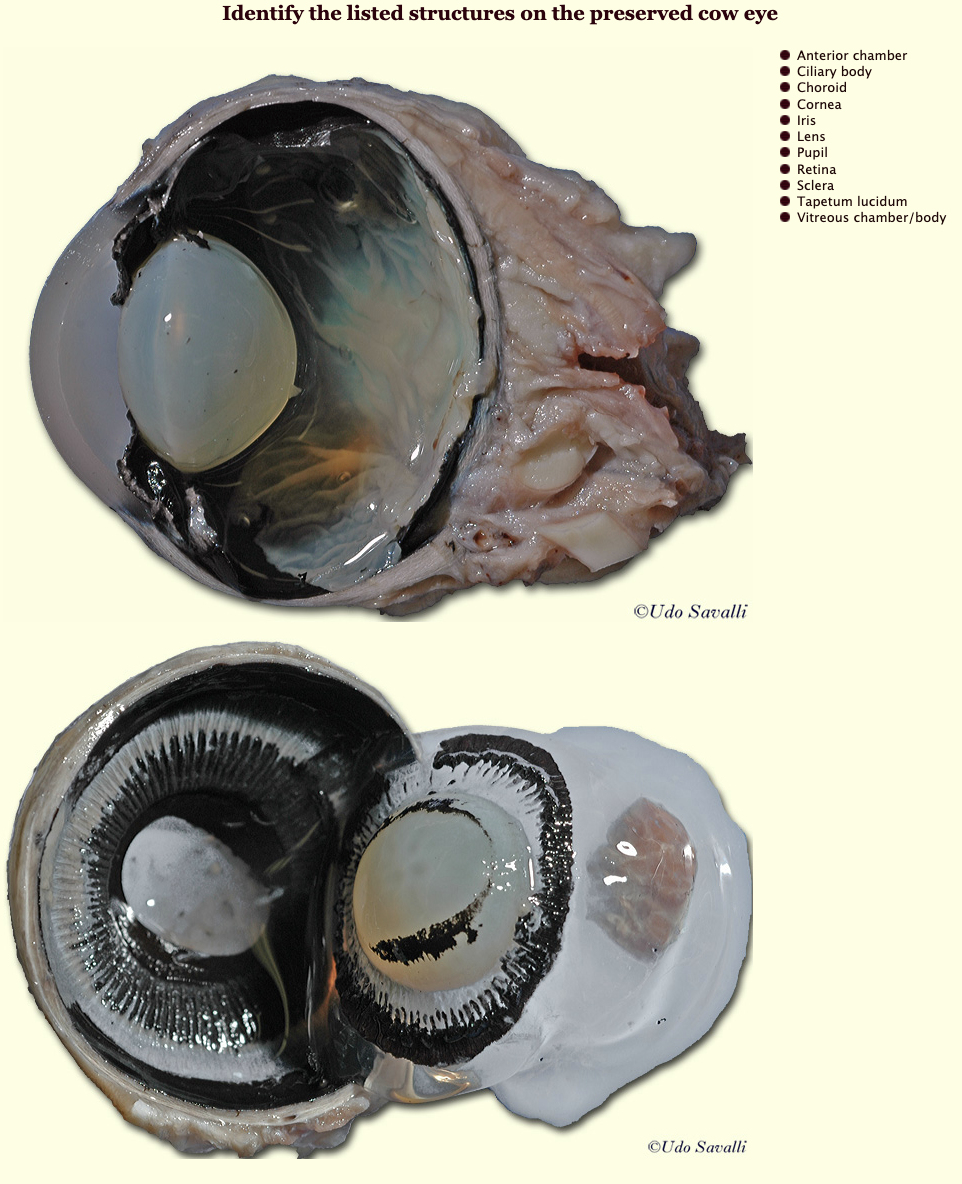
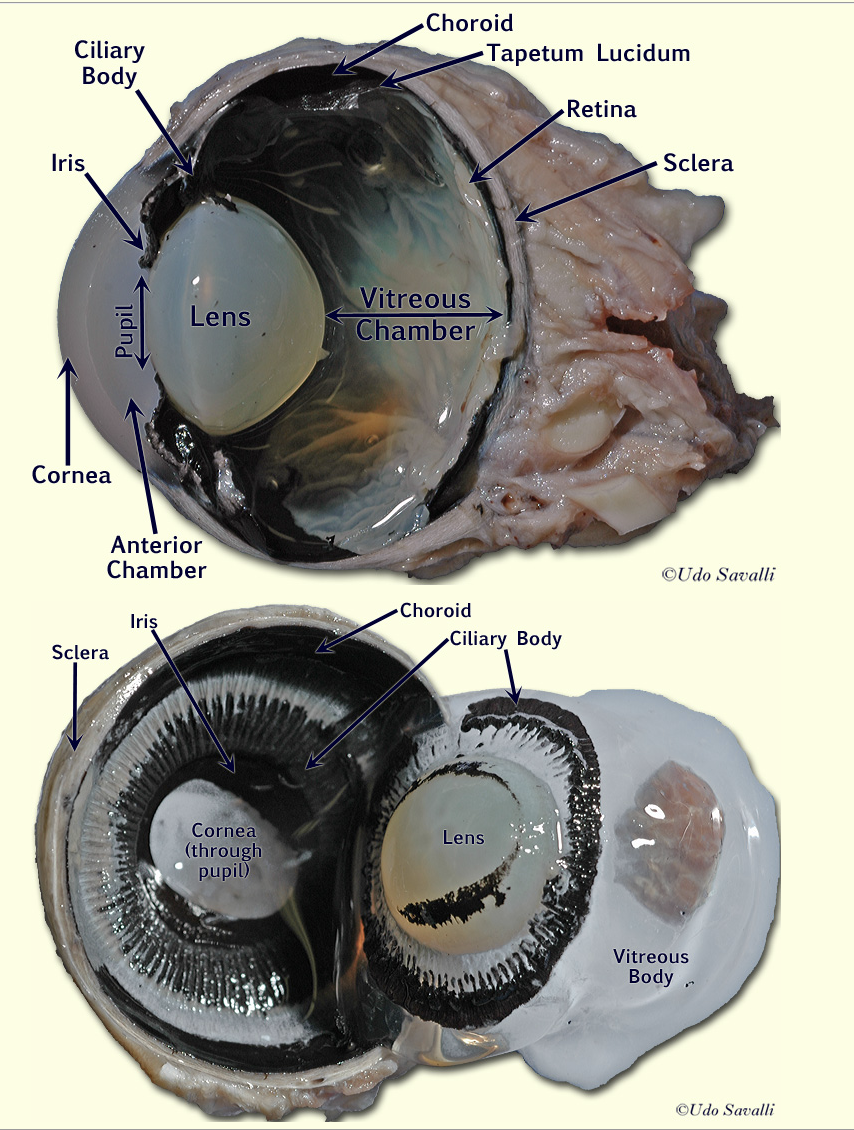
a thin membrane covering the front of the eye and inner eyelids
What is the components of the lacrimal apparatus?
lacrimal gland (produces tears) and lacrimal ducts (drains tears into the nasal cavity)
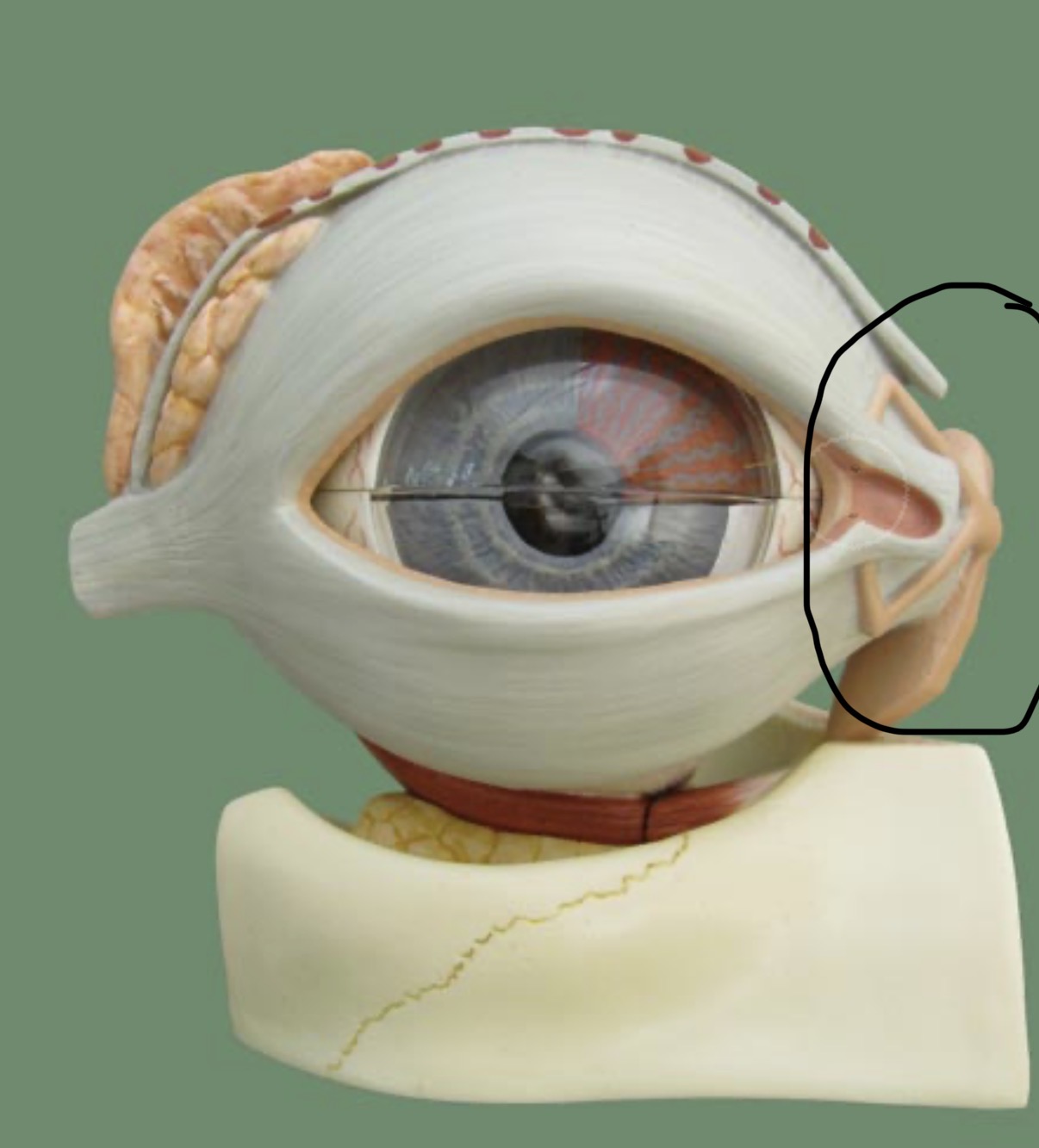
What is the function of lacrimal gland?
produce tears to keep the eye moist
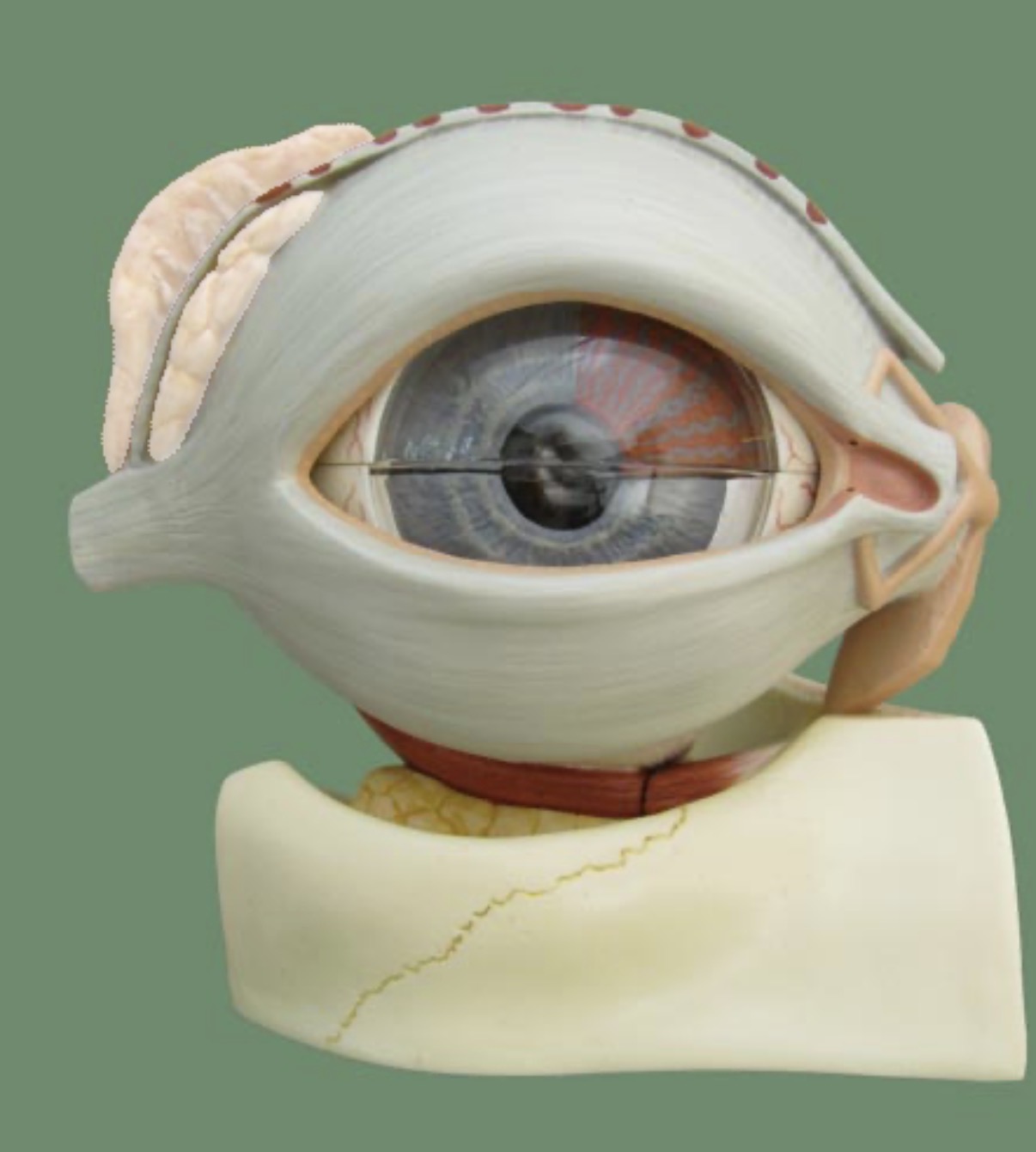
What is the cornea?
transparent front part of the eye that helps focus light
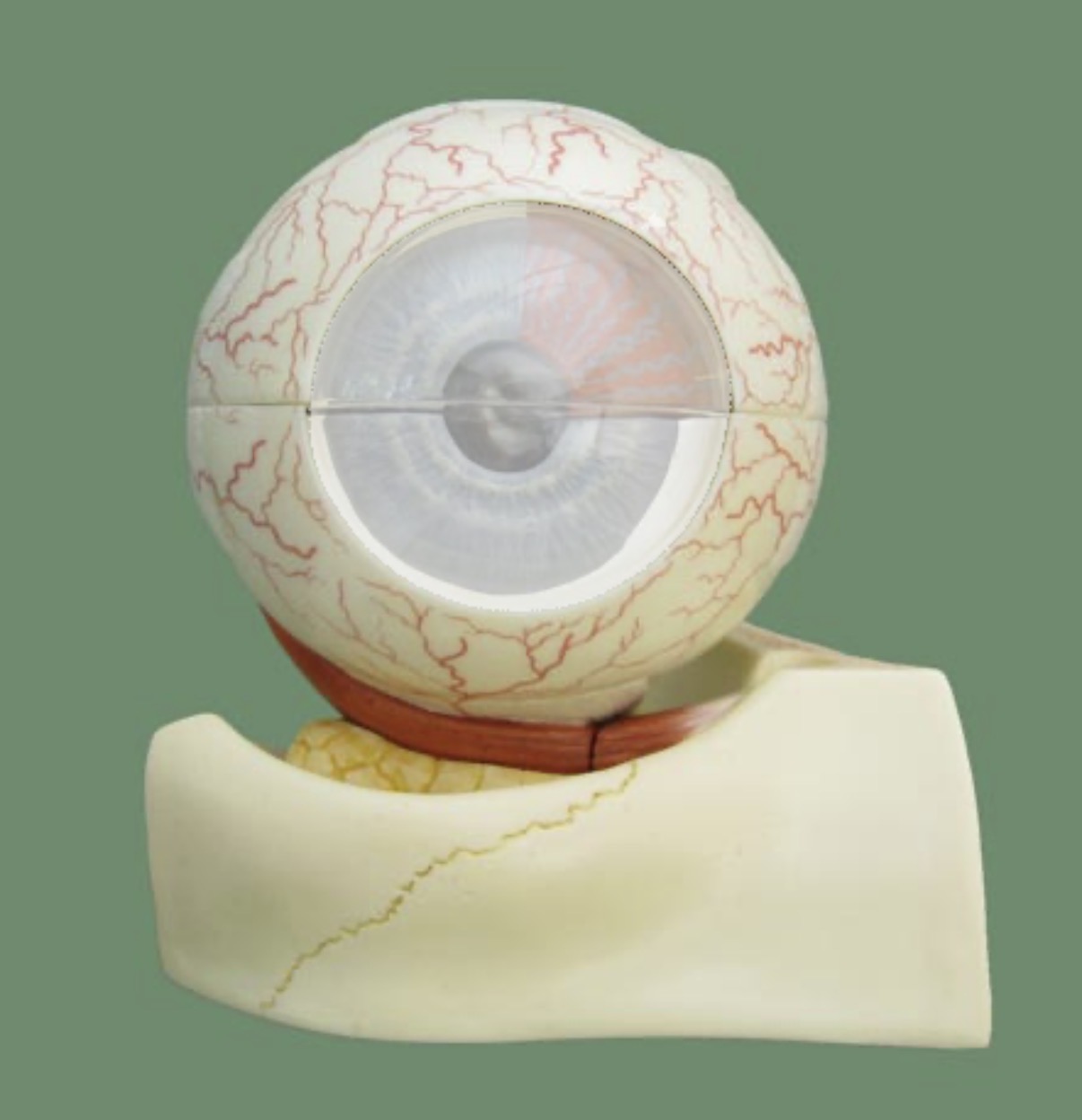
What is the sclera?
white, tough outer layer of the eyeball
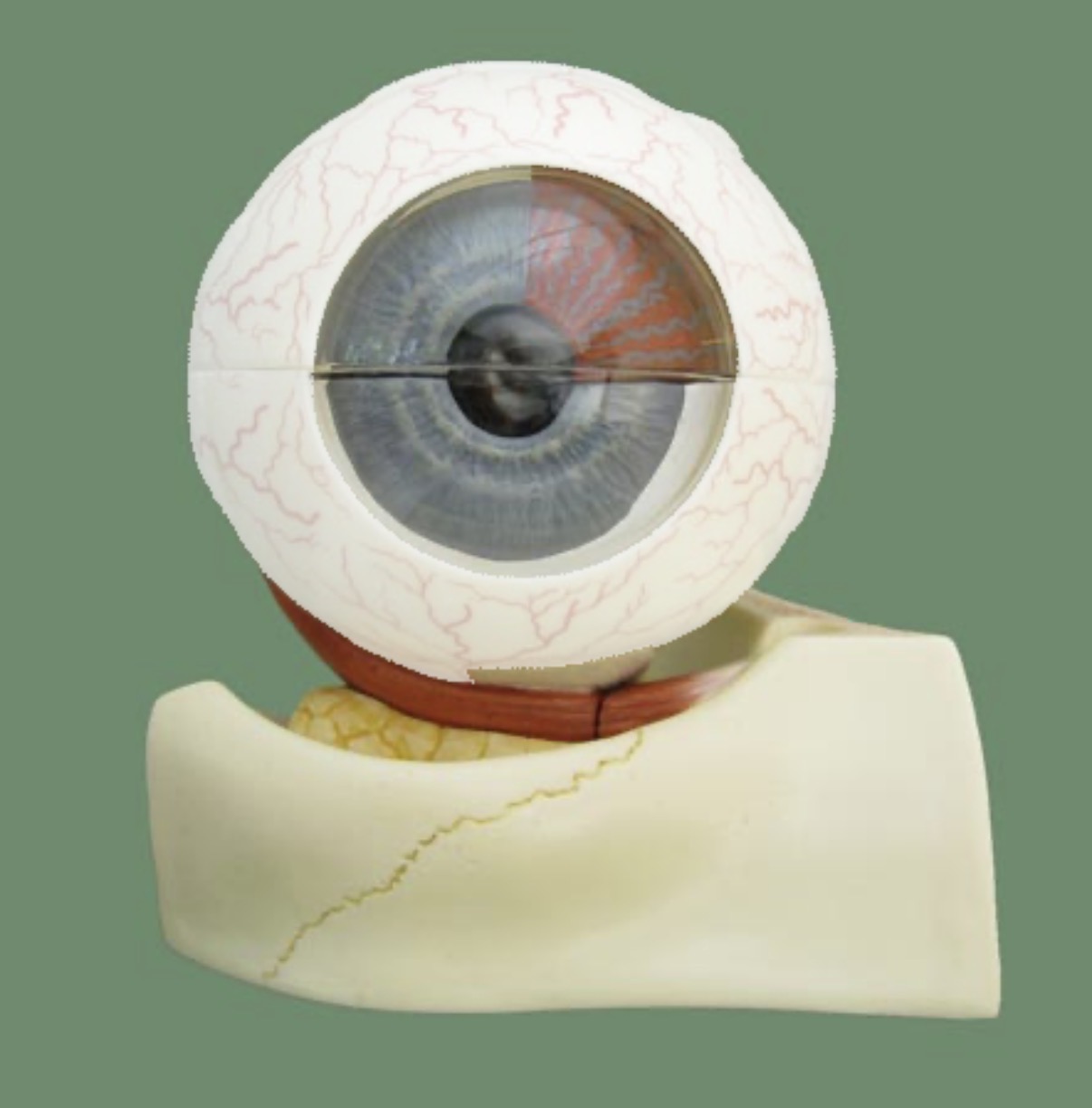
What is the iris?
colored part of the eye, controls pupil size
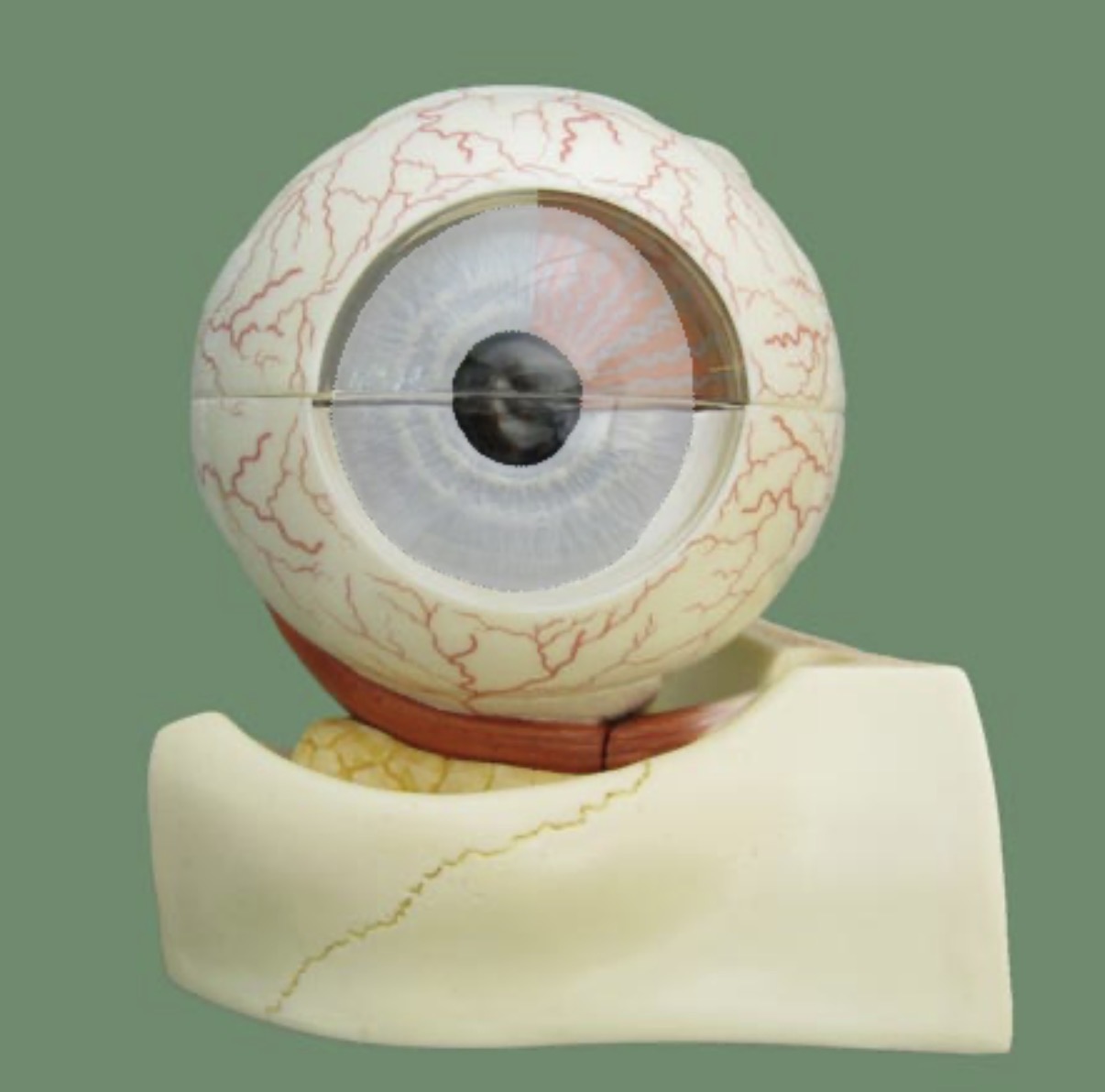
What is the pupil and what its function?
the opening in the center of the iris
controls light entry
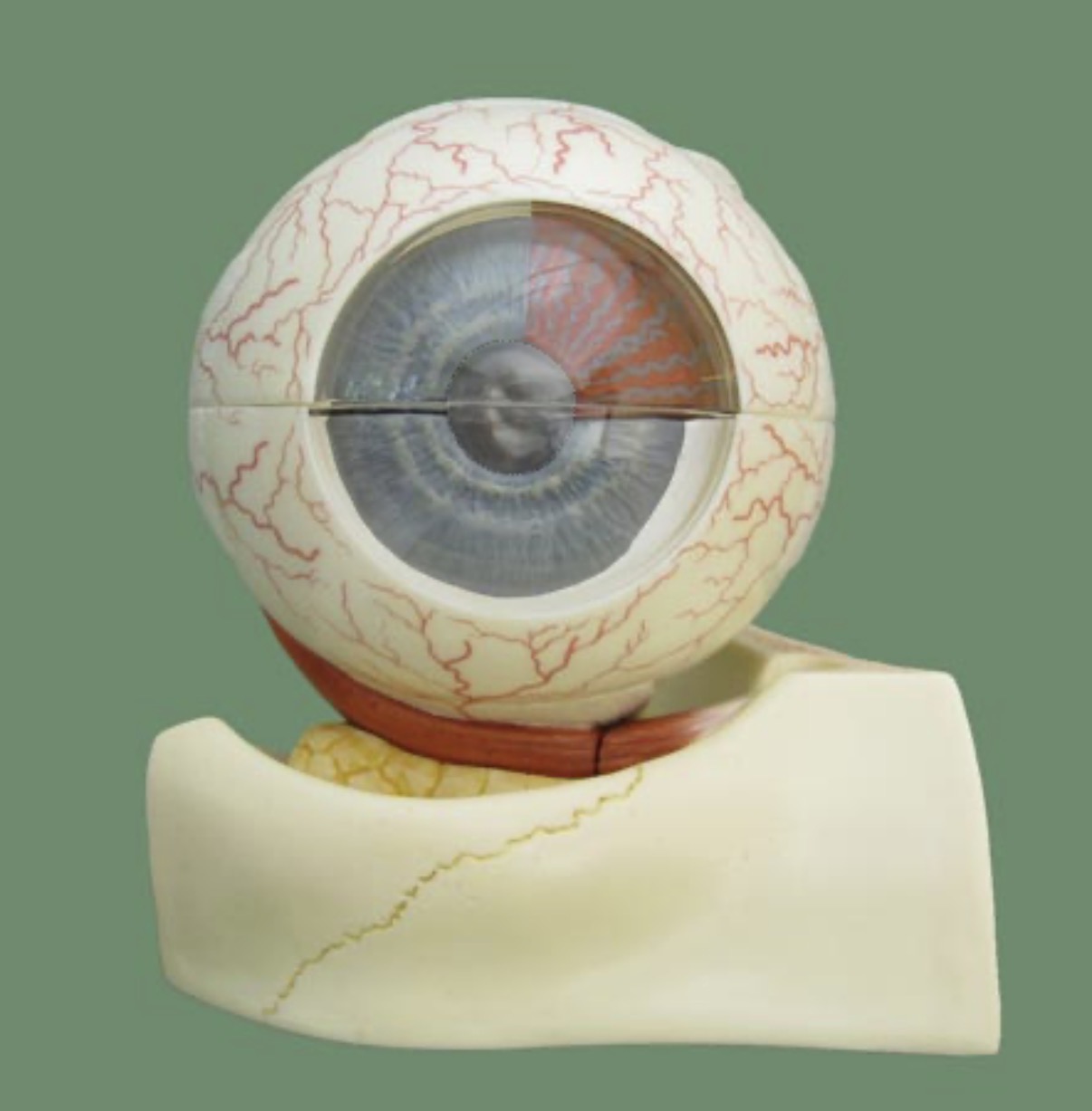
What is the function of the lens?
transparent structure that changes shape to focus light onto the retina
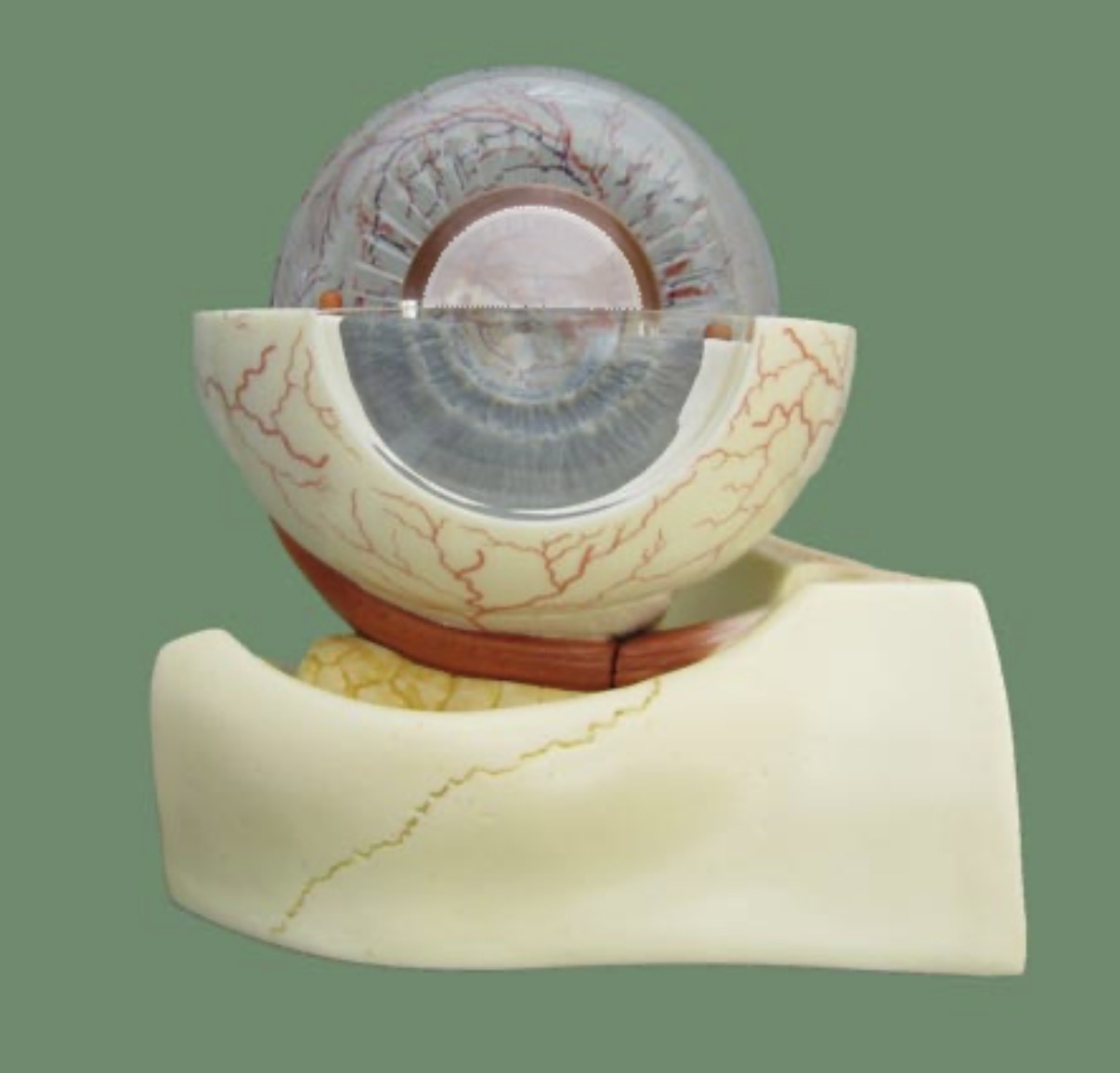
What is the aqueous humor and its function?
fluid in the anterior chamber
nourishes the eye and maintains intraocular pressure
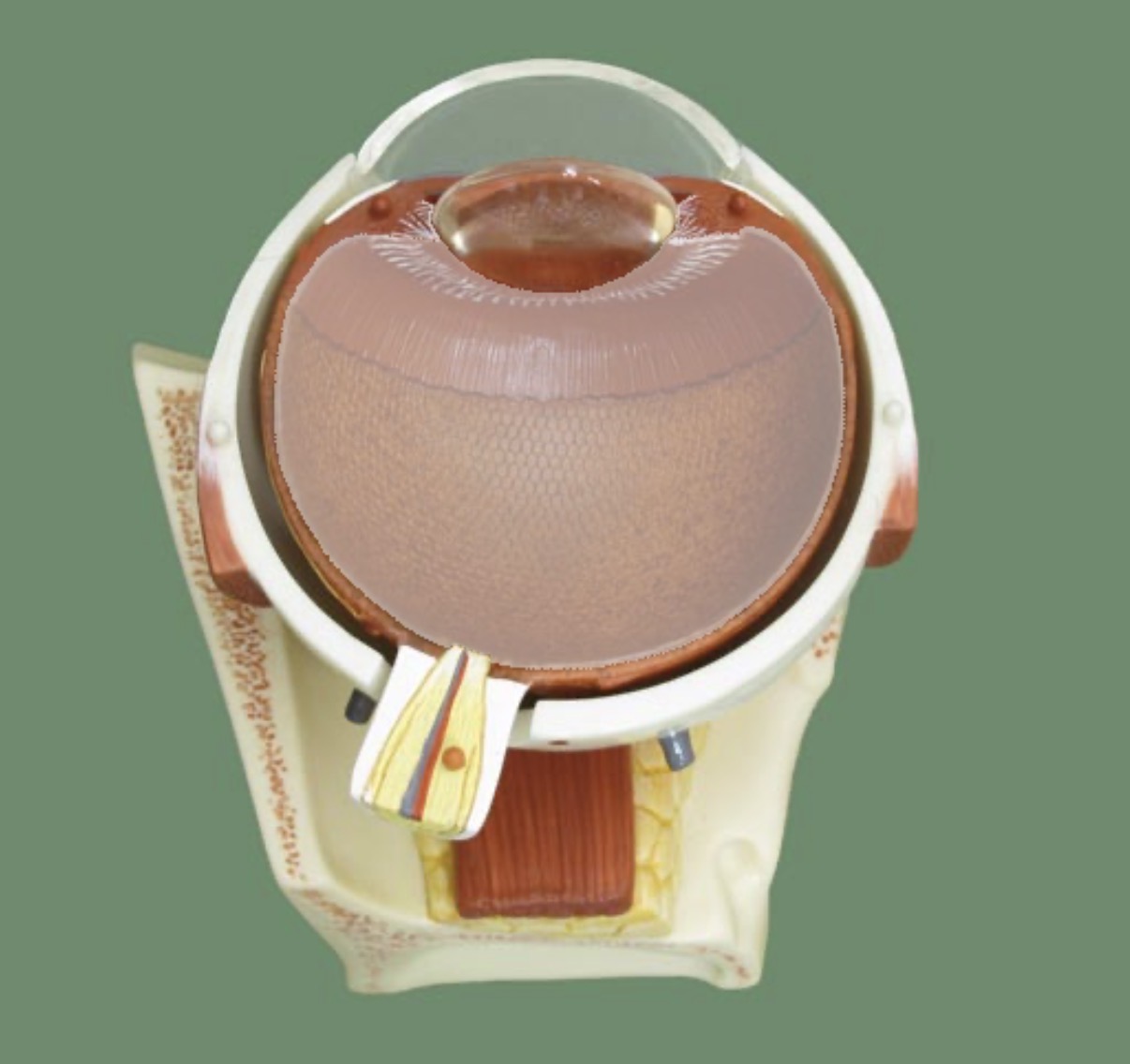
What is the retina?
light-sensitive layer containing photoreceptors (rods and cones)
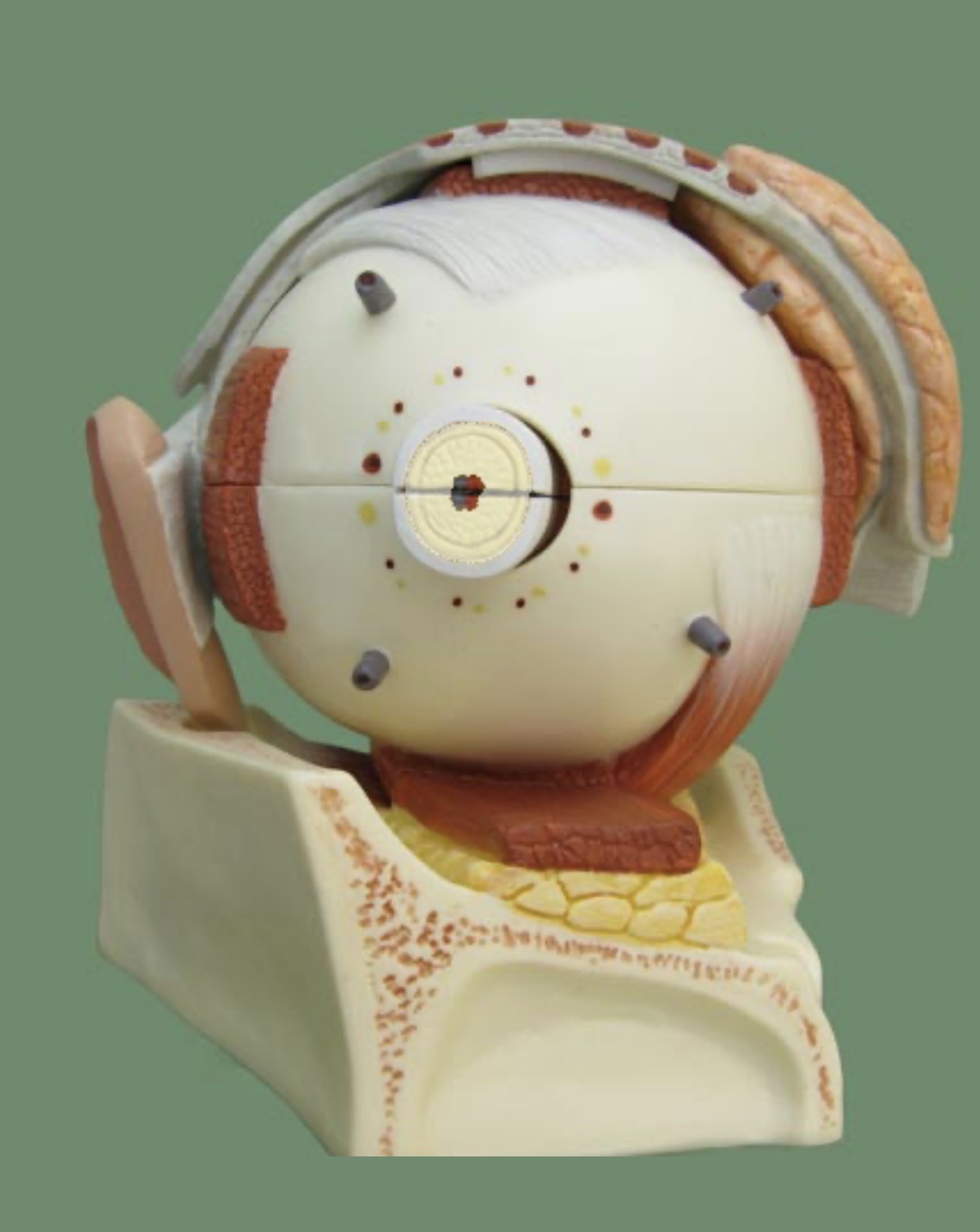
What is the function of the optic nerve (2)?
transmits visual signals from the retina to the brain
What is the function of the macula and fovea centralis?
central area of the retina responsible for sharp central vision
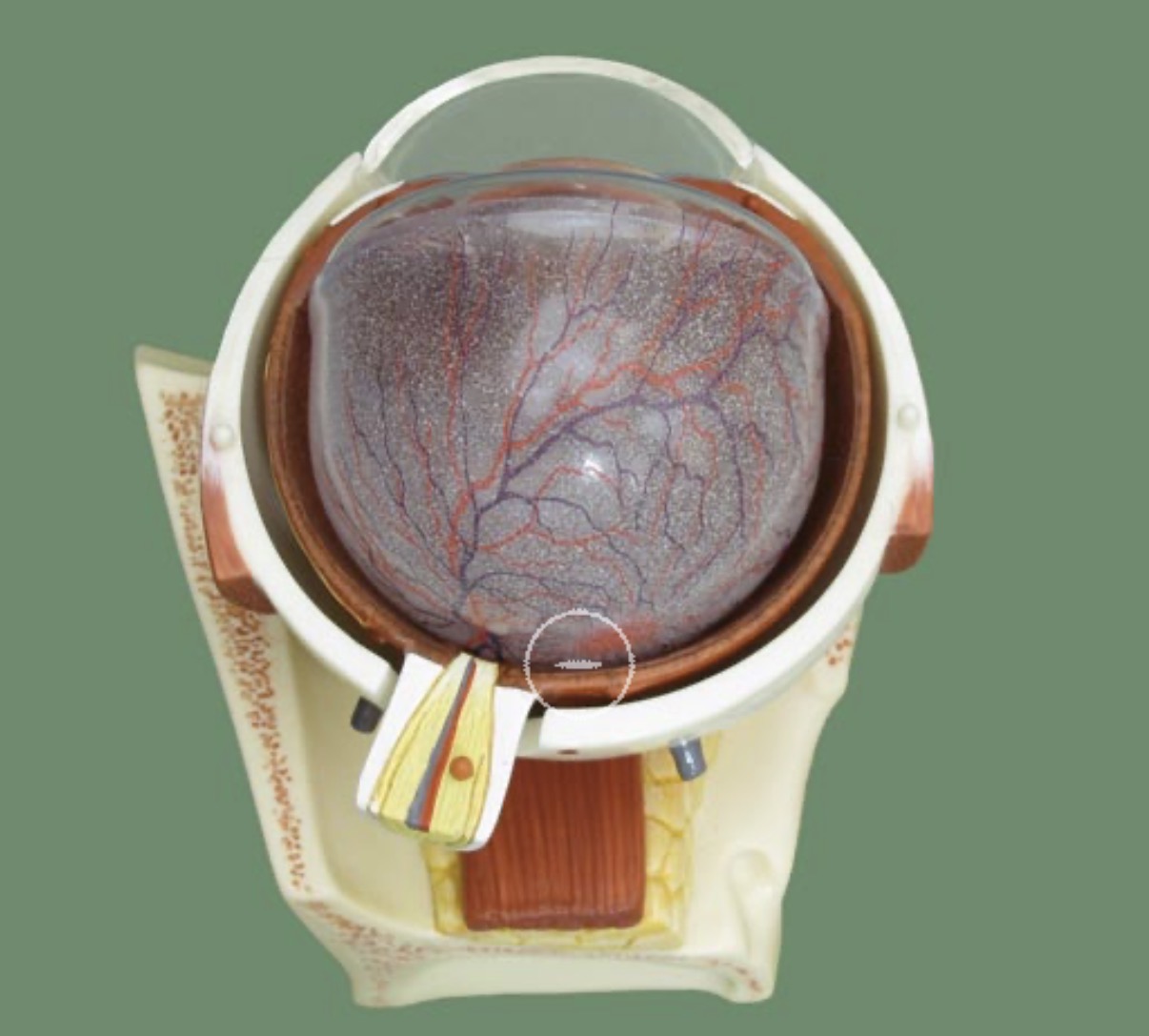
What is the function of the choroid?
the vascular layer that supplied oxygen and nutrients to the retina
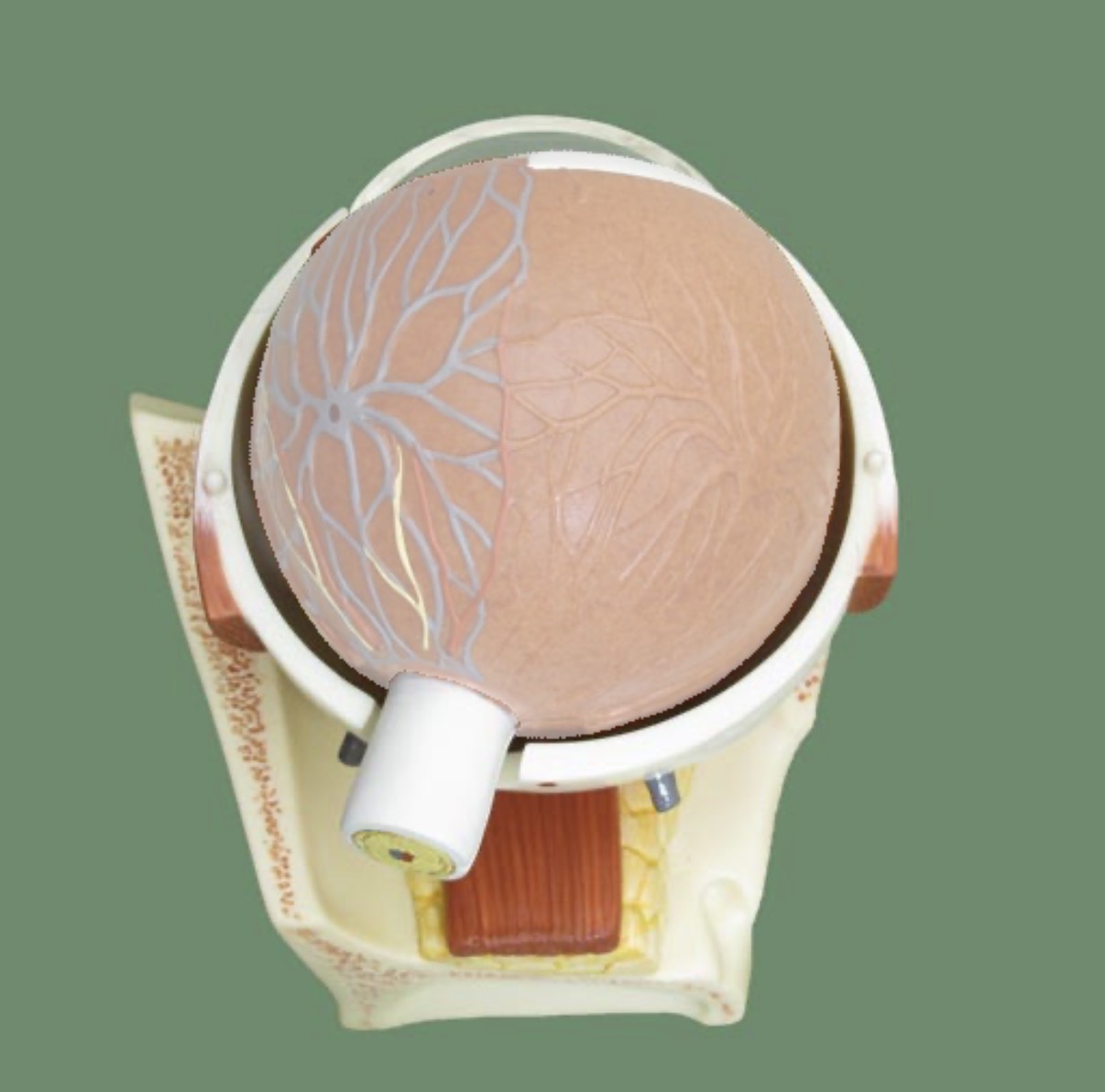
What is the vitreous humor and its function?
gel-like substance filling the posterior chamber
maintains eye shape
What is the optic disc (blind spot)?
where the optic nerve exits, lacks photoreceptors
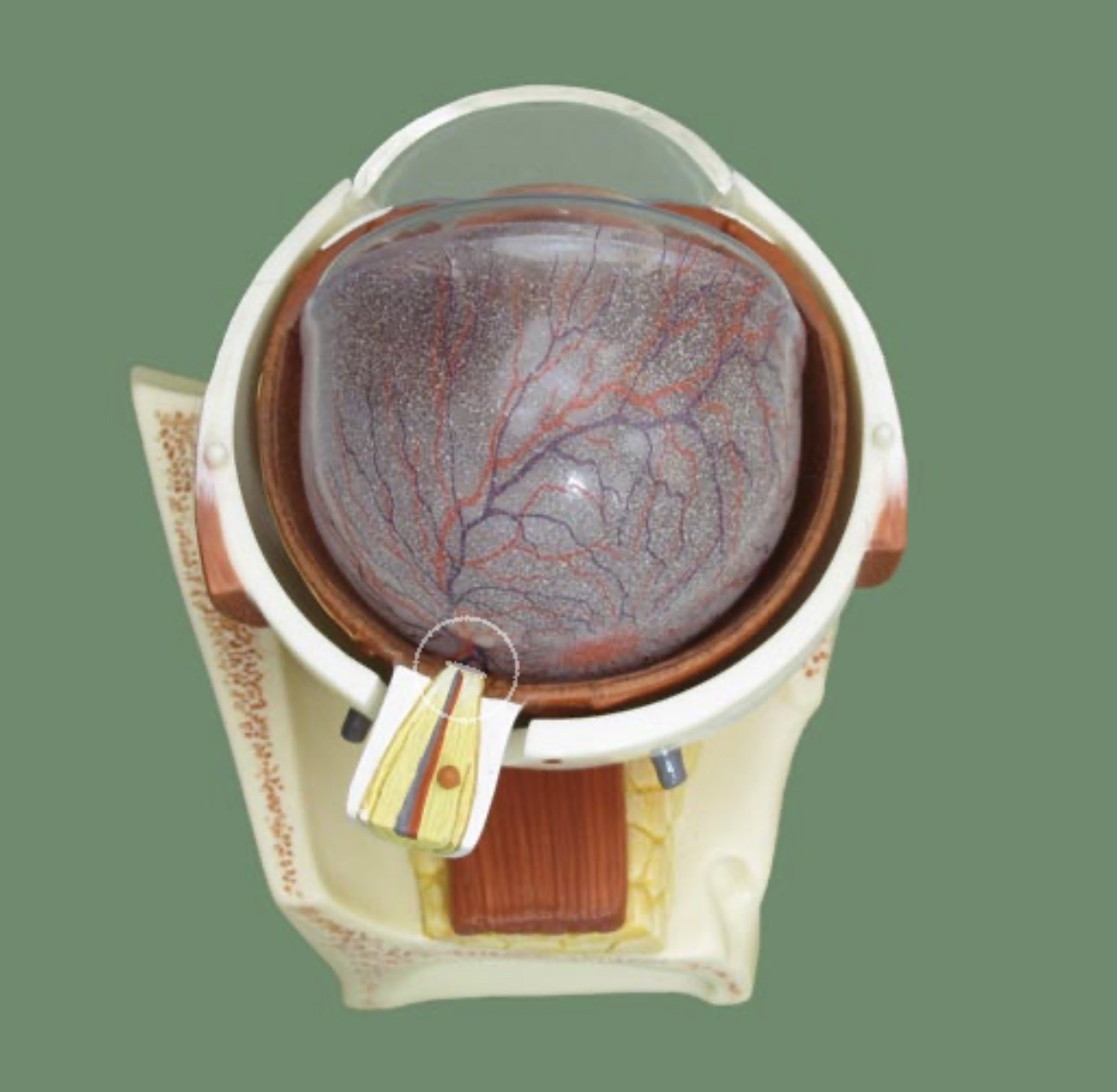
What is the function of the suspensory ligaments?
connects the ciliary body to the lens
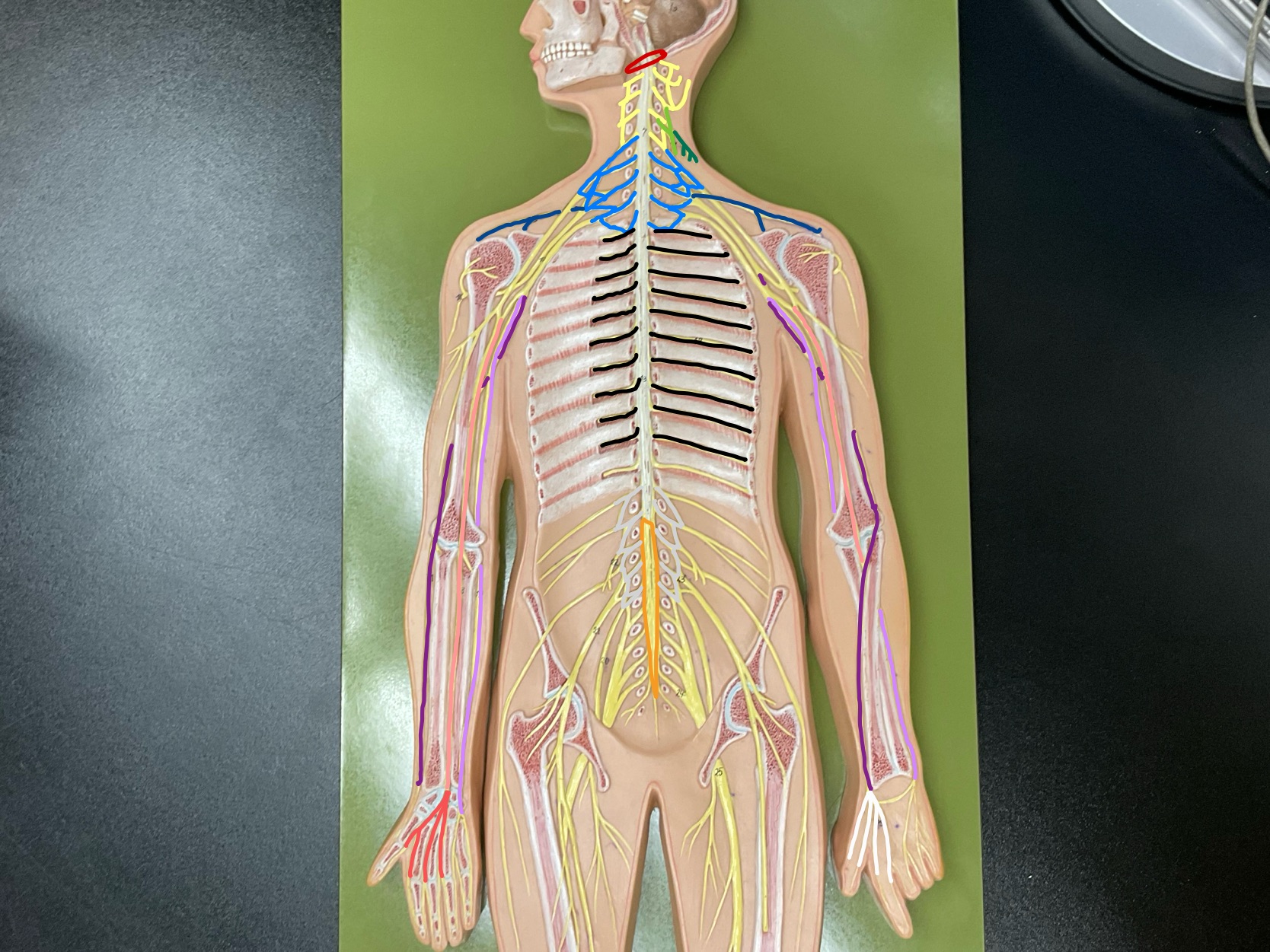
red
orange
yellow
light green
dark green
light blue
dark blue
light purple
dark purple
light pink
dark pink
white
black
grey
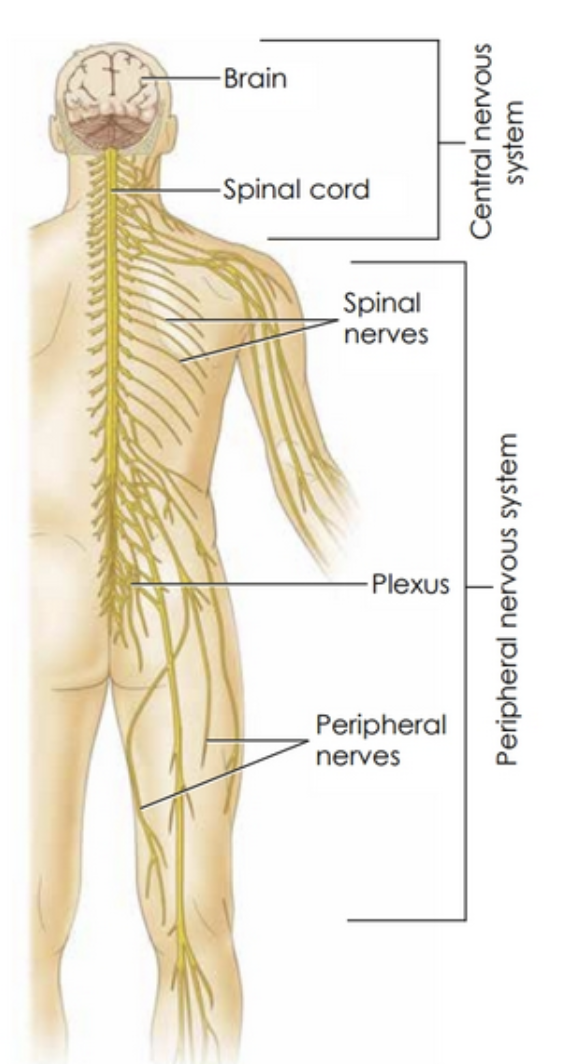
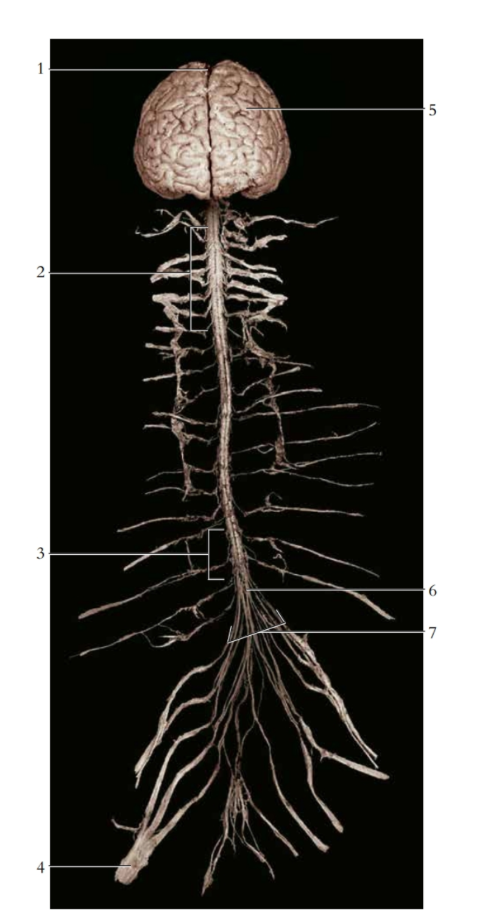
red = foramen magnum
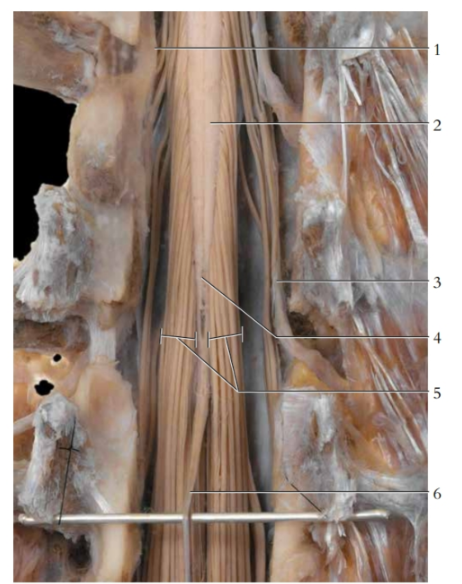
orange = cauda equina
yellow = cervical plexus
light green = phrenic nerve
dark green = supraclavicular nerve
light blue = brachial plexus
dark blue = subscapular nerve
light purple = radial nerve
dark purple = ulnar nerve
light pink = median nerve
dark pink = palmar ramus
white = dorsal ramus
black = thoracic nerves
grey = lumbar plexus
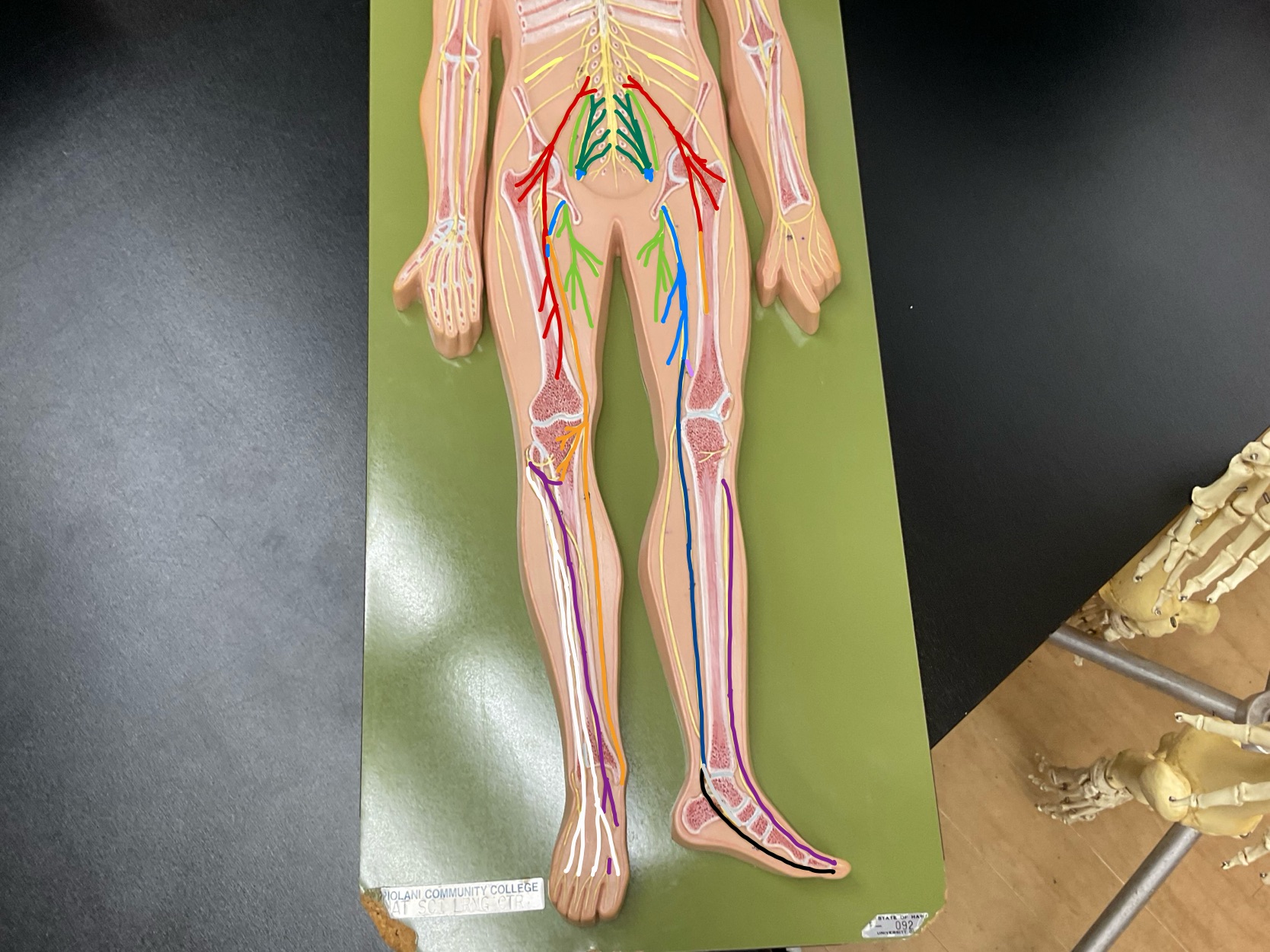
red
orange
yellow
light green
dark green
light blue
dark blue
light purple
dark purple
white
black
grey
red = femoral nerve
orange = saphenous nerve
yellow = iliohypogastric nerve
light green = obturator nerve
dark green = sacral plexus
light blue = sciatic nerve
dark blue = tibial nerve
light purple = common peroneal nerve
dark purple = deep peroneal nerve
white = superficial peroneal nerve
black = medial plantar nerve
grey = lateral plantar nerve
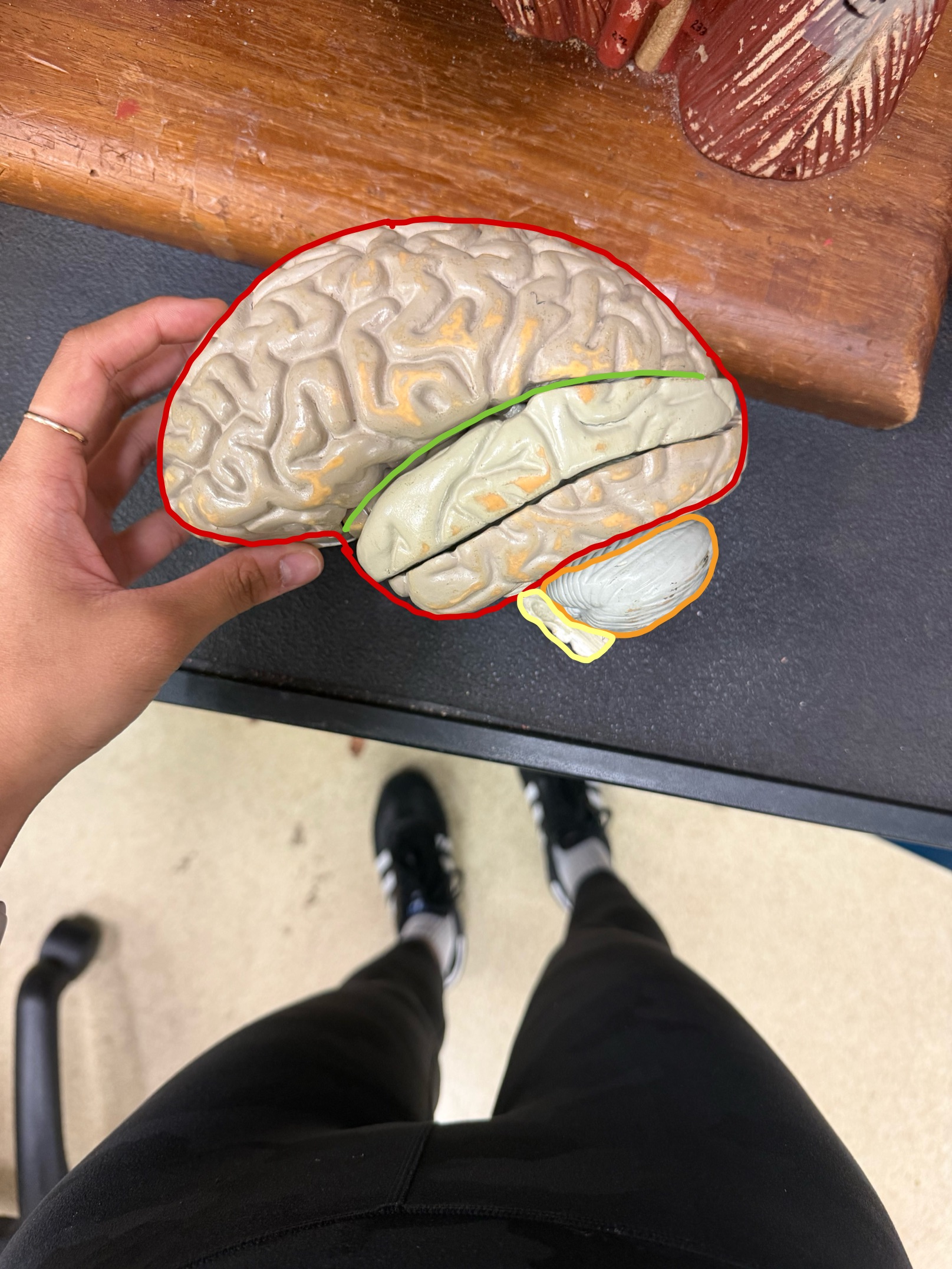
red
orange
yellow
green
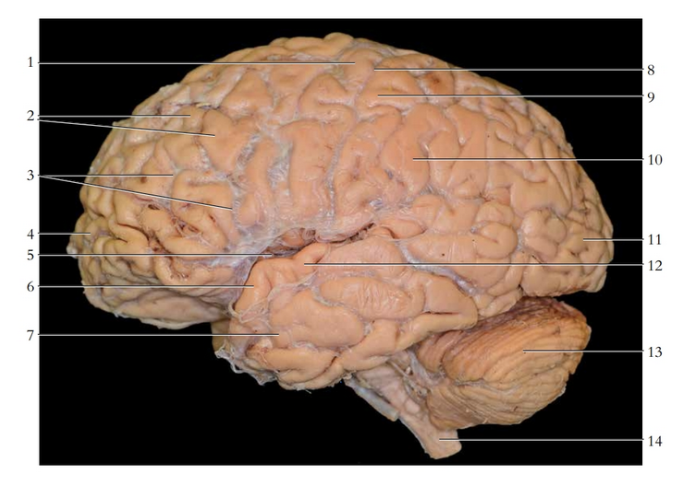
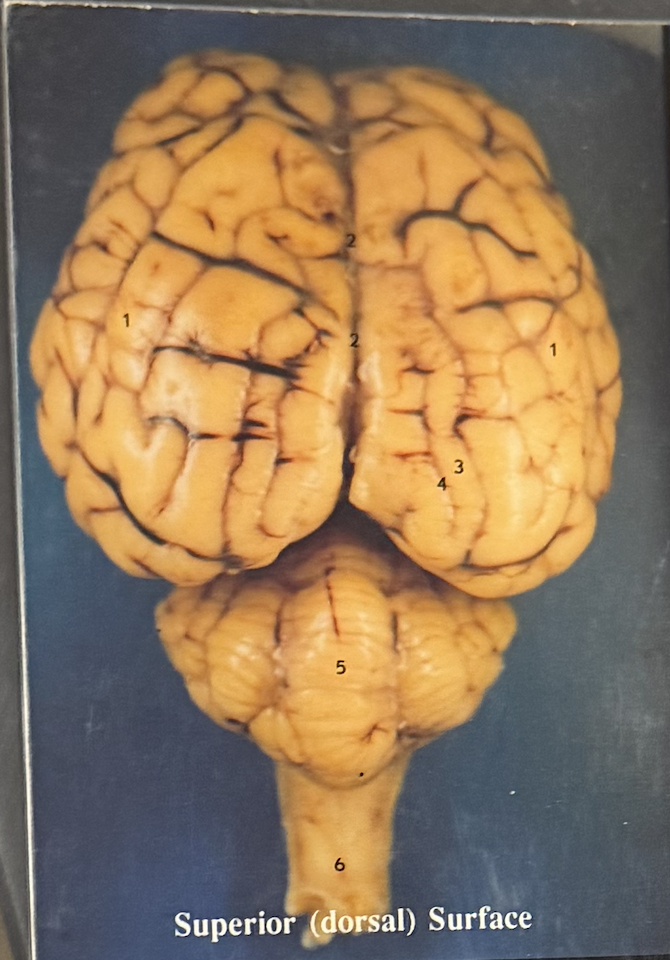
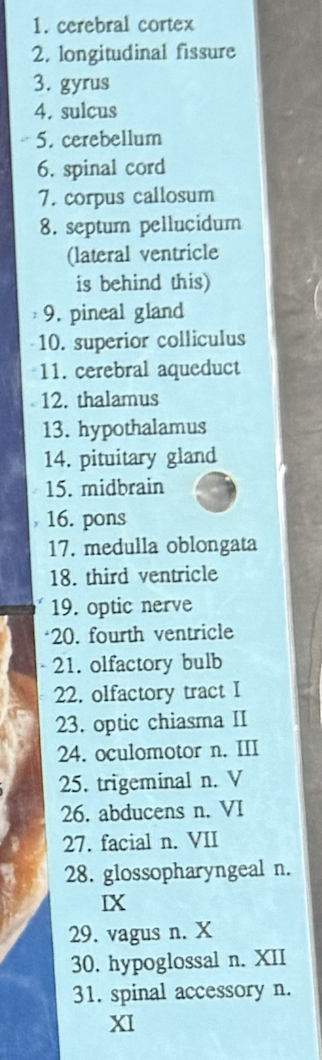
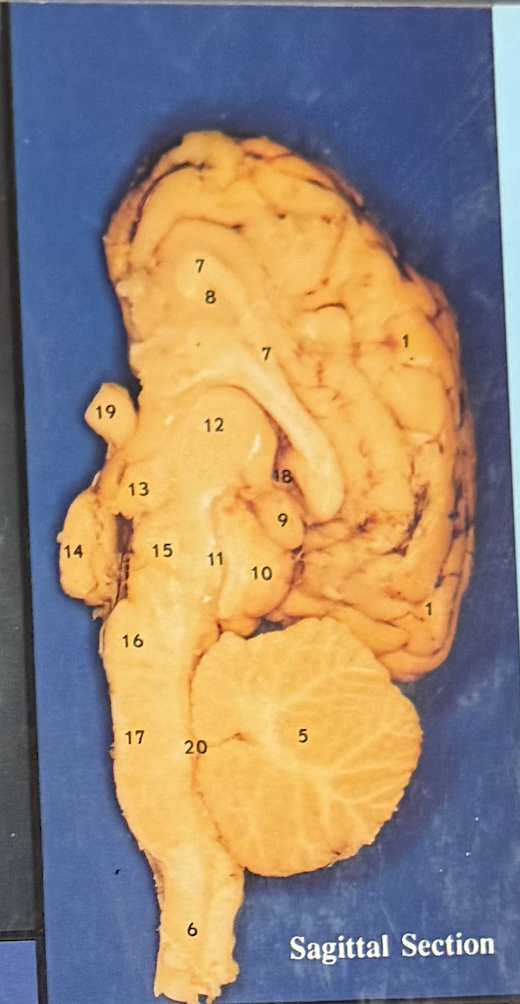
red = cerebrum
orange = cerebellum
yellow = brainstem
green = lateral sulcus
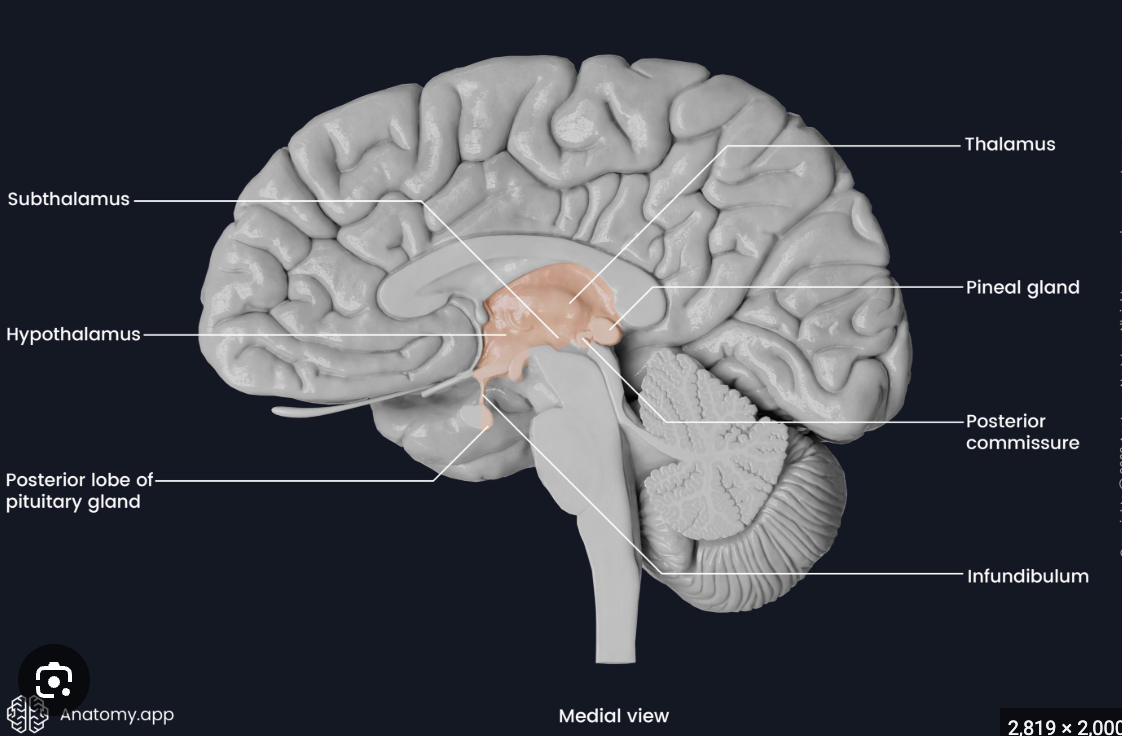
diencephalon
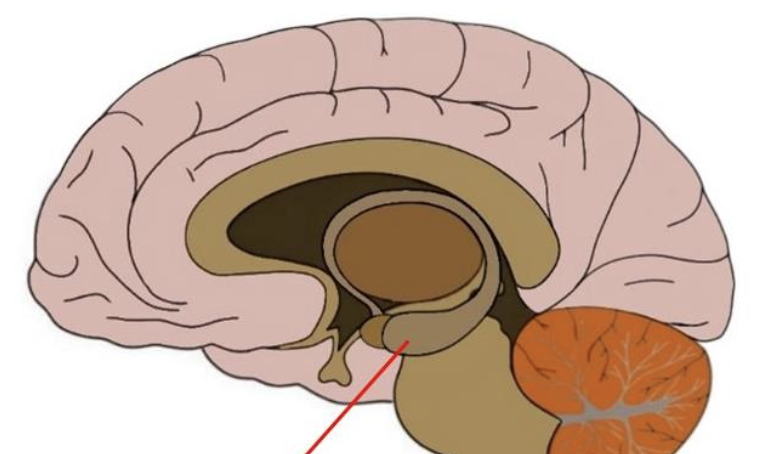
hippocampus
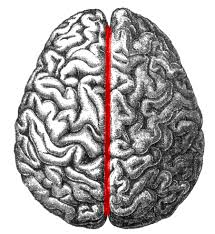
longitudinal fissure
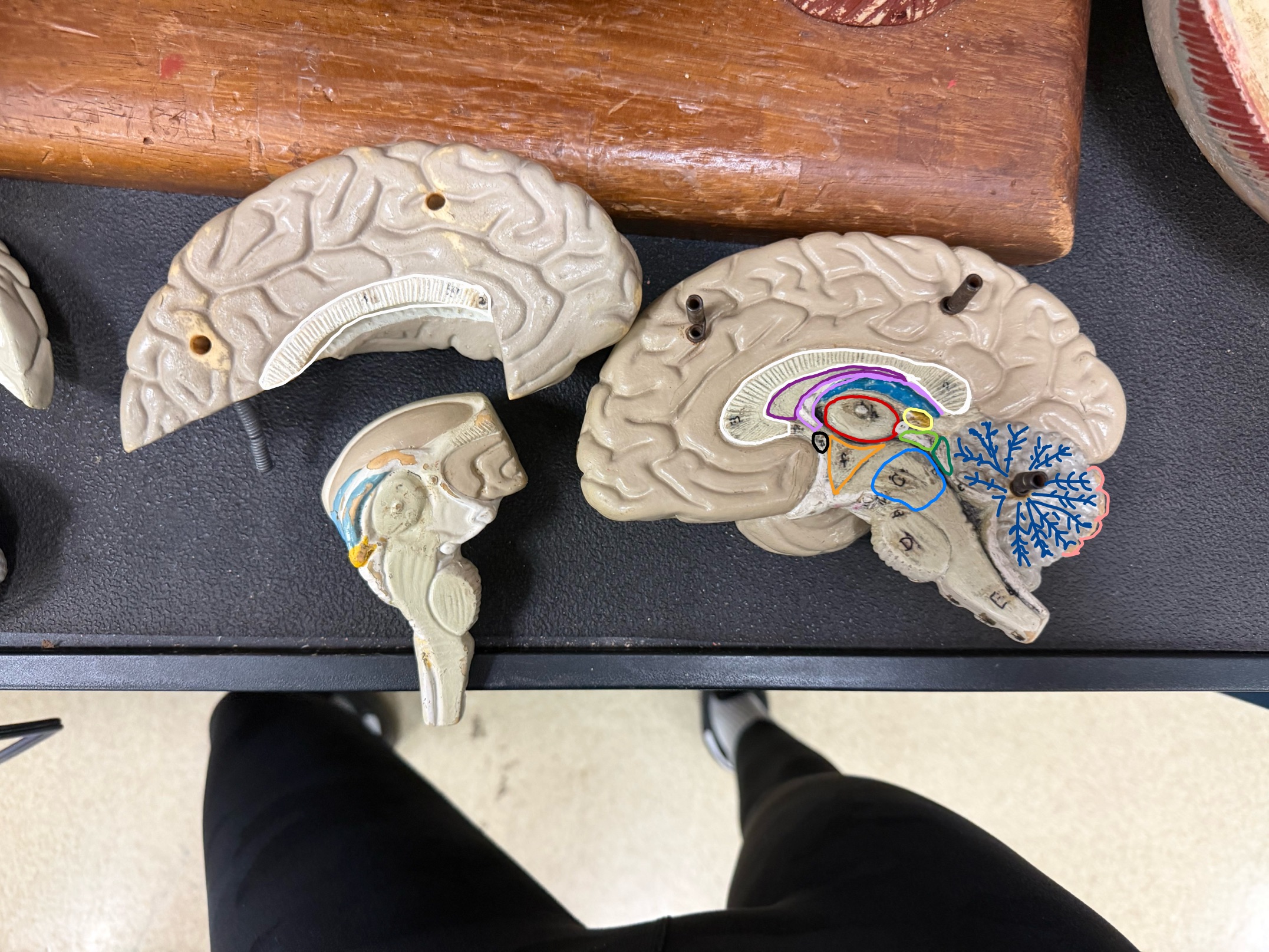
red
orange
yellow
light green
dark green
light blue
dark blue
light purple
dark purple
pink
white
black
grey
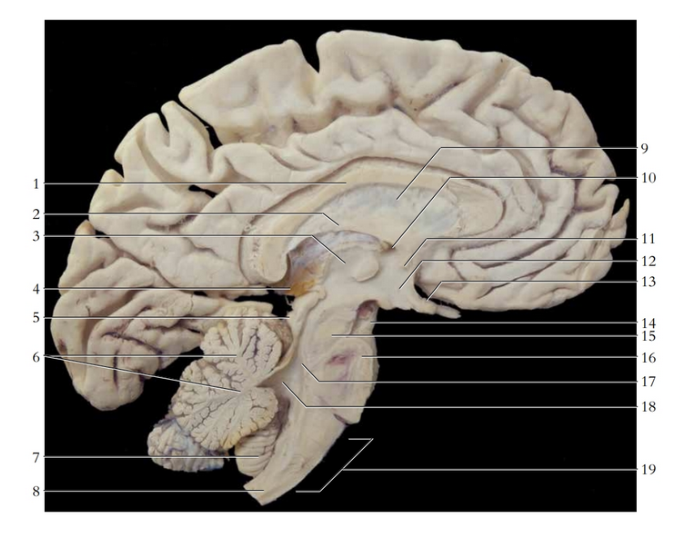
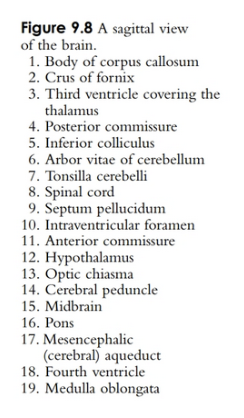
red = thalamus
orange = hypothalamus
yellow = pineal gland
light green = superior colliculus
dark green = inferior colliculus
light blue = cerebral peduncle
dark blue = arbor vitae
light purple = fornix
dark purple = septum pellucidum
pink = folia
white = corpus callosum
black = anterior commissure
grey = posterior commissure
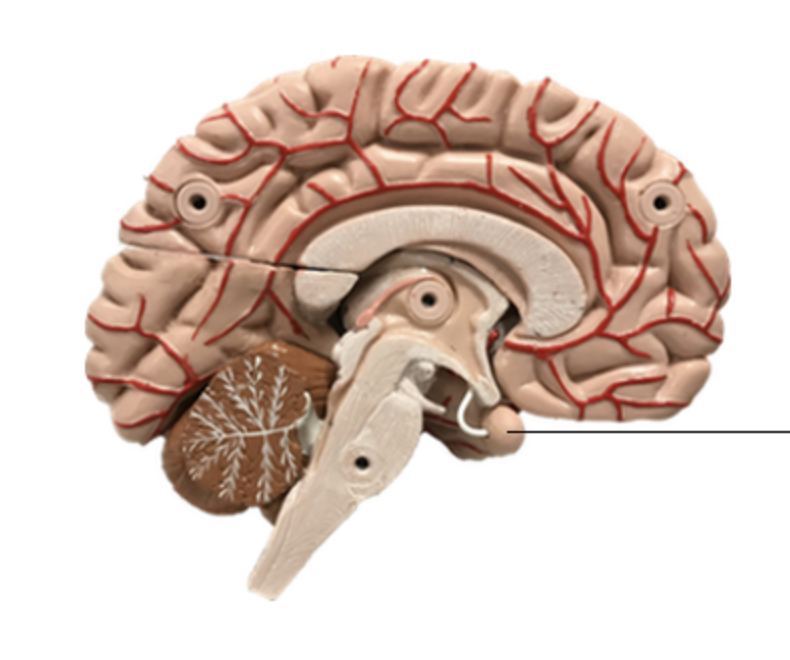
pituitary glands (not in model)
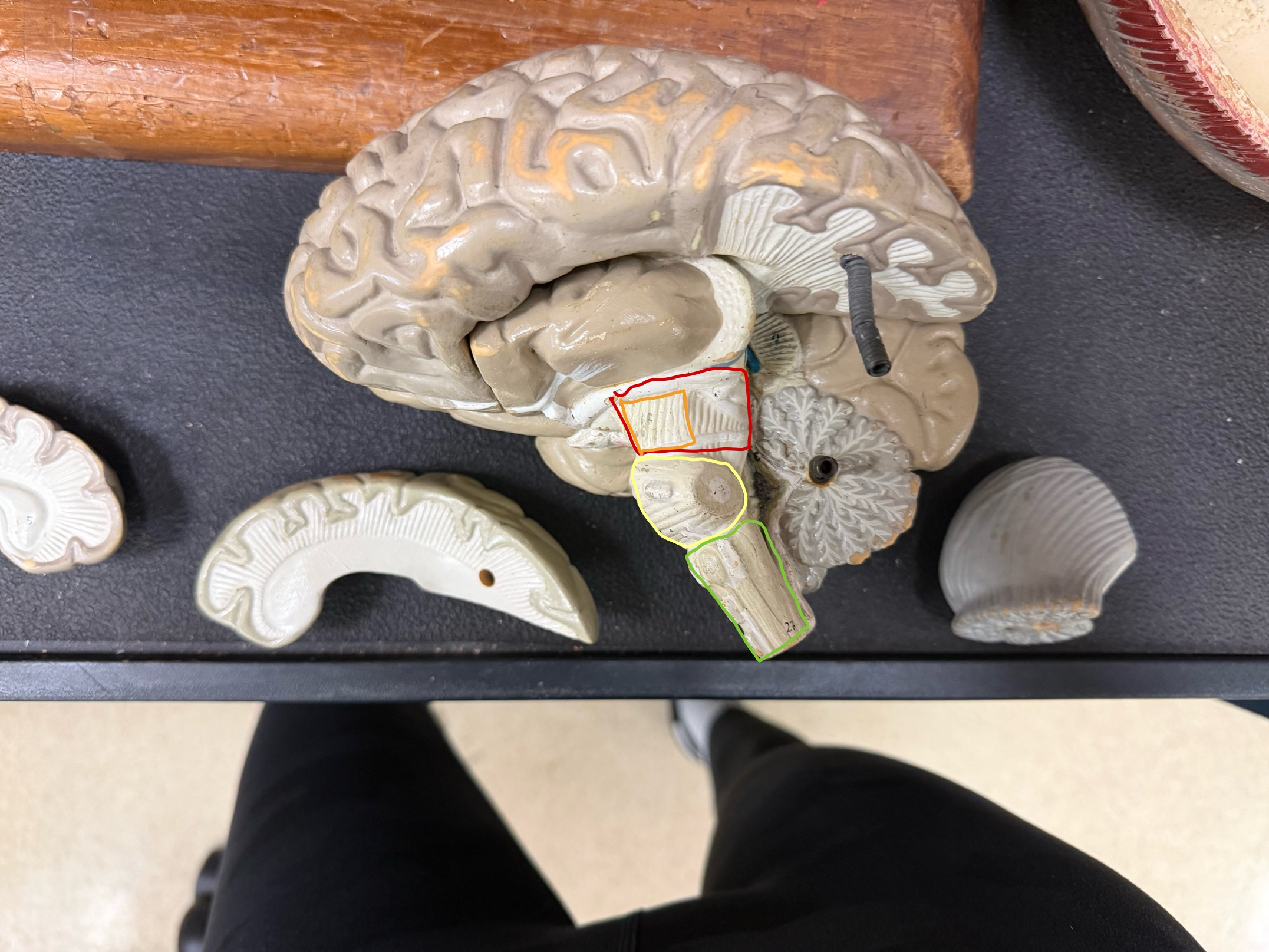
red
orange
yellow
green
red = midbrain
orange = cerebral peduncle
yellow = pons
green = medulla oblongata
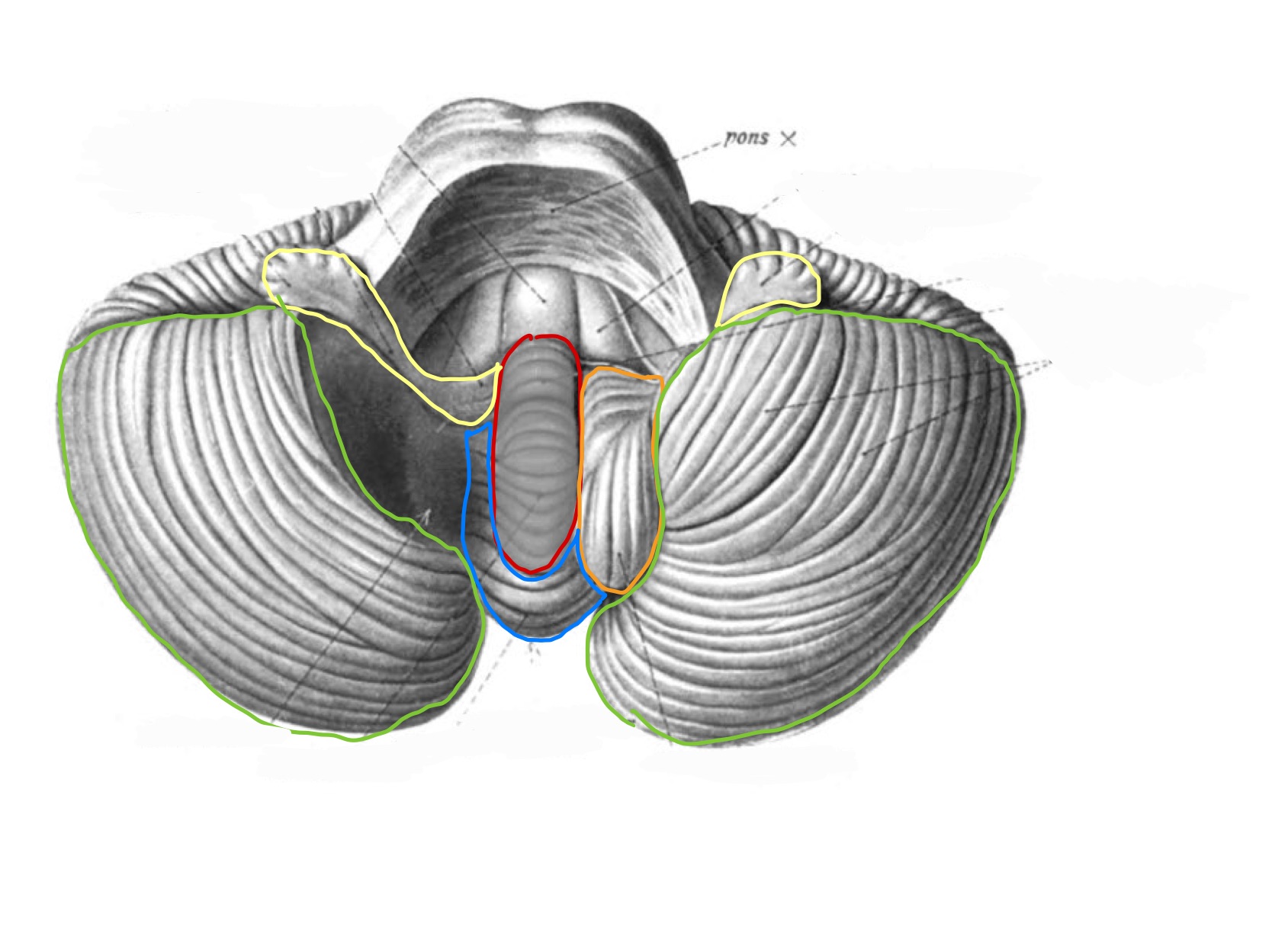
red
orange
yellow
green
blue
red = cerebellar vermis
orange = tonsil
yellow = flocculus
green = cerebellar hemispheres
blue = medullary pyramids
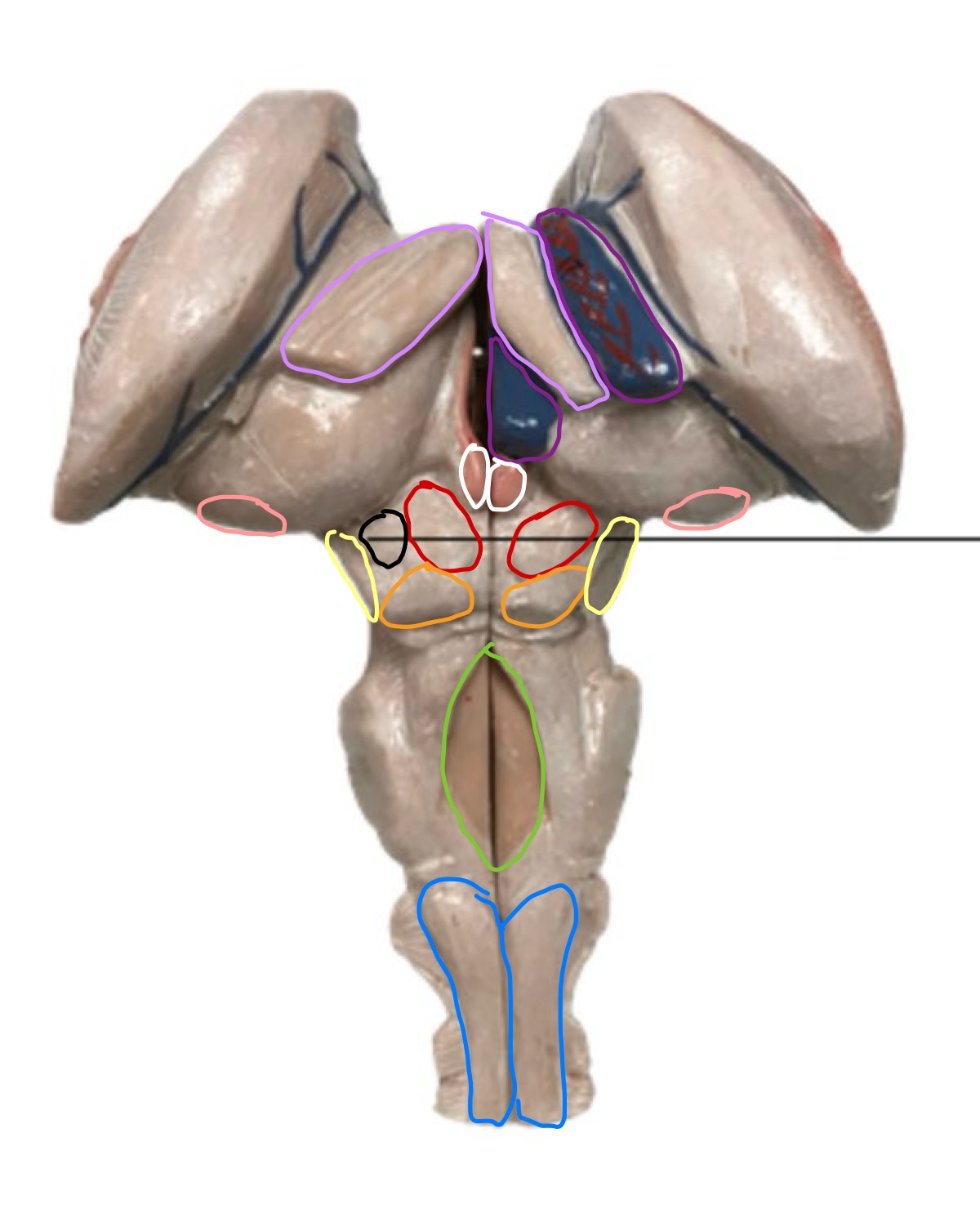
red
orange
yellow
green
blue
light purple
dark purple
pink
white
black
red = superior colliculus
orange = inferior colliculus
yellow = cerebral peduncle
green = 4th ventricle
blue = medullary pyramids
light purple = fornix
dark purple = choroid plexus
pink = lateral geniculate body
white = pineal gland
black = medial geniculate body
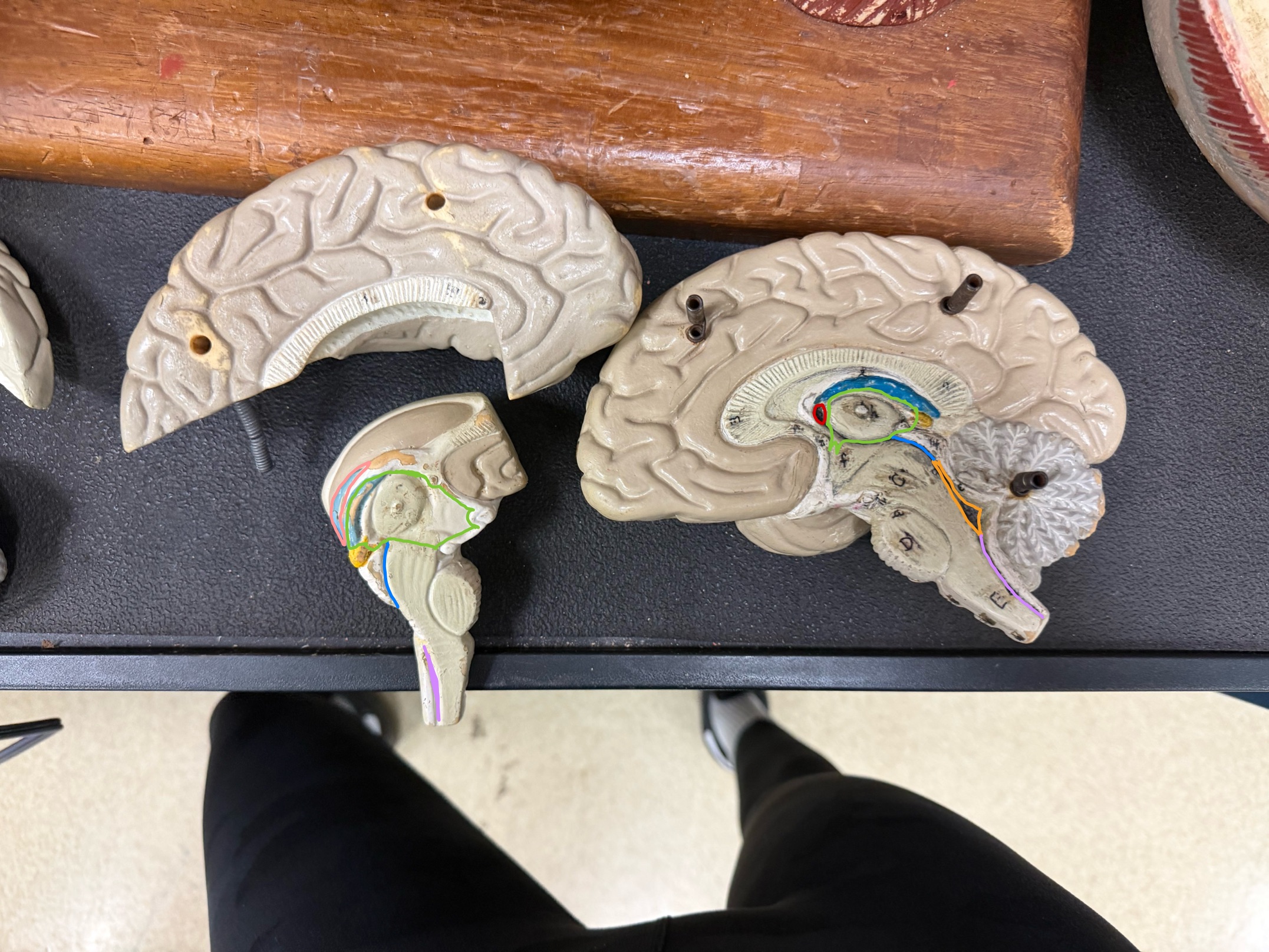
red
orange
green
blue
purple
pink
red = interventricular foramen
orange = 4th ventricle
green = third ventricle
blue = aqueduct of the midbrain
purple = central canal of spinal cord
pink = choroid plexus of lateral ventricles
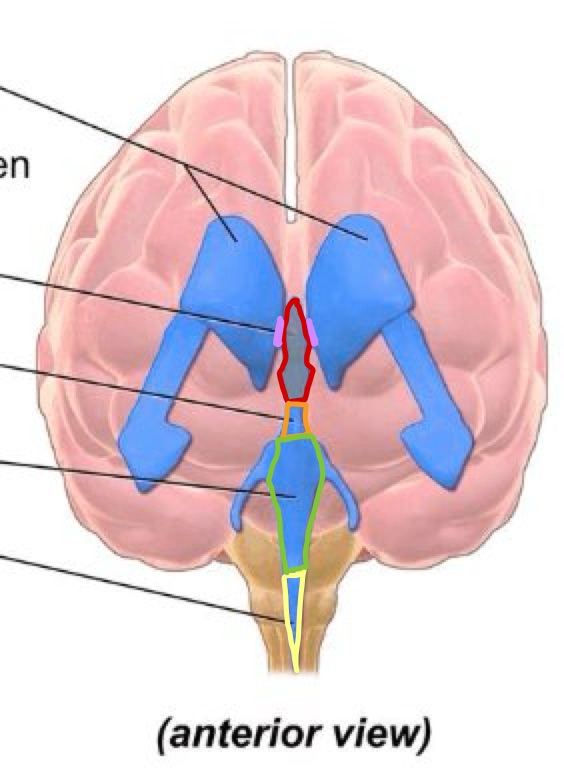
red
orange
yellow
green
red = third ventricle
orange = aqueduct of the midbrain
yellow = central canal of spinal cord
green = fourth ventricle
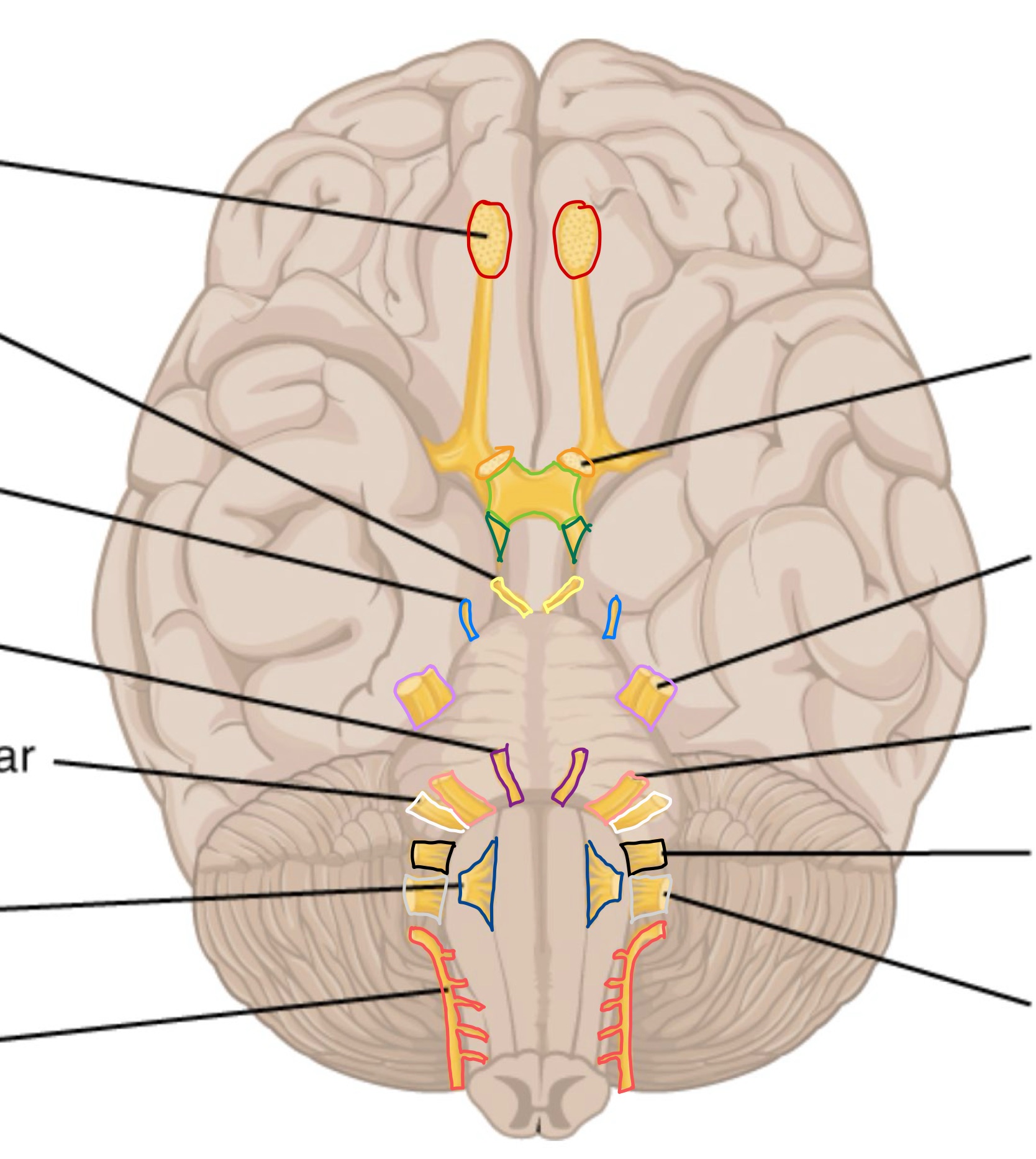
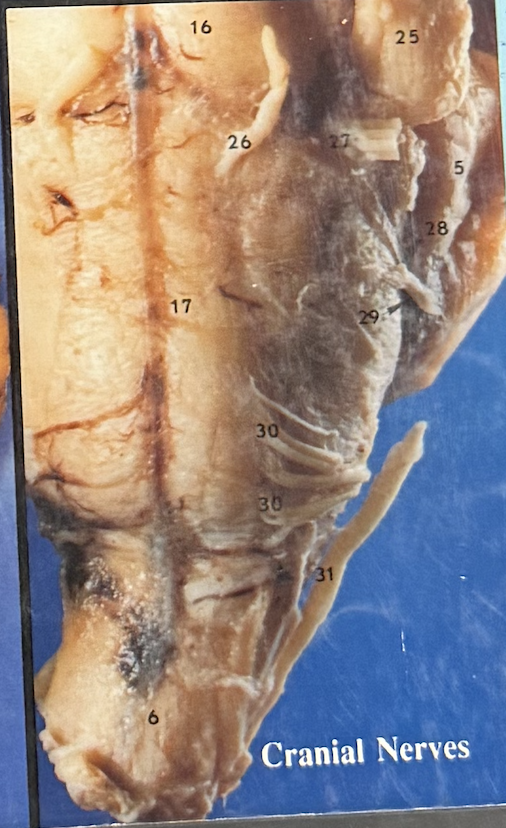
red
orange
yellow
light green
dark green
light blue
dark blue
light purple
dark purple
light pink
dark pink
white
black
grey
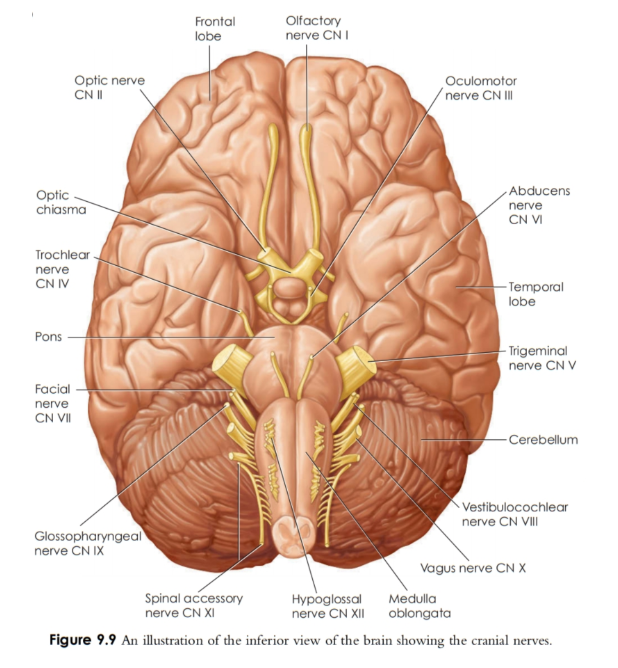
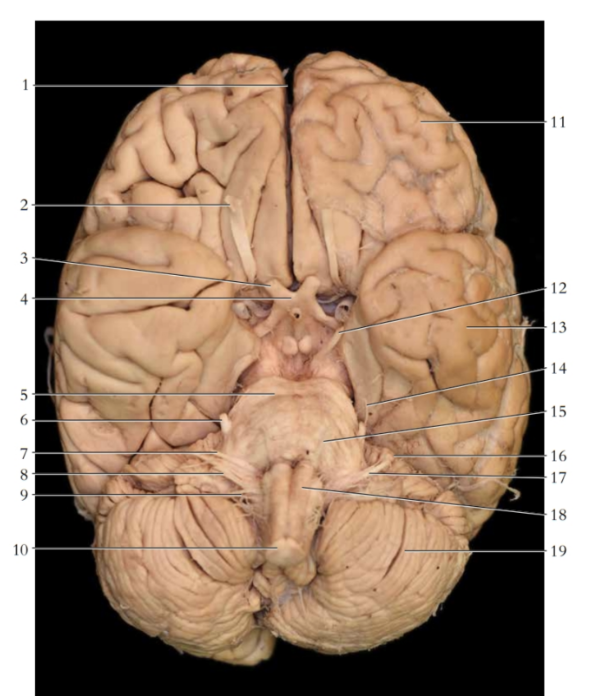
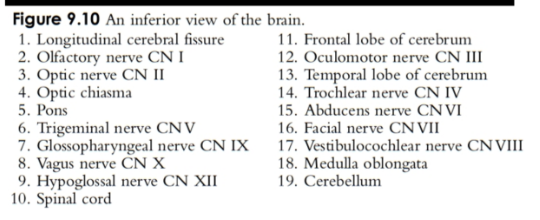
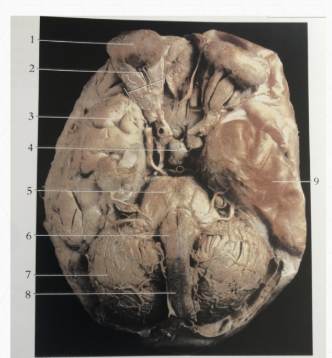
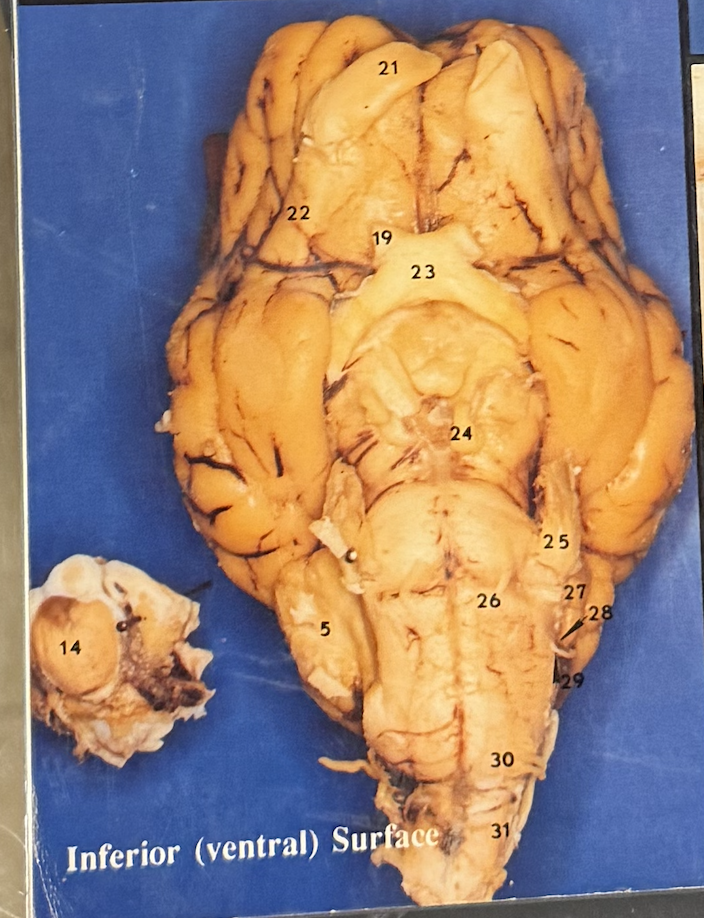
red = olfactory nerve I
orange = optic nerve II
yellow = oculomotor nerve III
light green = optic chiasm
dark green = optic tract
light blue = trochlear nerve IV
dark blue = hypoglossal human nerve XII
light purple = trigeminal nerve V
dark purple = abducens nerve VI
light pink = facial nerve VII
dark pink = spinal accessory nerve XI
white = vestibulocochlear nerve VIII
black = glossopharyngeal nerve IX
grey = vagus nerve X
Functions of the 12 cranial nerves
I olfactory = smell
II optic = sight/vision
III oculomotor = eye movement and pupil reflex
IV trochlear = eye movement (depress and laterally rotate)
V trigeminal = face/eyes/mouth sensation and chewing
VI abducens = eye movement
VII facial = moving face and taste
VIII vestibulocochlear = hearing and balance
IX glossopharyngeal = throat sensation, some taste, and swallowing
X vagus = movement, sensation, abdominal organs (parasympathetic nerve)
XI accessory = neck movement and shoulder muscles
XII hypoglossal = moves tongue
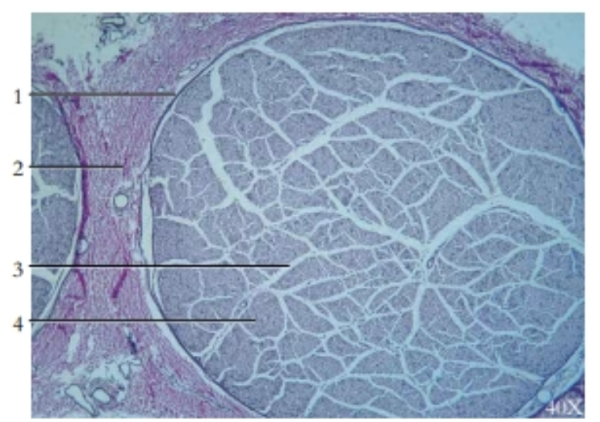
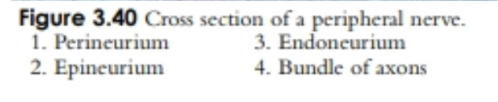
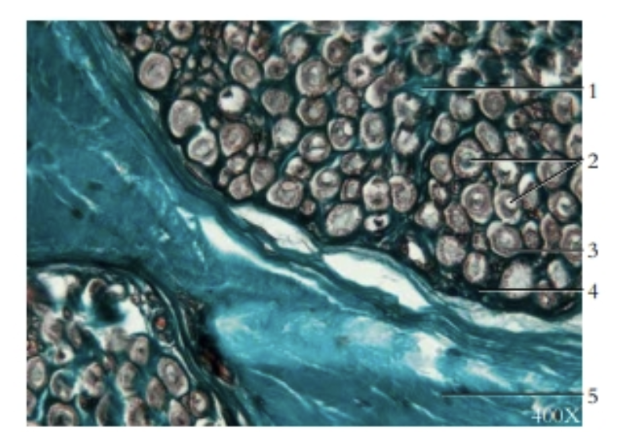

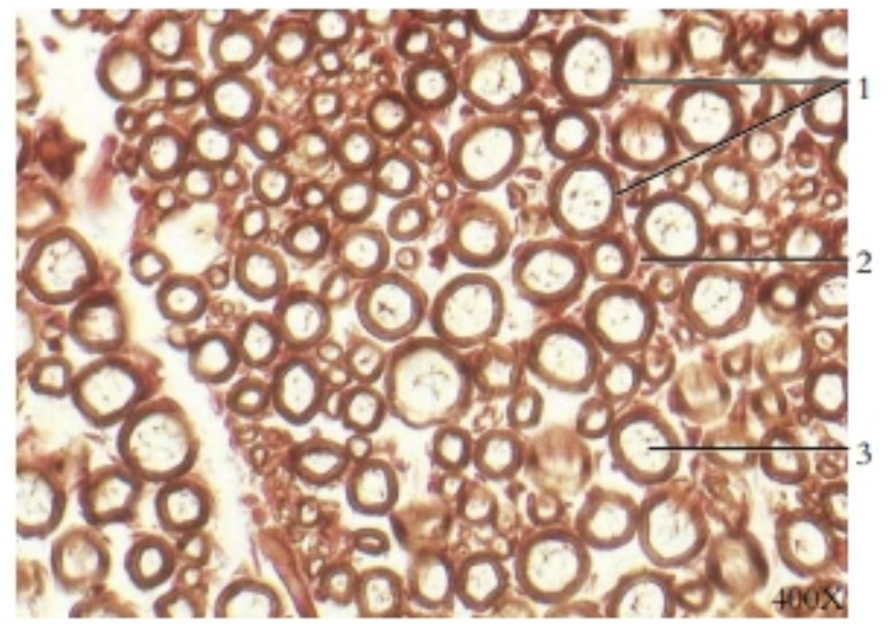
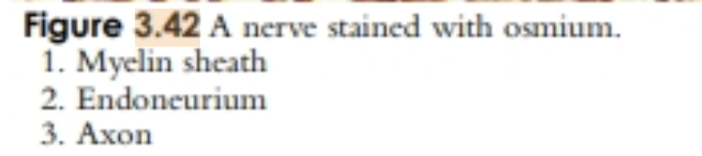
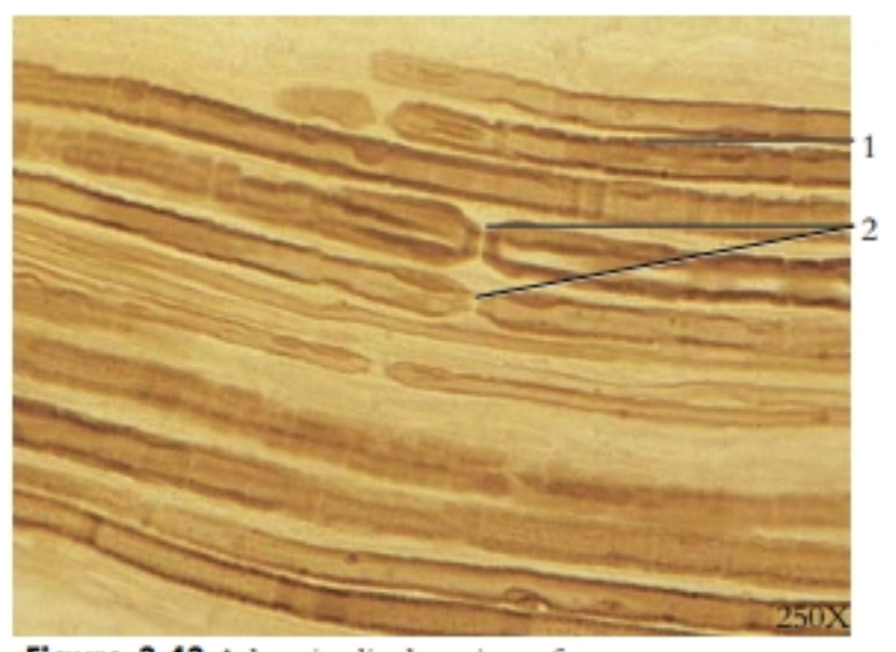

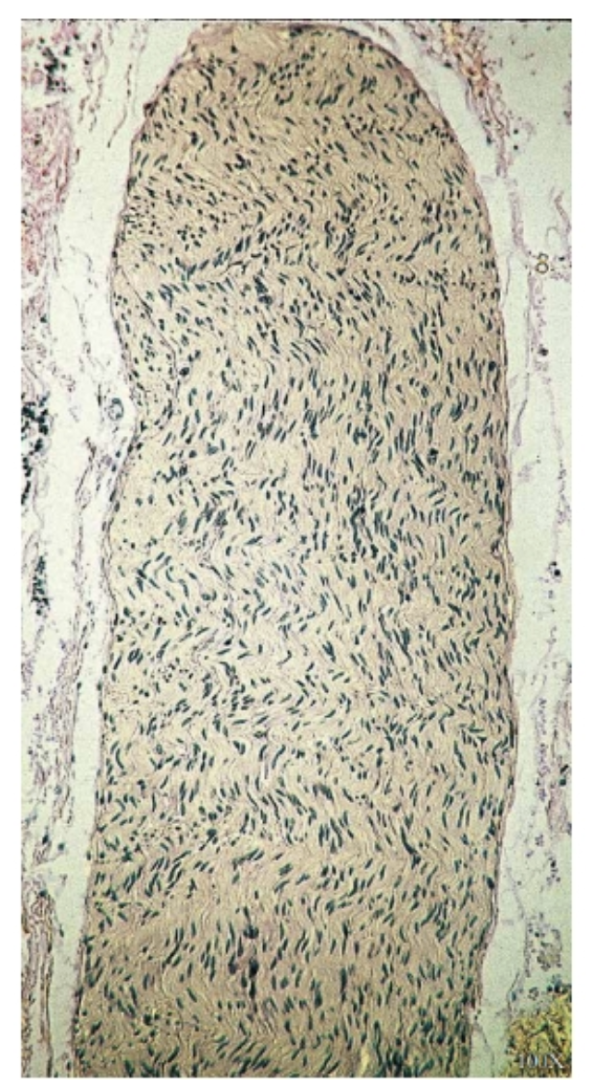
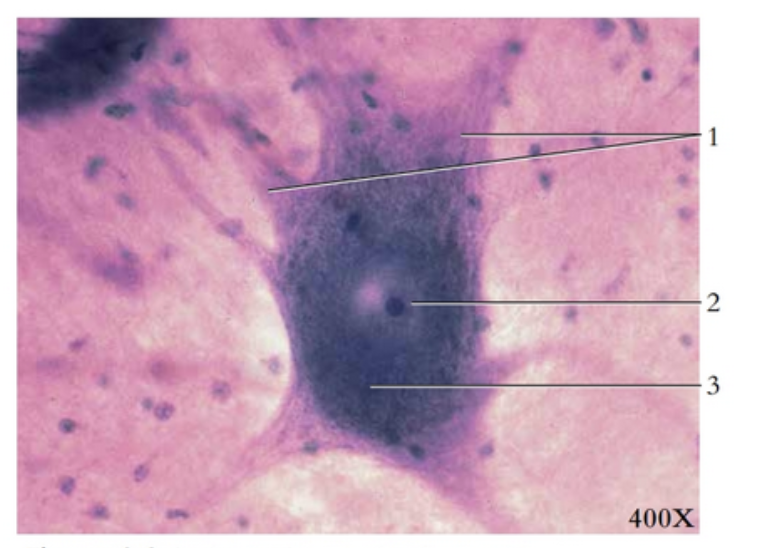
cross section of unmyelinated nerve