Phar 508: Chemistry of Sex Hormones - Lecture 1
 Call Kai
 Learn
Learn Practice Test
 Spaced Repetition
 Match
Match Flashcards
 Knowt Play
1/30

Earn XP
Description and Tags
Name | Mastery | Learn | Test | Matching | Spaced | Call with Kai | Chat |
|---|
No analytics yet
Send a link to your students to track their progress
31 Terms
What is the precursor to all sex hormones?
Cholesterol (ABCD structure)
Only difference is the position of the side groups
Where does hormonal biosynthesis start?
Stimulated in the brain
Hypothalamus → Pituitary gland
What two locations does the actual biosynthesis occur?
Gonads (ovaries - females, testes-males)
Adrenal glands
What are the active forms of hormones?
Free, circulating hormones
What is the HPA axis?
Hypothalamic-pituitary-gonadal axis → The system that regulates hormones
The HPA-axis includes both positive and negative feedback loops

What neurohormone is released/produced by the hypothalamus?
GnRH (gonadotropin releasing hormone)
What is GnRH and what does it do?
GnRH is a decapeptide synthesized in the hypothalamus
GnRH stimulates cells near the anterior pituitary to release other gonadotropins (LH & FSH)
What hormones (2) does the anterior pituitary release?
LH and FSH
What are LH and FSH? What are their structures composed of?
LH = Luteinizing hormone; FSH = Follicle stimulating hormone
They are heterodimers consisting of an alpha + beta subunit
Alpha subunits → identical
Beta-subunits → different
What are the male/female hormones?
Androgens = Male hormones
Testosterone, Androsterone
Estrogens = Female
Estradiol, Estriol, Estrone
What differentiates all the different sex hormones?
The presence of an -OH or =O (ketone) group
The side chains at C17 on the D-ring
Which cells types are associated with the ovary? Which receptors do they have?
Theca + Granulosa cells
Theca cells → LH receptors (bind to LH)
Granulosa → FSH receptors (binds to FSH)

Which cells types are associated with the testes? Which receptors do they have?
Leydig + Sertoli cells
Leydig → LH receptors
Sertoli → FSH receptors
Progesterone and testosterone are produced by which cells?
Theca cells of the ovary
Leydig cells of the testes
Estrone and estradiol are produced by which cells?
Granulosa cells of the ovary
Sertoli cells of the testes
Which enzyme is important in converting androgens to estrogens?
CYP19A1 (Aromatase)
Testosterone
“testo” = testes
“ster” = sterol
“-one” = ketone
Males produce 8.8-30.9 nmol/L
Females 0.4-2 nmol/L
Biosynthesized throughout men’s life but peaks in 20s
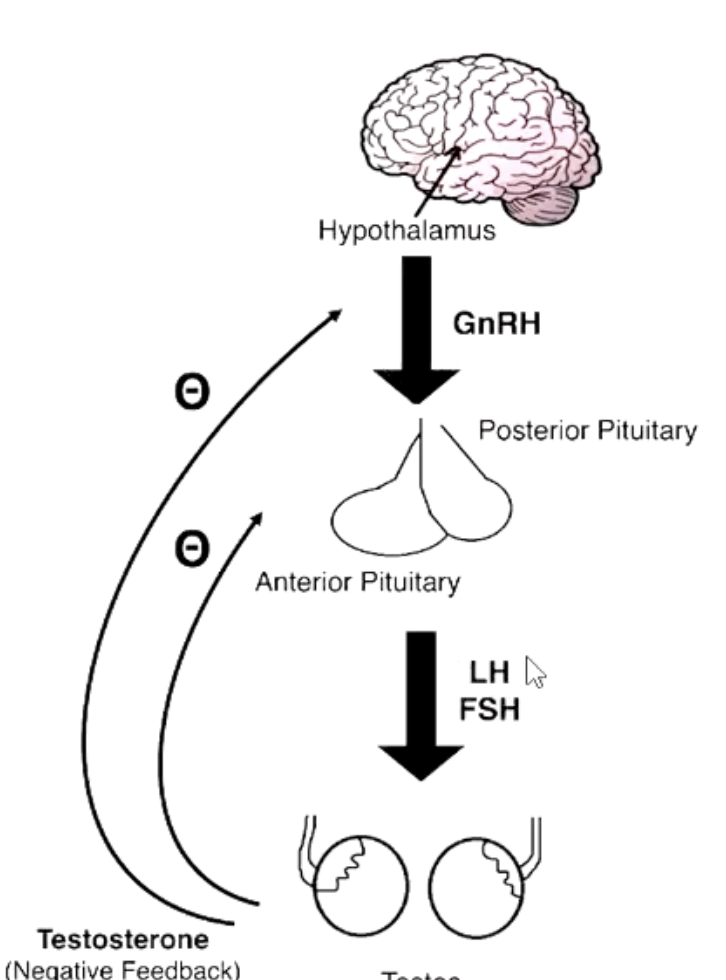
What is the relationship between GnRH, LH, and FSH in males?
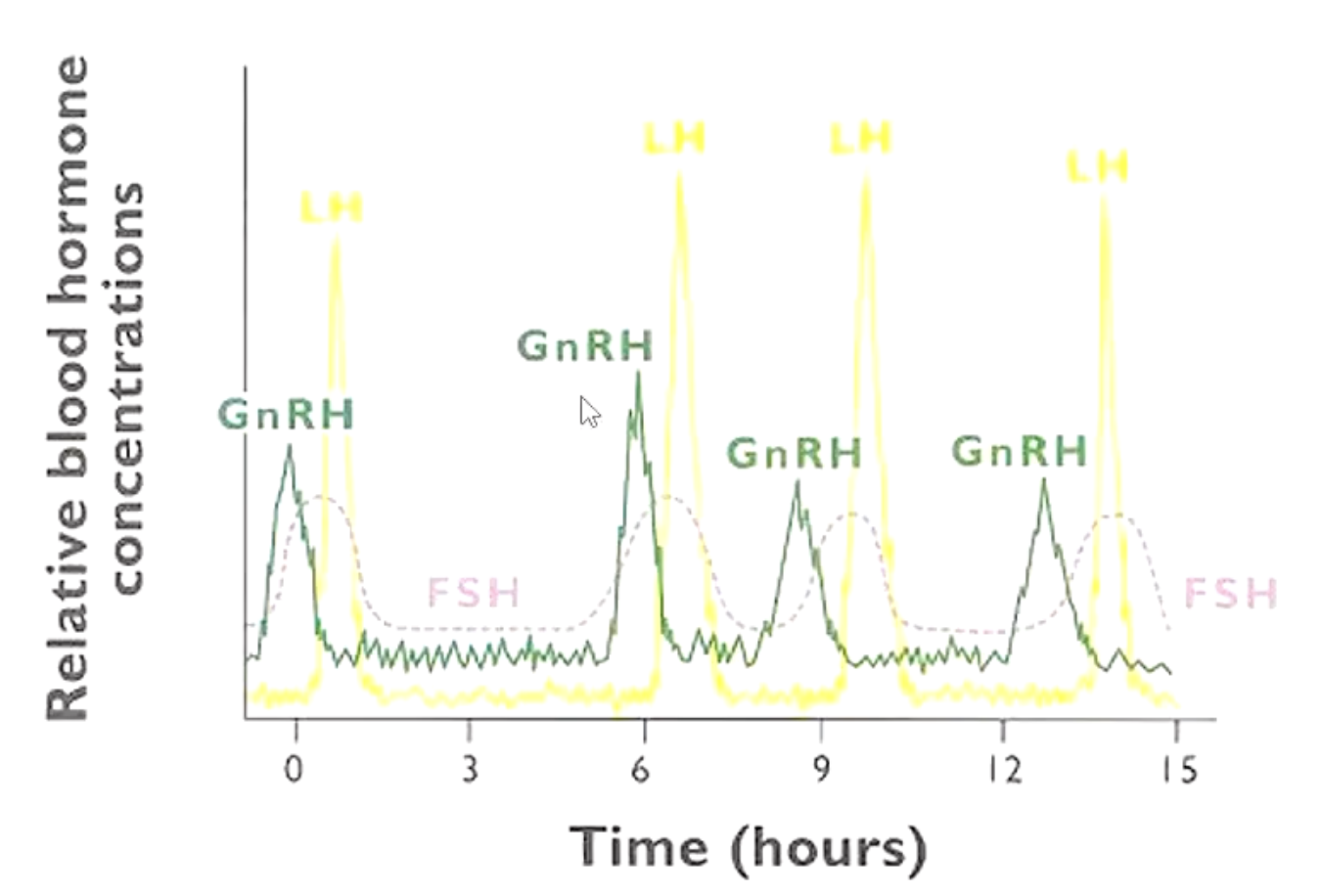
Hormonal episodes spike 4-8x in 24 hours
LH acts on Leydig cells within the testes
How is LH discharged? & why is this important?
LH has pulsatile spikes during the day, this is important bc:
1) High concentrations of testosterone are essential for spermatogenesis
2) Leydig cells becomes resistant/refractory to sustained high levels of LH
Estradiol
estrane steroid ring system: estra-, from Greek, meaning "inspiration"
-diol, a chemical term and suffix indicating that the compound is an alcohol with two OH-groups
Female production >> Males
Progesterone
Derived from PROGEstational STERoidal ketONEs
Estrogen production is primarily from…
The ovaries!

What are extra ovarian sources of estrogens?
Some expression in liver, adrenal glands, breast, placenta, and fat (becomes more important in postmenopausal state)
What are the three major estrogens?
Estrone (E1), Estradiol (E2), and estriol (E3)
Describe the process of progesterone production in the corpus luteum:
The follicular theca cells luteinize into small luteal cells (thecal-lutein cells)
The follicular granulosa cells luteinize into large luteal cells (granulosal-lutein cells)
Both form the corpus luteum
Progesterone is synthesized from cholesterol by both the large and small luteal cells upon luteal maturation
The Menstrual cycle
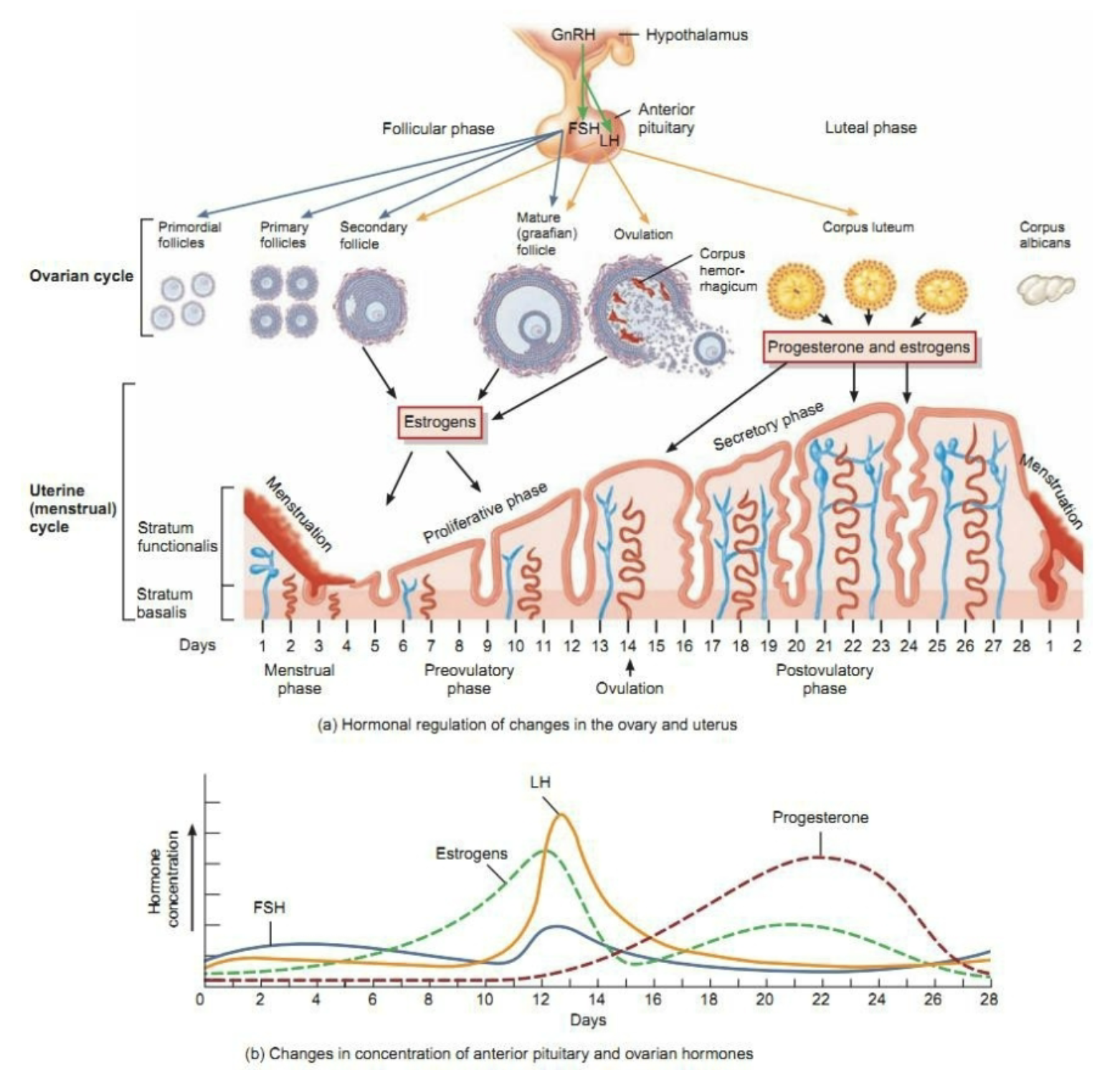
What are the roles of estrogen?
Women:
Reproduction
Bone health
Metabolism
Vascular health
Brain function
Men:
Fertility
Bone health
Metabolic health
Libido and sexual desire
What are the roles of progesterone?
Women:
Reproductive health
Emotional regulation
Brain and cognition
Men:
Hormonal balance
Central nervous system (CNS)
Reproductive
Cardiovascular health
What is the studied mechanism of signaling for steroidal/hormonal function?
Canonical (genomic) signaling
Essentially, a hormone binds to its hormone receptor which can dimerize and bind to the hormone-response element on the DNA in promoter regions of target genes
Estrogen → binds to estrogen receptor (ER)
Progesterone → binds to progesterone receptor
Testosterone → binds to androgen receptor
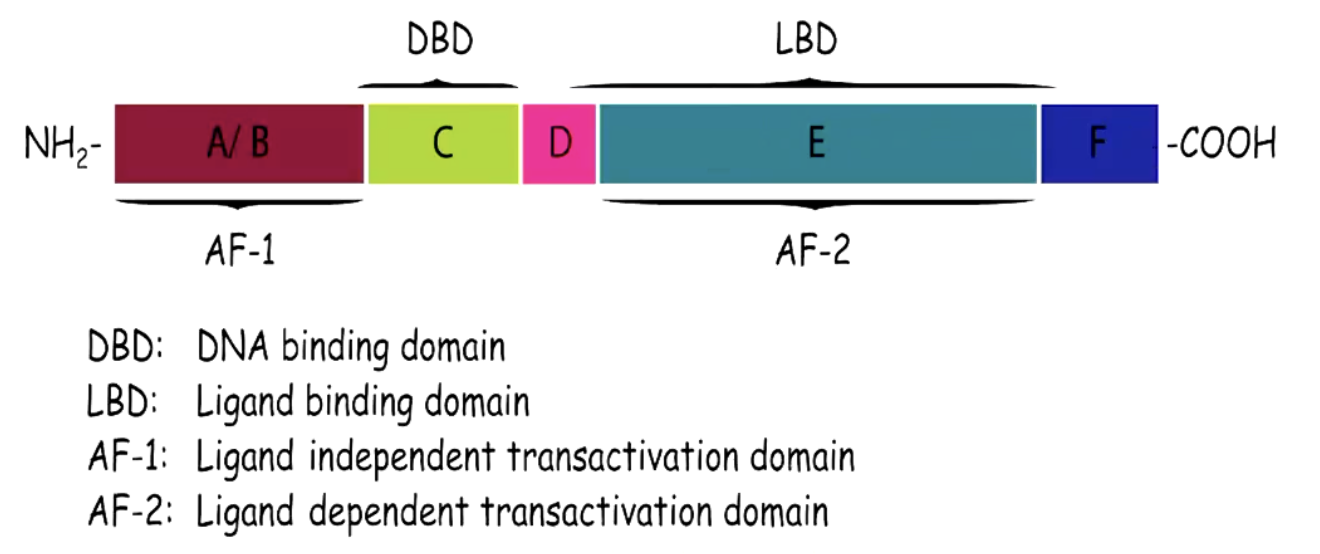
What is the general structure of steroid hormone receptors?