DNA and protein synthesis
 Call Kai
 Learn
Learn Practice Test
 Spaced Repetition
 Match
Match Flashcards
 Knowt Play
1/16

There's no tags or description
Looks like no tags are added yet.
Name | Mastery | Learn | Test | Matching | Spaced | Call with Kai | Chat |
|---|
No analytics yet
Send a link to your students to track their progress
17 Terms
what does the order of bases on the DNA tell us?
the order for combining amino acids to create particular proteins
what are the 2 processes in protein synthesis?
transcription
translation
what 2 molecules make up ribosomes?
RNA
proteins
mRNA?
made during transcription
it carries the genetic code from the DNA to the ribosomes, where it is used to make a protein during translation
mRNA is a single polynucleotide strand
3 adjacent bases are called codons (or triplets/base triplets)
contains more nucleotides than tRNA
tRNA?
involved in translation
carries the amino acids that are used to make proteins to the ribosomes
tRNA is a single polynucleotide strand that’s folded into clover shape.
hydrogen bonds between specific base pairs that hold the molecule in this shape
every tRNA molecule has a specific sequence of 3 bases at one end called an anticodon
they also have an amino acid binding site at the other end
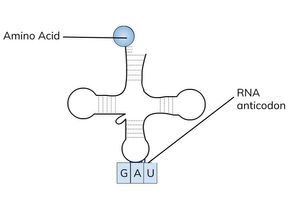
structural differences between mRNA and tRNA?
mRNA does not have hydrogen bonds, but tRNA does
mRNA is linear, tRNA is a cloverleaf
mRNA does not have an amino acid binding site, tRNA does
mRNA has more nucleotides/is longer
different mRNAs have different lengths, all tRNAs are similar/same length
mRNA has codons, tRNA has anticodons
accuracy of tRNA?
it is important that the correct amino acid is brought to the ribosomes by the tRNA so that the protein is assembled correctly
each t RNA molecule has an anticodon which is complementary to a specific codon on mRNA
the amino acids that corresponds to a specific codon binds to a specific attachment site on the tRNA molecule
if the original DNA sequence has the codon GCC, the codon in each step is:
mRNA complementary codon: CGG
tRNA anticodon: GCC
amino acids: arginine
what is transcription?
the first step in protein syntehsis
steps in transcription (P1)
RNA polymerase attaches to the DNA double helix at the beginning of a gene (locus of the gene)
the hydrogen bonds that bind the 2 strands together break, causing the DNA strands to separate, and the bases of the target gene are exposed
this is different to DNA replication, where DNA helicase separates the strands
RNA polymerase binds free-floating RNA nucleotides to the template strand
the RNA nucleotides form a strand of mRNA that is complementary to the template strand
the template strand in complementary to the gene, so this means mRNA is the copy of the gene
free-floating nucleotides are joined together by RNA polymerase
phosphodiester bonds form between the nucleotides in a condensation reaction to form the completed strand of mRNA
RNA polymerase eventually reaches the triplet of bases that signal stop
the RNA polymerase stops separating the DNA and producing the mRNA
transcription steps: P2- removal of mRNA?
the mRNA strand is separated from the template strand by RNA polymerase
the hydrogen bonds between the 2 strands of DNA form again and the strands join together
the completed mRNA strand leaves the nucleus and enters the cytoplasm
mRNA Is used in translation, the next step is protein synthesis
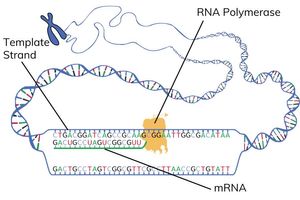
easier transcription steps?
hydrogen bonds between DNA bases break
only one DNA strand acts as a template
free RNA nucleotides align by complementary base pairing
uracil base pairs with adenine on the DNA
RNA polymerase joins the adjacent RNA nucleotides
by phosphodiester bonds to form the sugar-phosphate backbone
pre-MRNA is spliced to form mRNA/ introns are removed to form mRNA
easier translation steps?
mRNA attaches/associates to the ribosomes
ribosome moves to/finds the start codon
tRNA anticodons are complementary to the mRNA codons
tRNA brings a specific amino acid
ribosome fits around 2 codons/ribosome moves along to next codon
process is repeated and amino acids are joined together by peptide bonds
with the use of ATP
tRNA is released after the amino acids is joined to the polypeptide
the ribosome moves along the mRNA to form the polypeptide
what happens to the introns and exons in protein synthesis: eukaryotes?
the introns and exons are both copied into mRNA during transcription
mRNA strands containing introns and exons are called pre-mRNA
a process called splicing then occurs, introns are removed and the exons are joined together, forming mRNA strands
this takes place in the nucleus
the mRNA then leaves the nucleus for the next stage of protein synthesis (translation)
what happens to the introns and exons in protein synthesis: prokaryotes?
mRNA is produced directly from the DNA- without splicing taking place
there’s no need for splicing, because there are no introns in prokaryotic DNA
what happens in translation?
the produced mRNA binds to a ribosome in the cytoplasm
the ribosome is the site of protein synthesis
1 molecule of tRNA binds to the first codon in the ribosome (6 bases- 2 codons- can fit inside the ribosome at one tiem)
the tRNA molecule has an anticodon that is complementary to a specific codon
the anticodon allows the correct tRNA molecule to bind to the correct codon
each tRNA molecule carries a specific amino acid into the ribosome
the amino acid is bound to tRNA using ATP
A tRNA molecule binds to the second codon in the ribosome
when a tRNA molecule binds to mRNA, the corresponding amino acid is brought to the ribosome
the 2 amino acids in the ribosome form a peptide bond
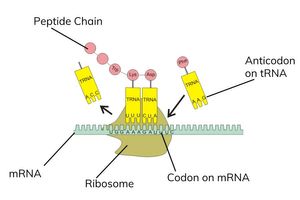
translation p2?
when the 2 amino acids bind together, the ribosome moves along the mRNA strand so that a new codon enters the ribosome
a complementary tRNA molecule binds to the new codon
a new amino acid is brought into the ribosome
a peptide bond forms between the new amino acid and the existing chain of amino acids
when the ribosome reaches a STOP codon, there is no corresponding tRNA molecule
the polypeptide chain is released from the ribosome
the polypeptide chain has been formed and is ready to complete its function