Concept 2.3: An element's properties depend on the structure of its atoms
 Call Kai
 Learn
Learn Practice Test
 Spaced Repetition
 Match
Match Flashcards
 Knowt Play
1/17

Name | Mastery | Learn | Test | Matching | Spaced | Call with Kai | Chat |
|---|
No analytics yet
Send a link to your students to track their progress
18 Terms
Chemical bonds
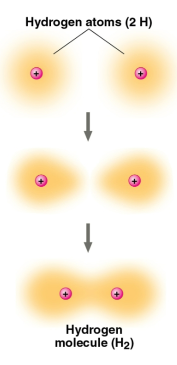
The attractions between atoms through sharing or transferring electrons created to complete an atom’s valence shell
Covalent bonds
The sharing of a pair of valence electrons by two atoms, counting as part of each atom’s valence shell
Molecule
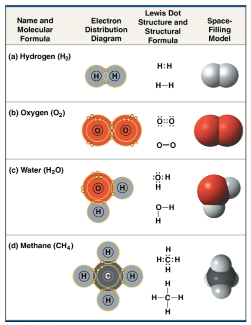
Two or more atoms held together by covalent bonds
Single bond
A single covalent bond; the sharing of one pair of valence electrons
Notated with lines like H—H to represent bonds, or molecular formulae like H2
Double bond
A double covalent bond; the sharing of two pairs of valence electrons
Valence
The atom’s bonding capacity between atoms of the same or different elements
Compound
A combination of two or more different elements held together by covalent or ionic bonds
Electronegativity
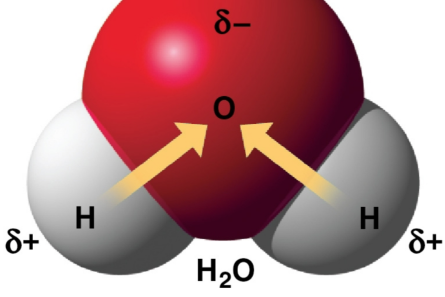
An atom’s attraction for the electrons in a covalent bond; higher levels of this pulls electrons toward itself
Nonpolar covalent bonds
Bonds where the atoms share electrons equally
Polar covalent bonds
Bonds where one atom is more electronegative and do not share electrons equally, creating a partial positive or negative charge for each atom or molecule
Ions
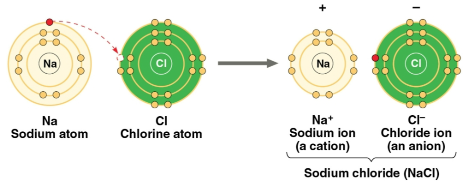
The result of ionic bonds in atoms where an electron is transferred and not shared between two atoms in a bond
Cation
A positively charged ion
Anion
A negatively charged ion
Ionic bond
The attraction of cations and anions to form a bond
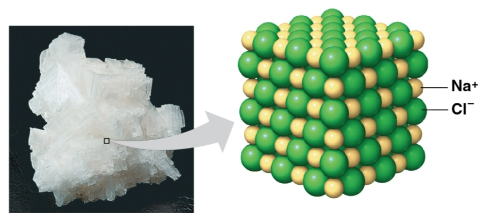
Ionic compounds (salts)
Compounds formed by ionic bonds, such as sodium chloride (NaCl)
NaCl itself is not a molecule but instead describes the ratio of atoms of a specific element in the bond
Salts dissolve easily in a solute, like water
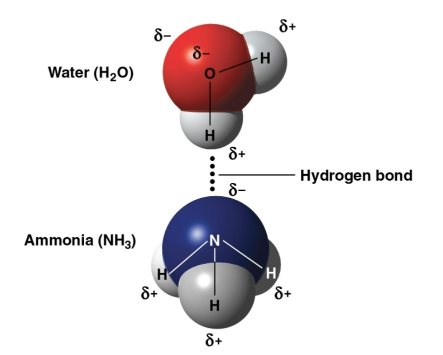
Hydrogen bond
A bond between a hydrogen atom covalently bonded to an electronegative atom and another electronegative atom, typically seen as other oxygen or nitrogen atoms
Van der Waals interactions
The uneven accumulation of electrons in one part of a molecule, creating attractions that are close together and can be strong enough to create bonds in organisms
Geckos are able to walk up walls
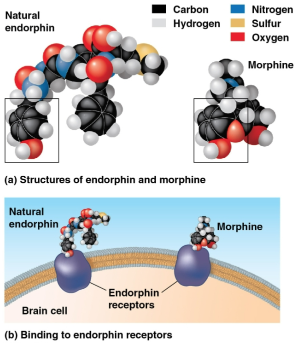
Molecular size and shape
These are key to its function, determined by the positions of its atoms’ orbitals
Similarly shaped molecules may serve similar purposes due to this, as is in the case of opiates and endorphins in the brain’s receptors