Exam 1
 Call Kai
 Learn
Learn Practice Test
 Spaced Repetition
 Match
Match Flashcards
 Knowt Play
1/46

There's no tags or description
Looks like no tags are added yet.
Name | Mastery | Learn | Test | Matching | Spaced | Call with Kai | Chat |
|---|
No analytics yet
Send a link to your students to track their progress
47 Terms
what is the scientific method?
a method of research with defined steps that include observation, formulation of a hypothesis, testing, and confirming or falsifying the hypothesis
what are the steps in the scientific method?
observation, hypothesis, prediction, experiment, & conclusion
what is an observation?
hoping to find a solution to something you cannot explain. can be quantitative (numbers) or qualitative (qualities)
what is a hypothesis?
a proposed solution to a scientific problem or an untested explanation. must be testable
what is a prediction?
a hypothesis written in the if… then… format
what is an experiment?
a procedure carried out to support or refute a hypothesis
what are the factors of experimental design?
variables, sample size, replication, control group vs. experimental group, blind or double-blind
elaborate about variables
you must only test one variable at a time
elaborate about sample size
it is represented by (n) and must be random
elaborate about replication
results must be repeatable
elaborate about control group vs. experimental group
the control group does not receive the new treatment being studied and is used to compare to the experimental group.
the experimental group receives the new treatment being studied.
elaborate about blind or double-blind
blind studies - subjects do not know what group they are in (they do not know if they are receiving a placebo or the treatment)
double-blind studies - both the subjects and administrator do not know
what is a conclusion?
look at the evidence collected to determine if it supports or refutes the hypothesis
if your hypothesis was incorrect, is the experiment a failure?
no, because you can remove that variable and reform a hypothesis
what is a theory?
a system of statements and ideas that explains a group of facts. most logical explanation of events that occur in nature
how does a theory differ from a hypothesis?
a theory is much broader in scope than a hypothesis.
a theory is a well-established framework build upon extensive evidence, whereas a hypothesis is a testable prediction or explanation that is formulated as part of research or experimentation.
what is scientific literacy?
the ability to understand, evaluate, and use scientific information in daily life
what are the characteristics of life?
cells - are composed of cells
homeostasis - maintain homeostasis (steady state)
evolve - are capable of evolving
metabolism - require energy and raw materials
grow - can grow
reproduce - can reproduce
respond to the environment
what is the five-kingdom classification?
1. monera: single-celled prokaryotes (bacteria)
2. protista: eukaryotic protozoa, algae, amoeba, paramecium
3. plantae: eukaryotic, photosynthetic plants
4. fungi: eukaryotic, decomposers (fungi, yeast, mushrooms)
5. animalia: eukaryotic animals, heterotrophs
what is a virus?
it is a protein coat with some DNA or RNA inside.
can you see a virus?
only with a microscope.
is a virus alive? can you kill a virus? is a virus made out of a cell?
can a virus grow and reproduce? does a virus need food/energy?
no, a virus is not considered a living thing. you cannot “kill” a virus since they are not considered alive but you can destroy or inactivate them. a virus is not made up of cells but rather a protein coat with some dna/rna inside. viruses cannot grow and can only replicate by hijacking a host cell. viruses do not need food or use energy on their own.
how does a virus attacks a cell
attaches to the host cell, injects its genetic material (dna or rna), and hijacks the cell to make copies
how do you protect yourself from a virus?
vaccines - injecting dead viruses or weakened virus into body so that the immune system recognizes the virus and builds protection against that virus
immune system: white blood cells
how do you protect yourself from bacteria?
antibiotics
why do we have dna?
it tells us how to make proteins
what are the levels of biological organization?
atom
molecule
cell
tissue
organ
organ system
organism
what is an atom?
an atom is the smallest function unit
what does an atom consist of?
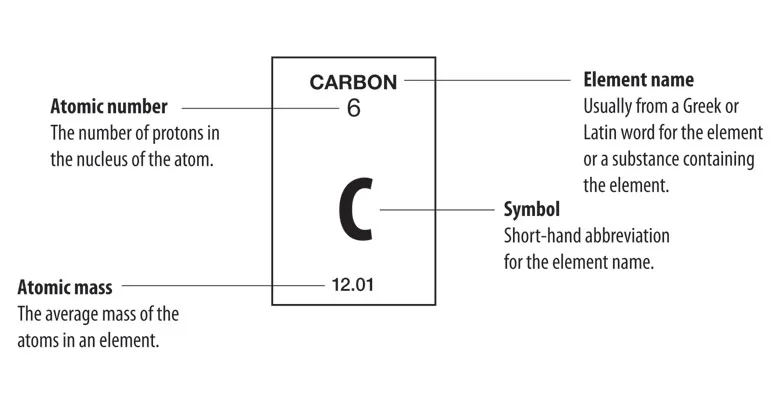
protons: positive charge, have mass
neutrons: no charge, have mass
electrons: negative charge, no discernible mass, make bonds
NEVER CHANGE THE….
PROTONS