Recalls 4 NP4
 Call Kai
 Learn
Learn Practice Test
 Spaced Repetition
 Match
Match Flashcards
 Knowt Play
1/30

There's no tags or description
Looks like no tags are added yet.
Name | Mastery | Learn | Test | Matching | Spaced | Call with Kai | Chat |
|---|
No analytics yet
Send a link to your students to track their progress
31 Terms
C. Hyperactive bowel sounds
Upon auscultation of the abdomen, the nurse noted 6 bowel sounds within 20 seconds. How should this finding be interpreted?
A. Hypoactive bowel sounds
B. Normal bowel sounds
C. Hyperactive bowel sounds
D. Absent bowel sounds
B. Localized pain when pressure is applied over the right lower quadrant
Which of the following findings is most consistent with McBurney’s point tenderness?
A. Pain in the left lower quadrant when the right upper quadrant is palpated
B. Localized pain when pressure is applied over the right lower quadrant
C. Pain relief when pressure is released over the abdomen
D. Diffuse abdominal pain that improves with movement
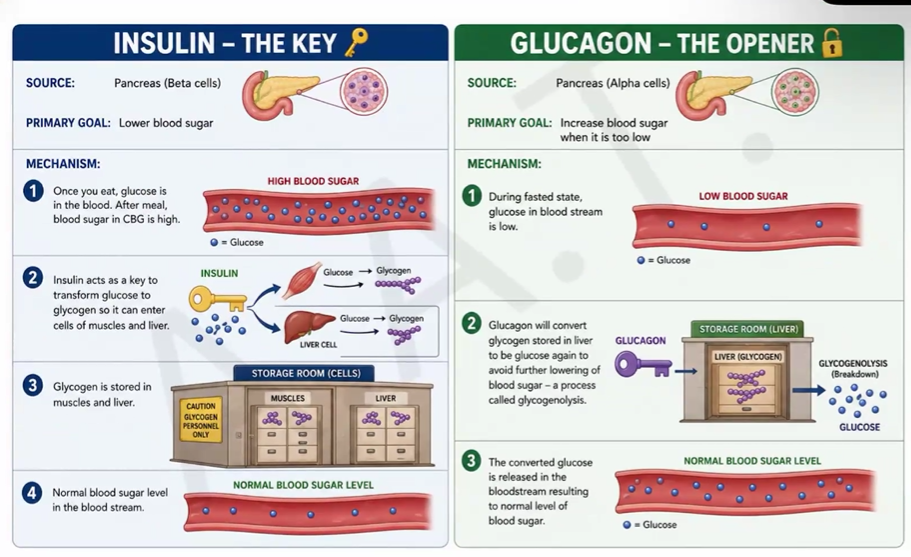
Which of the following best describes the primary pathophysiologic mechanism of Type 1 diabetes mellitus?
A. Insulin resistance in peripheral tissues
B. Autoimmune destruction of pancreatic beta cells
C. Excess glucagon secretion from alpha cells
D. Overproduction of insulin by the pancreas
B. Glucose cannot be stored in the liver due to lack of insulin
A client with early Type 1 diabetes is found to have fasting hyperglycemia and elevated postprandial blood glucose levels. Which explanation best describes this finding?
A. Excess insulin is driving glucose into cells too quickly
B. Glucose cannot be stored in the liver due to lack of insulin
C. Increased insulin resistance is preventing glucose uptake
D. The pancreas is producing excessive amounts of glucagon
C. HbA1c of 6.5%
A nurse is reviewing laboratory results of a client suspected to have diabetes mellitus. Which of the following findings confirms the diagnosis of diabetes?
A. Fasting plasma glucose of 95 mg/dL
B. Two-hour postprandial glucose of 180 mg/dL
C. HbA1c of 6.5%
D. Casual plasma glucose of 160 mg/dL
C. Lispro - rapid acting
A client with type 1 diabetes needs insulin coverage specifically for postprandial blood glucose spikes. Which insulin should the nurse expect to be prescribed?
A. NPH insulin - intermediate
B. Regular insulin
C. Lispro - rapid acting
D. Glargine - very long acting
C. Inject air into NPH insulin → inject air into regular insulin → draw regular insulin → draw NPH insulin
A nurse is preparing to administer a mixed dose of regular insulin and NPH insulin to a patient with diabetes. To ensure proper technique and avoid contamination, which of the following sequences should the nurse follow?
A. Inject air into NPH insulin → inject air into regular insulin → draw NPH insulin → draw regular insulin
B. Inject air into regular insulin → inject air into NPH insulin → draw regula r insulin → draw NPH insulin
C. Inject air into NPH insulin → inject air into regular insulin → draw regular insulin → draw NPH insulin
D. Inject air into regular insulin → inject air into NPH insulin → draw NPH insulin → draw regular insulin
A. Insulin waning – Dawn phenomenon – Somogyi effect
A patient with diabetes reports the following blood glucose patterns:
● Blood glucose gradually rises from bedtime until morning.
● Another patient has normal glucose at bedtime but develops hyperglycemia around 3–6 AM.
● A third patient is found to be hypoglycemic at 2–3 AM followed by rebound hyperglycemia in the morning.
Which of the following correctly matches each pattern?
A. Insulin waning – Dawn phenomenon – Somogyi effect
B. Dawn phenomenon – Insulin waning – Somogyi effect
C. Somogyi effect – Dawn phenomenon – Insulin waning
D. Insulin waning – Somogyi effect – Dawn phenomenon
A patient is diagnosed with Syndrome of Inappropriate Antidiuretic Hormone Secretion (SIADH). Which of the following assessment findings is NOT expected in this condition?
A. Serum sodium of 120 mmol/L with decreased serum osmolality and urine specific gravity of 1.028
B. Urine output of 300 mL over 8 hours with inappropriately concentrated urine despite low serum osmolality
C. Gradual weight gain with clinical signs of euvolemic fluid status and absence of peripheral edema
D. Serum sodium of 150 mmol/L with increased serum osmolality and dilute urine output
Which of the following findings should the nurse recognize as the earliest indicators of Addisonian crisis?
A. Severe hypertension with bounding pulses and flushed skin
B. Hypotension accompanied by nausea, vomiting, abdominal pain, and signs of increasing confusion
C. Gradual weight gain with peripheral edema and crackles on lung auscultation
D. Cyanosis with weak, thready pulses, cold clammy skin, and severe hypotension
The patient develops signs of Addisonian crisis. The nurse prepares to initiate immediate emergency management. Which of the following nursing actions demonstrates the correct positioning of the patient during this acute event?
A. Place the patient in high-Fowler’s position to maximize lung expansion and reduce work of breathing
B. Position the patient supine (recumbent) and elevate the legs to promote venous return and improve circulation
C. Position the patient in lateral Sims’ position to prevent aspiration during episodes of vomiting
D. Sit the patient upright with legs dangling to reduce preload and decrease cardiac workload
Which of the following food selections by the patient indicates appropriate understanding of dietary choices to help promote restoration of fluid and electrolyte balance?
A. Fresh fruits, oatmeal, and plain rice with water
B. Unseasoned grilled chicken breast, steamed vegetables, and herbal tea
C. Salted crackers, canned soup, pickled foods, and broth-based meals
D. Low-fat yogurt, boiled eggs, and low-salt toast with fruit juice
Which of the following nursing actions should be prioritized before initiating thrombolytic therapy?
A. Obtain a comprehensive history of anticoagulant use, recent surgeries, and baseline functional status while initiating IV access
B. Prepare the patient for immediate administration of alteplase to minimize neuronal damage within the therapeutic window
C. Facilitate rapid transport for brain imaging to differentiate ischemic from hemorrhagic stroke
D. Draw blood samples for coagulation studies, blood glucose, and complete blood count prior to therapy initiation
A nurse is discussing the pathophysiology of Multiple Sclerosis with nursing students. Which statement by a student reflects the most accurate understanding of the underlying cause of disease progression?
A. “MS occurs when peripheral nerves lose their ability to regenerate after injury.”
B. “MS develops when antibodies directly target acetylcholine receptors at the neuromuscular junction.”
C. “MS is caused by an autoimmune process in which sensitized T- and B-lymphocytes cross the blood–brain barrier, triggering inflammatory demyelination and eventual axonal degeneration in the CNS.”
D. “MS results from ischemic damage to brain tissue due to chronic reduction in cerebral blood flow.”
A student nurse asked about the early clinical presentation of Myasthenia Gravis. Which of the following findings should be identified as the most common initial manifestation of the disease?
A. Difficulty swallowing and choking episodes
B. Progressive weakness of the lower extremities with sensory loss
C. Drooping of the eyelids and double vision
D. Loss of coordination and unsteady gait
If a healthcare provider administers edrophonium chloride (Tensilon) IV for the diagnostic workup of a patient suspected to have Myasthenia Gravis, which of the following findings indicates a positive test result?
A. The patient develops bradycardia and increased salivation after injection
B. Muscle weakness and ptosis worsen within 5 minutes after administration
C. There is immediate improvement in muscle strength and resolution of ptosis
D. The patient reports numbness and tingling in the extremities
Which of the following instructions is most appropriate for a patient diagnosed with Trigeminal Neuralgia to help manage pain during episodes?
A. Apply cold compress directly to the affected side of the face to numb the pain
B. Eat foods at room temperature and chew on the unaffected side
C. Avoid all oral intake during pain episodes to prevent nerve stimulation
D. Massage the affected facial area vigorously to relieve nerve pressure
Which nursing intervention for a patient with Parkinson Disease is inappropriate when aiming to improve swallowing safety?
A. Encourage upright positioning with the head held steady during meals
B. Instruct the patient to place the food on the tongue, close the lips and teeth, lift the tongue up and then back, and swallow.
C. Offer thin liquids to facilitate easier swallowing of solid food
D. Suggest massaging facial and neck muscles before meals
Which of the following is the most common initial clinical manifestation of Rheumatoid Arthritis?
A. Asymmetric joint pain that worsens with activity and improves with rest
B. Symmetric joint pain with prolonged morning stiffness lasting more than 1 hour
C. Sudden severe joint pain in a single large joint with redness and swelling
D. Progressive joint stiffness that occurs only in the evening after activity
Which of the following joint deformities is most commonly associated with Rheumatoid Arthritis?
A. Heberden’s nodes and Bouchard’s nodes
B. Ulnar deviation and swan-neck deformity
C. Bone spur formation and joint space narrowing
D. Crepitus with joint movement and cartilage thinning
A patient with Osteoarthritis asks how to manage pain when starting a walking exercise program. Which response by the nurse is most appropriate?
A. “Avoid exercise when experiencing pain to prevent further joint damage.”
B. “Perform vigorous exercise daily to strengthen the joints quickly.”
C. “Take a prescribed analgesic before exercising to reduce discomfort.”
D. “Limit all physical activity to prevent worsening of symptoms.”
Which of the following findings is characteristic of Osteoarthritis involving the interphalangeal joints?
A. Soft tissue swelling of the metacarpophalangeal joints with ulnar deviation
B. Bony enlargement of the distal and proximal interphalangeal joints
C. Symmetric joint inflammation with prolonged morning stiffness lasting more than 1 hour
D. Joint deformity caused by pannus formation
A patient is scheduled for a diagnostic imaging procedure. Which situation represents the most significant contraindication or need for precaution before proceeding with a CT scan with contrast?
A. A patient with mild claustrophobia who becomes anxious in enclosed spaces
B. A patient with a history of iodine allergy who previously tolerated contrast with premedication
C. A patient who is 10 weeks pregnant requiring abdominal imaging
D. A patient who reports mild anxiety with stable vital signs.
In the immediate postoperative period following a Total Hip Arthroplasty, which nursing intervention is most appropriate to prevent hip dislocation?
A. Position the affected leg in full flexion while sitting upright
B. Allow the legs to be adducted together when lying in bed
C. Place an abduction splint or wedge pillow between the legs
D. Encourage internal rotation of the affected hip during repositioning
What is the initial nursing priority before transporting the patient with fracture?
A. Apply ice pack to reduce swelling
B. Perform neurovascular assessment of the affected limb
C. Immobilize the affected extremity using proper splinting technique
D. Encourage passive range of motion to assess joint function
The patient is able to read the line marked 20/40 on the Snellen chart. What does this result mean?
A. The patient can see at 20 feet what a normal eye can see at 20 feet
B. The patient can see at 40 feet what a normal eye can see at 20 feet
C. The patient can see at 20 feet what a normal eye can see at 40 feet
D. The patient has complete loss of central vision
A patient is prescribed with medicated eye drops to be instilled twice daily. The nurse emphasizes techniques to reduce systemic absorption and prevent adverse effects of the medication.
Which of the following statements by the patient indicates correct understanding of how to prevent systemic absorption of eye drops?
A. “I will blink several times after instilling the drops to spread the medication evenly.”
B. “I will gently press the inner corner of my eye near the nose for 1 to 2 minutes after applying the drops.”
C. “I will rinse my eye with water immediately after instilling the medication to remove excess drops.”
D. “I will tilt my head backward and massage my eyelid after putting in the drops.”
What is the most appropriate nursing action for this patient?
A. Instill prescribed antibiotic eye drops and discharge the patient with home care instructions
B. Advise the patient to rest and schedule an outpatient ophthalmology consultation in 3 days
C. Treat the condition as an emergency and prepare the patient for immediate ophthalmologic surgical intervention
D. Apply warm compress to the affected eye to improve retinal circulation and relieve symptoms
Another patient reports difficulty hearing conversations, especially in noisy environments. The patient states, “I can hear people talking, but I can’t clearly understand the words.” The nurse performs hearing tests. Findings include: air conduction heard longer than bone conduction (Rinne test) and sound lateralized to the right ear (Weber test). The patient also has difficulty hearing high-frequency sounds such as consonants.
A. Conductive hearing loss in the left ear
B. Conductive hearing loss in the right ear
C. Sensorineural hearing loss in the left ear
D. Normal hearing findings
Which of the following additional subjective findings is MOST consistent with conductive hearing loss?
A. Patient speaks in a loud voice
B. Patient speaks softly
C. Patient complains that people mumble
D. Patient exhibits no changes in volume of speaking
A nurse is preparing to perform ear irrigation for a patient with impacted cerumen in the left ear. Which of the following positions is MOST appropriate?
A. Lie on the left side
B. Lie on the right side
C. Sit upright with the head tilted backward
D. Lie supine with the head flat