IV. IN PROCESS QUALITY CONTROL (FLOWABILITY) (copy)
 Call Kai
 Learn
Learn Practice Test
 Spaced Repetition
 Match
Match Flashcards
 Knowt Play
1/23

There's no tags or description
Looks like no tags are added yet.
Name | Mastery | Learn | Test | Matching | Spaced | Call with Kai | Chat |
|---|
No analytics yet
Send a link to your students to track their progress
24 Terms
d. Excellent
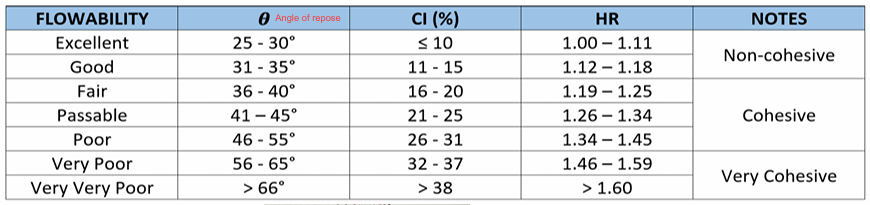
The flowability classification with an Angle of Repose of 25–30°
a. Good
b. Fair
c. Passable
d. Excellent
c. Good
The flowability classification with an Angle of Repose of 31–35°
a. Excellent
b. Fair
c. Good
d. Passable
d. Fair
The flowability classification with an Angle of Repose of 36–40°
a. Good
b. Passable
c. Poor
d. Fair
c. Passable
The flowability classification with an Angle of Repose of 41–45°
a. Fair
b. Poor
c. Passable
d. Very Poor
a. Poor
The flowability classification with an Angle of Repose of 46–55°
a. Poor
b. Very Poor
c. Fair
d. Passable
c. Very Poor
The flowability classification with an Angle of Repose of 56–65°
a. Poor
b. Very Very Poor
c. Very Poor
d. Passable
d. Very Very Poor
The flowability classification with an Angle of Repose of greater than 66°
a. Very Poor
b. Poor
c. Fair
d. Very Very Poor
c. ≤ 10%
The Compressibility Index (CI) for Excellent flowability
a. 11–15%
b. 16–20%
c. ≤ 10%
d. 21–25%
a. 1.00–1.11
The Hausner Ratio (HR) for Excellent flowability
a. 1.00–1.11
b. 1.19–1.25
c. 1.26–1.34
d. 1.12–1.18
d. Excellent and Good
The flowability classifications described as Non-cohesive
a. Fair, Good, and Excellent
b. Poor, Very Poor, and Very Very Poor
c. Passable, Poor, and Very Poor
d. Excellent and Good
d. Fair, Passable, and Poor
The flowability classifications described as Cohesive
a. Excellent, Good, and Fair
b. Poor, Very Poor, and Very Very Poor
c. Passable and Poor
d. Fair, Passable, and Poor
c. Very Poor and Very Very Poor
The flowability classifications described as Very Cohesive
a. Passable and Poor
b. Excellent and Good
c. Very Poor and Very Very Poor
d. Poor and Very Poor
d. > 1.60
The Hausner Ratio (HR) that indicates Very Very Poor flowability
a. 1.34–1.45
b. 1.46–1.59
c. 1.26–1.34
d. > 1.60
b. 1.46–1.59
The Hausner Ratio (HR) that indicates Very Poor flowability
a. 1.34–1.45
b. 1.46–1.59
c. 1.26–1.34
d. > 1.60
a. 1.34–1.45
The Hausner Ratio (HR) that indicates Poor flowability
a. 1.34–1.45
b. 1.46–1.59
c. 1.26–1.34
d. > 1.60
c. 1.26–1.34
The Hausner Ratio (HR) that indicates Passable flowability
a. 1.34–1.45
b. 1.46–1.59
c. 1.26–1.34
d. > 1.60
c. 1.19–1.25
The Hausner Ratio (HR) that indicates Fair flowability
a. 1.12–1.18
b. 1.46–1.59
c. 1.19–1.25
d. 1.26–1.34
a. 1.12–1.18
The Hausner Ratio (HR) that indicates Good flowability
a. 1.12–1.18
b. 1.46–1.59
c. 1.19–1.25
d. 1.26–1.34
c. > 38%
The Compressibility Index (CI) that indicates Very Very Poor flowability
a. 32–37%
b. 26–31%
c. > 38%
d. 21–25%
a. 32–37%
The Compressibility Index (CI) that indicates Very Poor flowability
a. 32–37%
b. 26–31%
c. > 38%
d. 21–25%
b. 26–31%
The Compressibility Index (CI) that indicates Poor flowability
a. 32–37%
b. 26–31%
c. > 38%
d. 21–25%
d. 21–25%
The Compressibility Index (CI) that indicates Passable flowability
a. 32–37%
b. 26–31%
c. > 38%
d. 21–25%
a. 16–20%
The Compressibility Index (CI) that indicates Fair flowability
a. 16–20%
b. 11–15%
c. > 38%
d. 21–25%
b. 11–15%
The Compressibility Index (CI) that indicates Good flowability
a. 16–20%
b. 11–15%
c. > 38%
d. 21–25%