W9 Literature Searching/Critiquing and Bias
 Call Kai
 Learn
Learn Practice Test
 Spaced Repetition
 Match
Match Flashcards
 Knowt Play
1/15

There's no tags or description
Looks like no tags are added yet.
Name | Mastery | Learn | Test | Matching | Spaced | Call with Kai | Chat |
|---|
No analytics yet
Send a link to your students to track their progress
16 Terms
Literature search supports EBVN
Allow VNs to move beyond assumptions
Ensure clinical decisions made on best evidence
Support professional accountability
Underpinning academic work
Identifying gaps in knowledge/evidence
PICO
Population - Who being affected? Symptoms, age, gender
Intervention - What is being done? Screening, surgery, service
Comparison - Control group or comparison e.g. different treatment option
Outcome - What to achieve via study? What hope to change/measure
Efficient literature searching
Database selection (VetMed, Science direct enhance evidence retrieval from varied disciplines)
Iterative search strategy (repeated test/refining keywords, filters to optimize relevance of results)
Search documentation importance (Documenting databases, search strings, limits, results enhances transparency, replicability and academic integrity)
Literature Critiquing
Structured, consistent way to decide if and how to use piece of research
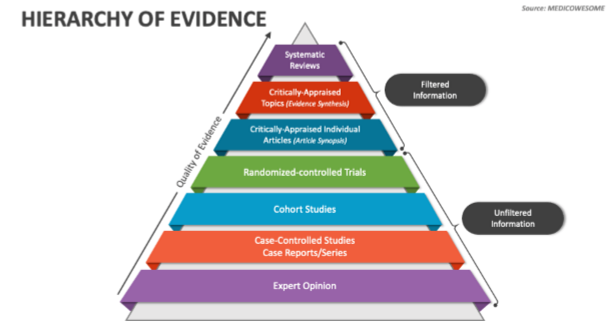
Hierarchy of evidence
Reliability and Validity
Small sample size - reduced reliability
Poor measurement tools - reduced validity
Frameworks for Critiquing Research EBVN
Improves consistency
Enhances validity of decisions
Identifies methodical flaws and identification of bias
Promotes critical thinking
Improves transparency and justification
Links evidence to practice
Improves confidence in decision making
Enable comparison between studies
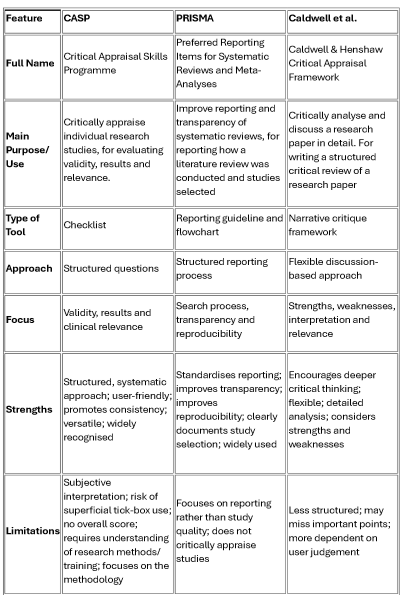
CASP
Critical Appraisal Skills Programme
Critical appraisal tool that provides structured framework for assessing quality and validity of research studies
Caldwell & Henshaw (Caldwell et al. framework)
Flexible narrative critique framework, encourages deeper analysis and discussion
CASP strengths/limitations
Strengths
Structured approach
Improves critical thinking
User friendly
Versatile
Promote consistency
Widely recognised
Limitations
Subjective interpretation
Superficial use
No clear score
Focus on methodology
Prior knowledge/training
Time consuming
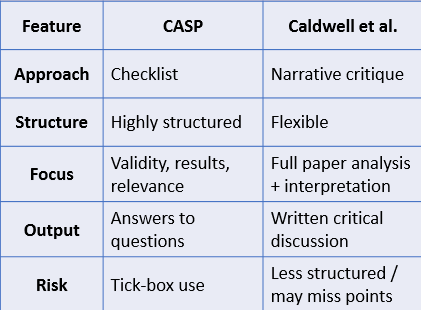
CASP vs Caldwell et al.
Types of Bias
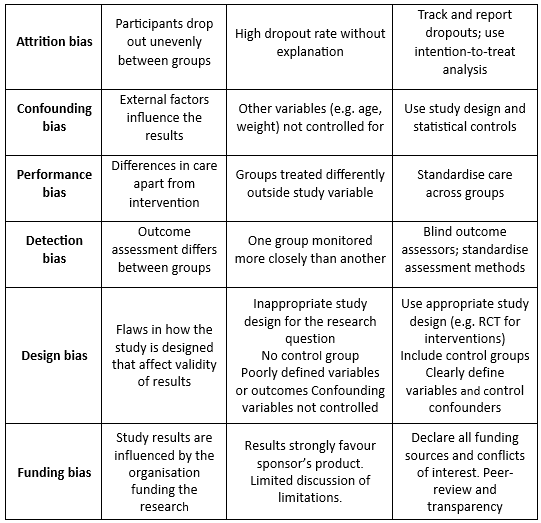
Selection, sampling, recall, measurement, observer, confirmation, publication, reporting, attrition, confounding, performance, detection, design, funding
Ways bias can affect findings:
Over/underestimate effect
Produces misleading results
Limits generalisability
Reduces reliability (consistency)
Reduces validity (accuracy)
Bias table
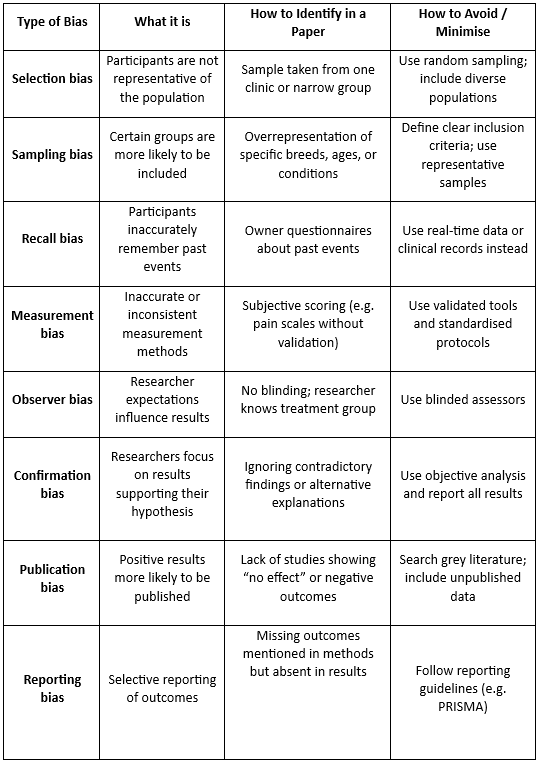
Bias table 2
PRISMA
Preferred Reporting items for Systematic Reviews and Meta-Analyses
To improve transparency, clarity and completeness of systematic reviews and meta-analyses
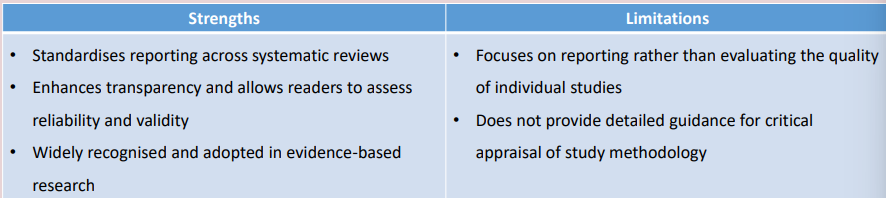
Casp Prisma & Caldwell et all