BIOL 151 - Unit 1
 Call Kai
 Learn
Learn Practice Test
 Spaced Repetition
 Match
Match Flashcards
 Knowt Play
1/56

There's no tags or description
Looks like no tags are added yet.
Name | Mastery | Learn | Test | Matching | Spaced | Call with Kai | Chat |
|---|
No analytics yet
Send a link to your students to track their progress
57 Terms
define carbohydrates (make-up/formula, 1. monomer, 2. function, 3. examples)
macromolecules made up of C, H, & O (C6H12O6) molecules — linear chain or ring-shaped molecules
monosaccharides
energy source & structure
glucose, starch → energy source, cellulose & chitin → structure

carbohydrate subgroups
monosaccharides (1 carb)
disaccharides (2 carbs)
oligosaccharides (3-10 carbs)
polysaccharides (100s of carbs)
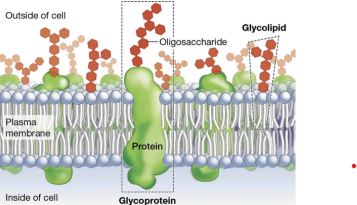
oligosaccharides
3-10 monosaccharides vital for cell recognition (communication) & signaling — usually found on glycoproteins
what bonds link monosaccharides, how are they formed & broken?
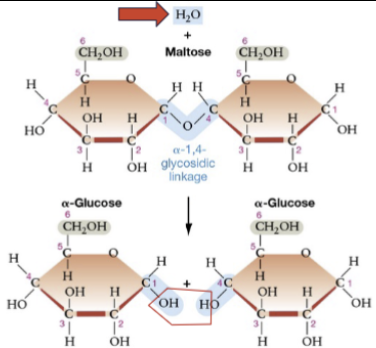
glycosidic bonds (COVALENT) are formed with dehydration synthesis (condensation reactions) and broken with hydrolysis

dehydration synthesis/condensation reaction
creates a covalent glycosidic bond + 1 H2O molecule (water is removed from bond)

hydrolysis reaction
a water molecule is added to break bond
disaccharides
2 monosaccharides bonded tgtr w/ glycosidic bonds through dehydration/condensation reactions (H2O is removed)
polysaccharides (bonds + examples)
multiple monosaccharides that create long polymers connected by either hydrogen or peptide bonds
energy storage: starch, glucose, glycogen
cell structure: cellulose, chitin, peptidoglycan
glycosidic bond
a covalent bond that joins a carbohydrate to another molecule
lipids (define, functions, types)
macromolecule mostly made of C & H atom as the tail (hydrophobic) & a carboxyl group as the head (hydrophilic)
monomers: glycerol & fatty acids
largely nonpolar & hydrophobic → insoluble to water
function: long-term energy storage, cell communication, signaling, cell membrane
steroids, fats (triacylglycerols/cides), phospholipids, waxes
why don’t lipids bond with water?
lots of nonpolar C-C and C-H bonds and nonpolar doesn’t have a charge to form hydrogen bonds w/ water
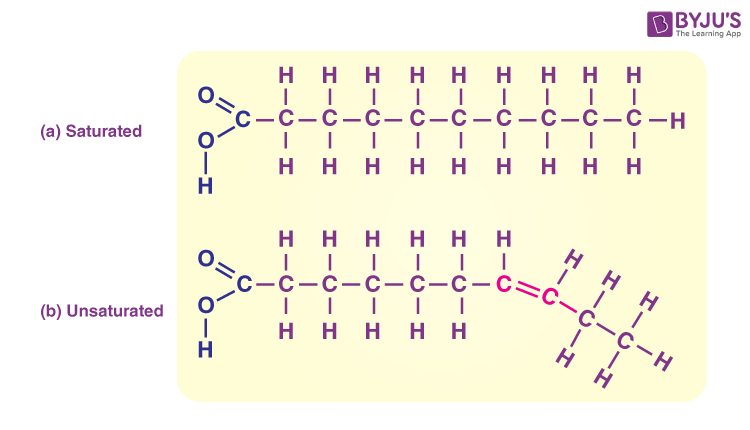
hydrocarbons
molecules containing only C & H atoms (greatly abundant in lipids!)
unsaturated contain C=C (double bonds)
saturated don’t
amphipathic
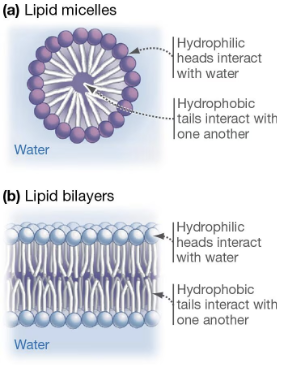
phospholipids that contain both hydrophilic & hydrophobic regions
lipids have hydrophilic heads & hydrophobic tails
ex. detergent

phospholipids
lipids consisting of 2 fatty acid chains (uncharged, polar) attached to a glycerol linked to a phosphate group (negatively charged polar)
major part of plasma membrane for animal cells

2 structures of amphipathic lipids when placed in water
micelles
lipid bilayer
micelles
tiny spherical lipid structures created when placed in water:
prone to forming free fatty acids
assemble spontaneously

lipid bilayer
amphipathic phospholipid lipids that align & layer tgtr
assemble spontaneously

unsaturated lipids
multi-bond chains fatty acids with kinks b/c C=C (double bond) surrounded by hydrogens (fewer than max H)
high permeability w/ low melting points
ex. oils

saturated lipids
a fatty acid where the hydrocarbon chain consists of only single bonds w/ carbons
low permeability so can stack w/ nonpolar molecules due to van der waal interactions
relatively high melting points
solids at room temp (ex. butter, waxes)

steroids
ring structure lipids w/ 4 linked carbon rings
ex. cholesterol, testosterone, estrogen

what type of bonds link lipids tgtr (& what process)?
ester bonds by dehydration synthesis/condensation reactions
fats aka triacylglycerols/triglycerides
nonpolar molecules made of 3 fatty acids linked to glycerol
primary function: energy storage (2x more energy per gram than carbs b/c of more high energy bonds (C-C & C-H)
linked w/ ester bonds (covalent bonds) through condensation reaction

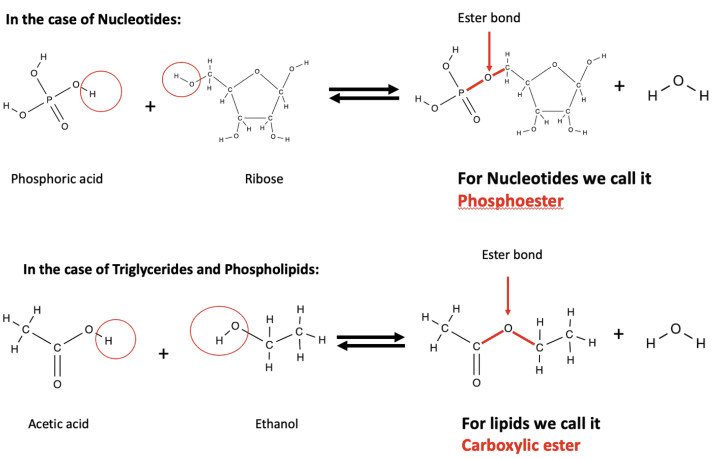
ester bond
for nucleotides = phosphoester
formed b/w a phosphate group with a ribose
for lipids = carboxylic ester
formed b/w a glycerol’s hydroxyl group (-OH) with a fatty acid’s carboxyl group (double bonded O)
glycerol
organic compound w/ 3 carbons, 5 hydrogens, & 3 hydroxyl (OH) groups → C3H8O3
backbone of triglycerides & phospholipids

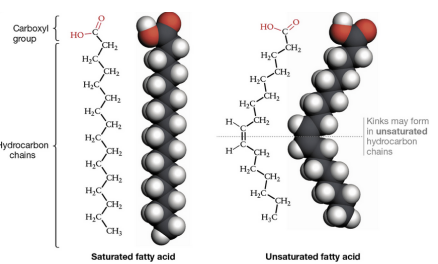
fatty acid
a simple lipid consisting of a polar carboxyl group (-COOH) bonded to a hydrocarbon chain
key building block for important lipids
unsaturated or saturated


diffusion
spontaneous movement of molecules across a membrane
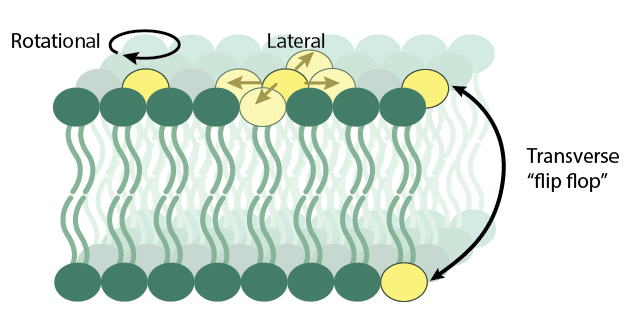
phospholipid diffusion
2 types:
lateral diffusion
transverse diffusion “flip flop”
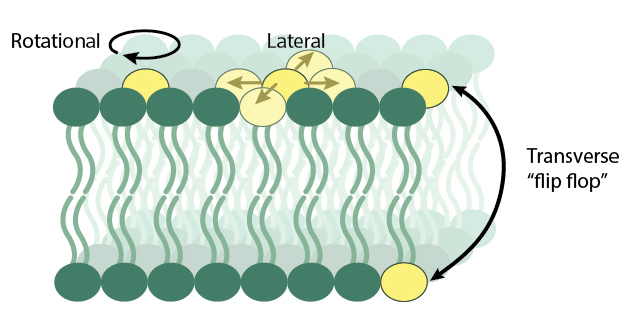
lateral diffusion
lipid movement in plasma membrane side-to-side within same layer side
occurs frequently

transverse diffusion
aka “flip flop” where a lipid moves within the plasma membrane to opposite layer
occurs not so frequently

integral proteins
embedded within the phospholipid bilayer/membrane
may or may not penetrate through both layers
hydrophobic

peripheral proteins
located on either inner or outer surface of phospholipid bilayer
not embedded within
vital for cell recognition/identification (to allow immune system to ID body cells aka “self” & foreign cells aka “non-self”)
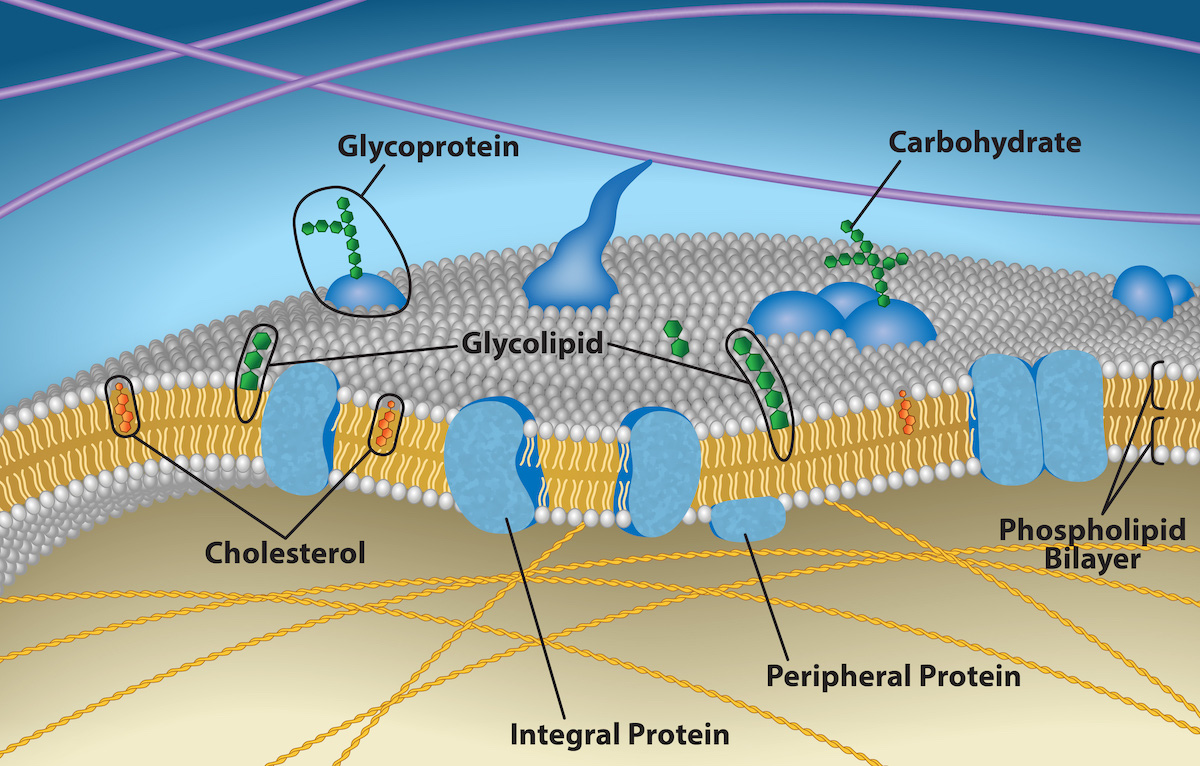
cholesterol
attached b/w phospholipids & 2 phospholipid bilayers of membrane
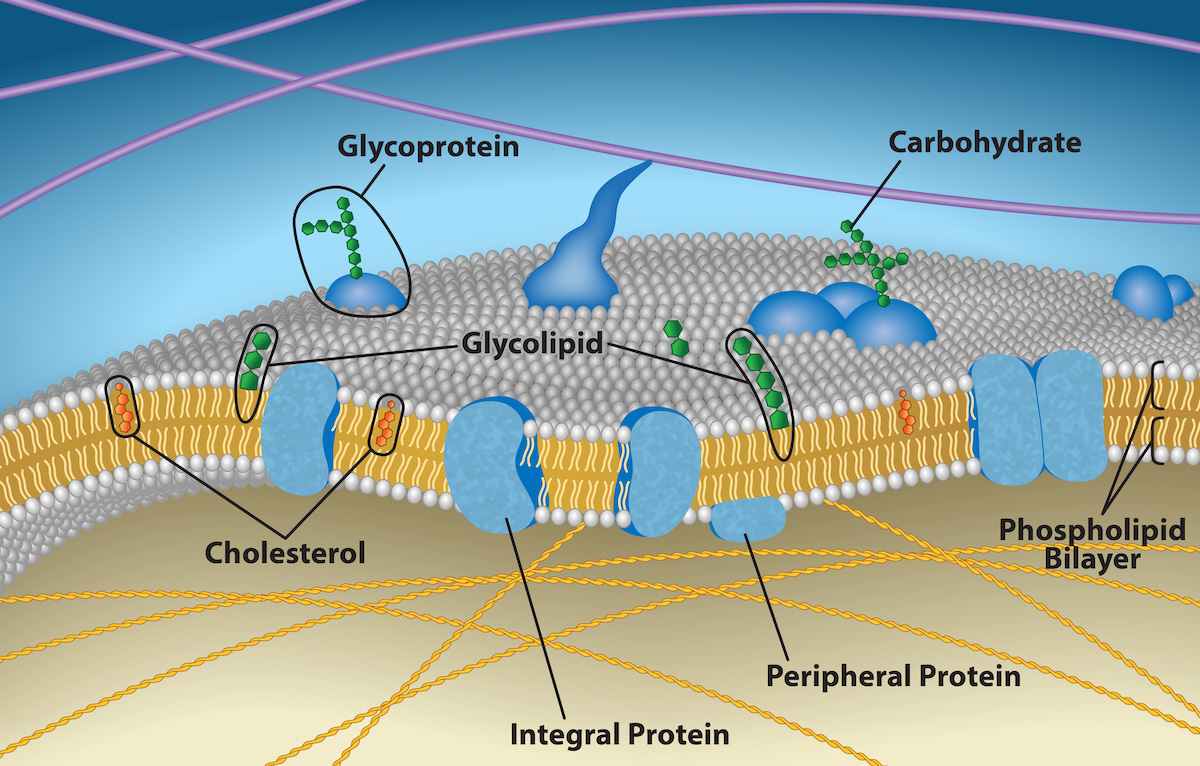
glycoprotein
protein w/ carbohydrate attached

glycolipid
lipid w/ carbohydrate attached
function of carbohydrates in plasma membranes
cell recognition/identification (to allow immune system to ID body cells aka “self” & foreign cells aka “non-self”)
glycocalyx
aka “fuzzy sugar coating” outer layer of plasma membrane of all glycoproteins & glycolipids
highly hydrophilic

what molecules cannot easily cross the membrane?
polar molecules like sodium & potassium
fluid mosaic model
describes the cell membrane’s structure as a mosaic (flexible) of components
amino group
-NH2
component of amino acids (that form proteins)
acts as a base
can form peptide bonds (bonds b/w amino acids)

carboxyl
-COOH
component of amino acids (that form proteins)
acts as an acid
can form peptide bonds (bonds b/w amino acids)

proteins
polymers made of monomers called amino acids (structure in picture) of 20 types connected by peptide bonds consisting of:
hydrogen atom (H)
amino functional group (-NH2)
carboxyl group (-COOH)
R group (side chain)
more features
legit does everything but carry genetic material
4 levels of structure: primary, secondary, tertiary, quatemary

r group (side chain)
abbreviation of the rest of the molecule which determines amino acid’s shape and function
ionic — super hydrophilic b/c full charge
polar — hydrophilic b/c partial charge
nonpolar — hydrophobic b/c no charge
peptide bond
a C-N covalent bond formed b/w 2 amino acids via dehydration synthesis/condensation reaction
amino acid A’s amino group (-COOH) with amino acid B’s carboxyl (-NH2)

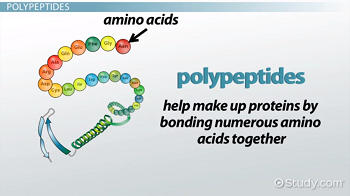
polypeptide
a single linear, continuous chain of amino acids bonded by peptide bonds
all proteins are made of polypeptides, but a single, flat polypeptide isn’t a protein
4 levels of protein structures (identify each)
primary — a single amino acid sequence/chain in a polypeptide; bonded by peptide bonds
secondary — a-helix & b-pleated sheet formations; hydrogen bonds b/w groups of peptide-bonded chains
tertiary — 3-dimensional shape consisting of 2ndary structures
quaternary — combo of (tertiary) polypeptides

pentose
5 carbon ring-shaped monosaccharides
hexose
6 carbon ring-shaped monosaccharides
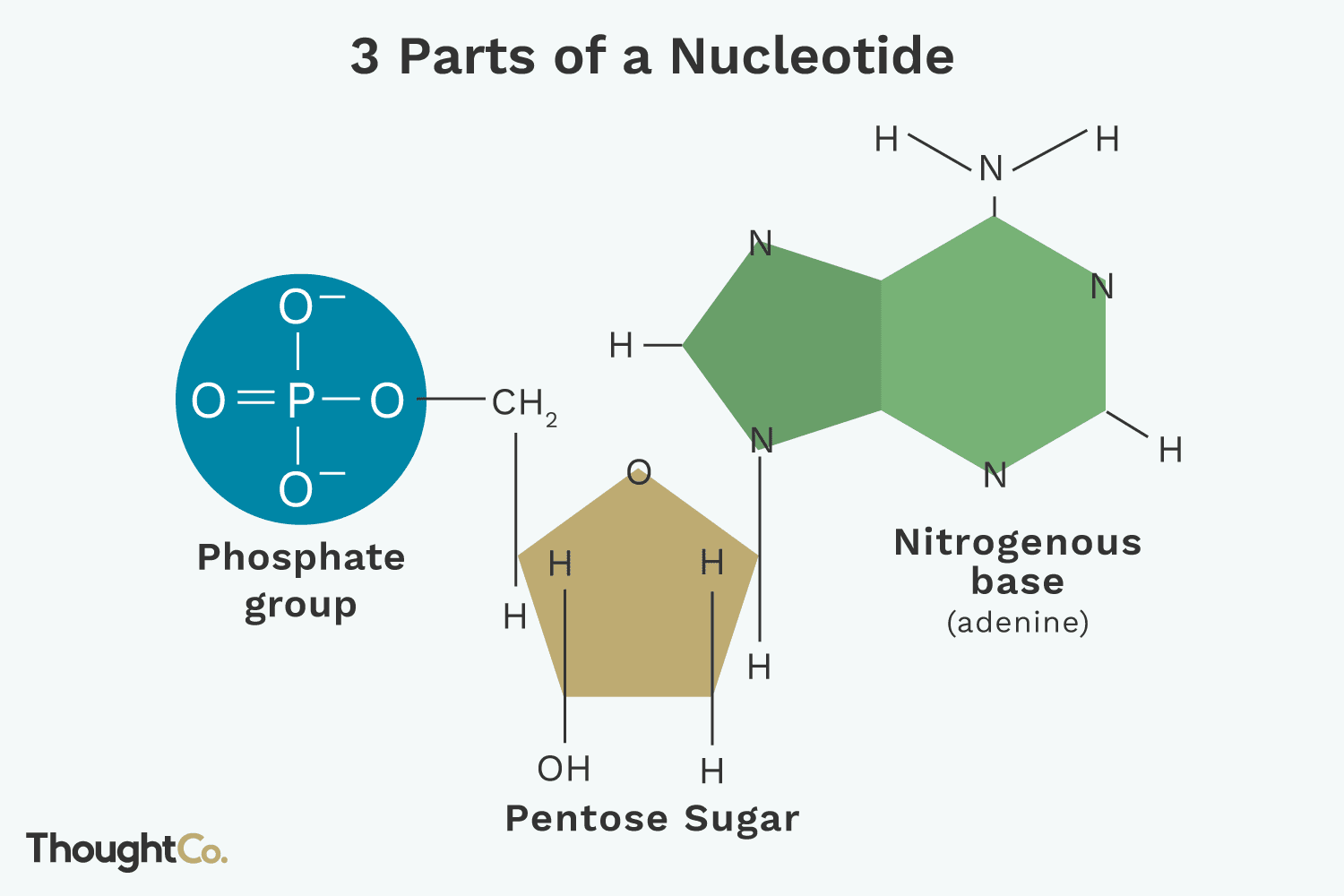
nucleic acids
polymers made up monomers called nucleotides
responsible for storage of genetic material (DNA & RNA)
bonded w/ phosphodiester bonds (covalent) by dehydration synthesis/condensation

phosphodiester bonds
covalent bonds that forms b/w the phosphate group (PO4) attached to 5’ carbon of nucleotide sugar A & the 3’ hydroxyl (-OH) of nucleotide B’s sugar
tgtr creating the “sugar-phosphate backbone” for

DNA vs RNA
DNA:
nucleotides contain deoxyribose
lacks an O on 2nd carbon → chemically stable → good for long-term storage
stores genetic code/blueprint
double-stranded
uses bases A, T, C, G
RNA:
nucleotides contain ribose
has an extra O on 2nd carbon → unstable & prone to breaking down (by hydrolysis) → good for temp genetic msgs so the cell can turn on-or-off specific genes, controlling gene expression and respond quickly)
interprets genetic code to help build proteins
single-stranded
uses bases A, U, C, G

3 parts of a nucleotide
dna: deoxyribose sugar
rna: ribose sugar
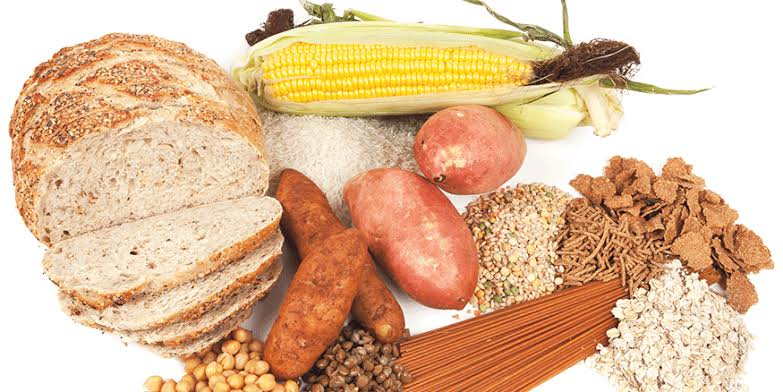
starch
carb for energy storage in plants
glycogen
carb for short-term energy storage in animals
cellulose
carb for structural support in plant cell walls
chitin
carb for structural support in exoskeletons, cell walls, & fungi

peptidoglycan
carb for structural protection & shape maintenance in bacterial cell walls