W1 Lecture - Body Defense Systems and Disease, History and Physical Exam, Medical History
 Call Kai
 Learn
Learn Practice Test
 Spaced Repetition
 Match
Match Flashcards
 Knowt Play
1/23

There's no tags or description
Looks like no tags are added yet.
Name | Mastery | Learn | Test | Matching | Spaced | Call with Kai | Chat |
|---|
No analytics yet
Send a link to your students to track their progress
24 Terms
what are the two types of immunity?
specific and nonspecific
what is nonspecific immunity?
protects against all antigenic insults the same way
is species resistance (ex: cats can’t get distemper) an example of specific or nonspecific immunity?
nonspecific immunity
are mechanical and chemical barriers (ex: skin + HCl in stomach) an example of specific or nonspecific immunity?
nonspecific immunity
is inflammatory response (ex: phagocytosis) an example of specific or nonspecific immunity?
nonspecific immunity
are interferon and compliment (chemicals that stop infections) examples of specific or nonspecific immunity?
nonspecific immunity
what is specific immunity?
protects against certain “invading” antigens
is cell-mediated immunity (T lymphocytes + macrophages) an example of specific or nonspecific immunity?
specific immunity
is humoral immunity (B lymphocytes and antibodies) an example of specific or nonspecific immunity?
specific immunity
what is considered the “first line of defense”?
healthy skin
what is considered the “second line of defense”?
inflammatory response
what is inflammatory response?
tissue damage causes cells to release chemical mediators
what are classic signs of inflammation?
heat, redness, swelling, pain
what is interferon?
substance that interferes with ability of virus to cause disease by preventing replication within host cell
what is complement?
a group of enzymes, activated during infection, binds to invading cell wall and places small holes in membrane causing lysis of the cell
what do T cells do?
programmed to recognize markers unique to self, interact directly with foreign agents and destroy or render incapable of causing disease
what do macrophages do?
travels through tissues looking for foreign substances, then takes them to T cell
what is humoral immunity?
young and inactive B cells produce antigen-combining receptor sites, then when in contact with specific antigen, B cell divides repeatedly to make clones (can make antibodies for specific antigen, or becomes memory cells to more easily recognize antigen). antibody locks onto antigen and renders it harmless or clumps them together (agglutination) for removal or cell lysis
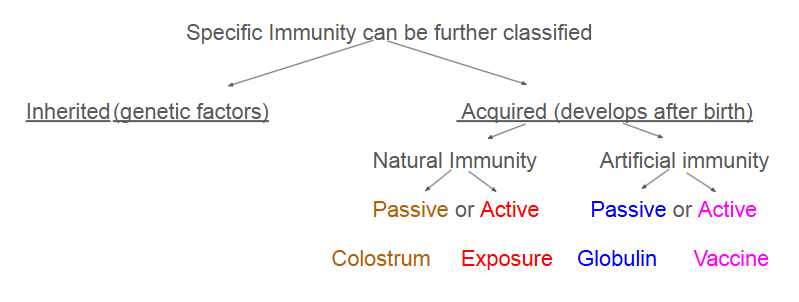
draw this from memory
okay im good
what is etiology?
study of causation or origination of disease
what is an etiologic agent?
causative agent
what is pathogenesis?
mechanism of development of a disease
what is a clinical sign?
body’s response that is seen (not all patients with disease show outward signs)
what is signalment?
age, breed, sex, reproductive status