Diabetes Mellitus Pathophysiology and pharmacology
 Call Kai
 Learn
Learn Practice Test
 Spaced Repetition
 Match
Match Flashcards
 Knowt Play
1/133

Earn XP
Description and Tags
Endo week 1
Name | Mastery | Learn | Test | Matching | Spaced | Call with Kai | Chat |
|---|
No analytics yet
Send a link to your students to track their progress
134 Terms
2 main function of pancreas
Make enzymes involved in absorption and make hormones involved in glucose homeostasis
Exocrine pancreas secretes what
pancreatic juice into the duodenum
Endocrine pancreas
consists of islets of Langerhans that secretes insulin and other hormones
glucagon and proglucagon
Alpha cells in Pancreatic Islets secrete
Amylin
creates full feeling, delays gastric emptying, and inhibits glucagon
Insulin, C-peptide, proinsulin, amylin
Beta cells in Pancreatic Islets secrete
Glycogenolysis
The breakdown of glycogen to glucose in the liver
Glycogenesis
Process of glycogen synthesis
Glyconeogenesis
Formation of glucose from non-carbohydrates and fat
Liver
Where does gluconeogenesis typically occur
glucagon release
Low blood sugar promotes
Stimulates glycogen breakdown
Glucagon does what
Raises blood sugar
Glycogen breakdown does this
Lipogenesis
formation of fat
Lipolysis
Breakdown of lipids
Increase
Insulin effect on liver - glucose uptake
Decrease
Insulin effect on liver - Glucose output
Decrease
Insulin effect on liver - gluconeogenesis
decrease
Insulin effect on liver - glycogenolysis
increase
Insulin effect on liver - lipogenesis
increase
Insulin effect on liver - glycogenesis
increase
Insulin effect on Adipose tissue - glucose uptake
increase
Insulin effect on Adipose tissue - lipogenesis
decrease
Insulin effect on Adipose tissue - lipolysis
increase
Insulin effect on Skeletal muscle - glucose uptake
increase
Insulin effect on Skeletal muscle - glycogenesis
increase
Insulin effect on Skeletal muscle - protein synthesis
glycogenolysis, gluconeogenesis, conversion of fatty acids and amino acids to keto acids
Insulin in liver inhibits
Insulin in liver promotes
Anabolic actions, storage of glucose as glycogen, glucokinase, glycogen synthase, inhibit glycogen phosphorylase, triglyceride synthesis, VLDL formation
Glycogenolysis
glycogen into glucose
High blood sugar promotes insulin release in which cells
Pancreatic beta
Low blood sugar promotes glucagon release in which cells
Pancreatic alpha
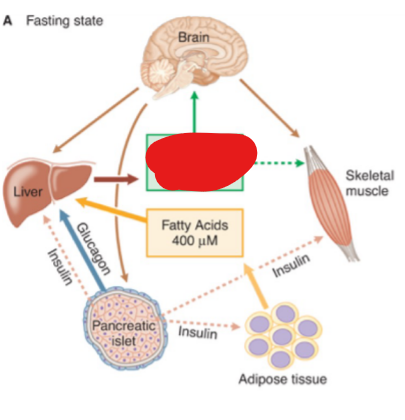
Glucose

Insulin
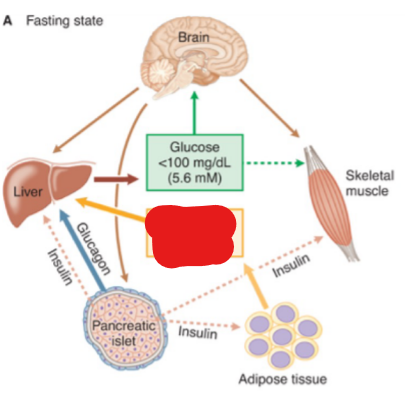
Fatty acids

Glucagon
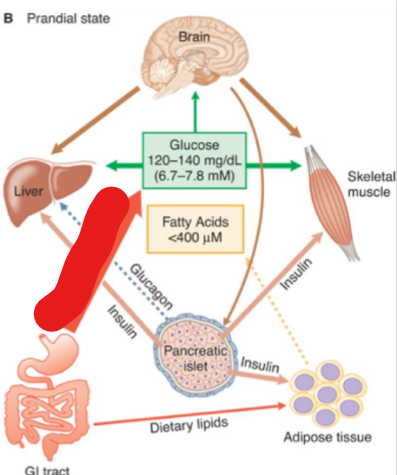
Dietary carbohydrate

Dietary lipids
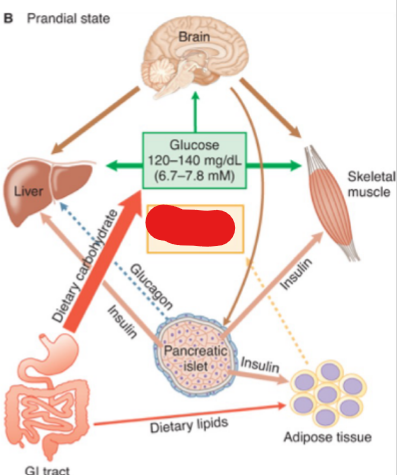
Fatty acids
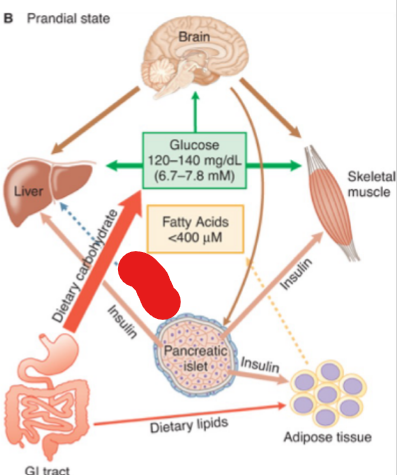
glucagon

Insulin
Effects of insulin in muscle
Increased glycolysis and increased protein synthesis
Increases glucose transport, induces glycogen synthase, inhibits glycogen phosphorylase
How does insulin in muscle increase glycogenesis
How does insulin in muscle increase protein synthesis
Increases amino acid transport and increases ribosomal protein synthesis
Effects of insulin in adipose tissue
Increased triglyceride storage, inhibition of intracellular lipase
Lipase
Catalyzes the hydrolysis of lipids
How does insulin in adipose tissue increase triglyceride storage
LPL is activated to hydrolyze triglycerides from lipoproteins into fatty acids which are moved into the cell
Glucose transport into cells provides glycerol phosphate to permit esterification of fatty acids supplied by lipoprotein transport
Where are insulin receptors found
Membranes of liver, skeletal muscle, and adipose tissue
Glucokinase in pancreatic beta cell
catalyzes the rate limiting step in glucose metabolism
Mechanism of insulin secretion by pancreatic beta cell
Glucose enters cell through GLUT then is catalyzed into glucose-6-phosphate by glucokinase then pyruvate then pyruvate enters the mitochondria to create atp/adp which closes the ATP sensitive potassium channel which depolarizes and opens the voltage dependent calcium channel. Ca then interacts with cAMP, and secretory granules exit the cell when incretins act on their receptor that potentiates after a meal
example of incretin
GLP1
Prediabetes
used to identify glucose or A1C levels that do not meet the criteria for diabetes yet fall in an intermediate range between normoglycemia and diabetes
Diabetes mellitus
Elevated glucose associated with absent or inadequate pancreatic insulin secretion, with or without concurrent impairment of insulin action
Categories of Diabetes
Type 1, type 2, Gestational, Specific
Monogenetic diabetes syndromes
Neonatal diabetes, Maturity Onset Diabetes of the Young (MODY)
Types of diabetes due to causes other than 1, 2, or gestational
Monogenetic diabetes syndromes, diabetes in the context of disease of the exocrine pancreas, drug or chemical induced
Examples of drug or chemical induced diabetes causes
Glucocorticoid use, HIV treatment, post-transplantation, systemic anti-cancer therapy
A1C
Indirect measure of average blood glucose levels based on the attachment of glucose to hemoglobin
Advantages of A1C test
No fasting required, less daily disturbances/representation for roughly 3 months, greater preanalytical stability
Disadvantages of A1C test
Lower sensitivity at designated point, limited availability, imperfect correlation between A1C and average glucose in certain individuals
Examples of when average glucose and A1C may be inaccurate
anemia, erythropoietin treatment, hemodialysis or HIV treatment
FPG stands for
Fasting Plasma Glucose Test
FPG
checks fasting blood glucose levels and measures blood glucose at a single point
OGTT stands for
Oral Glucose Tolerance Test
OGTT, 2-h PG
Measures blood glucose before and after drinking a 75g glucose drink. Requires fasting
OGTT is used to diagnose what
GDM at 24-28 wks
GDM stands for
gestational diabetes mellitus
OGTT one step strategy
75g OGTT - fasting
Two step OGTT
50g GLT - non-fasting
100g OGTT - fasting
Random plasma glucose test
Blood check at any time of the day. Usually for severe diabetes symptoms
Diabetes A1C
greater or equal to 6.5
Fasting Plasma Glucose Diabetes Diagnosis
greater or equal to 126
Diabetes 2 hour PG during OGTT
greater or equal to 200
Prediabetes A1C
5.7-6.4
Prediabetes FPG
100-125
Prediabetes 2hr PG during 75g OGTT
140-199
Prediabetes Random plasma glucose test
N/A
Type 1 diabetes has what
Destruction of B cells/reduced insulin production
Type 2 diabetes has what
Reduced insulin production and insulin resistance
Types of Type 1 Diabetes
1a and 1b (idiopathic)
Type 1 DM mechanism
CD4+ helper T cells identify and the CD8+ T cells mistakenly attack and destroy insulin-producing beta cells
Insulin replacement therapy in diabetes mellitus
type 1 need to live. type 2 may benefit but might not need to survive
Interruption of insulin replacement therapy for Type 1 DM
Diabetic ketoacidosis or death
Diabetic ketoacidosis
Insulin deficiency leads to cells not getting glucose so cells create ketones by burning fat
Early symptoms of Diabetic Ketoacidosis
Thirst/dry mouth
frequent urination
high blood glucose
high ketone levels in urine
Later symptoms of diabetic ketoacidosis
Constant tiredness
dry skin
nausea/vomiting/abdominal pain
difficulty breathing
fruity odor on breath
confusion/difficulty paying attention
Type 2 DM is characterized by
Relative deficiency in insulin secretion combined with tissue resistance to insulin action
Consequences of pancreatic beta cell to glucose sensitivity impairment
Blood glucose rises in excess after meals and liver glucose is released during fasting
Patients can have elevated levels of fasting insulin because
Higher fasting glucose, insulin resistance, increased amounts of proinsulin
Insulin resistance
Failure of normal amounts of insulin to elicit the expected response
Dysfunctional liver metabolism due to
insufficient insulin secretion and excessive glucagon secretion
Dysfunctional liver glucose in fasting state
too high glucose output
Dysfunctional liver glucose after meals
Glucose output inadequately suppressed
Factors influencing insulin resistance
obesity, activity level, aging
Why does obesity impact insulin resistance
increased resistance in liver and skeletal muscle. Insulin promotes weight gain due to lipogenesis in adipose tissue and liver
HHNS stands for
Hyperosmolar hyperglycemic Nonketotic Syndrom
HNSS
life-threatening condition that occurs when T2DM is poorly managed
Symptoms of HHNS
Dry, parched mouth
extreme thirst
warm, dry skin that does not sweat
high fever
sleepiness or confusion
loss of vision
hallucinations
weak on one side of the body
Gestational diabetes mellitus
Placenta and placental hormones create an insulin resistance leading to abnormal glucose levels in the second and third trimester
General symptoms of diabetes
Increased urination and thirst, feeling very hungry even if eating, extreme fatigue, blurry vision, cuts or bruises that are slow to heal