Foundations IIa blood morphology changes
 Call Kai
 Learn
Learn Practice Test
 Spaced Repetition
 Match
Match Flashcards
 Knowt Play
1/37

There's no tags or description
Looks like no tags are added yet.
Name | Mastery | Learn | Test | Matching | Spaced | Call with Kai | Chat |
|---|
No analytics yet
Send a link to your students to track their progress
38 Terms
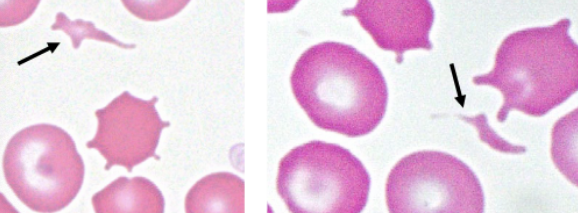
Schistocytes
Hemangiosarcomas, DIC, liver disease, hepatic lipidosis
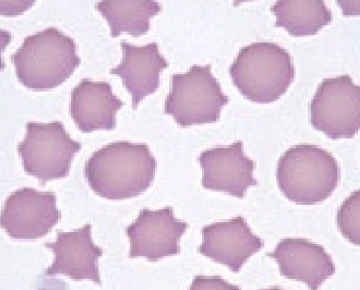
Echinocytes
Dehydration, electrolyte depletion, doxorubicin toxicity
Normal in pigs
Can be mistaken for drying artifact
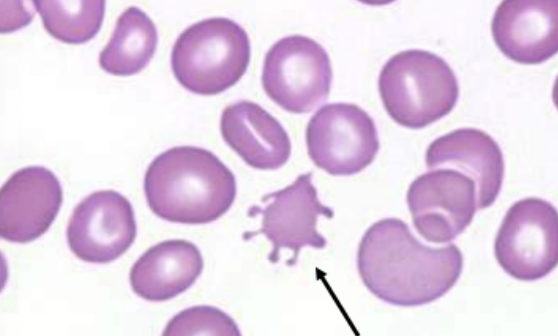
Acanthocyte
Hemangiosarcoma, DIC, liver disease
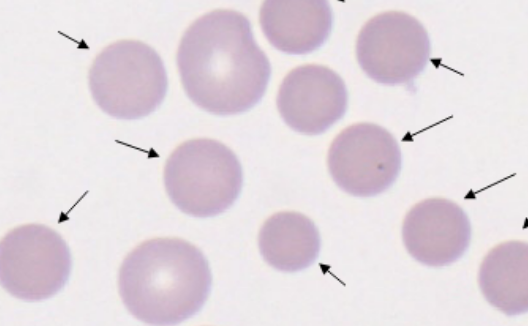
Spherocytes
Loss of shape often occurs with IMHA
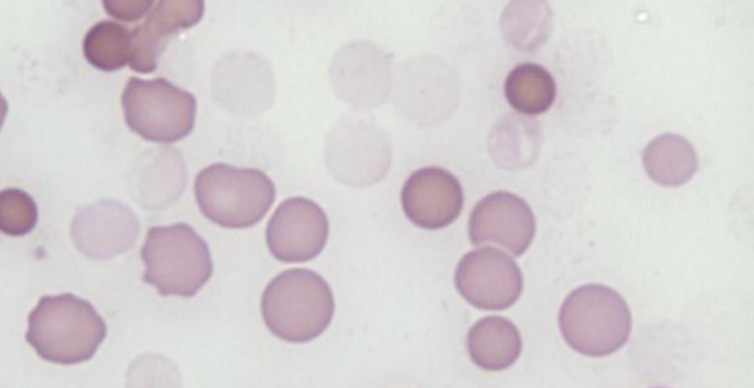
Ghost cells
IV hemolysis is the only thing that causes these
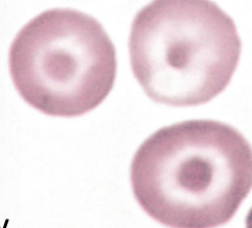
Target cells
Regenerative anemia, iron deficiency, cholestasis
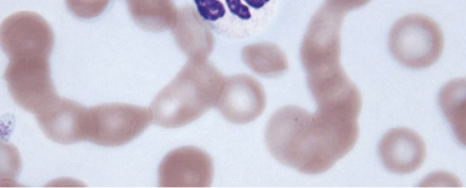
Rouleaux formation
Hyperglobulinemia, increased fibrinogen
Normal in horses
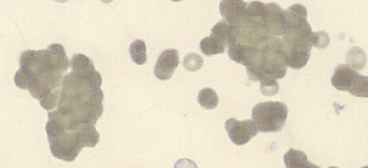
RBC agglutination
Never normal; can indicate IMHA
Double-check with saline dispersion test
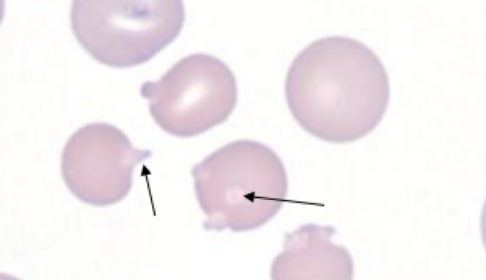
Heinz bodies
Oxidative damage (drugs, toxins, etc.)
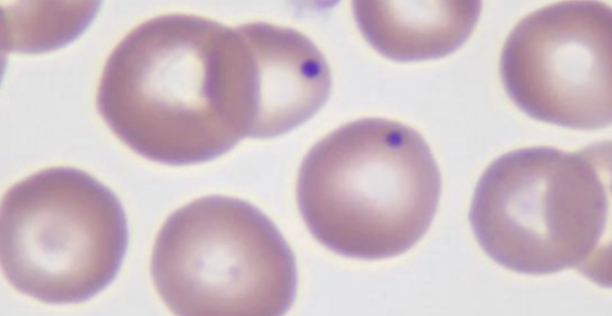
Howell-Jolly bodies
Remnant of nucleus in RBC
Regenerative anemia, splenic dysfunction, recent splenectomy
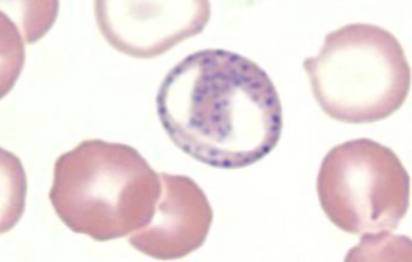
Basophilic stippling
Residual clumps of RNA
Regenerative anemia, dyserythropoiesis, lead toxicity
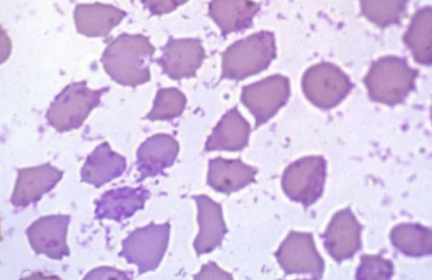
Mycoplasma
Pathogenicity varies
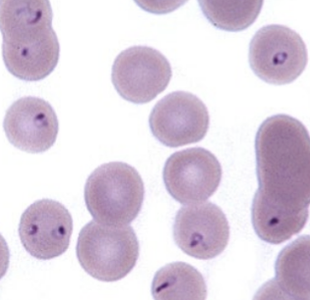
C. felis
Causes severe non-regenerative anemia with rapid progression
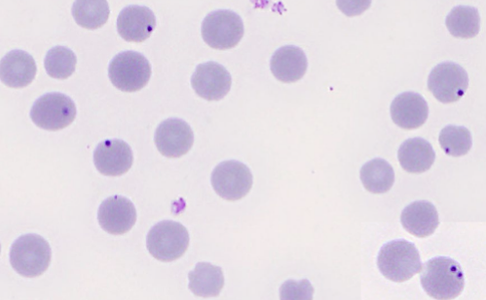
Anaplasmosis
Smaller than HJ bodies and may see multiple per cell
Hemolytic anemia
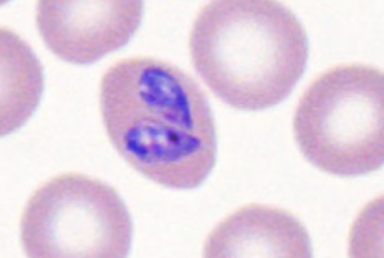
Large-form babesia
Often subclinical, but can cause anemia/thrombocytopenia
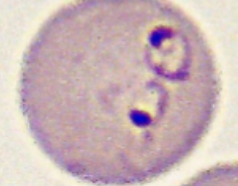
Small-form babesia
More severe; anemia, thrombocytopenia
Looks similar to C. felis
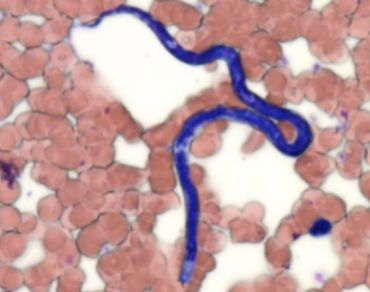
Microfilaria
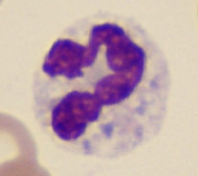
Dohle bodies
Can indicate inflammation, infection
Mild = normal in cats
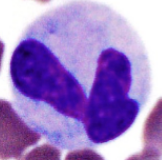
Basophilic cytoplasm
Can indicate inflammation/infection
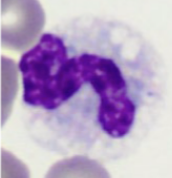
Vacuolization
Can indicate inflammation/infection if accompanied by other toxic changes
If not, it is likely artifact
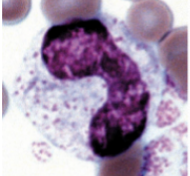
Toxic granulation
Can indicate infection/inflammation
Common in birds, reptiles, amphibians
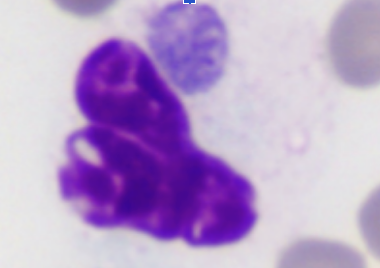
(Top middle spot)
Neutrophil - granulocytic ehrlichiosis and anaplasmosis
Will be accompanied by anemia, thrombocytopenia, and polyarthritis
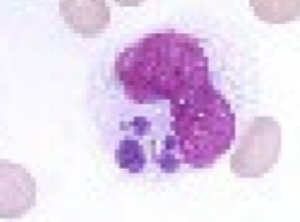
Monocytic ehrlichiosis
Similar to neutrophilic ehrlichiosis
Will be acoompanied by anemia, thrombocytopenia, hyperglobulinemia, lymphocytosis
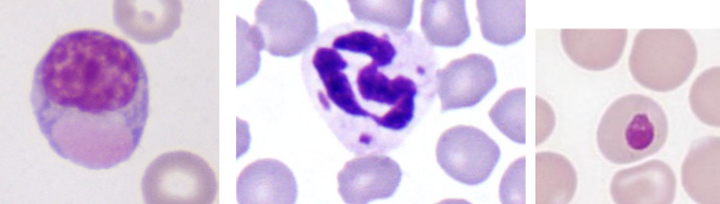
Distemper inclusions (lymphocyte, neutrophil, erythrocyte)
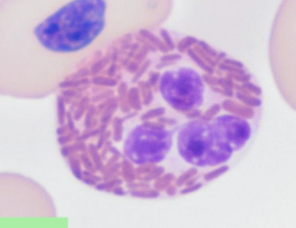
Normal bird heterophil
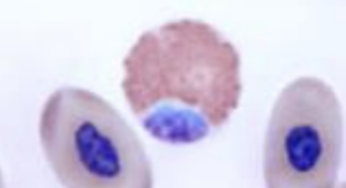
Normal tortoise heterophil
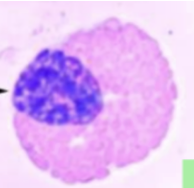
Normal tortoise eosinophil
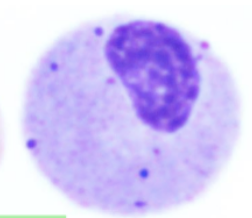
Normal iguana eosinophil
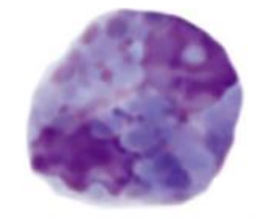
Normal parrot eosinophil
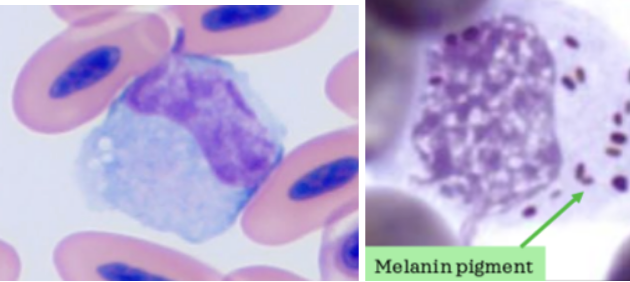
Normal exotic monocytes
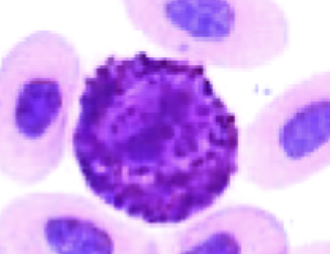
Normal exotic basophil
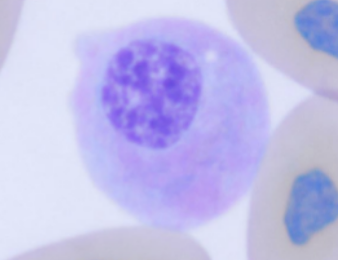
Azurophil
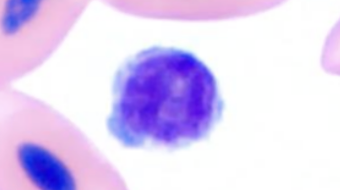
Lymphocyte
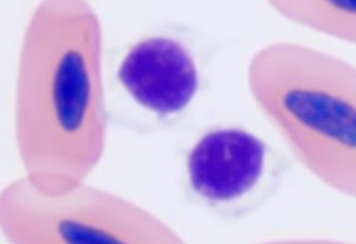
Thrombocytes
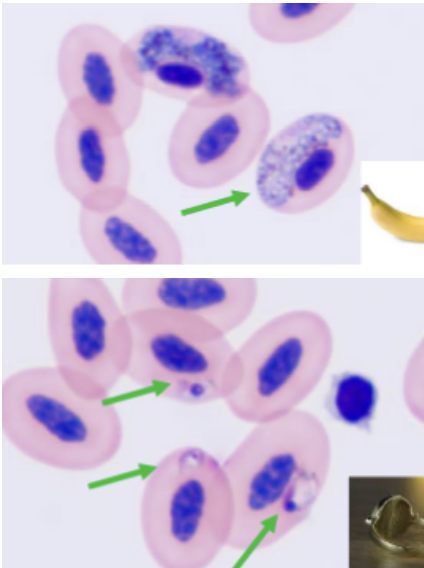
Hemoproteus
Mostly non-pathogenic, but can cause hemolytic anemia with high load
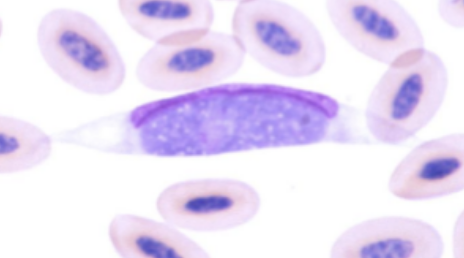
Leukocytozoon
Mostly non-pathogenic, but can cause hemolytic anemia with high load
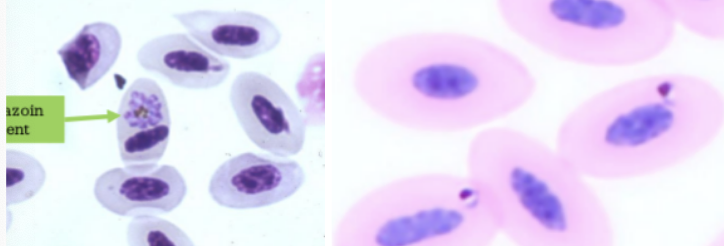
Plasmodium
Looks like hemoproteus/hemogregarina but may push the nucleus
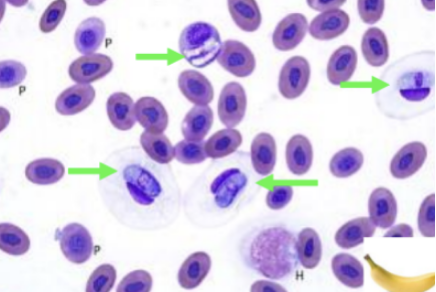
Hemogregarina
Mostly non-pathogenic, but can cause hemolytic anemia with high load