Biochem Exam 1
 Call Kai
 Learn
Learn Practice Test
 Spaced Repetition
 Match
Match Flashcards
 Knowt Play
1/160

There's no tags or description
Looks like no tags are added yet.
Name | Mastery | Learn | Test | Matching | Spaced | Call with Kai | Chat |
|---|
No analytics yet
Send a link to your students to track their progress
161 Terms
Properties of Water
high melting point, boiling point, and heat of vaporization
interacts electrostatically with charged solutes
more than one state
Cohesion
the property of water molecules to be attracted to each other, which causes them to stick together
Adhesion
the property of water molecules to be attracted to molecules other than water
Hydrogen Bonds
electrostatic forces of attractions caused by the difference in charge between hydrogen and oxygen atoms
Properties of Hydrogen Bonds
nearly tetrahedral arrangement of orbitals around oxygen
bonds with 4 neighboring water molecules
H bonds in liquid state
each molecule forms H bond with only 3.4 other molecules
H bonds in solid state
each molecule forms bonds with 4 water molecules → lattice structure
Electronegativity
a measure of an atom’s ability to attract shared electrons to itself
Polar Molecule
part of the molecule is slightly positive while the other part is slightly negative
Electronegativity and Polarity
determines the polarity of a chemical bond by measuring how strongly an atom attracts shared electrons
Hydrophilic
dissolves in water
polar compounds glucose, glycine, aspartate, lactate, glycerol
Hydrophobic
does not dissolve in water
non-polar molecules: lipids and waxes
Amphiphilic
part hydrophilic/hydrophobic
surfactants, detergents, phospholipids, cholesterol, fatty acids
Solute
a substance that can be dissolved into a solution by a solvent
Solvent
a substance in which a solute is dissolved
Solution
a homogenous mixture of one or more solutes dissolved in a solvent
solute + solvent = solution
Stock Solution
a concentrated solution of a chemical substance that is used to make more dilute solutions
Dilution of a stock solution
N1V1 = N2V2
pH Scale
p = potential or power
H = hydrogen ion concentration
measures the amount of H+ ions in a solution
pH calculation
pH = -log[H+]
Acids
more H+. ions
few OH- ions
can donate proton
Bases
less H+ ions
more OH- ions
can accept a proton
Titration curve of acetic acid with NaOH

Henderson-Hasselbalch equation
pH = pKa + log[A-]/[HA]
Buffer
is a solution that resists changes in pH when an acid of base is added, even in small amounts
pKa
inherent property of a particular substance → a number that measures how acidic a molecule is
pKa = -log(Ka)
Half-equivalence point
the point at which the acid and conj. base are in balance, the pH of the solution is equal to the pKa of the acid
What are enzymes?
proteins that help speed up metabolism, or the chemical reactions in our bodies
Oxidoreductase
function: oxidation-reduction reactions
examples: Dehydrogenase, Reductase, Oxidases
analogy: chargers/batteries (move electrons)
Transferase
function: transfers groups such as phosphate or methyl
examples: Transaminases, Aminotransferase, Kinase
analogy: delivery drivers (move packages/groups)
Hydrolase
function: hydrolysis of substrate; breaks down in presence of water
examples: Lipase (breaks down fatty acids), Peptidase (breaks down proteins), Nuclease, Phosphate, Amylase (breaks down starch)
analogy: dish soap (cut with water)
Lyase
function: non-hydrolytic removal or addition of a group to a substrate
examples: Synthase, Synthetase
analogy: balloon twisters (break without water)
Isomerase
function: converts to isomers
example: Glucose isomerase
analogy: interior designer (rearranger)
Ligase
function: that ligates
example: DNA ligase
analogy: superglue (join molecules together)
Holoenzyme
a complete, catalytically active enzyme composed of an inactive protein part (apoenzyme) combined with a non-protein component (cofactor)
Cofactor
small molecule including metals and coenzymes
tightly bound coenzymes = prosthetic group
loosely bound coenzymes = co-substrates
Properties of Enzymes
increases speed of reaction
decreases activation energy
sensitive to changes in pH and temperature
specific for a particular reaction or class of reactions
does not change (or consumed)
does not change the equilibrium position
does not change the thermodynamics
does not change the overall Δ G
Gibbs free energy (G)
measure of the amount of energy available to make or break chemical bonds
What is kcat
maximum velocity/enzyme concentration
tells you how fast an enzyme works; it is the turnover number
Michaelis-Menten equation

What is Km
Michaelis-Menten constant
tells you how well it binds to its substrate
defined as the amount of substrate necessary to allow an enzyme to function at half its maximal velocity
Competitive inhibition
a process where a molecule blocks an enzyme's active site by competing directly with the normal substrate for binding
Non-competitive inhibition
a type of enzyme regulation where an inhibitor binds to an allosteric site (a spot other than the active site) with equal affinity, whether the substrate is already attached or not
Uncompetitve inhibition
a type of reversible enzyme inhibition where an inhibitor binds exclusively to the enzyme-substrate (ES) complex rather than to the free enzyme
Principle ways of enzyme regulation:
allosteric control
proteolytic activation
reversible covalent modification (Phosphorylation/Dephosphorylation)
multiple forms of enzymes - Isozymes
controlling by amount of enzyme present
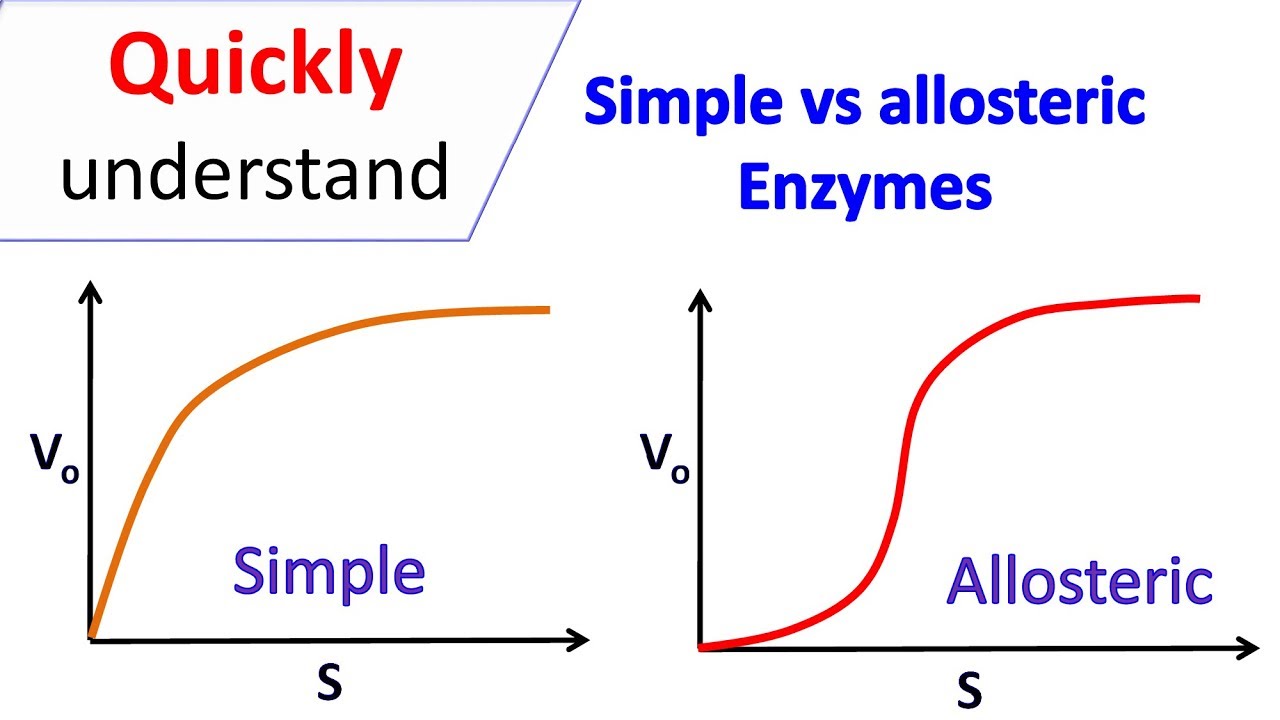
Allosteric Enzymes
have a site for an effector to bind to, as well as the active site → larger and more complex than normal enzymes
Example of Allosteric Regulation
ATcase is inhibited by CTP (example of feedback inhibition)
Graph of Allosteric Enzymes
allosteric enzymes have sigmoidal kinetics
T state (“tense”)
less active
favored by CTP binding
absence of substrate
low affinity for substrate
low catalytic activity
R state (“relaxed”)
more active
favored by substrate binding
presence of substrate
high affinity for substrate
Which is more energetically stable, T state or R state?
T state
Negative Allosteric Effector
CTP
decreases ATcase activity
Positive Allosteric Effector
ATP
increases ATcase activity
Zymogens
enzymes that start with the covered active site
Proteolytic Activation
lysis of the peptide bond
substrates get access to the active site only after one or more peptide bonds in the zymogen are broken
Zymogens examples
trypsinogen, chymotrypsinogen, blood clotting
Trypsin
is the common activator of all the pancreatic zymogens
Trypsin Inhibitor
prevents severe damage to those tissues, which could lead to acute pancreatitis
Reversible Covalent Modification
phosphorylation and dephosphorylation
enzymes controlled by this mechanism attach phosphate groups to amino acid side chains
Reversible Covalent Modification Examples
usually the polar but uncharged side chains of serine, threonine, or tyrosine
Isozymes
enzymes that differ in amino acid sequence yet catalyze the same reaction
Isozymes Example
Lactate dehydrogenase - catalyses anaerobic glucose metabolism and glucose synthesis
Central Dogma

DNA Structure
double helix
RNA Structure
single helix
Deoxyribose

Ribose

Nucleotide
sugar + phosphate + nitrogenous base
Nucleoside
base + sugar
Purines
Adenine and Guanine
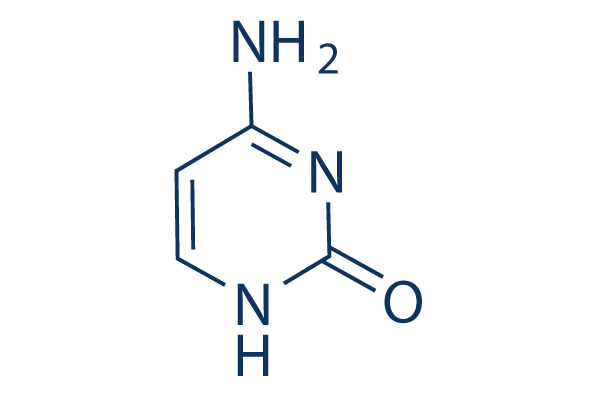
Pyrimidines
Cytosine, Thymine, Uracil
Adenine

Guanine

Cytosine
Thymine

Uracil

Phosphodiester Bond
between one sugar molecule’s 3’-OH group and the 5’-phosphate group on the adjacent sugar molecule
Base Pair Stacking
base pairs are stacked in a double helix which helps stabilize the double helix through van der waals forces
A DNA
dehydrated DNA, “right-handed”
B DNA
hydrated DNA, “right-handed”
Z DNA
forms upon methylation of deoxycytosine residues, the phosphoryl groups are zigzagged
Syn and Anti-forms of bases
pyrimidines only allow anti-form
purines allow both syn and anti

Tautomer
the ability of a molecule to exist in more than one chemical form
Messenger RNA (mRNA)
the template for protein synthesis or translation
Transfer RNA (tRNA)
two roles: carrying “activated” amino acids to the ribosomes for peptide bond formation and providing a decoder of the codons called anticodons
Ribosomal RNA (rRNA)
a major component of the ribosomes that provides a scaffolding where ribosomal proteins bind and form the overall structures
mRNA from DNA template
3’-CGCC GCTGCGCGTC AATTA TAC-5’ template strand DNA
5’-GCGG CGACGCGCAG UUAAU AUG-3’ mRNA
What are proteins?
the most versatile macromolecules in living systems that serve crucial functions in almost all biological processes
Amino Acid Structure
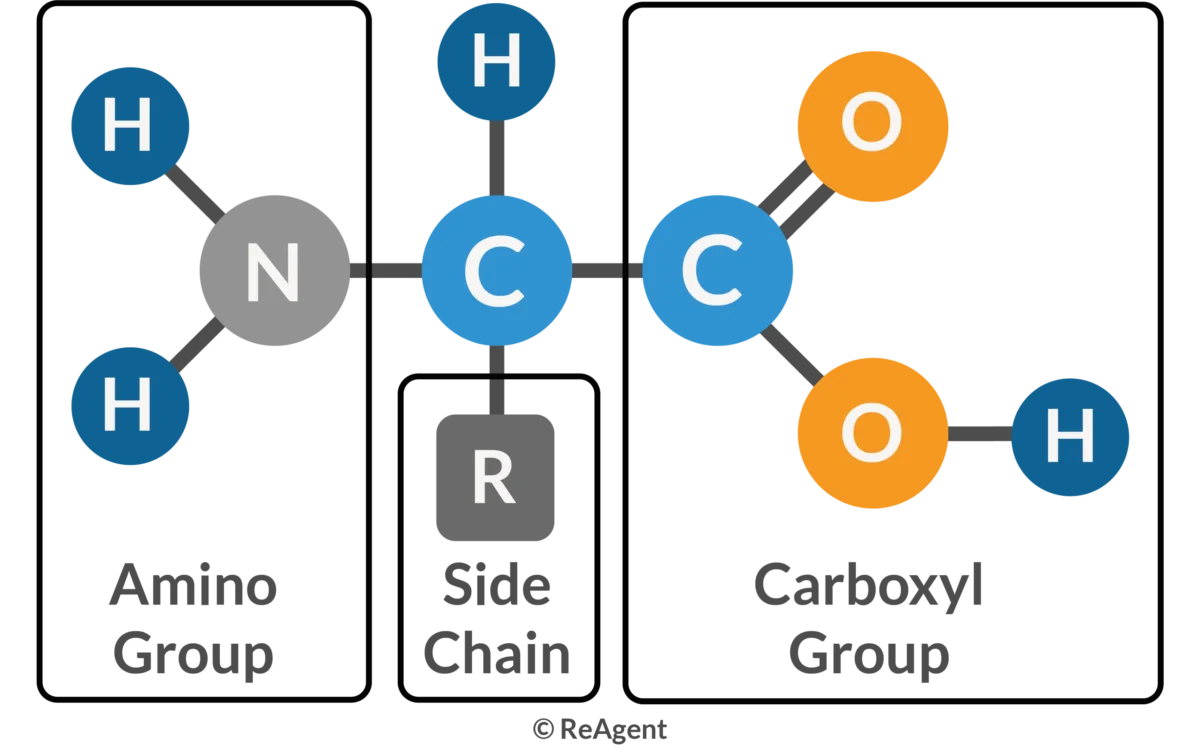
Peptide Bonds
are formed by condensation of carboxylic acids and amines; is accompanied by the loss of a water molecule

Amino Acids vary in: (due to their R groups)
size
charge
shape
Hydrogen-bonding capacity
Hydrophobic character
chemical reactivity
Non-polar Aliphatic R Groups
glycine, alanine, valine, leucine, isoleucine, methionine, proline
Non-polar Aromatic R Groups
phenylalanine, tyrosine, tryptophan
Glycine (G)
simplest amino acid
achiral

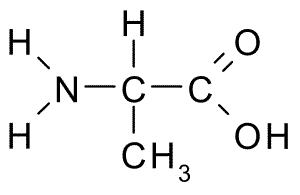
Alanine (A)
has a CH3 methyl for its R group
Valine (V)
branched-chain amino acid
mostly metabolized in muscle tissues

Leucine (L)
branched-chain amino acid

Isoleucine (I)
branched-chain amino acid

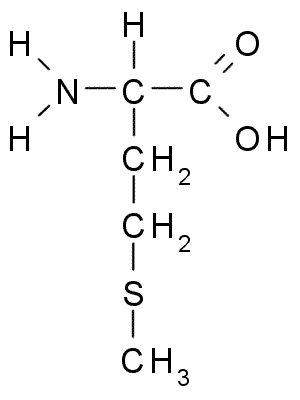
Methionine (M)
contains sulfur
Proline (P)
R group bound directly to the alpha-amino group
