Cardio Exam 3: Tsu VHD/Shock
 Call Kai
 Learn
Learn Practice Test
 Spaced Repetition
 Match
Match Flashcards
 Knowt Play
1/43

There's no tags or description
Looks like no tags are added yet.
Name | Mastery | Learn | Test | Matching | Spaced | Call with Kai | Chat |
|---|
No analytics yet
Send a link to your students to track their progress
44 Terms
Surgical Treatment & Procedures
Balloon valvuloplasty
Valve repair
Valve replacement
Bioprosthetic replacement
Mechanical replacement
KNOW
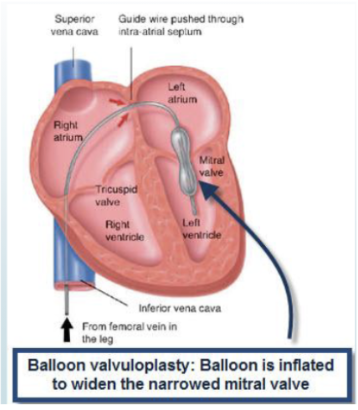
Balloon Valvuloplasty
Commonly for _____
Requires pre-procedureal _____ to rule out thrombus formation
Possibly for aortic stenosis if pt is too high-risk for cardiac surgery
mitral stenosis, TEE
Valve Repair
Fixing and preserving the pt’s native valve
_____ preferred over _____, if possible
Lower operative mortality
Better long-term outcomes
Preservation of left ventricular function
No anticoagulation
valve repair, replacement
Valve Replacement
_____
Transcatheter aortic valve implantation (TAVI)
Mechanical valves
1st generation: _____
2nd generation: _____
3rd generation: _____
Bioprosthetic valves
_____ (_____)
_____ (_____)
open heart surgery, Ball and cage, single tilting disk, bileaflet tilting disk, porcine, pig, bovine, cow
Bioprosthetic vs Mechanical Valves
Bioprosthetic (Tissue)
Advantages
_____
Disadvantages
_____ – will need _____
less thrombogenic, low durability, replacement in 5-10 years
Bioprosthetic vs Mechanical Valves
Mechanical (Prosthetic)
Advantages
_____
Disadvantages
_____ → _____
Can have _____
high durability, highly thrombogenic, lifelong anticoag, clicking sound
Choose the best type of valve replacement based on the following factors
Bioprosthetic | Mechanical | |
Young Pt | ||
RFs for Bleeding | ||
Refuses or C/I to Anticoag |
Mechanical, Bioprosthetic, Bioprosthetic
Antithrombotic therapy Bioprosthetic
_____ thrombogenicity
Depends on _____ of replaced valve
Recommendations
Bioprosthetic Aortic Valve
Bioprosthetic Mitral Valve → _____
lower, location, anticoag
Antithrombotic therapy Bioprosthetic
Bioprosthetic Aortic Valve
_____ indefinitely (_____)
Optional: _____ 75mg daily for _____ IF _____
Baby Aspirin, add clopidogrel, 3-6 months, TAVI
Antithrombotic therapy Bioprosthetic
Bioprosthetic Mitral Valve → _____
_____ with _____, then _____
Anticoag, Warfarin, INR 2-3 for 3 months, Aspirin, Baby Aspirin
Antithrombotic Therapy Mechanical
_____ thrombogenicity
Depends on _____ of replaced valve
Recommendations
Mechanical Aortic Valve
_____ with INR 2-3 indefinitely*
Mechanical Mitral Valve
_____ with INR 2.5-3.5 indefinitely
Bridge with _____ or _____ if INR _____therapeutic
_____ if additional RFs for thromboembolism (_____, _____, _____, Hx of _____)
ACC/AHA recommendation for INR _____ if pt has additional RFs for thromboembolism
Higher, location, Warfarin, Warfarin, IV UFH, SC LMWH, sub, Add baby aspirin, Afib, low EF, older age, TE, 2.5-3.5
Antithrombotic Therapy Summary
Aortic
BioProsthetic (Porcine or Bovine)
Baby Aspirin: _____
Warfarin: _____
Mechanical (Any Generation)
Baby Aspirin: _____
Warfarin: _____
add clopidogrel if transcatheter, none, none, INR 2.5-3.5 for 3 months only
Antithrombotic Therapy Summary
Mitral
BioProsthetic (Porcine or Bovine)
Baby Aspirin: _____
Warfarin: _____
Mechanical (Any Generation)
Baby Aspirin: _____
Warfarin: _____
if additional TE RFs, INR 2-3, if additional TE RFs, INR 2.5-3.5
Use of DOACs in valvular disease
Dabigatran, Apixaban, Rivaroxaban, Edoxaban (DARE)
Use is C/I with mechanical heart valves
Studies show increased risk of _____ + _____ compared to warfarin
mechanical heart valves, TE, bleeding
Pregnancy and VHD
_____ generally preferred if women wishes to have children in the future
Optimal regimen for mechanical valve based on discussion of maternal and fetal risks
Warfarin increases risk of congenital fetal abnormalities, fetal loss and hemorrhagic complications
If mother is willing, _____ could be continued in _____ if daily dose is <_____
Most choose to use _____ due to warfarin congenital effects
LMWH does not cross placenta
_____
Must be monitored closely with anti-Xa levels
UFH IV can be a last-line option
Low-dose aspirin added for high-risk patients
Bioprosthetic valve, warfarin,1st trimester, 5 mg, LMWH injection, BID SQ injections
A 30 year-old female requires mitral valve replacement for severe mitral valve prolapse. Which statement regarding valve replacement is most accurate for this patient?
A bioprosthetic valve will last longer than a prosthetic (mechanical) valve
Her goal INR would be 2.5–3.5 if she received a prosthetic (mechanical) valve
A prosthetic/mechanical valve would be better if she would like to have children in the future
If she receives a bioprosthetic bovine valve, she should be on aspirin and clopidogrel therapy
2, prosthetic lasts forever, NO continue warfarin or use LMWH, for transcatheter implantation (aortic position)
A 55 year-old male receives a mechanical mitral valve and mechanical aortic valve. His past medical history includes previous DVT and asthma. In addition to therapeutic heparin, which of the following anti-thrombotic regimens would be most appropriate?
A. Aspirin 81mg and warfarin to goal INR 2-3
B. Aspirin 81mg and warfarin to goal INR 2.5-3.5
C. Warfarin to goal INR 2-3
D. Warfarin to goal INR 2.5-3.5
B (increased TE risk)
A 78 year-old female presents with severe mitral stenosis. Her past medical history includes atrial fibrillation (stopped warfarin due to intracranial hemorrhage), HTN, and diabetes. Which of the following statements about this patient is most accurate?
Her mitral stenosis is likely due to rheumatic heart disease
A bioprosthetic valve will last >20 years in this pt
The best option for valve replacement would be a mechanical mitral valve
If the patient receives a bioprosthetic valve, she can use apixaban instead of warfarin
1, short-term valve (5-10 years), if on mechanical mitral valve = Warfarin, generally do not use DOACs
A 75-year old patient has severe aortic stenosis, and is considering valve replacement. Which of the following statements is most accurate?
If she receives a valve by transcatheter procedure, she should be on warfarin and clopidogrel
She needs to be on warfarin whether she receives a mechanical or bioprosthetic valve
If she receives a mechanical valve, she will need to be on warfarin lifelong with a goal INR of 2-3
3, Aspirin and Clopidogrel, only for mechanical valve
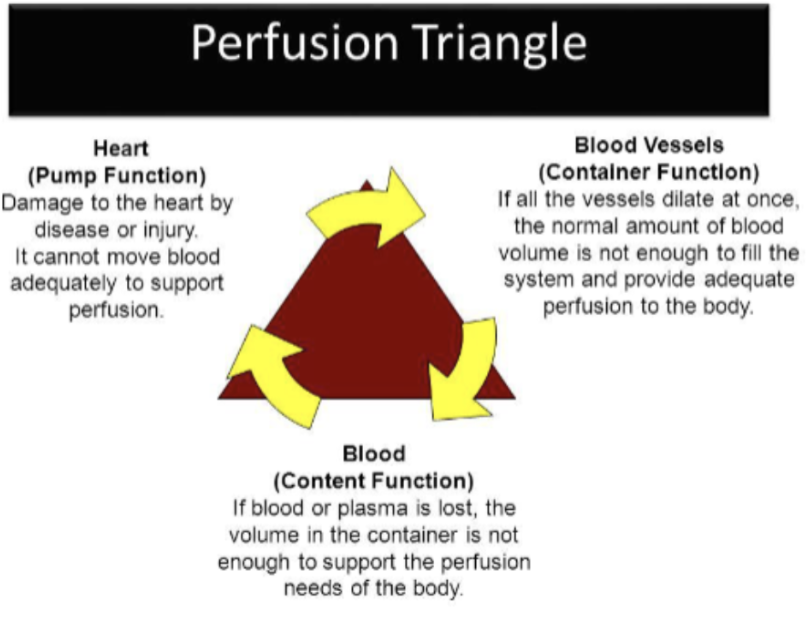
Shock
Acute, generalized state of _____
Defined as _____ mmHg OR _____ of at least _____ mmHg from baseline with _____ despite adequate fluid resuscitation
Mortality ranges from 20-40%
inadequate perfusion of critical organs, systolic BP <90, reduction, 40, perfusion abnormalities
Goals and Monitoring of Shock
Goal is to achieve and maintain:
Mean arterial pressure (MAP) _____ mmHg
Adequate _____
Global monitoring
Assesses _____ of entire body
Includes systemic BP, oxygen tension, lactate
Regional monitoring
Assess organ-specific oxygen delivery and utilization
Examples include coagulation abnormalities, impaired renal or hepatic dysfunction, cool extremities, cardiac ischemia, etc
>65, perfusion to critical organs, perfusion and oxygenation
Types of Shock
_____
_____
_____
_____
Cardiogenic, Obstructive, Hypovolemic, Distributive
Cardiogenic
_____
Ex. _____
General Treatment: _____
heart fails to pump out blood, HF and valve dysfunction, increase CO and inotropes
_____
Heart fails to pump out blood
Ex. HF and Valve dysfunction
General Treatment: Increase CO and Inotropes
Cardiogenic
Obstructive
_____, but _____
Ex. _____
General Treatment: _____
Heart pumps well, outflow is obstructed, PE and tamponade, treat obstruction
_____
Heart pumps well, but outflow is obstructed
Ex. Pulmonary embolism and Tamponade
General Treatment: Treat obstruction
Obstructive
Hypovolemic
_____, but _____
Ex. _____
General Treatment: _____
Heart pumps well, not enough blood volume to pump, blood and fluid loss, IV fluids (crystalloids, colloids, blood)
_____
Heart pumps well, but not enough blood volume to pump
Ex. Blood + Fluid loss
General Treatment: IV fluids (crystalloids, colloids, blood)
Hypovolemic
Distributive
_____, but there is _____
Ex. Anaphylaxis and Sepsis
General Treatment: _____
heart pumps well, peripheral vasodilation, anaphylaxis and sepsis, IV fluids then vasopressors
_____
Heart pumps well, but there is peripheral vasodilation
Ex. Anaphylaxis and Sepsis
General Treatment: IV fluids, THEN Vasopressors
Distributive
Which accurately describes shock due to massive blood loss after a trauma?
Cardiogenic
Obstructive
Hypovolemic
Distributive
3
_____
IV administration as IV push or titratable infusion
α1, β1, β2 agonist
Physiologic effects:
Vasoconstriction
Increased inotropic / chronotrophic activity
Most common vasopressor used in life-threatening situations (cardiac arrest, pt is dead)
Usually 3rd or 4th line vasopressor in shock
EPI
Epinephrine
_____ administration as _____ or titratable _____
_____
Physiologic effects:
_____
_____ activity
Most common _____ used in _____ (_____, _____)
Usually 3rd or 4th line vasopressor in shock
IV, IV push, infusion, alpha-1, beta-1, and beta-2 agonist, vasoconstriction, increased inotropic and chronotropic, vasopressor, life-threatening situations, cardiac arrest, pt is dead
_____
IV administration as a titratable infusion
Primarily α1 agonist, secondarily
β1 agonist
Physiologic effects:
Vasoconstriction
Increased inotropic / chronotrophic activity
Preferred vasopressor in sepsis
Most common vasopressor in ICU
NE (Levophed)
NE (Levophed)
_____ administration as a titratable _____
_____
Physiologic effects:
_____
_____ activity
Preferred _____ in _____
Most common vasopressor in _____
IV, infusion, primarily alpha-1 agonist, secondarily beta-1 agonist, vasoconstriction, increased inotropic and chronotropic, vasopressor, sepsis, ICU
_____
IV administration as a titratable infusion
D, β1, α1 agonist (depends on dosing!)
Physiologic effects:
Increased renal blood flow (low dose)
Increased inotropic / chronotrophic activity (medium dose, for bradycardia)
Vasoconstriction (high dose)
Primarily used for cardiogenic shock in ICU
DA
DA
_____ administration as a titratable _____
_____
Physiologic effects:
_____ (_____ dose)
_____ activity (_____ dose, for _____)
_____ (_____ dose)
Primarily used for _____
IV, infusion, DA, beta-1, and alpha-1 agonist (depends on dosing), increased renal blood flow, low, increased inotropic and chronotropic, medium, bradycardia, vasoconstriction, high, cardiogenic shock in ICU
_____
Intravenous administration as a titratable infusion
Also could be used for diabetes insipidus
Adjunctive agent to NE in sepsis (NOT as monotherapy)
Not affected by acidosis
Physiologic effects:
Vasoconstriction
Vasopressin
Vasopressin
_____ administration as a titratable _____
Also could be used for _____ insipidus
_____
Not affected by _____
Physiologic effects:
_____
IV, infusion, diabetes, adjunctive agent to NE in sepsis (NOT as monotherapy), acidosis, vasoconstriction
General Adverse Effects of Vasopressors
_____
_____
_____, Especially _____ → _____
Arrhythmias, tachycardia, tissue ischemia, digit ischemia, long-term (ICU)
Which medication primarily increases BP by stimulating only α-receptors?
Norepinephrine
Phenylephrine
Epinephrine
Dopamine
2
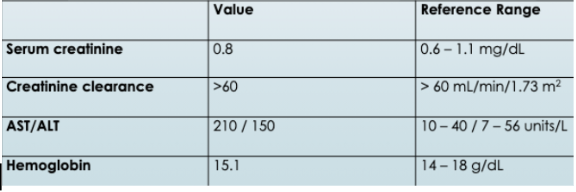
EE is a 56 year old male who presents with fever, persistent vomiting, and abdominal pain. A CT scan reveals an infected abdominal abscess.
PMH: none
Vitals: BP 80/56 mm Hg, HR 100 bpm, MAP 64 mm Hg, Temp 102
What findings determine that EE is in shock? What type of shock is it?
SBP is <90 and Distributive shock (sepsis)
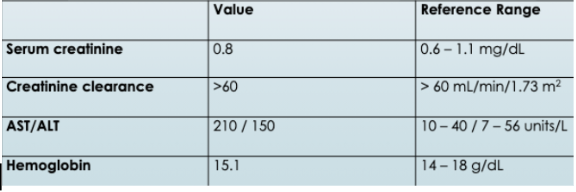
EE is a 56 year old male who presents with fever, persistent vomiting, and abdominal pain. A CT scan reveals an infected abdominal abscess.
PMH: none
Vitals: BP 80/56 mm Hg, HR 100 bpm, MAP 64 mm Hg, Temp 102
If this initial management is not effective, what should be started next?
Vasopressors (NE is the vasopressor of choice in sepsis)
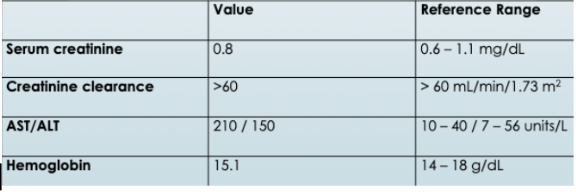
EE is a 56 year old male who presents with fever, persistent vomiting, and abdominal pain. A CT scan reveals an infected abdominal abscess.
PMH: none
Vitals: BP 80/56 mm Hg, HR 100 bpm, MAP 64 mm Hg, Temp 102
What is the initial management for shock in EE?
IV Fluids