Biology & learning
 Call Kai
 Learn
Learn Practice Test
 Spaced Repetition
 Match
Match Flashcards
 Knowt Play
1/34

Earn XP
Name | Mastery | Learn | Test | Matching | Spaced | Call with Kai | Chat |
|---|
No analytics yet
Send a link to your students to track their progress
35 Terms
Brain
Organ involved in processing information, memory, and learning
Embryonic development
Early development of the brain before birth
Neuron
Nerve cell that transmits information
Neuronal plasticity
Ability of neural networks in the brain to change and reorganize due to experience
Synapse
Junction between neurons where communication occurs
Activity
dependent plasticity
Use it or lose it
Principle that unused neural connections weaken over time
Memory
Physiological event occurring at synapses involving neuronal activity and plasticity
Sensory memory
Very brief storage of sensory stimuli
Short
term memory (STM)
Long
term memory (LTM)
Long
term potentiation (LTP)
Neurotransmitter (NT)
Chemical messenger that transmits signals across synapses
Learning
Ability to recall information and use it
Learning (experience
based)
Encoding
Converting information into a form that can be stored in memory
Chunking
Organizing information into meaningful groups to improve memory
Active learning
Learning approach that requires engagement and participation
Emergence
Concept that the whole is greater than the sum of its parts
Emergent properties
New properties that arise from the interaction and arrangement of parts
Hierarchy
Organization of biological systems into interconnected levels
Levels of biological organization
Molecules, organelles, cells, tissues, organs, organ systems, organisms, populations, communities, ecosystems, biosphere
Reductionism
Studying complex systems by breaking them into simpler components
Evolution
Process of change over time that explains unity and diversity of life
Three domains of life
Bacteria, Archaea, and Eukarya
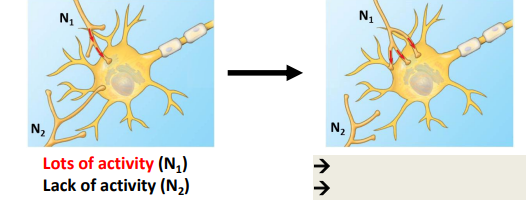
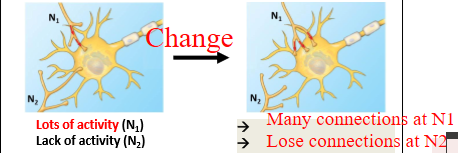
what is the change?
Many connections at N1, Lose connections at N2
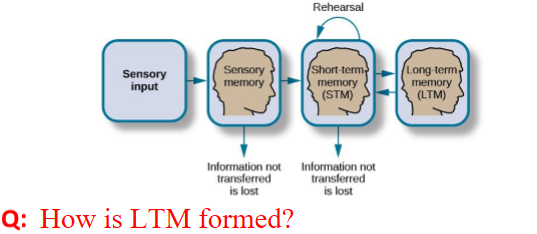
How is LTM formed?
Encoding, Converting info into a format that can be stored
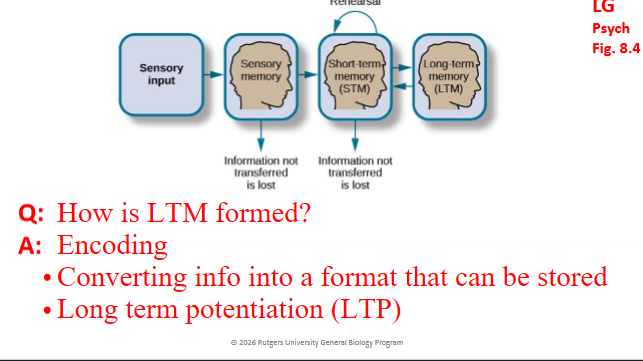
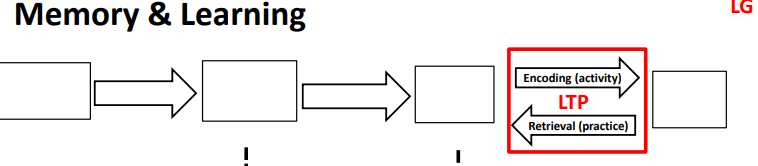
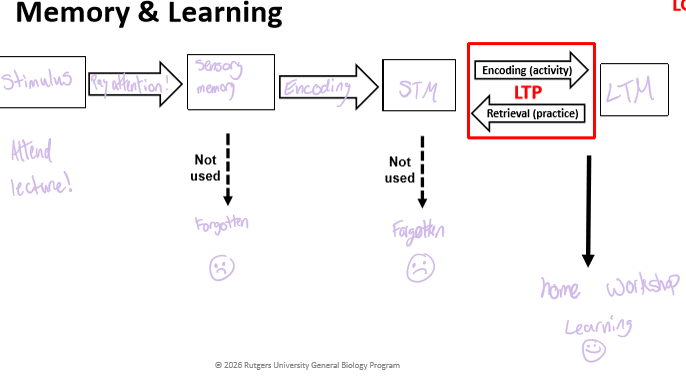
Fill in all blanks
Stimulus, pay attention, sensory memory, encoding, STM, LTM
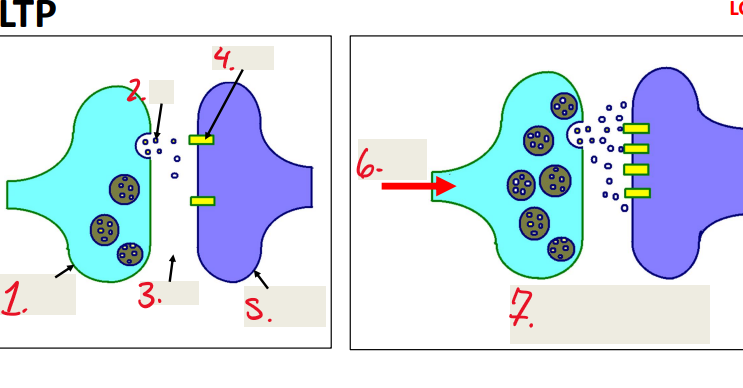
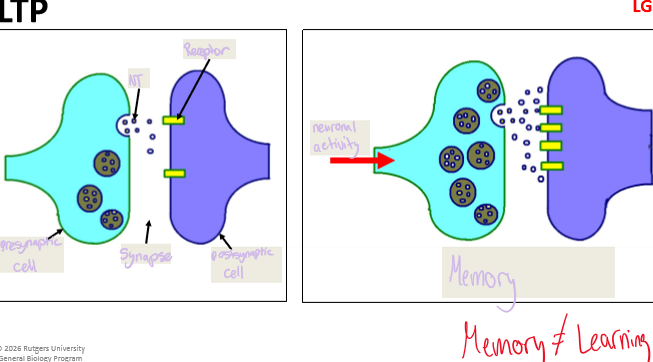
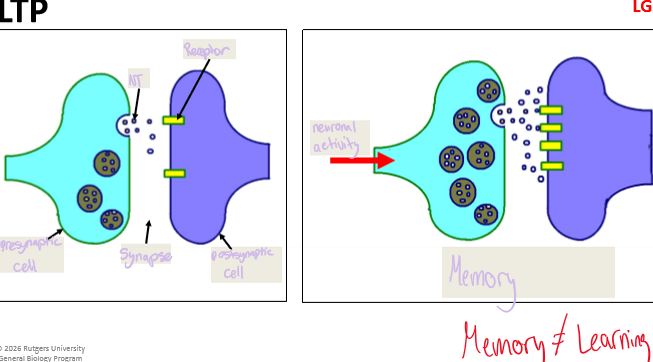
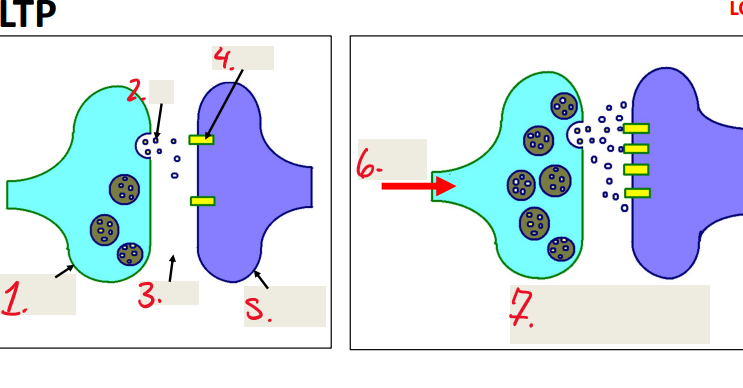
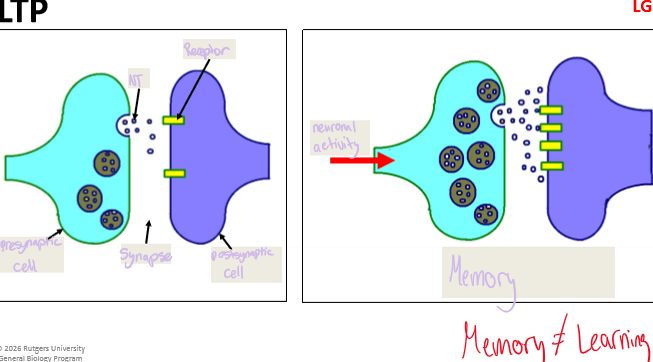
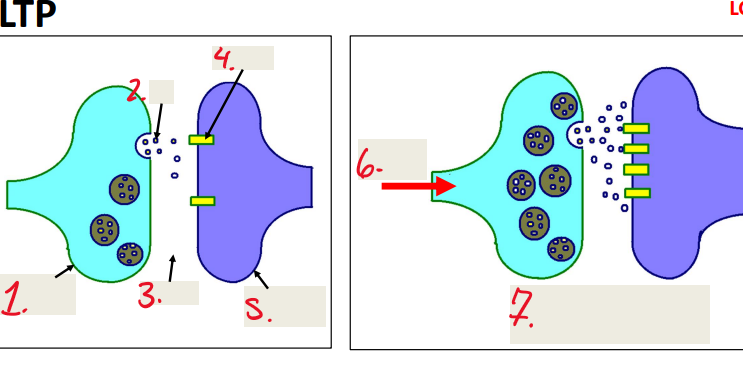
Fill in the blank. 1.
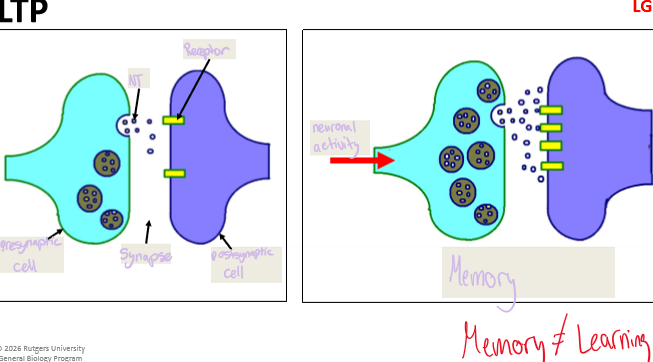
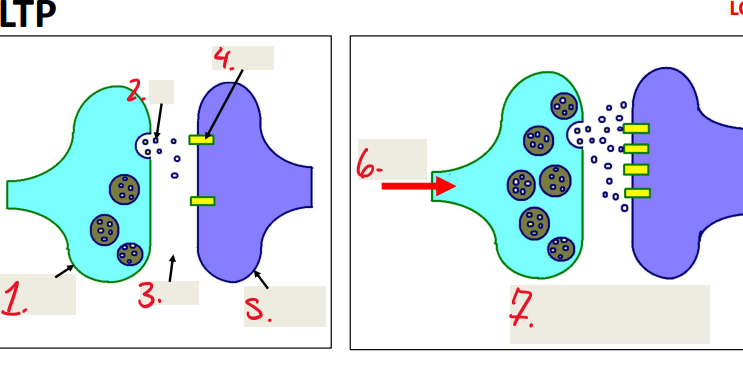
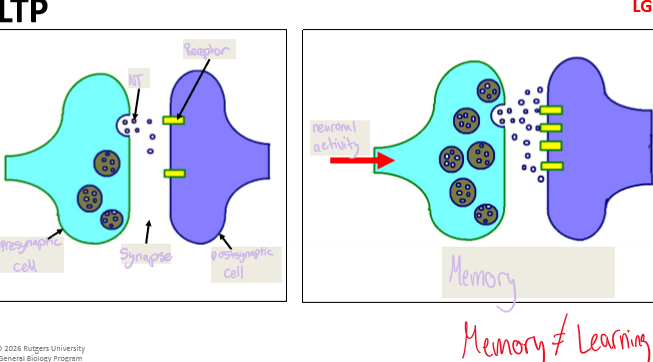
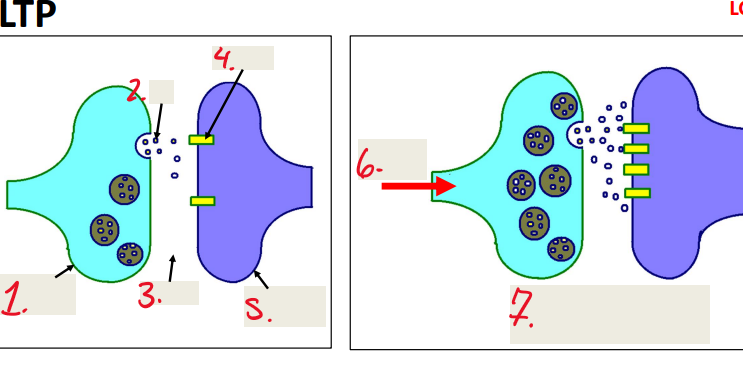
Presynaptic cell
Fill in the blank.2.
NT
Fill in the blank.3
Synapse
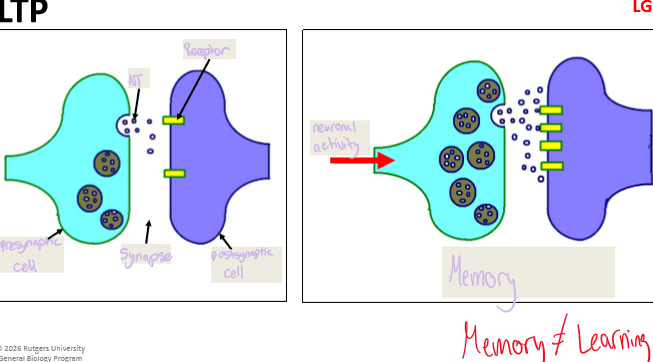
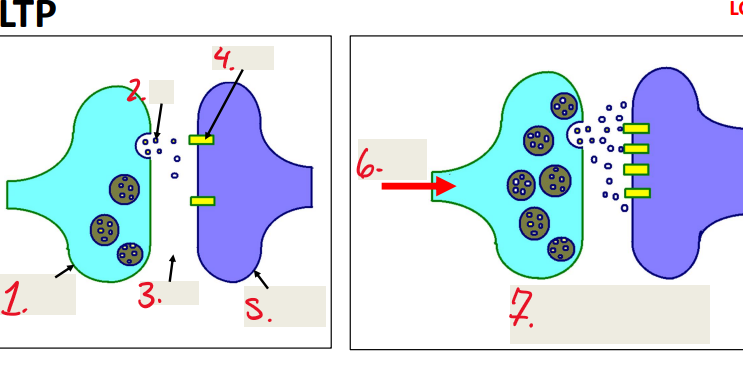
Fill in the blank.4.
Receptor
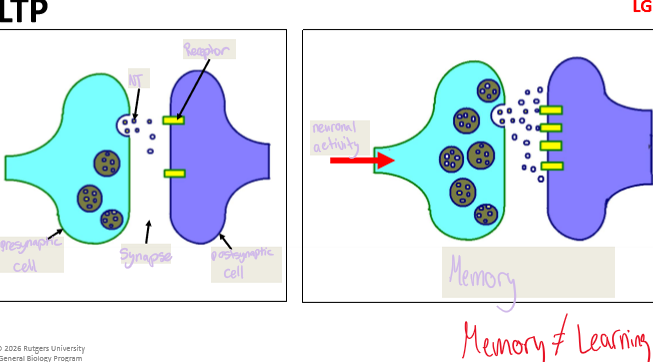
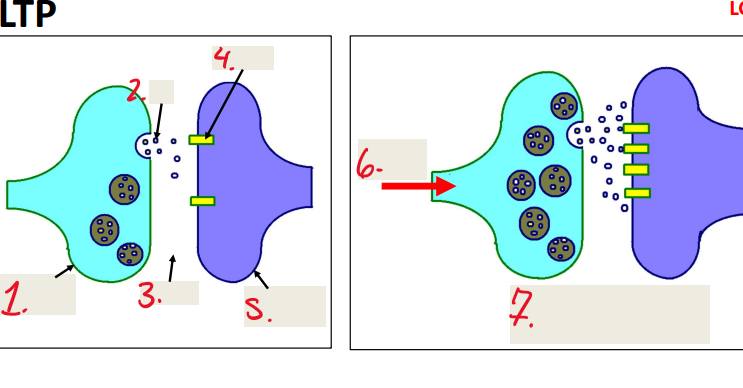
Fill in the blank. 5.
Postsynaptic Cell
Fill in the blank. 6.
Neuronal activity
Fill in the blank. 7.
Memory