Population size and Ecosystem (WIP)
 Call Kai
 Learn
Learn Practice Test
 Spaced Repetition
 Match
Match Flashcards
 Knowt Play
1/60

Earn XP
Description and Tags
ALEVEL edexcel
Name | Mastery | Learn | Test | Matching | Spaced | Call with Kai | Chat |
|---|
No analytics yet
Send a link to your students to track their progress
61 Terms
Ecology
the study of the interactions of organisms within their environments, including biotic and abiotic factors
Ecosystem
ecological unit consitsting of several habitats and their associated communities with bioti and abiotic components. STABEL SELF-PERPETUATING SYSTEM
Population
group of interbreeding individuals of the same species occupying a particular place at a given time
Community
all organisms living in a particular habitat
Habitat
place where organisms live within an ecosystem. Where they live, feed and breed
Niche
refers to the way in which an organism fits into an ecological community of ecosystem
Population size
the number in a population
Population density
numbers in a population per unit area
What do population numbers depend on?
-Birth rate or rate of division/multiplication
-death rate
-emigration (movement out of population)
-immigration (movement into population)
Biotic factors increasing population growth rate
-high brith rate
-adequate food
-ability to compete for resources
-ability to defend agasint predators
-ability fo resist disease/parasites
-ability to adapt to change
Abiotic factors increasing population growth rate
-favourable light
-gavourable temperatures
-optimum level of nutrients/minerals
Population growth graph- exponential
under ideal conditions graph should be J shaped
Population crash
eventually an exponential graph will result in a “crash” caused by a density independent even
Population growth graph- s shaped
growth does not continue unrestricted
Population growth- lag phase
slow growth while it adapts to a habitat
population growth -log/exponential phase
rapid grwoth as there is lots of reproduction with little environmental resistance
population growth- stationary phase
birth rate of new individuals is equal to death rate of older ones. The population has reached the carrying capacity for the particular environment
bacterial populations- death phase
the build up of toxins in the closed environment l;eads to death rate being faster then multiplication rate
carrying capacity
the maximum population size that can be supported indefinitely by a given environment
Factors that may limit or slow population growth
-available food
-predators
-parasitism/disease
-overcrowding
-competition for… (be specific)
-accumilation of toxic waste
-weather
Density dependant factors
tendancy for the death rate to increase or birth/growth rate to decrease as density of population increases
a greater proportion die
density independant factors
the tendancy for the death birth or growth rate in a population to neither rise nor fall as the density increases
A fixed percentage of the population dies
Emigration
movement out of a population- non-reversable and trigered by overcrowding
Migration
periodic seasonal movement
Sampling techniques
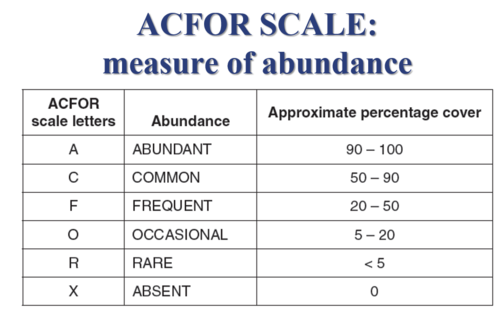
-random quadrats, line and belt transects
ACFOR SCALE
what is competition
an interaction between two or more organisms or species.
-a regulatory factor
intraspecific compeetition
individuals of the same species striving for the same resource
interspecific competition
between individuals of different species
law of constant yeild
when density is sufficiently high and resources become limited the effects of competition will result in a constant biomass
interspecific seasonal competition
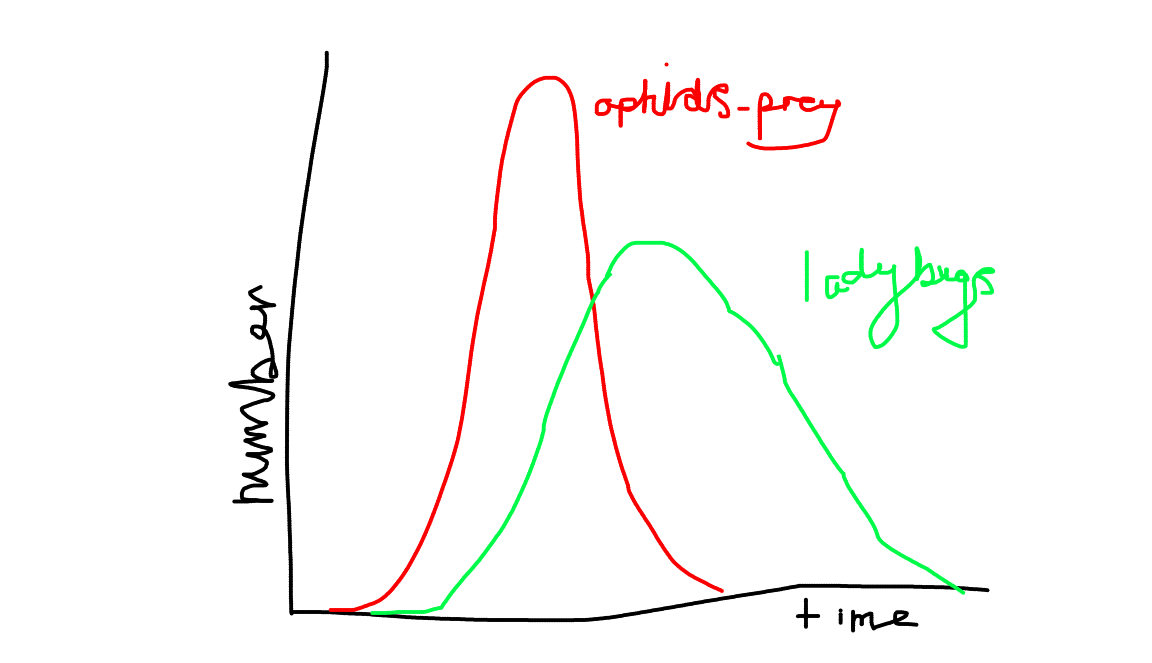
competitive exclusion principle
two species that compete for the same resources cannot stably coexists
-one competitor will have an advantage over the other which leads to extinction/ near extinction
ecosystem
the type of place where an organism lives
habitat
the specific parts of the ecosystem that meets thge organisms needs and in which it lives
community
all the animals and plants living in one habitat
trophic structure
represents the different feeding relationships that determine the route iof energy flow and the pattern of chemical cycling
hydrothermal energy and chemosynthesis
carbon dioxidde + water+ hydrogen sulfide + oxygen > carbohydrate + sulphuric acid
biomass
-the mass of living material within an ecosystem
-measured by weight or by dry weight per unit area of land or per volume of water
NPP
Net primary productivity- the potential food available to primary consumers
it is the organic mass of plants
the biomass added to an ecosystem per unit area per unti time
GPP
Gross primary productivity- the rate of production of chemical energy in organic molecules by photosynthesis (KJm^-2 year^-2)
ie- the rate at which products are formed
NPP equation
NPP= GPP-R
Factors limiting NPP
-low rainfall
-low temperature
-few available nutrients
-a short growing season
ecological efficiency
Succession
the change in structure and species composition of a community over time
seral stages progress towards a climax community
watch a video bro
primary succession
-colonisation of bare rock which becomes woodland
-no organic matter at first, colonisation by pioneer communities like algae and lichen
-increases the weathering of rocks> soil particles
-death of organisms provide organic matter
-small plants supported by thin slil replace pioneer organisms
-death and decomposition lead to thicker soil> flowering plants
-natural climax community
secondary succesion
-an area that previously supported life
-back to bare earth due to some reason
-has soil/organic matter
-plants are reestablished from seeds in soil
-quicker
facilitation
species interactions that benefit at least one of the species but with no harm to any of the species
Zonation
the change in species along an environment gradient- a spatial change in species
The carbon Cycle
1- photosynthesis removes CO2 from the atmosphere
2-production of carbohydrates, proteins, fats leads to plant growth
3-consumed by animals and therefore lead to animal growth through food webs
4- CO2 added to atmosphere through respiratiions
5- dead organisms acted on by saprotrophic microorganisms> more respiration added CO2 in atmosphere
6-partial decay of dead organisms in the past has lead to formation of fossil fuels- combustion of fossil fuels returns more CO2 to atmosphere
Human activity effecting carbon cycle
-combustion of fossil fuels acounts for about 70% of increase
-deforrestation accounts for about 30%
The greenhouse effect
-greenhouse gases allow high energy solar radiation to pass through to the earths surface
-much escaped to space as heat but some is trapped and absorbed by the gases into the atmosphere, heating everything up
causes of enhanced greenhouse effect
-increased human population >need more food, more recources and create more waste
-increased conbustion of fossil fuels
-more car exhaust emissions
-more cows and rice fields for food
-deforrestation
-more fertilisers
-CFCs
effect of climate change on organisms
-changing weather and vegetation patterns, forcing species to migrate to survive
-but the rapid nature is likely to exceed the ability for species to migrate or adjust
-increased sea temperaturs are causing more coral reefs to bleach
what is carbon footprint
the total amountof carbon dioxide attributable to the actions of an individual or product or service over a period of one year
the nitrogen cycle -assimilation
nitrates and ammonium compounds are taken up by plants to form amino acids and proteins
plant proteins are digested and formed into animal proteins
the nitrogen cycle- putrefaction or ammonification
-bacteria, plants and animals die or produce waste
-the process of decay of dead remains is alos known as putrefaction. Bacteria and fungi break down organic nitrogen in dead remains, faeces or urine into ammonia which forms ammonium in the soil
The nitrogen cycle - nitrification (aerobic)
Nitrosomonas convert ammonium into nitrites (NO2-)
Nitrobacter convert nitrites to nitrates (NO3-)
The nitrogen cycle- nitrogen fixation
Requires nitrogenase enzymes and ATP. Atmospheric nitrogen is converted into ammonia by:
Azotobacter (live in soil) and rhizobium (symbiosis, live in root nodules of legumes)
theres also atmospheric fixation with lightning and industrial fixation with the haber process
The nitrogen cycle- denitrification
Thiobacillus and Pseudomonas reduce nitrates back into nitrogen (anaerobic)
good human activity
-draining land and ploighing fields
-fixing atmospheric nittogen
-applying artifical fertilisers/ manure or slurry
How can fertilisers reduce biodiversity
extra nutrients allow fast growing plants to dominate, blocking smaller species’ acess to vital sunlight.