Unit 1 and 2 - Movement Analysis and Review
 Call Kai
 Learn
Learn Practice Test
 Spaced Repetition
 Match
Match Flashcards
 Knowt Play
1/43

Earn XP
Description and Tags
1 - review, 2 - movement analysis
Name | Mastery | Learn | Test | Matching | Spaced | Call with Kai | Chat |
|---|
No analytics yet
Send a link to your students to track their progress
44 Terms
Osteokinematics vs arthrokinematics
Osteokinematics is describing motions like flexion, extension, abduction, adduction, etc.
Arthrokinematics describes articulations of rolling, sliding, gliding

Planar synovial joints:
describe the joint
Motion/DoF
Flat articulation
Translations (sliding and gliding), 1 DoF

Hinge synovial joint:
describe the joint
Motion/DoF
concave/convex
1 DoF

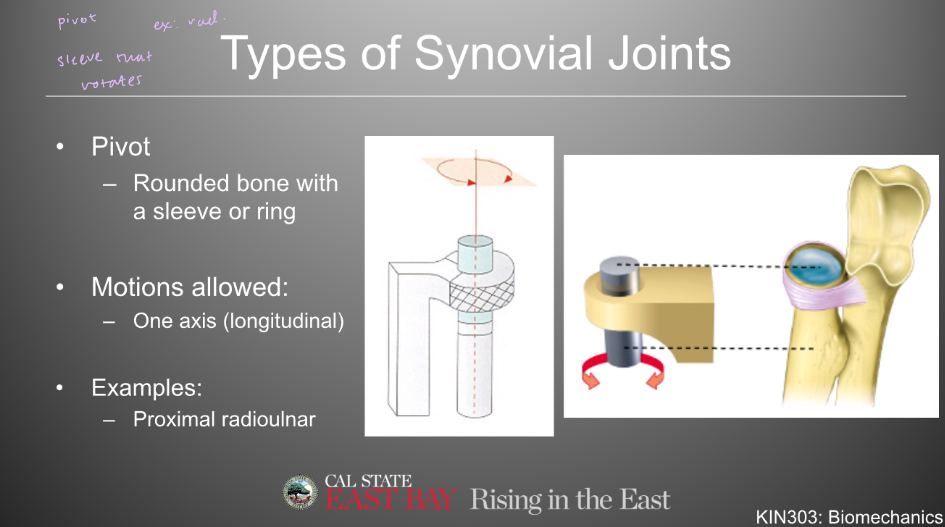
Pivot synovial joint:
describe the joint
Motion/DoF
sleeve
1 DoF
Condyloid synovial joint:
describe the joint
Motion/DoF
oval
2 DoF

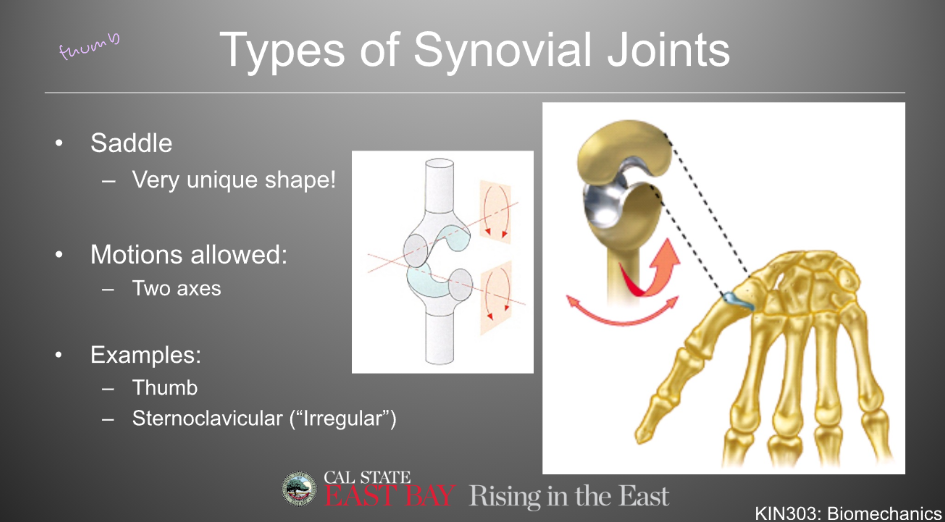
Saddle synovial joint:
describe the joint
Motion/DoF
unique shape
2 DoF
ball-and-socket synovial joint:
describe the joint
Motion/DoF
cup like
3 DoF

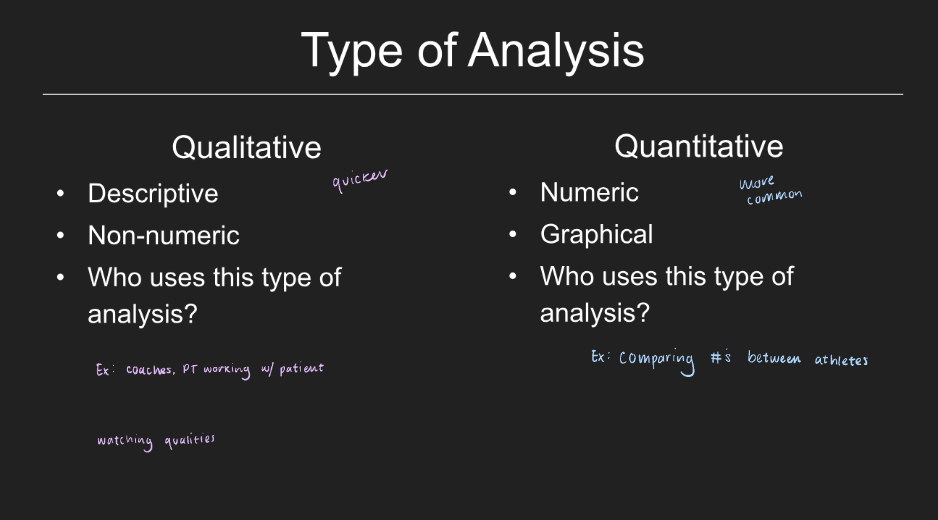
Qualitative analysis vs quantitative analysis
qual: descriptive, describes qualities
quant: numeric and graphical
Chunking movement definition
breaking down motion into phases based on criteria
possible criteria for chunking movements + their definitions
what are the three distinct phase in most motions in sports?
1.
A. Critical events: chunking walking using heel strike as phase 1 and toe-off as phase 2
B. Maximum joint angle (see image for example. blue = max joint angle ex and underlined in purple = critical event ex)
2, preparation → execution → follow through

When chunking it is important to consider that certain ___ can make or break the ___ of a motion
phases, success
(think of olympic lifting example from class)

When doing qualitative analysis:
What type of material would you most likely be looking at?
What are the main considerations?
Viewing a video and describing the motions
- View (sagittal, frontal, etc.
- goal of analysis
- clothing/background
- equipmen
- context (practice vs. competition)

qualitative analysis
True or false:
Lighting is not important in a video
The background being non-cluttered is best for seeing participant
It is okay if the subject goes out of frame a bit
Wearing baggy clothing is okay in some cases
Fill in the blank:
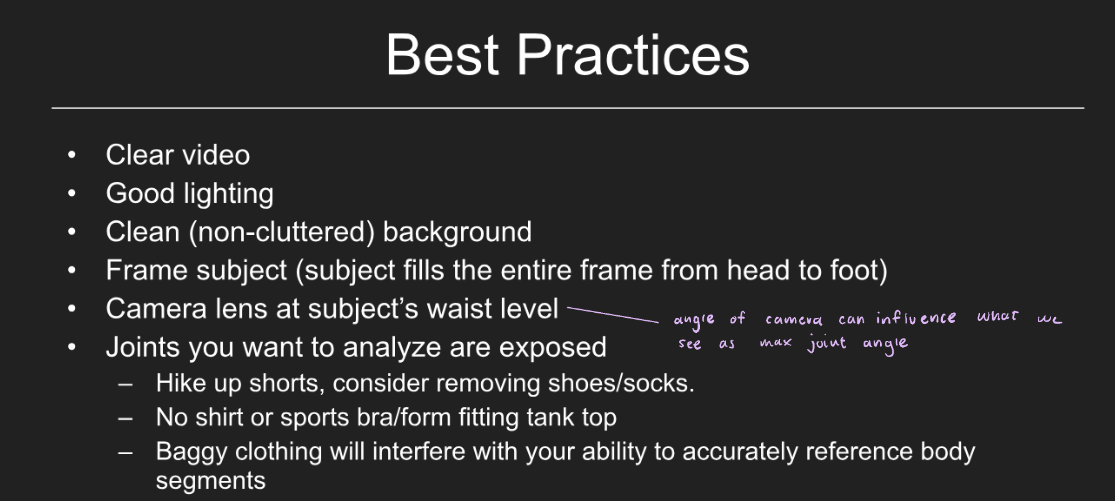
Camera should be at ____ level
Clothes should be _____ fitting and ____ over joints
T/F
F
T
F
F
Fill in the blank
waist
tight, minimal
Maximal vs submaximal
definitions
what is something you would use maximal effort for and why?
what is something you would use submaximal effort for and why?
maximal is all your effort
submaximal is not using all your effort (accuracy)vertical jump would be maximal because you want to see how high you can possibly jump by using all your effort
figure skaters spinning would be submaximal because they may be able to do 5.25 spins max but that would throw off their routine/direction, so they need to measure effort and operate submaximally to only do 4 spins

True or false:
focus of analysis in biomechanics can be whole body OR joint specific
true

fundamental biomechanical principals of movement:
Squat
explain a squat in terms for fundamental movement
what plane is it in?
what is an example of a squat motion that is used ever day
going down to the ground and bending your legs
sagittal plane
lifting something up from the ground

fundamental biomechanical principals of movement:
Lunge
how is it different than a squat
legs are staggered and both have to be on the ground
fundamental biomechanical principals of movement:
twist
describe
plane
axial rotation of trunk
transverse

fundamental biomechanical principals of movement:
Push/Pull
Describe the motions, what joints are moving?
Push would be ____
Pull would be ___
flexion/extension of elbow and shoulder
throwing
moving object towards body (?)
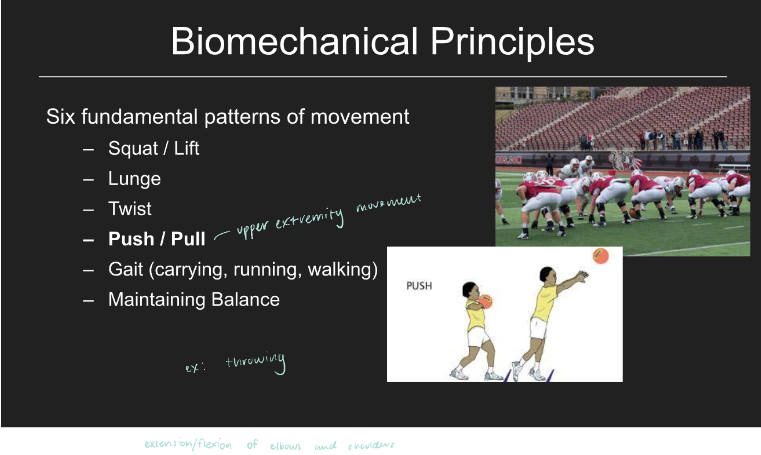
fundamental biomechanical principals of movement
gait
list 3 examples
True or false: crawling is NOT an example of gait
True or false: any locomotion is gait
walking, running, carrying
false, it is — hand in front of feet
true (only mentioned during online lecture)

fundamental biomechanical principals of movement
maintaining balance
describe
true or false: it is not needed for most motions
center of mass is above base of support
FALSE present in most

List the fundamental biomechanical principals of movement
Squat/Lift
Lunge
Twist
Push/Pull
Gait (carry, walk, run)
Maintaining balance


what fundamental movement is this?
twist
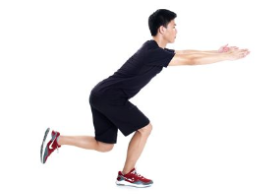
what fundamental movement is this?
squat

what fundamental movement is this?
maintain balance
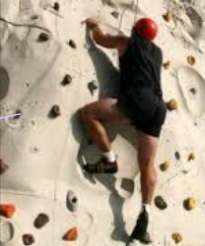
what fundamental movement is this?
gait
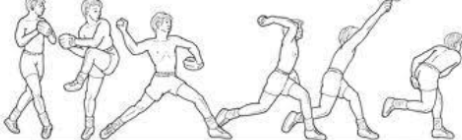
what fundamental movement is this?
twist

what fundamental movement is this?
lunge
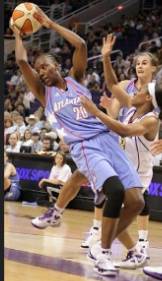
what fundamental movement is this? (guy in blue)
maintain balance
(could also be pull I THINK)

what fundamental movement is this?
lunge
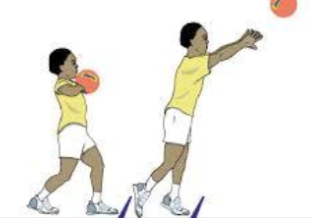
what fundamental movement is this?
push
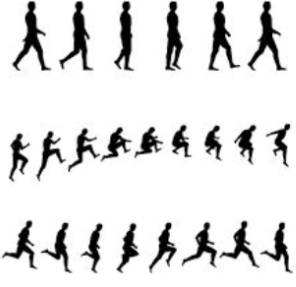
what fundamental movement is this?
gait
Why is gait important?
Kinematics of gait
It is the window to the brain, we can see a lot about injury recovery through it
hip flexion/extension, knee flexion/extension, ankle dorsi/plantar flexion

example of kinematics in engineering
waymo knowing where people are going to walk

true or false: we can use linear kinematics to see if someone’s hip is tighter than the other
if true describe how that would look
true
kinematics is video, we can look at their max joint angle to describe them being 40% flexed in one hip compared to the other

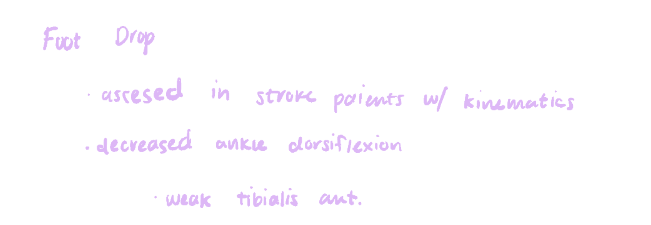
Foot drop:
Foot drop is decreased ____ and seen mostly in _____
Muscle that is responsible for it
Foot drop is assessed using ____ (kinematics or kinetics)
dorsiflexion, stroke patients
Tibialis anterior
kinematics
How would you use kinematics to assess ACL injury
angle of knee flexion (bc ACL injury reduces it)
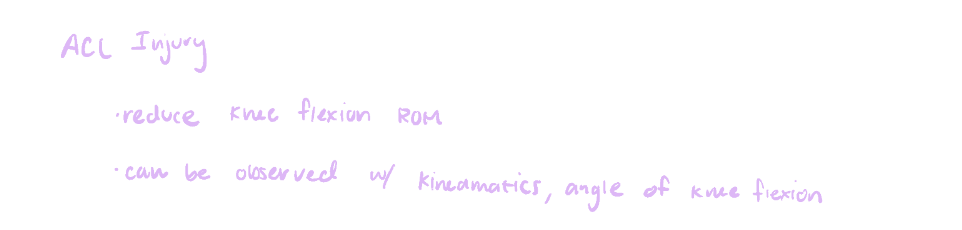
other stuff from his random kinematics slides that i dont think we have access to
no clue good luck

in comparison to kinematics, kinetics is good for assessing what?
athletic capacity and fatigue


joint motions from 7-8
push, twist
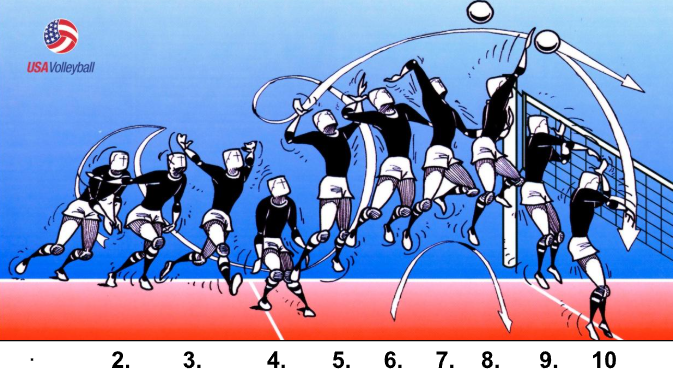
discuss

discuss
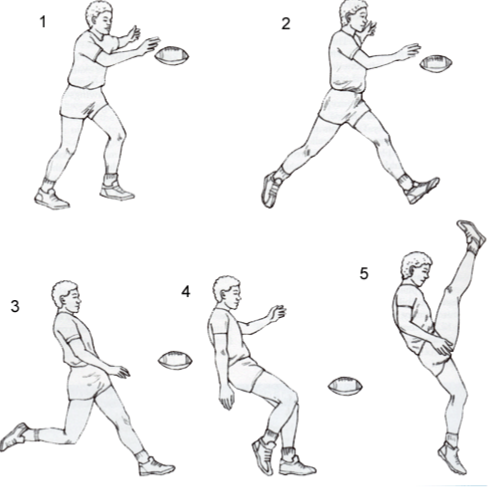
GH extension when?
all throughout the exercise

discuss