Phonetics Review
 Call Kai
 Learn
Learn Practice Test
 Spaced Repetition
 Match
Match Flashcards
 Knowt Play
1/34

There's no tags or description
Looks like no tags are added yet.
Name | Mastery | Learn | Test | Matching | Spaced | Call with Kai | Chat |
|---|
No analytics yet
Send a link to your students to track their progress
35 Terms
Articulation
Function of speech organs during the process of speaking → describes a person’s speech
Articulation Disorder
difficulty w/ production of speech sound
phonetic errors
inability to produce sound
problem w/ motor processes
ability to contrast sounds
relatively few speech errors in connected speech
typically not influenced by other language domains
Phonetics
perception and production of speech sounds
articulatory (production)
acoustic (transmission)
auditory (perception)
Phonological Disorders
phonemic errors
ability to produce sound
problem w/ phonological level (i.e., phonemes) of language system
inability to contrast sounds
many errors in connected speech
influenced by other language domains
Phoneme - aka allophone
Spoken/sound form
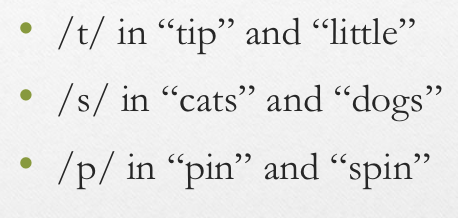
Grapheme
written form of phoneme
Phonetic inventory:
persons inventory of speech sounds
Phonemic Inventory
persons inventory of phonemes used contrastively
Articulatory System
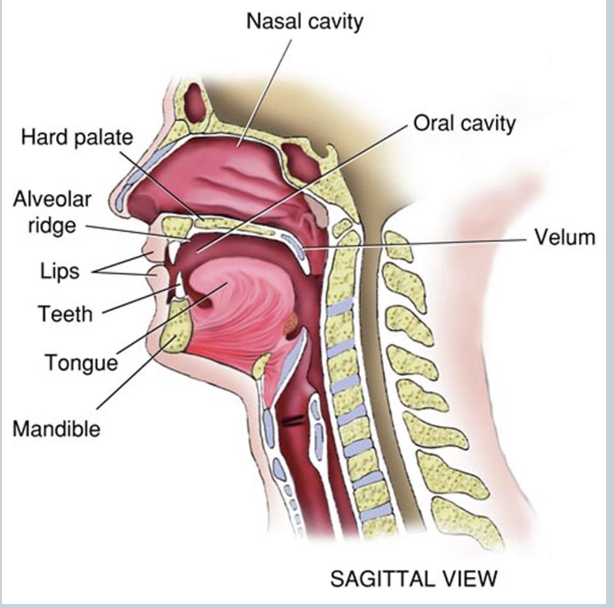
Vowels
Open vocal tract
voiced (vocal fold vibration)
tongue is primary articulator
sonorants (louder than most consonants)
14 english vowels & 5 dipthongs
youtube:
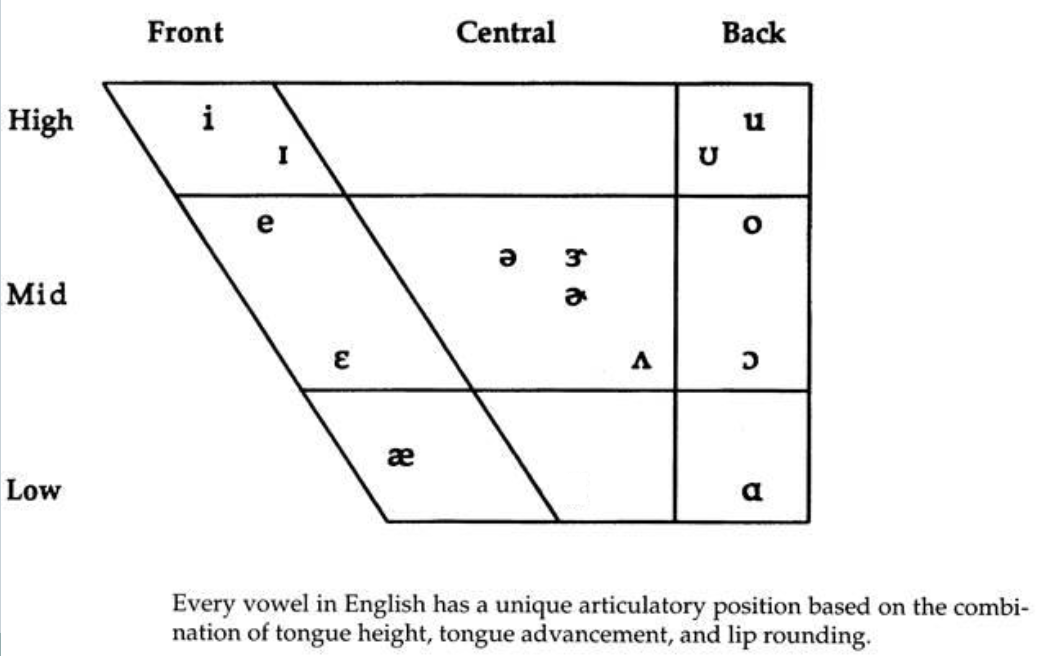
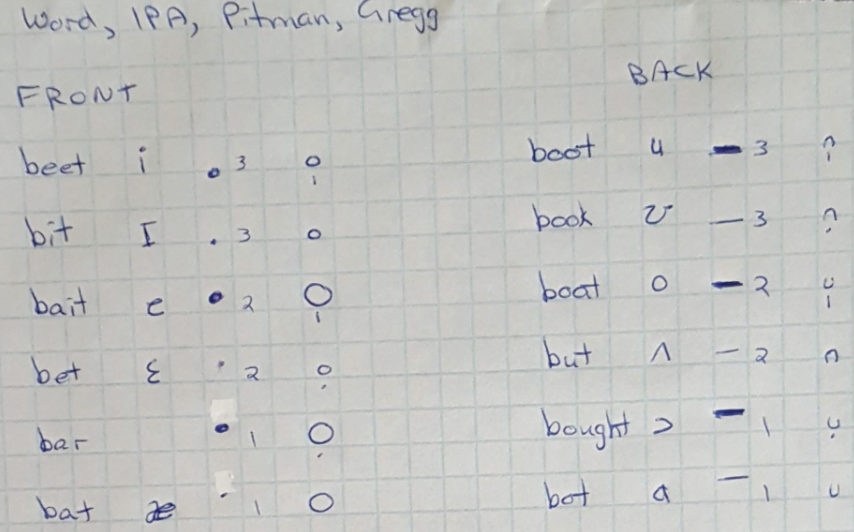
Chart for Vowel tongue position
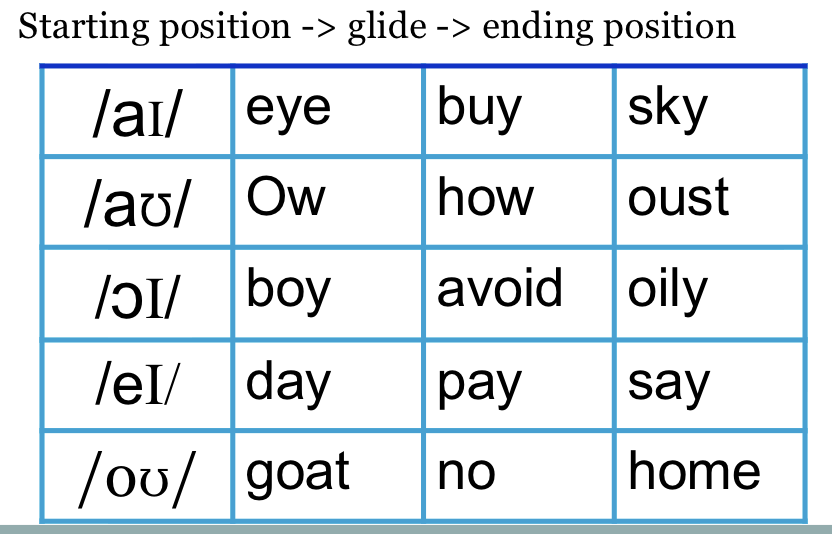
Diphthongs
A single vowel sound gliding smoothly from one position to another in the same syllable.
Lip rounding - retracted
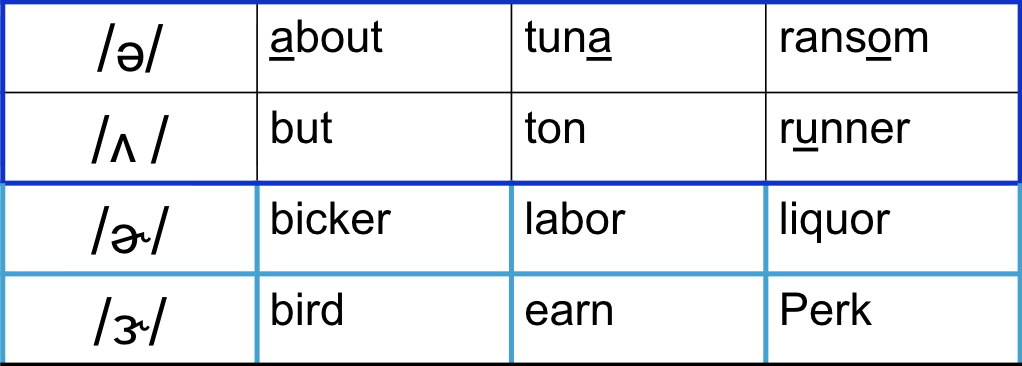
all front vowels are retracted unstressed mid-central vowels and 1 low-back vowel
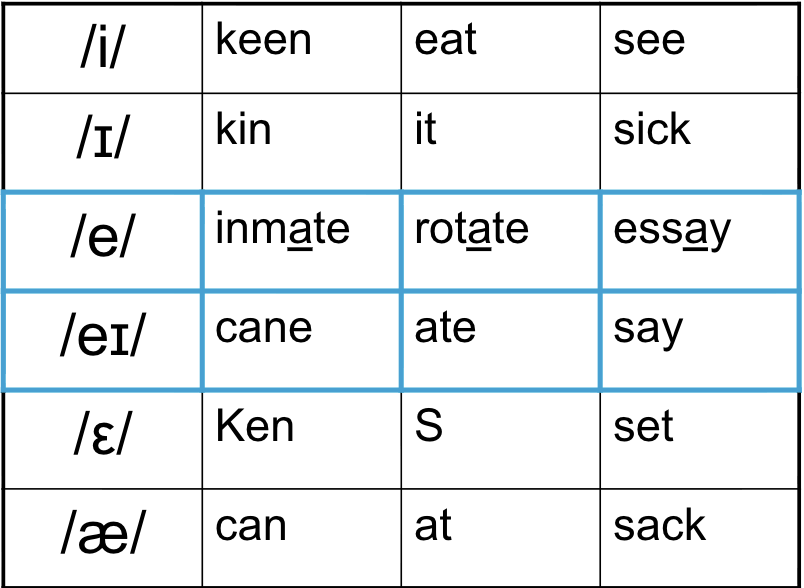
/i, ɪ, e, ε, æ, ɑ, ə, ʌ/
Lip Rounding - Rounded
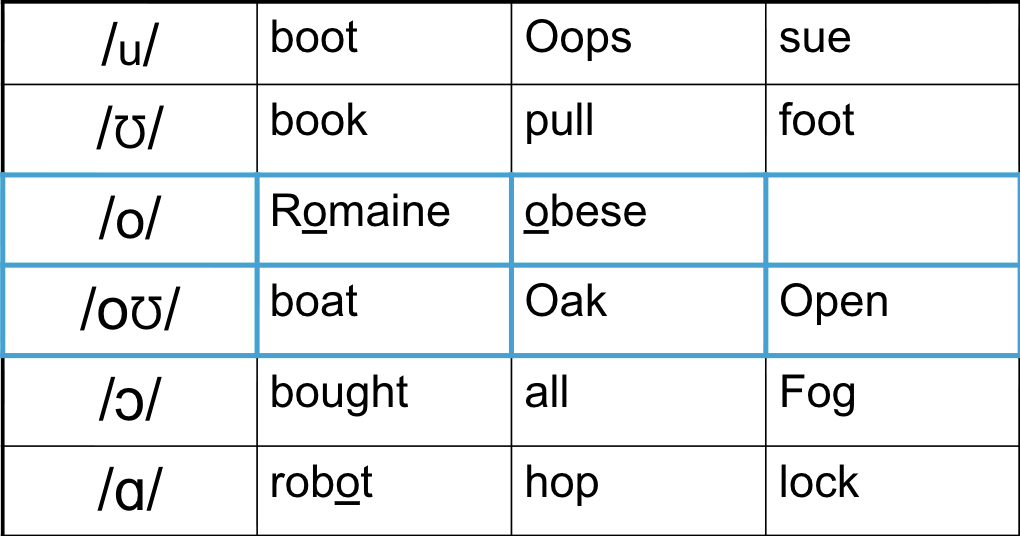
most back vowels
/u, Ʊ, o, ɔ/
Tense Vowels
longer duration and more effort; can end an open syllable; extreme tongue position
/i, e, u, o, ɔ, ɑ, ɝ /
Lax Vowels
shorter duration, less effort; centralized in the mouth
/ ɪ, ε, æ, Ʊ, ə, ʌ, ɚ /
Vowels
longer in duration
greater intensity
can stand alone → “I”, “oh, “A”
Consonants
shorter in distance
less in intensity
cannot stand alone as a meaningful utterance
Resonants (Sonorants)
resonance coming through the entire vocal tract
sound source at the vf
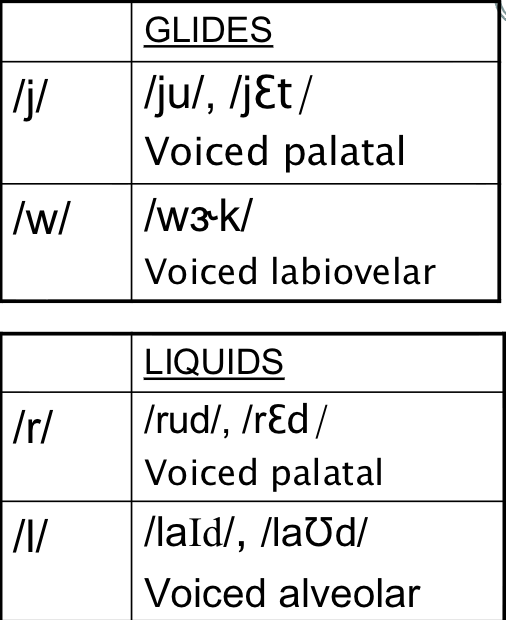
nasals, liquids, all glides = all voiced
all vowels
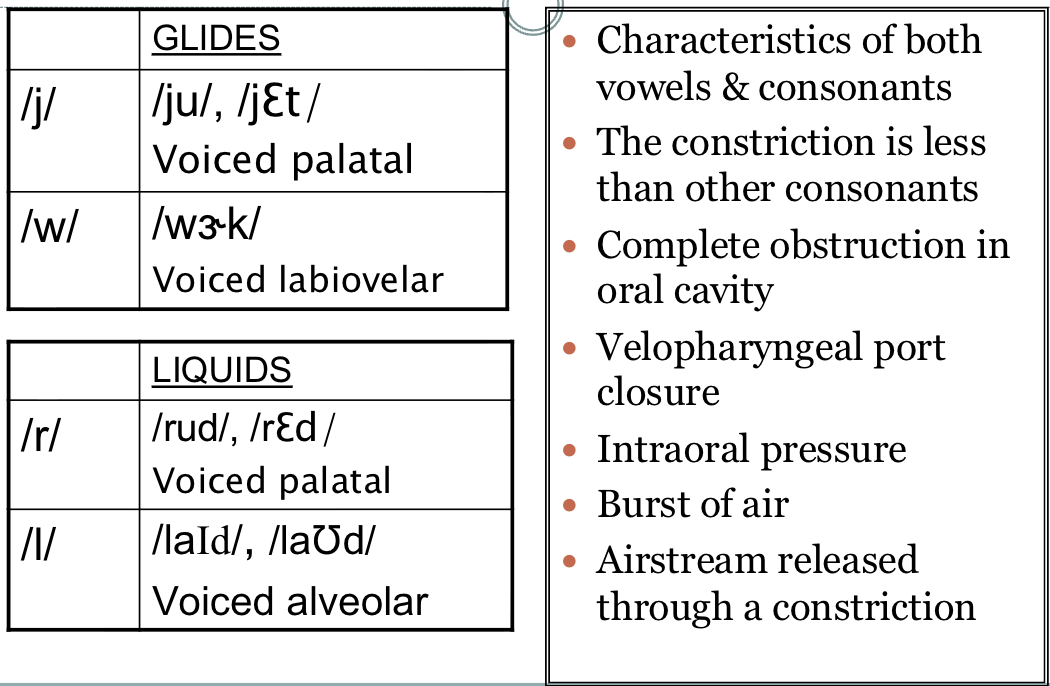
Nonresonants (obstruents)
resonance occurs just anterior to the point of constriction
sound source is at the point of constriction
stops, fricative, affricates
Consonant Positions
Prevocalic = occurs before a vowel in a syllable → “see”, “ray
Postvocalic = occur after a vowel → “eat”, “ouch”, “all”
Intervocalic = occur between vowels → “easy”, “away”, “utter”
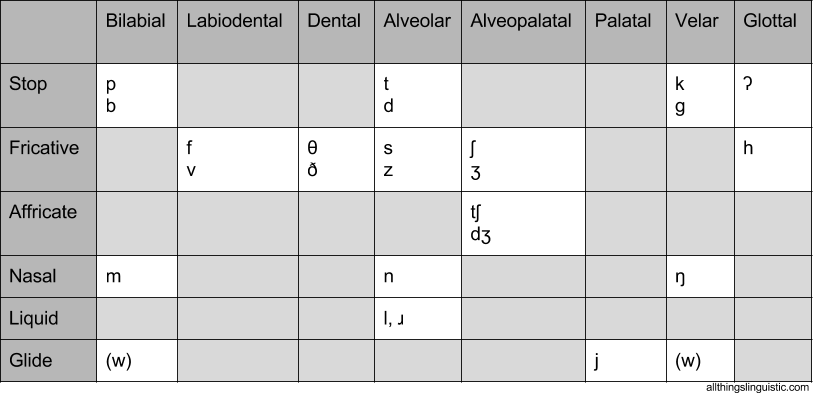
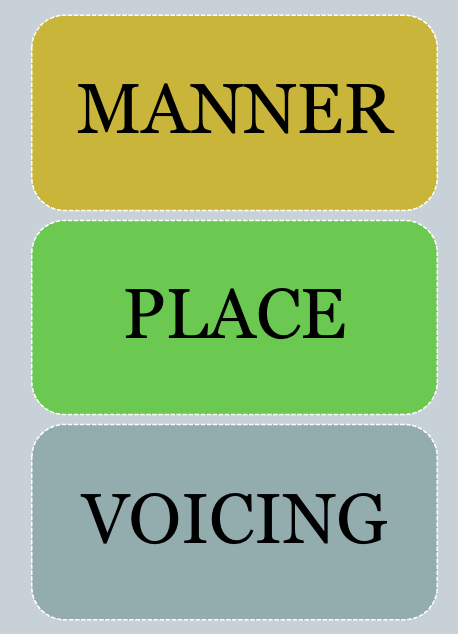
Classification of Consonants → Manner, Place, Voicing
Classification of Consonants: Manner
the way in which the airstream is modified as it passes through the vocal tract
stops
fricatives
affricates
nasals
glides
liquids
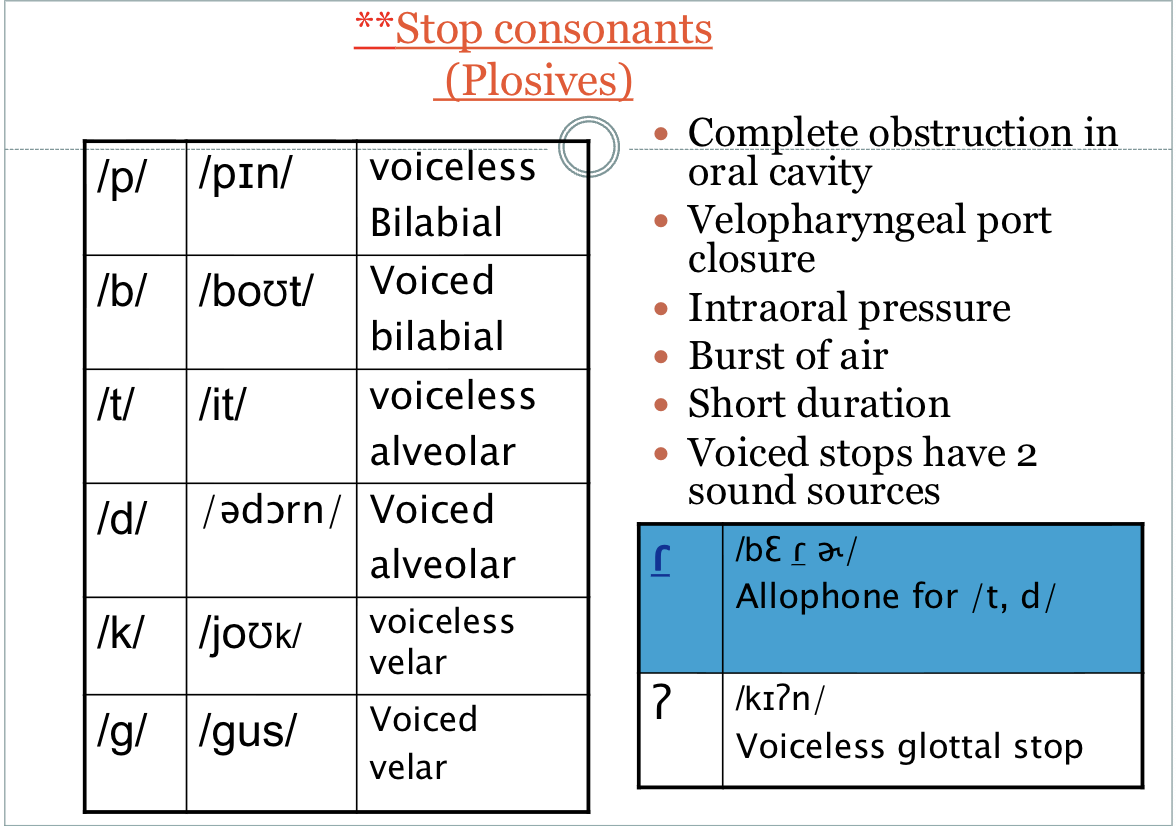
Classification of Consonants: Manner (stops)
A stop involves a complete closure such that no air passes out of the mouth.
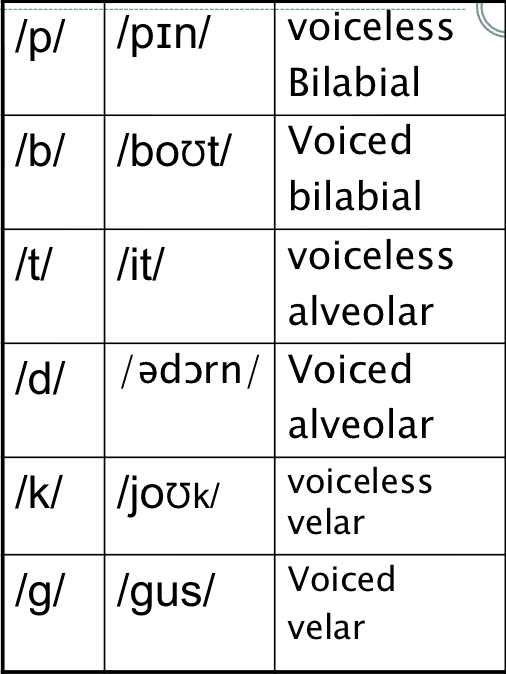
/ p t k b d g /
Classification of Consonants: Manner (nasal stops)
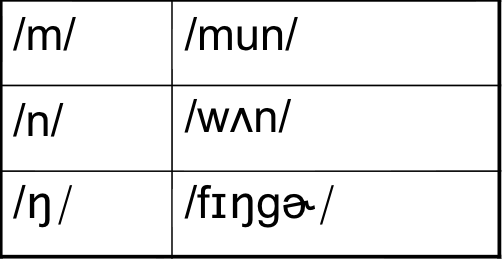
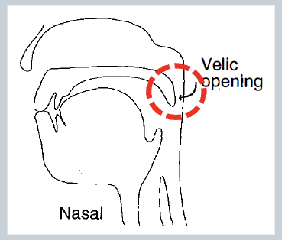
Sounds /m n ŋ/ are called nasals or nasal stops. All nasals in english are voiced.
When velum is lowered, it allows the air to pass through the nasal passages, producing that is nasal.
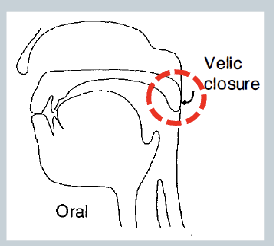
Classification of Consonants: Manner (oral stops)
When the velum is raised, blocking airflow through the nasal passages, oral sounds are produced
/p b k t d g/
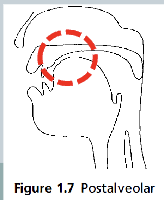
Classification of Consonants: Manner (Fricatives)
Sounds made w/ small opening, allowing air to escape with some friction. The escaping air is turbulent and produces a noisy friction-like sound called frication.
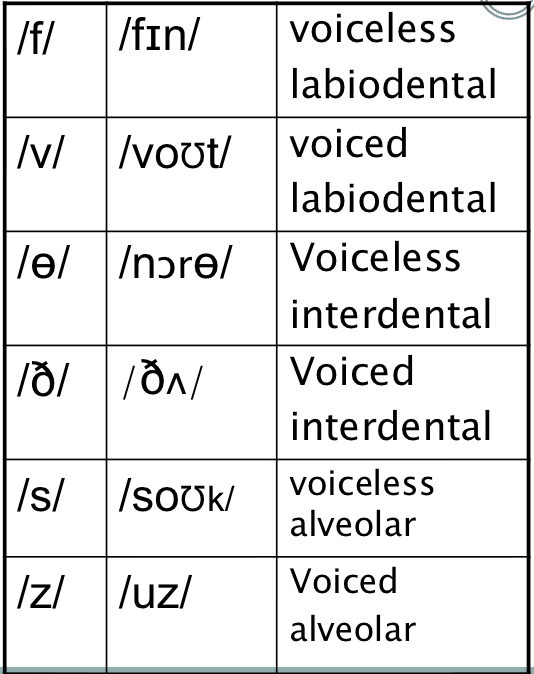
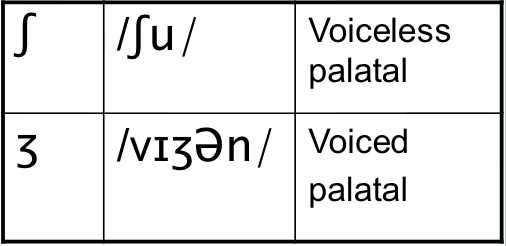
/f v θ ð s z ʃ ʒ h/
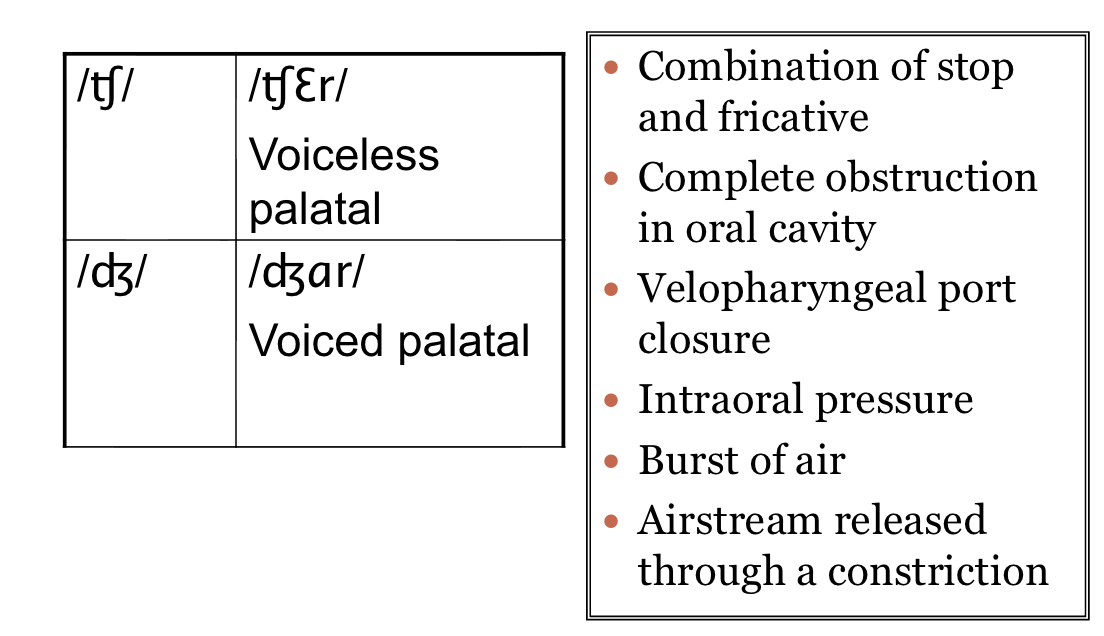
Classification of Consonants: Manner (Affricates)
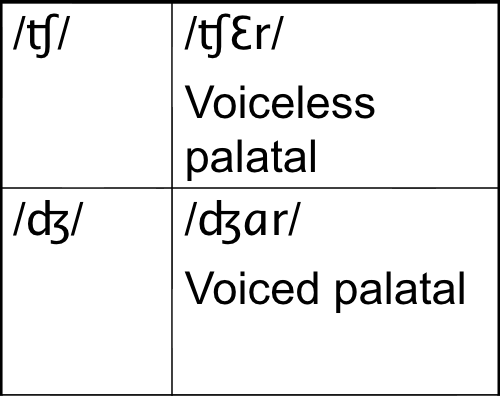
Sequences of stop plus fricative. The english sounds /tʃ dʒ/ are postalveolar affricates. These are the sounds in church and judge. Closure → frication
ch → tʃ
j → dʒ
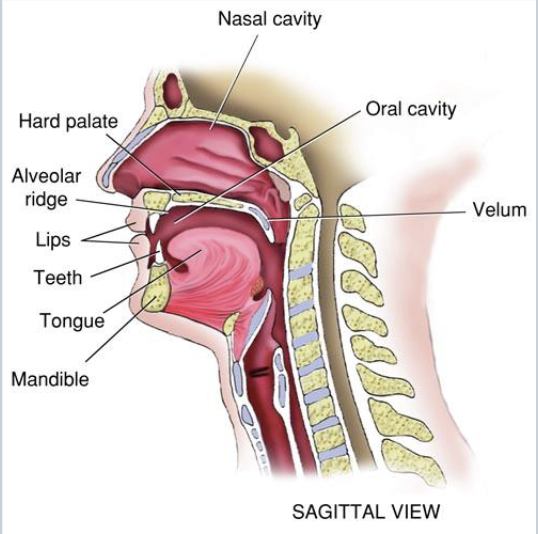
Classification of Consonants: Place
bilabial
labiodental
interdental
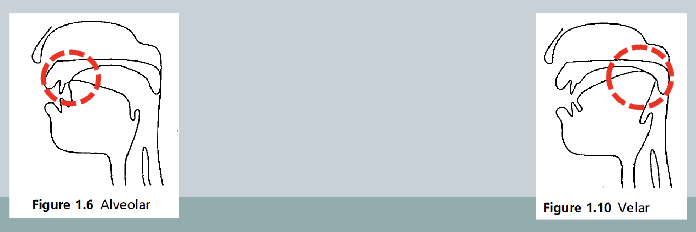
alveolar
palatal
velar
glottal
Classification of Consonants: Voicing
Vocal fold (vf) vibration either ‘on’ or ‘off’
cognates → phonemes that only differ in voicing
/p/, /b/
/s/, /z/
/ɵ/, /ð/
Front Vowels:
Back Vowels:
Central Vowels:
Stop Consonants (Plosives)
Consonant Charts continued: