GRST 209 Quiz 1
 Call Kai
 Learn
Learn Practice Test
 Spaced Repetition
 Match
Match Flashcards
 Knowt Play
1/51

There's no tags or description
Looks like no tags are added yet.
Name | Mastery | Learn | Test | Matching | Spaced | Call with Kai | Chat |
|---|
No analytics yet
Send a link to your students to track their progress
52 Terms
What is a Myth?
a story that, through its classical
form, has attained a kind of immortality because its inherent archetypal
beauty, profundity, and power have inspired rewarding renewal and
transformation by subsequent generations.
how do we make sense of myths
Myth aims to represent the “higher reality” of human experience
This is independent of factual accuracy
What is Classical Mythology exactly about?
-The importance of Greek myths for
the study of mythology
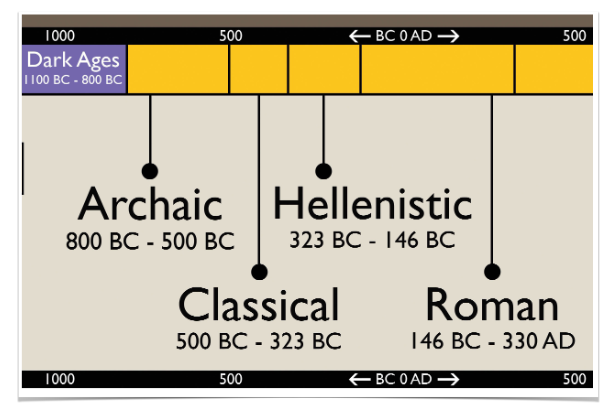
Myths in the Archaic Period
The Iliad and the Odyssey
Originally oral compositions
“Homer” as a shorthand expression
•The Homeric Hymns and Hesiod
•Homer, Hesiod, and the gods
From local to Panhellenic deities
Myths in the Classical Period (490–323 BCE)
•In Athens, Greeks begin examining their myths
– Classical period as height of Greek commitment to reason and beauty
• Achievements in tragedy, history, and the visual arts
• Muthos (“myth”)
–Philosophy and rationalization
• Logos (“rational argument”)
– Opposed to mytho s
Myths in the Hellenistic Period (323–30 BCE) and Beyond
•Educated and retrospective
responses
–Alexandrian scholars
•Roman conquest
•Classical mythology is the study of
myths:
–Primarily myths from the Archaic
and Classical Periods
–Influences of the Ancient Near East
and myths of Rome
Myths from Ancient Rome •Roman power in the 1st century CE
•Greek borrowings and what counts for
Roman myths
•The debate over a Roman indigenous
mythological system
•“Classical mythology” refers to both
Greek and Roman myths
How Do We Make Sense of Classical Myths?
We make sense of classical myths by examining their historical and cultural contexts, recurring symbols, characters, and themes. Although these stories were created in the ancient world, they explore universal experiences such as love, conflict, courage, jealousy, loss, and the search for identity.
Why Study Classical Mythology today?
Studying classical mythology helps us understand the foundations of Western literature, art, language, philosophy, and popular culture. Myths also encourage us to consider important questions about human behaviour, morality, power, and society. By comparing ancient beliefs with modern perspectives, we can better understand both the past and ourselves.
Allegorical approach
-interprets myth in a non-literal way, but as an extended metaphor
-Max Müller (19th century theorist): all myths are
allegories of nature, and thus they describe
meteorological and cosmological phenomena
Oedipus complex
-Sigmund Freud (1956-1939): a controversial
approach
•Importance of dreams as fulfillment of
repressed wishes
•and dream-work (1.condensation;
2.displacement; 3. representation)
•Myths and dreams similar in arrangement
of symbols
•Oedipal drama leads to patriarchy and
beginning of religion and the arts
Carl Jung (1875-1961)
Myths are a projection of our collective unconscious
•Myths contain archetypes (images that are the traditional expressions
of collective dreams: patterns of behaviours)
•Anima and Animus
• Emphasis on the psychological dependence of all societies on their
traditional myths
Ritualist approach
“myth implies ritual, ritual implies
myth, they are one and the same” (Leach, 1954)
•J. G. Frazer (1854-1941) and Jane Harrison
(1850-1928)
Bronislav
Malinowski (1884-1942)
• challenged the universality of Freud’s Oedipus complex
• psychological functionalism
• myths explains existing facts and institutions by
reference to tradition (culture and society)
Vladimir Propp (1895-1970)
•All Russian folktales have same linear structure
•Units of this structure are called motifemes
•Focused on Quest narratives
-stories that go from A to B
Structuralist Interpretations
Claude Lévi-Strauss (1907-2009)
•Myth as mode of communication in which structure is critical
•Binary structure of human mind
•Myth as society’s way of resolving conflicts between ideas in a non-linear way
• very useful for succession myths rather than Classical times renditions of
myths
-form of communication
-analyzed how it communicates
Structuralist Interpretations
Walter Burkert (1931-2015)
Combines structuralism and
classical scholarship
•“Myth is a traditional tale applied.”
•Burkert’s four theses:
1. Myth belongs to the more general class of
traditional tales.
2. the identity of a traditional tale is to be found
in a structure of sense within the tale itself.
3. Tale structures are founded on basic
biological o cultural programs of actions
4. myth is a traditional tale with secondary
partial reference to something of collective
importance (value to entire community)
Structuralist Interpretations
Feminist approaches (interpretation)
•Focus on psychological and social situation of female characters
•Examine fundamental assumptions
•The issue: evidence about women in antiquity is meager and
conflicting;Idea that all Greek women were submissive and
socially “silent” is too simple
homosexuality (interpretation)
•Accepted as part of ancient life
•Governed by cultural codes different from ours
• Things to be aware of:
myths themselves provide internally consistent set of values
Heterosexuality is the norm
Family and religious bonds are important
Comparative approach
•Oral and literary myth
•Distinction between early oral
storytelling and later written texts
•Literary texts are “mythology” too
•Joseph Campbell (1904-1987): popular
comparative mythologist
•Less serious attention to classical myths
Greek Creation Myths
Creation stories: why they matter
• A couple of things to remember:
• Anthropomorphic deities, but
they do not have coherent
identities or psychological
features
• A variety of stories, a variety of
identities
Panhellenism and Greek Deities
•Panhellenism and the cultural
unification of the Greeks
•Developing coherence of divine
identities and representations
•But the unified personality of a
god or goddess is inaccurate
–Variation and cult titles
The Theogony
• There are more than Hesiod’s Theogony, but
none of them reached the same cultural
authority.
• A collection of different types of oral poems
–Hymns, catalogues, and dramatic tales
• Hymns to divinities: prayer and praise
–To the Muses (1–115)
–To Hekate (413–455)
•Catalogues
–First catalogue of early features of existence
–Second catalogue: mothers and suffering
•Dramatic Tales
–The first generation of gods: Kronos’s castration of
Ouranos
–Birth of the Olympians
–The secret birth of Zeus and liberation of other
Olympians
–Zeus’s victory over his enemies, including Typhoio s
•Zeus’s defeat of Typhoios demonstrates his
power
•Zeus’s transformation of the universe from a
chaotic place into a cosmos
The first deities: Chaos and Eros
• Chaos: “yawning void”. Issues:
• How to interpret Chaos: a void, a beginning or a first principle
• “Then”: 1) it is temporal (next) - a sequence in time; 2) the meaning is that they are
generated from Chaos
• Ovid’s interpretation
• Mighty Eros (Love and Reproduction) & alternate creation myth
• Aristophanes’ Birds (5th century BC): “There was no race of immortals before Eros
caused all things to mingle. From the mingling of couples, Urano, Ocean, Ge and
the immortal race of all the blessed gods came to be.”
Gaia: mother Earth
•Gaia: archetypal fertile female goddess
•“Gaia first brought forth starry Uranus,
equal to herself”
•Gaia + Uranus: a union of earth and sky
common in mythology
–hieros gamos: “sacred marriage” of
earth-mother and sky-father
Oceanids and Sun-gods: the descendant of the Titans
•Oceanus + Tethys = thousands of Oceanids
•Hyperion (sun god) + Theia = (union produces)
–Helius: also, a sun-god
–Selene: goddess of the moon
–Eos: goddess of the dawn
•Apollo and Artemis: later connected with sun
and moon (Phoebus/Phoebe “the bright one”)
Castration of Uranus
•Uranus despises his children
•Stuffs them right back into Gaia
•Cronos (time god) volunteers to take action
•Cronus castrates Uranus and throws genitals
onto sea
•From the white foam around Uranus’ severed
genitals is born Aphrodite
•Freudian psychological interpretation: male’s
unconscious is fearful of being deprived of his
sexual potency which springs from his guilt
-Gaia becomes pregnant again
Cronus, Rhea, and the Birth
of Zeus (vv:456-471)
•Cronus (saturn) and Rhea become the parents of (the
Olympians):
–Hestia, Demeter, Hera
–Hades, Poseidon, Zeus
•Cronus fears prophecy
•Cronus “kept vigilant watch and lying in wait
he swallowed his children”
Rhea’s Plan
•Pregnant Rhea consults Gaia and Uranus
•Rhea goes to island of Crete, gives birth to
Zeus on Mt. Dicte
•Curetes (Rhea’s attendants) guard Zeus and
make noise to drown out his crying
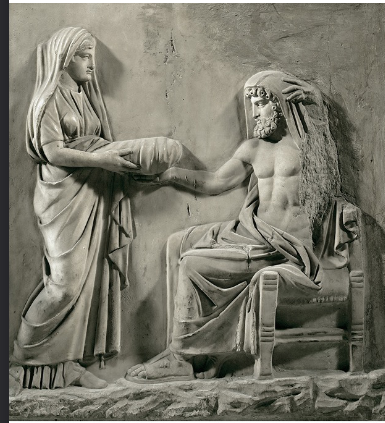
•Rhea gives Cronus a stone concealed in a
blanket
•Cronus swallows stone and Zeus grows up
in secret
-zeus is Cronus’ replacement
Zeus and Power
• Zeus freed his uncles from Tartarus, the
Hecatoncheires (Hundred-handers) whom
Uranus had imprisoned
• Titanomachy: fight between the Olympians,
led by Zeus, and the Titans
• The fight against Typhoeus (child of Earth and
Tartarus). This monster embodies confusion of
realms, and represent social anarchy
• Zeus did not create the human world, he
brought order, the Kosmos, but mostly for the
gods!

Prometheus, a titan
• Battle of wits between Prometheus and Zeus
• Prometheus (forethinker) vs. Epimetheus (after
thinker)
• Prometheus tricks Zeus In eating bones hidden in
delicious fat. (Explanation of animal sacrifices in
ancient Greece)
• Zeaus takes the fire away form the humans
• Prometheus’s punishments:
• an eagle eternally eating his regenerating liver
• Pandora (all-gifted): “that’s just how Zeus, the high lord
of Thunder, made women a curse for mortal men”
The Creation of Mortals
•Various versions
- in some versions, they are created by Zeus, or Zeus and some of the
Olympians
- In Theogony, it seems Hesiod is following the dominant tradition: Prometheus
is the creator of man (from clay) - comparison to the creation of Adam
- one version has Athena breathing life into the clay shaped as man by
Prometheus
Pandora
•Hephaistos creates a woman out of
clay
•Decked out by Athena
•“A great infestation among mortal
men”
–A bad wife: pain and misery all the
time
–A good wife: Life balanced between
good and evil
“The sheer deception, irresistible to men” v.593
Pandora
Prometheus is wholly defeated, and Zeus has
outsmarted him!
Pandora second version
• A second versions of the myth appears in
Works and Days
•Hephaestus makes woman from clay
but other gods add gifts
•Given to Epimetheus despite
Prometheus’ warning
•Pandora opens jar, releases misery,
diseases, evils
•Only Hope left in the jar: is that good
or bad?
• Pandora’s box (Works and Days): was it
really a box?
• Pithos: food container
•James Frazer’s The Golden Bough (1890)
– 3 Stages of human development (Darwin’s evolution theory)
-magical practices
-formalized ritual
-scientific reasoning
- Myths are taken in isolation
•Bronislaw Malinowski’s fieldwork in the Trobriand Islands. (Myth in Primitive Cultures - 1926)
–Culture and its coherent, integrated components “myth fulfills in primitive culture an indispensable
function: it expresses, enhances and codifies belief: it safeguards and enforces morality: it vouches for the
efficiency of ritual and contains practical rules for the guidance of man.”
–Only a social context can indicate a myth’s function (functionalism) as “a practical guide to the activities
with which it is connected”
Levant: Creation Stories
Hesiod’s Theogony and creation myths of the
Ancient Near East
•The Enuma Elish or The Epic of Creation:
-circulating in 2000BC orally and written down around
1400/1100BC on tablets
-similarities in the male deities/feminine deities opposition;
Marduk equivalent to Zeus
•Genesis:
- Many differences: one God unchallenged, the
creation of humanity at the centre
- The structure is similar: hymns, catalogues, and
dramatic tales appear
- Two creation stories, not one
The Diverse Character of Zeus
•A passionate god with many lovers
•His promiscuity creates conflicts with Hera
•But also the supreme god of justice and virtue
•Attributes:
–Thunder and lightning
–Bearded
–Wears aegis (animal skin/shield made of goat
skin - Amalthea)(double etymological connection
[ἀίξ (Aix) = goat & αἰγίς (aigis) = storm]
–Eagle and oak tree
•But even Zeus’ power is sometimes vulnerable
Zeus in the Theogony
•Zeus’s many marriages at the end of Hesiod’s Theogony.
Daughters from Themis (Established Custom):
- Seasons
- Eunomia (Lawfulness)
- Dike (Justice)
- Eirene (peace)
• Father of gods and mortals?
•Cosmic Order: Thunder and Lightning
–The bright sky
–Thunder and lightning, rain and storms: weapons and control
of celestial phenomena
–Iliad 15.187-193: the fight between the brothers Hades, Zeus
and Poseidon and the control of different natural realms
–The belief that Zeus dwelled on mountains
•“Cult” and “ritual”
•Mt. Lycaon - rain magic
•Mt. Hymettus
•Other titles of Zeus
•
–Horkius: guardian of oaths
–Ombrius: Stormy
- Philius: guardian of friendship
- Genius: guardian of hospitality
The connection to justice, fertility and community are as important as Zeus’ role as a sky god.
Human Order: Justice
Zeus’s rain and his oversight of human deeds and
justice (Work and days vv.50-57, p.121): a judge of men
•Zeus Melichios (Mild One) in Athens
–Connection to the Underworld
–Connection to justice
–Community welfare
Divine Order: Kingship
•Zeus in Homer’s Iliad as a king who works to keep
balance in war
•Zeus’s physical strength
•Zeus is constrained by his obligations to other gods
–Sarpedon in the Iliad
–Conflict with human prayers and sacrifices
–How little humans understand of the divine
•From the protector of justice to decisions that have
nothing to do with justice: the case of the
distraction of Troy
•Neither Hesiod nor Homer “correct” about Zeus:
how different people, in different period/
circumstances made sense of Zeus’ role
Violence and Grace
•Aeschylus on Zeus, from the Agamemnon
–Intersection of mythic tales and religious piety
- first stanza: reverential piety & limited human
understanding
- second stanza: the three generations of gods and the
victory of Zeus
- third stanza: the Pathei mathos - suffering into wisdom
•Zeus’s gift to humanity: divine violence and divine
grace
Leda and the Swan
•Zeus’s disguises and sexual violence
•The ambiguity of ancient
interpretations: sexual violence or
seduction (what do you see in these
images?)
•Leda and Zeus the Swan
–Human beings cannot escape the will of
Zeus or mortality
- Children of gods as a gift to counteract
the suffering of the human condition
Ganymede
•Handsome Trojan prince abducted by
Zeus (by the Eagle or a wind)
•Becomes immortal cupbearer of the
gods
–Replaces Hebe (youth)
- Symposia “drinking parties”: historical
context
•Variety of ways to interpret the abduction
–Bisexual Zeus desiring the handsome
Ganymede
- Representation of young boys entering
specific religious cults.
Hera: Zeus’ wife
•A sacred marriage: Hera is sister and wife
of Zeus who bears only Zeus’s offspring
•Hera: powerful but mostly important as
Zeus’ partner
•Hera’s wrath and subservience to Zeus:
Mother and wife who punishes Zeus’
lovers
–Hera at first worshipped independently of Zeus
–Historical origin for their mythical hostility
- Excerpt from Hesiod’s Works and Days
•Hera’s attributes:
–Regal appearance, with crown and scepter
–Pomegranate: fertility symbol
–“Ox-eyed”
–Peacock (myth of Argus)
- Cuckoo
Children of Zeus and Hera
•Eileithyia, Goddess of Childbirth
–Shares role with mother Hera
•Hebe, Cupbearer of the Gods
–Goddess of youthful bloom
–Later marries divine Heracles
•Ares: god of war and
destruction, not always
esteemed
•Hephaestus: divine artisan, god of creative fire
•Thyphaon

Hera and Rituals
•Goddess of Heroes at Argos
–The Hecatombaia: sacrifice of 100 cattle
–The etymology of Hera: a connection to “hero” or “seasons”?
–Intimate association with Argos and its political integrity
– A goddess who oversees the continuity of the community through prosperity and a growing population
-connected heroes to seasons/community
•Goddess of Fertility and Protection at Samos
–Important sanctuary on island of Samos: visitors from Babylonia and Egypt
–The Tonaia (Binding) ritual: a story with pirates and fertility symbol
–Links to marriage and thus to Zeus: the disappearance of pinecones and pomegranate dedications as a sign of Hera taking second place
-looked upon as the goddess of fertility
-connection with water
Hades
The King of the Underworld
Hades
• Hades is not feared and not evil
–Polydegmon (“Receiver of Many”)
–“Zeus of the Underworld”
•Hades: also called Pluto, Dis, or Orcus
–Hades and his realm: chthonian
–Pluton (“Of Wealth”): Hades as bountiful
• There are almost no temples or sanctuaries to Hades: why?
–Associated with caves: caves as a liminal space
•Hades: not like Christian Satan
–Grim and inexorable, but not evil
- Some accounts treat Underworld with levity
0associated with fertility (where seeds come from)
-no temples due to his powers not associated with humans

Characters associated
with Hades
Characters associated
with Hades
Characters associated with Hades:
- Persephone: queen of the underworld and spouse of
Hades
- Charon, the ferryman (brings souls to underworld)
- Hermes Psychopompos (conveyors of souls) escorts
the dead (messenger to gods)
- Cerberus, guardian of the entrance
- Judges of the Underworld
–Minos, Rhadamanthys, and Aeacus
Inhabitants of the Underworld
•Canon of mythological sinners:
–Tityus: vultures tearing liver
–Ixion: bound to a wheel
–Danaids: carrying water in vain
–Sisyphus: forever rolling rock up a hill
–Tantalus: tantalized by food and drink, which he can
never have
•Home of Furies (Erinyes, all goddesses associated with vengeance) and Hecate (feminine magic powers)
•Furies:
–Pitiless upholders of old code of vengeance
–Case of Orestes results in their transformation into
Eumenides in Athens
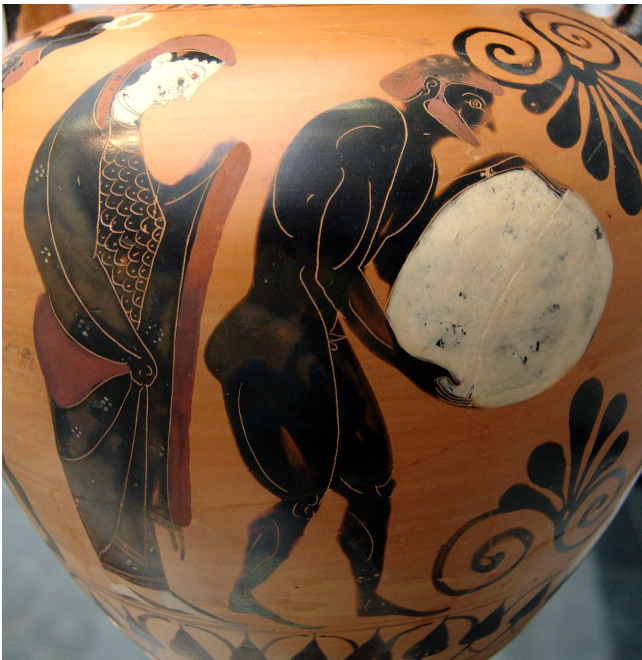
Souls in the Underworld
•Retain the appearance and personality they
had at death
•Disagreements among the dead
–Minos and Hades as judges who resolve
disputes
•Rewards and punishments after death
–Tityos, Tantalos, Sisyphus, and others
•Behavior believed to shape the fortunes of
one’s descendants
•Alternative beliefs about the fate of the soul
–Philosophers
–Mystery religions
-sometimes there is a role of judgement (punishment)

Funerary Rituals
• Three stages
–Prosthesis: laying out of the dead
–Ecphora: funeral procession
–A feast
• Women oversaw death processes in funerary
rituals
–Prevalence of this social pattern
–Reflected in Demeter’s oversight of fertility and
mythical connection to Hades
-women will clean, dress, oil, and escort the body
-worst hing to do is to leave a body unburied, even in combat
Views of the Afterlife
•Homer’s Book of the Dead Odyssey, (book 11 Odyssey)
–Interpretations of the Homeric Underworld
-Not seemingly an afterlife of reward and punishment
-Aimless and joyless souls
•Plato’s Myth of Er:
•Last book of Plato’s Republic
•Er comes back to life and reports on other world
•Judgment of souls, upward and downward
•Appropriate penalties for all sins
•Chain of light extending the spindle of Necessity
•Harmony of the spheres
–A heaven and hell clearly depicted
–Special torments
–Ties with Christian sentiments clear
•Vergil’s Book of the Dead (Aeneid)
–Vergil’s Vision of the Afterlife
•Cerberus
•Minos the judge
•Heroic warriors’ souls
•Crossroads: Elysium or Tartarus
•Elaborate description of Tartarus and
its sinners