7. Breast disorders and breast cancer *
 Call Kai
 Learn
Learn Practice Test
 Spaced Repetition
 Match
Match Flashcards
 Knowt Play
1/58

Earn XP
Description and Tags
firstaid pg 667
Name | Mastery | Learn | Test | Matching | Spaced | Call with Kai | Chat |
|---|
No analytics yet
Send a link to your students to track their progress
59 Terms
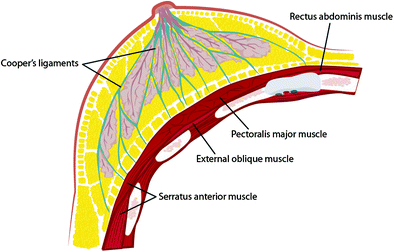
cooper's ligaments
suspensory ligaments; fibrous bands extending from the inner breast surface to the chest wall muscles
-retractions in cancer
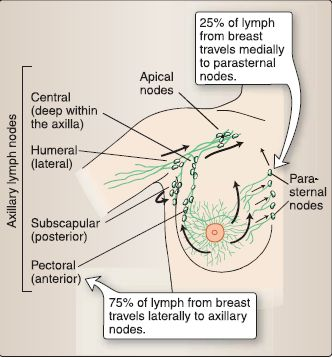
axillary nodes (75%)
Especially from lateral quadrants
primary lymphatic drainage of breasts

Internal mammary (parasternal) nodes
Especially medial breast
Can communicate with the contralateral breast
lesser:
Supraclavicular nodes
posterior intercostal nodes
secondary lymphatic drainage of the breasts
Breast → pectoral (anterior) axillary nodes → central nodes → apical nodes → subclavian lymphatic trunk
general flow of lymphatics from the breast
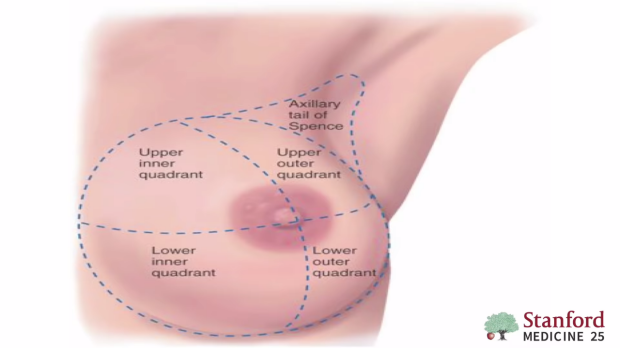
upper outer quadrant
(more tissue +axillary drainage)
Most common first site of breast cancer lymphatic metastasis = axillary nodes, particularly the sentinel lymph node.
Lateral breast → Axillary
Medial breast → Internal mammary/parasternal
breast quadrant with the highest incidence of cancer
Estrogen
binds estrogen receptors (ER) in breast tissue
Activates gene transcription and growth-factor signaling
→ Ductal epithelial proliferation
→ Elongation + branching of ducts
Also promotes stromal growth and fat deposition
hormone promoting ductal growth?
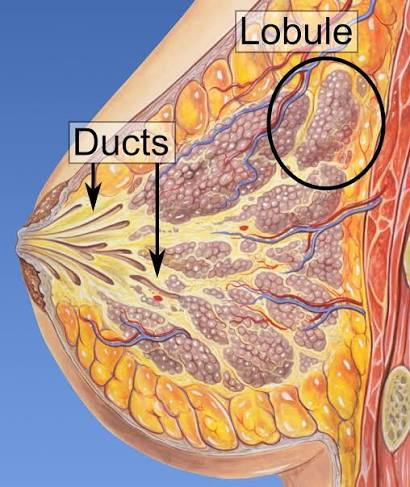
Progesterone = Breast Growth
Binds progesterone receptors in breast tissue
→ proliferation of lobular/alveolar epithelial cells
→ formation and maturation of lobules and alveoli
Prepares the breast for milk secretion during pregnancy
Works synergistically with estrogen
hormone promoting lobular & alveolar development?
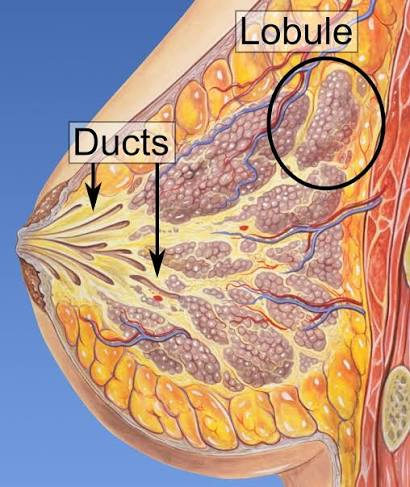

Prolactin → milk production
Oxytocin → milk ejection
hormones promoting milk production and ejection
stage II
tanner stage of breast budding
stage V
tanner stage of mature breast
Lobular hypertrophy
Increased vascularity
breast changes associated with pregnancy and lactation
↑ estrogen / ↓ androgen
hormone imbalance associated with gynecomastia
Hard, irregular, non-mobile mass
Skin dimpling, nipple retraction
Possible lymphadenopathy
physical exam findings associated with breast cancer
Young women (<30)
Mobile, rubbery, well-circumscribed
physical exam findings associated with fibroadenoma
breast cyst
Fluctuant, may be painful
Often cyclic
fibrocystic changes
Bilateral, cyclic pain
"Lumpy" breasts
bloody nipple discharge
physical exam finding associated with intraductal papilloma
core needle biopsy
preferred breast biopsy technique
Cyst vs solid mass
Young women (<30)
best uses of breast ultrasound
High-risk screening (e.g., BRCA)
Evaluating extent of cancer
best uses for breast MRI
Start mammography at age 40
Every 1–2 years
breast cancer screening recommendations for average risk pts
Start earlier (~age 30)
Annual MRI + mammogram
breast cancer screening plan for high risk patients
papilloma until proven otherwise
bloody nipple discharge =
BRCA1 or BRCA2 mutation
Strong family history of breast/ovarian/pancreatic/prostate cancer
Prior chest radiation at a young age
Certain hereditary cancer syndromes
Atypical hyperplasia / LCIS
describe who is considered "high risk" breast patients
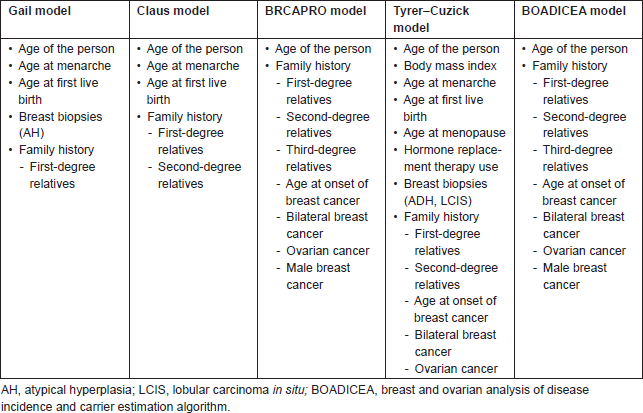
Gail model
A breast cancer risk prediction tool used mainly in primary care to estimate:
5-year risk
Lifetime risk
BRCA1
high risk breast and ovarian cancer tumor marker
more often associated with triple-negative breast cancer
BRCA2
high risk breast cancer tumor marker
also ovarian, pancreatic, prostate, male breast cancer
BRCA1
tumor marker more often associated with triple negative breast cancer
TP53
gene associated with Li-Fraumeni
observation if classic and stable
excision if large, symptomatic, growing, or uncertain diagnosis
treatment of fibroadenoma
reassurance
supportive bra
analgesics
reduce symptom triggers if helpful
treatments for fibrocystic changes of breast
fat necrosis of breast
Often after trauma or surgery
Can mimic cancer clinically and on imaging
Diagnosis often requires imaging ± biopsy
localized
reproducible with palpation or movement
musculoskeletal
costochondritis, muscle strain, trauma, rib pain
define presentation of chest wall pain (not breast pain)
spontaneous
unilateral
from a single duct
bloody or serous/clear
signs of pathologic nipple discharge
Intraductal papilloma
Duct ectasia
Carcinoma
concering causes of nipple discharge
Tumor (size)
Nodes
Metastasis
components of TNM staging
invasive ductal carcinoma
most common invasive breast cancer
invasive lobular carcinoma
Invasive carcinoma that characteristically grows in a single-file pattern
ductal carcinoma in situ
Noninvasive
Often associated with microcalcifications
lobular carcinoma in situ
Marker of increased bilateral breast cancer risk
Not a true invasive cancer
inflammatory breast cancer
Peau d'orange, erythema, edema
Aggressive
paget disease of breast
Eczematous nipple changes
Often associated with underlying malignancy
lumpectomy + radiation
breast cancer therapy with the most conservation
mastectomy
Removal of the breast, with variations in skin/nipple preservation depending on case.
Implant-based
Autologous tissue flap
options for post-mastectomy reconstruction
ER+
PR+
HER2-
Lower proliferation
tumor markers of luminal A breast cancer
luminal A
breast cancer type with the best prognosis
ER+
lower PR and/or higher proliferation
may be HER2+ or HER2-
More aggressive than luminal A
tumor markers of luminal B breast cancer
Endocrine therapy helps
tamoxifen
aromatase inhibitors in appropriate patients
treatment recommendations for ER/PR positive cancers
trastuzumab-based regimens
treatment of HER2 positive cancer
No endocrine or HER2 target
chemotherapy often central
treatment of triple negative breast cancer
60%
life time risk of breast cancer in BRCA women
tamoxifen, raloxifene, or, in some settings, aromatase inhibitors
meds used as chemoprevention in BRCA patients
adjuvant chemotherapy
treatment given after surgery to reduce recurrence risk
adjuvant radiation therapy
typically indicated after breast-conserving surgery
excision of the involved duct/fistula tract
definitive management of chronic subareolar breast abscesses
paget disease of the breast
rare breast cancer involving the nipple and usually the areola, accounting for about 1%–3% of breast cancers. It often presents with itching, erythema, crusting, scaling, thickening, nipple flattening, or bloody/yellow discharge, and it can mimic eczema
older age, chest radiation, family history, BRCA1/2 mutations, Klinefelter syndrome, cirrhosis, and testicular disorders
risk factors for breast cancer in men
invasive, ductal in origin
more likely breast cancers in men