Chapter 3: Cells - The Living Units Flashcards
 Note
Note Call Kai
 Learn
Learn Practice Test
 Spaced Repetition
 Match
Match Flashcards
 Knowt Play
1/49

Earn XP
Description and Tags
Vocabulary-style study flashcards for Marieb Human Anatomy & Physiology 12th Edition Chapter 3 (Cells: The Living Units).
Name | Mastery | Learn | Test | Matching | Spaced | Call with Kai | Chat |
|---|
No analytics yet
Send a link to your students to track their progress
50 Terms
Cell Theory
The concept that the cell is the smallest unit of life, all living organisms are composed of one or more cells, and cells arise only from pre-existing cells.
Plasma Membrane
A flexible, selectively permeable outer boundary of the cell that separates intracellular fluid (ICF) from extracellular fluid (ECF).
Fluid Mosaic Model
A depiction of the plasma membrane structure as a dynamic lipid bilayer of phospholipids and cholesterol embedded with mobile proteins and surface carbohydrates.
Integral Proteins
Membrane proteins inserted into the lipid bilayer, usually transmembrane, that function as transport channels, carriers, enzymes, or receptors.
Peripheral Proteins
Proteins loosely attached to integral proteins or membrane lipids that function as enzymes, motor proteins for shape change, or intercellular connections.
Glycocalyx
A sugar coating on the cell surface formed by glycolipids and glycoproteins that acts as specific biological markers for cell-to-cell recognition.
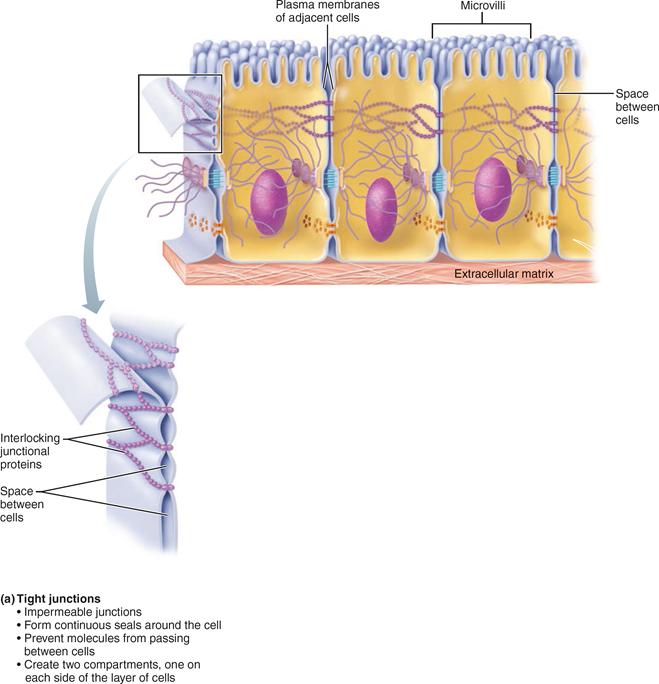
Tight Junctions
Impermeable cell junctions formed by fusing integral proteins that encircle adjacent cells, preventing fluids and molecules from passing between them.
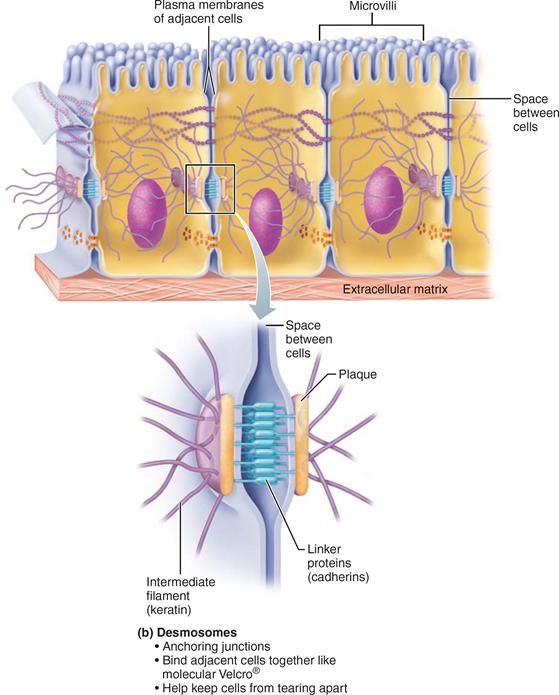
Desmosomes
Anchoring junctions formed by cadherin linker proteins that interlock between plaques of adjacent cells to prevent tissues from tearing under tension.

Gap Junctions
Communicating junctions composed of transmembrane proteins called connexons that form hollow tunnels allowing ions and small molecules to pass between cells.
Simple Diffusion
The unassisted passive movement of nonpolar, lipid-soluble molecules directly through the phospholipid bilayer down their concentration gradient.
Facilitated Diffusion
The passive transport of polar or charged molecules across the plasma membrane down their concentration gradient using protein carriers or channels.
Osmosis
The diffusion of a solvent (such as water) through a selectively permeable membrane directly through the lipid bilayer or via aquaporins.
Aquaporins (AQPs)
Transmembrane channel proteins specifically dedicated to facilitating the rapid passage of water molecules across cell membranes.
Osmolarity
The total concentration of all solute particles in a solution, expressed in osmoles per liter (osmol/L).
Isotonic Solution
A solution with the same concentration of nonpenetrating solutes as the cell interior, causing cells to retain their normal shape and volume.
Hypertonic Solution
A solution with a higher concentration of nonpenetrating solutes than inside the cell, causing water to leave the cell and the cell to shrink (crenation).
Hypotonic Solution
A solution with a lower concentration of nonpenetrating solutes than inside the cell, causing water to enter the cell until it swells and bursts (lyses).
Primary Active Transport
A membrane transport mechanism that directly uses ATP hydrolysis energy to pump solutes against their concentration gradients.
Sodium-Potassium Pump (Na+-K+ Pump)
A primary active transport enzyme (Na+-K+ ATPase) that pumps three Na+ out of the cell and two K+ into the cell per ATP consumed.
Secondary Active Transport
A transport process driven indirectly by energy stored in ionic concentration gradients established by primary active transport pumps.
Phagocytosis
A form of endocytosis ("cell eating") in which pseudopods engulf large solid particles or pathogens into a membranous sac called a phagosome.
Pinocytosis
A fluid-phase endocytosis ("cell drinking") process in which the cell infolds its membrane to non-specifically ingest drops of extracellular fluid and solutes.
Receptor-Mediated Endocytosis
A selective endocytic mechanism in which specific extracellular ligands bind to cell-surface protein receptors to be ingested in protein-coated vesicles.
Exocytosis
The active vesicular process by which intracellular substances enclosed in secretory vesicles are ejected out of the cell into the extracellular space.
Resting Membrane Potential (RMP)
The electrical potential voltage across the plasma membrane of a resting cell, typically ranging from −50mV to −90mV, determined largely by K+ leakage.
Cell Adhesion Molecules (CAMs)
Glycoproteins that anchor cells to the extracellular matrix or adjacent cells, assist in cell movement, attract white blood cells, and transmit intracellular signals.
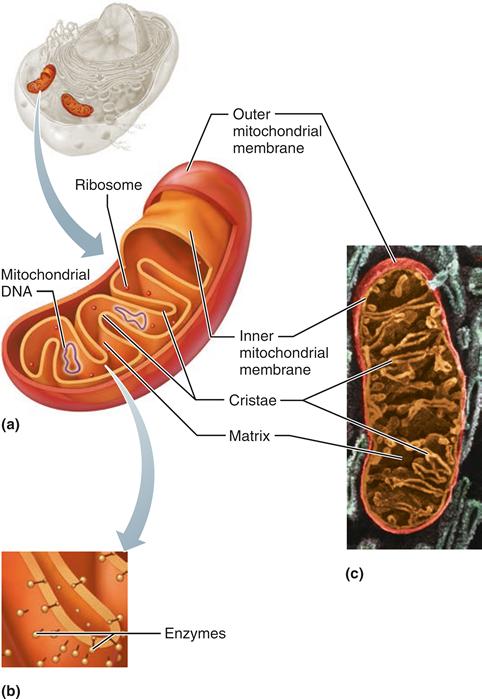
Mitochondria
Membranous, double-walled organelles containing cristae that produce most of the cell's ATP through aerobic cellular respiration.
Ribosomes
Nonmembranous organelles composed of rRNA and proteins that serve as the primary sites of cellular protein synthesis.
Rough Endoplasmic Reticulum
A continuous system of fluid-filled membranous cisterns studded with ribosomes that synthesizes membrane proteins, secreted proteins, and phospholipids.

Smooth Endoplasmic Reticulum
A network of membranous tubules devoid of ribosomes that catalyzes lipid synthesis, steroid hormone production, detoxification of chemicals, and calcium storage.
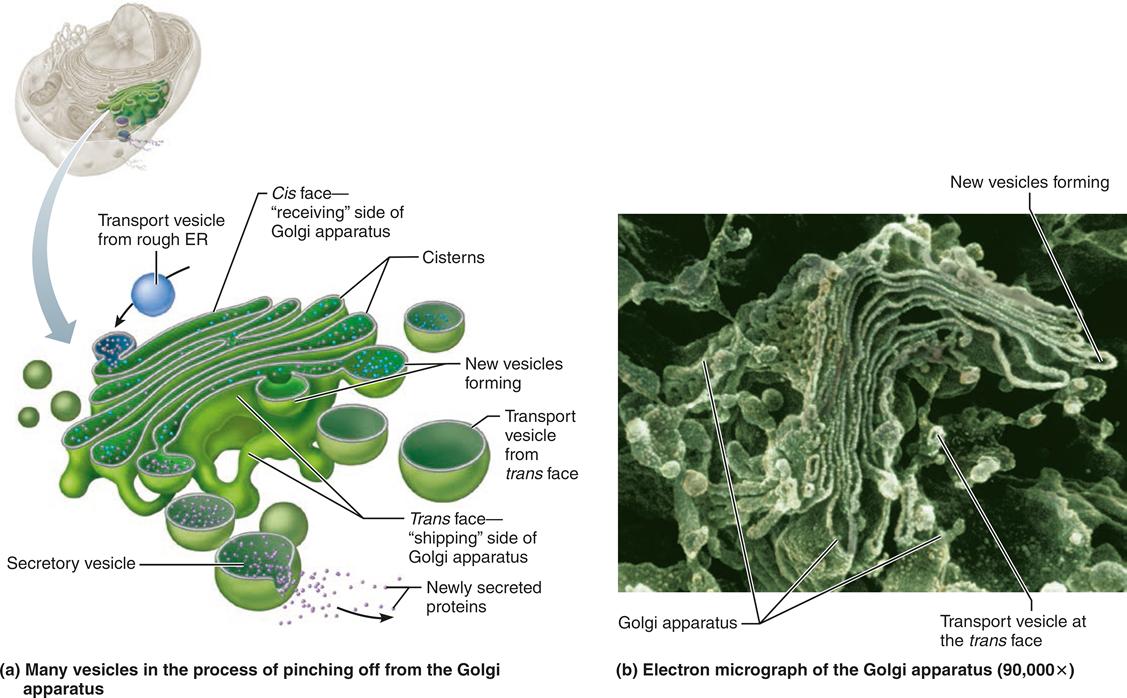
Golgi Apparatus
A series of stacked, flattened membranous sacs that modifies, concentrates, tags, and packages proteins and lipids received from the rough ER into vesicles.
Lysosomes
Spherical membranous organelle vesicles filled with acidic digestive enzymes (acid hydrolases) that degrade cellular wastes, organelles, and ingested materials.
Peroxisomes
Membranous sacs containing oxidases and catalases that neutralize toxic free radicals and hydrogen peroxide (H2O2) into water.
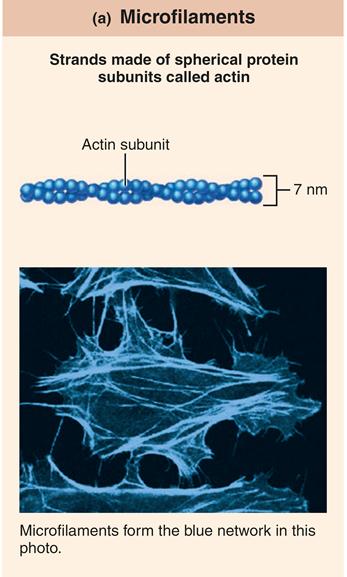
Microfilaments
The thinnest cytoskeletal elements made of actin protein subunits that form the terminal web, support cell surface shape, and facilitate movement.
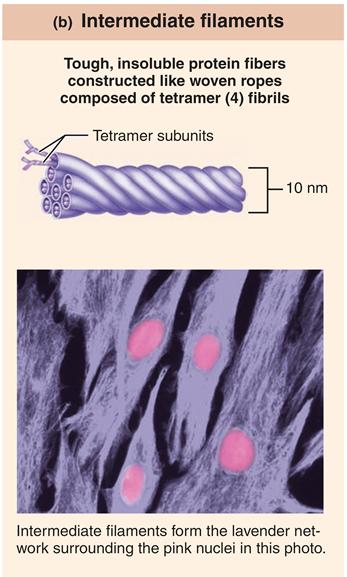
Intermediate Filaments
Tough, insoluble ropelike protein fibers composed of tetramer fibrils that help cells resist mechanical pulling forces.
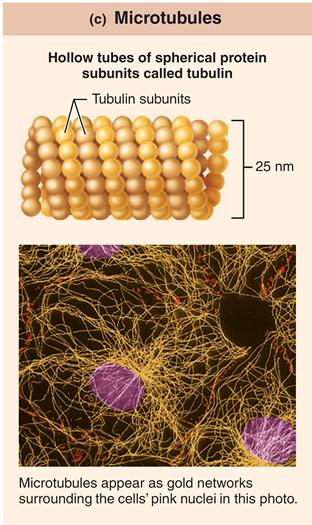
Microtubules
Hollow tubes composed of tubulin subunits that radiate from the centrosome to determine overall cell shape and serve as tracks for organelle movement.
Centrosome
The microtubule-organizing center near the cell nucleus containing a matrix and a pair of barrel-shaped centrioles oriented at right angles.
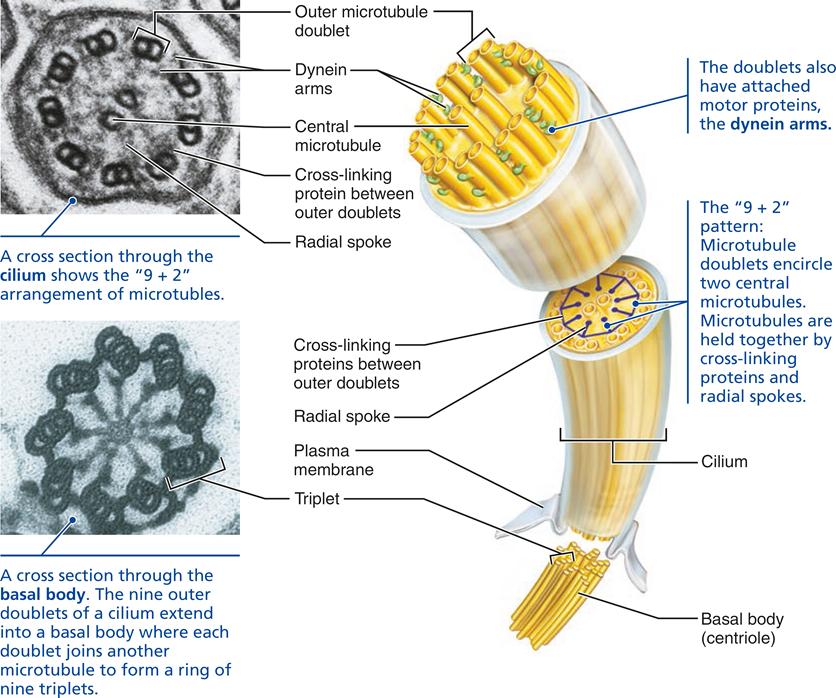
Cilia
Motile cellular projections containing a "9 + 2" pattern of microtubules that move substances in a coordinated sweeping motion across cell surfaces.
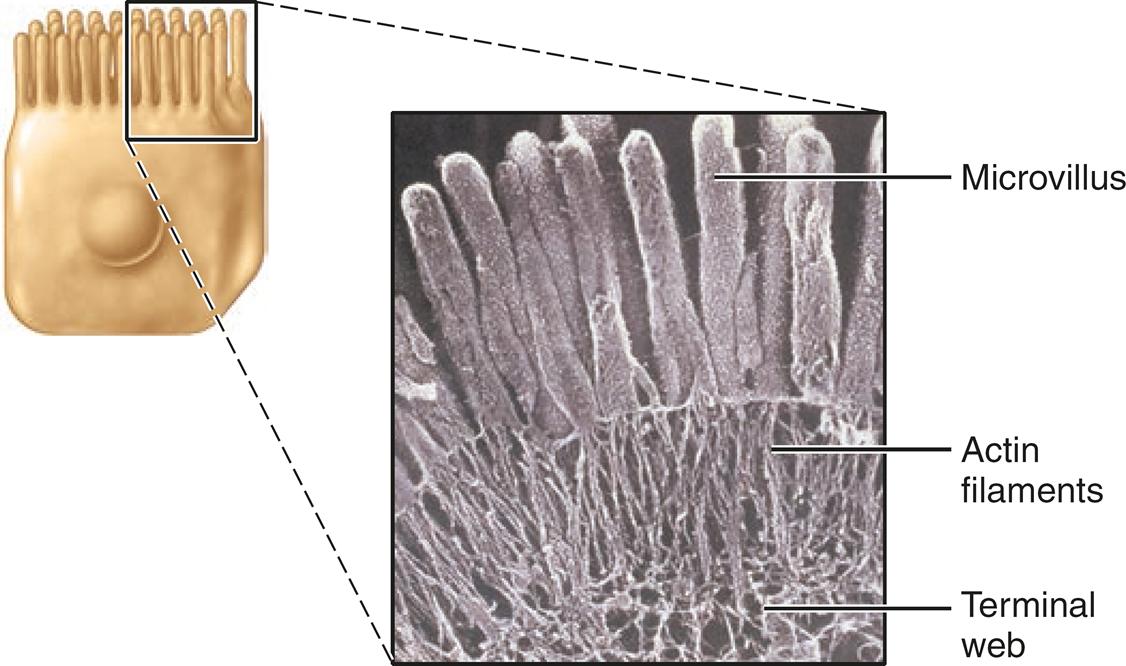
Microvilli
Tiny, fingerlike projections of the plasma membrane supported by an internal actin core that function to increase surface area for absorption.
Nucleolus
A dense, dark-staining nuclear region involved in synthesizing ribosomal RNA (rRNA) and assembling ribosome subunits.

Chromatin
Uncondensed nuclear structures arranged as nucleosomes, consisting of approximately 30% DNA, 60% histone proteins, and 10% RNA.
S Phase
The subphase of interphase during which DNA replication occurs to ensure identical genetic copies for daughter cells.
Mitosis
The nuclear division phase of the cell cycle consisting of four sequential stages: prophase, metaphase, anaphase, and telophase.
Cytokinesis
The division of the cytoplasm during cell division, accomplished through the contraction of an actin microfilament cleavage furrow.
Transcription
The nuclear process of transferring the genetic base sequence information stored in a DNA gene template into a complementary strand of mRNA.
Translation
The cytoplasmic process occurring at ribosomes in which the base code sequence of mRNA is translated to assemble amino acids into a polypeptide chain.
Codon
A specific three-base sequence on an mRNA molecule that corresponds to one amino acid or a translation stop signal.
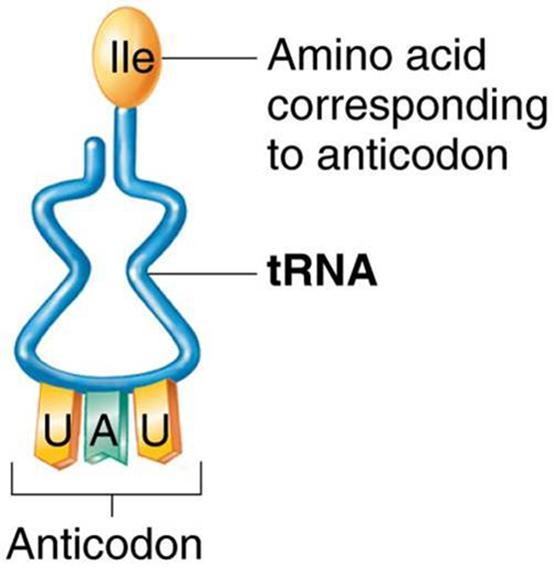
Anticodon
A specific three-base sequence on a tRNA molecule that complementary base-pairs with a specific codon on mRNA during protein synthesis.
Autophagy
The cellular self-eating process of isolating obsolete or damaged organelles in autophagosomes for degradation by lysosomes.
Apoptosis
Programmed cell death triggered by caspase activation, leading to controlled breakdown of cell structures and phagocytosis without inflammation.