Time Use and Habits (ch. 14)
 Call Kai
 Learn
Learn Practice Test
 Spaced Repetition
 Match
Match Flashcards
 Knowt Play
1/9

Earn XP
Description and Tags
Week 6
Name | Mastery | Learn | Test | Matching | Spaced | Call with Kai | Chat |
|---|
No analytics yet
Send a link to your students to track their progress
10 Terms
Lifestyle Balance: Model of Occupational Balance
Meet basic needs for sustained health and safety
Have rewarding and meaningful relationships with others
Feel engaged, challenged, and competent
Create meaning and a positive identity
Organize time and energy to meet personal goals
Occupational Balance
Grounded in Western Perspectives
Subjective and individualized experiences of engagement in a variety of activities and occupations to meet one’s needs
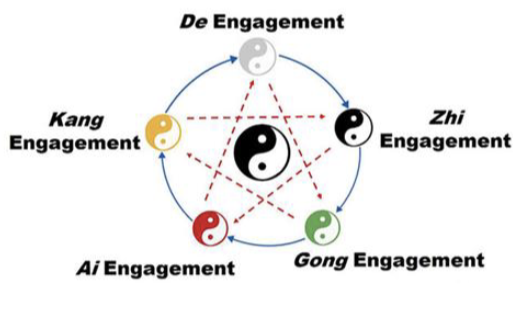
Model of Occupational Harmony
Equilibrium between physical and mental engagement, quiet and active engagement, and individual and social engagement
Harmony among five dimensions of occupational engagement
Harmony among five dimensions of occupational engagement
Habits & Routines
Habits- patterns of doing activities that are so familiar that they become essentially automatic; not broken but can be replaced
Routines- patterns of activity that comprise habits and the typical sequence in which they are undertaken
• Up to 90% of our daily behavior is shaped by habits and routines
Barriers to Successful Time Use and Mental Illness
Difficulty structuring time
o Limited access to structured occupations (e.g., work)
o Limited financial resources
o Low levels of motivation
o Skill deficits (i.e., difficulty finding occupations that afford the “just-right challenge”)
o Limited social support
o Institutional settings that restrict opportunity
Assessing Time Use
Time Diaries
o Assess time use for a longer period of time (e.g., a day, week)
o Recall vs. ongoing
o Pros- Provide a more holistic look at a person’s time use
o Cons- Require the person to accurately remember what they did OR remember to record what they are doing throughout the day
o E.g., Occupational Questionnaire, Modified Occupational Questionnaire, Occupational Experiences ProfileTime Sampling
o Assess time use at random snapshots
o Typically utilizes technology
o Pros- Less demand for recall
o Cons- Not as comprehensive as a time diary
o E.g., Experience Sampling Method, Ecological Momentary Assessment
Building Routines and Habits
Focus on one activity at a time when facilitating skill building
• Use an activity analysis approach to understand each element of the
activity
• Facilitate skill building in the natural environment
• Attend to temporal factors
• Encourage repetition to embed routines and habits into daily life
• Take advantage of technology
• Can embed new habits into existing routines
Action over Inertia
Addresses persistent imbalance and disengagement
• Flexible workbook-based intervention that uses a strengths-based,
recovery-oriented approach
1. Identifying the need for change and engaging the individual into the
change process
2. Exploring current patterns of time use and providing rapid support for
engaging in meaningful activities
3. Providing information about the relationship between meaningful
activity and well-being
4. Conducting long-term goal planning
5. Monitoring and refining plans on an ongoing basis
• Acknowledges that living with mental illness is challenging but provides
opportunities to engage in meaningful activities associated with recovery,
health, and well-being benefits
Interventions: Redesigning Daily Occupations
group treatment to enable lifestyle changes for return
to work including changing patterns of daily occupation, increasing work
capacity, and improving health
• Three phases over 16 weeks
Self directed, given knowledge and understanding of their own patterns of daily occupations to make decisions about how they would like to change
Interventions: IPSRT
Interpersonal and Social Rhythm Therapy
• Used with patients diagnosed with bipolar disorder to regulate circadian
rhythm in conjunction with medication use
Four phases
1. Gather information about the patient history and interpersonal relationships
2. Helping the patient establish more regular routines (sessions are weekly)
3. Building the patient’s confidence in their capability to use the skills they learned
4. Preparing for termination of therapy; patients and therapist meet once month for continued check in
• Benefits
o Helps patients learn how to regulate everyday routines and manage their diagnoses
o Increase stability of rhythm