Splinting Lily
 Call Kai
 Learn
Learn Practice Test
 Spaced Repetition
 Match
Match Flashcards
 Knowt Play
1/218

There's no tags or description
Looks like no tags are added yet.
Name | Mastery | Learn | Test | Matching | Spaced | Call with Kai | Chat |
|---|
No analytics yet
Send a link to your students to track their progress
219 Terms
Age related changes/medical conditions
cognition
cardiovascular/hematological
digestive/metabolic/endocrine
genitourinary
skin functions
neuromuskuloskeletal
sensory functions
Considerations of orthotic in short term setting
prevent secondary conditions
monitor recovery
optimize positioning
forward info to discharge setting
Considerations of orthotic in long term setting
choose safe materials for clients with cognitive impairment or restricted mobility
train team members to monitor skin integrity
Considerations of orthotic in community based setting
provide pictures and written instructions for use and care
provide contact information in case questions arise
orthoses typically enable functional participation
orthoses must be versatile and durable
For older adults, keep the design...
simple for easy donning/doffing
For older adults, you can label the orthosis with
name
left/right
hand/foot
landmarks for proper positioning
Written and oral instructions should be provided which include...
application
wearing schedule
precautions
Goals of pediatric orthoses for positioning
mobilize joints
reduce contractures
provide stability
rest
proper alignment
Goals of pediatric orthoses for function
enable existing function to continue
improve existing function
substitute for weak or absent muscles
augment benefits of therapy
Goals of pediatric orthoses for hygiene
improve or prevent hygiene problem
Goals of pediatric orthoses for protection
keep child safe
prevent undesired behaviors
Fabrication considerations for children
different proportions
they're constantly growing
parent/caregiver education
Foundational movement patterns are set within the first...
2-3 years
Approaches to pediatric orthoses fabrication
engage child in the process
frequently monitor for physical growth and psychosocial development
caregiver engagement
safety
prepare the child
custom designs
material selection
pattern making
time
padding and strapping
Wearing schedule should align with ______
purpose
Purpose/goals of orthoses for arthritis
manage pain
improve function
joint protection
Fabrication considerations for orthoses for arthritis
pressure areas
joint alignment
Wearing schedules for orthoses for arthritis
patient and condition specific
Precautions for orthoses for arthritis
do no harm
Purpose/goals of orthoses for fractures
immobilize for healing
Fabrication considerations of orthoses for fractures
fluctuation in edema
anticipate potential pressure ares
Wearing schedules for orthoses for fractures
condition and protocol specific
Precautions for orthoses for fractures
do no harm
Purpose/goals of orthoses for extensor tendons injuries
position and protect healing tendon
prevent scarring
Fabrication considerations for orthoses for extensor tendons injures
allowing as much movement without compromising healing structure
Wearing schedules for orthoses for extensor tendons injures
condition/patient and protocol specific
Precautions for orthoses for extensor tendons injures
follow healing protocol
Purpose/goals of orthoses for flexor tendon injuries
position and protect healing tendons
prevent scarring
Fabrication considerations for orthoses for flexor tendon injuries
allowing as much movement without compromising healing structure
Wearing schedules for orthoses for flexor tendon injuries
condition/patient and protocol specific
Precautions for orthoses for flexor tendon injuries
following healing protocol
Intrinsic plus/Antideformity position
MCP flexion 50-80
PIP extension
DIP extension
Wrist extension 15-20
Thumb abducted with IP extended
Intrinsic plus/Antideformity position is considered safe to immobilize for...
long periods of time without developing hand stiffness/contractures
Advantages of prefabricated orthoses
time efficient for therapists
immediate feedback
lightweight
sportier look
some have soft material
supports and allows movement
may be more sensitive on scars/skin
less pressure over bony prominences
Disadvantages of prefabricated orthoses
compromised joint position
may be less supportive
may allow for more mobility
dont conform
difficult to fit
does not address all conditions
difficult and expensive to stock
Low temperature thermoplastic materials (LTT)
softens between 130-180 degrees
High temperature thermoplastic materials
softens above 250 degrees
How do you choose which material?
patient population
diagnosis
therapists preference/familiarity
availability
client factors
Material content and properties
memory
drapability
elasticity
bonding
self-finishing edges
conformability
flexibility
durability
perforation
finish
color
thickness
Examples of tools and resources
scissors
splint pan
grease pencils
contact cement
velcro hook/pile
d-rings
outriggers
Finishing touches
padding
avoid pressure areas
finish edges
reinforcement
Types of padding
moleskin
molestick
polycushion
sticky-back T-foam
Assure that MD prescription for OT intervention provides clear info of...
diagnoses
purpose
involved body part
duration of orthosis wear
The MD prescription will guide your...
plans for orthosis fabrication and the education you provide to your client/patient
Factors that may influence adherence to home program
client understanding of medical necessity
social support
valued/necessary life roles/tasks performed while wearing orthosis
Considerations: cognitive status
attention
memory
problem solving abilities
performance analysis
Considerations: health literacy needs
demonstration
written information
pictures/graphics
writing directly on orthosis
Use ______ _______ for client to demo understanding
teach back
Guiding questions for wearing schedule
purpose
compliant
medical contraindications/precautions
patient tolerance of orthosis
assitance needed to don/doff
Clear instructions for orthosis care
avoid heat sources
cleaning procedures
keep away from pets
Precautions during orthosis fabrication and fitting
fragile skin
impaired sensation
fluctuating edema
impaired vision
Skin checking: darker skin tones
feel for changes in temp over boney prominences
watch for change in texture
watch for change in color
Change in texture in darker skin tones
smoother or shinier can indicate lack of blood flow
bogginess can indicate wound below surface
Skin checking: lighter skin tones
watch for redness around bony prominences and borders of orthosis
Areas of redness should not last more than...
15 minutes after removal
Stage 1 pressure injury: assessing dark skin tones
no visible blanching in response to pressure
redness may not be visible
Deep tissue pressure injury: assessing dark skin tones
may not be easily visualized
assess for pain and changes in skin temp
Inflammation: assessing dark skin tones
recently resolves areas of inflammation may appear darker
compare affected area with non-affected skin for temp, color, shine, tautness, pitting edema and pressure
Ecchymoses (bruising): assessing dark skin tones
bruised areas may appear darker and may be tender when palmated
Finger gutter orthosis can be used to treat
PIP and DIP fractures/sprain
contractures
mallet finger
tendon laceration
Considerations for finger gutter fabrication
know where injury is
MCP creases should be clear to allow for full ROM
changes in edema may require orthosis modifications
Volar wrist orthosis can be used to treat
carpal tunnel
radial nerve palsy
wrist sprain/fracture
RA exacerbation
drop wrist
Considerations for volar wrist fabrication
condition will guide wrist angle
allow for full thumb ROM
radial and ulnar styloids are potential pressure points
orthosis should not limit hand function
Short opponens can be used to treat
skiers thumb
gamekeepers thumb
golfers thumb
thumb CMC osteoarthritis
Considerations for short opponens fabrication
thump IP joint is typically left free
allow for full wrist ROM
thumb is typically in palmar abduction
Resting hand can be used to treat
RA exacerbation
burns
crash injuries
complex regional pain syndrome
acquired brain injury
radial nerve injury
Considerations for resting hand fabrication
position of joints will vary depending on clients condition and goals of treatment
lots of joint included means lots of potential pressure areas
Long opponens can be used to treat
dequervain tenosynovitis
thumb CMC osteoarthiritis
RA exacerbation
tendonitis
scaphoid fracture
Considerations for long opponens fabrication
thumb IP joint is typically left free
thumb is typically in palmar abduction
radial and ulnar styloids are potential pressure areas
Standardized outcome measures
DASH/QuickDASH
COPM
Patient Related Wrist Evaluation (PRWE)
Moberg Pick-up Test
Jebsen-Taylor Hand Function Test
Provocative Tests
techniques that reproduce specific symptoms
Top-down approach
occupational performance analysis
client-centered frame of reference
Bottom up
evaluate pathology
attempt to connect impairments in body functions/structures to performance difficulties
How are the arches of the hand related to function?
balance stability and mobility, allowing the palm to cup, grip objects of various shapes, and execute fine motor skills
Features of the snuff box
extensor pollicis longus
abductor pollicis longus
extensor pollicis brevis
You dont want to over immobilize the snuff box because...
you want to preserve movement and function where you can
When possible it can be really helpful to compare...
both sides
Wrist joint
ulna, radius and 8 carpal bones
pronation/supination
ligament support
Finger and thumb joints (palmar surface)
thick
immobile
hairless
sensory
Finger and thumb joints (dorsal surface)
thin
mobile
edema accumulates
Shoulder complex
high mobility at cost of stability
scapulohumeral rhythm
Elbow joint
2 degrees of freedom
ligament support
*considerations during splinting
Following surgery, the targets of orthosis intervention are to...
protect nerve computation
reduce edema
control pain
Factors that determine the duration of immobilization for nerve conditions
operative procedure
location of nerve
amount of nerve movement
concomitant procedures
patient/surgeon related factors
A nerve repair is typically immobilized for up to _ _______ compared to nerve transfers/grafts
3 weeks
Nerve regeneration is approximately _____ per day
1 mm
Sometimes its takes up to ________ for initiation of regeneration
one month
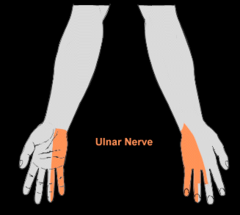
Ulnar nerve dermatome
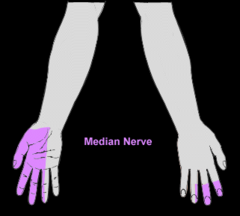
Median nerve dermatome
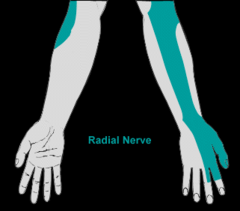
Radial nerve dermatome
Potential causes of radial nerve injury
saturday night palsy
honeymoon palsy
crutch palsy
humeral fracture
entrapment at elbow
elbow fracture
entrapment at wrist
Symptoms of radial nerve injury (axilla)
weakness
tingling and numbness from back of arm to hand
Symptoms of radial nerve injury (spiral groove)
weakening of brachioradialis
interferes with ability to bend wrist back and straighten fingers
Symptoms of radial nerve injury (posterior interosseous nerve)
muscle weakness
inability to extend ones fingers
Purpose/goals of orthotic intervention for radial nerve conditions
position for healing, comfort and function
facilitate extension
Fabrication considerations for orthotic intervention for radial nerve conditions
lack of motor control
posting to assist fabrication
provide "just right" tension
Wearing schedules/functional considerations for orthotic intervention for radial nerve conditions
static for comfort and positioning
dynamic for functioning
Precautions for orthotic intervention for radial nerve conditions
dorsal pressure areas
decreased sensation
client centered wear schedules
Potential causes of ulnar nerve injury
fracture at medial epicondyle
fracture of olecranon process
compression at epicondylar groove
compression at wrist
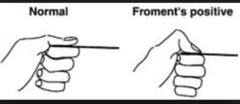
Froment's sign
thumb IP flexion during lateral pinch attempt.