Optics III: Diffraction
 Call Kai
 Learn
Learn Practice Test
 Spaced Repetition
 Match
Match Flashcards
 Knowt Play
1/20

There's no tags or description
Looks like no tags are added yet.
Name | Mastery | Learn | Test | Matching | Spaced | Call with Kai | Chat |
|---|
No analytics yet
Send a link to your students to track their progress
21 Terms
Light passing a horizontal, single slit produces…
Diffraction pattern perpendicular to the slit
Horizontal bands spreading vertically
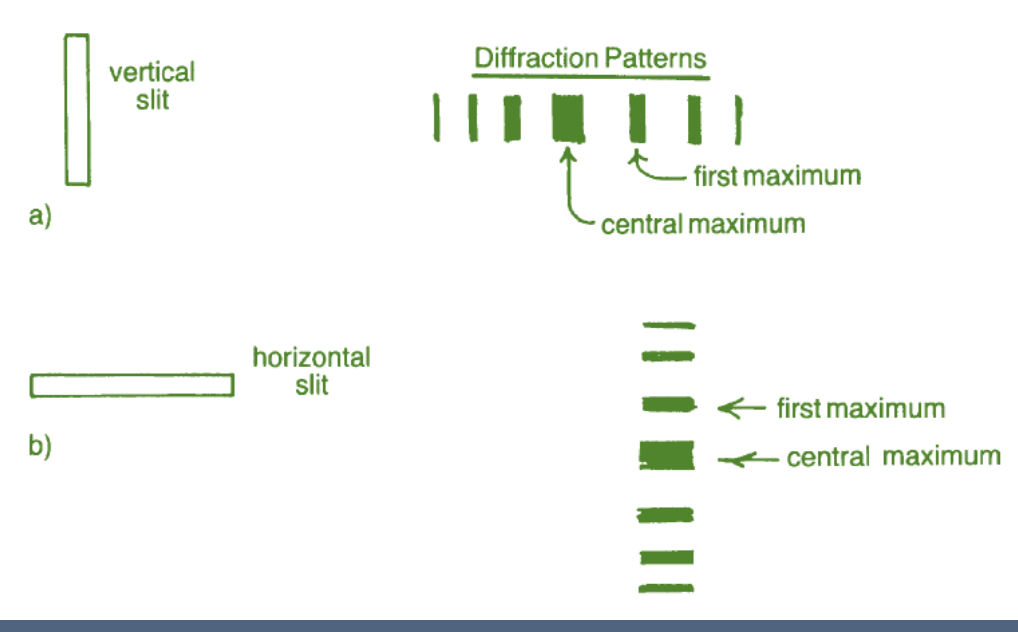
Maximum intensity in the single slit experiment
At the center, the following dark bands are the darkest
Following light/dark bands are less bright/dim
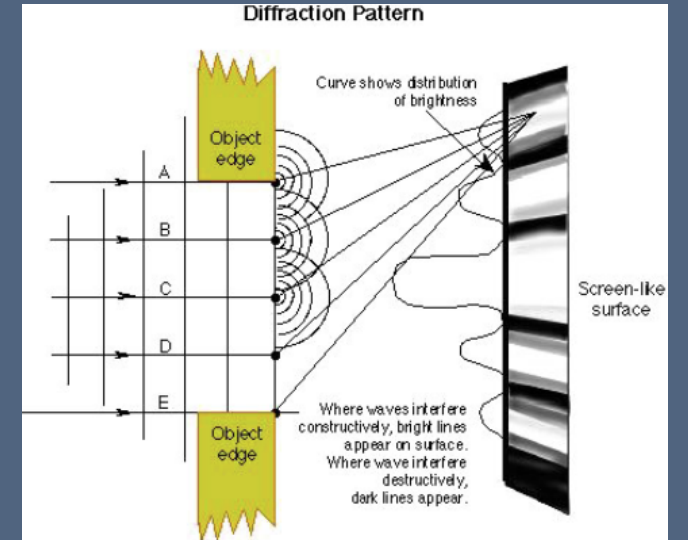
Huygens-Fresnel Principle
Every point on a wavefront is considered a source of spherical diffraction
All points cause interference OR coherence on one another
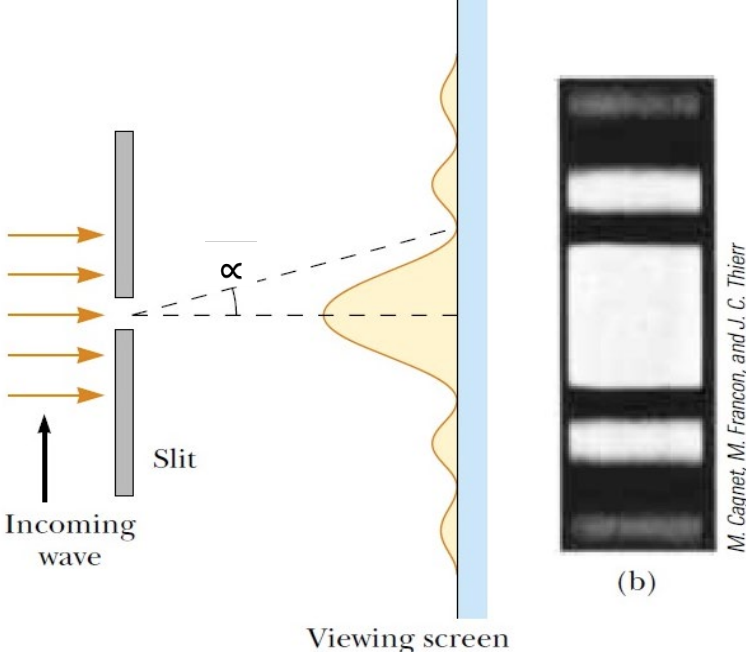
What points make angle α
Points consists of…
Center of the slit
Center of the viewing screen
Point being measured for angle α (Changes depending on where on the pattern you are measuring)
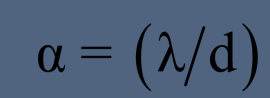
Calculating angular distance of a slit
Angular distance
∝ or θ
Measured from peak of bright center → Center of first dark band
Equation variables
d = width of the slit
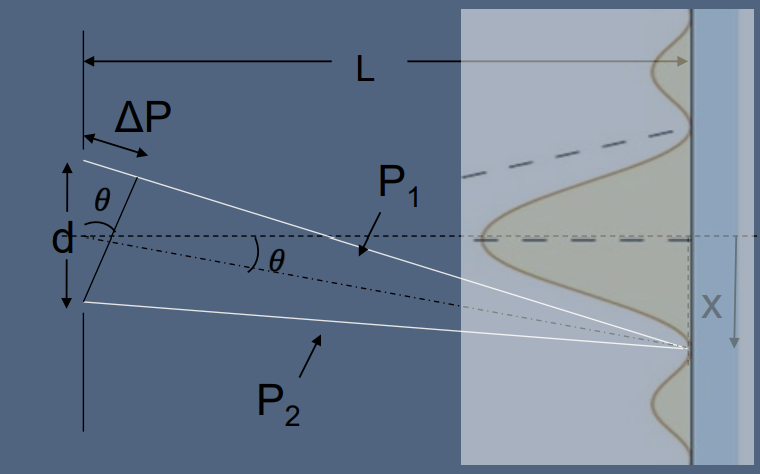
Finding path difference
△P = P1-P2
△P = d * sin * θ
You’re looking at a point X
You wanna find the difference between the hypotenuse of the path travelled to point X from…
Top and bottom of the slit (Picture)
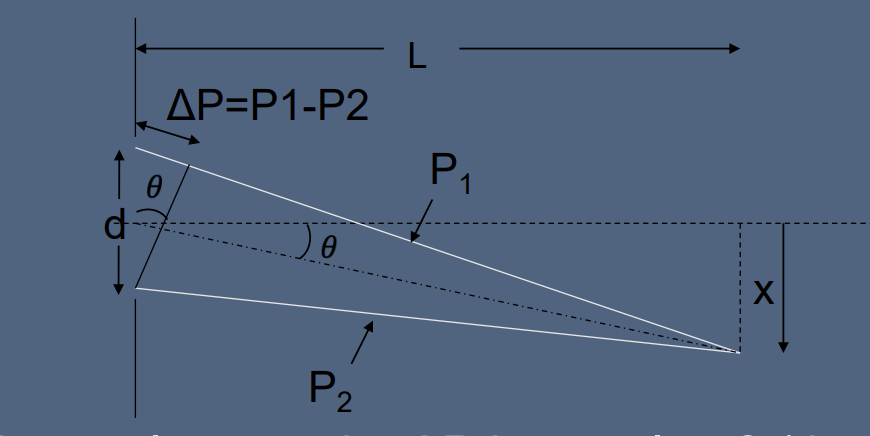
What’s the importance of path difference?
When △P is a multiple of a full wavelength → Destructive interference
→ d * sin(θ) = mλ
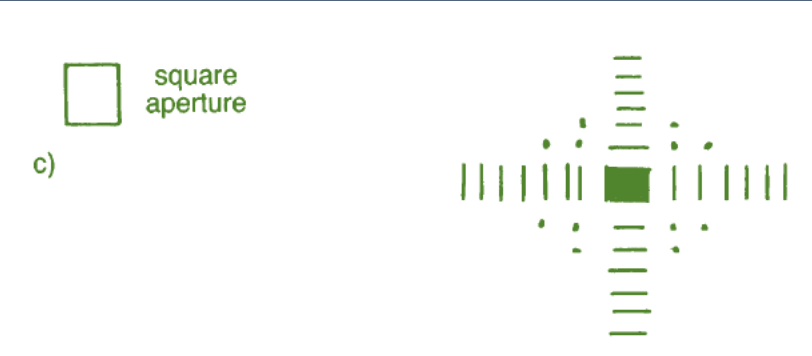
Diffraction pattern of square aperature
Diffraction pattern of circular aperture
Bright, central disc surrounded by dark/bright rings
Airy disk!

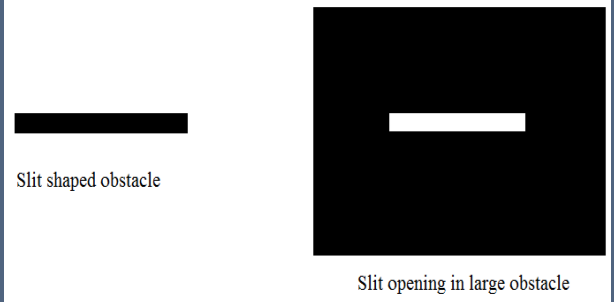
Obstacle vs. Slit diffraction pattern
Called reciprocity
If the slit was instead an obstacle of the same size
Both spread light perpendicular to the slit/obstacle
Horizontal slit → Spreads vertically
Horizontal obstacle → Spreads vertically
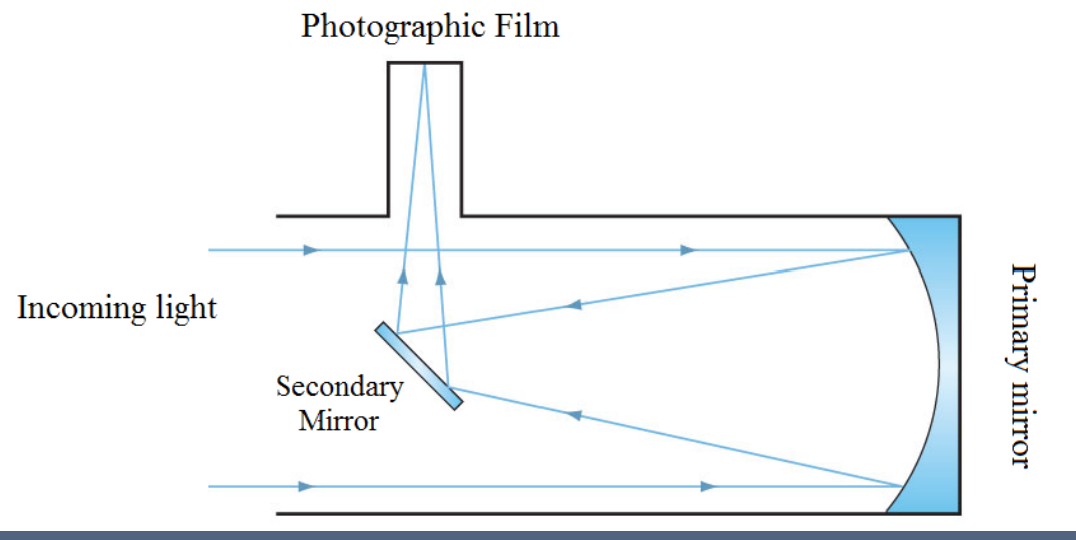
Diffraction of astronomical telescope
Shape
How is it produced
Stars produce a spiky diffraction pattern
Diffraction produced by the secondary mirror
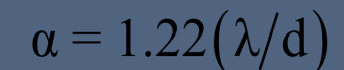
Calculating angular half-diameter (ɑ) of circular aperture
Consists of center → Center of first dark ring
What exactly is an Airy’s disc
Circle with diameter across the first dark ring
Includes entire bright circle and half of first dark ring
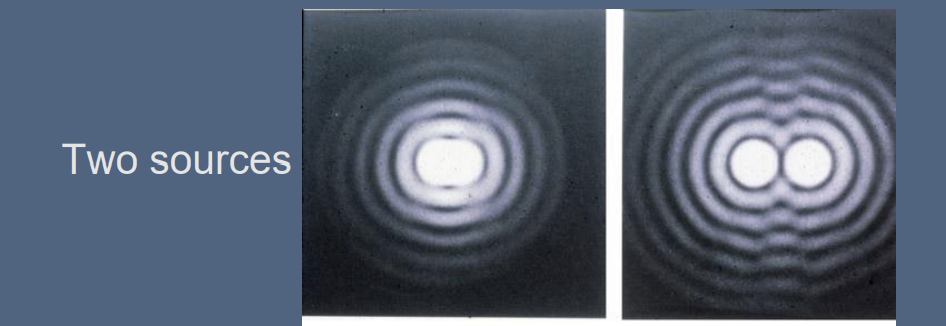
Rayleigh criterion
Two point sources can be resolved as seperate entities if…
Their Airy discs are half-overlapped (Or less)
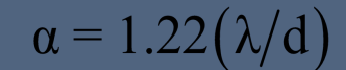
Resolving power of any instrument with circular aperture…
Equal to angle ɑ
Inversely proportional to instrument aperture diameter (d)
Conversion factor degree ↔ radians
57 deg/rad
Conversion factor arc mins ↔ deg
60 arc mins / deg
Conversion arc sec ↔ min
60 sec/min
Explain our eyes limitation to 20/20 vision
Eye resolving power: 1.9×10⁻⁴ rad
20/20 letter: 5 arc min total / 1 arc min for each detail = 2.9×10⁻⁴ rad
Wait, we have plenty of resolving power?? Why not more than 20/20
Foveal cone size: 3×10⁻³ mm BUT distance to lens = 17mm
→ 3×10⁻³ mm / 17mm = 1.7×10⁻⁴
About equal to resolving power of the eye
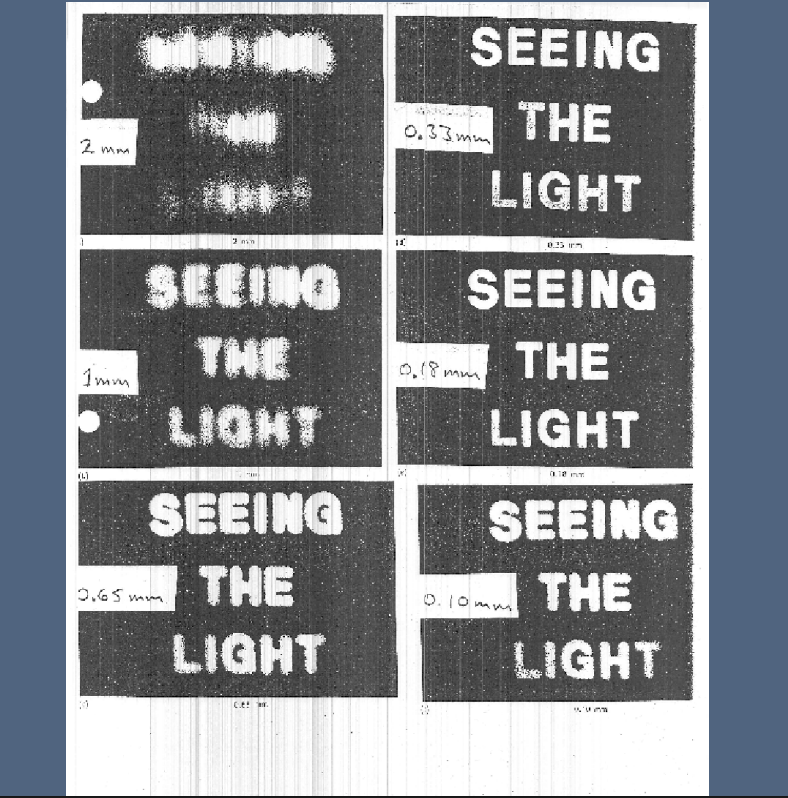
Size of pinhole camera aperture affects on…
Quality
Brightness
Diffraction effects
Smaller the aperture…
Resolution increases
Remember resolving power inversely proportional to aperture diameter
Brightness decreases
Diffraction increases
Diffractive lenses
Front surface → Refractive surface (For distance vision)
Back surface
Grooved
Produces diffraction when tear film fills the grooves
→ Helps with near vision
→ Makes pupil fluctuation obsolete
→ Reduction of contrast