Positioning Related Terms (Planes, Relationship, Movement)
 Call Kai
 Learn
Learn Practice Test
 Spaced Repetition
 Match
Match Flashcards
 Knowt Play
1/31

There's no tags or description
Looks like no tags are added yet.
Name | Mastery | Learn | Test | Matching | Spaced | Call with Kai | Chat |
|---|
No analytics yet
Send a link to your students to track their progress
32 Terms
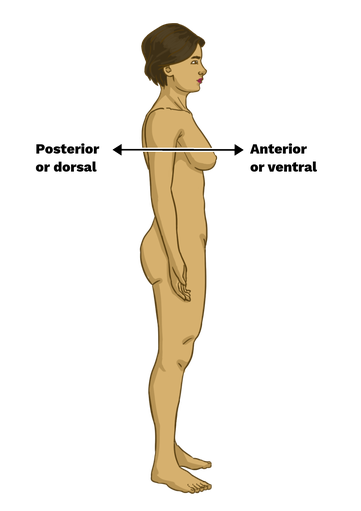
posterior - body surface
also known as?
back part of body
also known as dorsal
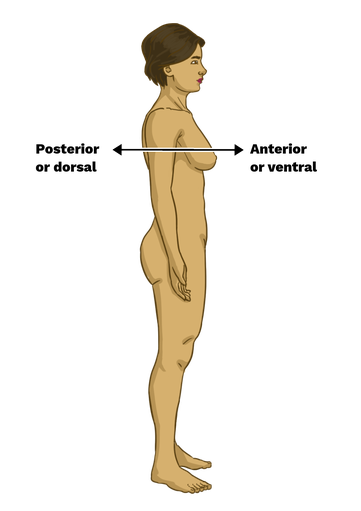
anterior - body surface
also known as?
front part of body
also known as ventral
plantar - body surface
sole/posterior portion of foot
"‘plant’ foot to ground” bottom part of foot
short line
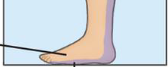
dorsum (dorsal of foot) - body surface
top/anterior surface of foot
dorsum pedis
long line

dorsal (of hand) - body surface
back/posterior hand

palmar - body surface
anterior/ventral, palm of hand

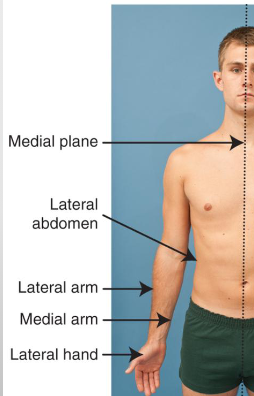
medial vs lateral - relationship terms
medial = inside part, closet to medial aspect
lateral = outside part, away from center
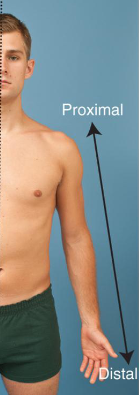
proximal vs distal - relationship terms
proximal = near source
distal = away from source
cephalad vs caudad - relationship terms
cephalad = toward head end of body
caudad = away from head end of body

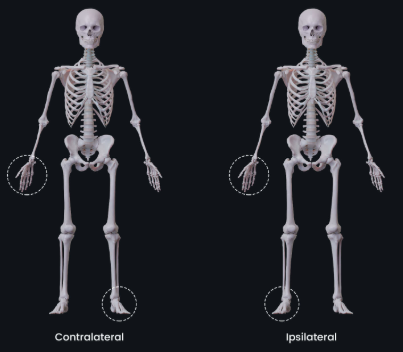
ipsilateral vs contralateral - relationship terms
ipsilateral = on same side of body/part, right pic
contralateral = on opposite side, left pic
internal vs external - relationship terms
internal = inside
external = situated near outside
superficial vs deep - relationship terms
superficial = near skin surface
deep = farther away

lordosis vs kyphosis (scoliosis) - relationship terms
lordosis = right pic, inward curve of spine mostly in lower back/lumbar area (swayback)
kyphosis = middle pic, outward curve of upper back/thoracic area (hunchback)

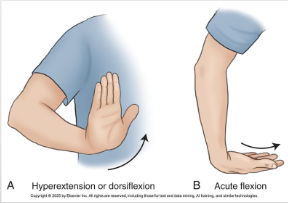
flexion vs extension
(acute flexion vs hyperextension)
flexion = decreases angle of joint (knee, elbow, wrist)
extension = increases angle as body parts moves from a flexed to straightened position
hyperextension = dorsiflexion = extending joint beyond straight/neutral position
acute = bending joint to max/near max capacity, significantly closing angle of joint
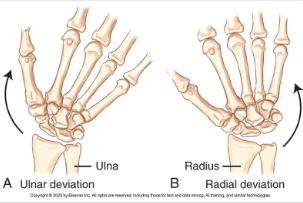
ulnar vs radial deviation
ulnar = turn/bend hand + wrist from natural position toward ulnar side (towards pinky side)
radial = turn/bend hand + wrist toward radial side (towards thumb side)
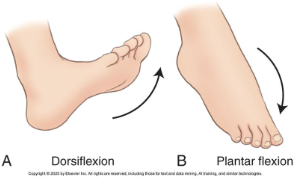
dorsiflexion vs plantar flexion
d = decrease angle bt dorsum + lower leg, moving foot + toes upward
p = extending ankle joint, moving foot + toes downward
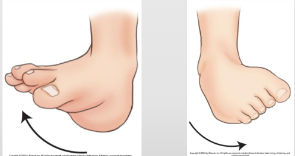
eversion vs inversion
left: eversion (valgus stress) = outward stress movement of foot at ankle joint, toward lateral
right: inversion (varus stress) = inward stress movement, toward medial
(abnormal names)
medial vs lateral rotation
medial = movement toward inside, anterior part inward
lateral = movement toward outside, anterior toward outside

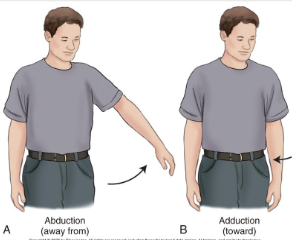
abduction vs adduction
ABduction = lateral movement away from body, “abducted by aliens, taken away”
ADduction = later movement towards body, “add to body”
supination vs pronation
supination = rotational movement of hand into anatomic position, “want soup, palm up”
pronation = rotational movement of hand into opposite anatomic position, palm dowm/back

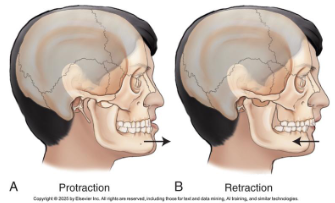
protraction vs retraction
protraction = movement forward from normal position
retraction = movement backward from normal position, being drawn back
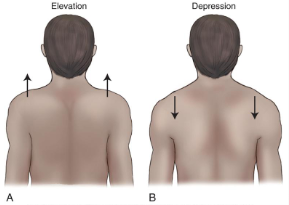
elevation vs depression
elevation = lifting, raising, moving part superiorly
e - shoulders raised, shrugging shoulders
depression = letting down, lowering, moving part inferiorly
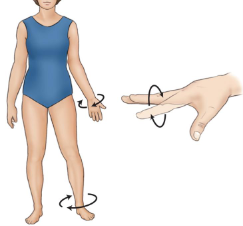
tilt vs rotation
l: rotation = turn/rotate body part on its axis
r: tilt = slanting/tilting movement w respect to long axis

circumduction
move part round in form of circle, only possible w joints that can move in multiple ways (fingers, wrist, arm, leg)
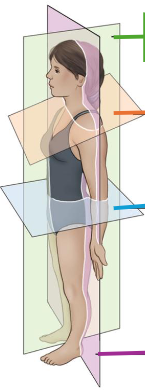
longitudinal planes/sections
sections run lengthwise in direction of long axis of body or any of parts, taken in sagittal, coronal, oblique plane
sagittal plane
split right and left
midsagittal plane = divides left + right evenly/equally
green plane
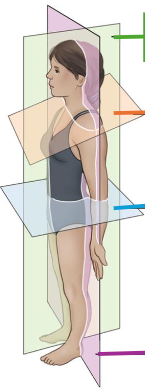
coronal plane
splits anterior and posterior (front and back)
midcoronal plane = divides A/P evenly/equally
purple plane
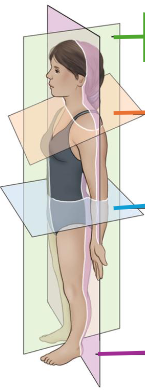
horizontal/axial/transverse/cross section plane
splits superior and inferior (top and bottom)
transverse plane at right angle to longitudinal planes
blue plane

oblique plane
longitudinal/transverse plane that is at angle/slant
not parallel to sagittal, coronal, horizontal plane
orange plane
base plane
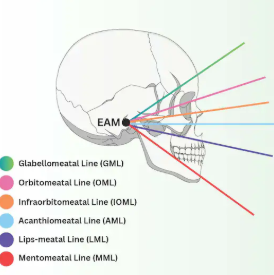
precise transverse plane that connects lines from infraorbital margins to superior margin of external auditory meatus EAM
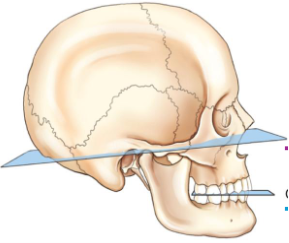
occlusal plane
horizontal plane formed by biting surfaces of upper + lower teeth when jaw is closed
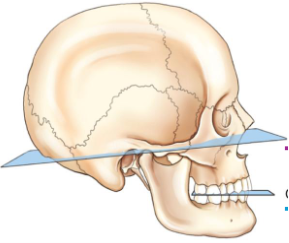
infraorbitomeatal line IOML
entering inferior part of orbitals exiting EAM