Bus- STEEPLE, CBMs, decision trees
 Call Kai
 Learn
Learn Practice Test
 Spaced Repetition
 Match
Match Flashcards
 Knowt Play
1/33

Earn XP
Description and Tags
I did decision trees, CBM, and then STEEPLE -this has everything's, made bf test topics were revealed.
Name | Mastery | Learn | Test | Matching | Spaced | Call with Kai | Chat |
|---|
No analytics yet
Send a link to your students to track their progress
34 Terms
Decision trees
Quantitative decision making tool. Diagrammatic representation of different options that are available to a business.
Use of decision trees
Allows managers to calc the expected value of each decision in order to choose the best.
Rules to construct decision trees diagrams
Constructed from left to right
Decision nodes are square, used when there is a choice or decision to be made
Chance nodes are circle, used when there is a different possible outcome. Usually two or more routes for each chance nodes.
Actual values are stated at the end of each branch.
Rejected decisions are crossed by two parallel lines.
Expected value
average outcome if the decision was made many times over.
Advantage of decision trees
Allow managers to have visually clear and logical manner
All potential options can be seen
Consider risks involved
Enable more scientific & objective decisions to be made
Provide insight to the decision rather than ppls views, intuitions, feelings
Disadvantage of decision trees
Probabilities are only estimates and subject to error
Probabilities may be subject to bias
Technique doesn’t reduce risks
Delays in planning may invalidate data
Qualitative data are looked up on (not considered)
Qualitative factors considered in the making of Decision trees
Location
Employees
Brand
Products
Competitors
Traditional Business models
only concerned about the financial cost of using resources, focus on; producing, selling, using & throwing.
Linear Business model
Do not consider the long term environmental impacts of business activities.
Disposable society
Consumers replace or upgrade products simply because they are not interested in them rather than actual need to change.
Circular business models
Decision making tools that focus on the environmental impacts of business activity. (reuse, reduce, repair, recycle)
Advantages of using circular business models
Offers new commercial opportunities
Contributing to sustainable business growth
Generating new revenue
Transforming organization relationship with customer, supplier, gov etc
Protecting natural environments
Avoiding negative media coverage
Types of Circular Business models
Circular supply models
Resource recovery models
Product life extension models
Sharing models
Product service system models
Circular SUPPLY models DEF
are CBMs that focus on replacing finite natural resources with renewable, recyclable and degradable resources in a sustainable way.
Resource recovery models DEF
CBM that aims to re-use resource outputs by re-processing waste materials into new & usable products
ADVANTAGE
preservation of finite natural resources
minimize damage to the environment
saving landfill space reserved for waste
reducing pollution
Product life extension models
CBM based on business extending the life cycle of their products in order to use finite resources.
ADVANTAGE
longevity
re-usability
repairing
Sharing model
CBM that places emphasis on offering services where customers share products rather than owning such items themselves.
ADVANTAGE
facilitating the sharing of under-used products
reducing the demand for new products
reduces environmental burdens
helps create a more sustainable future
Product service system models
CBM based on the premise that businesses offer the function of a product rather than the physical product itself.
ADVANTAGE
IDK bruv
Green technologies DEF
environmentally friendly innovations that consider the long-term impact on the environment
Advantages of green technologies
improve organization relationship with its key stakeholder
Disadvantage of green technologies
can be expensive
requires companies to give up some of the economic of sales
Tripple bottom line DEF
made to refer to the three pillars of sustainability that businesses need to consider
Give the three triple bottom line
social sustainability
environmental sustainability
profit sustainability
what does STEEPLE stand for and DEF
Social
Technological
Economic
Environmental
Political
Legal
Ethical
Opportunities and threats in the external business environment.
What is STEEPLE analysis
situational tool that is central to formulating business strategy.
Social
Values and attitudes of society towards a wide range of different issues
Technological
New products, processes, cost of change, and advances in technologies.
Economic
State of the economy in which the business operates.
Good: Economic growth, International Trade
Bad: Inflation, Unemployment
Environmental
The ecological and geographic influences outside a businesses control.
Political
The role the government play in business operations -policies.
Legal
The law that affect the way in which businesses operate as well as how customers behave
Ethical
The moral values and beliefs that apply to businesses and how the operate
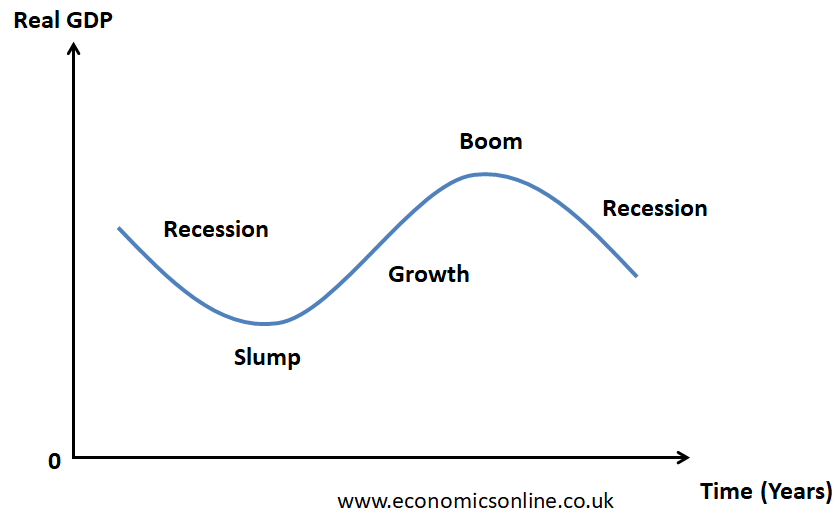
Under Economic in STEEPLE what is a Business cycle
pattern of fluctuations in economic growth
Business cycle diagram