anat and phys exam 1
 Call Kai
 Learn
Learn Practice Test
 Spaced Repetition
 Match
Match Flashcards
 Knowt Play
1/68

There's no tags or description
Looks like no tags are added yet.
Name | Mastery | Learn | Test | Matching | Spaced | Call with Kai | Chat |
|---|
No analytics yet
Send a link to your students to track their progress
69 Terms
anatomy
study of structure
physiology
study of function
anatomy and physiology are…
complementary to one another
inspection
look at appearance
palpation
feeling a structure with the hands
auscultation
listening to sounds produced by the body
percussion
tap on the body, feel for resistance, and listen to the emitted sound for abnormalities
dissection
cutting and separating human body tissues to reveal tissue relationships; use a cadaver, a dead human body
comparative anatomy
study (for example, dissection) of multiple species to learn about form, function, and evolution
exploratory surgery
opening the living body to see what is wrong; now replaced by medical imaging to view inside without surgery
radiology
branch of medicine specializing in imaging
gross anatomy
structures visible with the naked eye
subdivisions of gross anatomy include
surface anatomy, regional anatomy, systemic anatomy, clinical anatomy, developmental anatomy
surface anatomy
exterior features
regional anatomy
body areas
systemic anatomy
organ systems
clinical anatomy
medical specialties (pathological anatomy – changes that occur during illness, radiographic anatomy – structures seen using specialized imaging techniques)
developmental anatomy
from conception to death, includes embryology
Microscopic anatomy
requires the aid of a microscope
Cytology
study of structure and function of cells; fine detail (ultrastructure) may be resolved using an electron microscope
subdivision of microscopic anatomy
Histology
examination of tissues with microscope
Histopathology
microscopic examination of tissues for signs of disease
Neurophysiology
physiology of nervous system
Endocrinology
physiology of hormones
Systemic physiology
functions of an organ system
Pathophysiology
mechanisms of disease
Comparative physiology
Study of different species to learn about body functions
Basis for much of our understanding of human physiology and the development of new drugs and medical procedures
organism composed of (highest hierarchy)
organ systems
organ systems composed of
organs
organs composed of
tissues
tissues composed of
cells
cells composed partly of
organelles
organelles composed of
molecules
molecules composed of (lowest hierarchy)
atoms
organism
a single, complete individual
organ system
group of organs with a unique collective function; for example: circulation, respiration, digestion
Organ
structure composed of two or more tissue types that work together to carry out a function
An organ has defined anatomical boundaries; can have organs within organs (i.e. skin is the body’s largest organ, contains hairs, nails, glands, etc., which are each considered organs
Note: organs can belong to more than one organ system – the pancreas belongs to both system
Tissue
similar cells and cell products forming a discrete region of an organ and performs a specific function
Cell
smallest unit to carry out all basic functions of life
Organelle
structure within a cell that carry out a function
Molecule
particle composed of two or more atoms
Largest molecules (proteins, fats, DNA) are called macromolecules
Atom
smallest particle with unique chemical identity
no human exactly alike
diff fingerprints
some lack certain muscles
diff number of vertebra
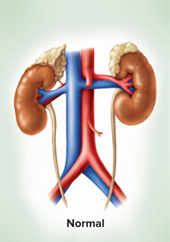
situs inversus (left-right reversal)
images are in the patient’s pov, flip right and left sides.
ex) patient’s right kidney is on the left to my pov
Reference male
22 years old, 154 lb, light physical activity, consumes 2,800 kcal/day
1kcal = 1 cal
Reference female
22 years old, 128 lb, light physical activity, consumes 2,000 kcal/day
physiology is more variable than anatomy
Variations in sex, age, diet, weight, physical activity, genetics and environment
Failure to consider variation can lead to overmedication of the elderly or medicating females on the basis of research done on males
Homeostasis
ability to detect change, activate mechanisms that oppose it, and thereby maintain relatively stable internal conditions
Claude Bernard
noted fairly constant internal conditions despite changing external conditions (for example, internal temperature stays fairly constant at 97-99°F or 36 37°C - internal conditions fluctuate within a limited range)
Walter Cannon
coined the term homeostasis
Negative feedback
allows for dynamic equilibrium within a limited range around a set point
The body senses a change and “negates” or reverses it
Loss of homeostatic control causes
illness or death
feedback loops
feedback mechanisms alter the original changes that triggered them
homeostasis in body temperature (97-99°F)
If too warm (> 97-99°F), skin blood vessels dilate (vasodilation) and sweating begins (heat-losing mechanism)
If too cold (< 97-99°F), skin blood vessels constrict (vasoconstriction) and shivering begins (heat-gaining mechanism)
homeostasis of blood pressure (baroreflex)
Rise from bed, blood drains from head and blood pressure falls in this region
2. Blood pressure drop detected by baroreceptors that transmit signals to cardiac center of brainstem
Cardiac center transmits signals to heart to increase heart rate, raising blood pressure and restoring homeostasis
The raise in blood pressure is detected by the baroreceptors which then stops sending signals to the cardiac center to increase heart rate
baroreflex components of a feedback loop
receptor, integrating (control) center, effector
Receptor
structure that senses change in the body (for example, the baroreceptors above heart that monitor blood pressure)
thermometer
Integrating (control) center
control center that processes the sensory information, “makes a decision,” and directs the response (for example, cardiac center of the brainstem)
Effector
cell or organ that carries out the final corrective action to restore homeostasis (for example, the heart)
Positive feedback is a self-amplifying cycle
Leads to a greater change in the same direction, as opposed to the corrective action of negative feedback
Normal way of producing rapid changes
Examples: childbirth, blood clotting, protein digestion, and generation of nerve signals
Dangerous positive feedback system
vicious circle of runaway fever. Infection causes fever to raise body temperature. This can increase metabolism in cells, which then generate even more heat and raise the temperature even more, which then increases the metabolic rate in cells even more which then generates even more heat… causing a positive feedback loop
positive feedback in childbirth
head of fetus pushes against cervix
nerve impulses from cervix transmitted to brain
brain stimulates pituitary gland to secrete oxytocin
oxytocin stimulates uterine contractions and pushes fetus toward cervix
Gradient
difference in chemical concentration, charge, temperature, or pressure between two points
Matter and energy tend to flow down gradients
Blood flows down a
pressure gradient, from a place of higher pressure to a place of lower pressure
Chemicals flow down a
concentration gradient
Charged particles flow down an
electrical gradient
Electrochemical gradient
combination of concentration, electrical gradients
Heat flows down a
thermal gradient
Movement in the opposite direction is
up the gradient and requires spending metabolic energy