Bio exam 1
 Call Kai
 Learn
Learn Practice Test
 Spaced Repetition
 Match
Match Flashcards
 Knowt Play
1/207

There's no tags or description
Looks like no tags are added yet.
Name | Mastery | Learn | Test | Matching | Spaced | Call with Kai | Chat |
|---|
No analytics yet
Send a link to your students to track their progress
208 Terms
Valence Electrons
Electrons located in the outermost shell of an atom that determine its chemical reactivity.
glycogen role in regulating blood glucose
glycogen stores excess glucose, mainly in the liver and skeletal muscles. When blood glucose levels are high, the liver converts glucose into glycogen for storage. When blood glucose levels drop, the liver breaks down glycogen and releases glucose into the bloodstream, helping maintain normal blood glucose levels.
ester bonds
Covalent bonds between an alcohol and a carboxylic acid. The bonds that form/break during dehydration synthesis/hydrolysis of lipids and nucelic acids.
glucose
enzyme: Amylase + Starch =
glucose + galactose
Enzyme: lactase + lactose =
create cellular energy
principle role for sugar in living things
weak acid vs strong acid
Weak acids partially dissociate in solution, while strong acids fully dissociate into their ions. This distinction affects their pH, reactivity, and buffering capacity.
buffering capacity
the ability of a solution to resist changes in pH upon the addition of an acid or base.
dissociation
The process where a compound or molecule breaks apart into smaller pieces, such as ions, usually when dissolved in water.
carboxyl
functional group most commonly found in lipids
C-H
Bonds between which two elements are most commonly found in lipids
Protons
Positively charged subatomic particles located within the nucleus of an atom.

Atomic Number
The number of protons in an atom's nucleus, which identifies the element.
Electronegativity
An atom's ability to attract shared electrons toward itself.

Ionic Bond
A chemical bond formed by the electrostatic attraction between oppositely charged ions created through the complete transfer of electrons.
Polar Covalent Bond
A covalent bond where electrons are shared unequally between atoms due to a significant difference in electronegativity, creating partial positive (δ+) and partial negative (δ−) charges.
Nonpolar Covalent Bond
A covalent bond where electrons are shared equally between atoms because they have similar electronegativities (ΔEN≈0 to 0.5).

Polar Molecule
A molecule with an uneven distribution of electron density, resulting in partial positive (δ+) and partial negative (δ−) charges on opposite ends.
Cohesion
The property of water molecules sticking to other water molecules via hydrogen bonding, creating surface tension.
Adhesion
The property of water molecules sticking to other polar or charged surfaces, aiding in capillary action. Prevents backward flow.
High Specific Heat
The property of water that enables it to resist rapid changes in temperature by absorbing or releasing large amounts of heat energy.
Hydrophilic
Describing polar or charged substances that interact favorably with water and readily dissolve in it.
Hydrophobic
Describing nonpolar substances that do not interact favorably with water and do not dissolve in it.

pH Scale
A logarithmic scale ranging from 0 to 14 that measures the concentration of hydrogen ions (H+) in a solution, where values below 7 are acidic and above 7 are basic.
Functional Group
A specific group of atoms within a molecule that determines characteristic chemical properties and reactivity.

Hydroxyl Group
A polar functional group consisting of a hydrogen atom bonded to an oxygen atom (−OH), characteristic of alcohols.

Carboxyl Group
An acidic functional group consisting of a carbon atom double-bonded to an oxygen atom and single-bonded to a hydroxyl group (−COOH).

Amino Group
A basic functional group consisting of a nitrogen atom attached to two hydrogen atoms (−NH2), which can accept a proton (H+).

Sulfhydryl Group
A functional group consisting of a sulfur atom bonded to a hydrogen atom (−SH), which can form covalent cross-linking bonds to stabilize protein structure.

Methyl Group
A nonpolar functional group consisting of a carbon atom bonded to three hydrogen atoms (−CH3).

Phosphate Group
A functional group containing a central phosphorus atom bonded to four oxygen atoms, which contributes negative charge and can react with water to release energy.

Monomer
The single, repeating small molecular unit that serves as the building block of a polymer.
Polymer
A large molecule composed of many repeating monomer subunits covalently bound together.

Dehydration Synthesis
A chemical reaction that joins monomers together into polymers by releasing a water molecule (H2O).
Hydrolysis
A chemical reaction that breaks covalent bonds in polymers to yield monomers by adding a water molecule (H2O).
Monosaccharide
The single sugar monomer unit of carbohydrates, usually forming a ring structure with a basic empirical formula ratio of 1:2:1 (CH2O).
Glycosidic Bond
The covalent bond that connects monosaccharides together to form disaccharides and polysaccharides.
Starch
An energy-storage polysaccharide stored in plant roots and seeds, composed of glucose monomers linked by digestible α-1,4 glycosidic bonds.
Cellulose
A rigid structural polysaccharide structural in plant cell walls, composed of glucose monomers linked by indigestible β-1,4 glycosidic bonds.
Glycogen
A highly branched energy-storage polysaccharide found in animal liver and muscle tissue that plays a vital role in blood glucose regulation.
Chitin
A structural polysaccharide containing nitrogen, found in the exoskeletons of arthropods.

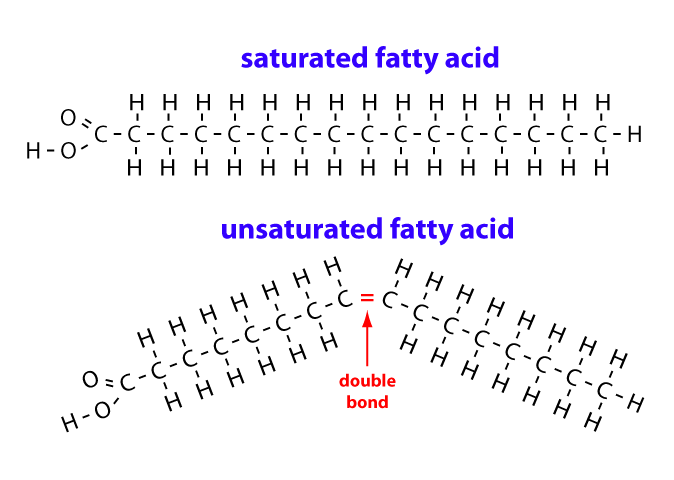
Saturated Fatty Acid
A fatty acid chain containing only single carbon-carbon bonds, solid at room temperature with a higher melting point. Longer hydrocarbon chains. Packer tighter —> less movement —> less fluidity
Unsaturated Fatty Acid
A fatty acid chain containing one or more double carbon-carbon bonds, liquid at room temperature with a lower melting point. shorter hydrocarbon chains. packed more loosley —> more movement —-> more fluidity
Amphipathic
Describing a molecule that possesses both hydrophilic (polar) and hydrophobic (nonpolar) regions.

Triglyceride
A lipid polymer composed of three fatty acid chains attached to a single glycerol backbone via ester bonds.

Phospholipid
An amphipathic lipid consisting of a hydrophilic phosphate head and two hydrophobic fatty acid tails, forming the bilayer /core structure of cell membranes.

Steroid
A class of lipids characterized by a carbon skeleton composed of four fused hydrocarbon rings.

Amino Acid
The monomer unit of proteins, consisting of a central α-carbon bound to an amino group, a carboxyl group, a hydrogen atom, and a variable R group.
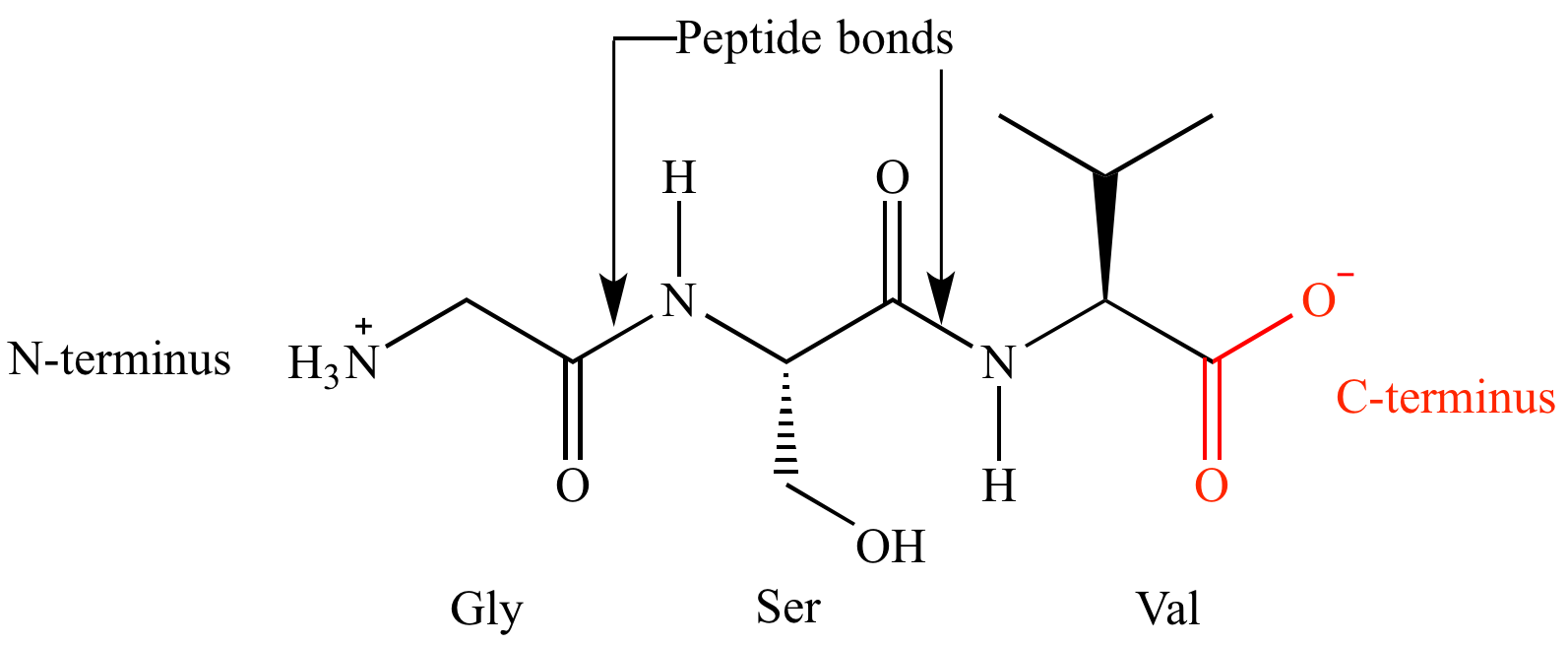
Peptide Bond
The covalent bond formed by dehydration synthesis linking the amino group of one amino acid to the carboxyl group of another.
Protein Primary Structure
The unique linear sequence of amino acids in a polypeptide chain. Determines 3D structure.

Secondary Structure
Local structural folding of a polypeptide backbone, such as an α-helix or β-sheet, stabilized by hydrogen bonds.
Tertiary Structure
The overall three-dimensional shape of a single polypeptide chain formed by interactions among side chain R groups.
Quaternary Structure
The protein structure resulting from the combination and interaction of two or more polypeptide subunits.
Denaturation
The loss of a protein's native three-dimensional shape and functional ability caused by factors like extreme temperature or changes in pH.
Hypothesis
A proposed, testable explanation for an observation that makes a prediction that can be tested through an experiment.
monosaccharide
carbohydrate monomer
polysaccharide
carbohydrate polymers
fatty acid
lipid monomer
amino acid
protein monomers
polypeptide (less than 50 amino acids), proteins (more than 50 amino acids)
protein polymers
nucleotides
nucleic acid monomer
DNA, RNA
nucleic acid polymers
Starch
A polysaccharide found in plants for carbohydrate storage. Made up of amylose and amylopectin.
Amylose
A linear polymer of glucose units that forms part of starch, it is soluble in water and contributes to the energy storage in plants.
Amylopectin
A highly branched polysaccharide that, along with amylose, makes up starch. It serves as a major energy storage component in plants.
Amide group
A functional group containing a carbonyl carbon attached to a nitrogen atom. -C(= O)NH-. Properties: Polar, Hydrophilic. Commonly found in proteins
carbon
Life’s chemical backbond. Forms 4 covalent bonds. Bonds with itself, nitrogen, oxygen, hydrogen, and Sulfur.
Sulfhydryl group
-SH. Properties: Polar, forms S-S disulfide bonds. Commonly found in: The amino acid cysteine, proteins
Methyl group
A very stable chemical group made up of one carbon atom bonded to three hydrogen atoms. CH₃. Properties: nonpolar. Commonly found in amino acids, proteins, and nucleic acids.
Carbonyl group
Functional group consisting of a carbon atom double-bonded to an oxygen atom (C=O). Properties: Polar, hydrophilic. Commonly found in carbohydrates and proteins.
ATP
Cell’s battery
carbon, oxygen, hydrogen, nitrogen
four major elements that make up the human body
functions of protein
Regulatory functions (control processes, e.g., hormones), Structural functions (support e.g., collagen), Defense (antibodies), Transport (hemoglobin), Movement (actin and myosin), Enzymes (catalyst for reactions), Metabolism (control biochemical pathways.
Carboxyl group
Polar, negatively charged at the pH of a cell, can donate a proton —> behaves as an acid, hydrophilic. Commonly found in fatty acids, amino acids, protiens.
amino group
Polar, positively charged at the pH of a cell, can accept a proton —> behaves as a base, hydrophilic. Commonly found in amino acids, proteins.
enzymes
Biological catalysts that speed up chemical reactions in cells by lowering activation energy, facilitating metabolic processes.
< 0.4
nonpolar covalent
between 0.4 and 1.8
polar covalent
>1.8
ionic
unsaturated fat
usually liquid at room temp. lower melting point. Packed looser, more movement. Ex: oil
saturated fat
solid at room temperature. High melting point. Packed tighly, less movement.
monounsaturated
unsaturated fatty acid characterized by 1 double bond in carbon chain
polyunsaturated
unsaturated fatty acid characterized by 2 (or more) double bonds in carbon chain
atom structure

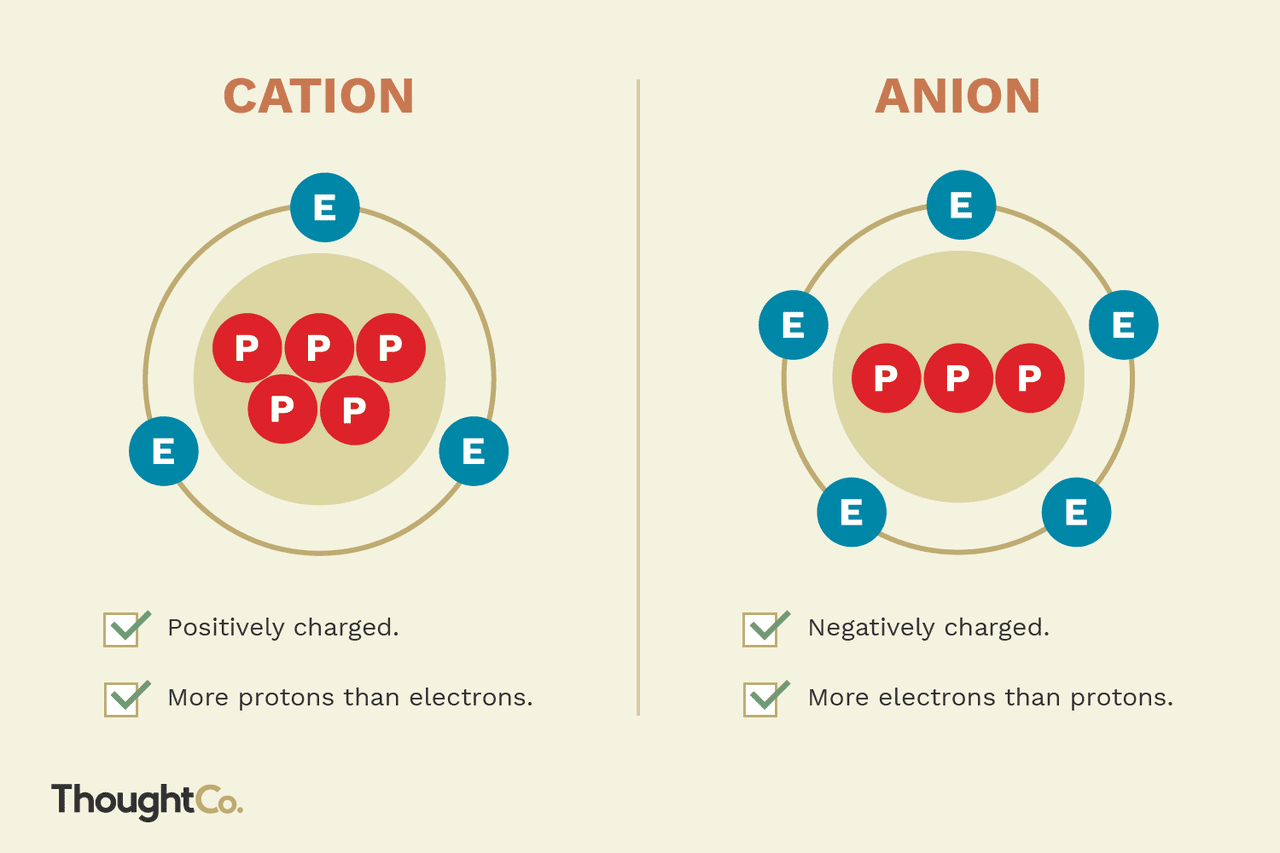
cation vs anion
Hydroxyl Group

phosphate group

Monomer vs. Polymer

Dehydration Synthesis vs Hydrolysis

Glucose vs. Fructose

Monosaccharide

Disaccharide

Polysaccharide

Saturated Fatty Acid vs. Unsaturated Fatty Acid
Phospholipid Bilayer
creates a barrier

Cholesterol

Peptide bond

N Terminus

C Termius
Protein Structures
sturtcure determines function
