L4 Transition Metal Complexes of Higher and Cyclic Alkenes
 Call Kai
 Learn
Learn Practice Test
 Spaced Repetition
 Match
Match Flashcards
 Knowt Play
1/23

There's no tags or description
Looks like no tags are added yet.
Name | Mastery | Learn | Test | Matching | Spaced | Call with Kai | Chat |
|---|
No analytics yet
Send a link to your students to track their progress
24 Terms
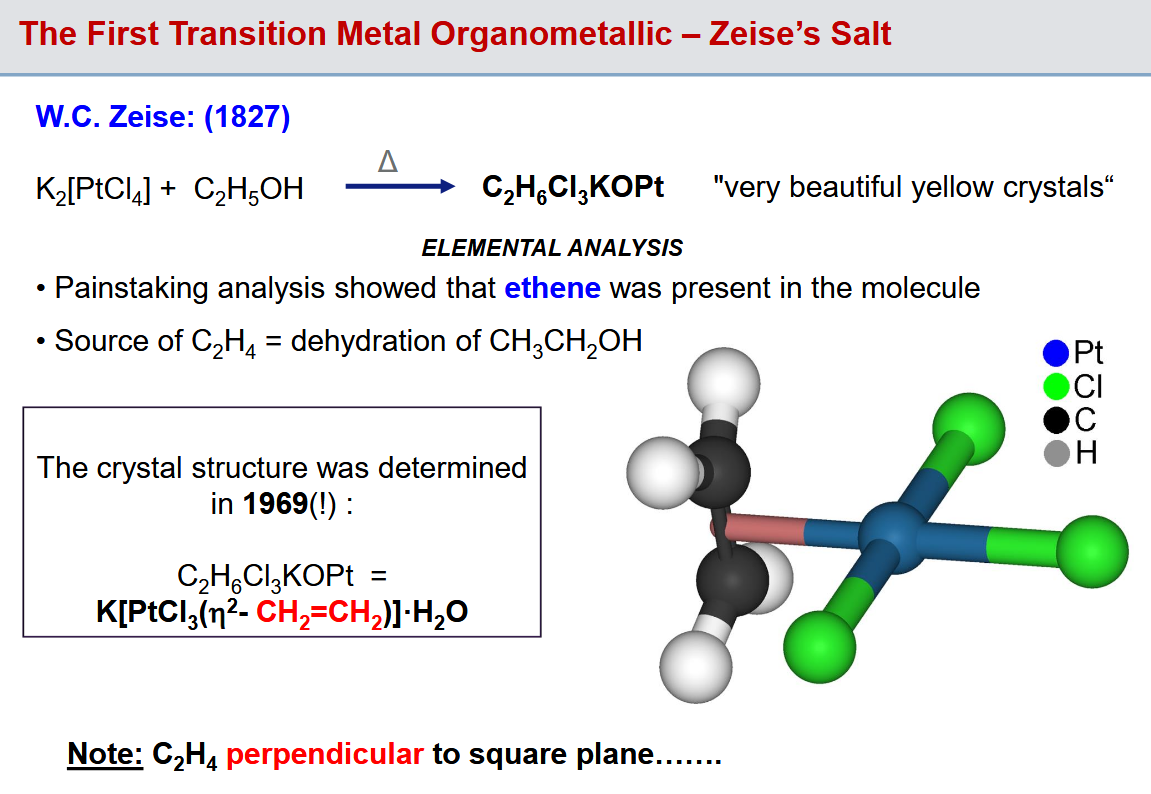
Zeise’s salt - the first organometallic transition metal complex
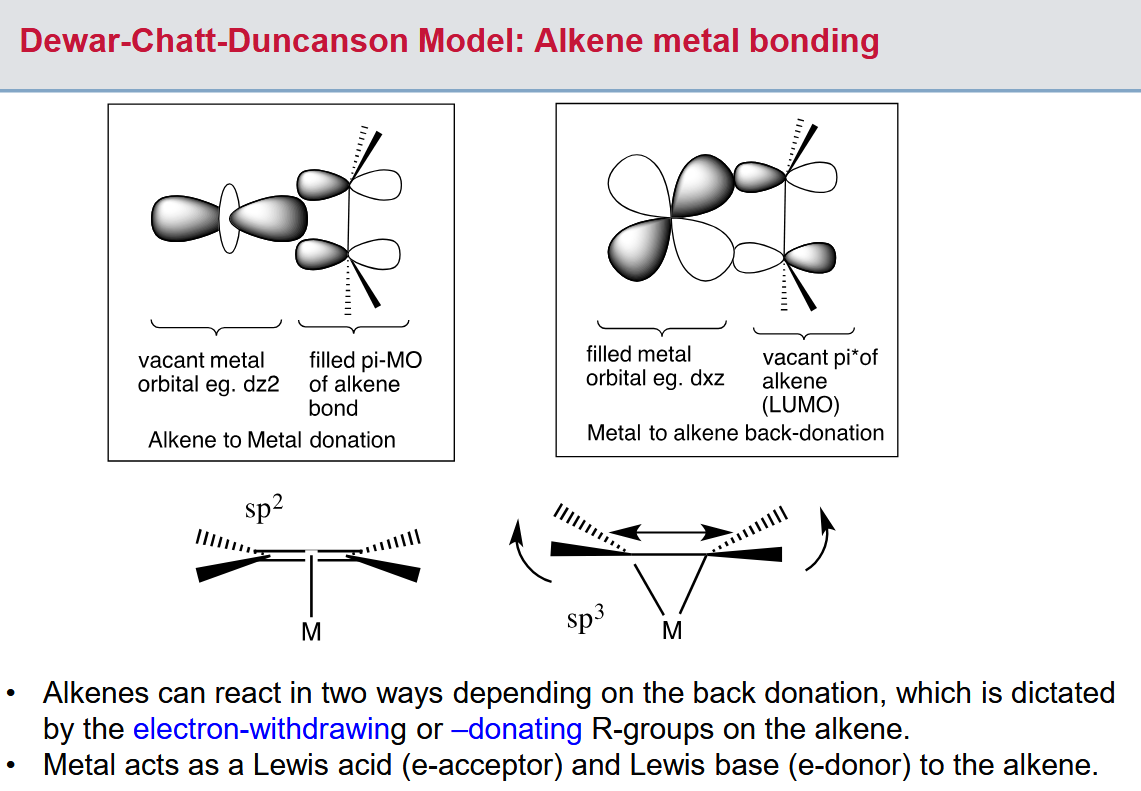
Dewar-Chatt-Duncanson Model: Alkene metal bonding
(2 ways)
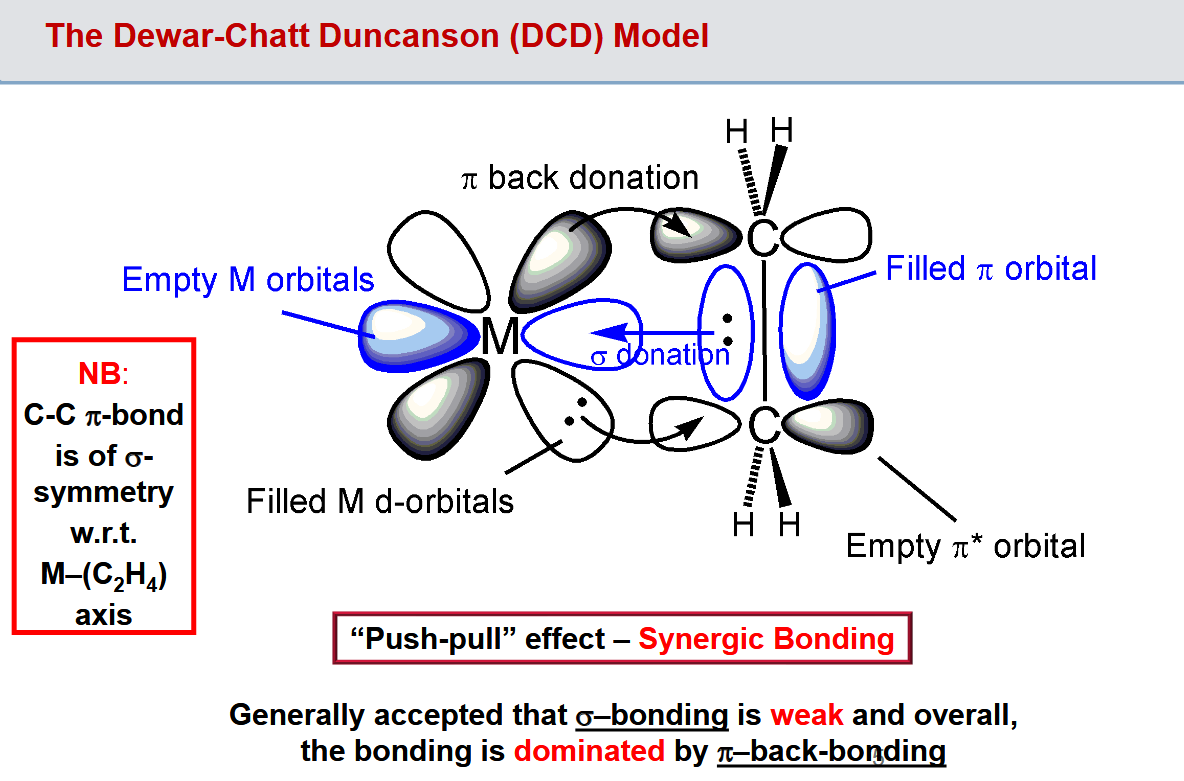
The DCD model - which interaction is the dominant bonding effect
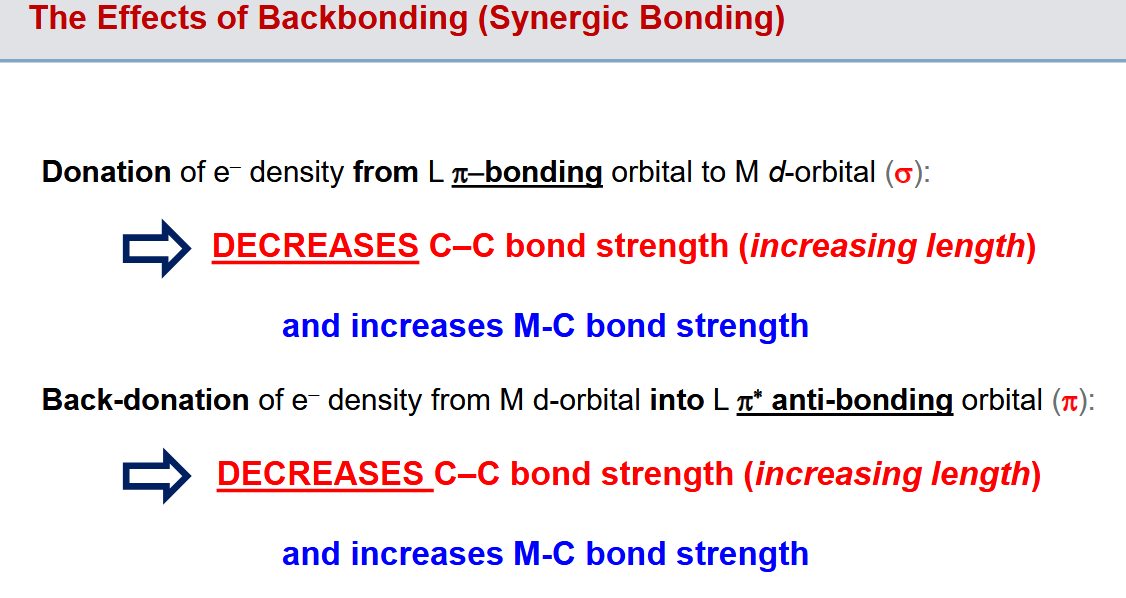
The effects of backbonding in bond strength
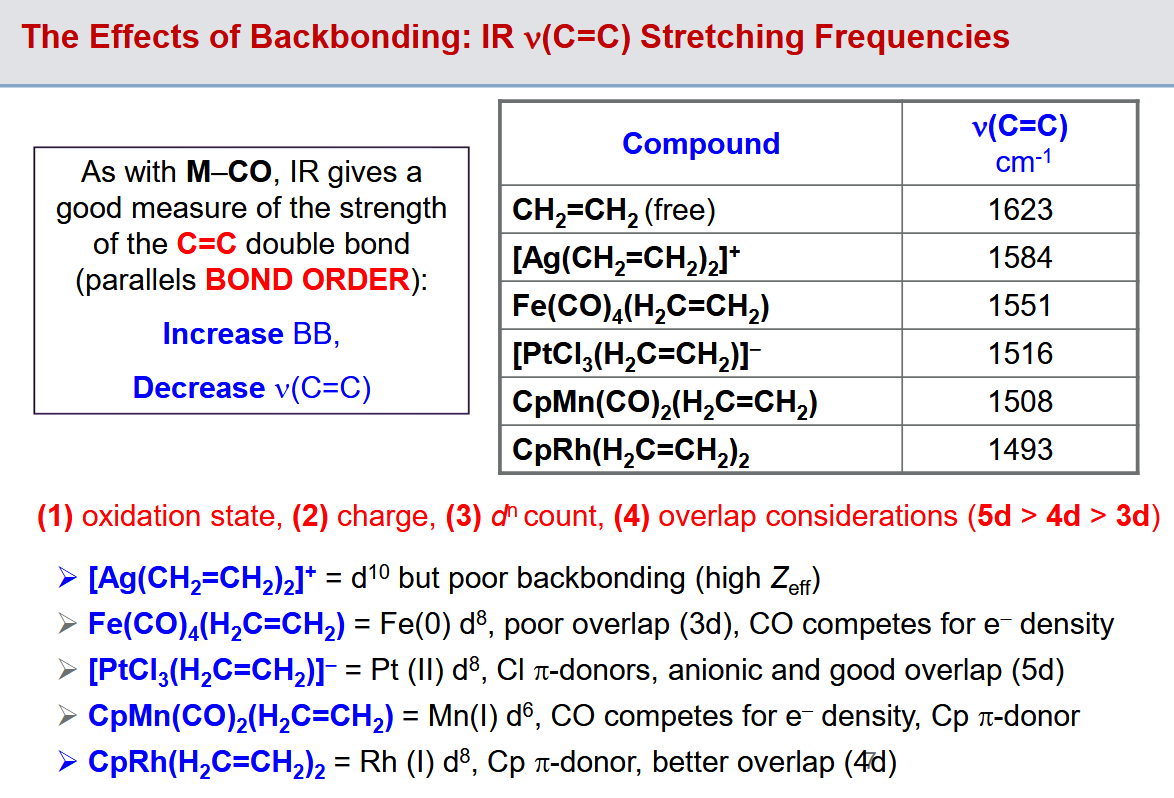
Effect of backbonding on IR (C=C) bond stretching frequency
Increased backbonding weakens the C=C bond so the frequency drops
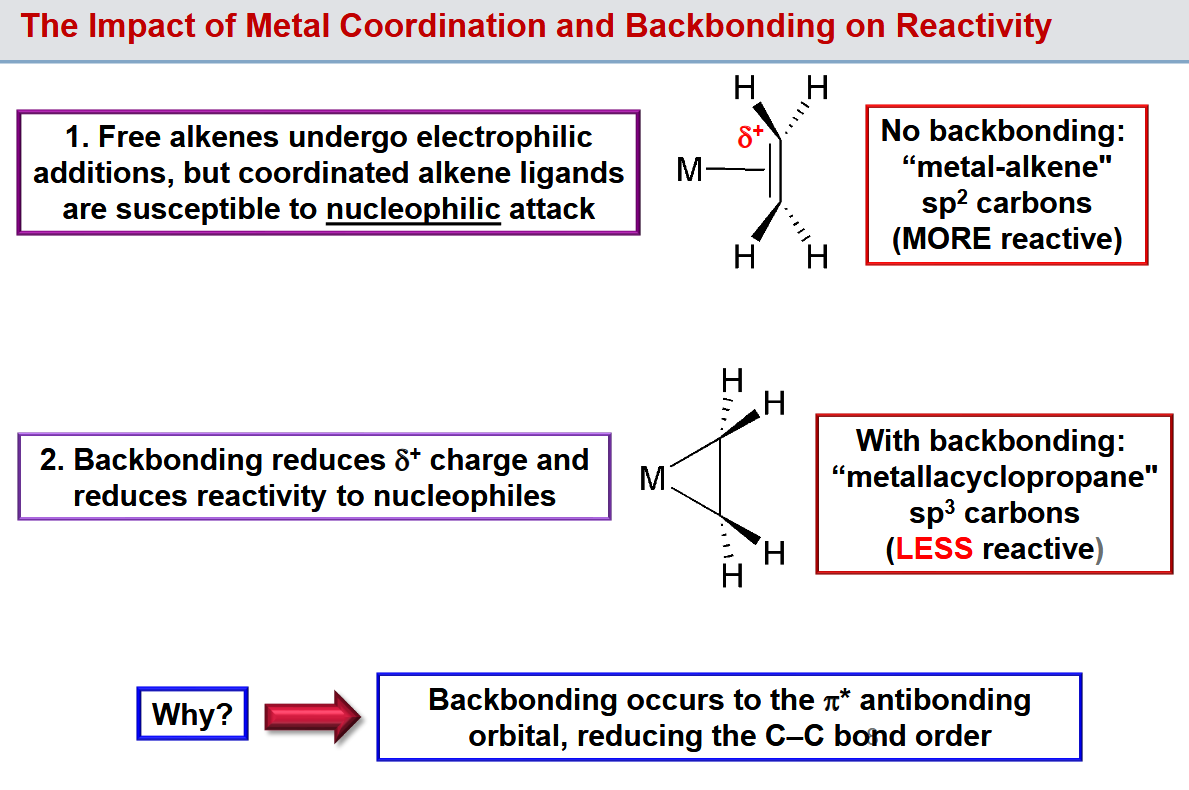
How does degree of backbonding affect reactivity
More backbonding drops the reactivity as you lose (some of) the double bond character in the alkene
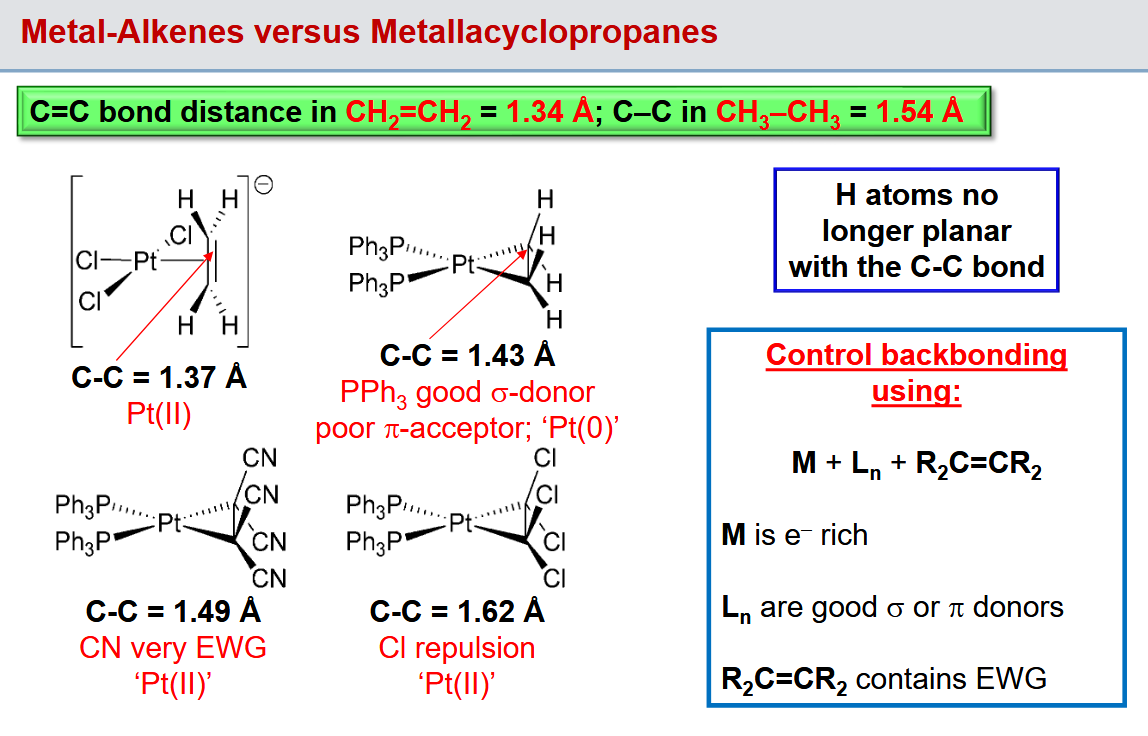
Metal-alkenes vs metallacyclopropanes
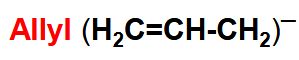
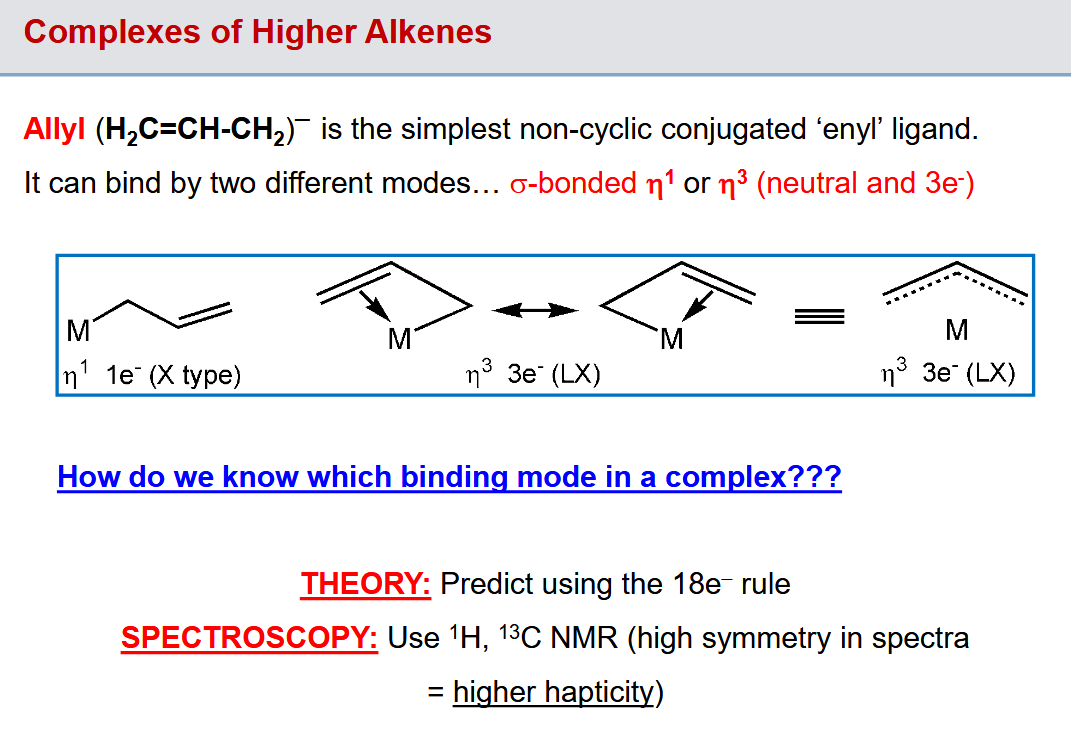
Complexes with allyl ligands - binding modes
can either just bind as an X ligand or include the double bond to become LX
(note after eta 3, not neutral but -ve)
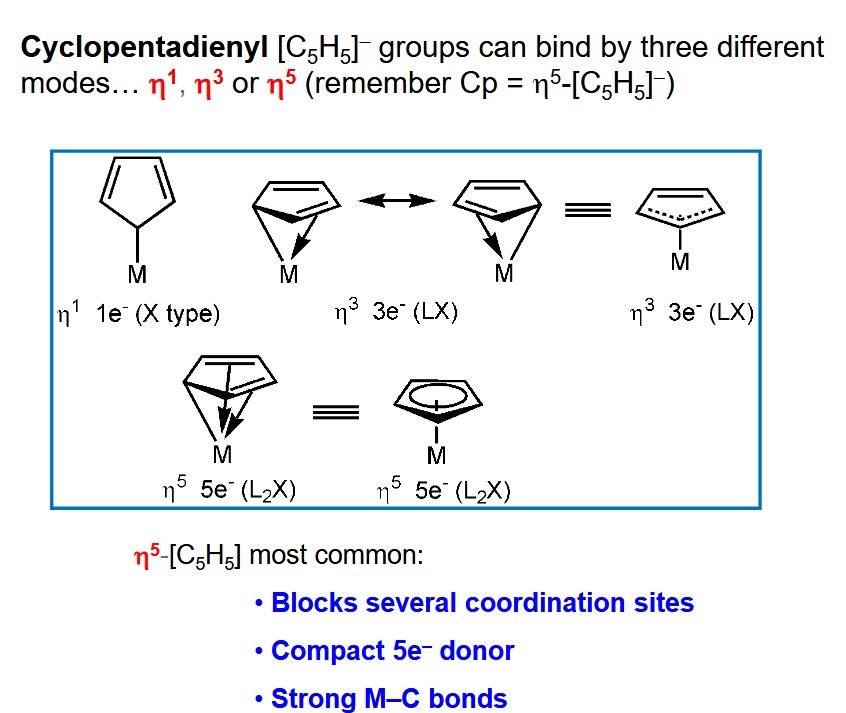
Cyclopentadienyl ligand binding modes
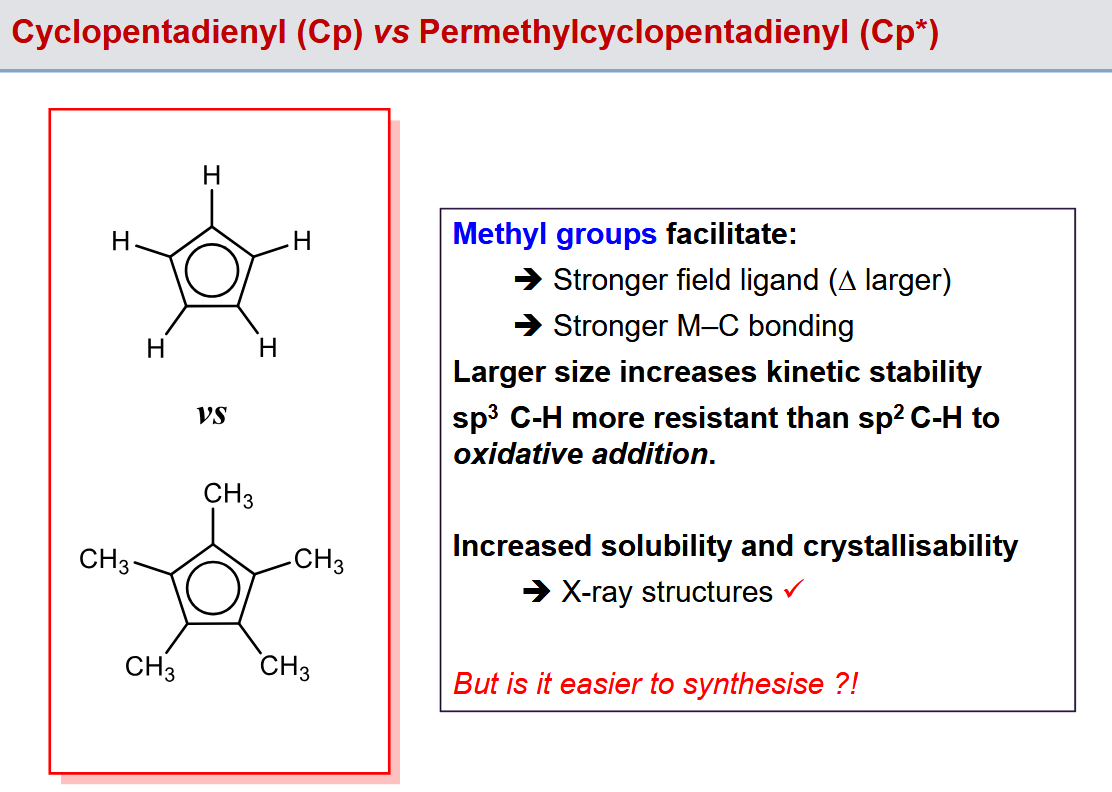
What is the Cp* and how does it affect the complex
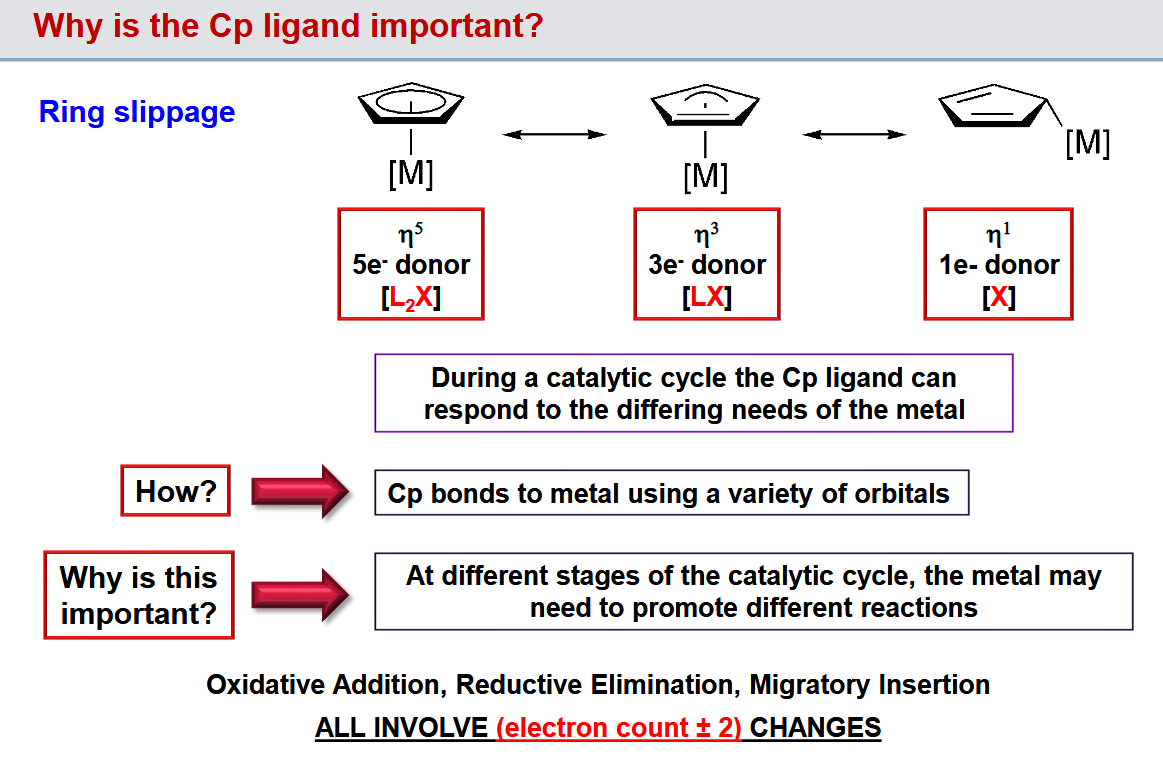
Ring slippage - importance of the cyclopentadienyl ligand in catalysis
Note how each of the changes is a 2e- change
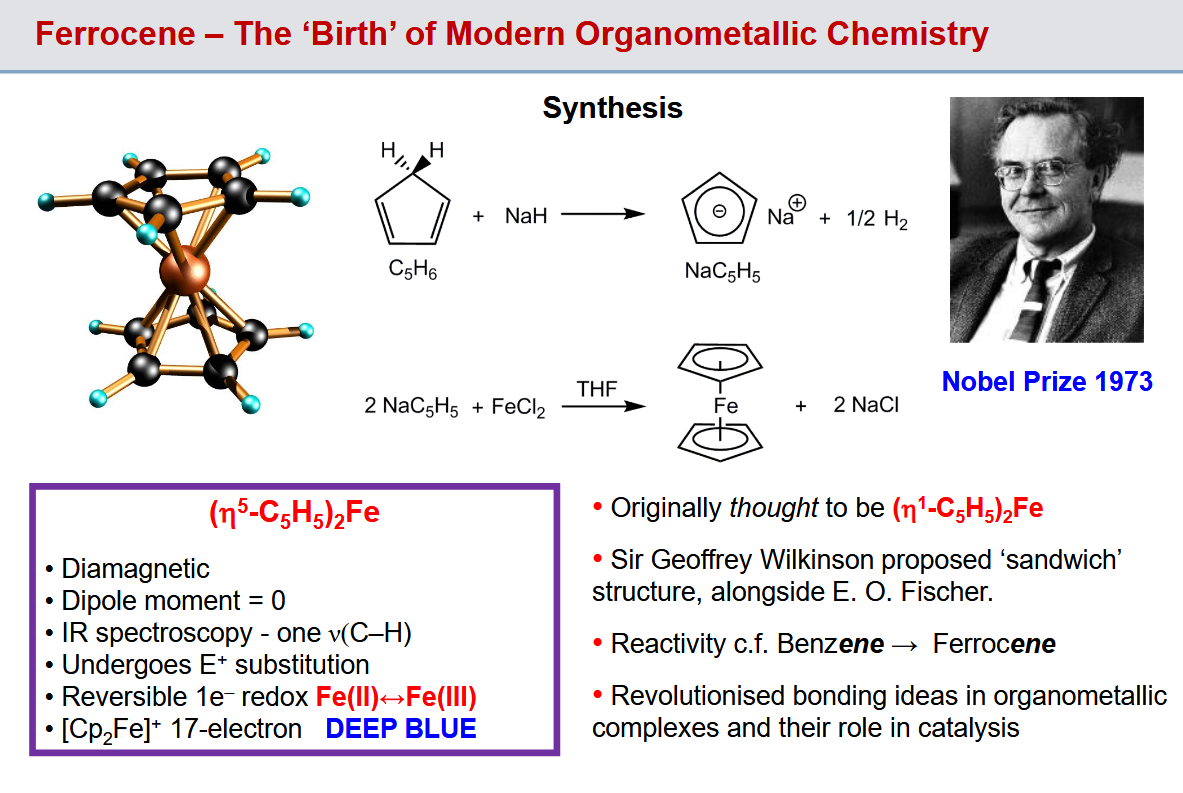
Ferrocene overview
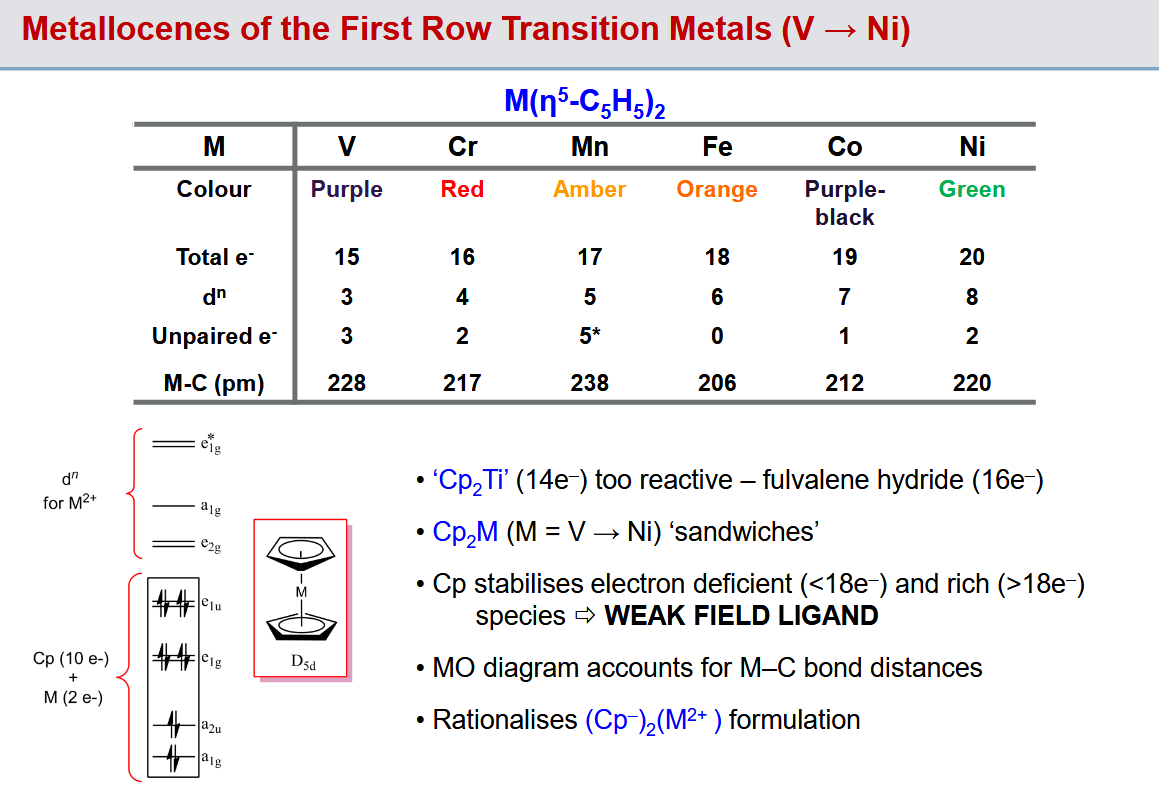
Features of first row metallocene metals
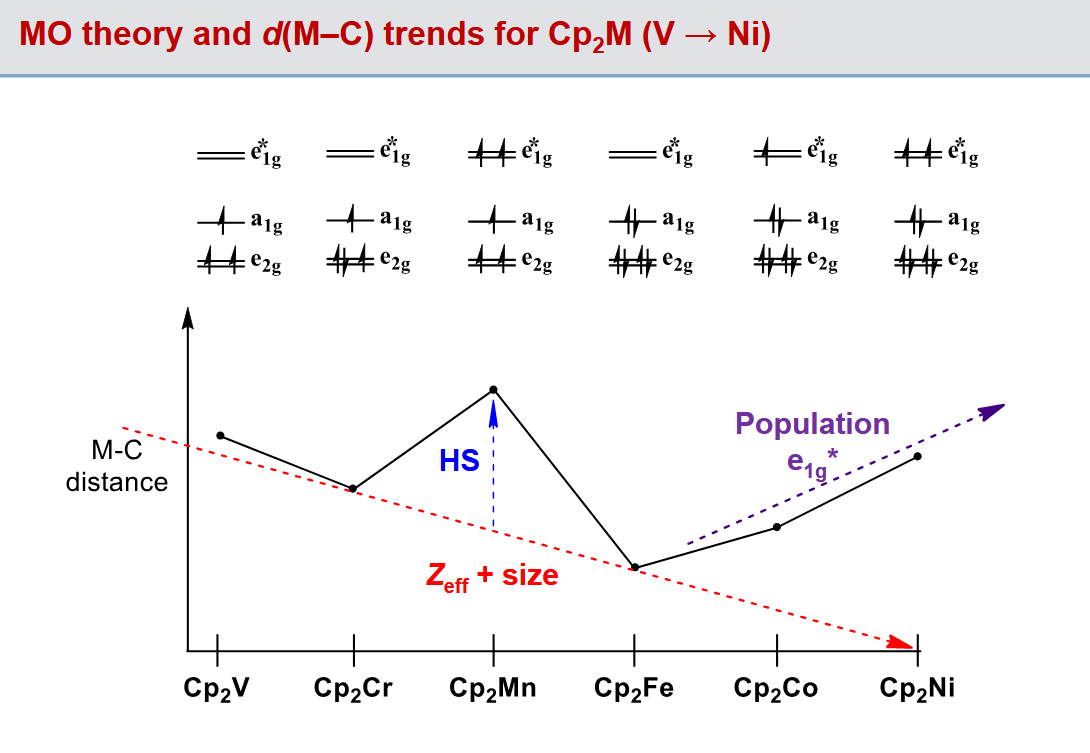
Trends for Cp2M
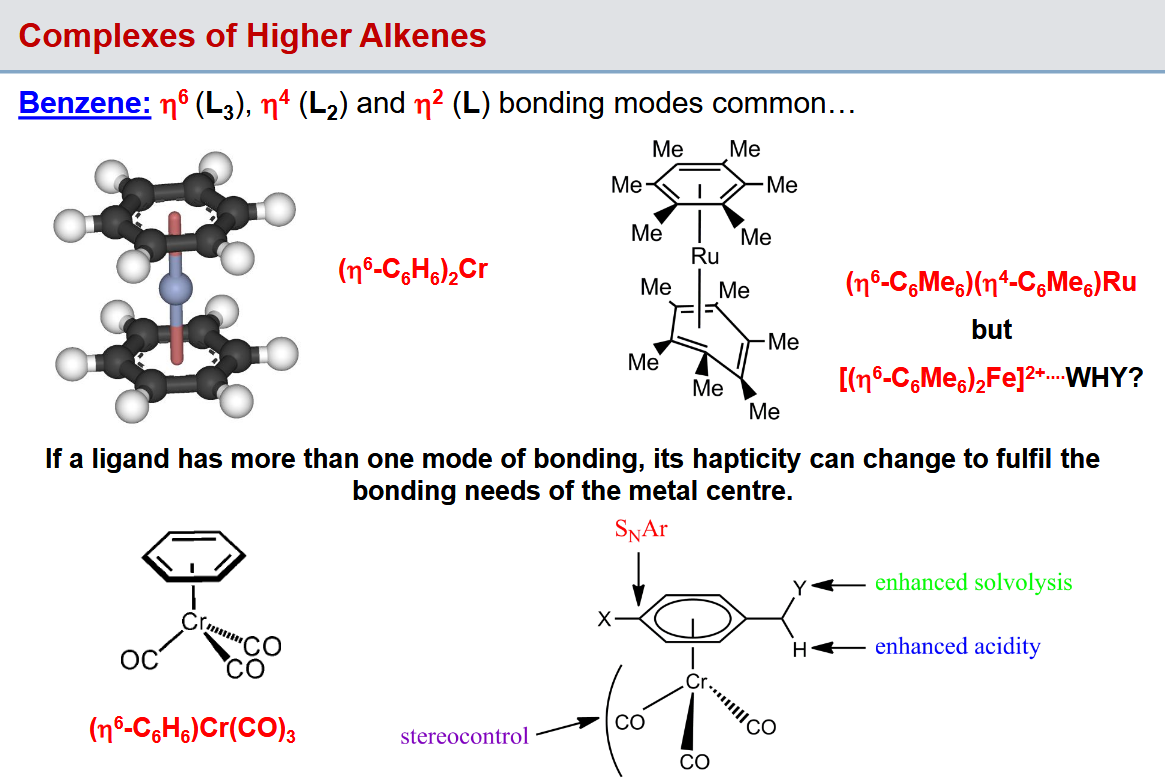
Benzene as a ligand - binding modes
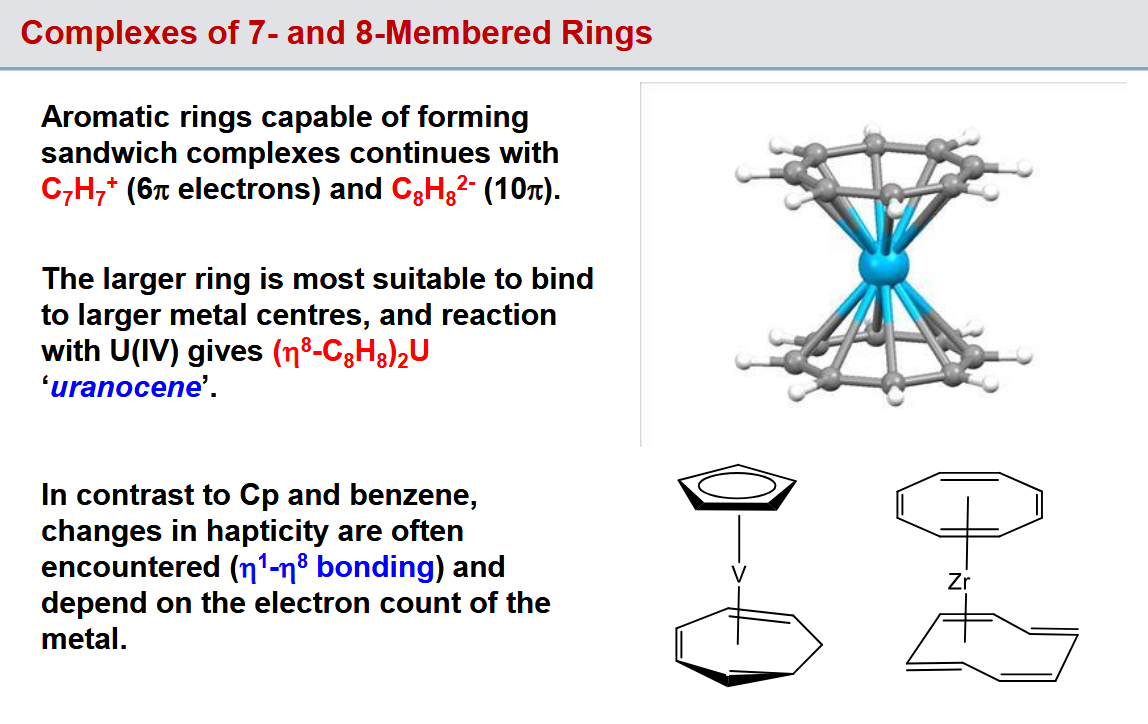
Complexes of 7/8-membered rings
Note that the 18 electron rule is not relevant for lanthanides and actinides.
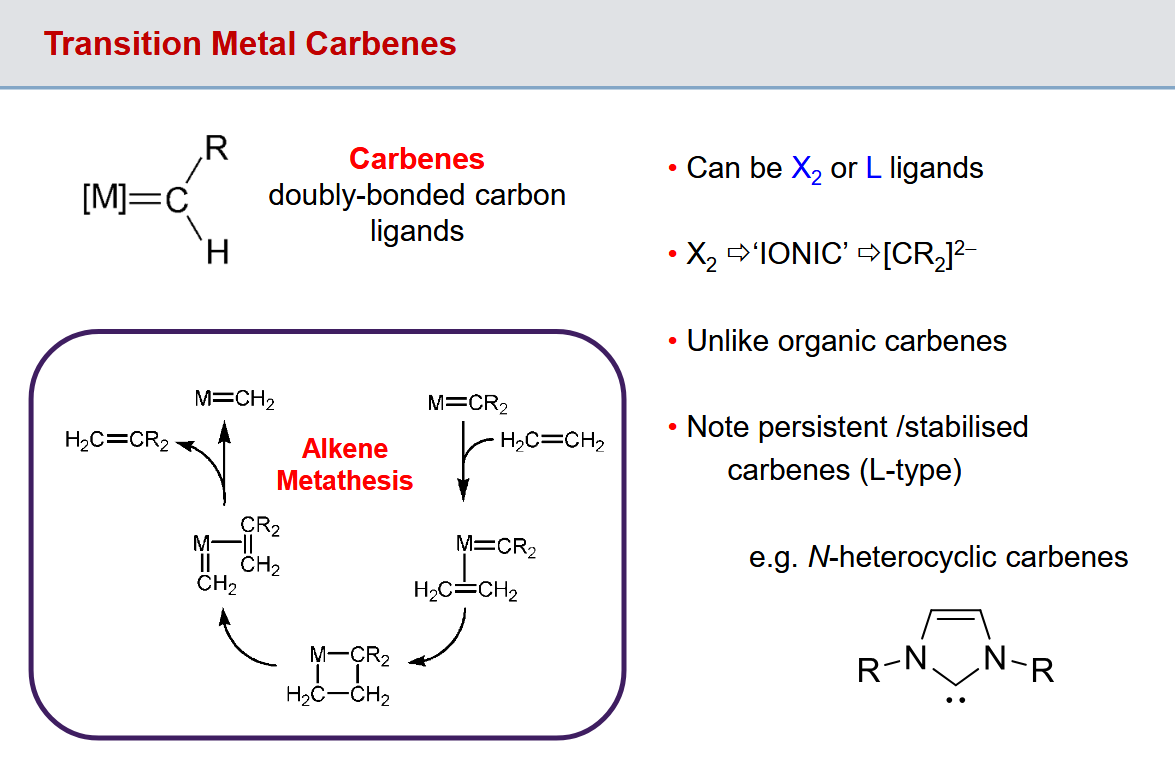
Transition metal carbenes
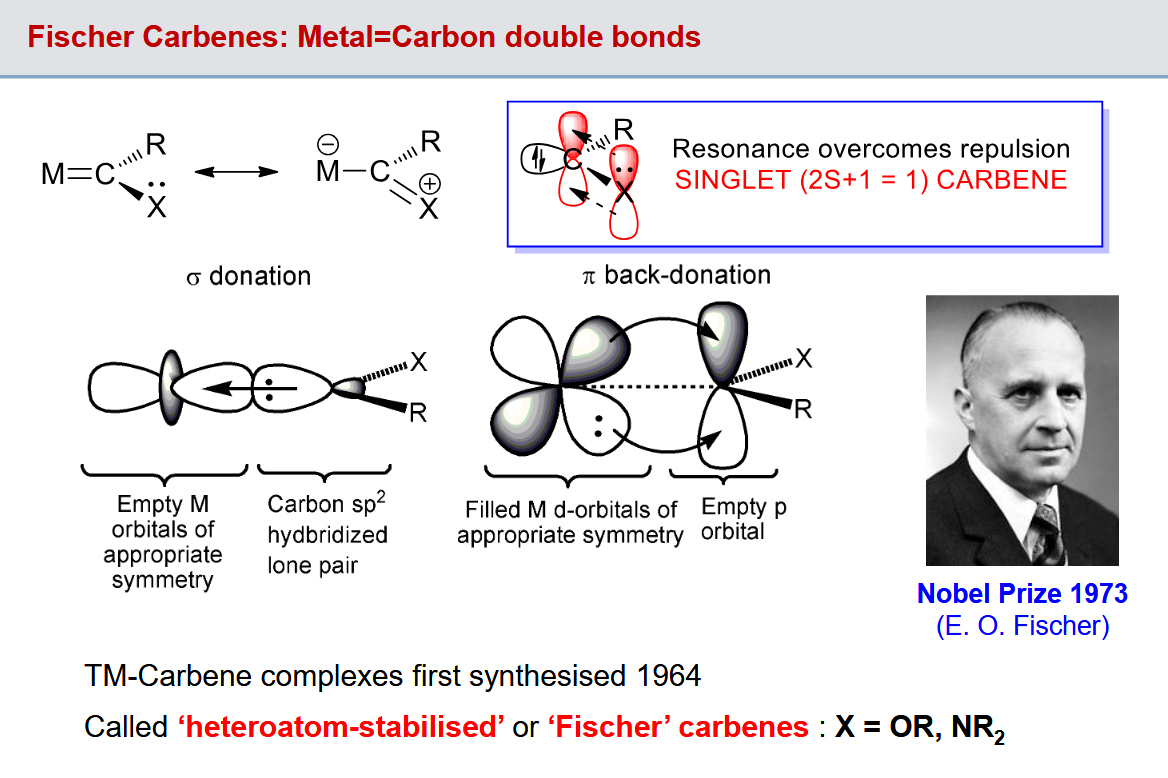
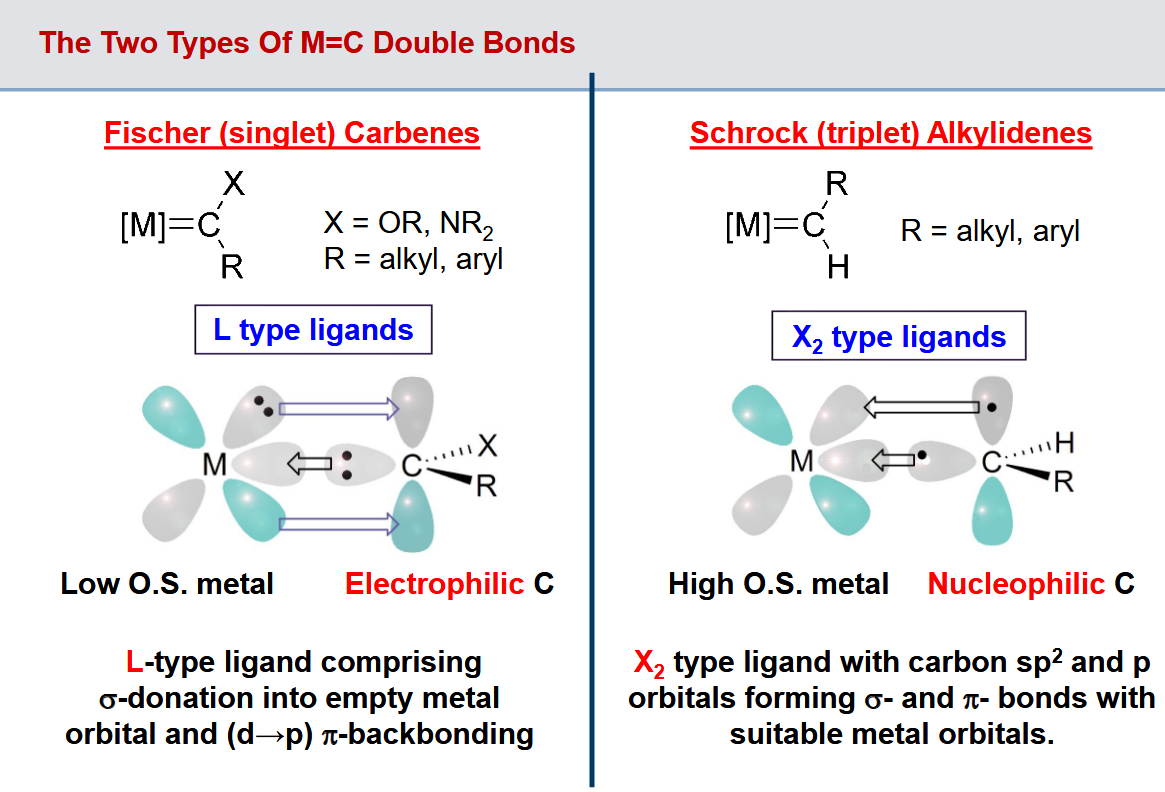
Fischer carbenes - key feature
It must have a hetereoatom like in an alkoxide or amine to stabilise the rather unstable carbene.
Singlet carbene
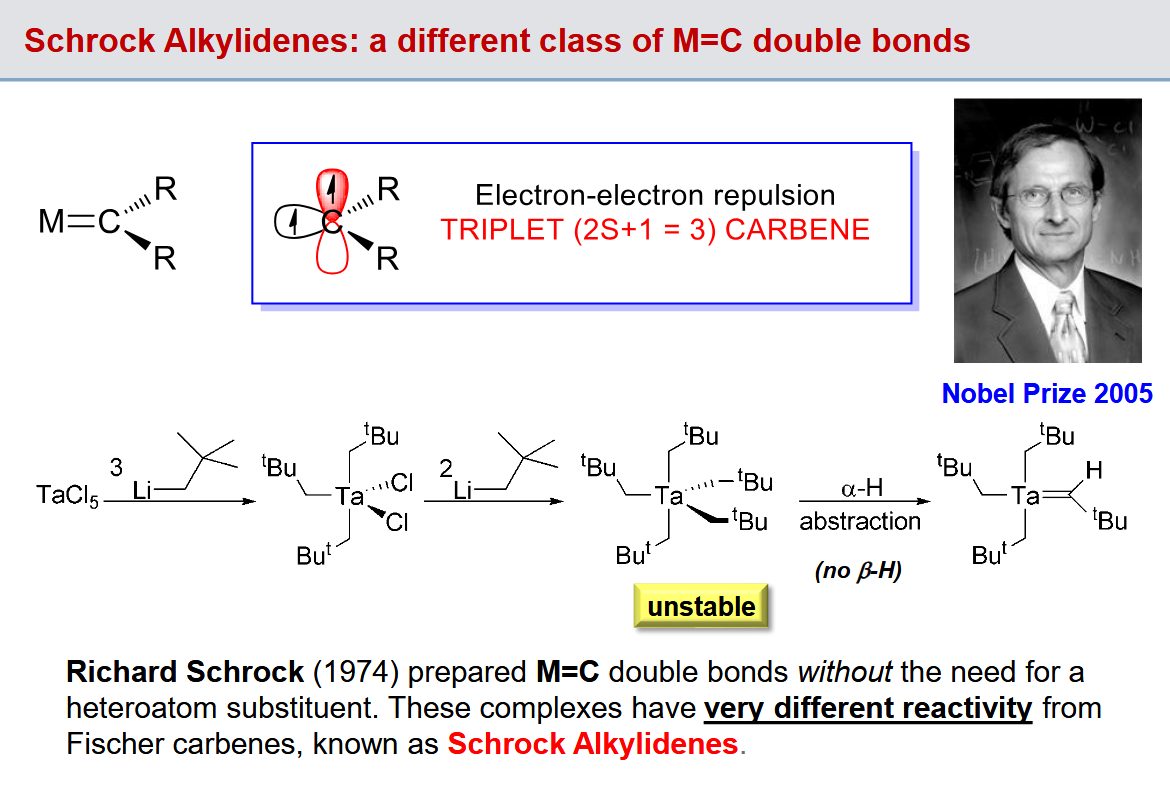
Schrock Alkylidenes key feature
Does not have a heteroatom, instead has an aromatic or alkyl substituent and the other ligands are bulky for steric hindrance
Triplet carbene
Comparison of the two M=C types
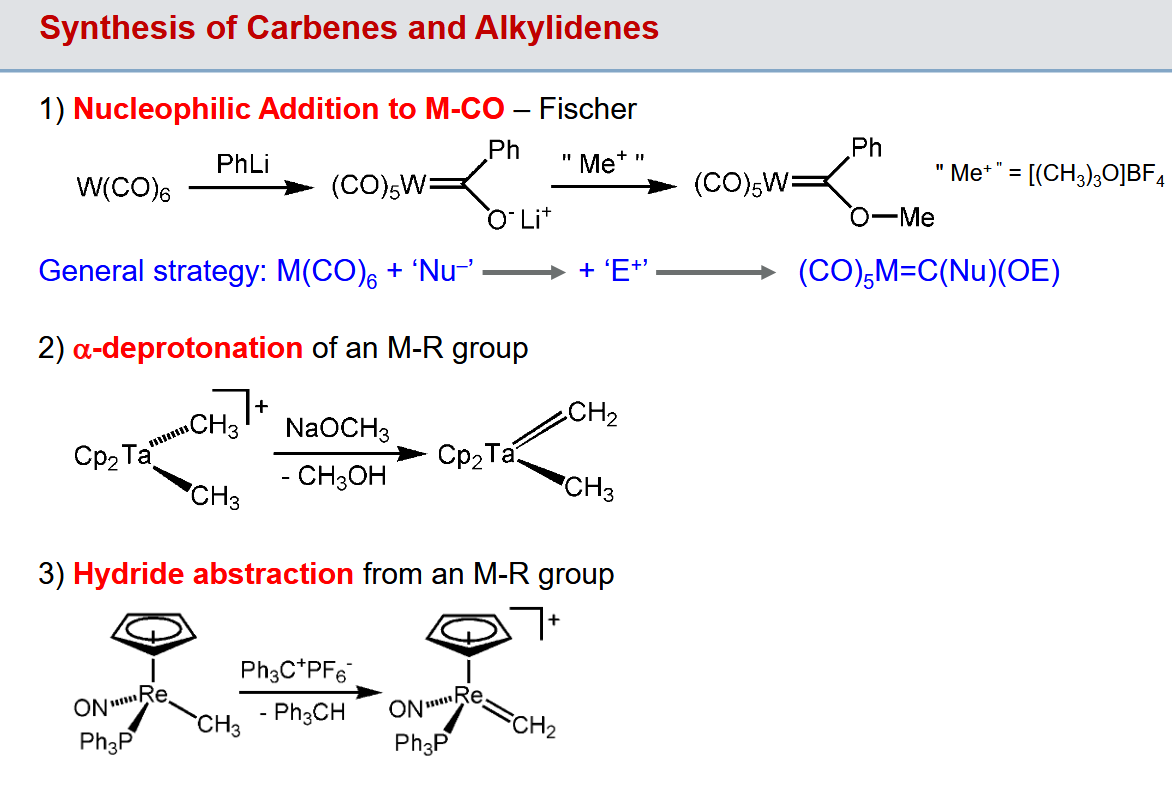
Synthesis of carbenes and alkylidenes
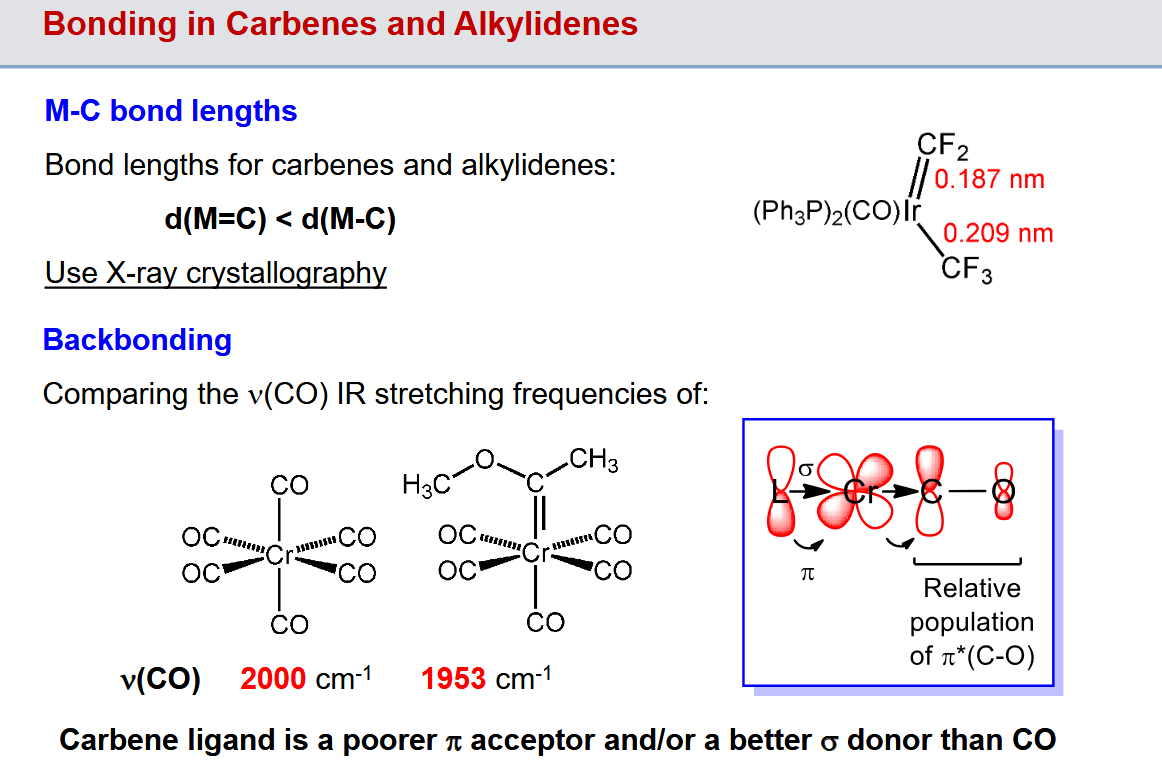
Bonding in carbenes and alkylidenes
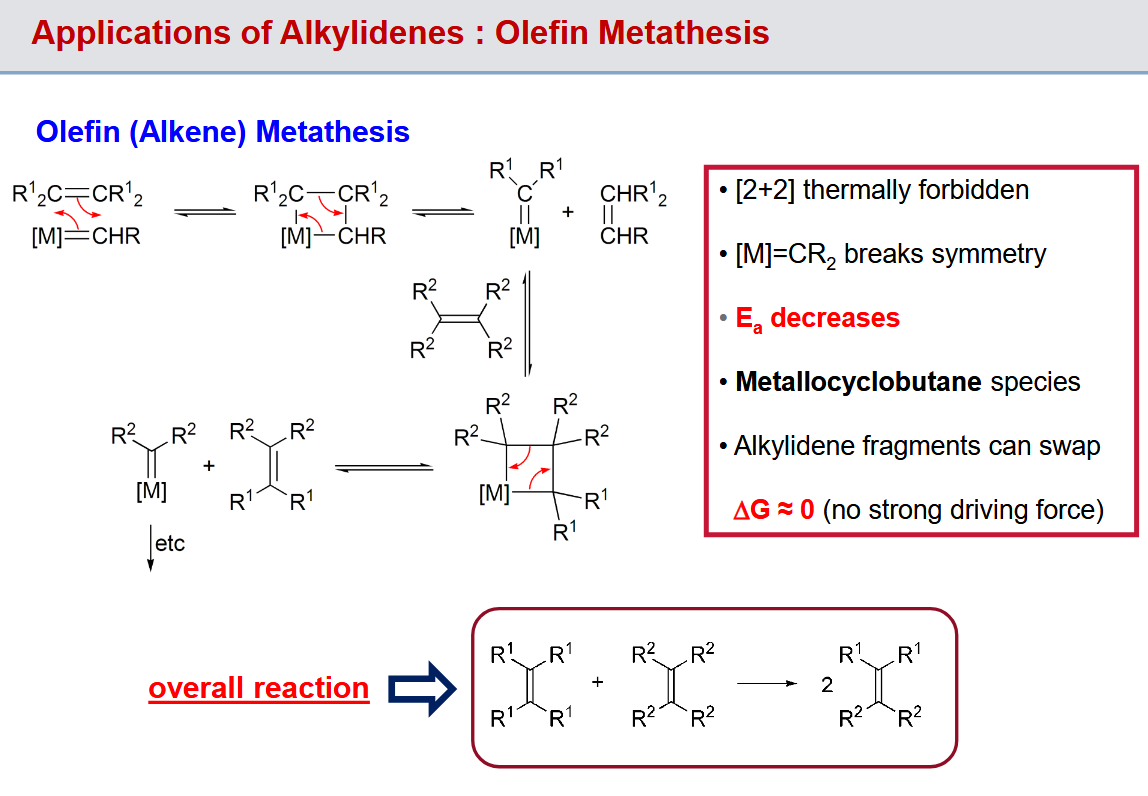
Applications of Alkylidenes : Olefin Metathesis
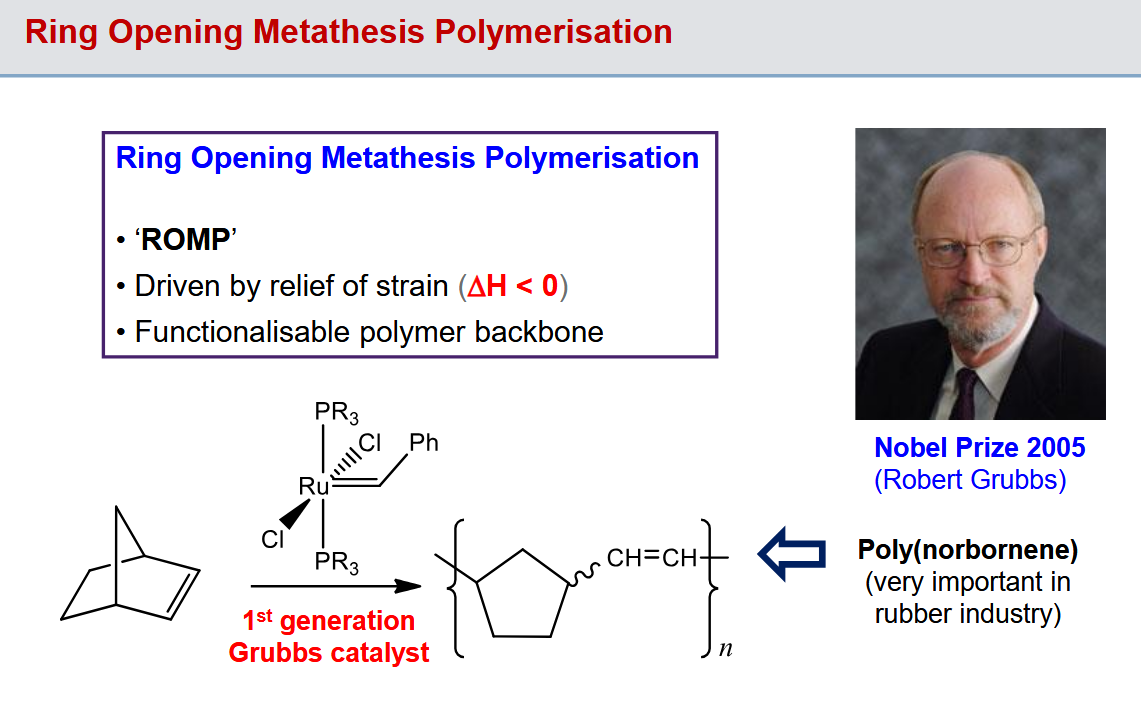
Ring Opening Metathesis Polymerisation