psych notes pre midterm
 Call Kai
 Learn
Learn Practice Test
 Spaced Repetition
 Match
Match Flashcards
 Knowt Play
1/159

There's no tags or description
Looks like no tags are added yet.
Name | Mastery | Learn | Test | Matching | Spaced | Call with Kai | Chat |
|---|
No analytics yet
Send a link to your students to track their progress
160 Terms
HEALTH definition
complete state of physical, mental and social well being
determinants of health
understand concept
health psychology
understanding psychological influences onn how ppl stay healthy, why ppl become ill and how do they respond when they do get ill
4 components of health psychology
health promotion and maintenance, prevention and treatment of illness, etiology and correlated of health, illness and dysfunction and impact of health professionals on ppls behavior
health psychologists
practitioners that focus on 4 concepts of health psychology
mind body connection
understanding how mental and emotional health impacts physical health and vice versa
perspectives on mind body connection (3)
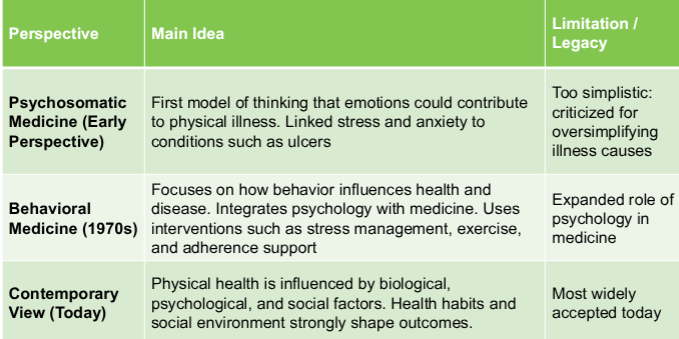
current perspective of mind body connection
humans are complex and illness can be caused by many factors (not just biological- virus or bacteria), looks at biological (virus) psychological (behaviors and beliefs) and social (employment)
Biopsychosocial model of health
makes up factors of health, health is interconnected
biomedical model (original)
illness explained because of biology, psychological and social processes are irrelevant
comparing biomedical and biopsychosocial
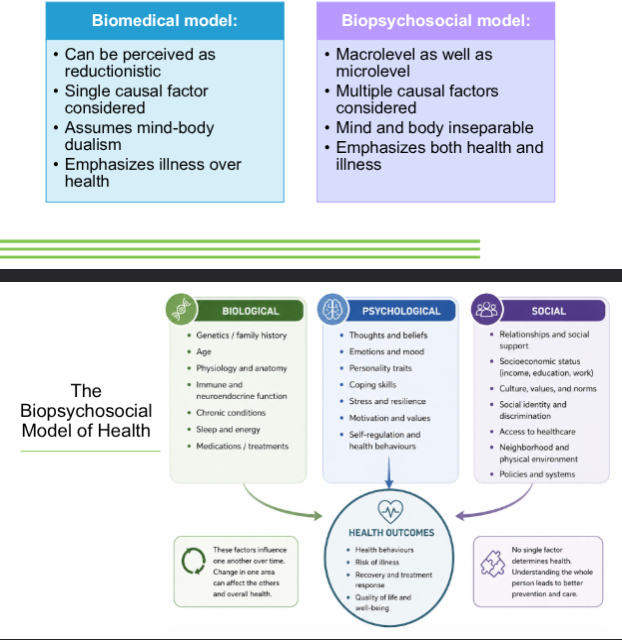
advantages to biopsychosocial model
victim not seen as passive victim
focus on behaviors (smoking, alcohol, excersize)
microlevel and macrolevel processes (micro is within body, macro is external)
mind and body intertwined
researchers adopt a systems theory approach
changes on one level affect other levels
clinical implications of biopsychosocial model (3)
better assessment (evaluate social and psychological factors as well ex stress and isolation)
more effective treatment (can provide better treatment by understanding person (ex paid meds for ppl who cant afford)
therapeutic relationship matters (helps pts feel more understood)
contribution of health psychology
pain management, smoking cessation and unhealthy habits, stress reduction, coping with chronic illness and treatment side effects
interventions are brief and low cost
goal: developing more interventions
lalonde report
challenges traditional views of health, focused on health promotion by creating a more holistic, preventative and socially conscious view of health
4 main cornerstones: lifestyle, human biology, environment and healthcare organisation
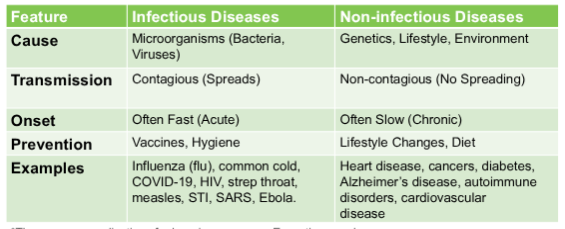
acute vs chronic illness
acute- more often in past, occur over short period of time, infectious process usually, mostly reversible
chronic- more often now, contribute to disability and death, slow and long lasting
course terms review
growth of health psychology
changing patterns of disease and illness in life expectancy, impact in cause, course, treatment and impact of acute and chronic disease, decrease in age of onset of certain diseases, advances in med technology and research
developed and tested variety of short term behaviour interventions to address health related problems
value of health psychology, applied field not just theoretical, value has increased and more recognised, better understanding of the role psychology plays
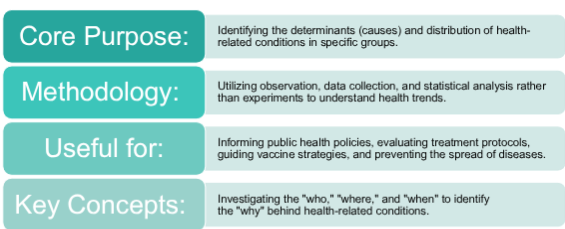
epidemiology
how, when and why diseases occur, analyse data on illness distribution and patterns like prevalence and risk factors, they implement evidence based health interventions and policies
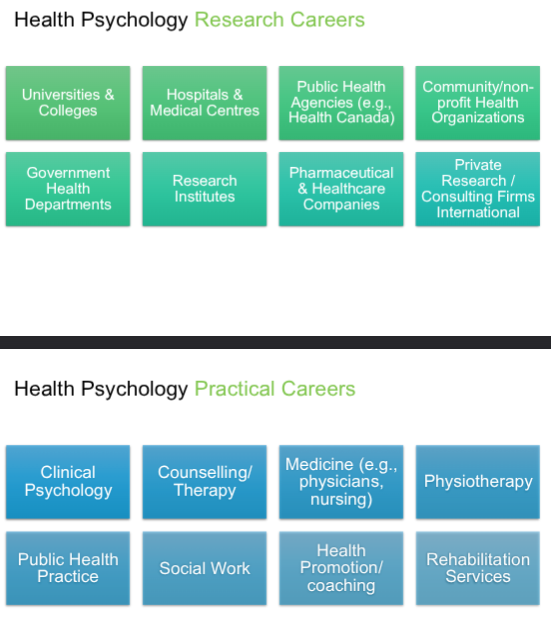
what do health psychologists do
research, practice- individual and community levels, work to prevent physical illness and work to promote health, treatment and adjustment of treating physical illnesses
understand body systems
do that
body systems and psychology
stress activates body systems, lifestyle affects disease process, emotions can influence physiology, biology shapes behavior in return
nervous system
info transmission from brain to body and body to brain, interconnected nerve fibers, fight flight flee or freeze response, made up of CNS and PNS, made of brain and spinal cord, PNS made of somatic (voluntary) and autonomic, autonomic split into sympathetic (mobilises body for actions- stress response) and parasympathetic
parasympathetic nervous system
controls activity of organs under normal circumstances, resumes homeostasis
sympathetic nervous system
body responds to stress situations, HR increases, digestion slows down, etc
constant stress keeps this system active constantly which can lead to mental and/or physical issues
disorders of nervous systems
epilepsy, parkinsons, cerebral palsy, alzheimers, multiple sclerosis, huntingtons, paraplegia or quadriplegia
affect cognition, movement, mental health, pain and comfort, bowel and bladder control
endocrine systems
system of glands and organs which release hormones, hormones regulate bodily functions like metabolism, growth, sleep, reproduction and mood, works with the nervous system
glands of endocrine system
hypothalamus- main control system, links nervous and endocrine system
pituitary gland- master gland, regulates other gland
thyroid gland- controls metabolism and energy levels
adrenal glands- manages stress, bp and metabolism
pancreas- manages blood sugar levels
goands- reproductive hormones
adrenal gland
small gland on top of each kidney, composed of adrenal medulla and cortex, produces cortisol, epinephrine and norepinephrine, works with nervous system- sympathetic response, works with hypothalamus
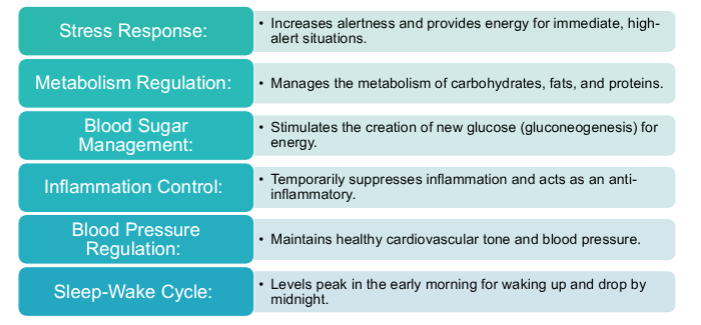
cortisol
steroid hormone produced by adrenal glands, manages stress, metabolism, blood pressure and immune function, it is primary stress hormone, helps fuel flight or fight response, raises bp and regulates sleep and wake cycle
low cortisol- tiredness, apetite loss, hypotension
long term high cortisol
caused by persistent stress
weight gain, high bp, type 2 diabetes, osteoporosis, acne, weak immune system, anxiety/depression
disorders of endocrine system
infertility, hypothyroidism, hyperthyroidism
type 1 diabetes- insulin dependant diabetes
type 2 diabetes- inufficient insulin or insensitivity
***body cannot manufacture or use insulin properly is diabetes
cardiovascular system
carries oxygen, nutrients and CO2 throguh body, composed of heart, vessels, and blood, highly responsive to stress and can lead to heart disease,
stress- activates sympathetic response which leads to increased HR and BP, blood pressure constriction, repeated or chronic activation can lead to hypertension, artherosclerosis (plaque buildup) and increased risk of MI or stroke
disorders- wbc (leukemia, leukopenia, leukocytosis), rbc (anemia, sickle cell anemia), clotting disorders, artherosclerosis
allostatic load
cumulative physiological strain from chronic stress, body can handle up to a certain threshold of stress before body starts reacting to it
blood pressure
common physiologic metric used in psychologic research, non invasive indicator of physiological arousal, sensitive to stress, emotion and cognitive load, reflects activity of cardiovascular and autonomic nervous system
research- assess stress reactivity, study emotional responses, evaluate effect of interventions, linking psychological traits to physiological health risks
systolic- pressure on artery walls during contraction
diastolic- pressure on artery walls between beats
chronic high bp called hypertension which increases risk of heart disease and stroke
reactivity- how much bp increases in response to stress
recovery- how quickly bp returns to baseline
*** both are predictors of long term cardiovascular health
measuring cardiovascular activity in psychological research
BP- measured bia oscillometric methods to analyze systolic and diastolic changes
HR- used to assess emotional arousal, stress and cognitive load
ECG- measures electric signals from heart to assess responses to emotions, mental workload and cognitive tasks
immune system
system of cells, tissues, and organs that defend against bacteria, toxins and pathogens, reacts to infection, allergies, cancer and autoimmune diseases, surveillance system, primary function is to distinguish btwn self and foreign and attack foreign, chronic stress weakens the immune system leading to increase susceptibility to infections
infection types: local, focal or systemic
transmission types: direct, indirect, biological and mechanical
course of infection: incubation, period of non specific symptoms, acute phase, fatality or period of decline
immunity
bodys resistance to injury from invading organisms, develops naturally or artificially (vaccines), nonspecific or specific immune responses, lymphatic system plays key role in immune system by acting as drainage system of body, autoimmunity is when body attacks its own tissues, inflammatory response is important for immune response however it can lead to chronic disease
disorders: HIV/AIDS, cancer, splenomegaly, tonsilitis, mononucleosis (enlargement in lymph system), lymphoma
digestive system
breaks down food, absorbs nutrients and absorbs waste, plays role in immune activity, energy regulation and works with nervous and endocrine system, strongly influenced by stress, emotions and behaviors, eating patterns (diet, timing, restriction, binging) affect functioning, digestive process interacts with all other systems
bidirectional relationships- psychological states affect digestive symptoms and digestive issues affect mood and quality of life
disorders: IBS, crohns, GERD, celciac, ulcerative colitis
gut microbiome
system of microorganisms that live in GI
roles: food particle fermentation, pathogen management, vitamin synthesis, intestinal barrier strengthening, harmful toxins compound removal, immune system regulation and stimulation
digestive system and stress
short term- reduced apetite or nervous stomach, increased gut motility can cause constipation or diarrhea
long term- chronic inflammation, altered gut microbiome, increased vulnerability to GI disorders
gut brain axis
communicates via vagus nerve, emotional stress affects digestion and gut distress influences mental health, chronic stress can trigger disorders like IBS and an unbalanced gut microbiome can contribute to anxiety and depression, cognitive behavior therapy is a intervention that can manage both
health psychologists focus on breaking that vicious cycle
health promotion
health is smth to strive towards, promotion of well being, quality of life and longevity
explain health promotion vs disease prevention
hp- focus on building healthy lifestyles, promoting excersize, healthy eating
dp- vaccinations, reducing risks of injury or illness
healthy behaviors
actions undertaken by people to enhance or maintain health
healthy habit- behavior established and performed automatically for ones health, taught socially, such as seat belt or brushing teeth
factors influence practice of health behaviors
socio economic status, age, gender, values, personal control, social influence, personal goals, percieved symptoms, access to health care, place, supportive environmnets, cognitive factors
are health behaviors stable
NO
behaviors have different causes
same behavior, different reasons (differ from person)
cause changes over time (what starts behaviors is not equal to what maintains it)
life stages
patterns vary across individuals (individual variation)
behavior and disease/disorder
modifying health behaviors reduce deaths due to lifestyle related illness, increase longevity, expland years of life free of disease, decrease health expenditures
primary secondary and teriatry prevention
1- prevents disease before starts (vaccines)
2- early detection (screening)
3- manages long term established health problems to prevent deterioration (therapies and rehab)
health promotion in children and adolescents
health behaviors as adults affected by childhood, socialisation is important and parents should be role models, teachable moments (pick the right time to build habits into kids) as children move into adolescence- childrens may ignore the early training received for health habits,
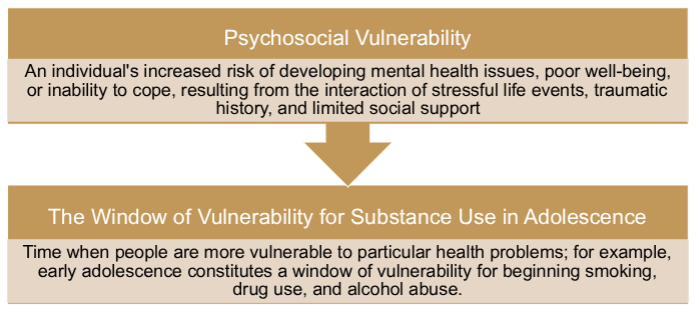
psychosocial vulnerability
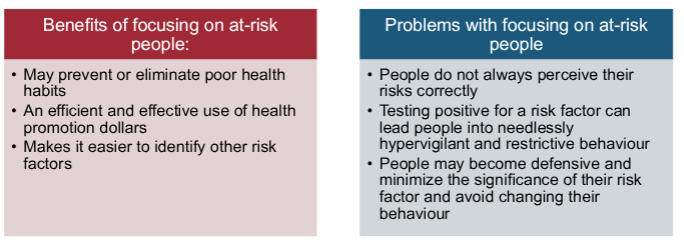
pros and cons of health promotion of at risk people
optimism bias
bad things happen but nothings gonna happen to me
health promotion with older adults
excersize, nutrients and hydration, regular sleep, control alcohol and tobacco, vaccinations, fall prevention,
more teaching and identifying risks
health beliefs
beliefs individuals have about health and disease, shaped by culture, society and indivudals beliefs, ex- vaccines and dieting
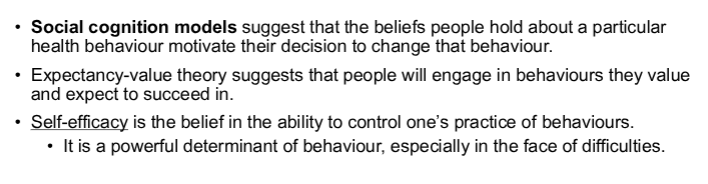
social cognition models of health behavior change
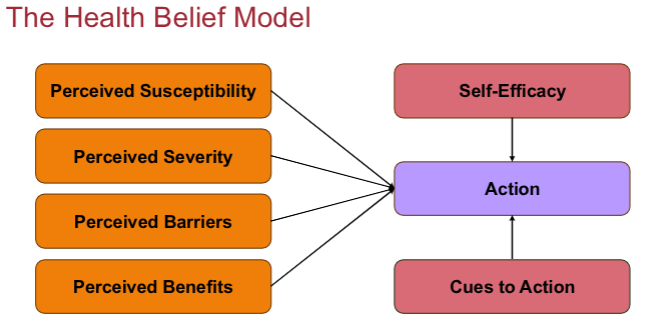
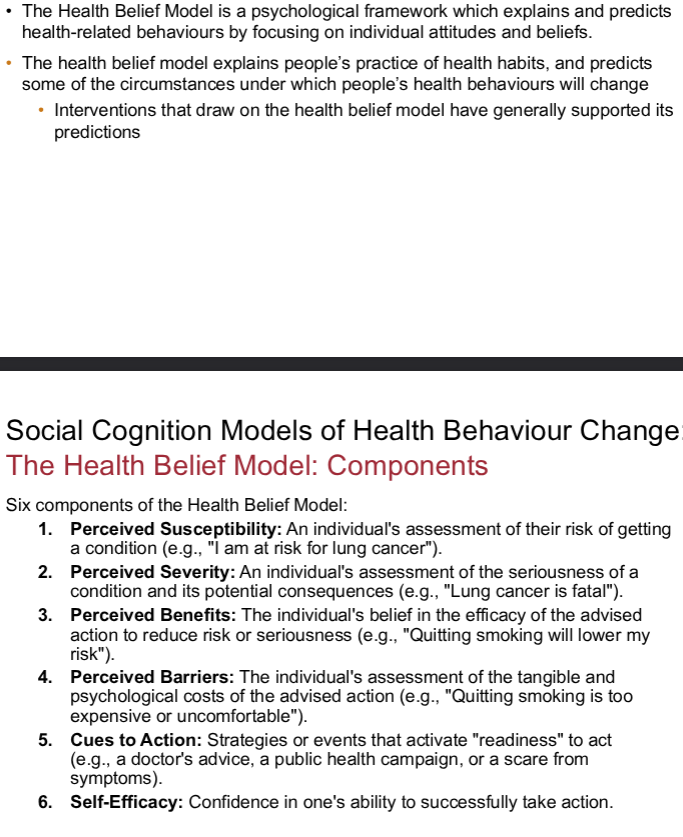
health belief model (6)
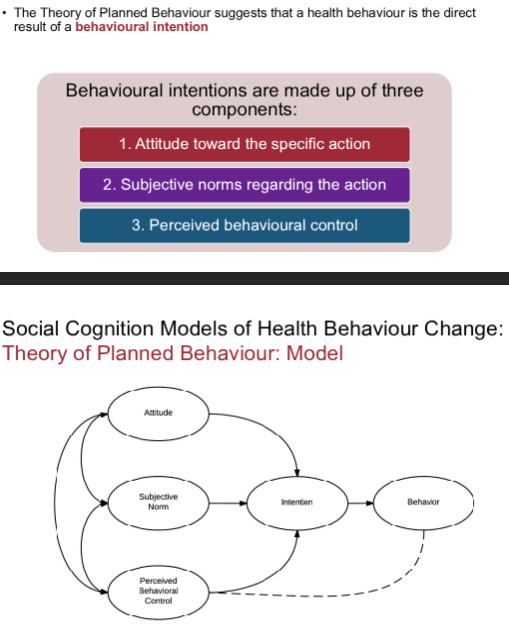
Theory of planned behavior
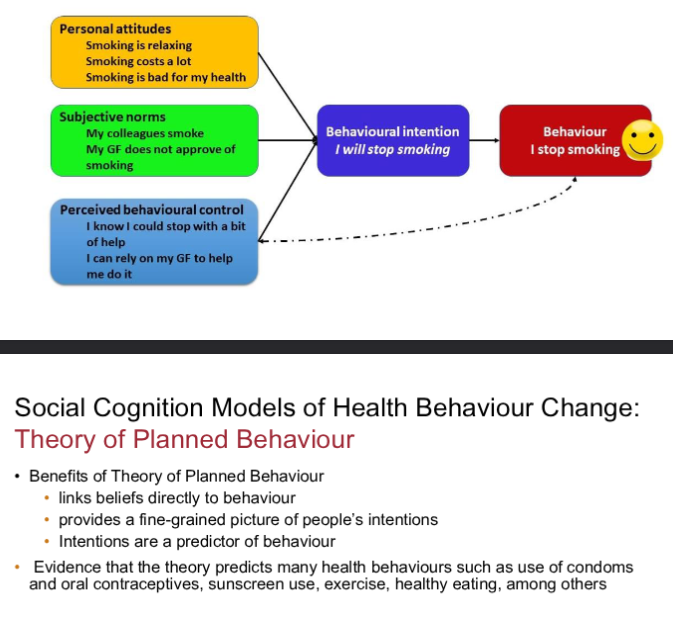
***intentions are important but u need more sometimes
attitudinal approaches not helpful for explaining spontaneous changes, not effective predictors of long term change, attitude change may not alter behavior or work long term
IMPLEMENTATION INTERVENTIONS bridge the intention behavior gap, specific behaviorial intention that highlights how when how and where of a behavior, includes if-then contingency plans
issues with attitudinal approaches
communication hav provoke irrational and defensive reactions, thinking abt disease provokes negative moods, some ppl may hold irrational health beliefs
irrational beliefs of health
optimism causes 4 things
unrealistic optimism bias
neglect of preventative care
increased risk behaviors
false sense of security
reduced stress
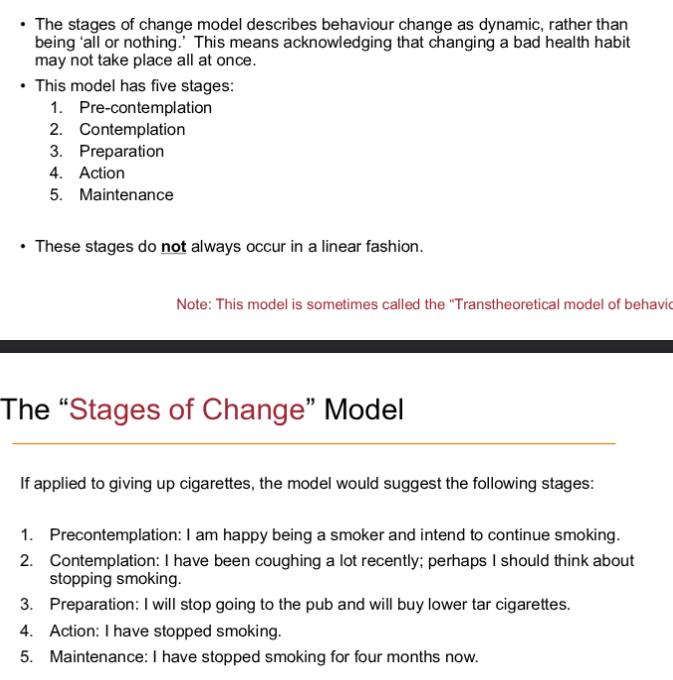
stages of change model or transtheoretical model of behavior
model captures process people go through (practical), illustrates that successful change may not occur on first try, explains why people are not often successful on changing behavior and esp on first try
modelling
role models can help to increase long term behavior change, can reduce anxiety that gives rise to new bad habits when changing health behaviors, is most effective when it shows the realistic dificulties people are going through (ex- alcoholic anonymous)
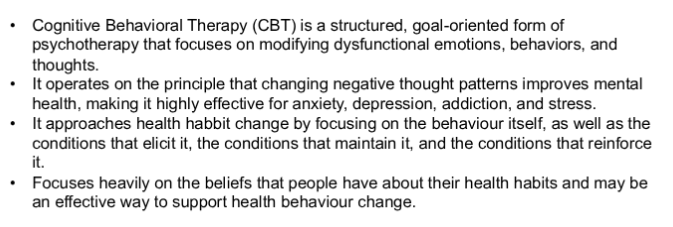
cognitive behavioral therapy
preventable injuries
road traffis esp for kids, adolescents and young adults, falls are leading cause of injury, unintentional injuries in the home such as poisoning are most common cause of disability and death in children under 5, education and resrouces are key
motorvehicle accidents
almost 2000 canadians killed per year, efforts on maintenance of roadways, volume of travel and safety standards, psychological research done to address factors associated with accidents, interventions that reduce injuries and fatalities: reducing highway speeds, seat belts, placing young children in safety restraints, getting ppl to follow this is dificult, social engineering, health education and psychological interventions are appropriate
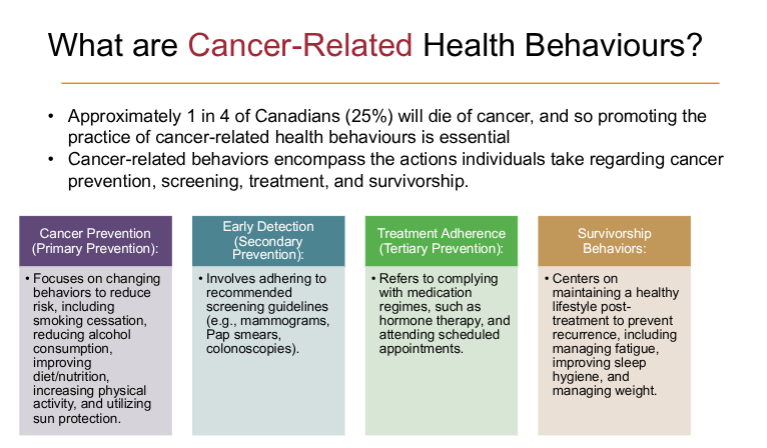
cancer related health behaviors
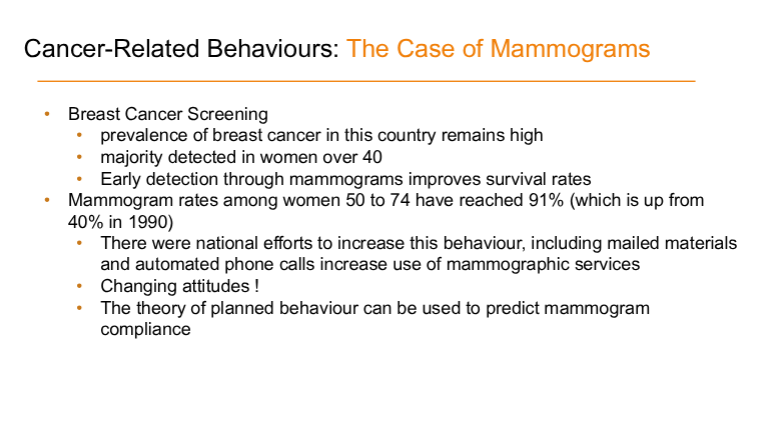
breast cancer screening
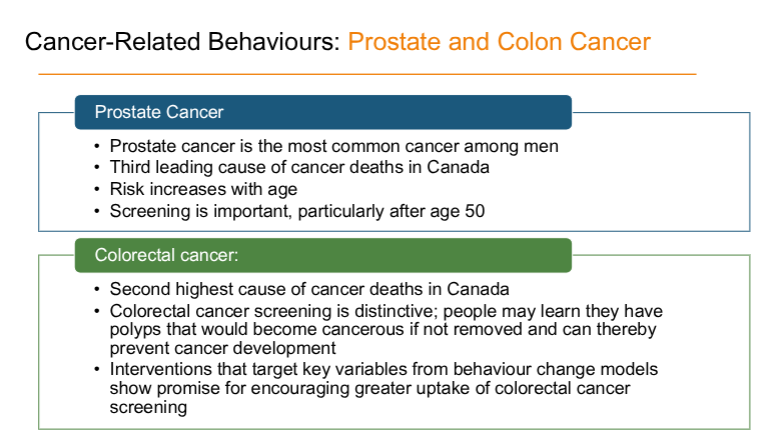
prostate and colon cancer
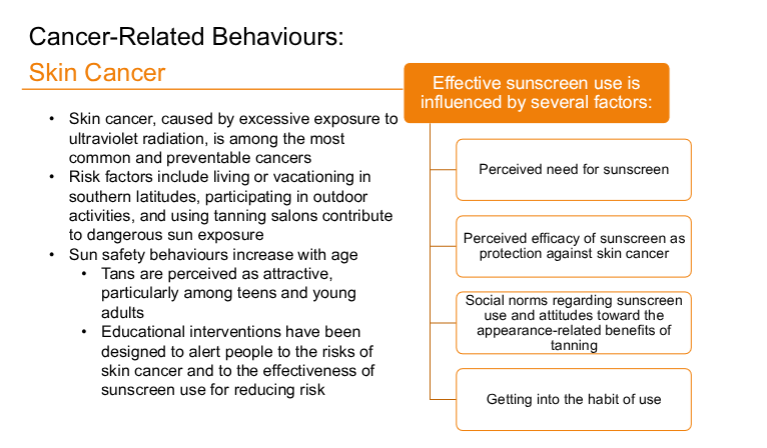
skin cancer
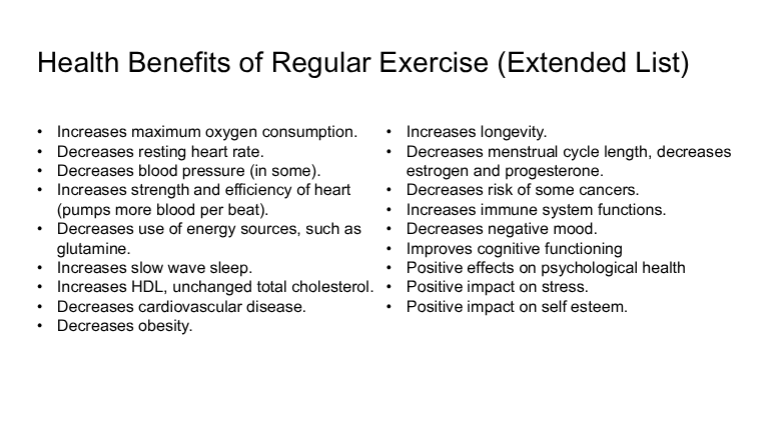
benefits of excersize
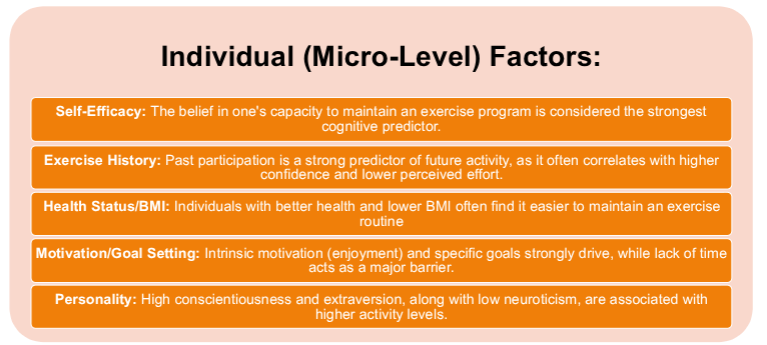
determinants of regular excersises micro level
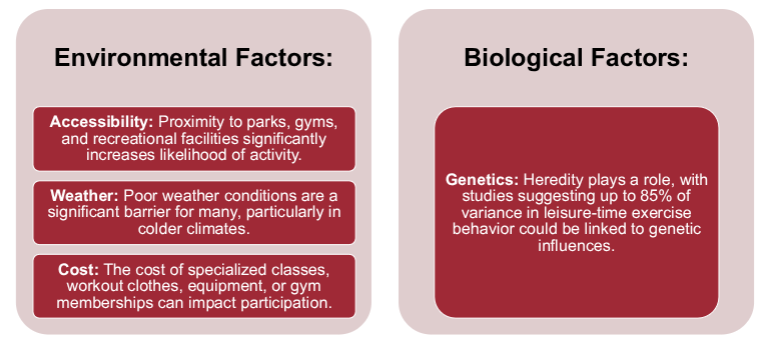
environmental and biological factors of regular excersise
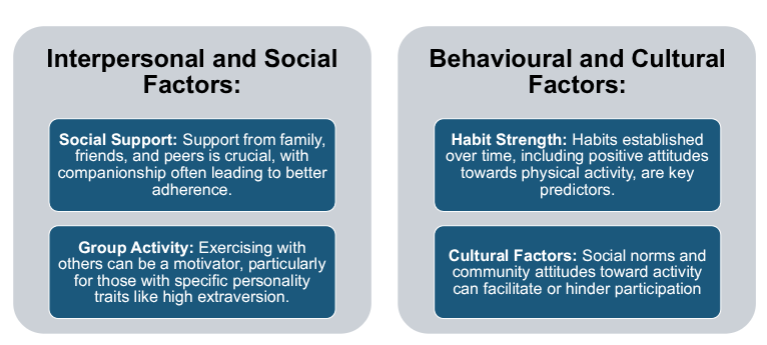
interpersonal, social, behavioral and cultural factors of regular excersise
excersise focused interventions
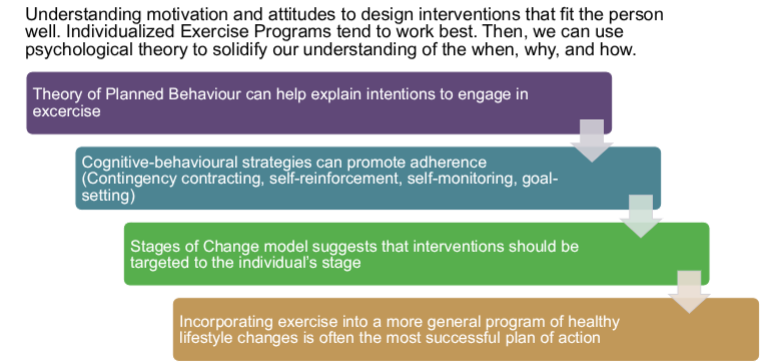
maintaining a healthy weight
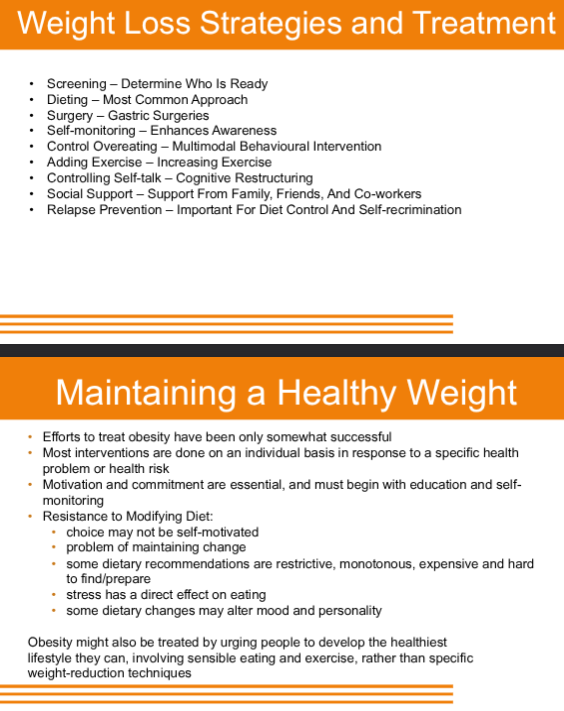
diet is important and controllable risk factor, critical for ppl at risk for or already diagnosed with chronic diseases,
risks of obesity
risk factors for many disorders and associated with increased death rates for cancers, risk in surgery, risk for anasthesia admin and child bearing, 50% of obesity is due to genetics, blame and shame is NOT effective, causes psychological distress
regulation of eating
taste- chemical gatekeeper of eating (we eat things that taste good)
leptin and insulin are hormones that control eating
ghrelin- hunger hormones, can explain why dieters gain the weight they lost
malfunctioning ventromedial hypothalamus can interfere with normal eating habits
many psychological and social factors however also many biological ones
weight loss strategies and treatment
sleep
poor sleep effects cognitive functioning, mood, performance in work and quality of life
chronic partial sleep can compromise ability to secrete and respond to insulin
chronic stress and insomnia
sleep plays a role in adaptive self regulation
can interfere with appetite and can cause obesity
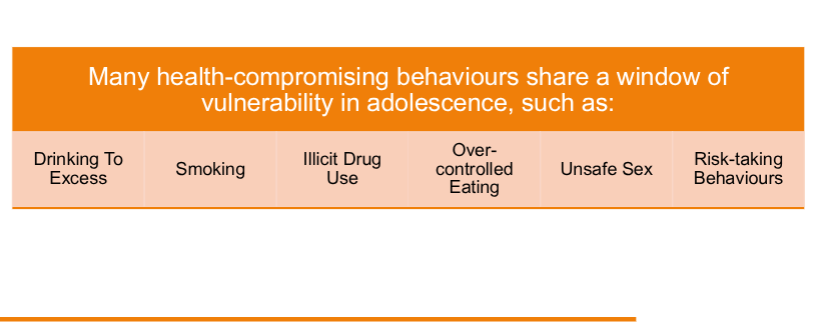
health compromising behaviors
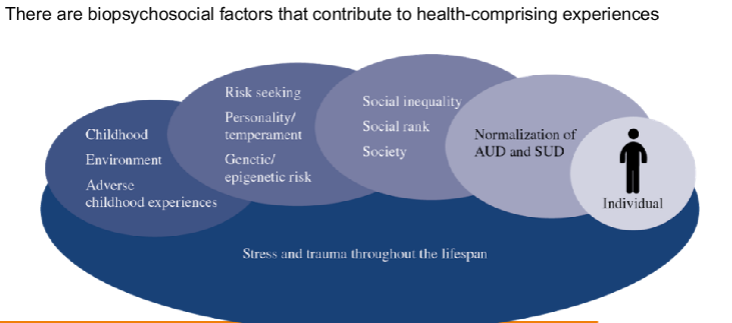
window of vulnerability
period of our lives when certain behaviors are more likely
substance use disorder
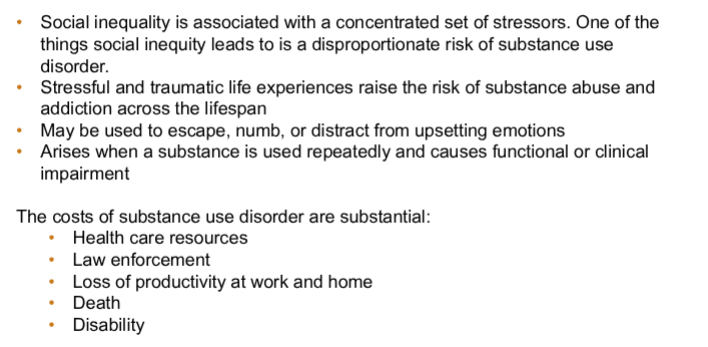
4 criteria of substance use disorder
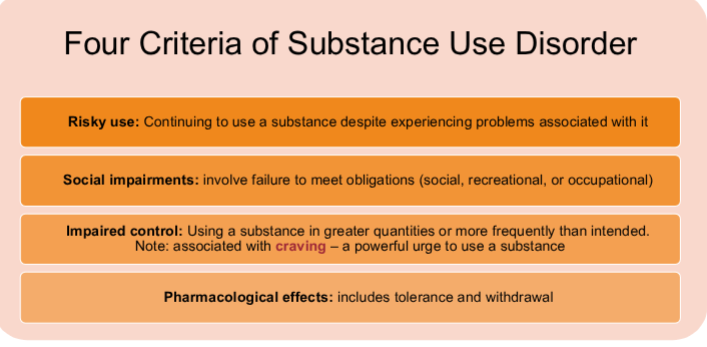
risky use, social impairments, impaired control and pharmacological affects
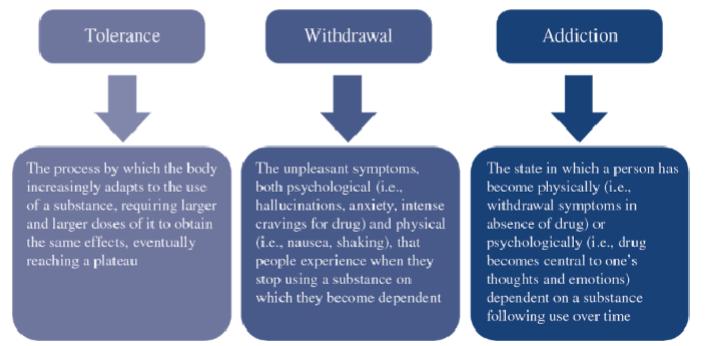
tolerance vs withdrawal vs addiction
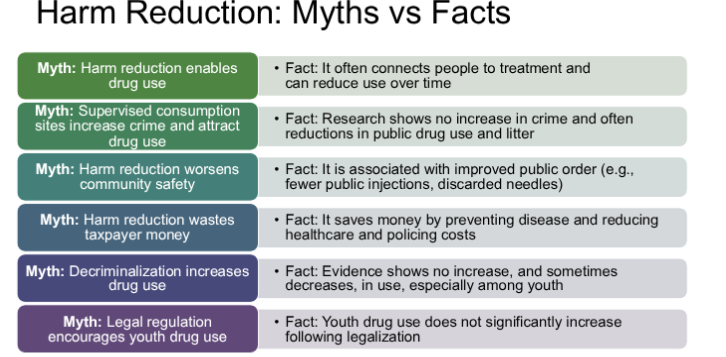
substance use disorder and harm reduction
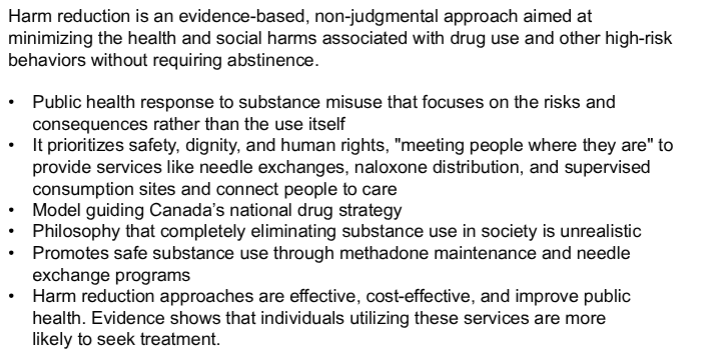
key principles of harm reduction for substance abuse (4)
prioritise life saving, user involvement, non coercive (no judgement) pragmatism (drugs are part of society and focuses on practical measures)
common substance use harm reduction interventions
overdose prevention/supervised consumption sites (same space), naloxone distribution, syringe services programs, drug checking or testing services (places to test drugs for fentanyl, safer using education (reduces risks)
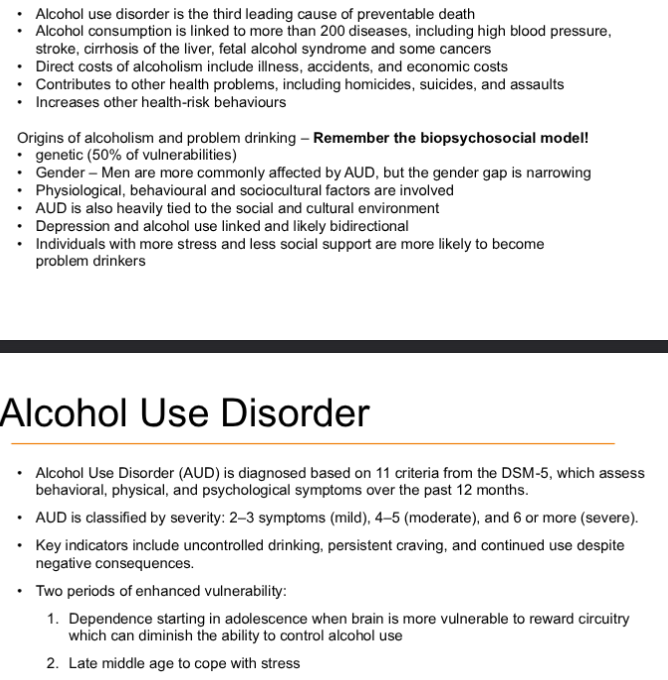
alcohol use disorder
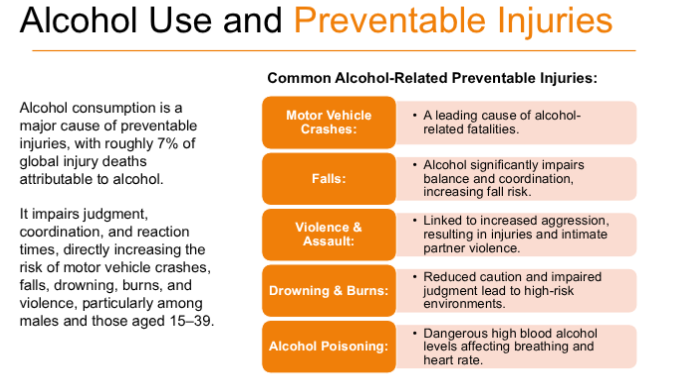
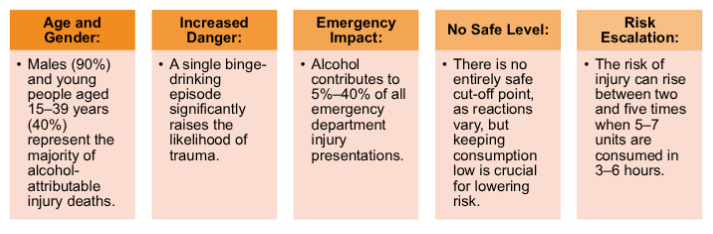
alcohol use and preventable injuries
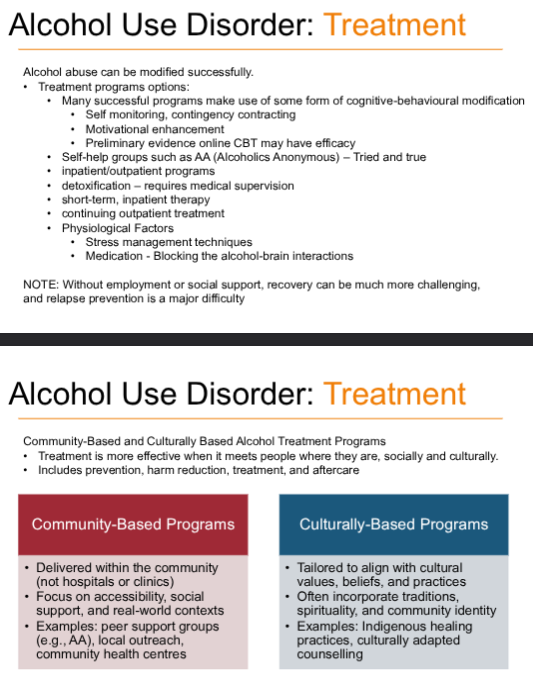
alcohol use disorder and treatment
alcohol risk factors
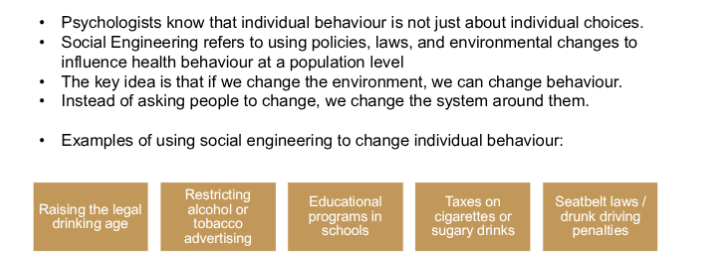
social engineering
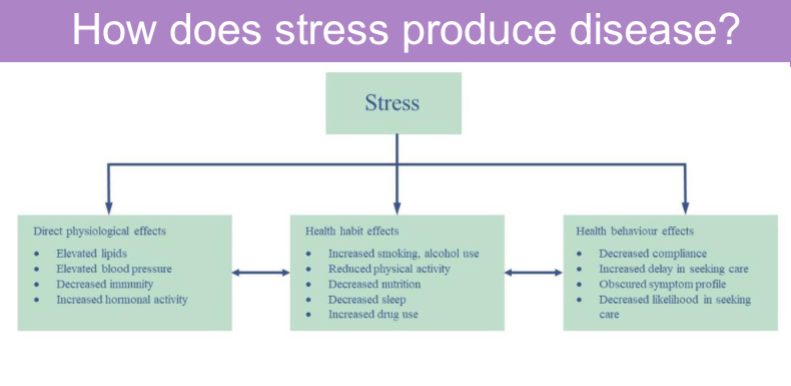
stress
negative emotional experience accompanied by biochemical physiolocial, cognitive and behavrioal changes directed towards altering stressful event or accomodating it
stressor
something that causes stress, doesn’t need to be ongoing, anticipating stress can be as stressful as occurence
person-environment fit
refers to personal resources sufficient to meet demands of environment, if they are capable to meet the challenge of stress
strain
a negative reaction when a persons coping mechanisms are inadequate to meet demand of adjustment
self efficacy
our confidence in the ability of ourselves to handle things
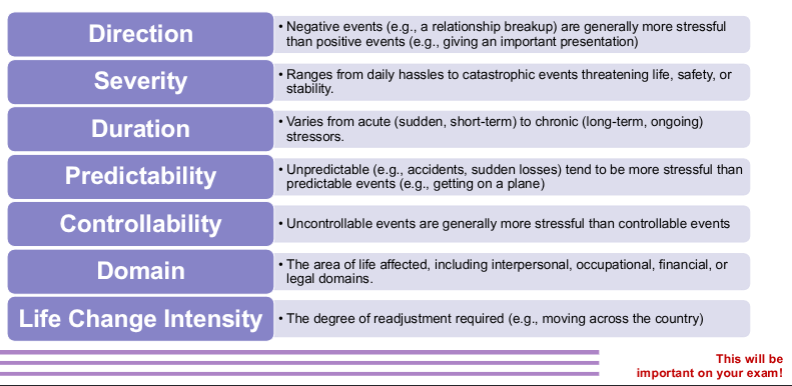
dimensions of stressful events
how does stress produce disease