ekg/ecg pictures
 Call Kai
 Learn
Learn Practice Test
 Spaced Repetition
 Match
Match Flashcards
 Knowt Play
1/71

There's no tags or description
Looks like no tags are added yet.
Name | Mastery | Learn | Test | Matching | Spaced | Call with Kai | Chat |
|---|
No analytics yet
Send a link to your students to track their progress
72 Terms
~68
what is the HR of this
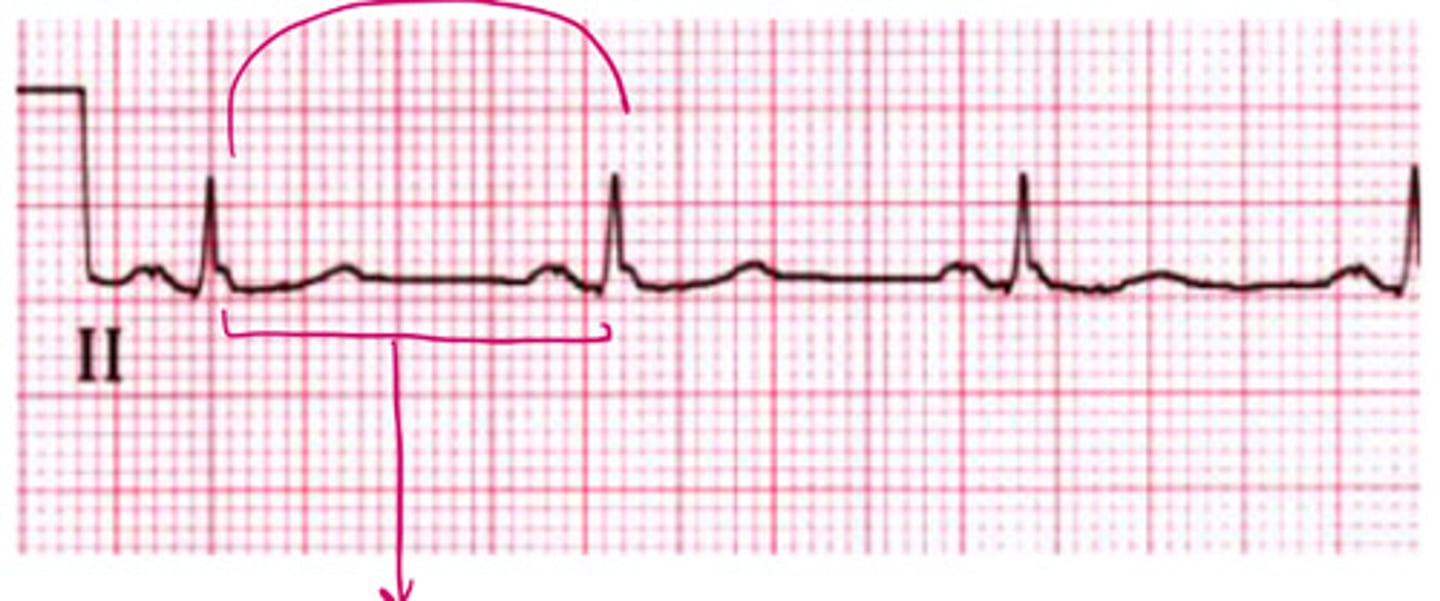
stepwise approach to interpreting ECG
~187.5
what is the HR of this
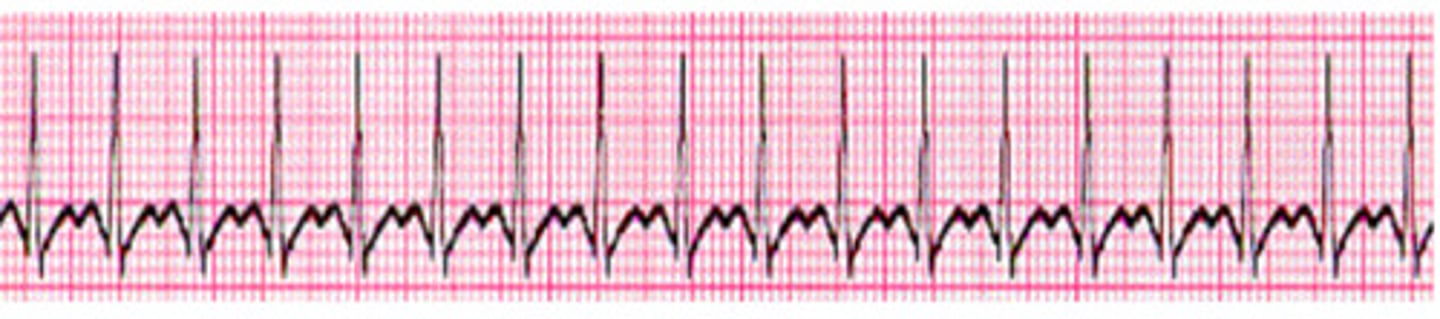
0.8 (normal)
what is the QRS interval of this
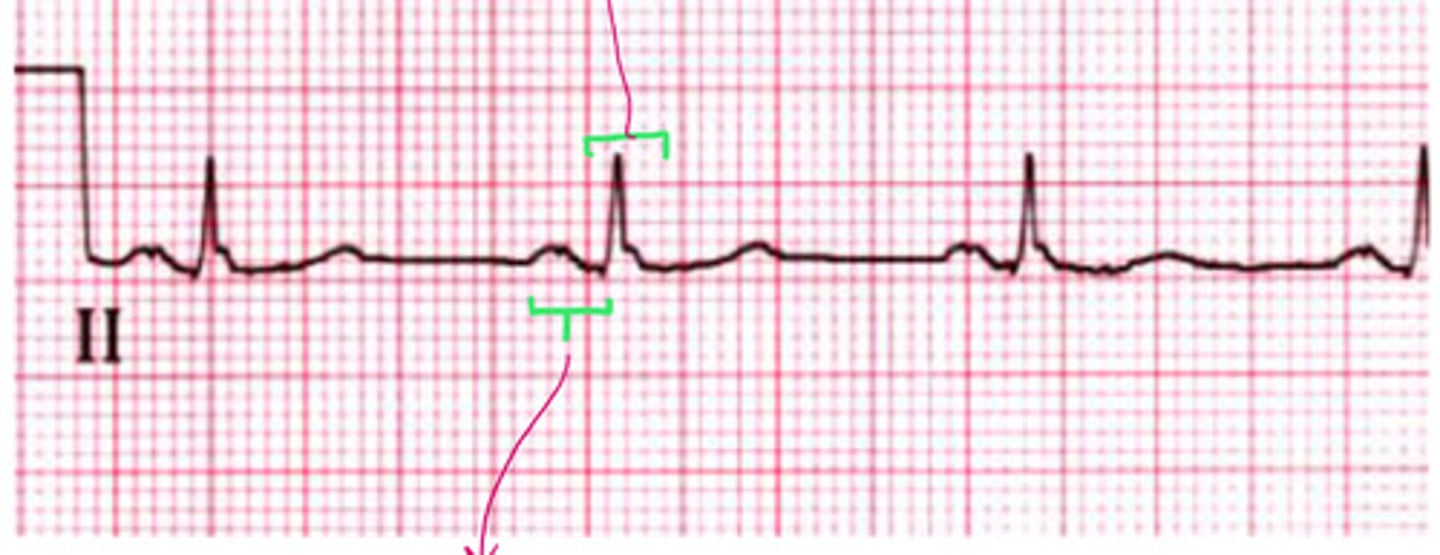
0.16 (normal)
what is the PR interval of this
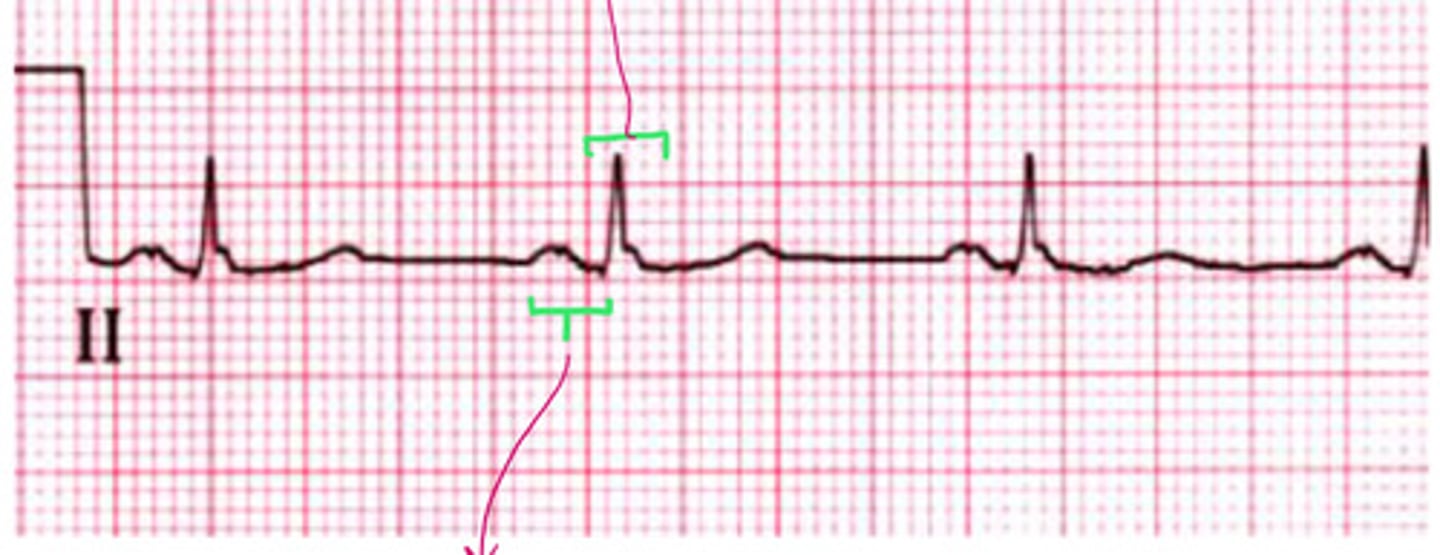
normal ECG
what kind of ECG is this?
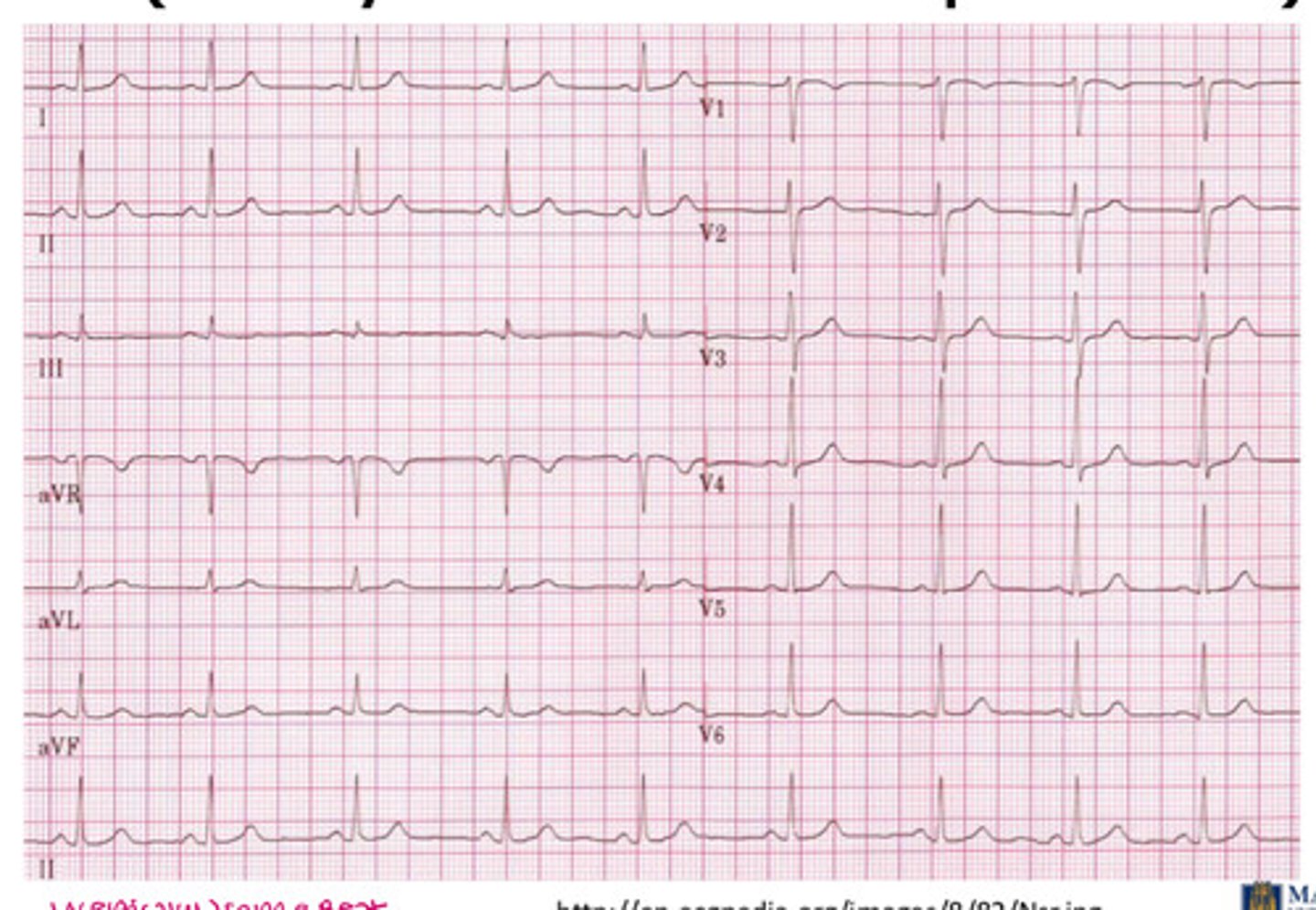
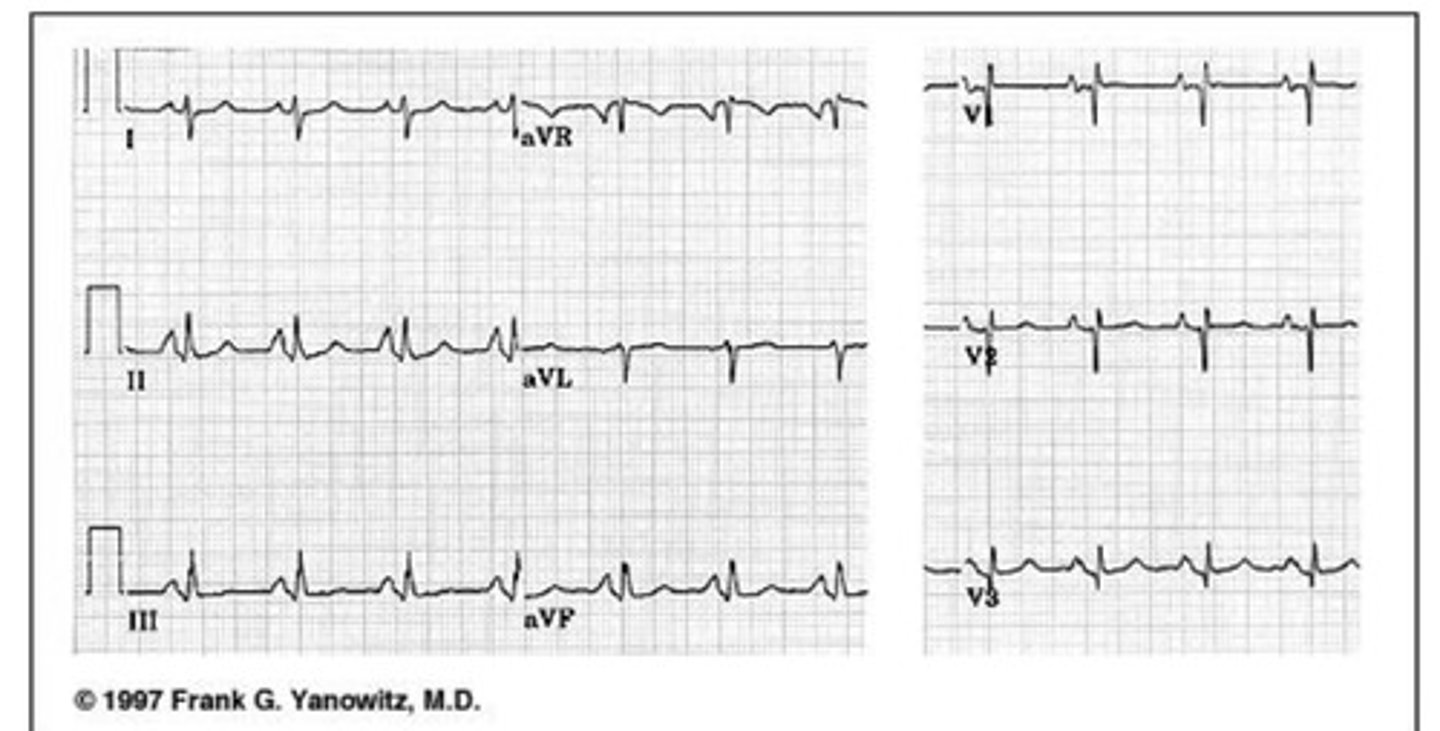
normal axis deviation; upright in I and AVF
is this normal, left, or right axis deviation? why
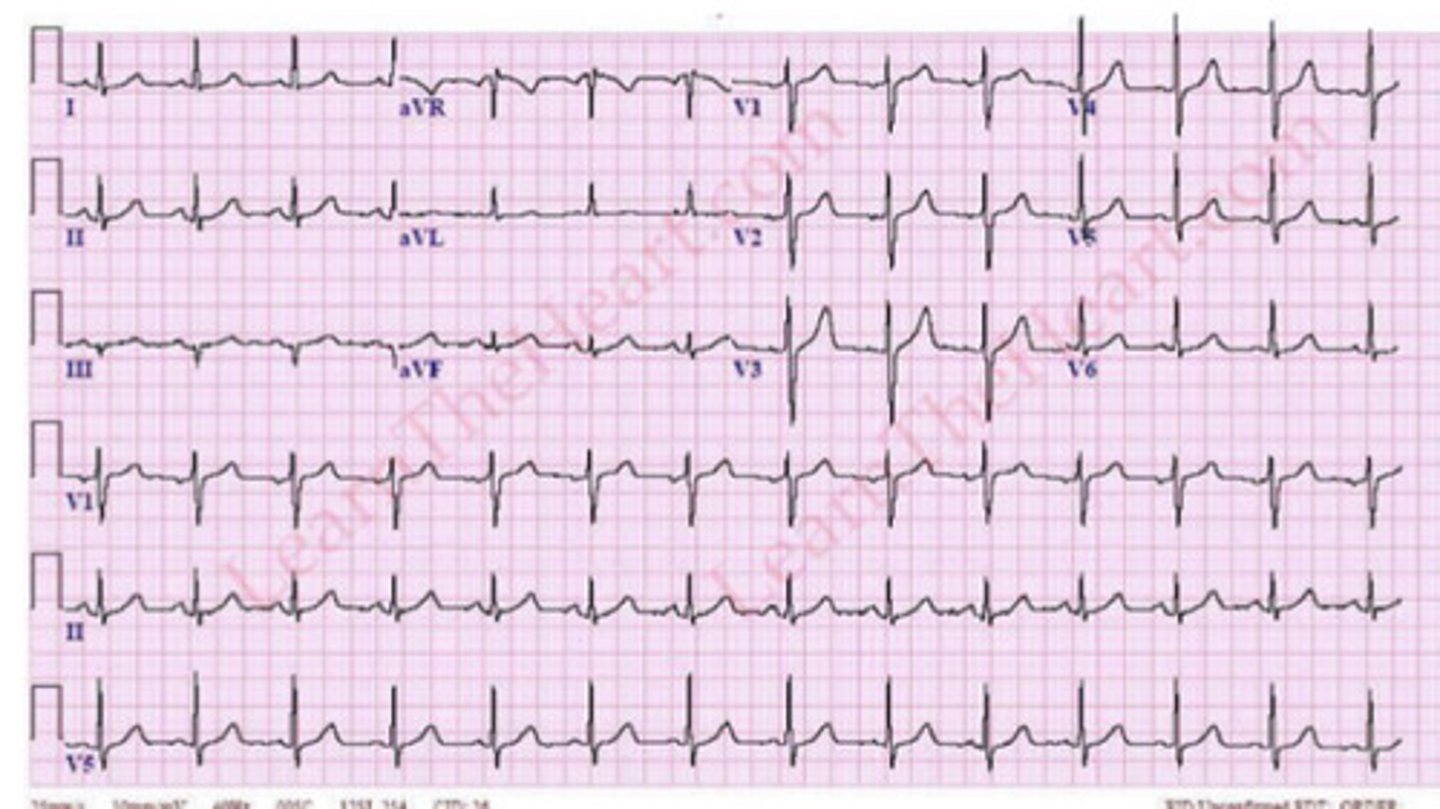
right axis deviation; down in 1, upright in AVF
is this normal, left, or right axis deviation? why
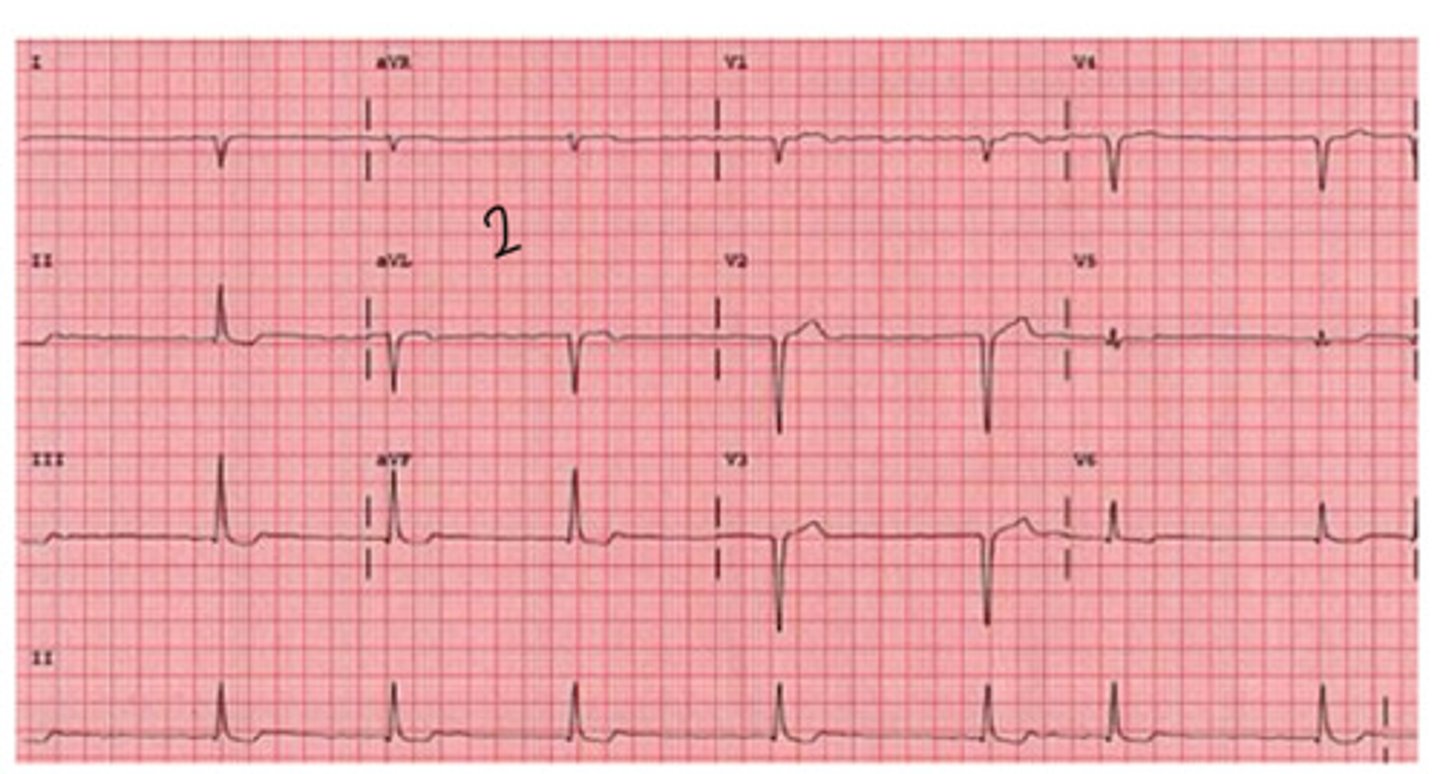
left axis deviation; up in 1, down in AVF
is this normal, left, or right axis deviation? why
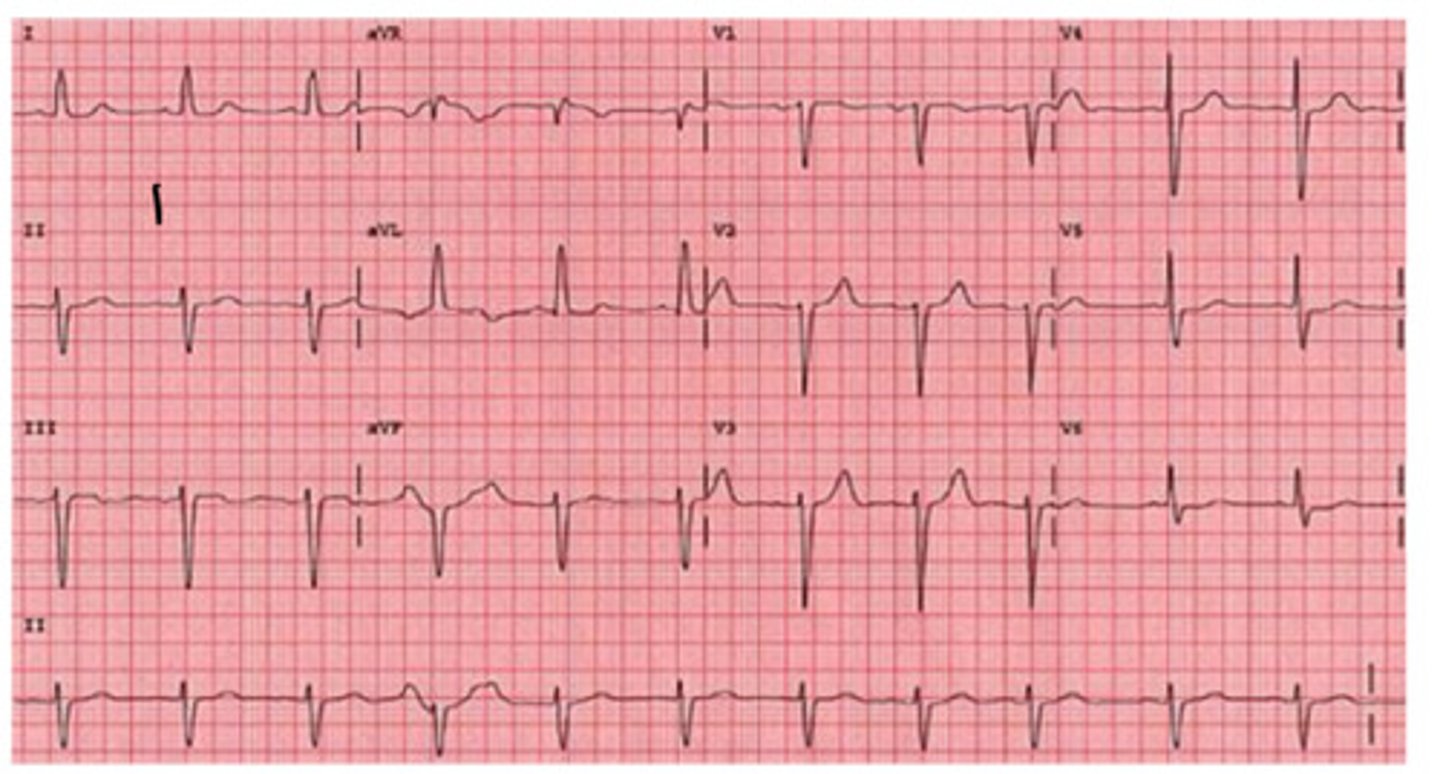
AVR -150
AVL -30
I 0
II +60
AVF +90
III +120
what are the angles from top left to clock wise
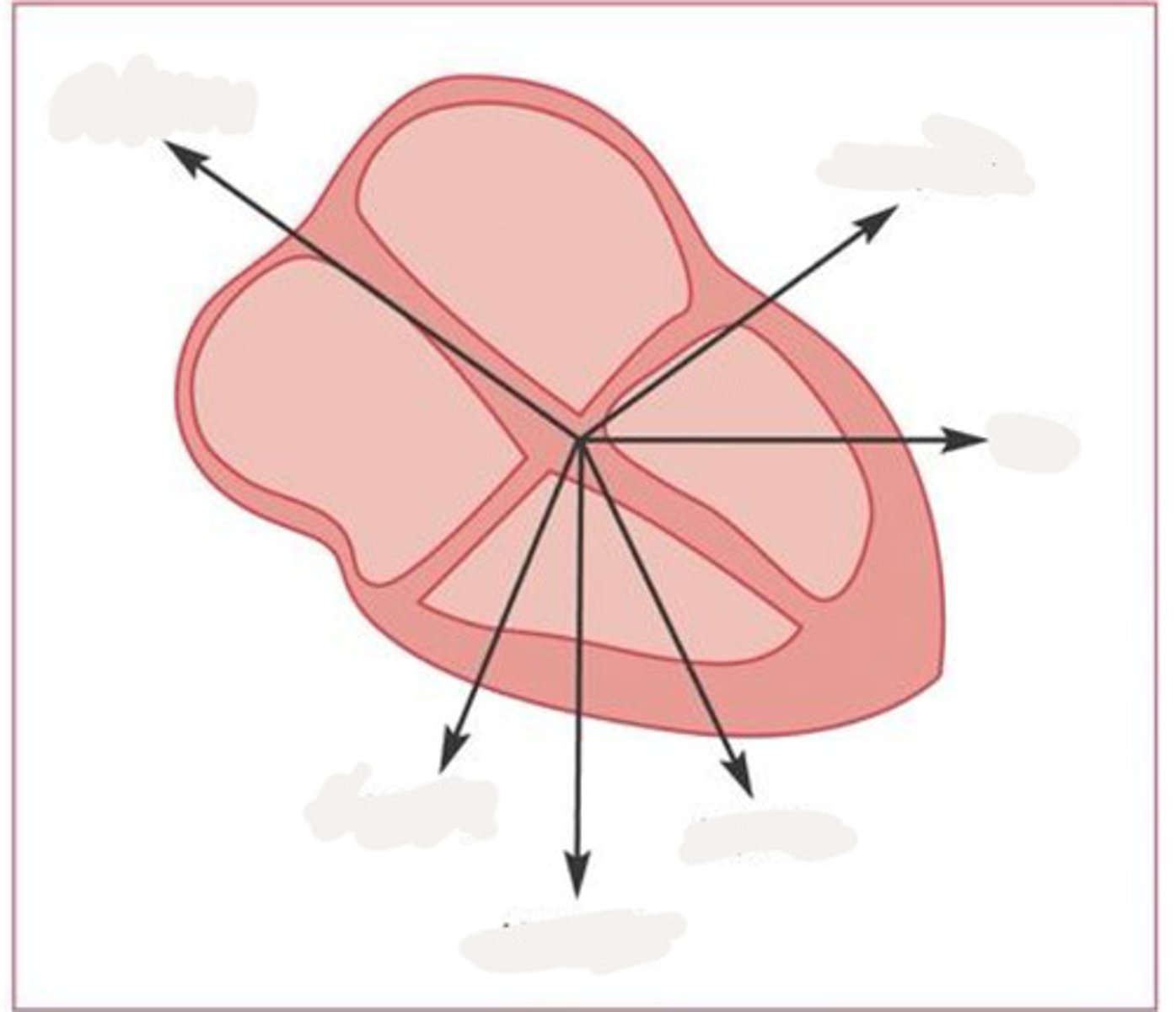
*
be able to determine precise axis
LVH w/ strain pattern
what is this
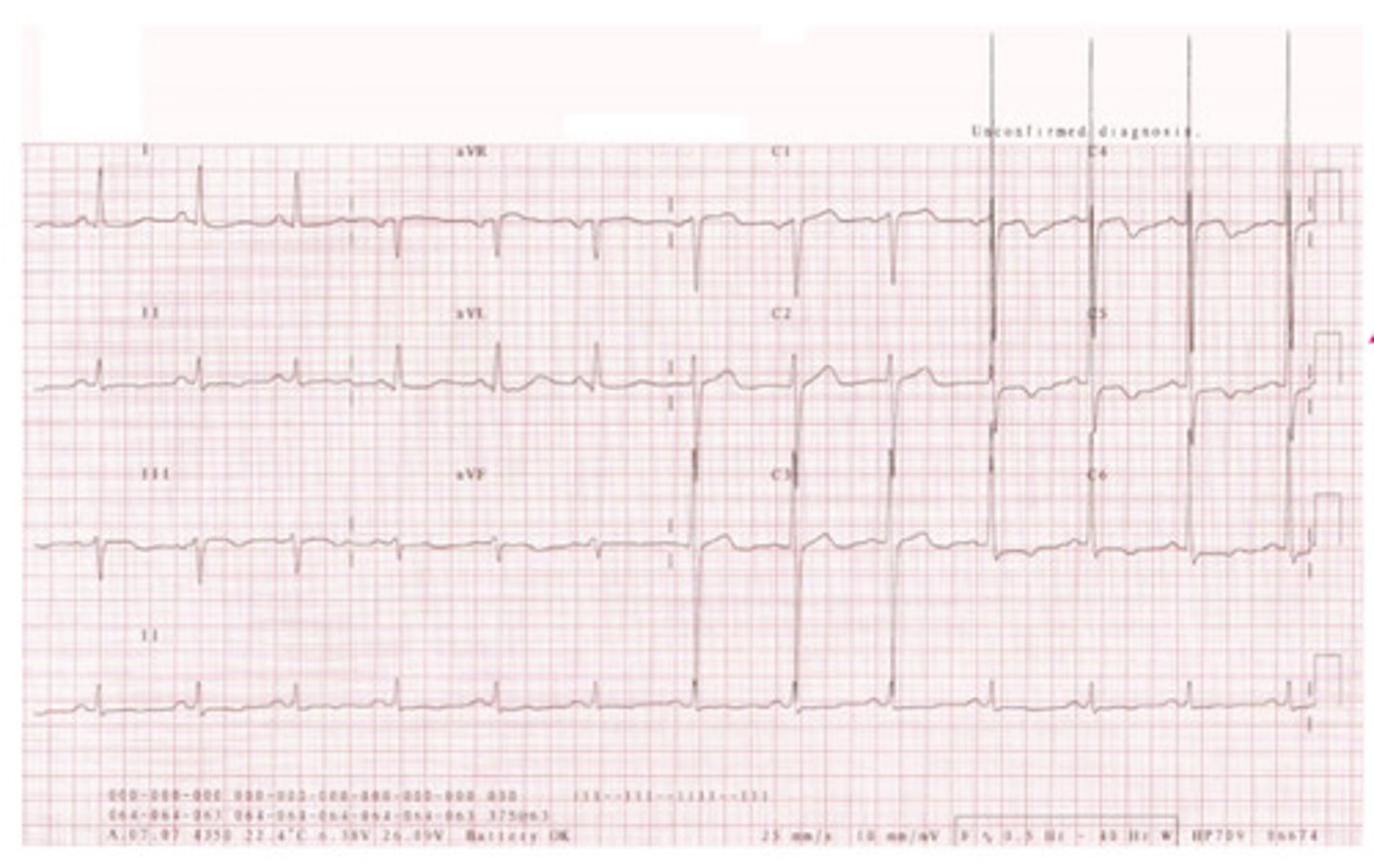
right ventricular hypertrophy
what is this
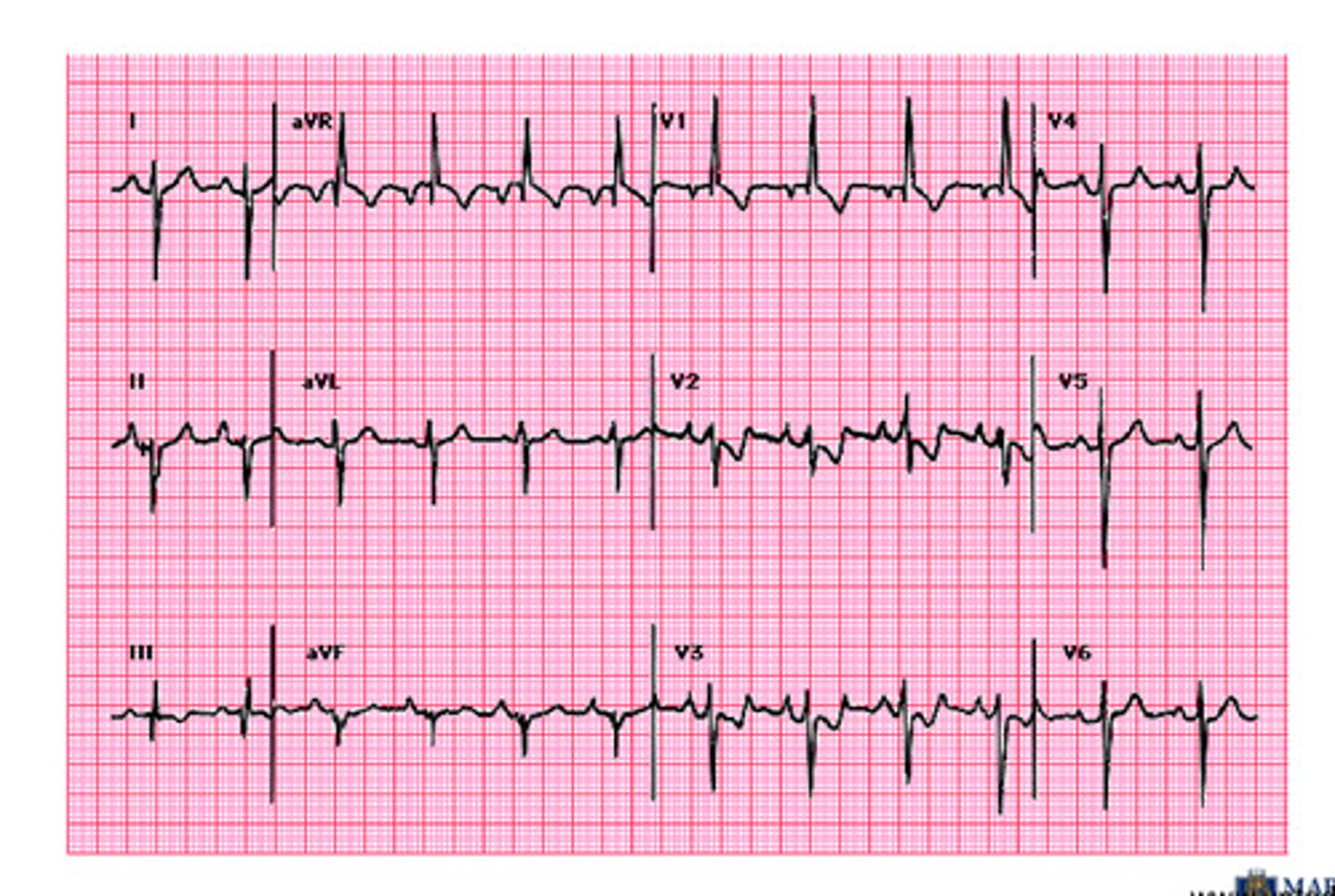
left atrial enlargement
what is this
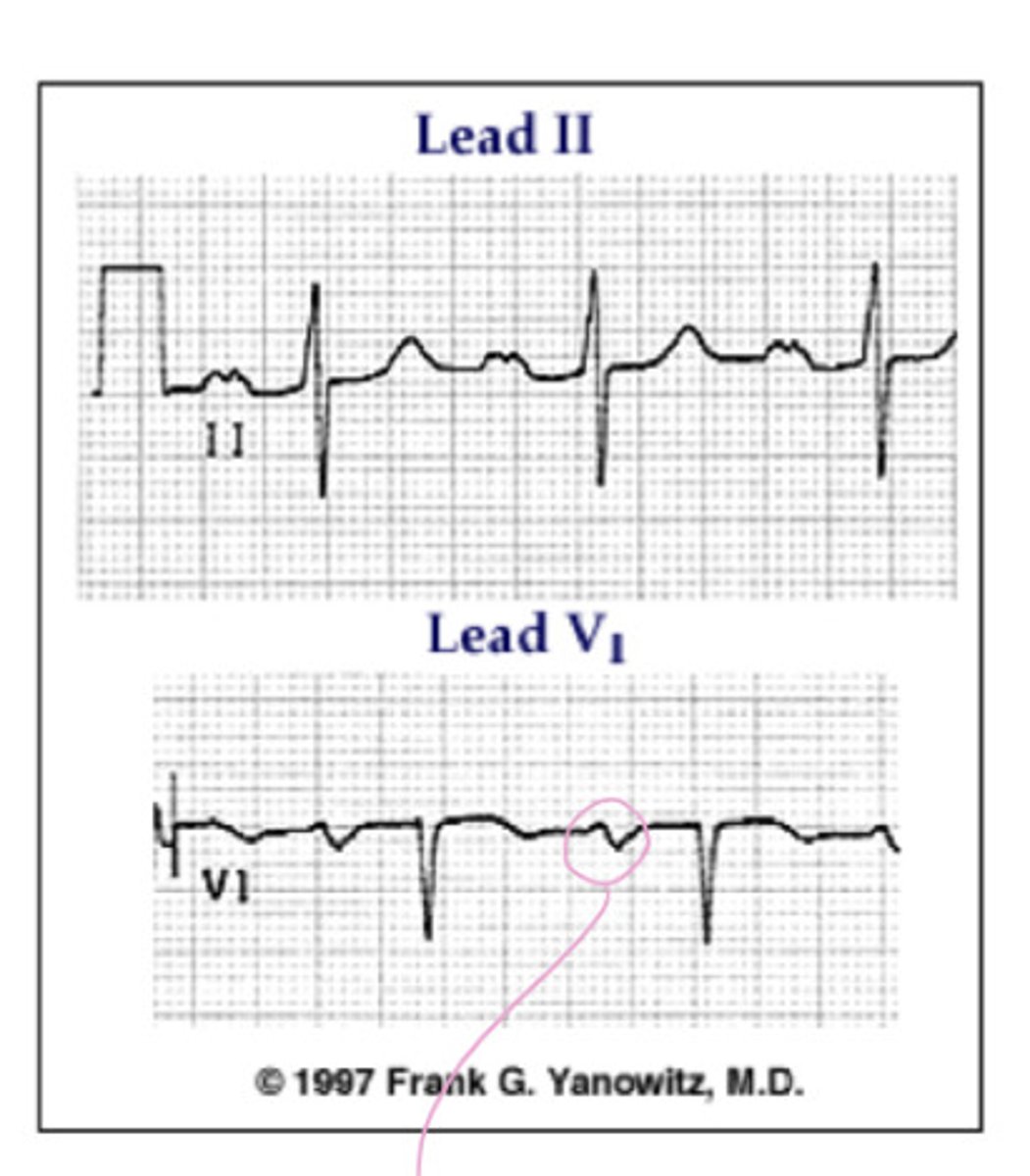
right atrial enlargement
what is this
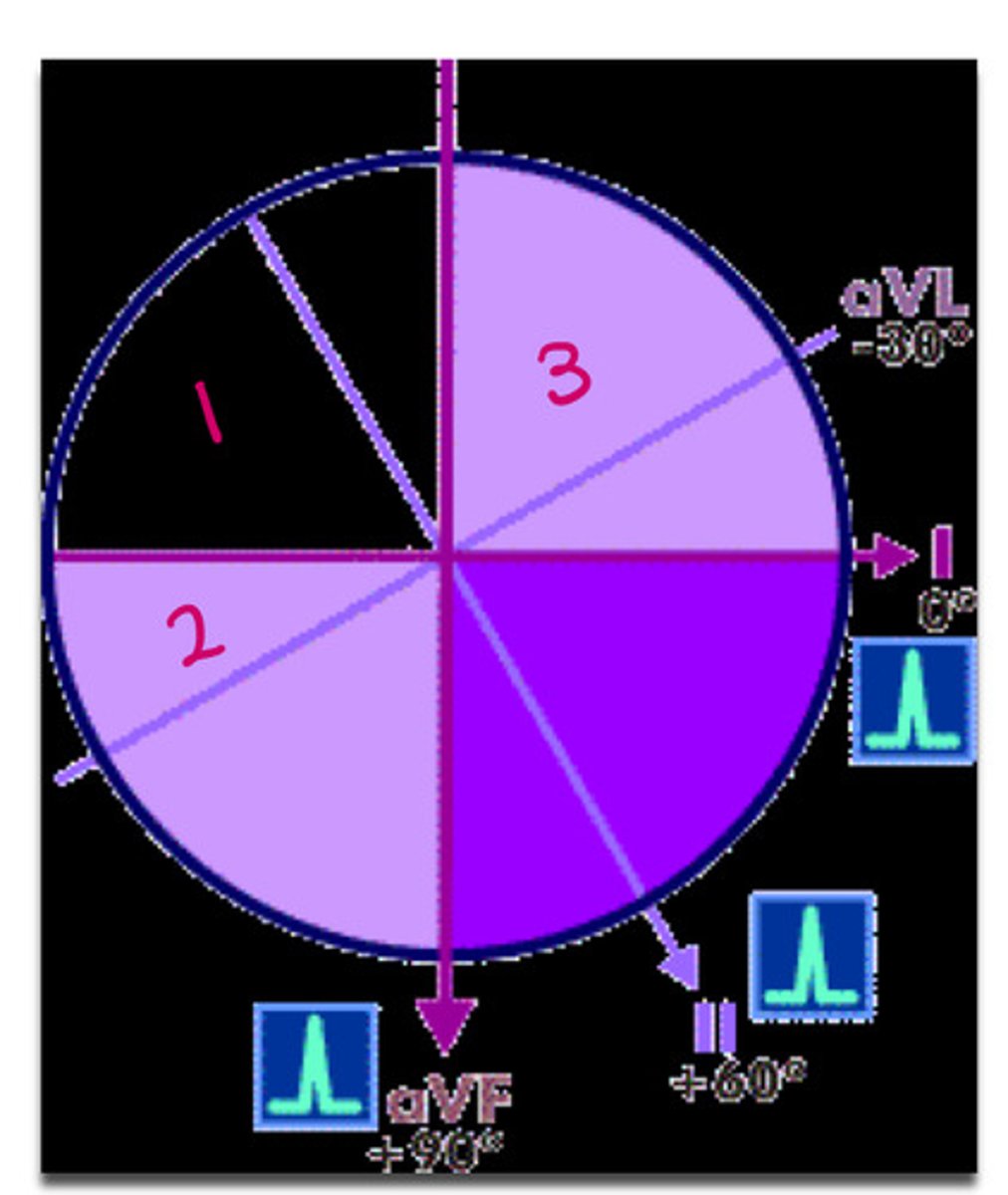
1: extreme R axis deviation
2: R axis deviation
3: left axis deviation
what do the numbers correlate to
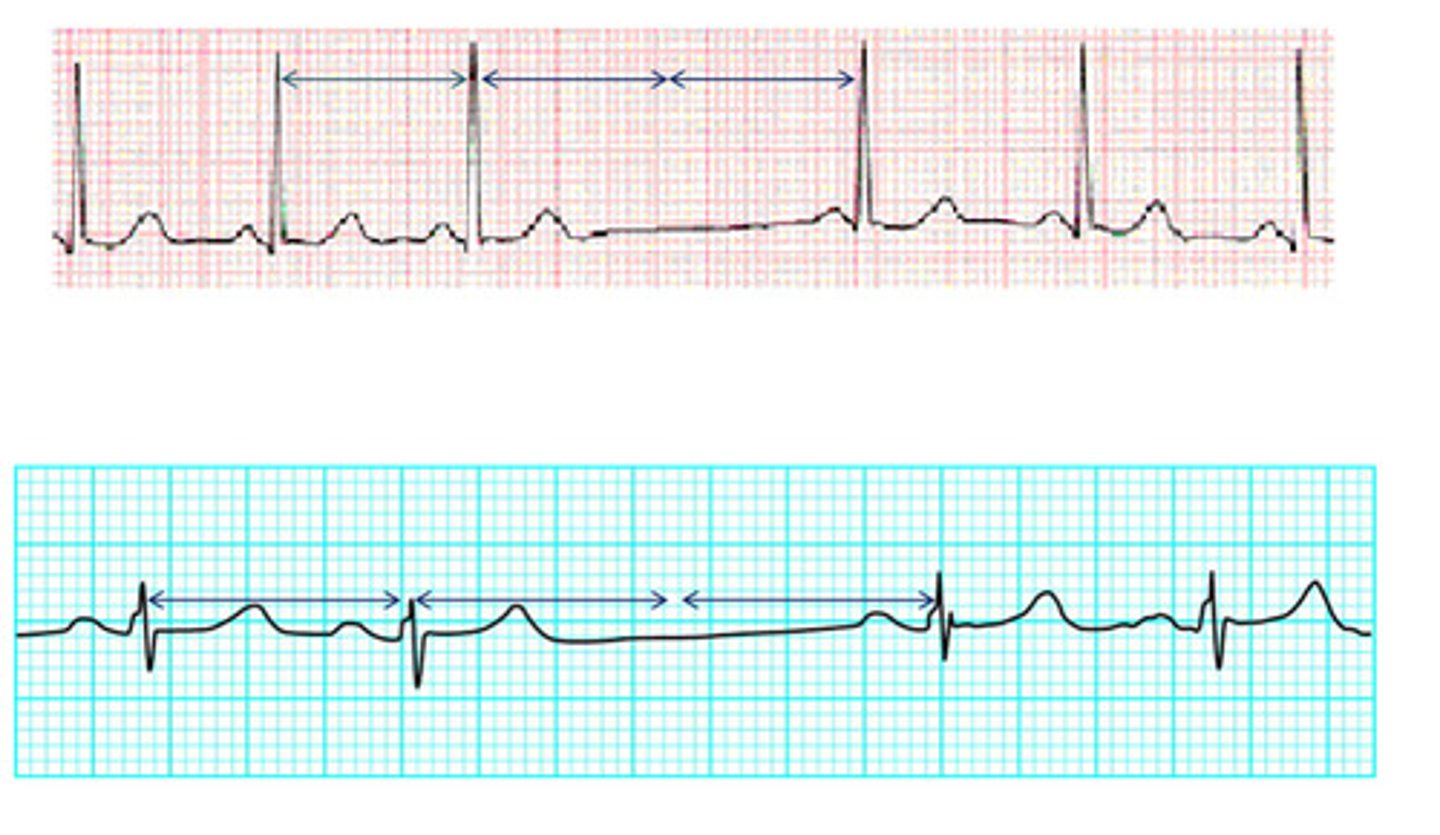
sinus arrest/exit block
what is this
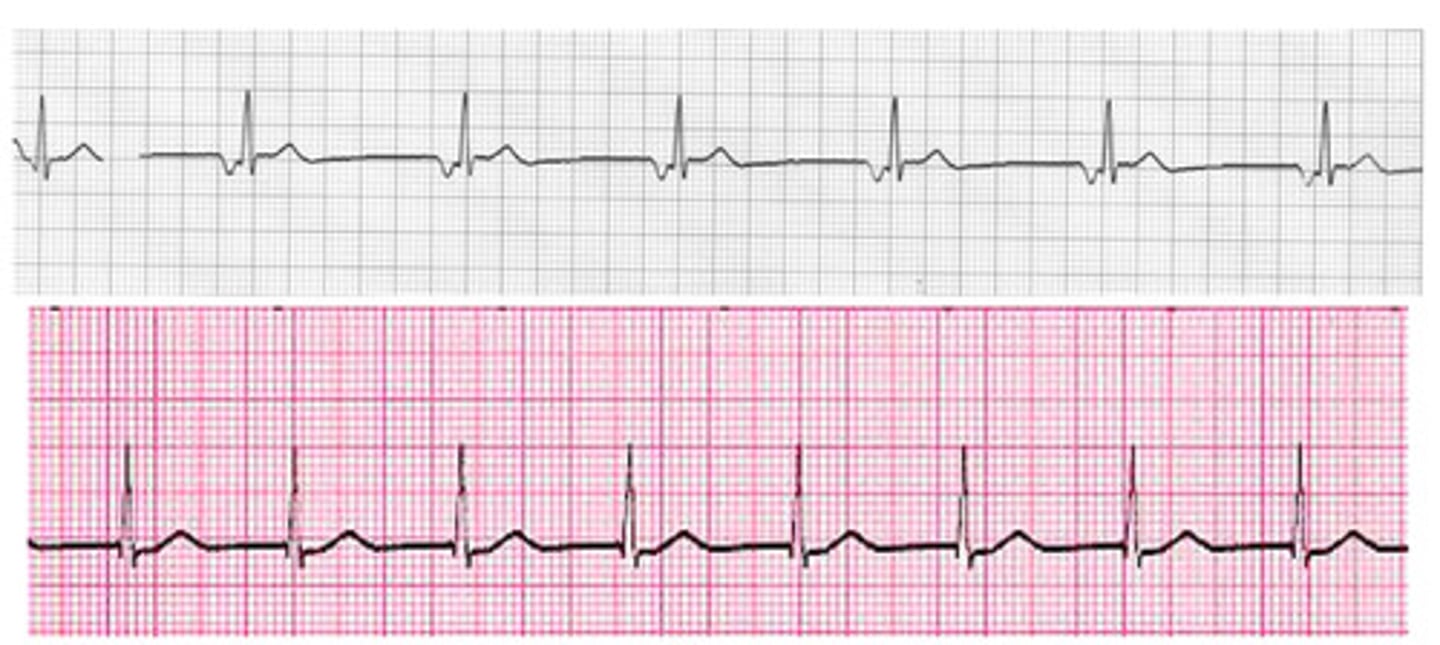
junctional rhythm
what is this
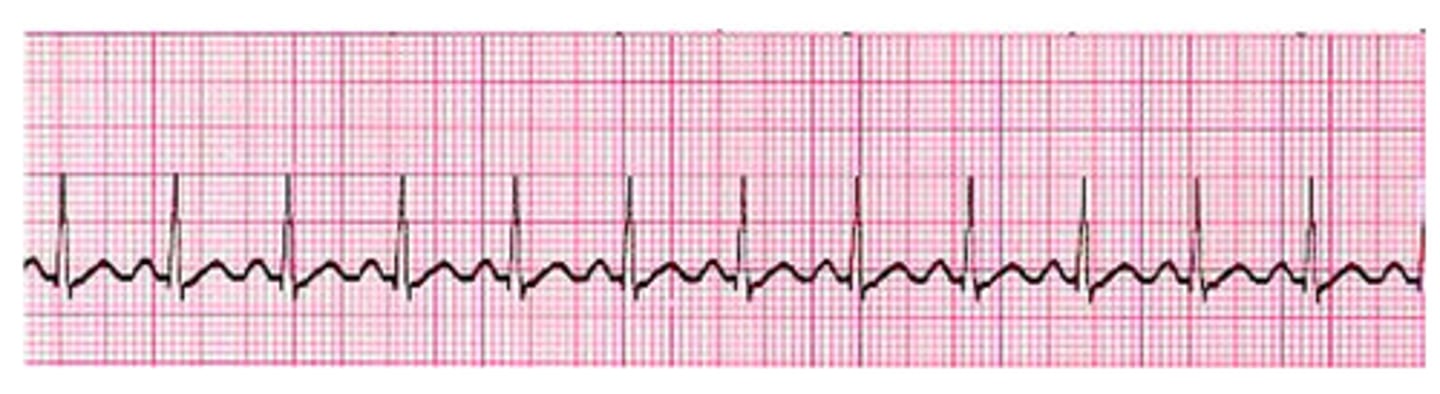
sinus tachycardia
what is this
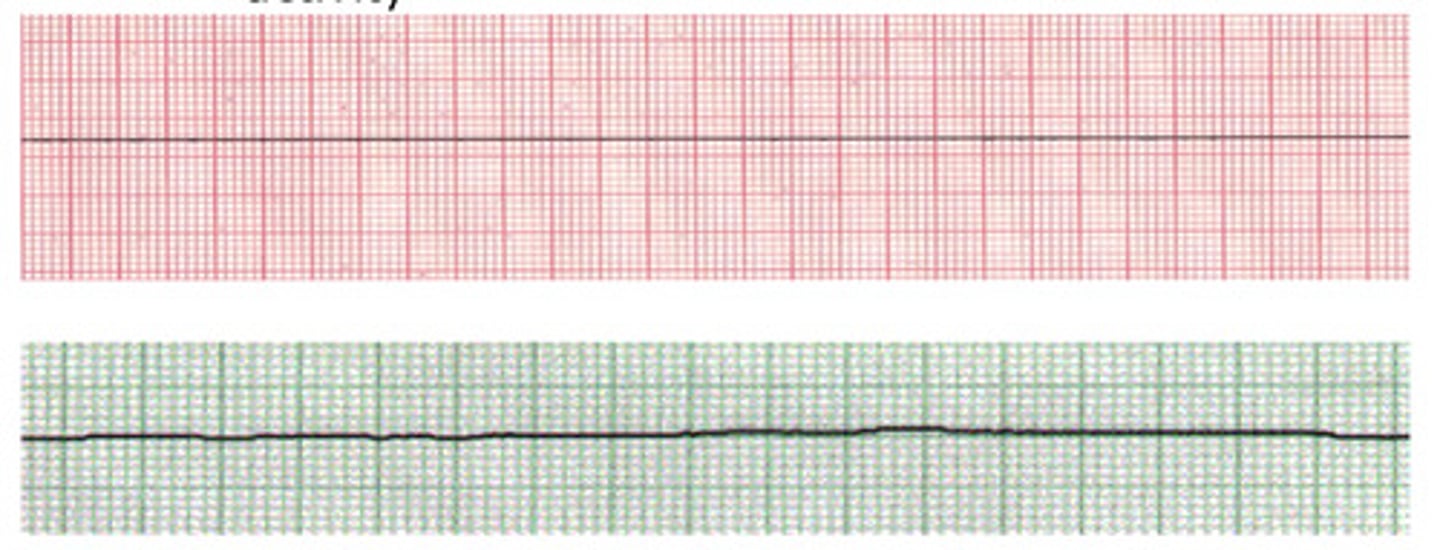
asystole
what is this
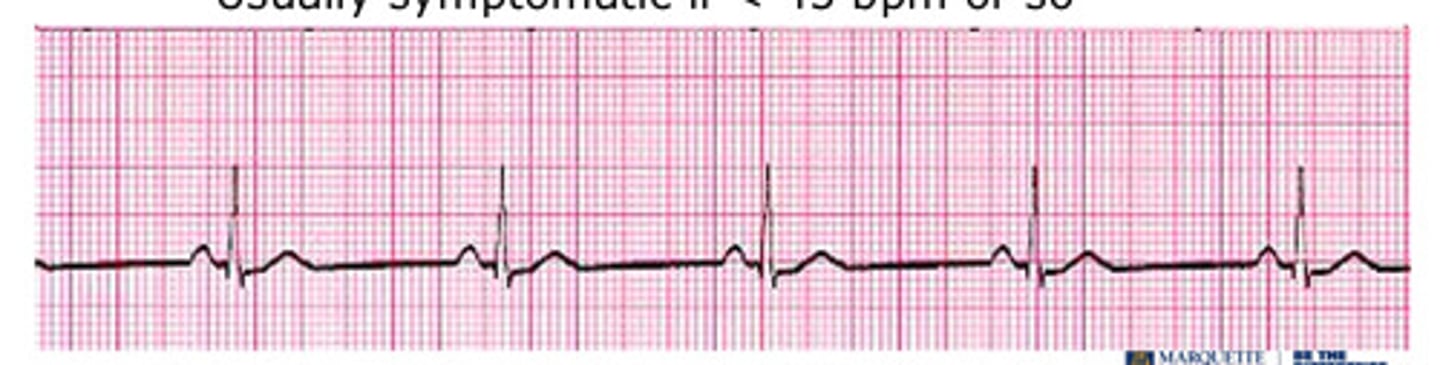
sinus bradycardia
what is this
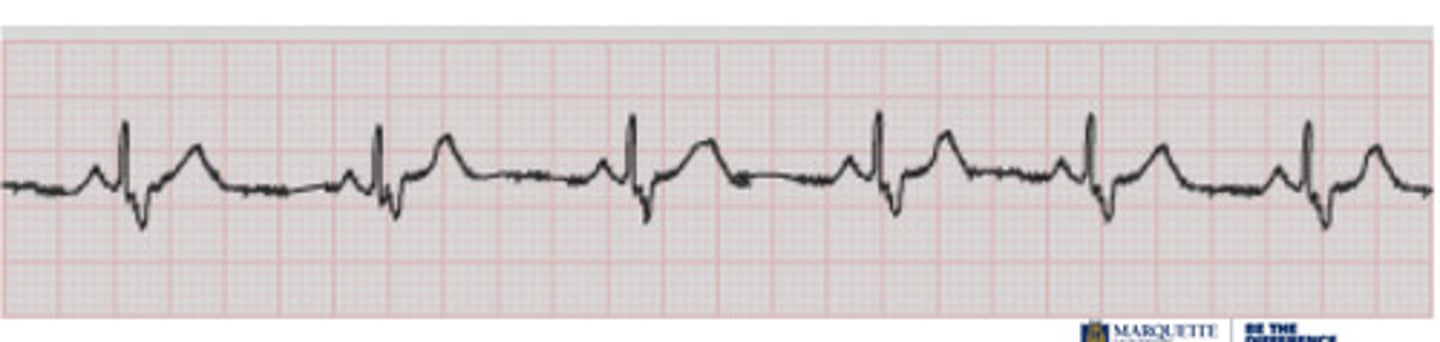
general sinus arrhythmia
what is this
PSVT (paroxysmal supraventricular tachycardia)
what is this
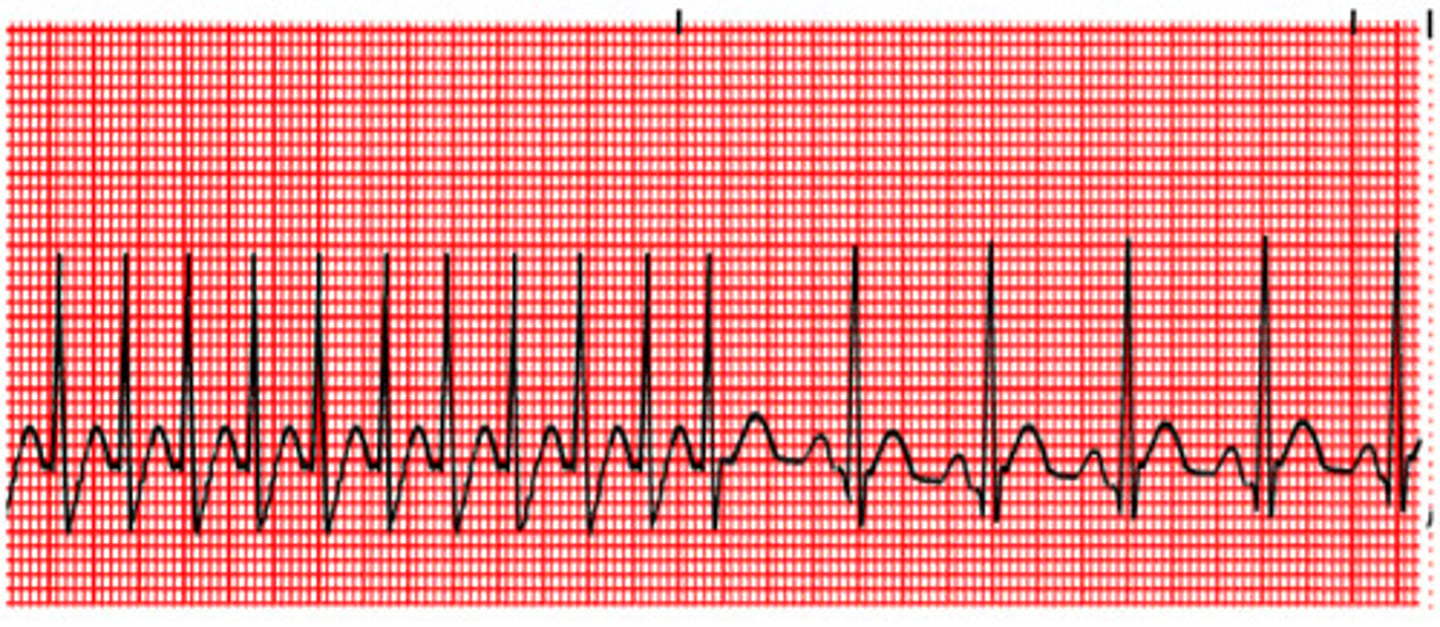
a fib
- a: fine
- b: coarse
what is this & what types are they?
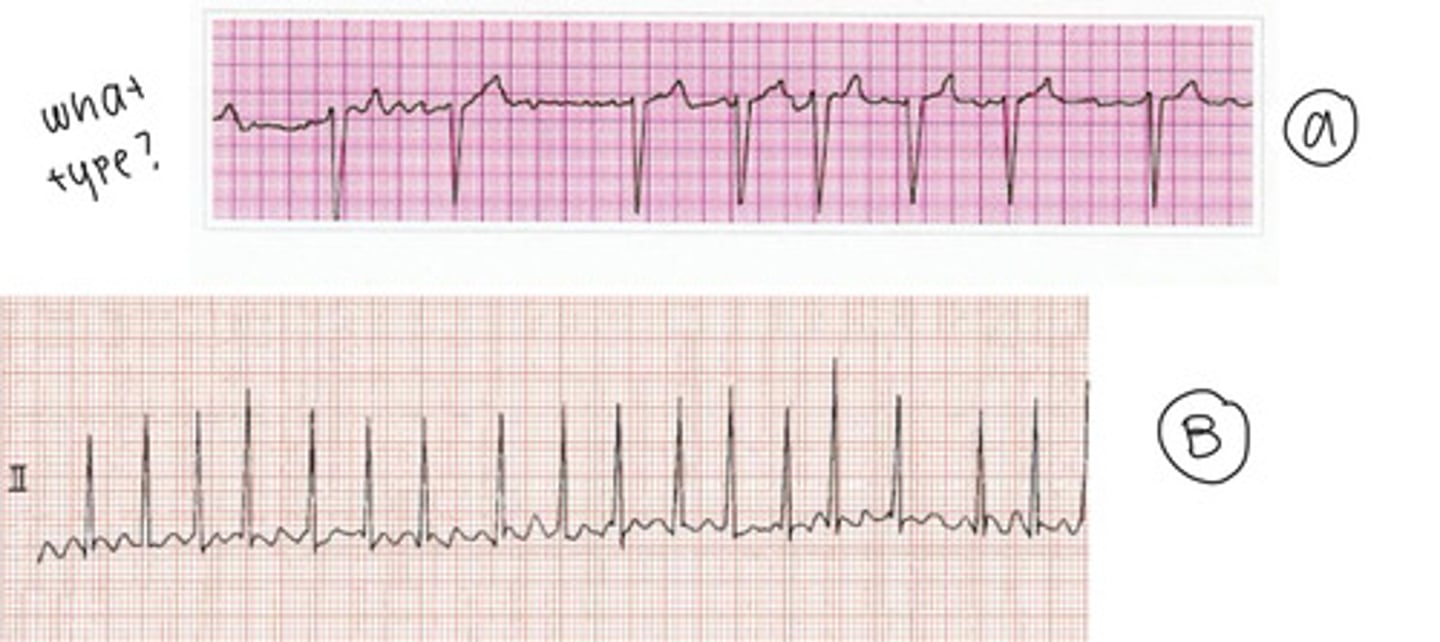
multifocal atrial tachycardia
what is this
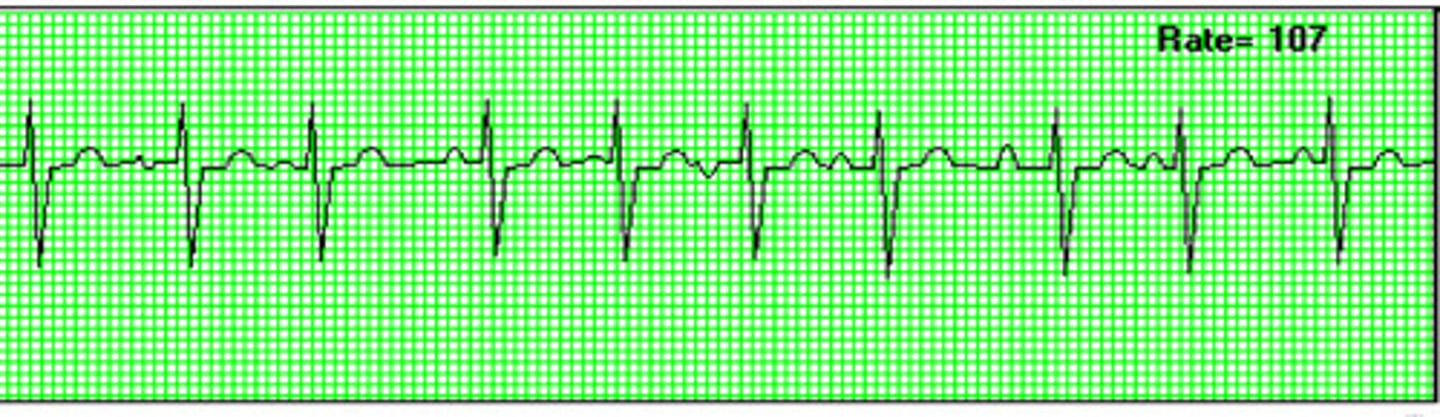
atrial flutter
what is this
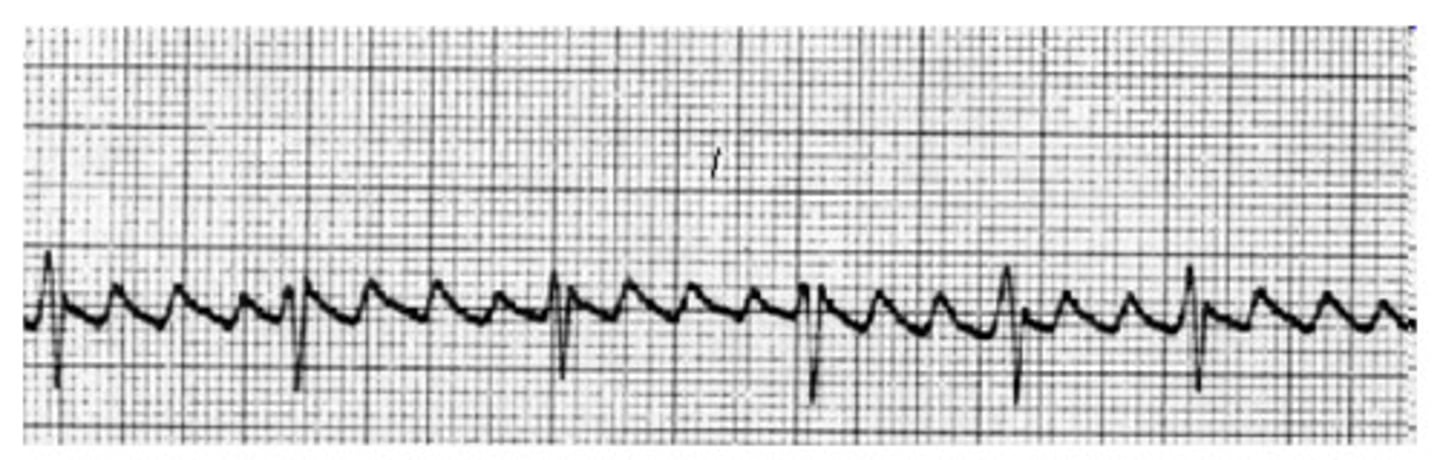
premature junctional beat
what is this
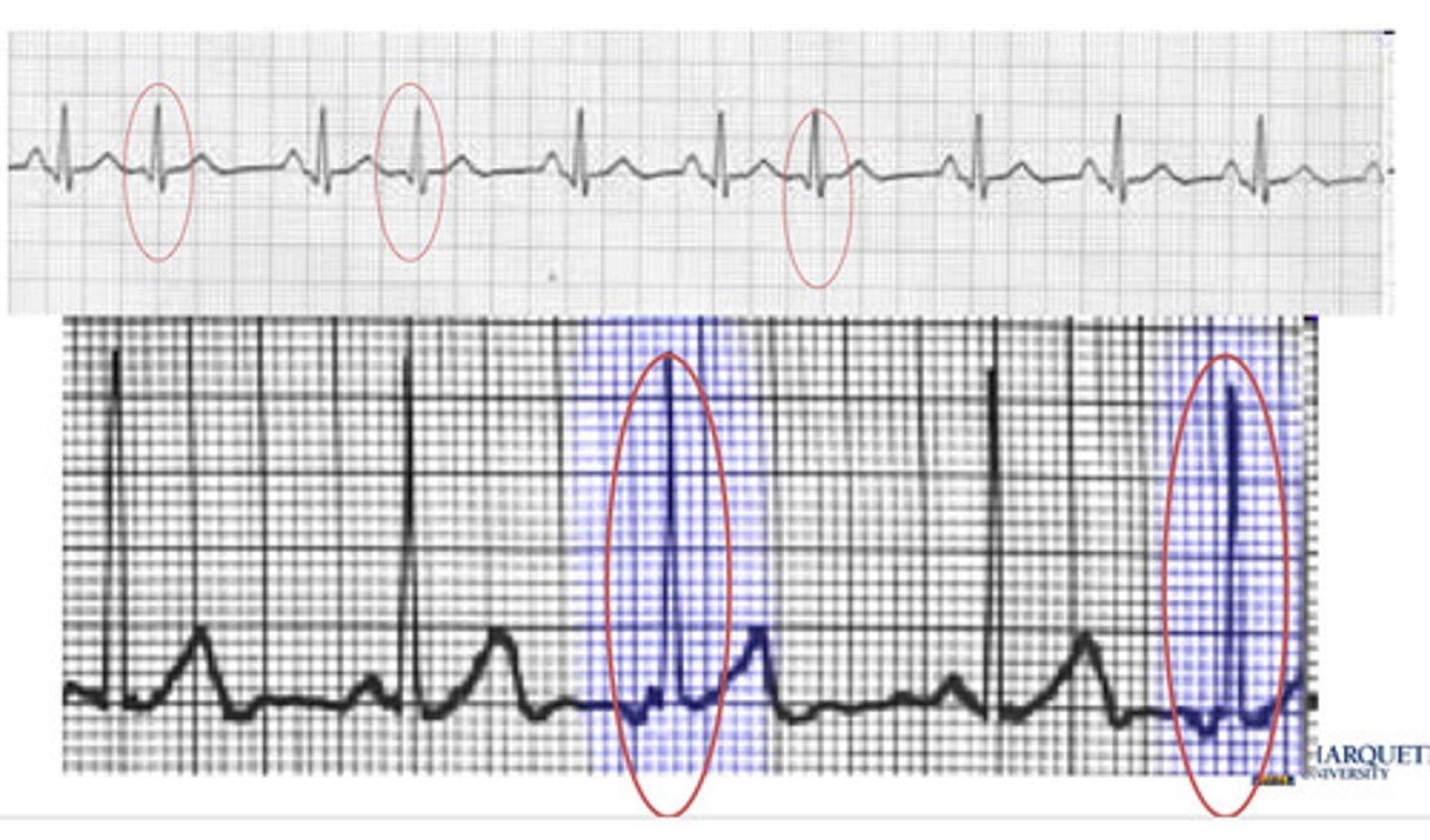
premature atrial contraction (PAC)
what is this
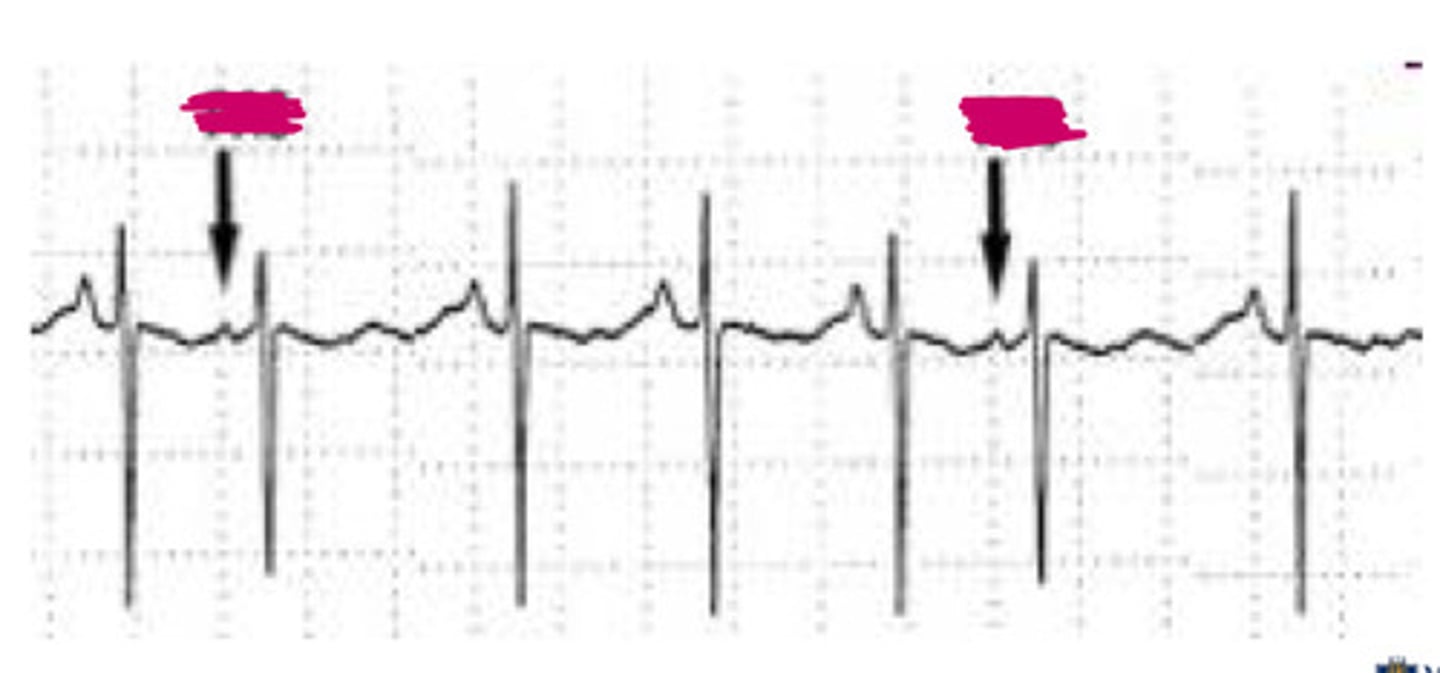
- a: vtach
- b: vfib
what is this
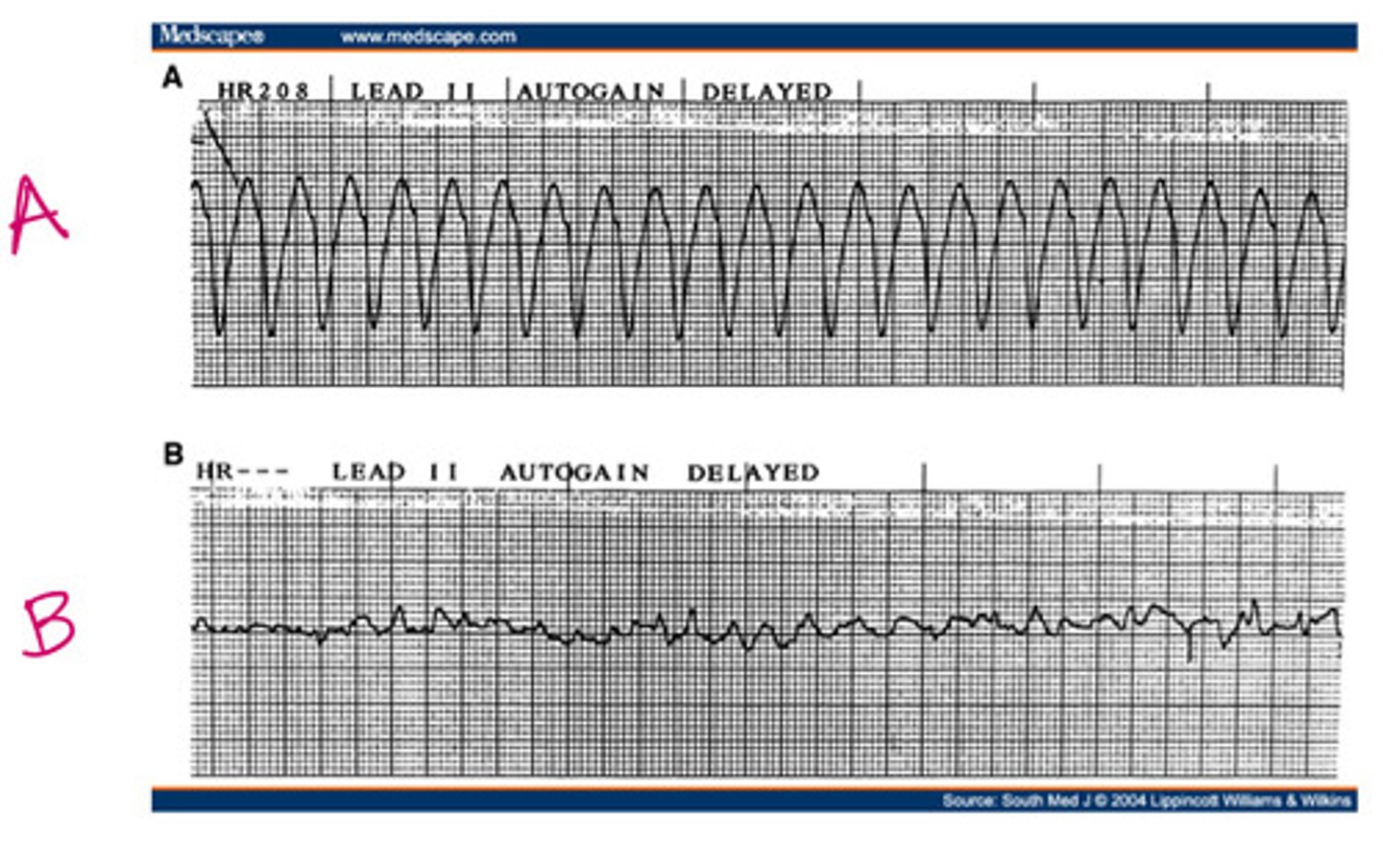
ventricular fusion beat lol
what is this
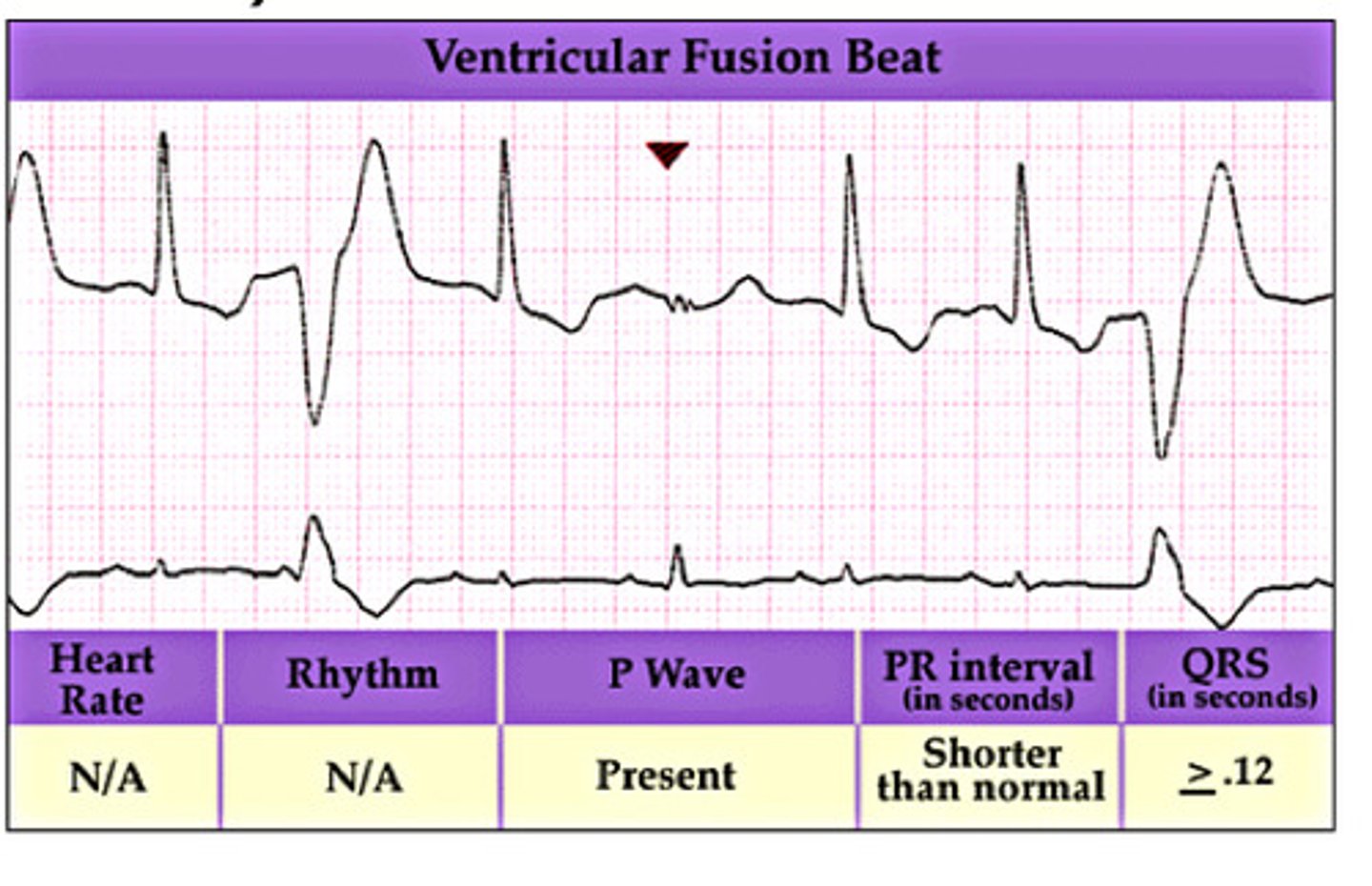
accelerated idioventricular
what is this
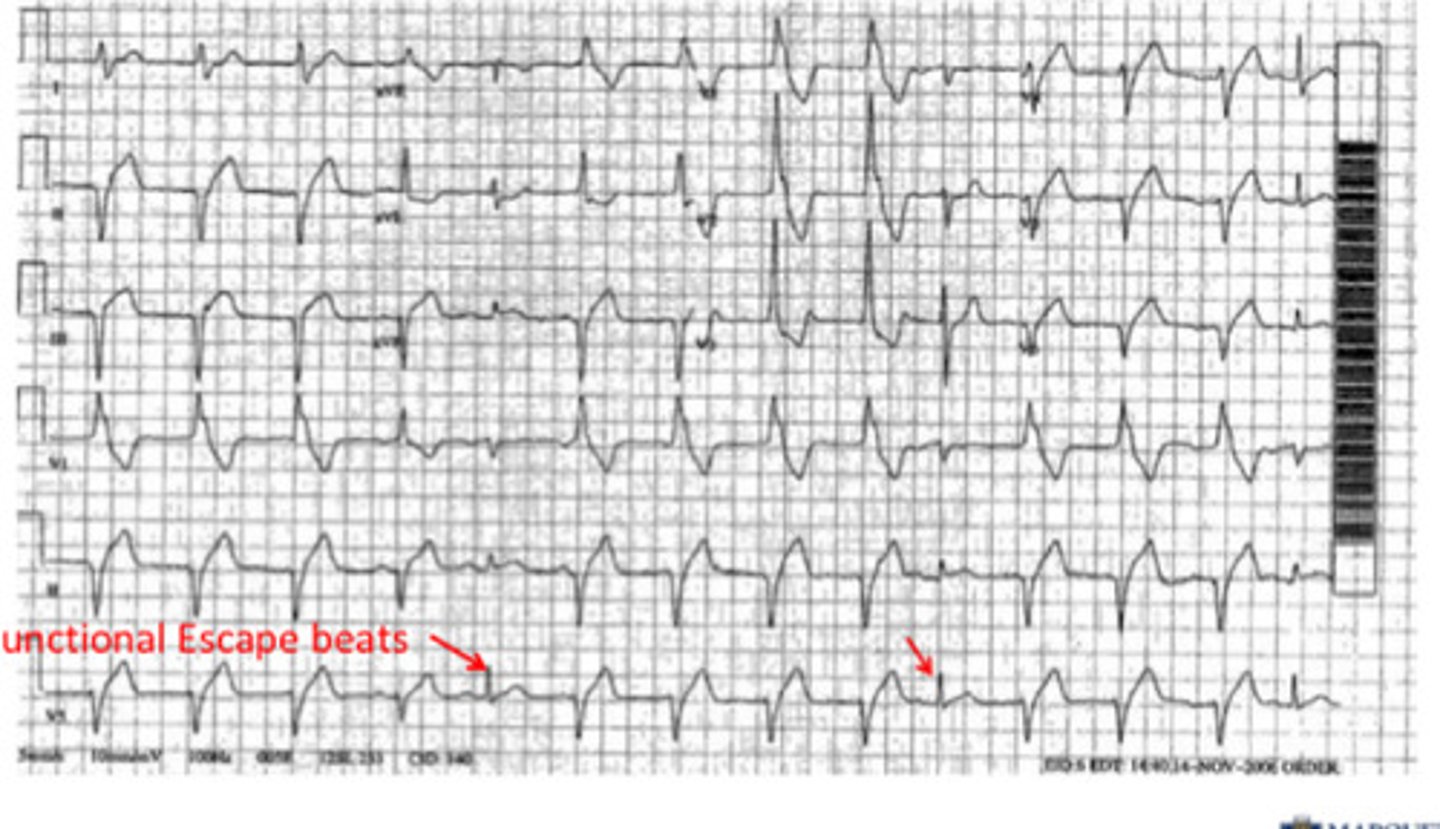
R on T phenomenon
what is this
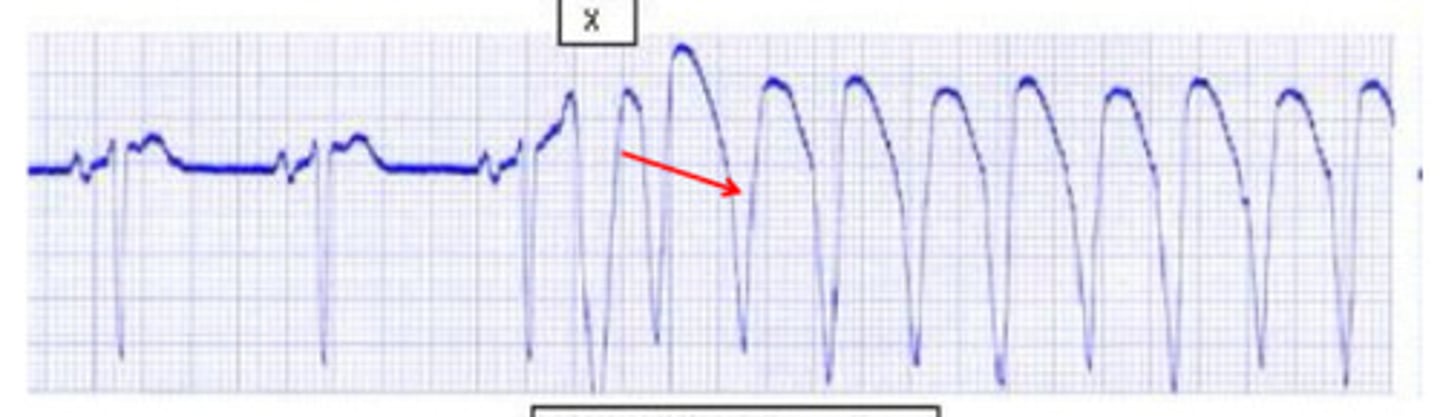
polymorphic v tach
what is this
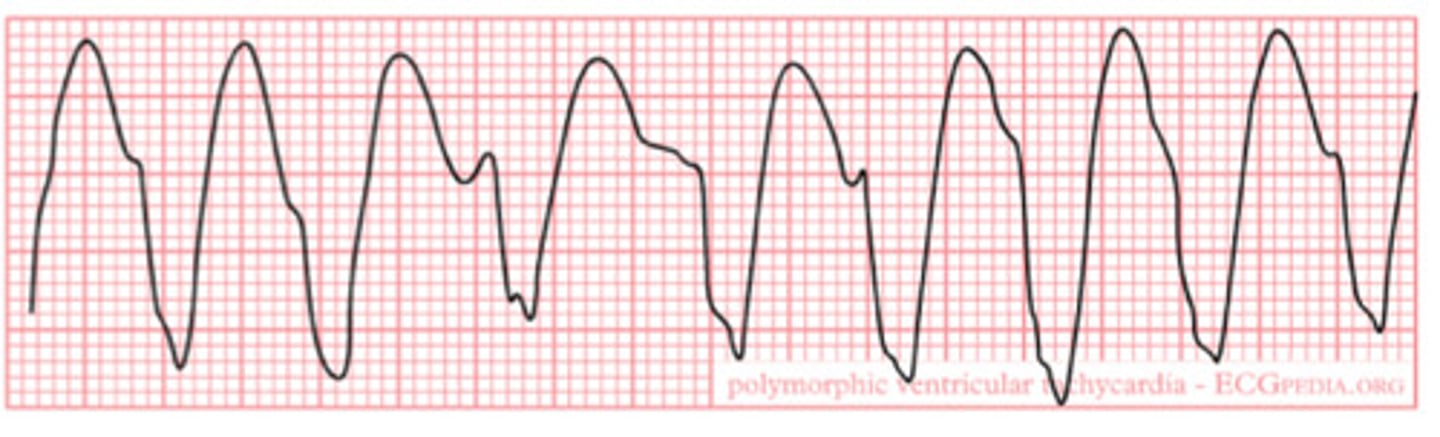
monomorphic v tach
what is this
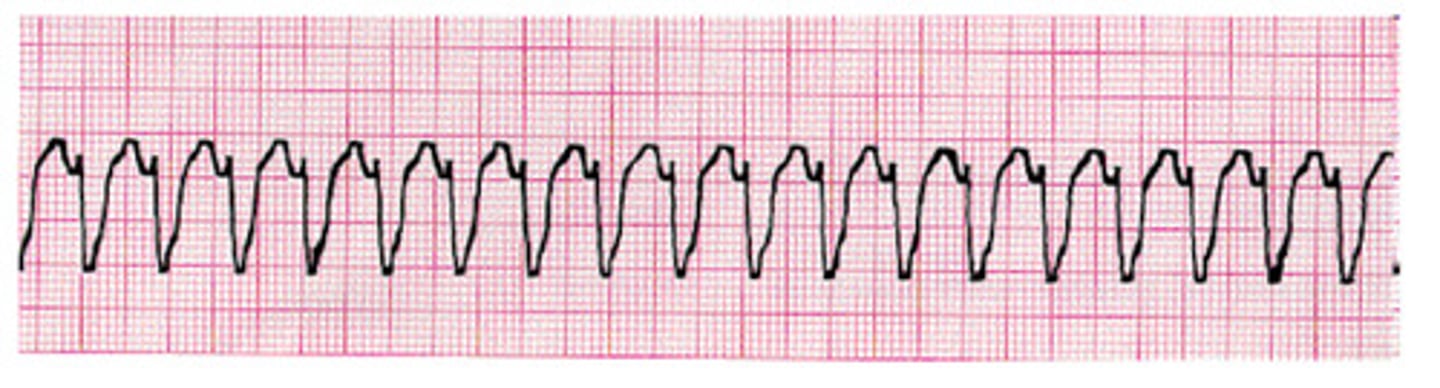
torsades de pointes
what is this
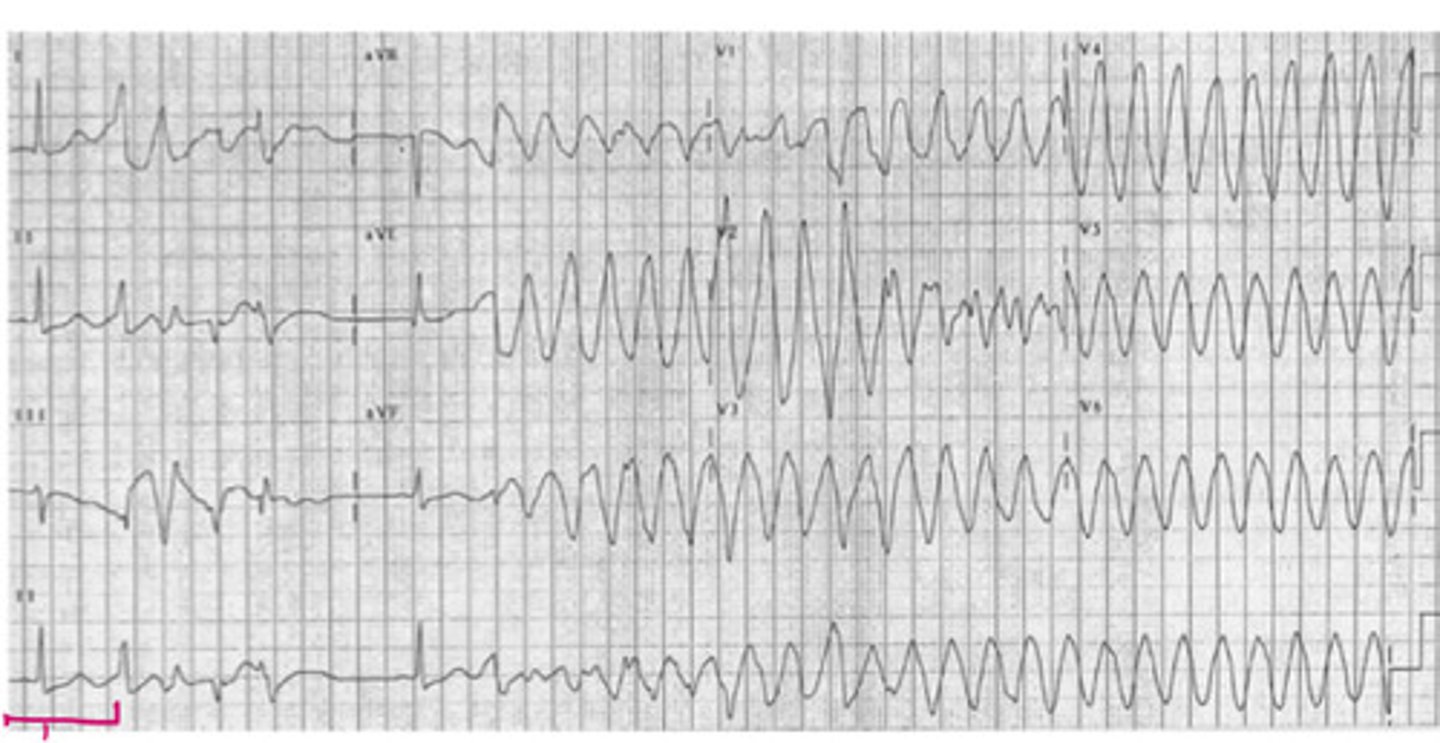
unifocal PVC
what is this
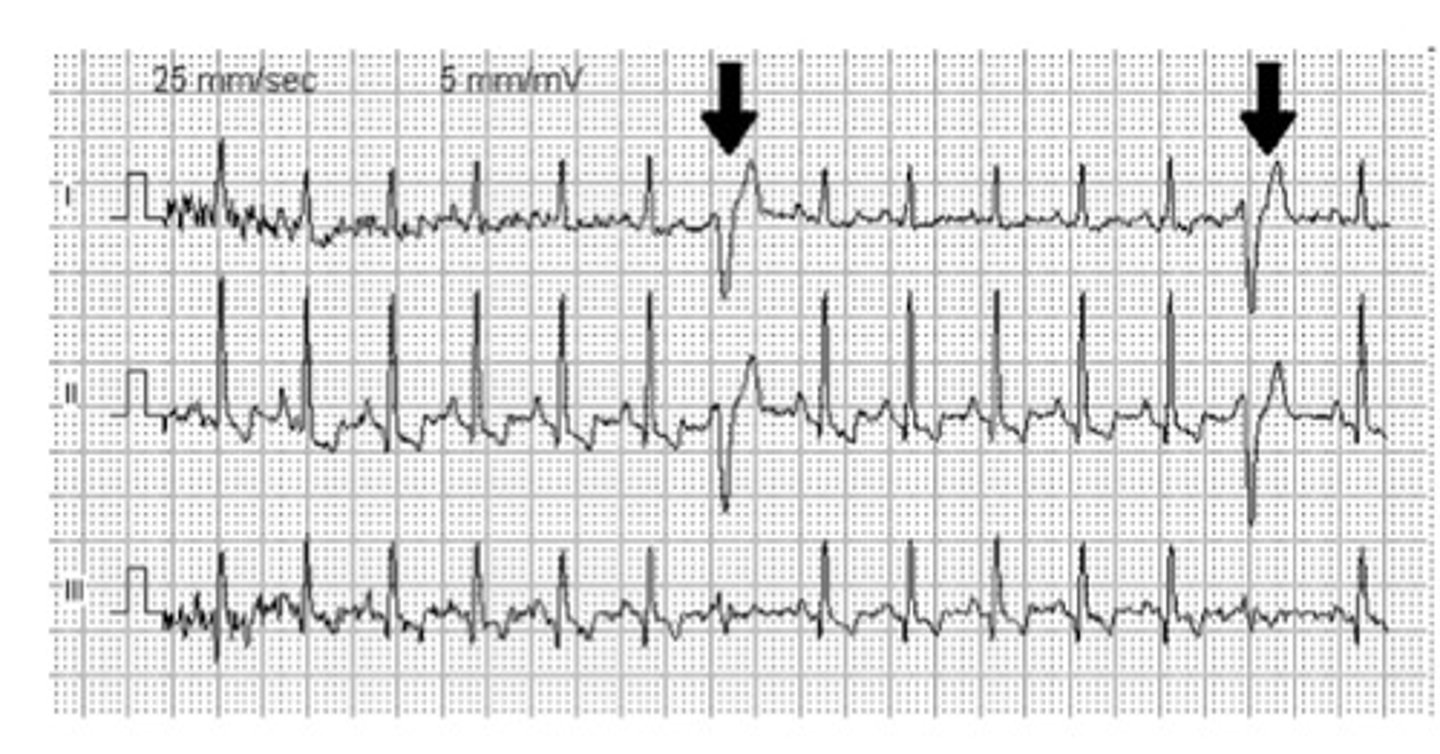
ventricular tachycardia
what is this
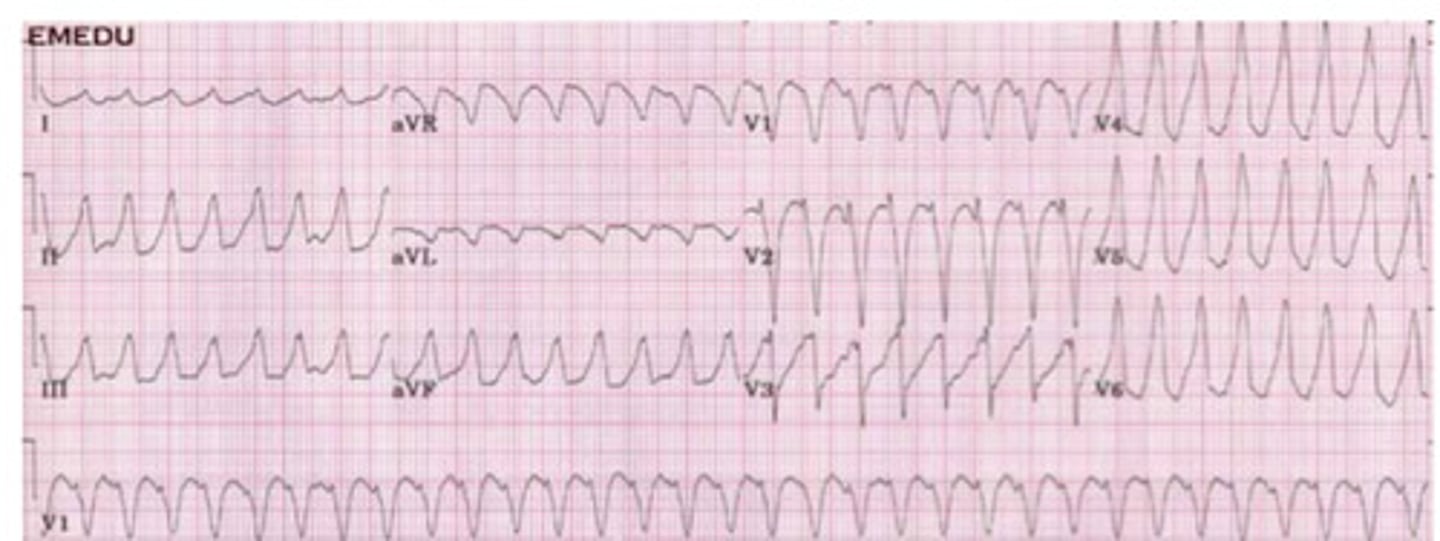
Wolf-Parkinson-White Syndrome
what is this
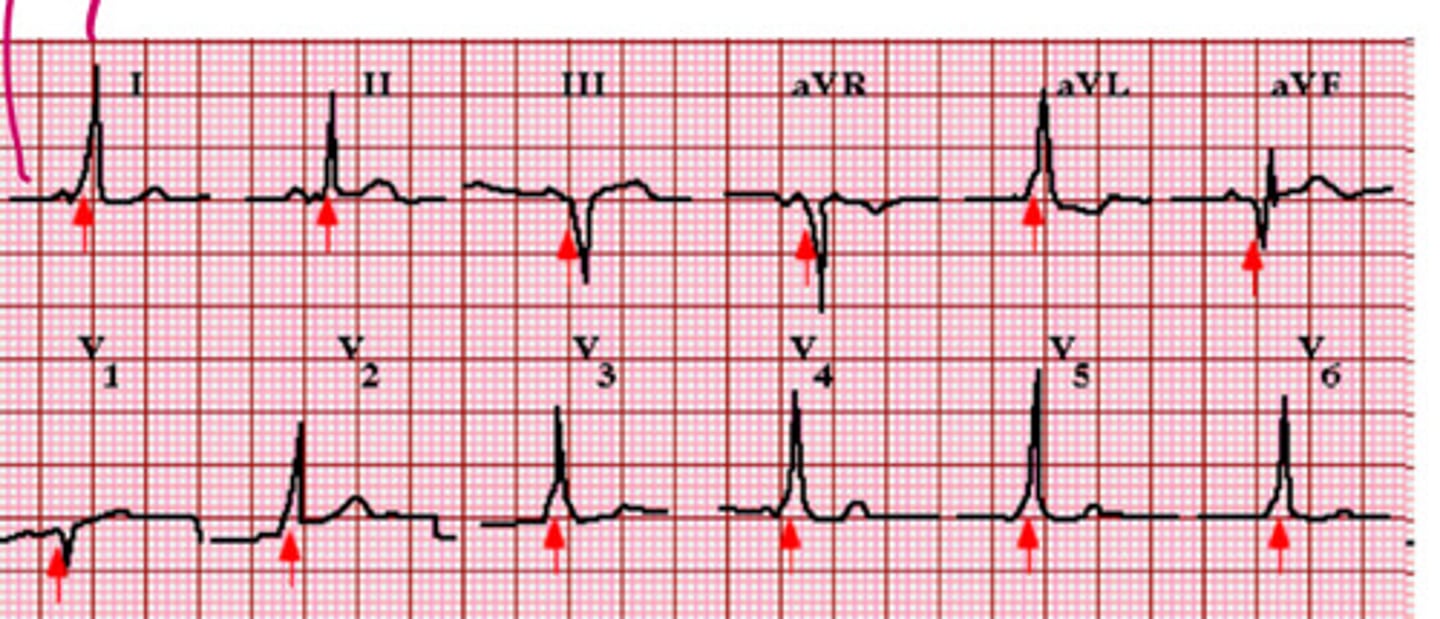
left bundle branch block
what is this
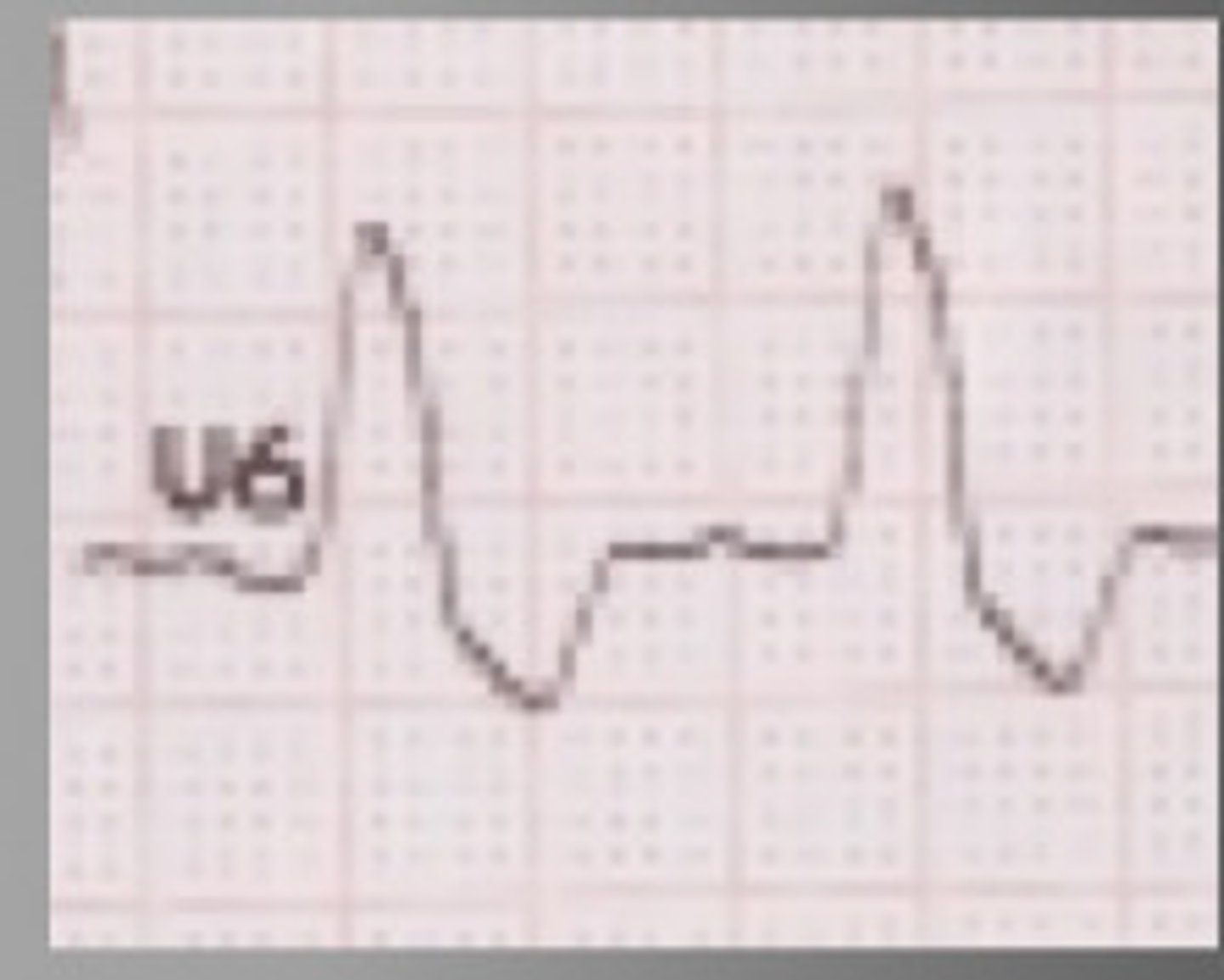
left posterior fascicular block
what is this
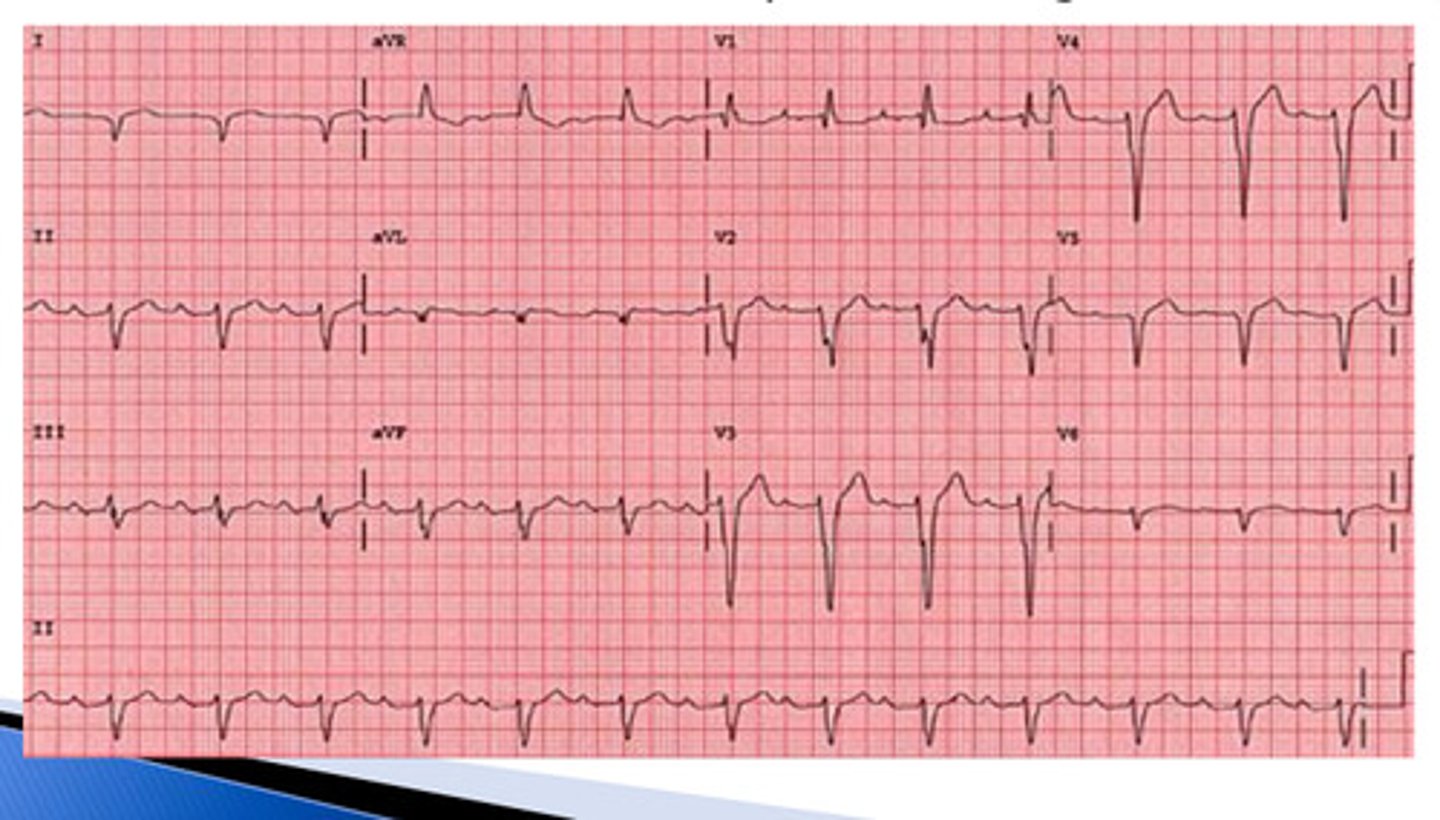
right bundle branch block
what is this
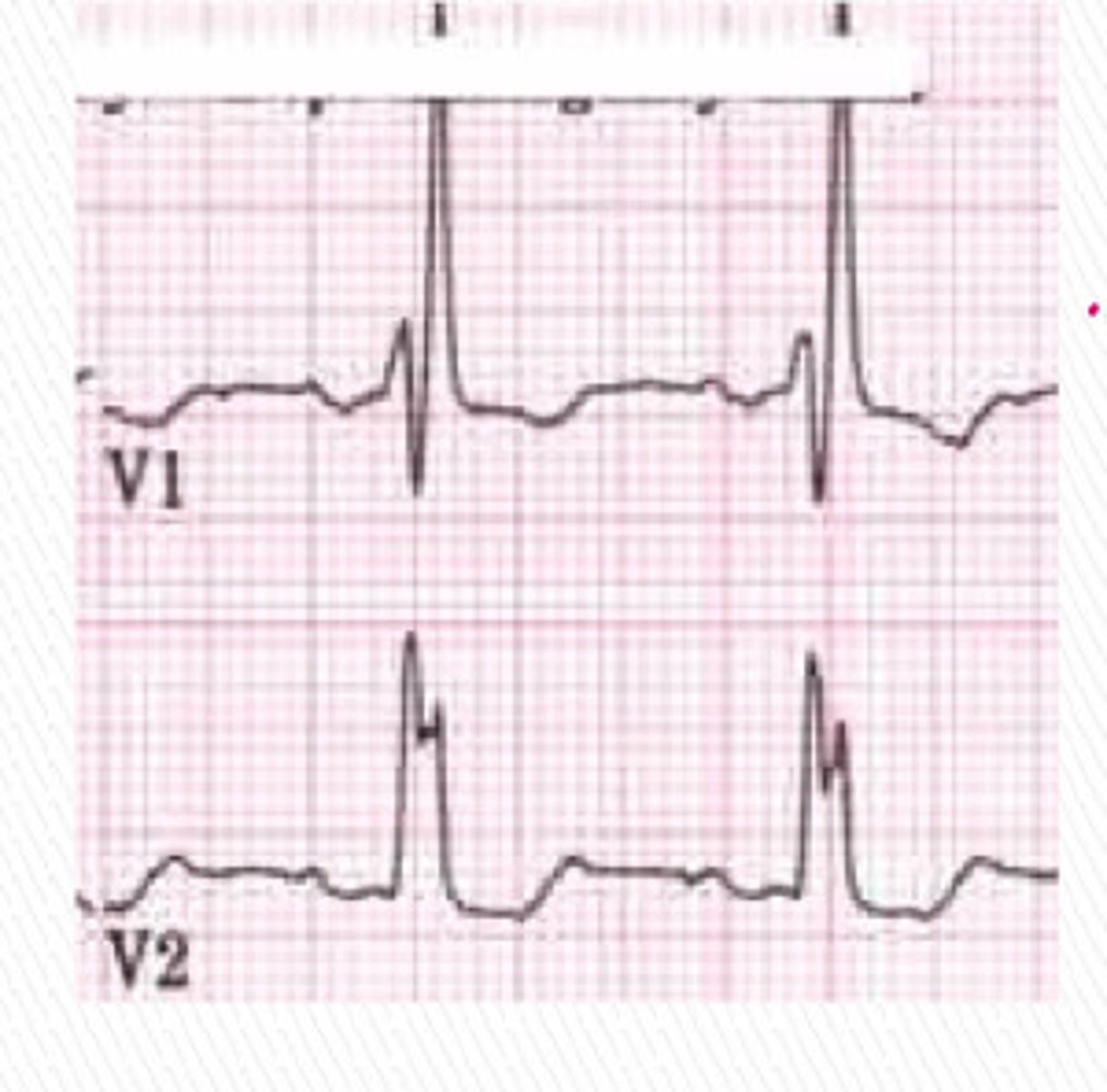
3rd degree heart block
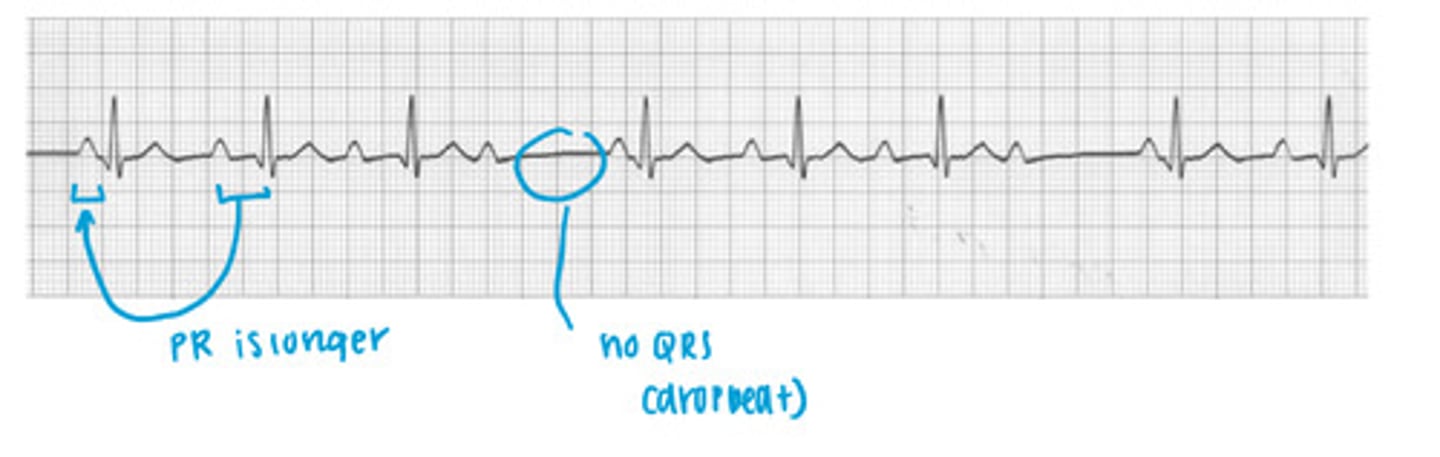
what is this
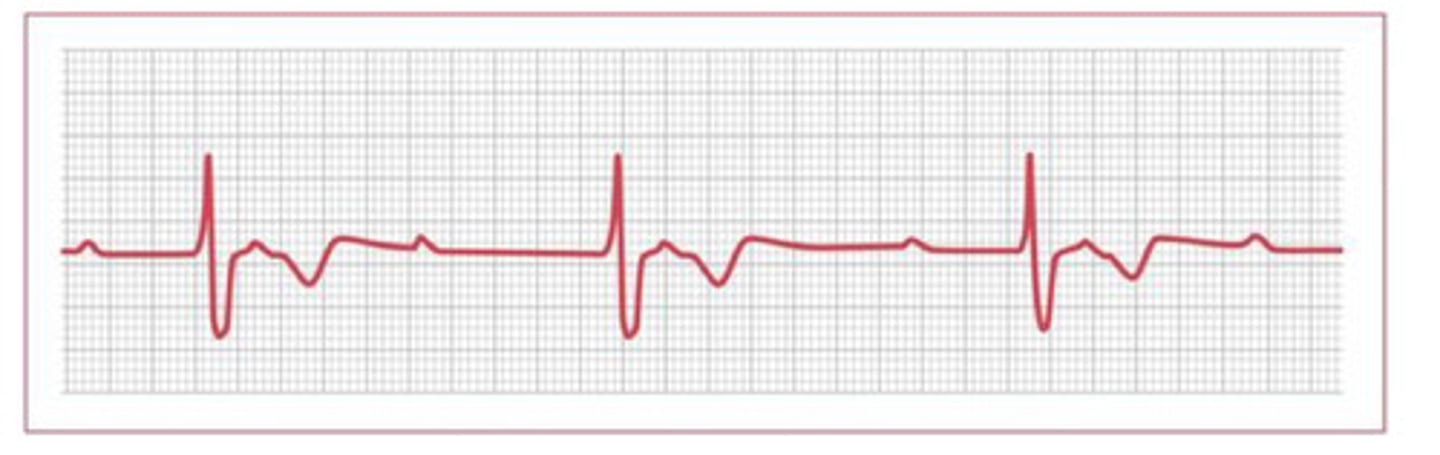
wenckebach
what is this
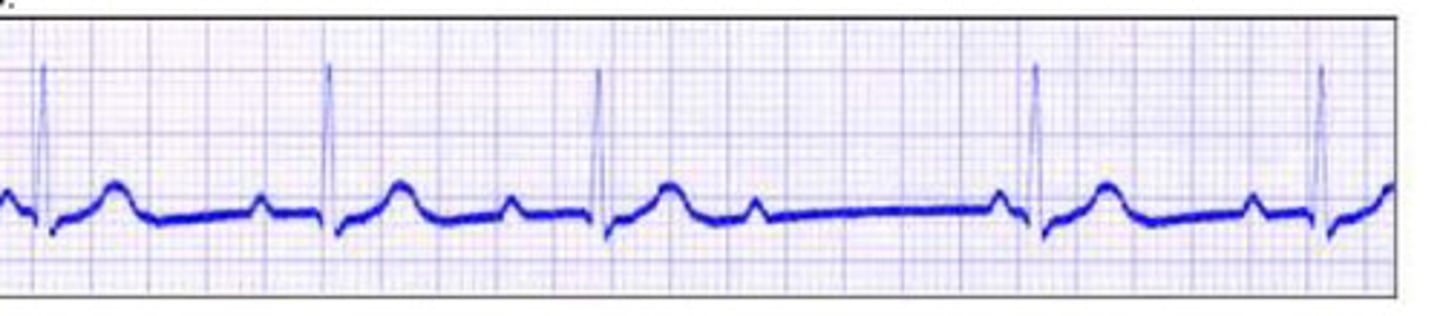
left anterior fascicular block
what is this
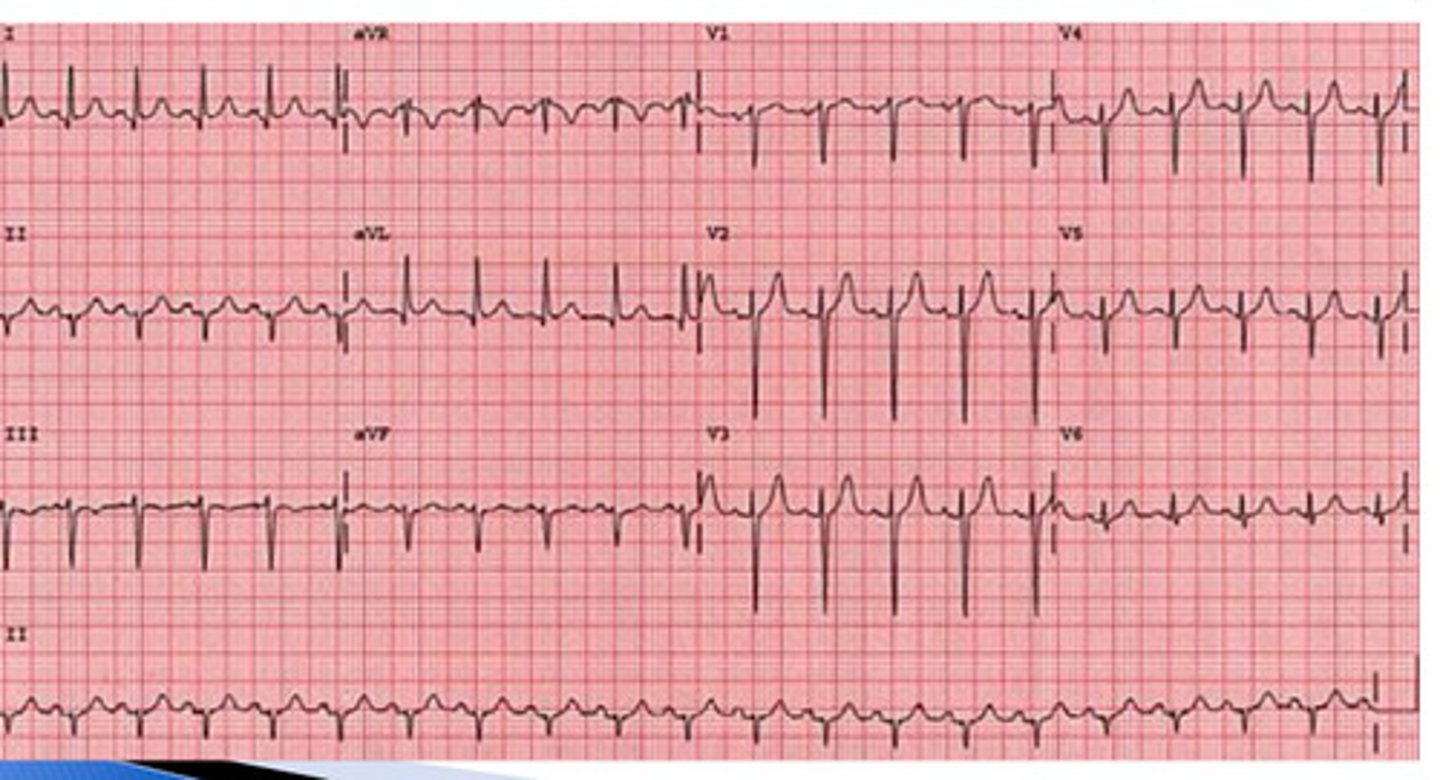
first degree av block
what is this
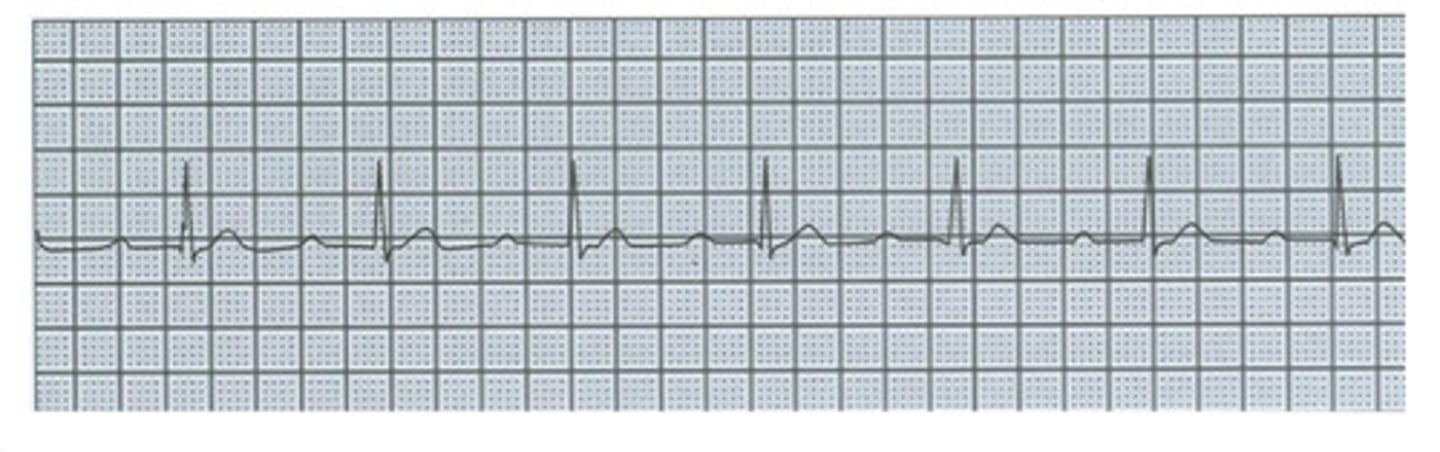
mobitz 2
what is this
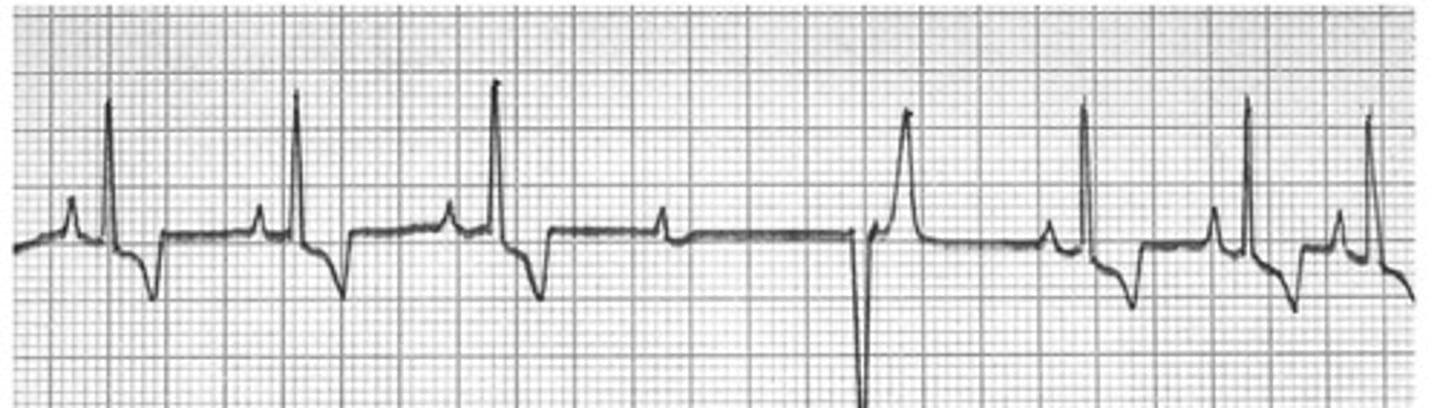
mobitz type II block
what are these examples of
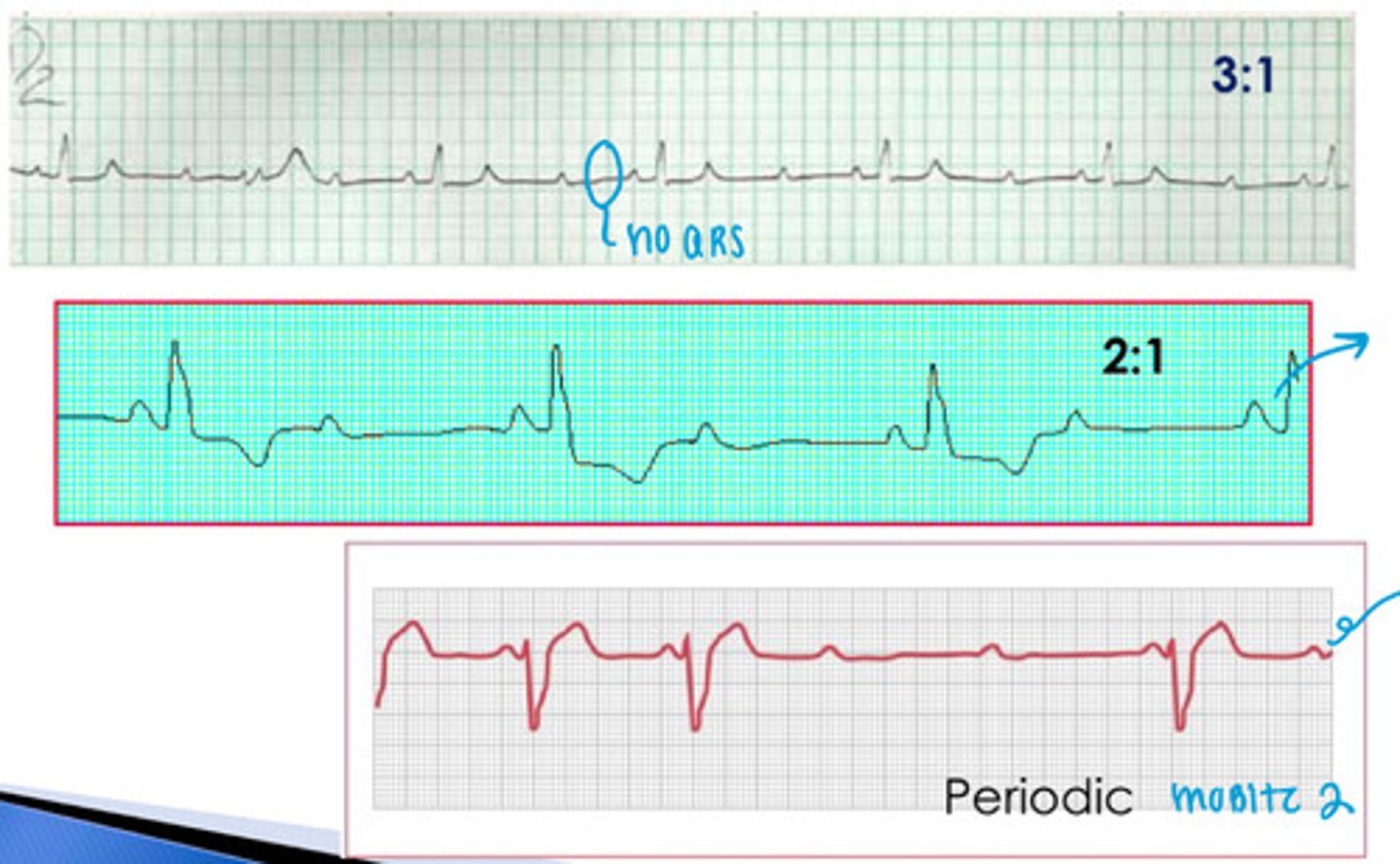
sinus node block
what is this
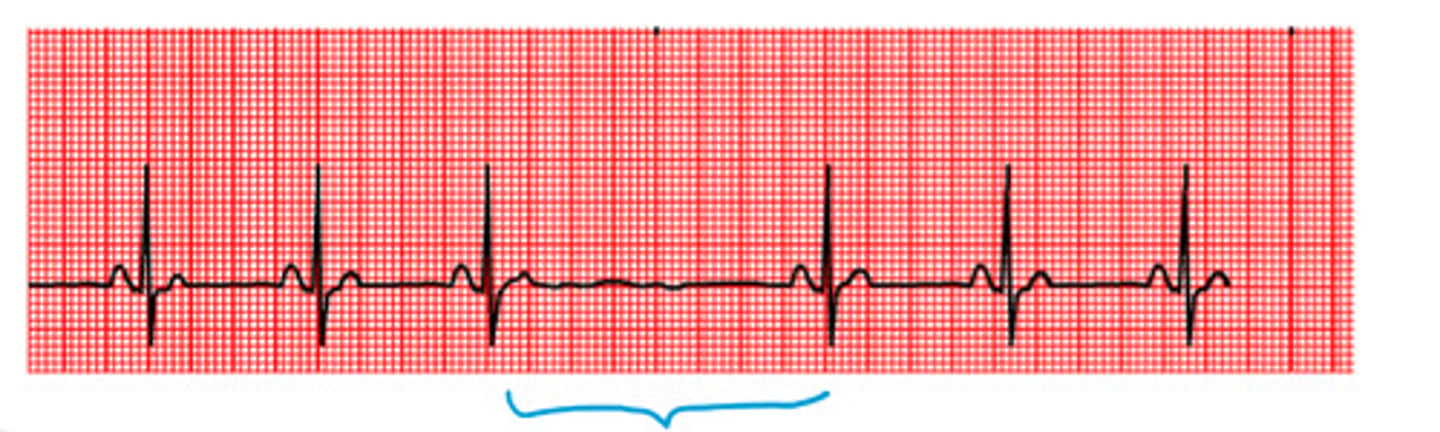
wenckebach's
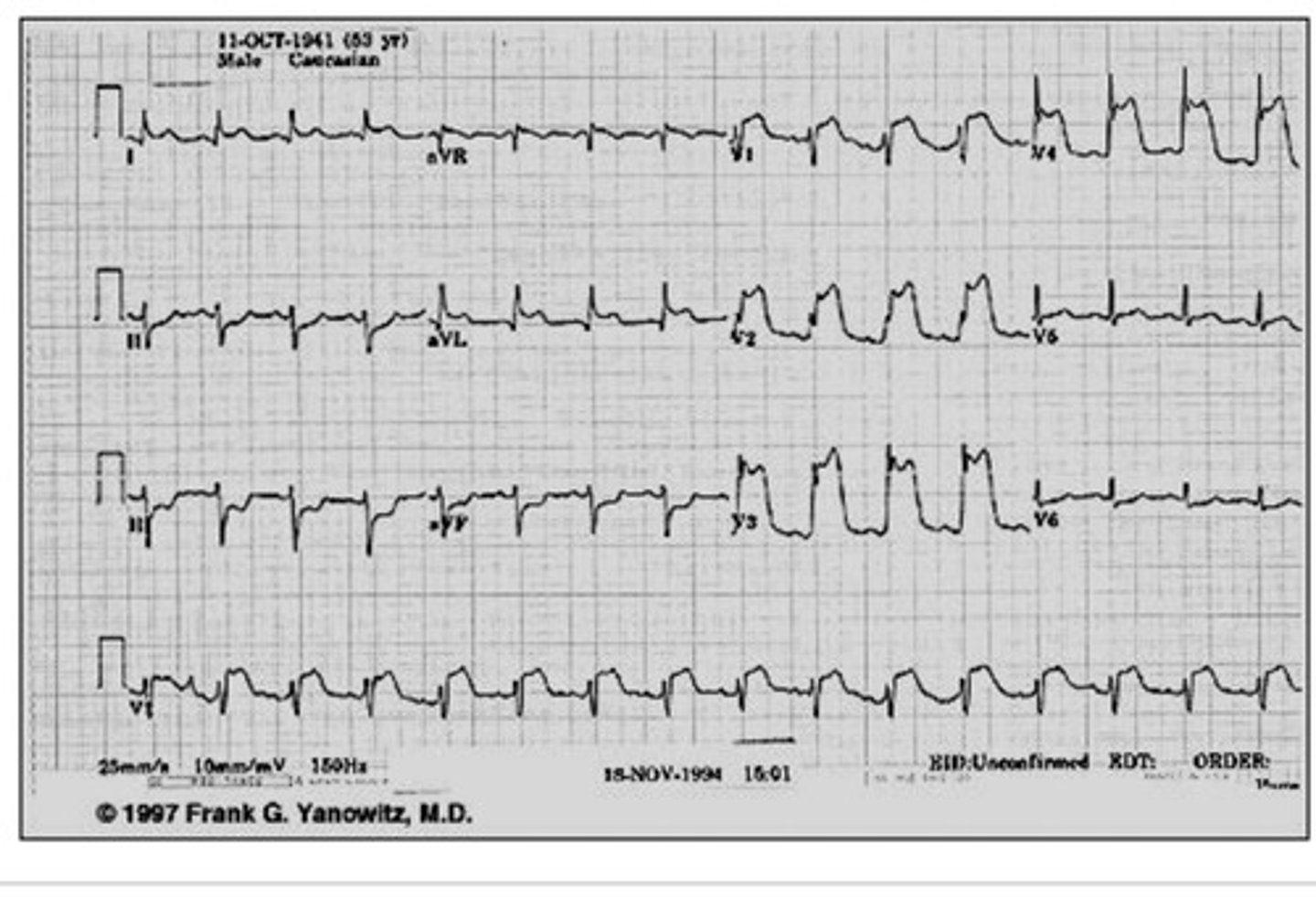
what is this
acute anterior mi
what is this
acute lateral mi
what is this
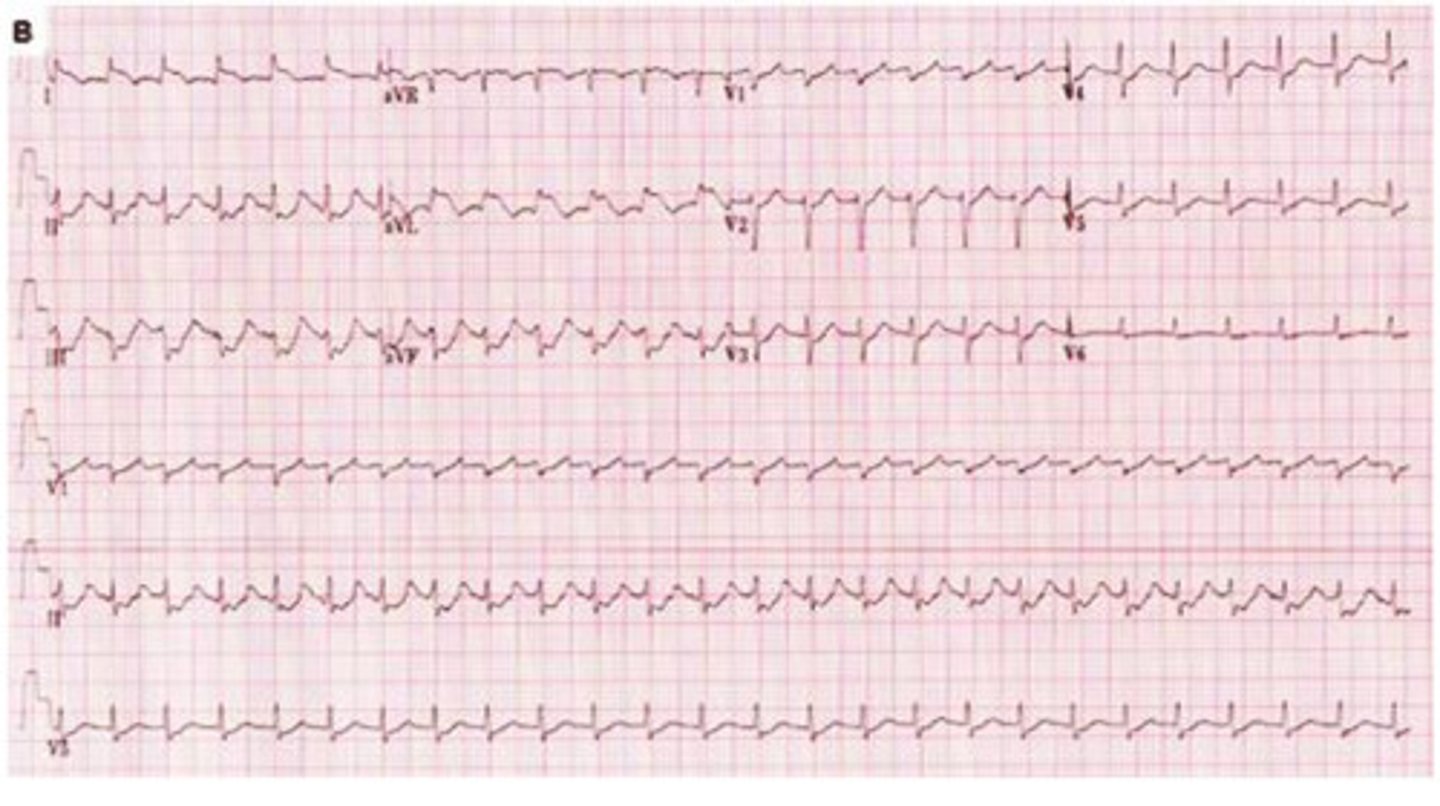
old lateral mi
what is this
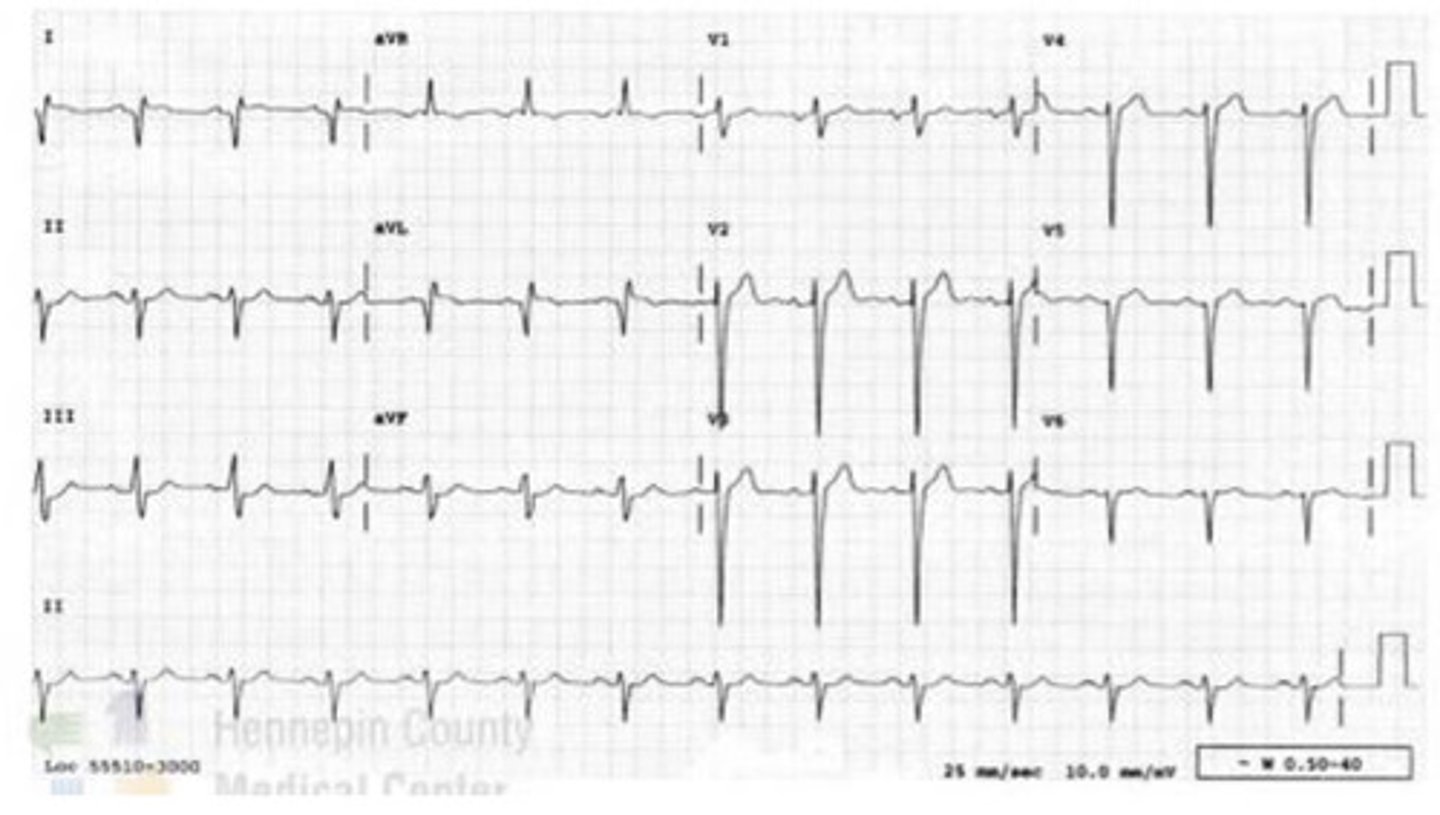
acute inferior MI (STEMI)
what is this
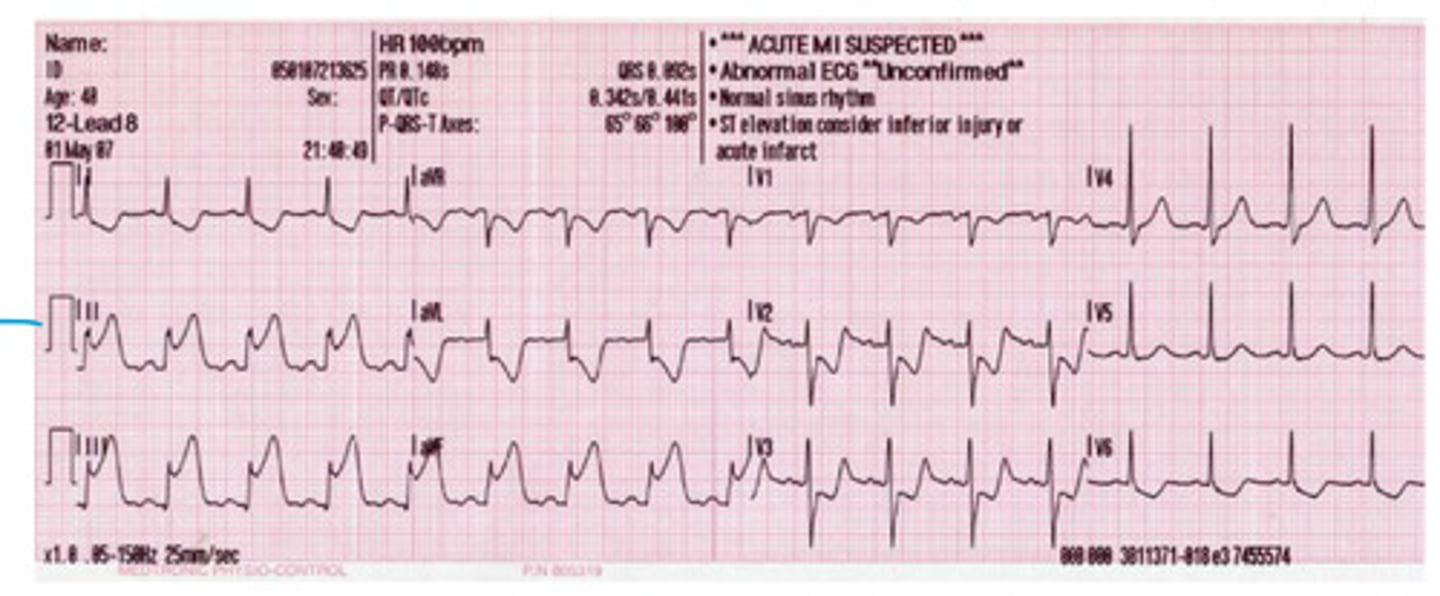
old inferior MI
what is this
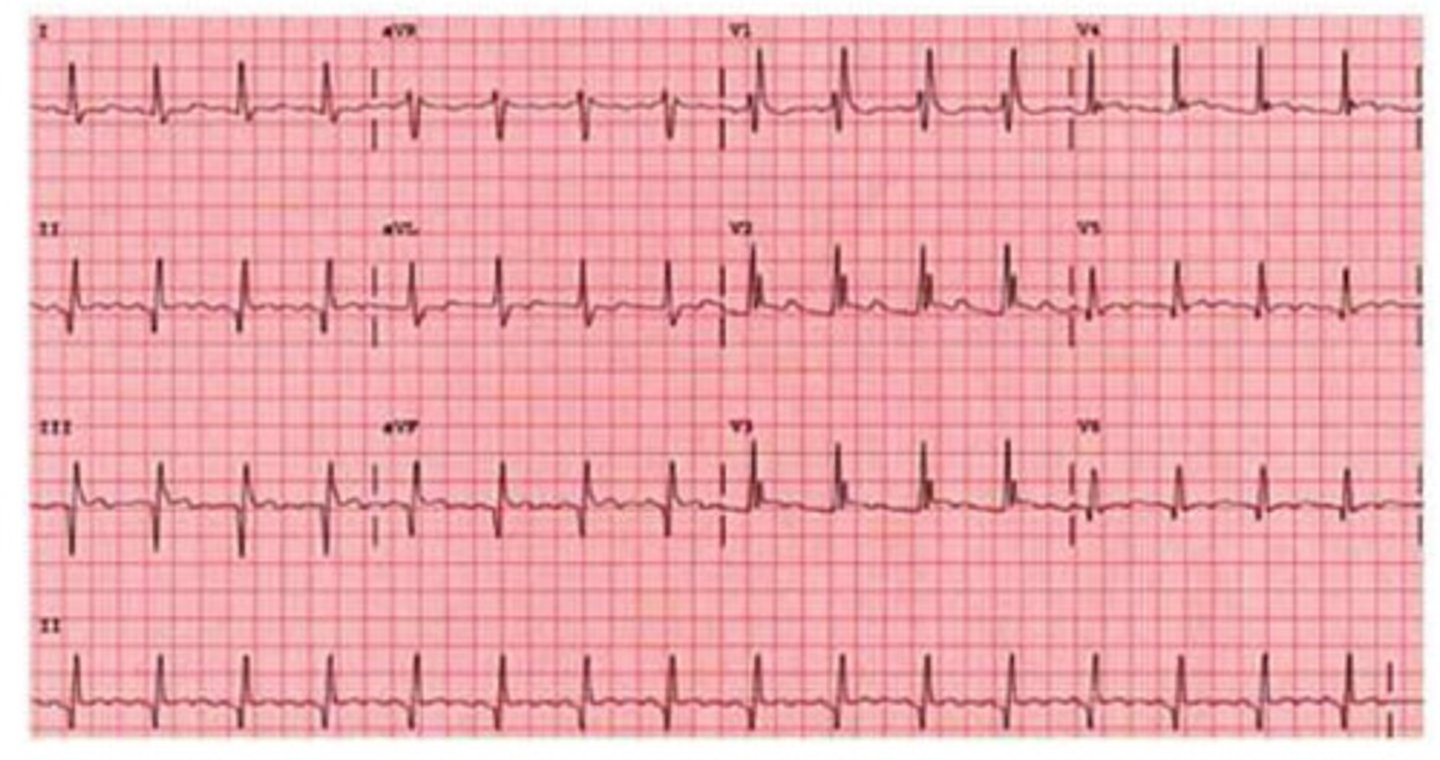
early repolarization
what is this
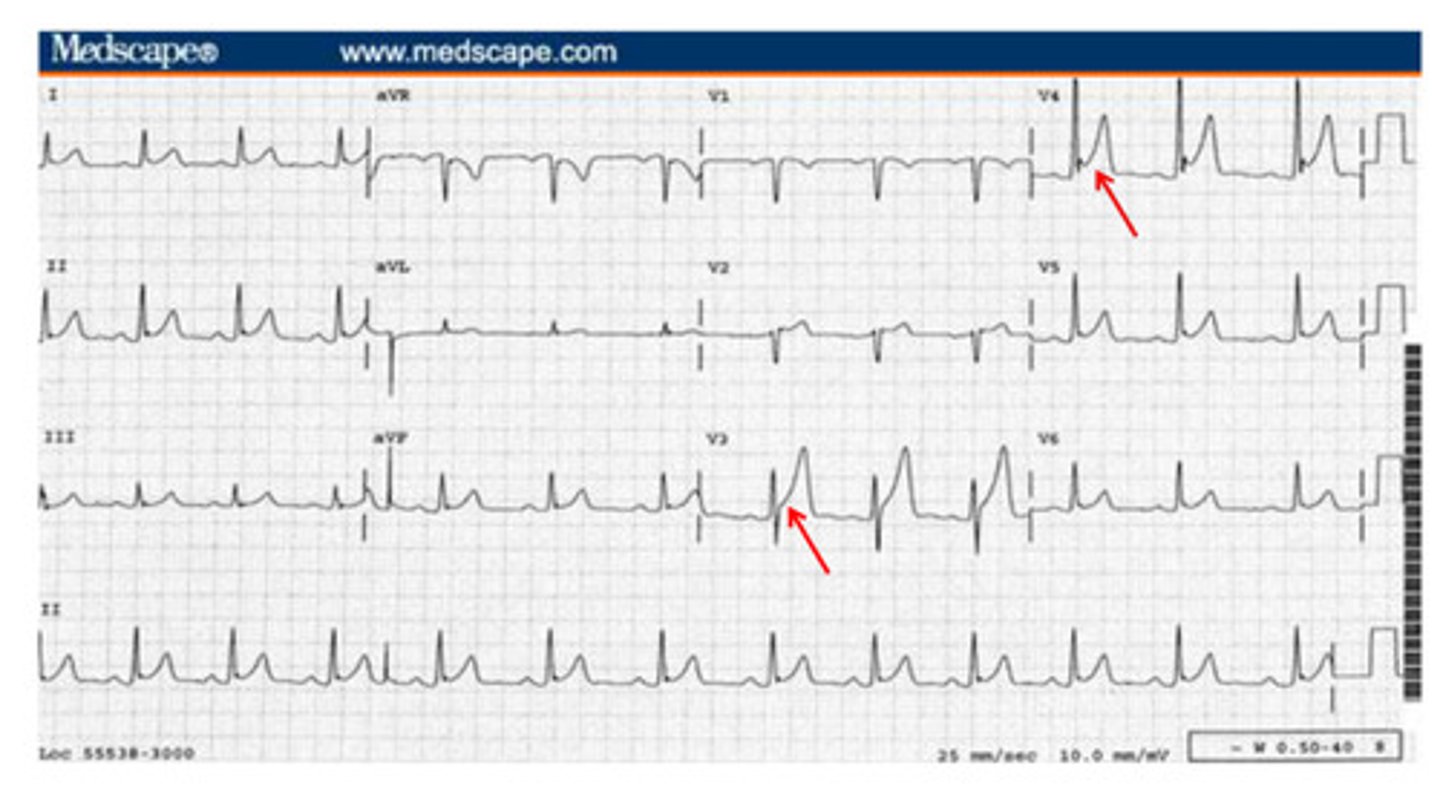
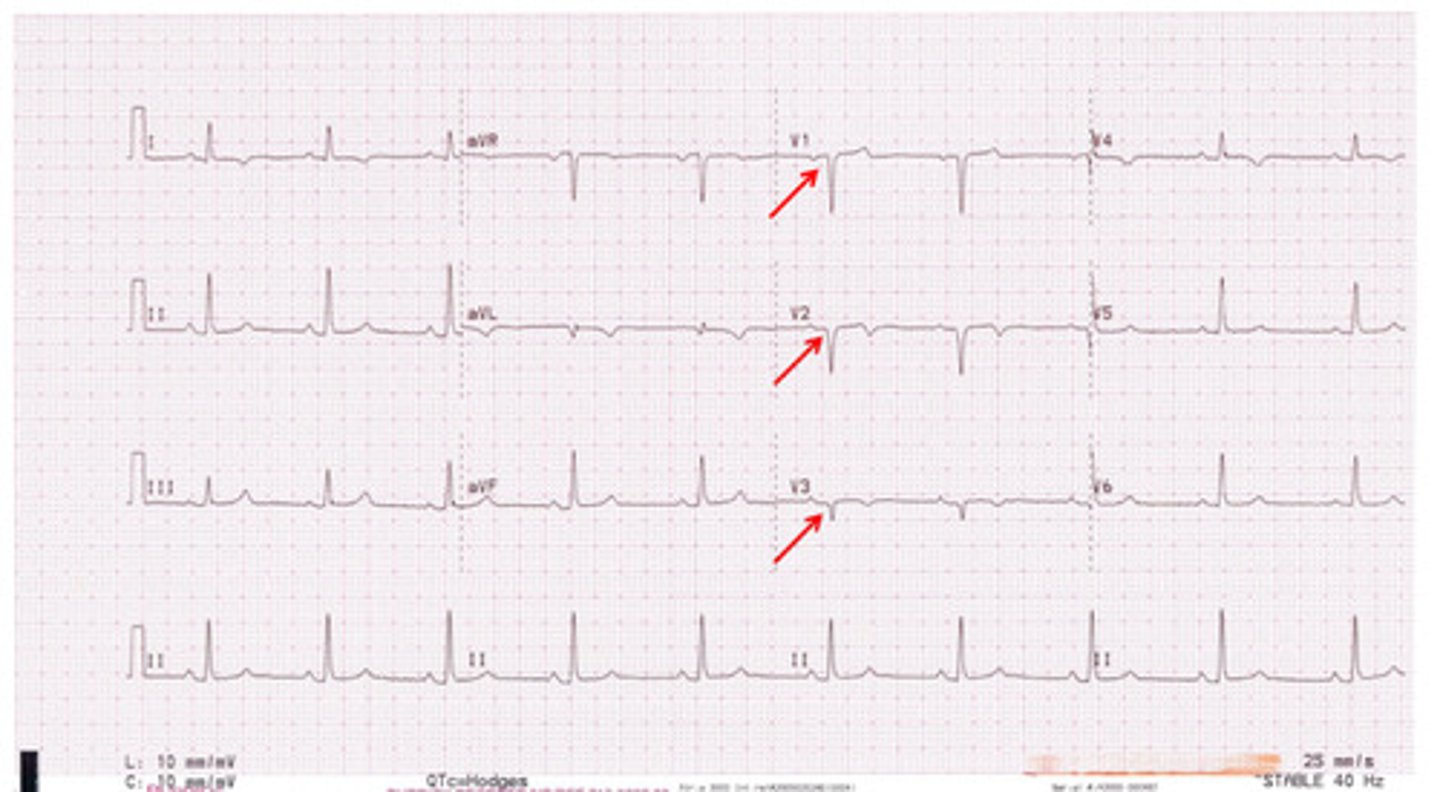
pathologic
this ekg shows ______ Q waves
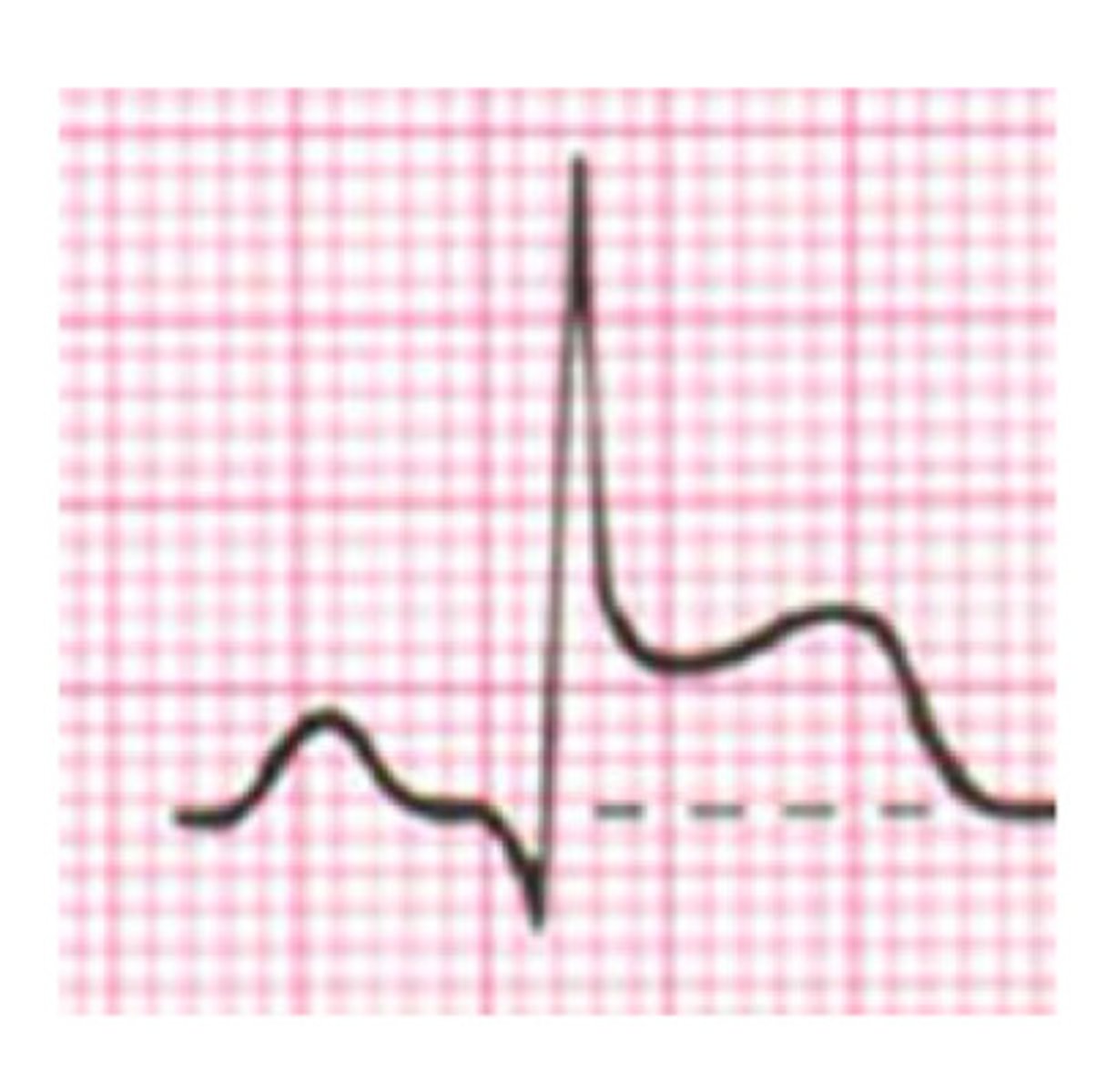
ST segment elevation
what is this
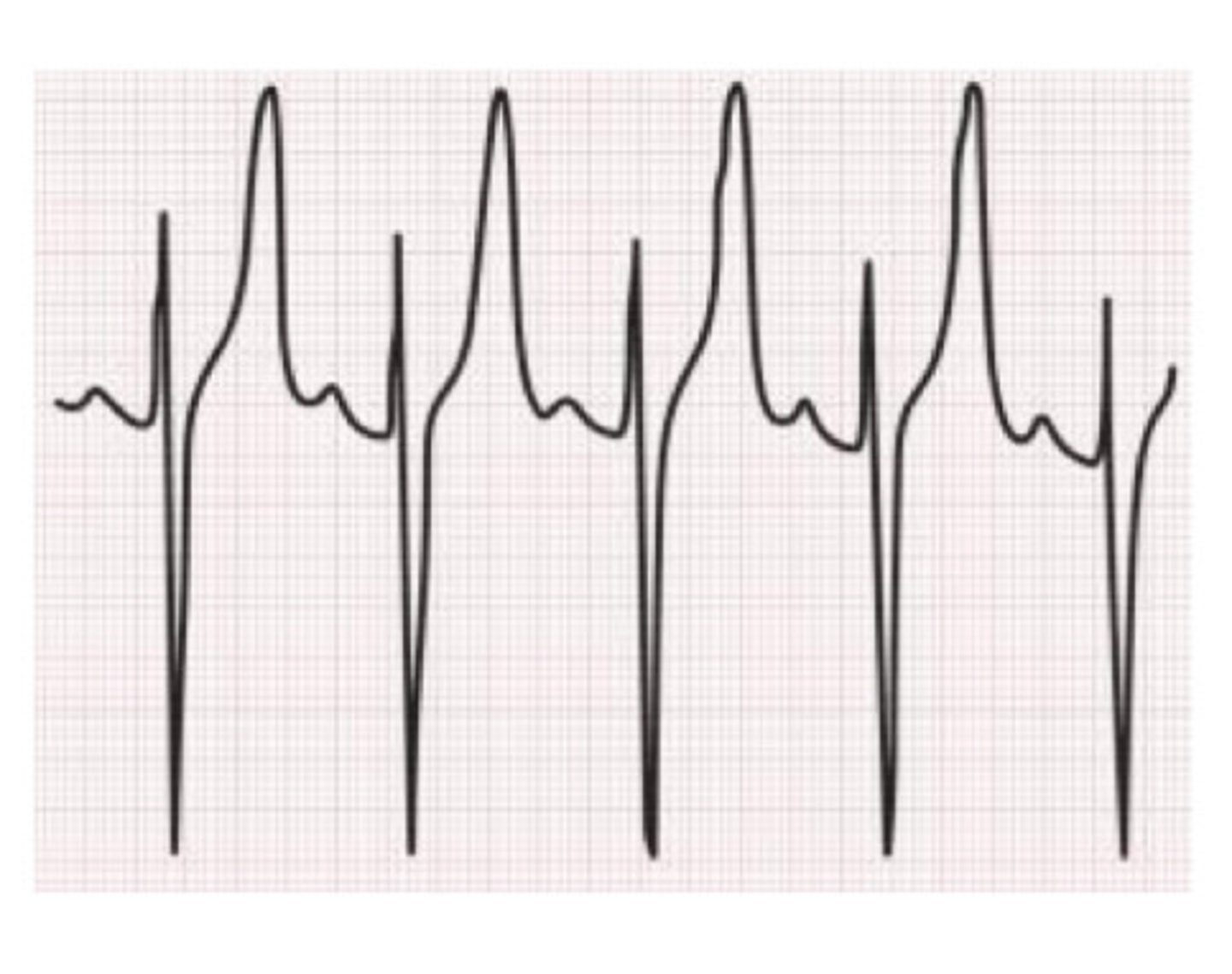
T wave peaking
what is this
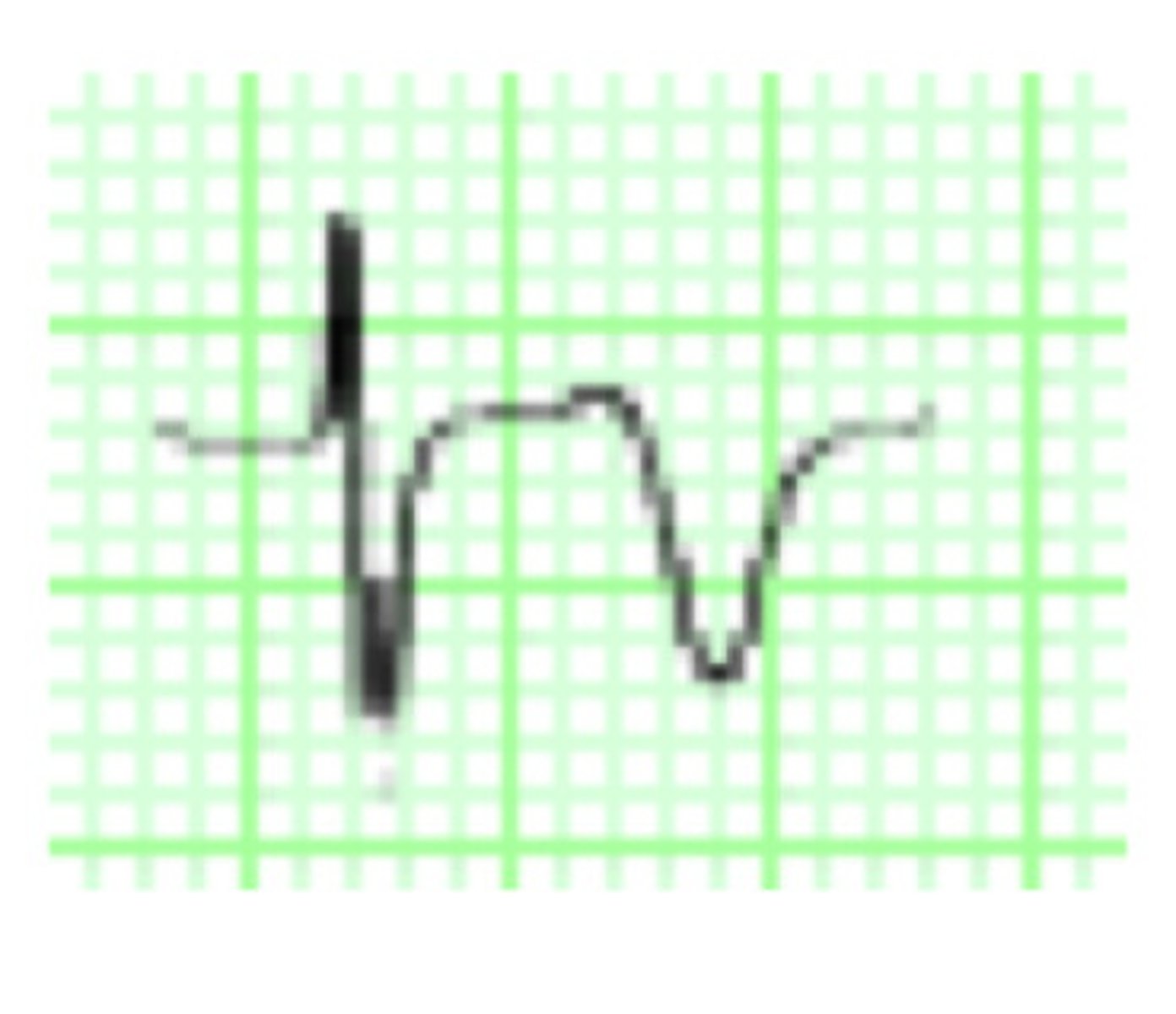
T wave inversion
what is this
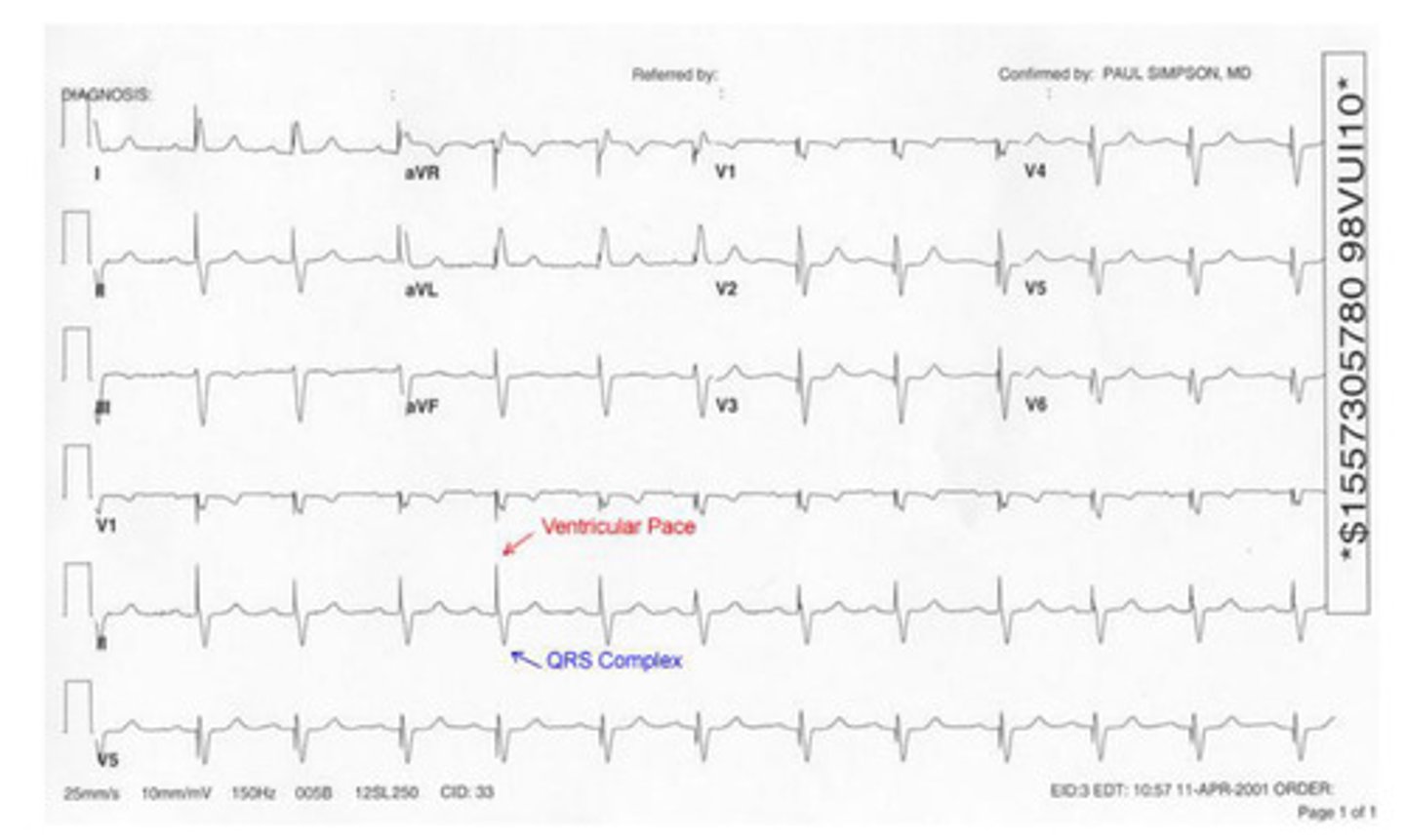
ventricular pacemaker
this is an example of a _____ _____
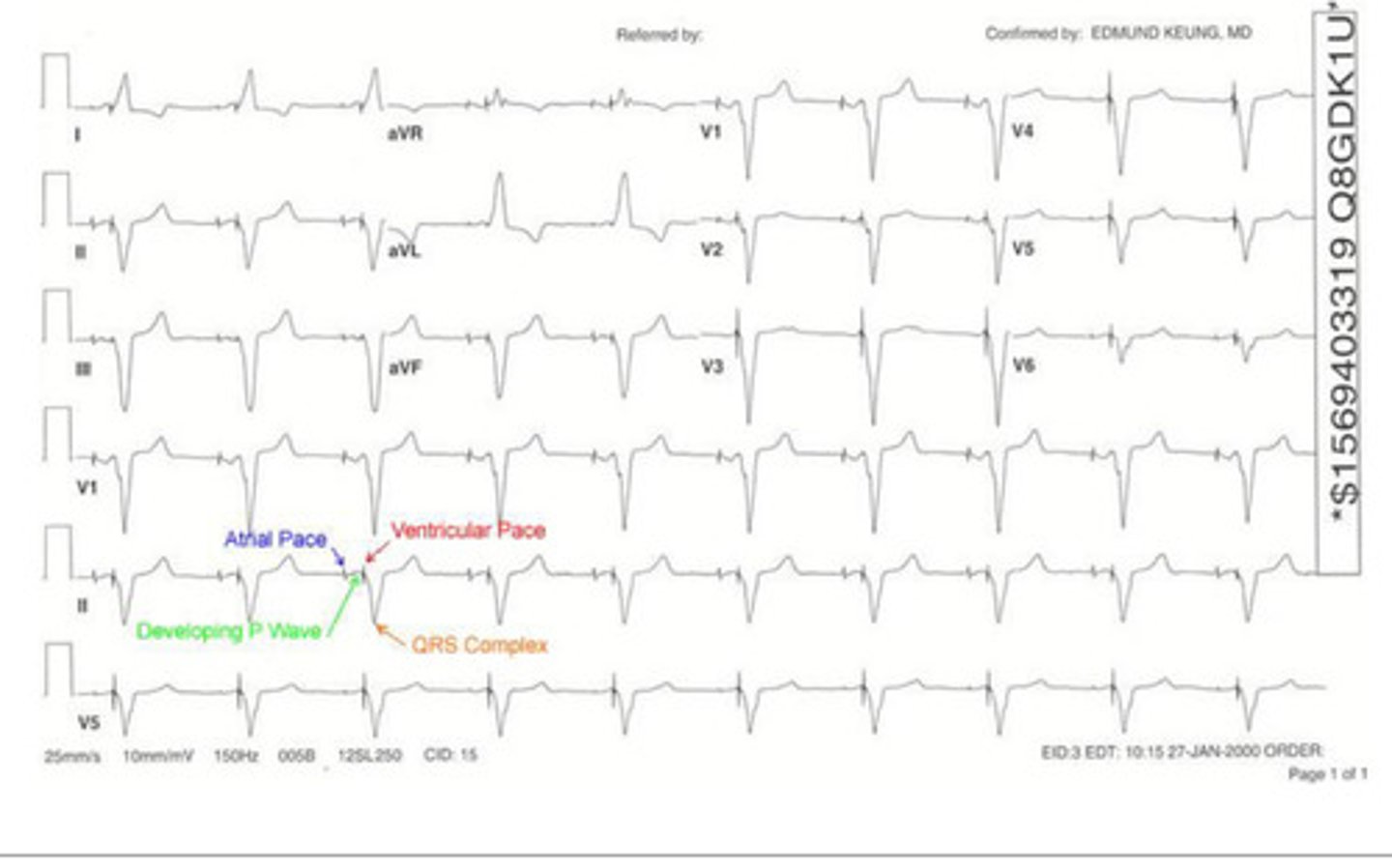
dual chamber
this is an example of a ____ _____ pacemaker
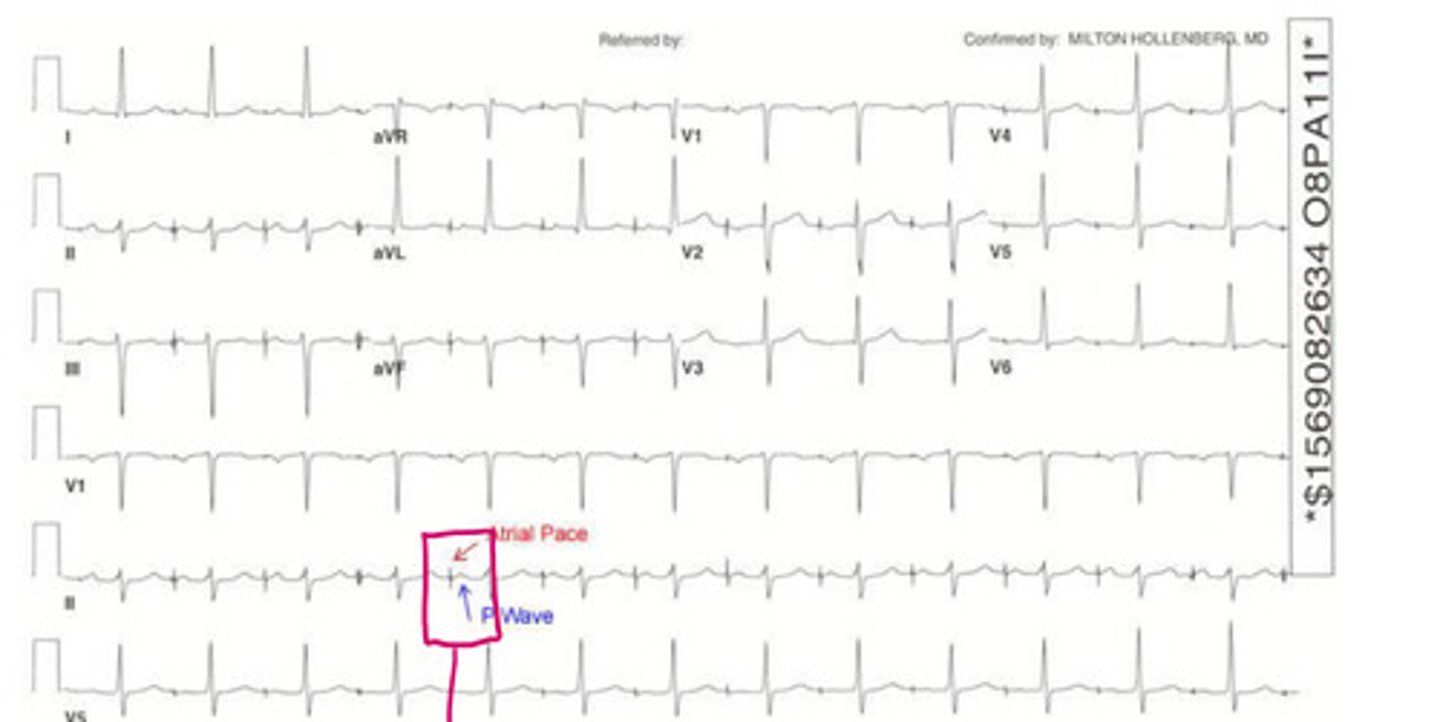
atrial pacemaker
this is an example of an _____ ______
hypothermia; osborne
this is an example of ______, which is characterized by _____ waves
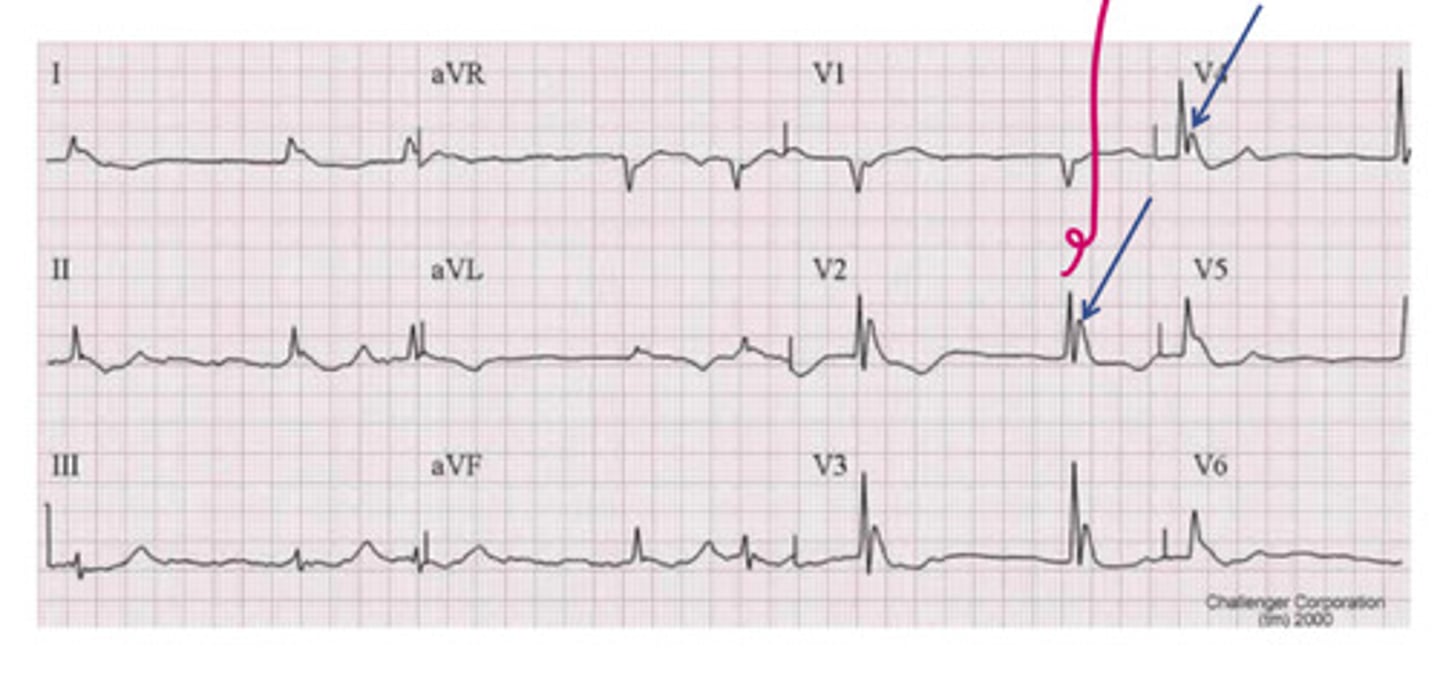
S1Q3 pattern in pulmonary embolisim
this is an example of ________ pattern in ______ _______
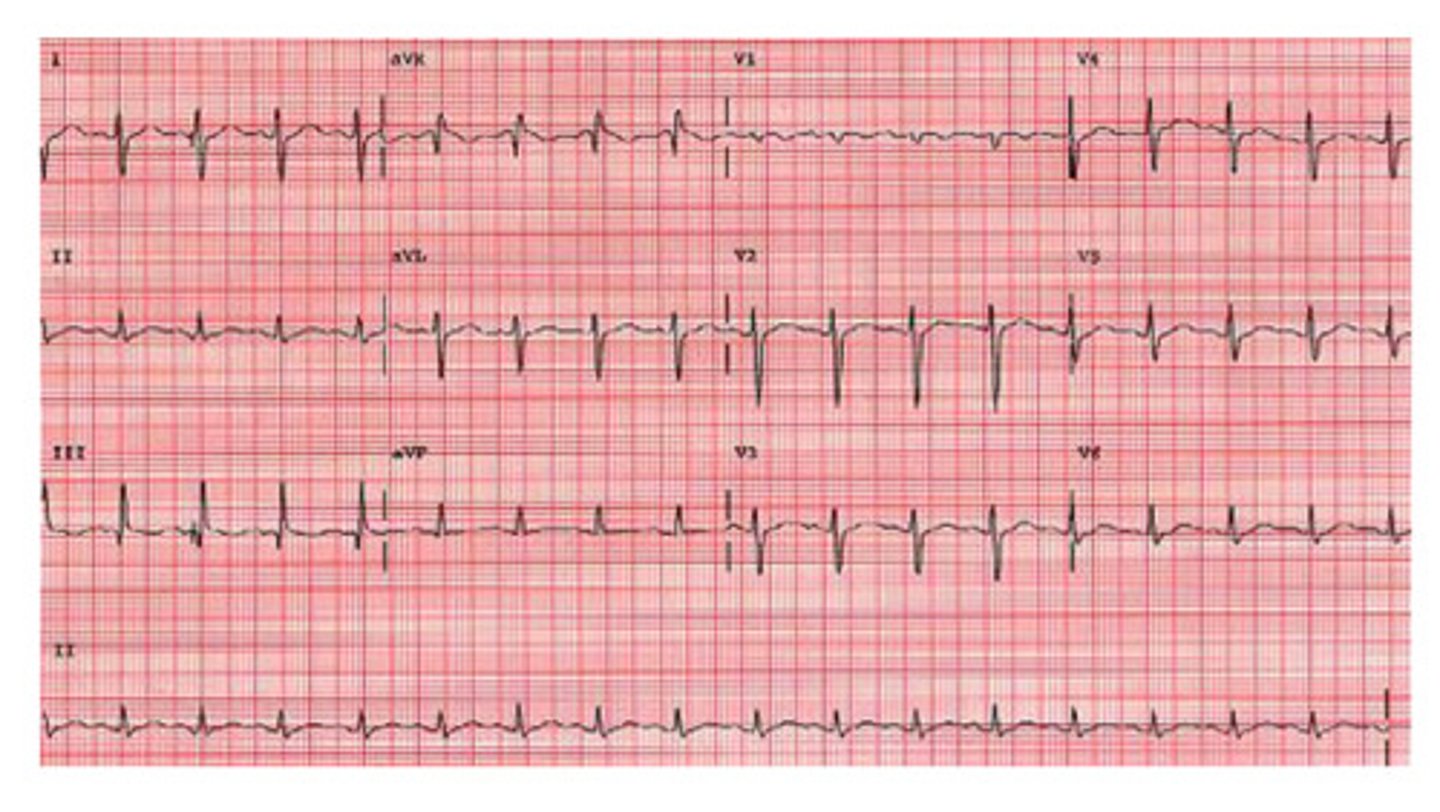
pericardial effusion
what is this? hint: low voltage & electrical alternans
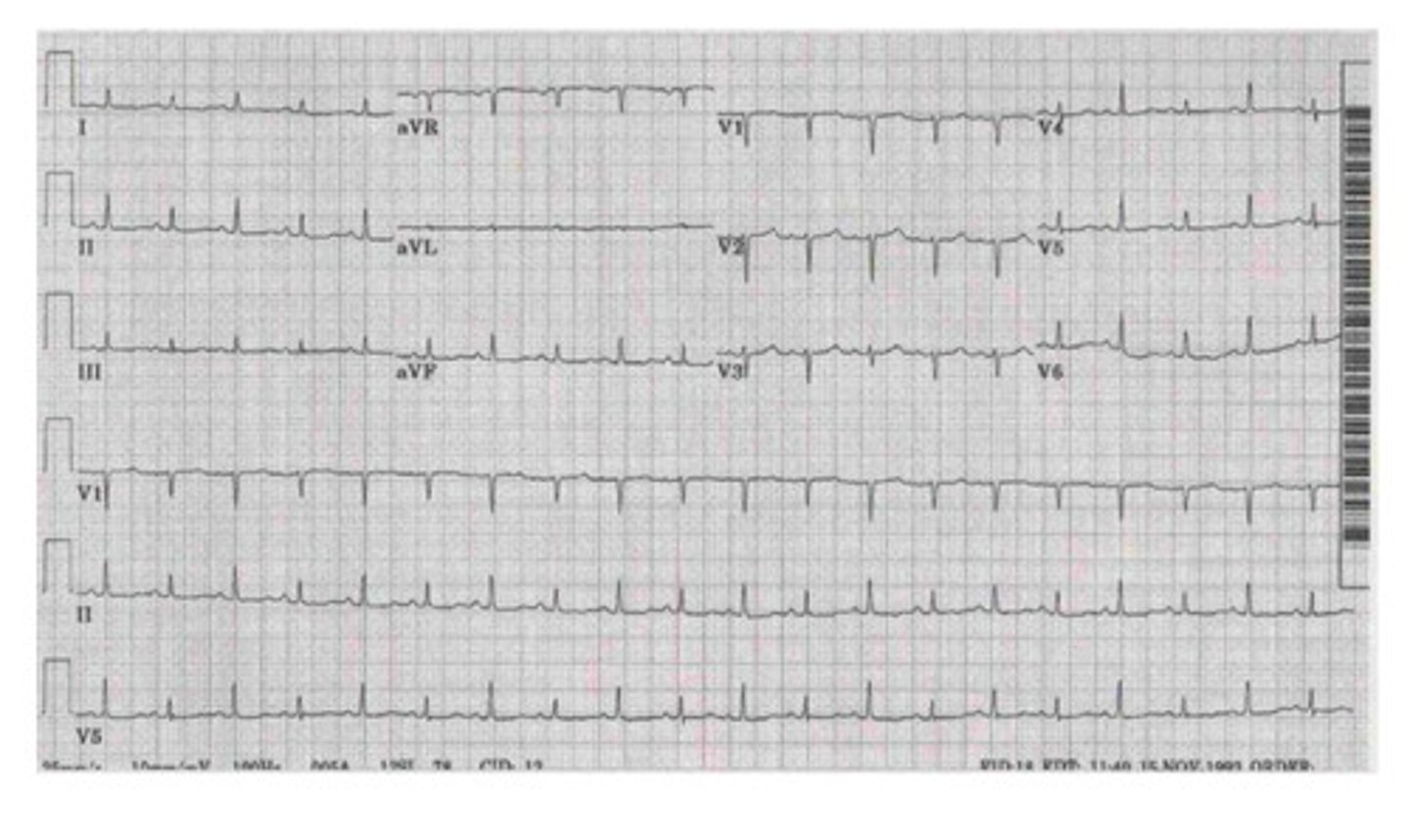
pericarditis; ST
this is an example of _____, which has a key characteristic of diffuse ___ elevation
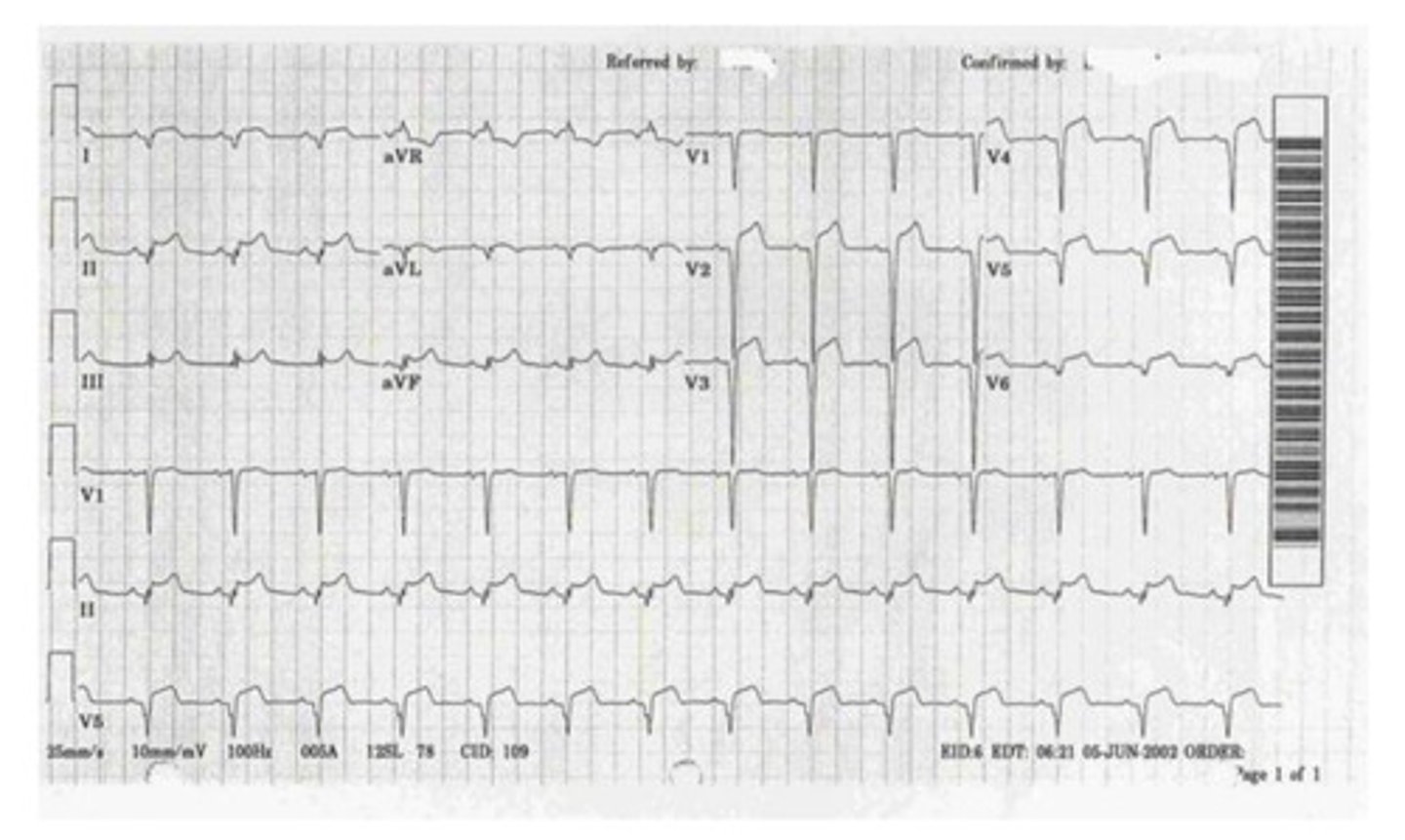
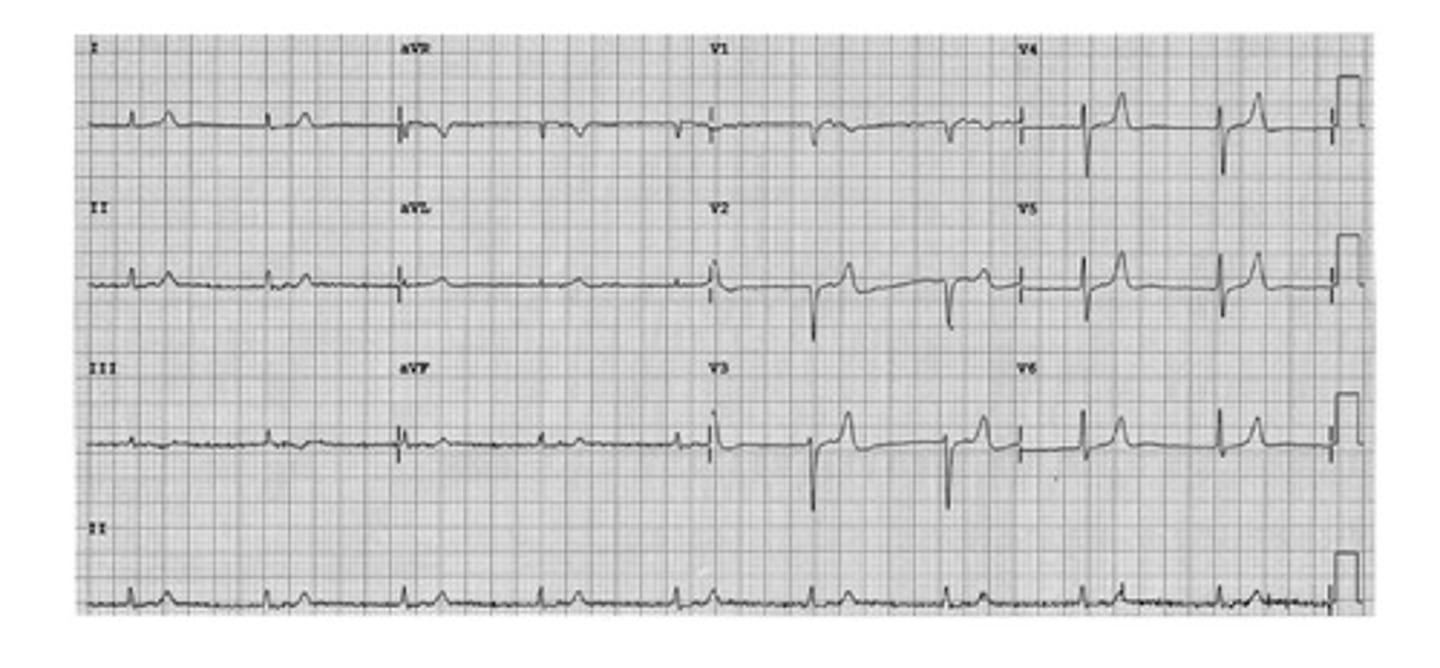
hyperkalemia (absent P waves, peaked T waves)
what is this
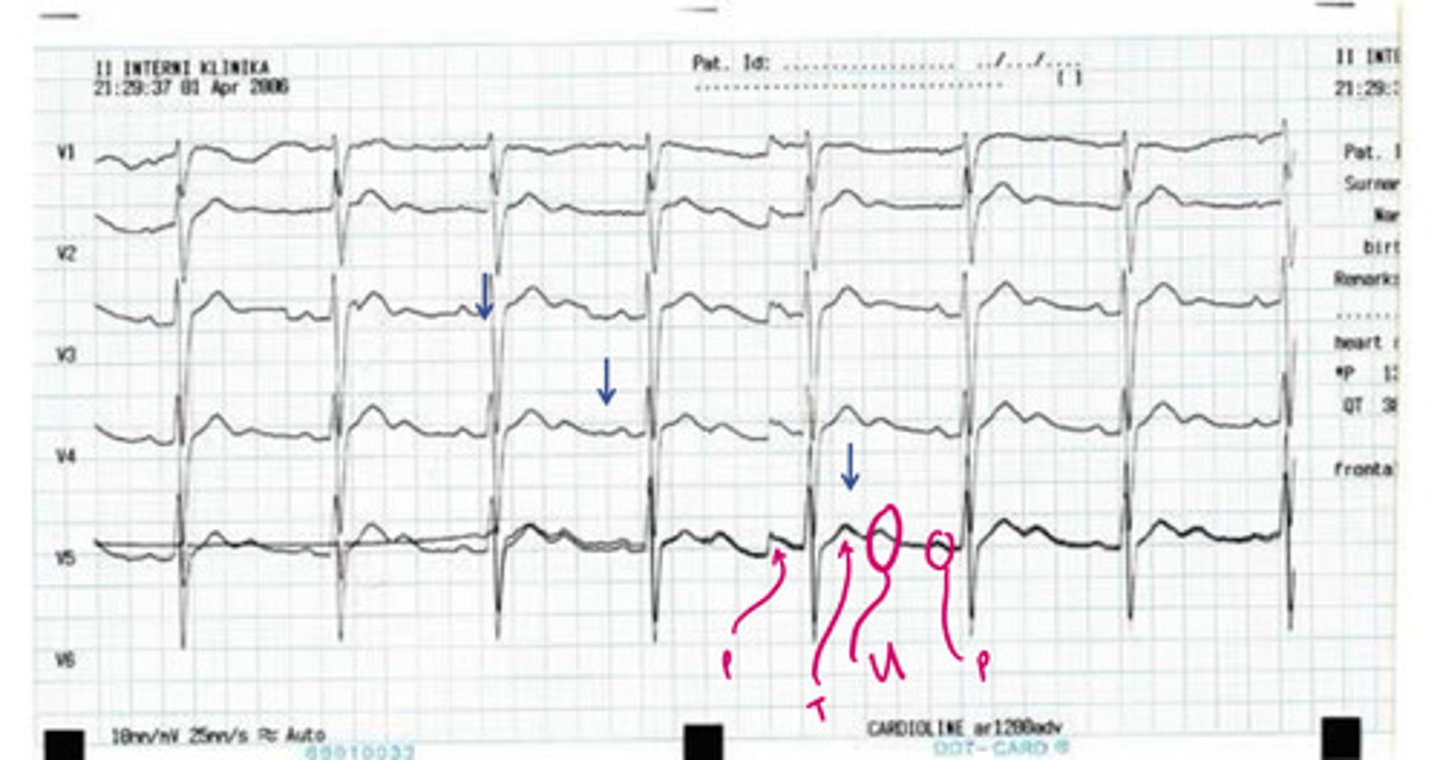
hypokalemia; u waves
this is an example of _______, which has characteristic ___ waves
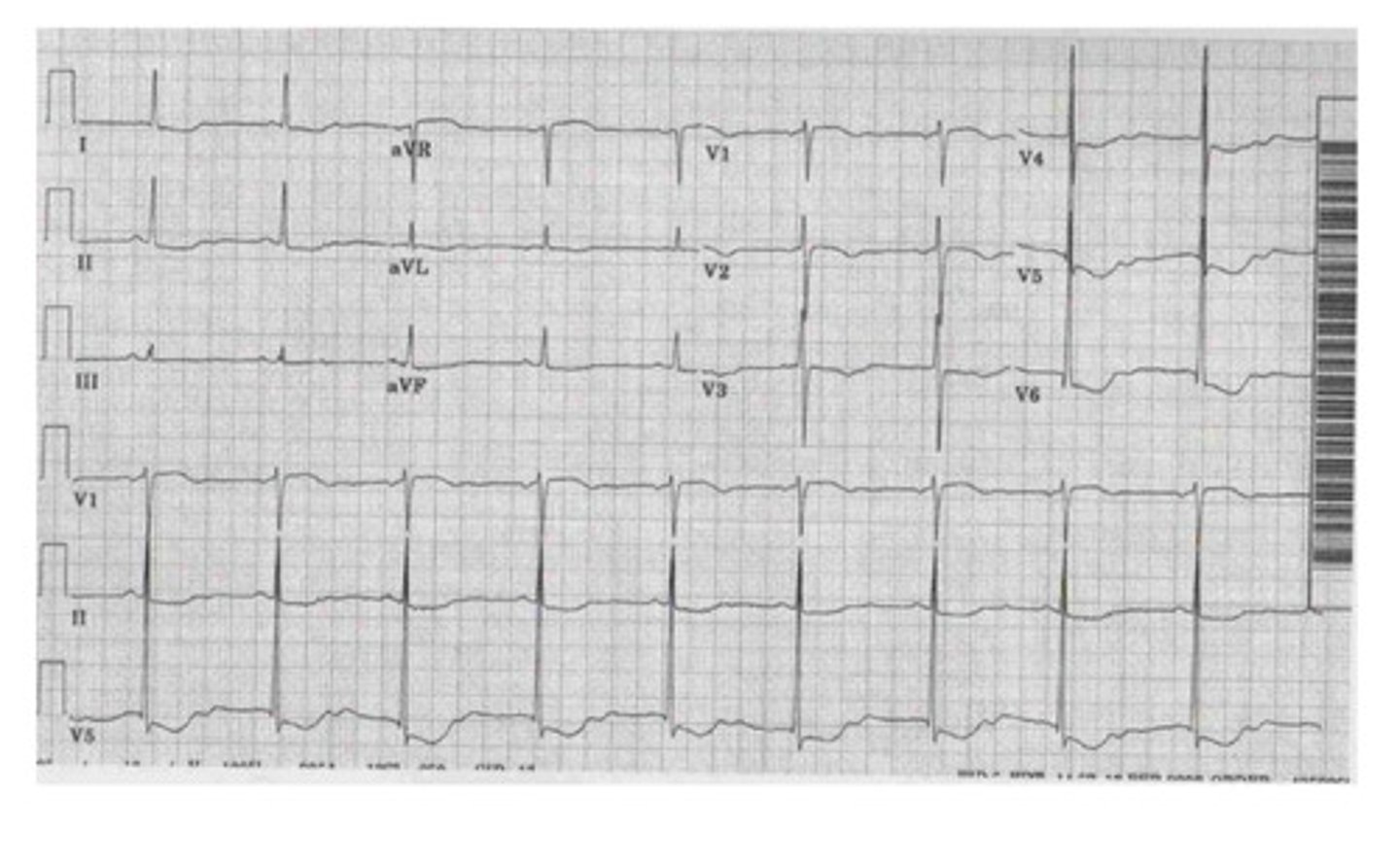
hypokalemia (flat T waves, ST depression)
this is an example of ______, why
hyperkalemia =
this is an example of _____, characterized by sine wave pattern
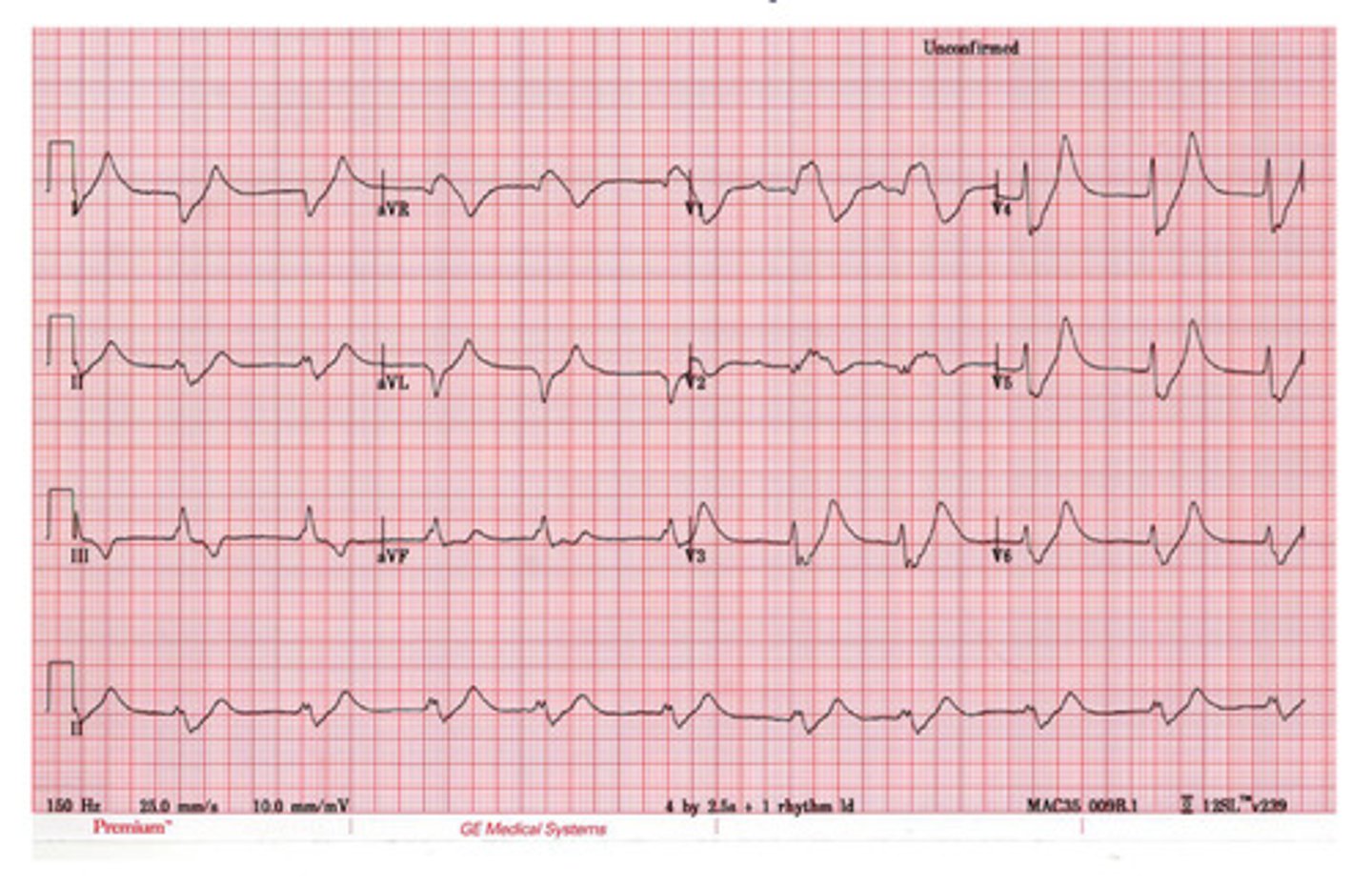
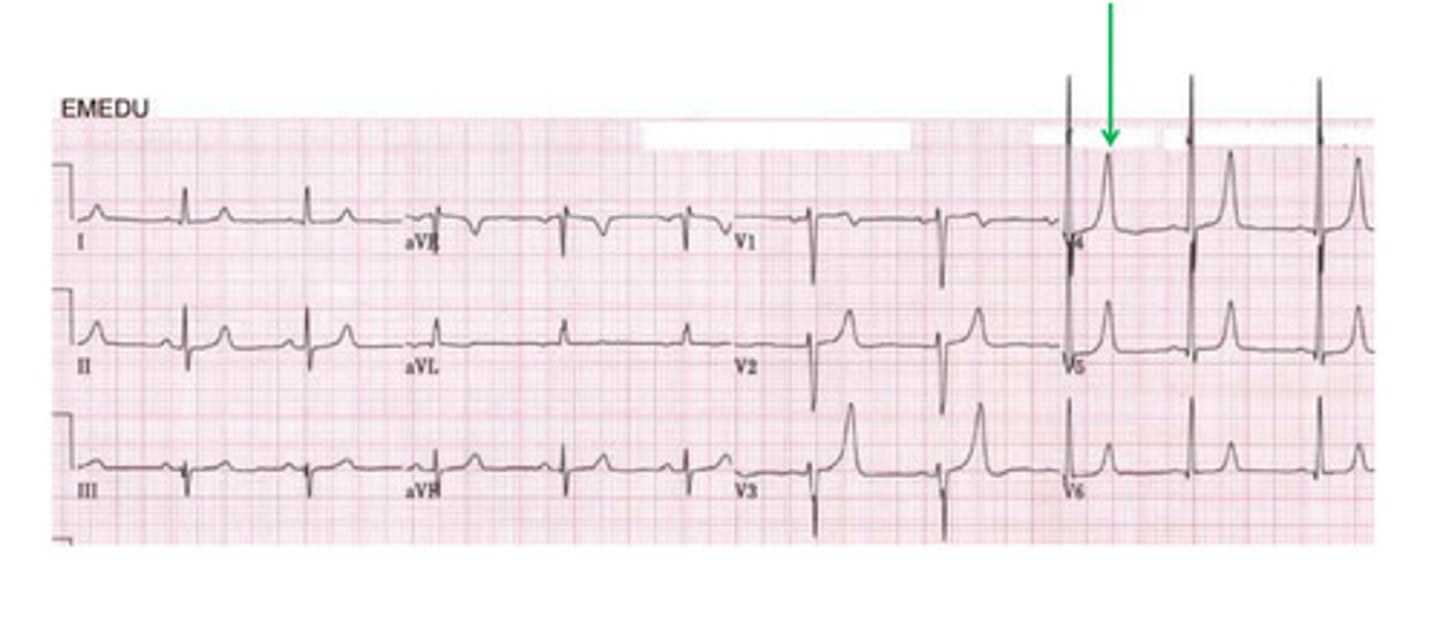
hyperkalemia
this shows T wave peaking in _______
- calculate HR
- check intervals (PR, QTc, QRS width)
- check axis (normal, left, right)
- rhythm (ask these questions if not obvious): P wave before every QRS (& are they upright in I, II, AVR?), is QRS wide or narrow, is it regular or irregular
- blocks?
- check for evidence of infarct, injury, ischemia (ST segments, T waves, pathologic Q waves); remember LBBB, pacemaker, and WPW obscure findings
- check for chamber enlargement
- overall impression?
stepwise approach to interpreting EKG's