Reproductive System | Quizlet
 Call Kai
 Learn
Learn Practice Test
 Spaced Repetition
 Match
Match Flashcards
 Knowt Play
1/49

There's no tags or description
Looks like no tags are added yet.
Name | Mastery | Learn | Test | Matching | Spaced | Call with Kai | Chat |
|---|
No analytics yet
Send a link to your students to track their progress
50 Terms
primary ovarian follicle
(2) granulosa cell layer only 1-2 cells thick
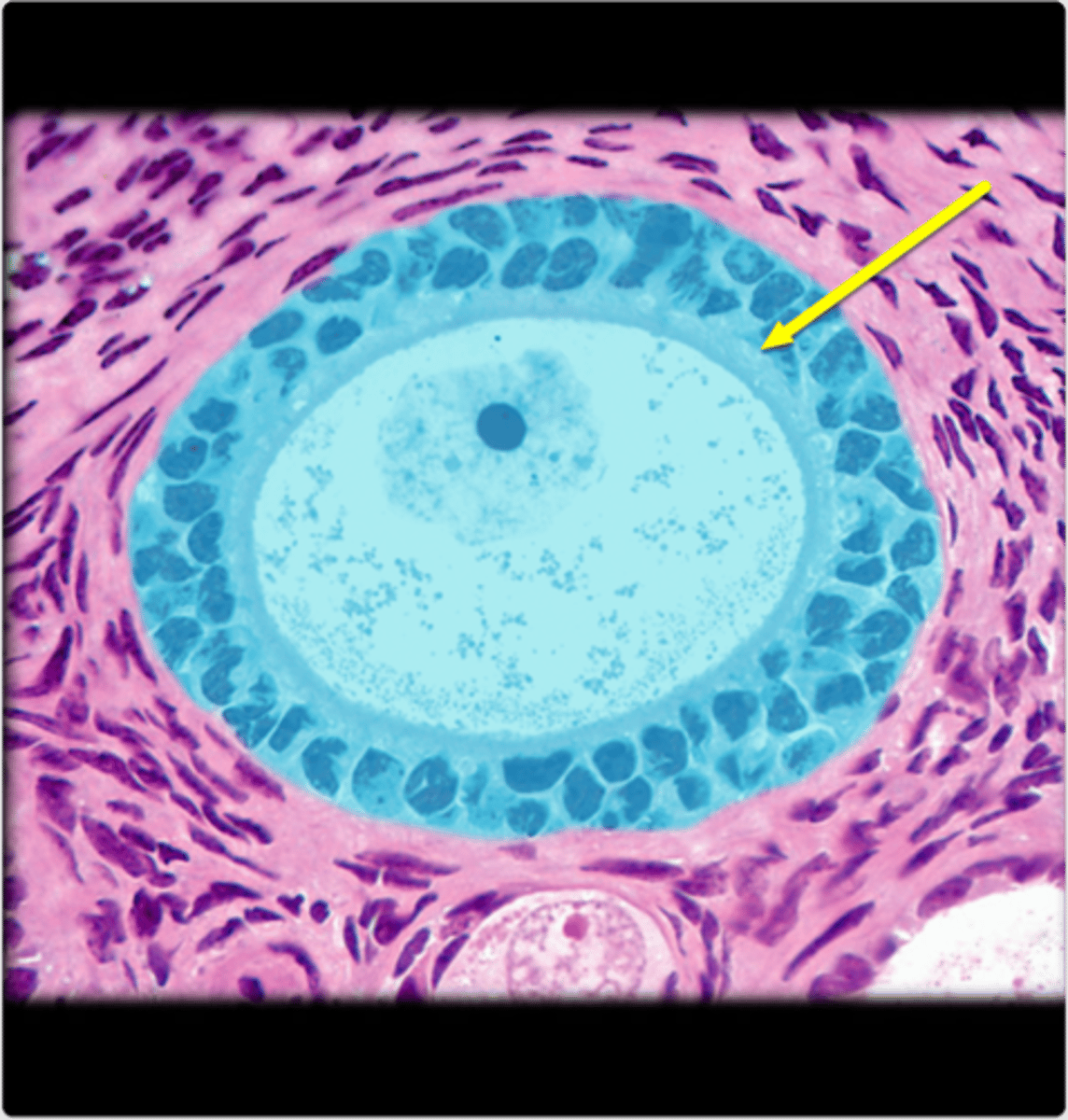
secondary ovarian follicle
(2) contains small accumulations of fluid in the intracellular space
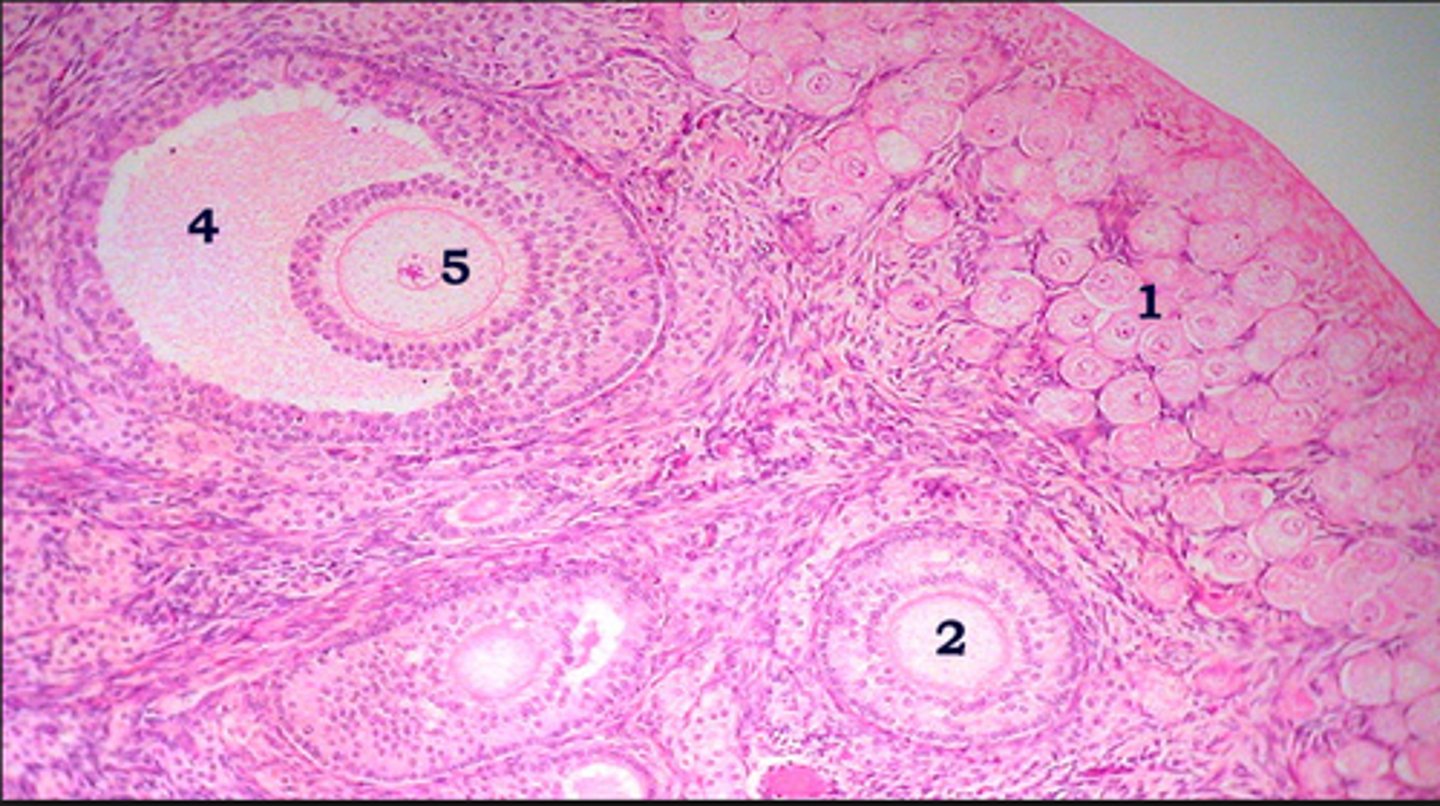
tertiary ovarian follicle/Graffian follicle
Contains maturing ovum and ruptures during ovulation
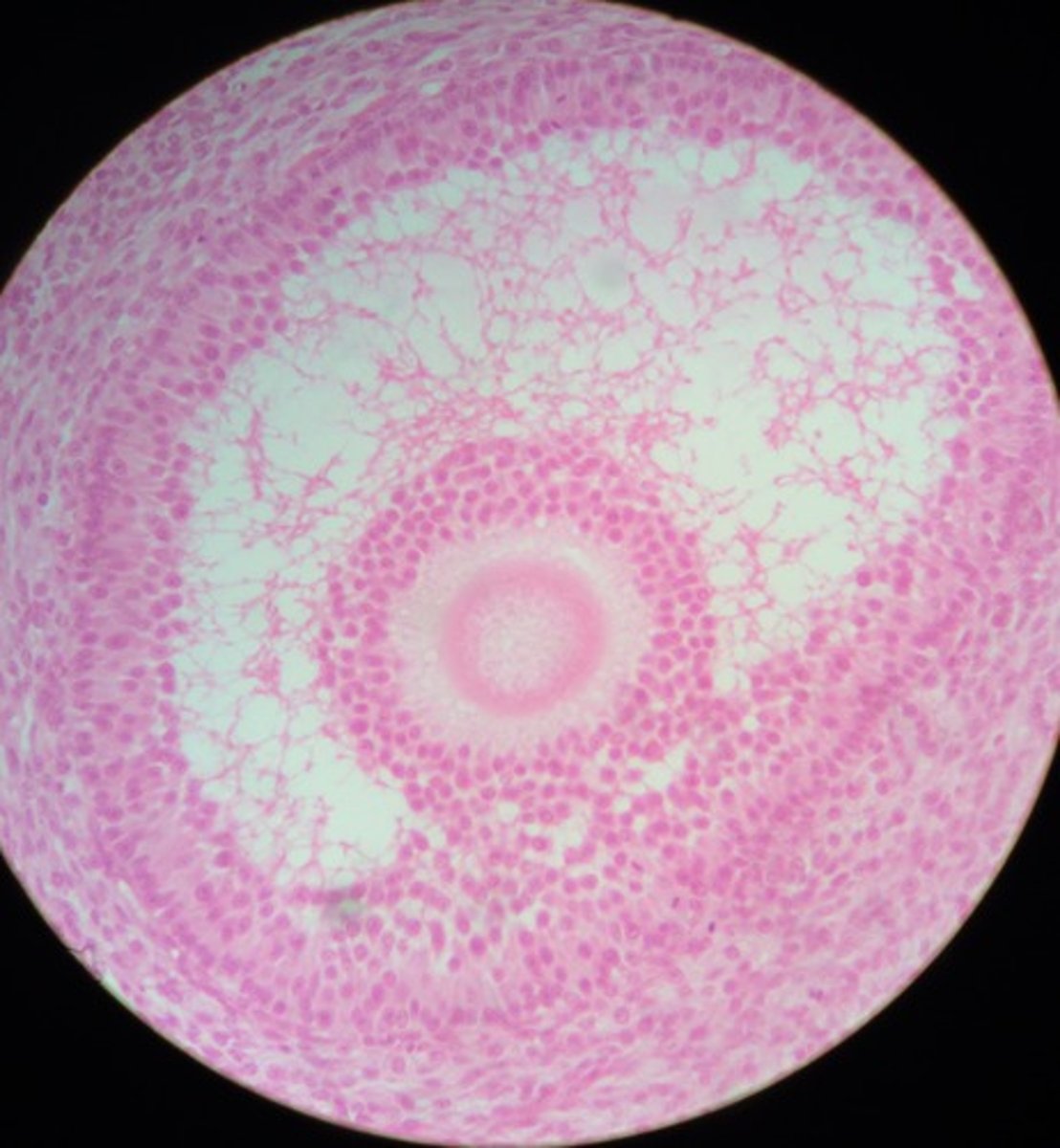
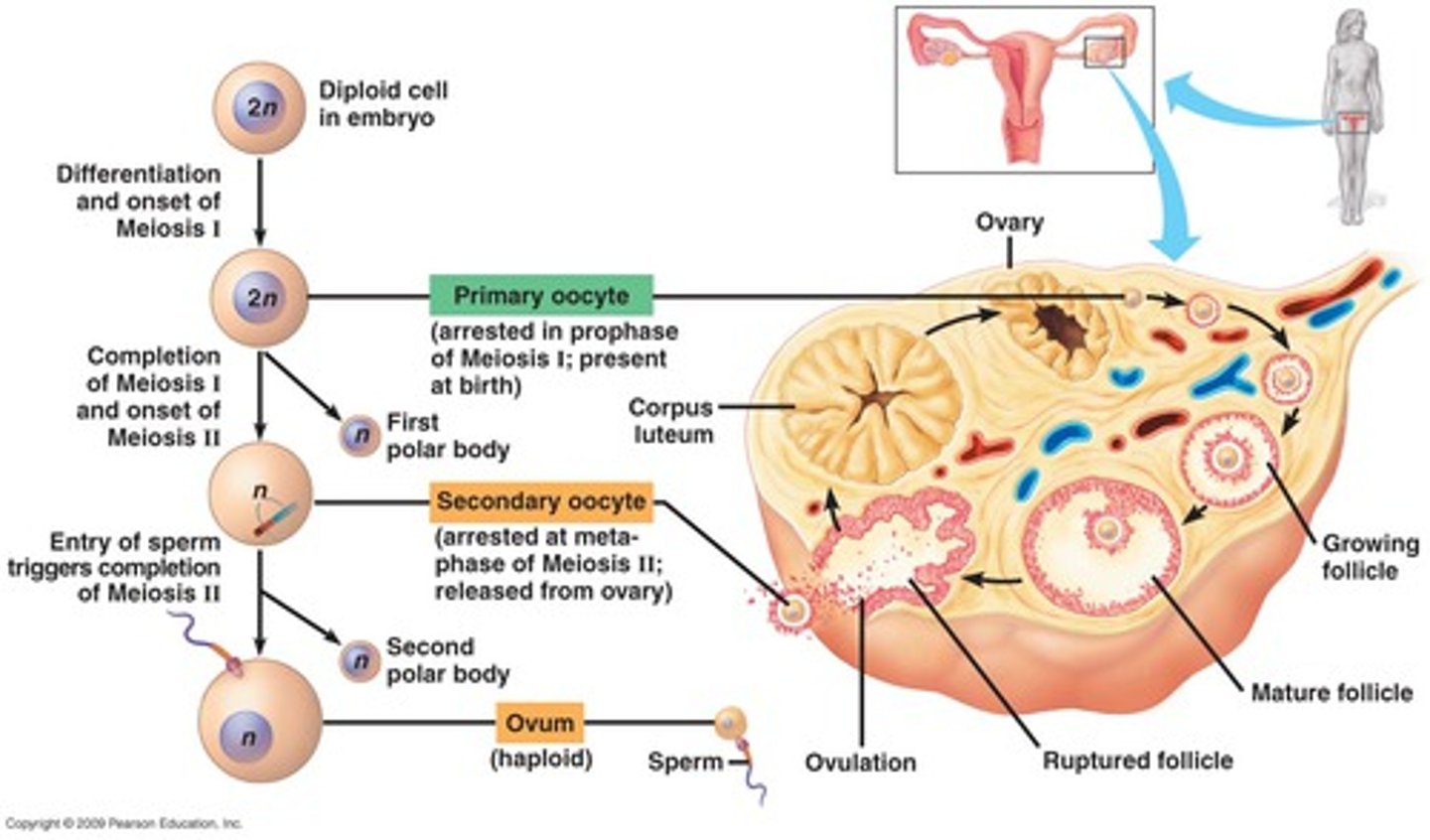
secondary oocyte
A haploid cell resulting from meiosis I in oogenesis, which will become an ovum after meiosis II.
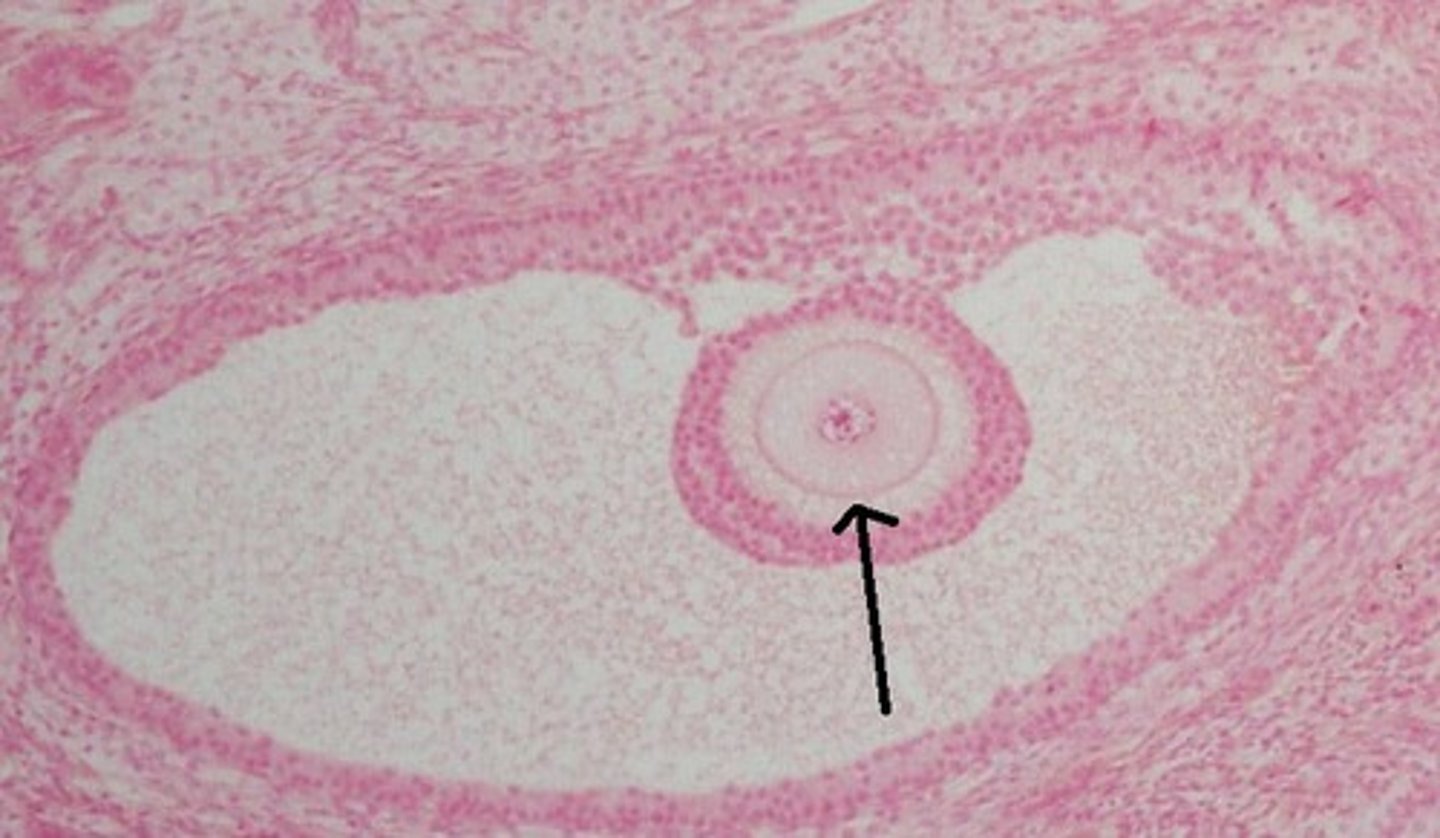
zona pellucida
A thick, transpartent coating/lining rich in glycoproteins that surrounds an oocyte.
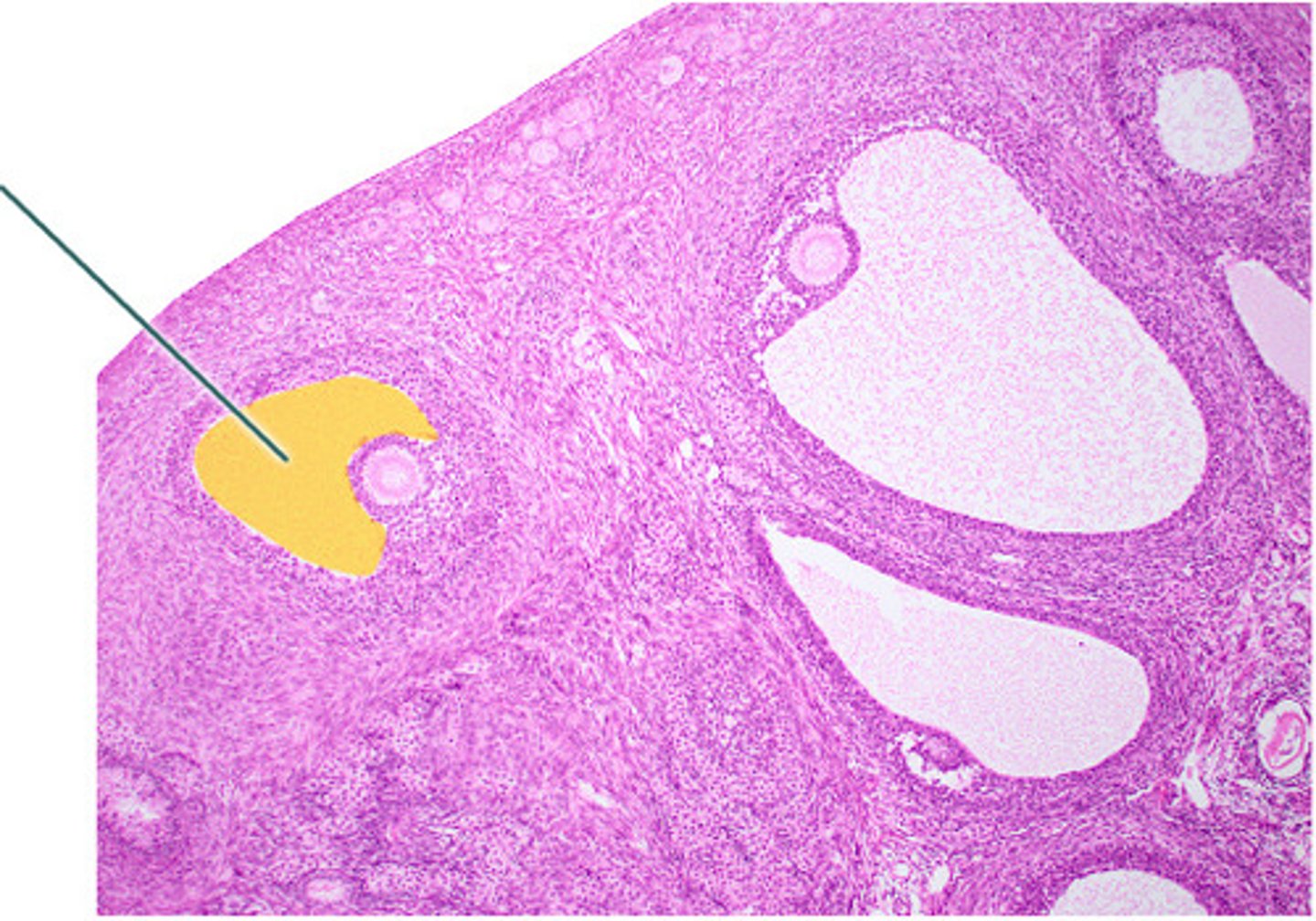
follicular antrum
-large cavity between layers of granulosa cells
-contains follicular fluid
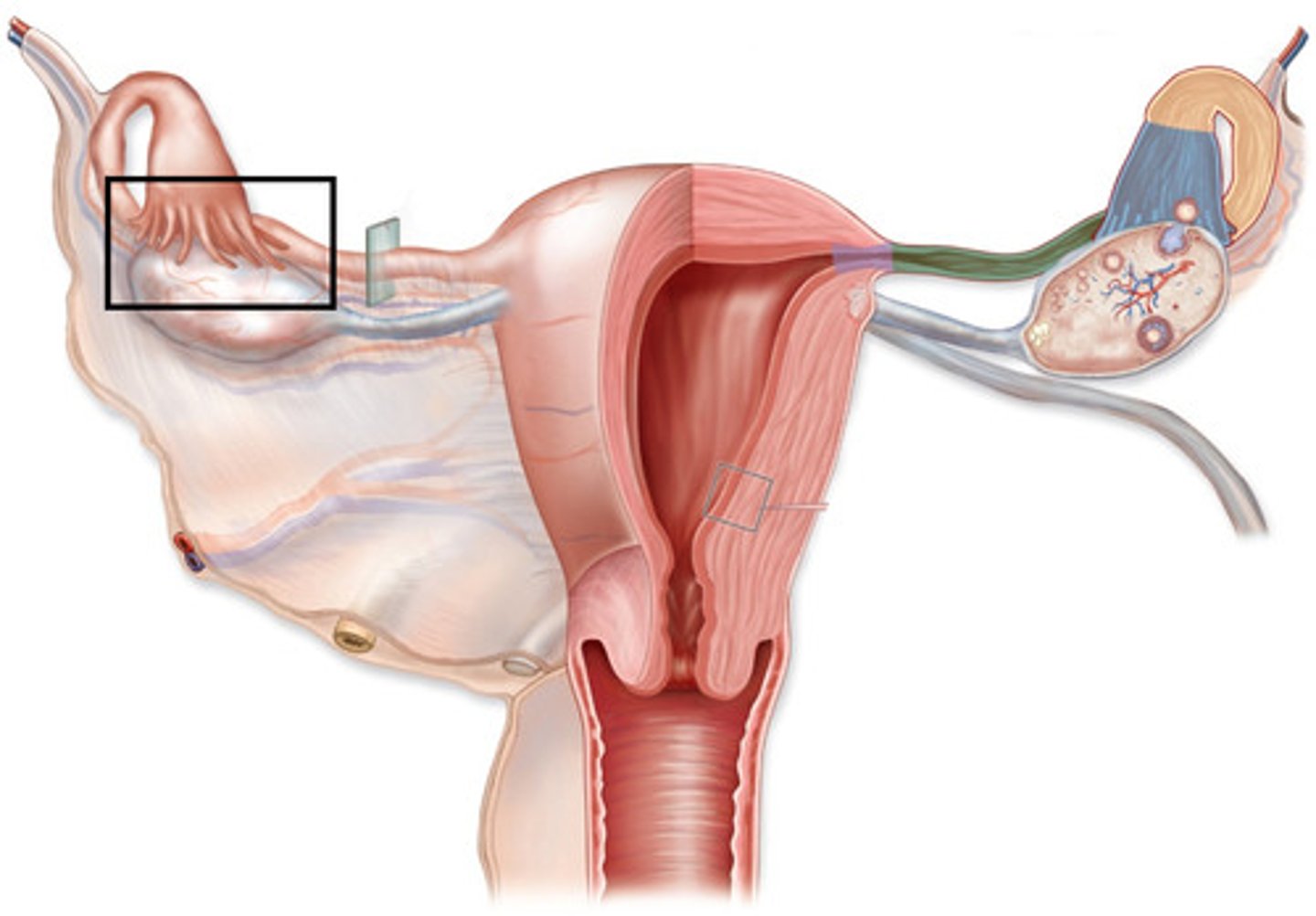
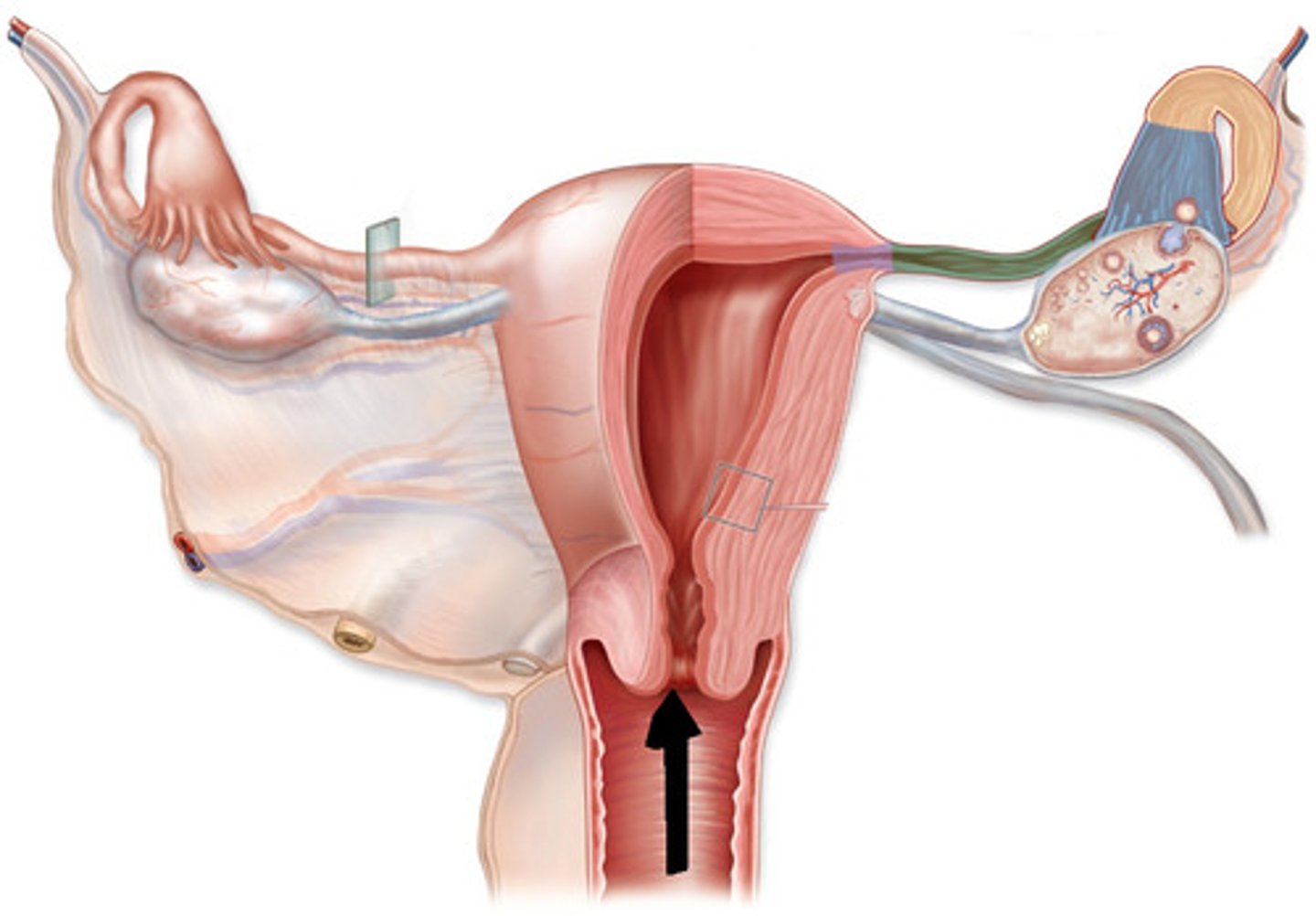
fimbriae (of uterine tube)
Egg Release:
Ovary -> ____________ -> Uterine Tube -> Uterus -> Cervix -> Vagina
ampulla (of uterine tube)
(2)
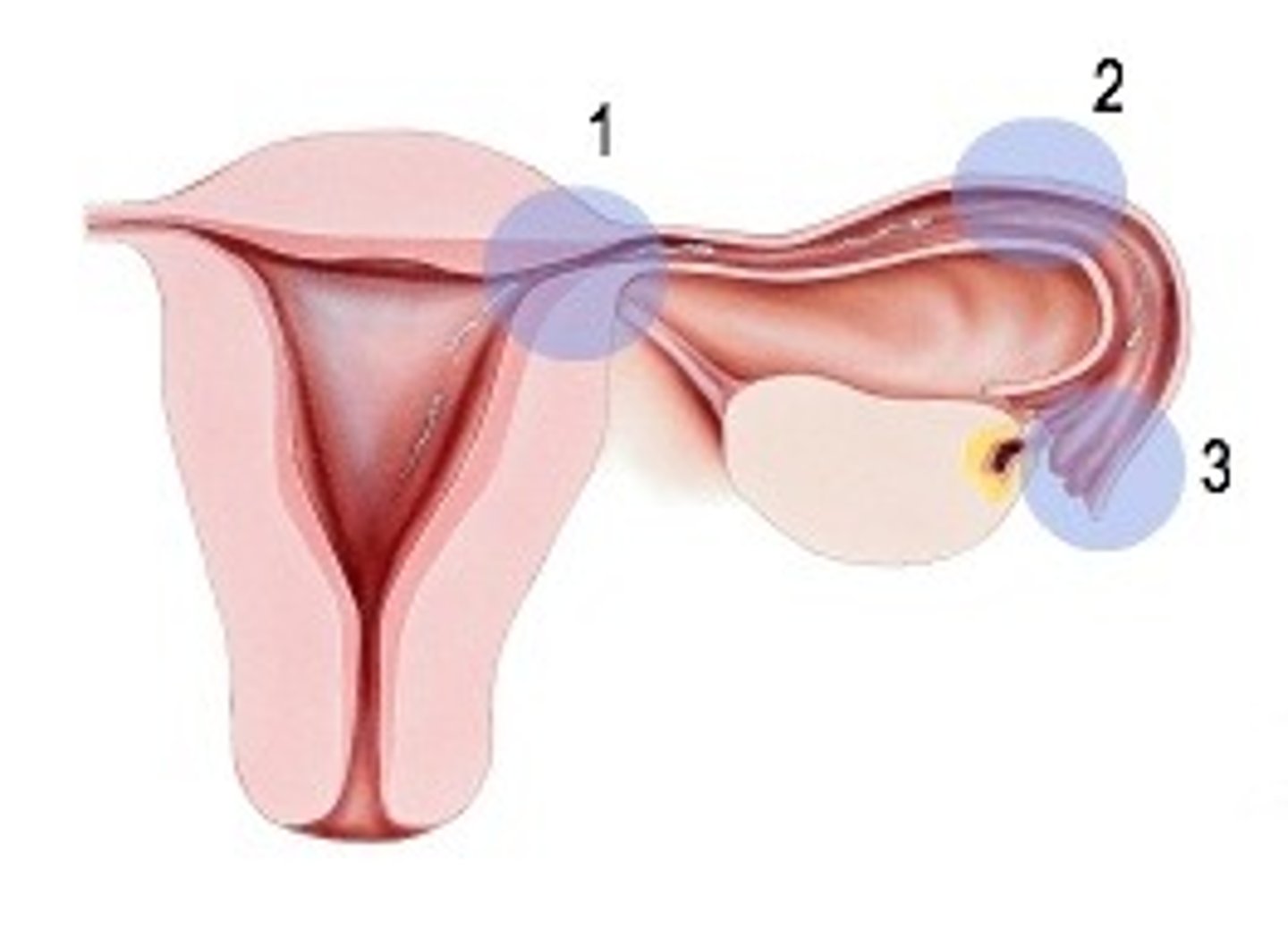
isthmus (of uterine tube)
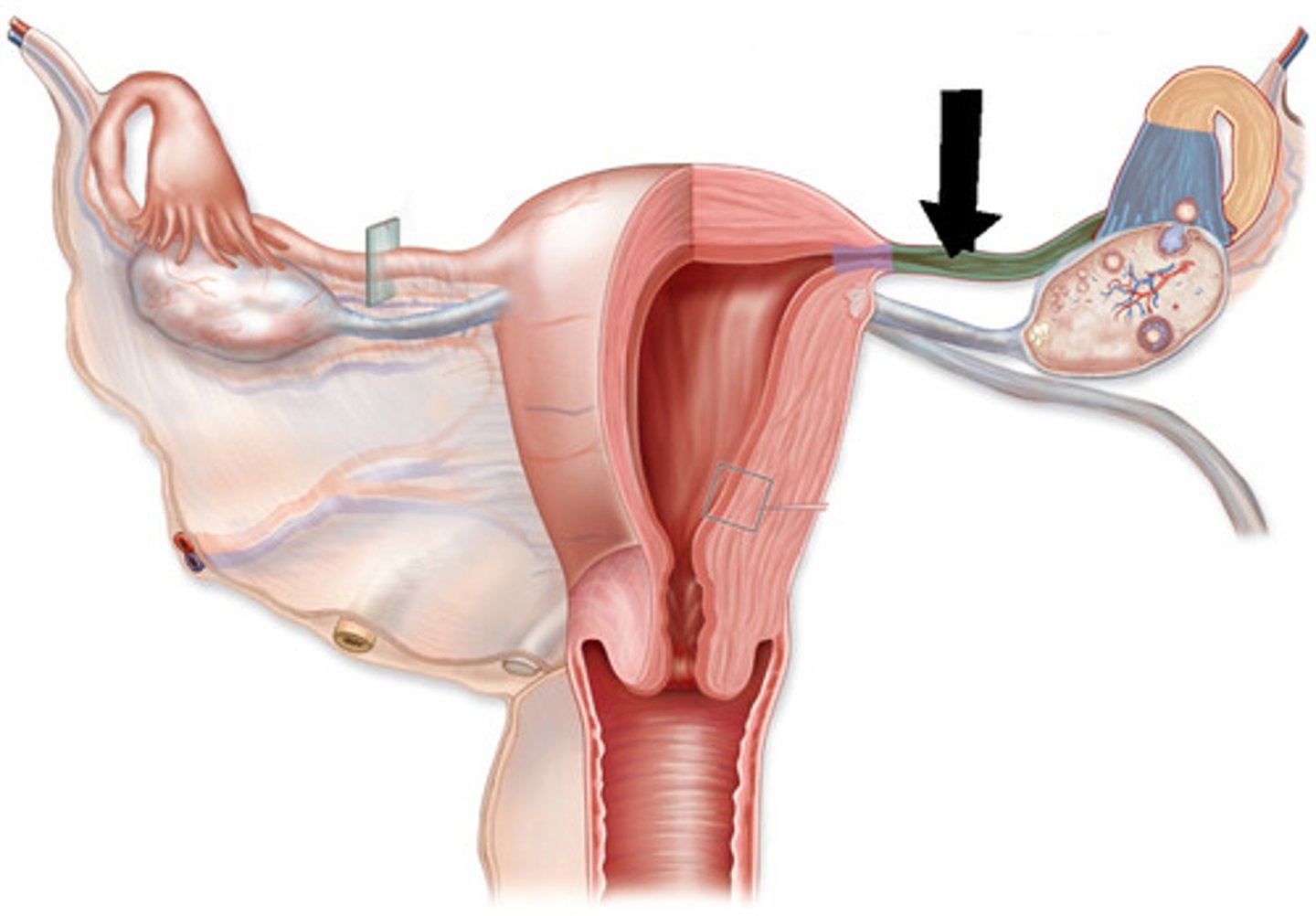
fundus (of uterus)
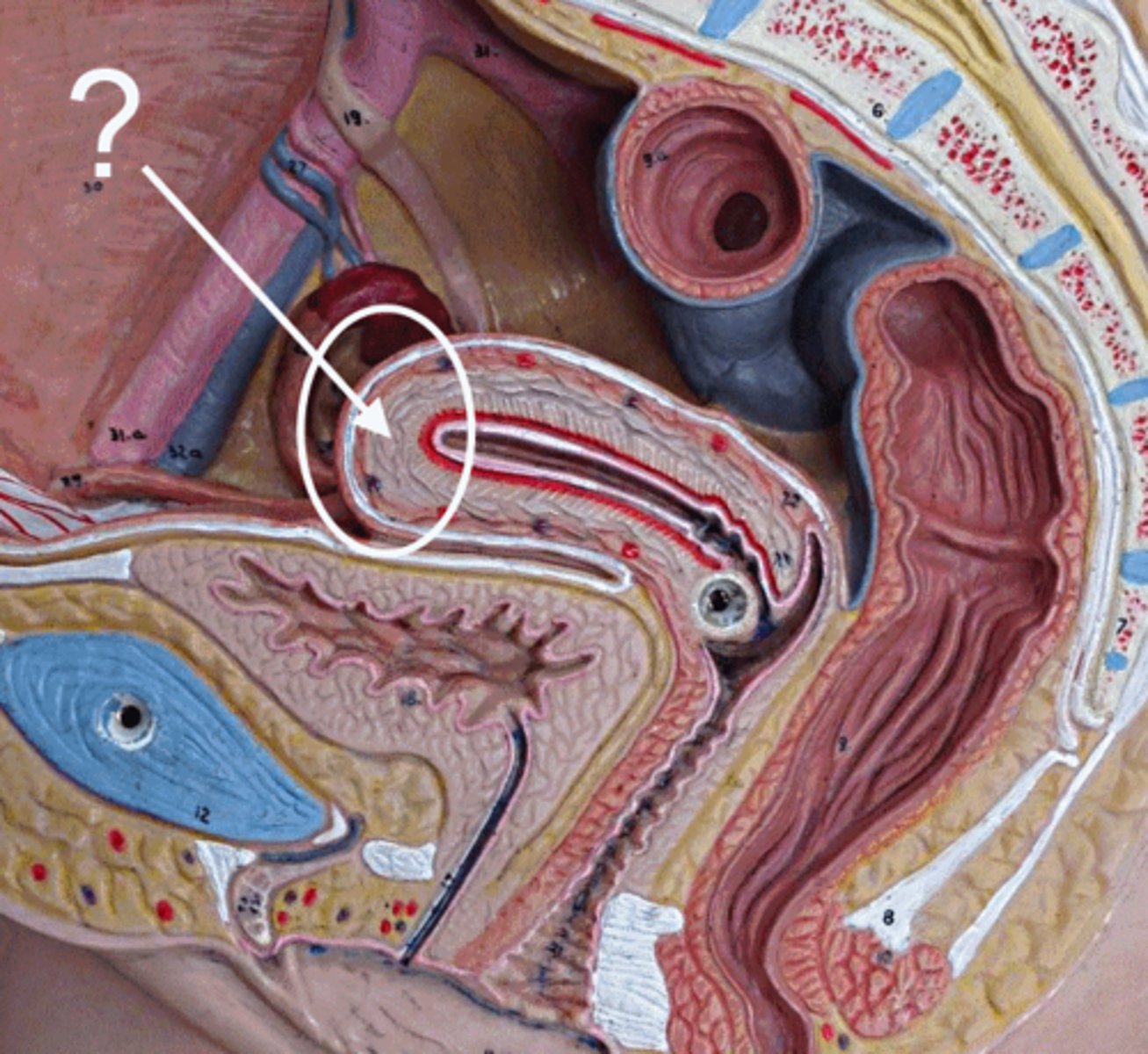
body of uterus
major portion of uterus
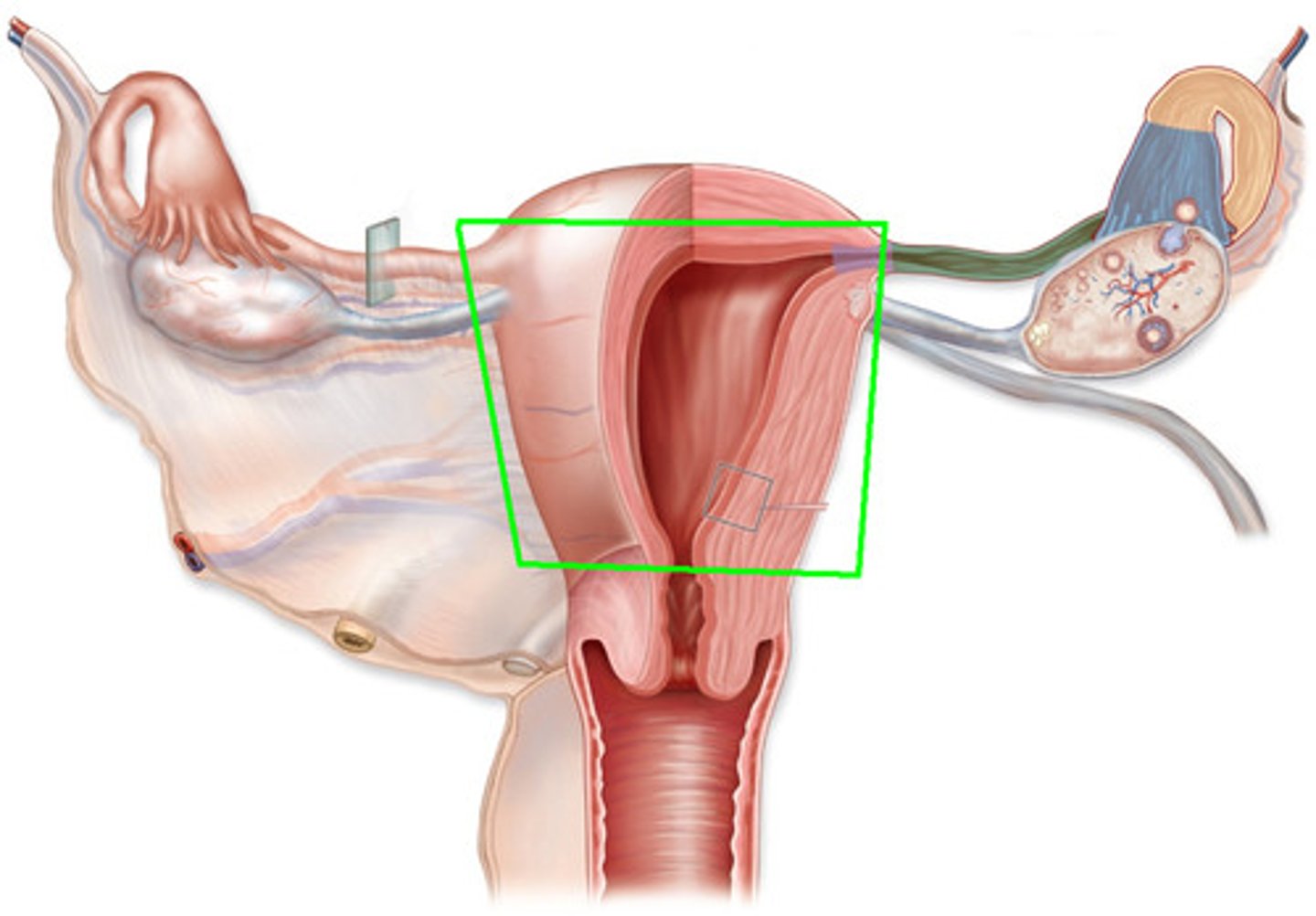
isthmus (of uterus)
narrowed inferior region
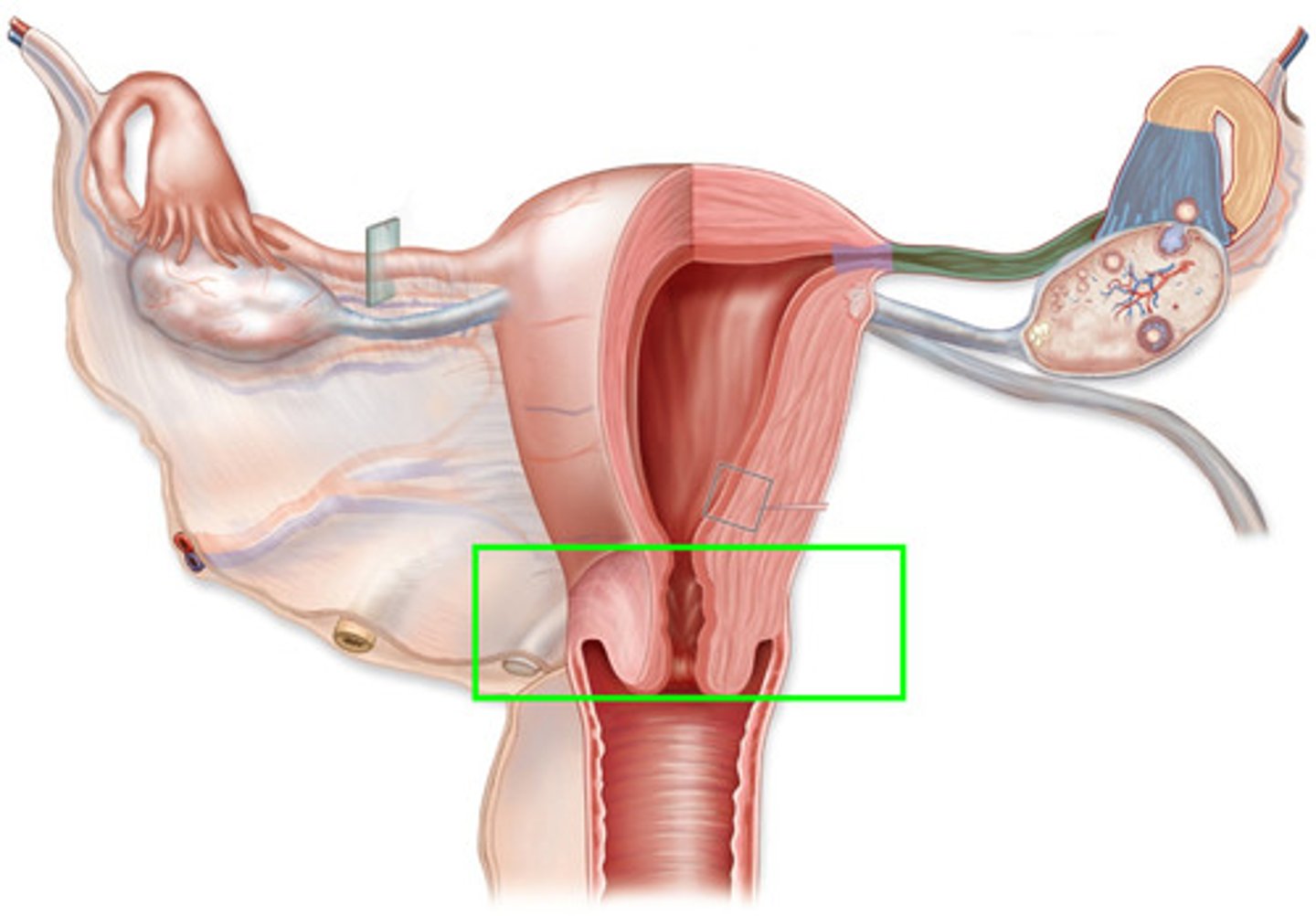
cervix (of uterus)
narrow neck which projects into the vagina inferiorly
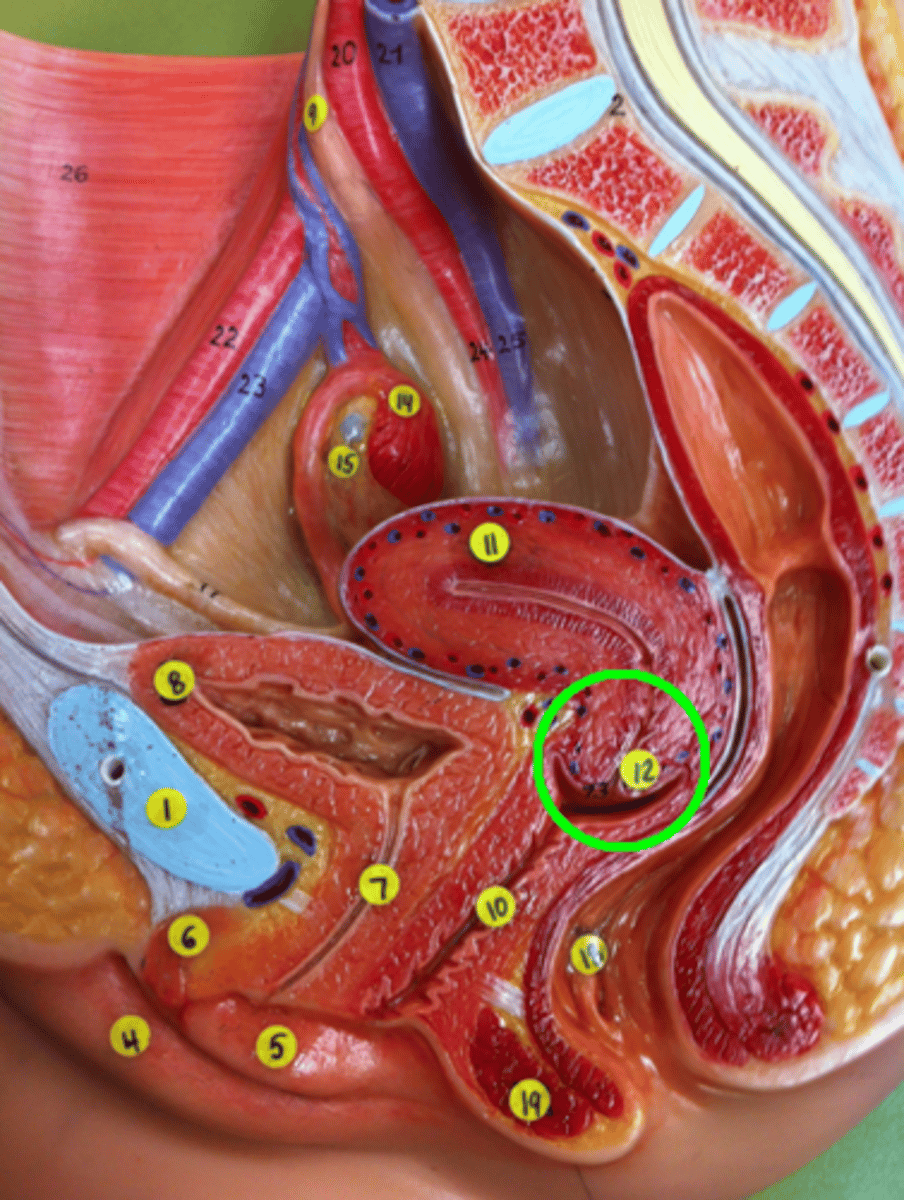
internal orifice/internal os
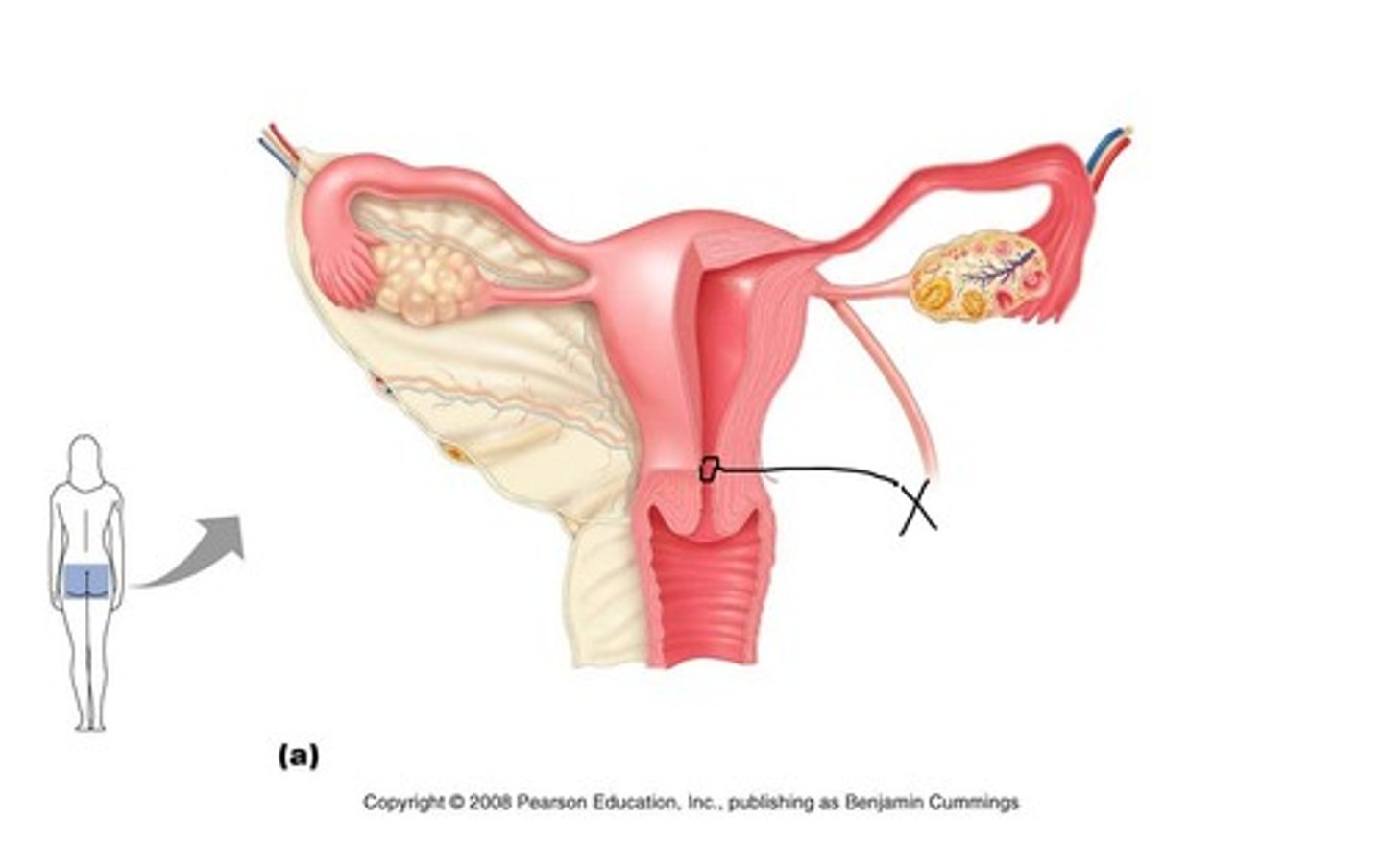
cervical canal
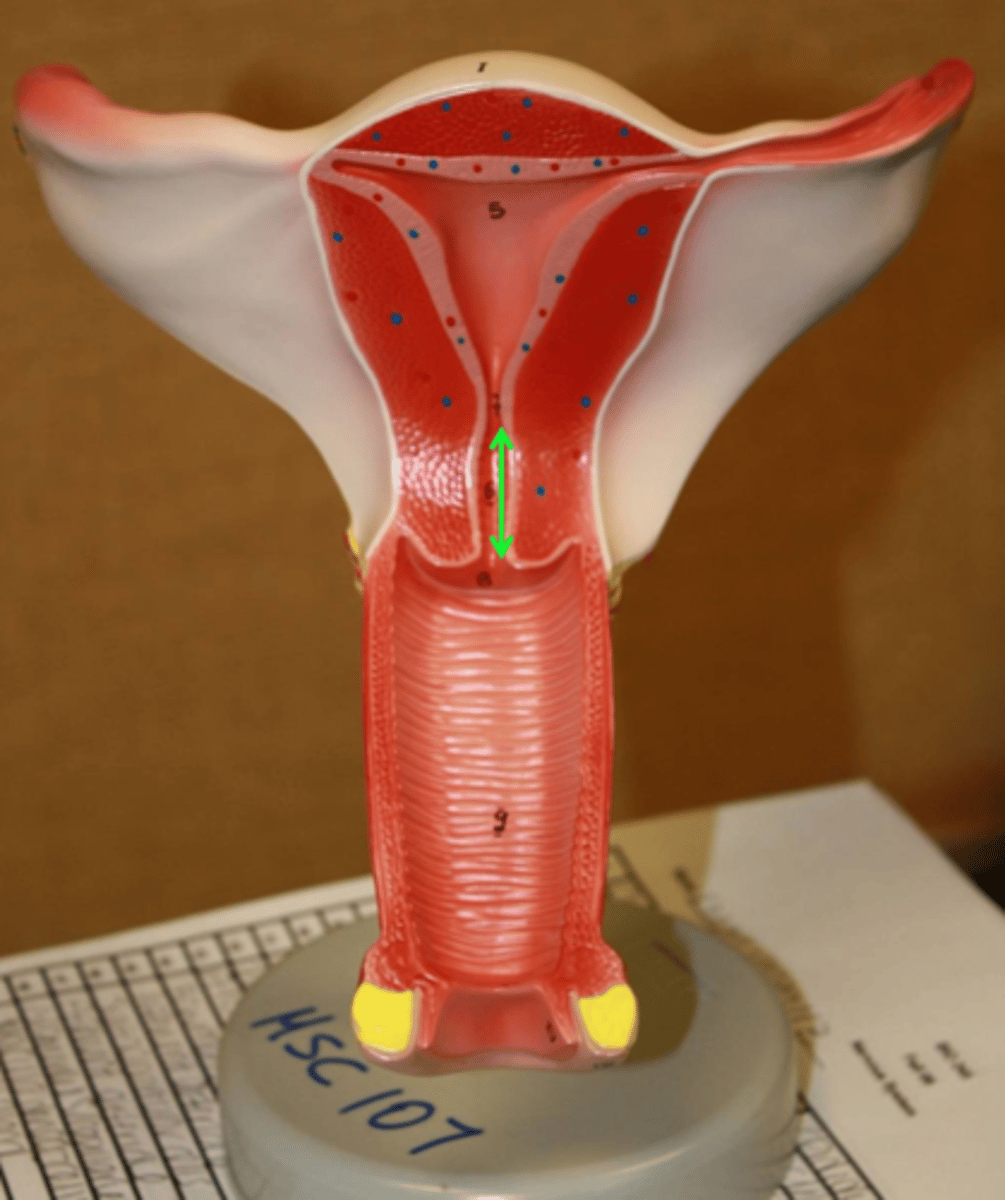
external orifice/external os
urogenital vestibule
located just ventral to the anus
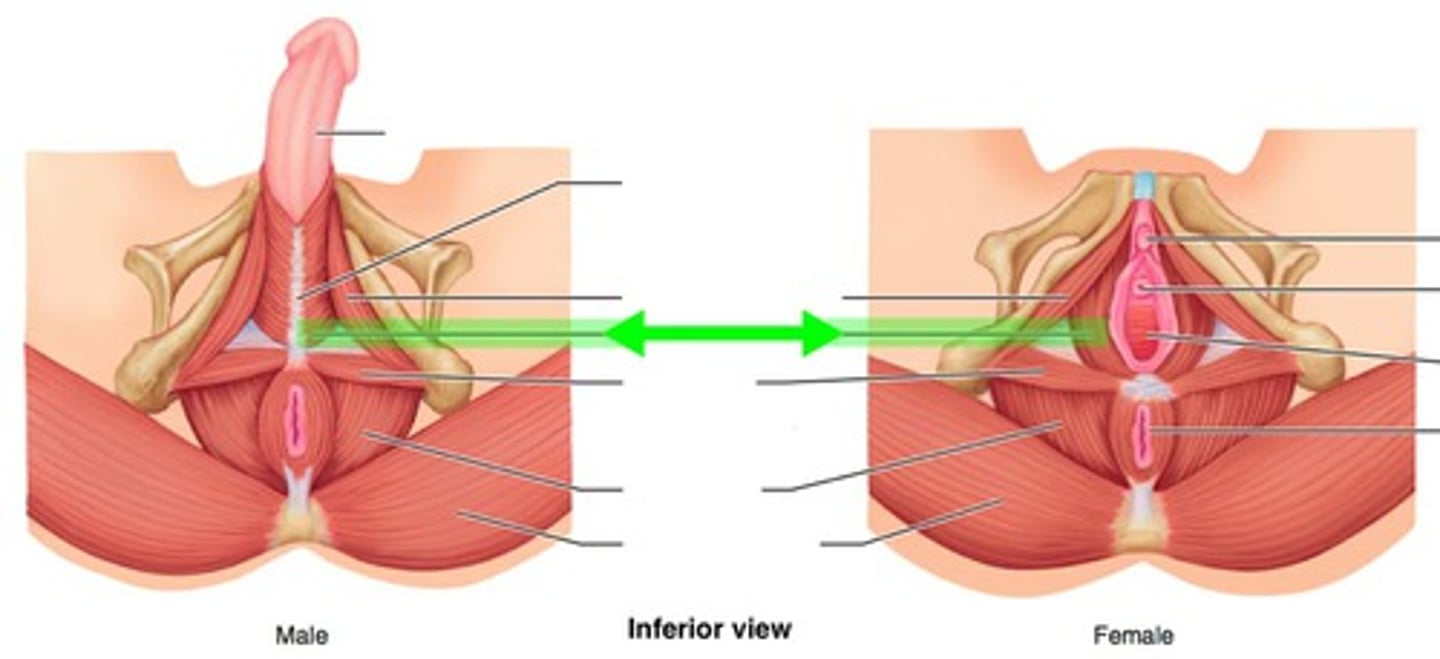
labia majora
the larger outer folds of the vulva
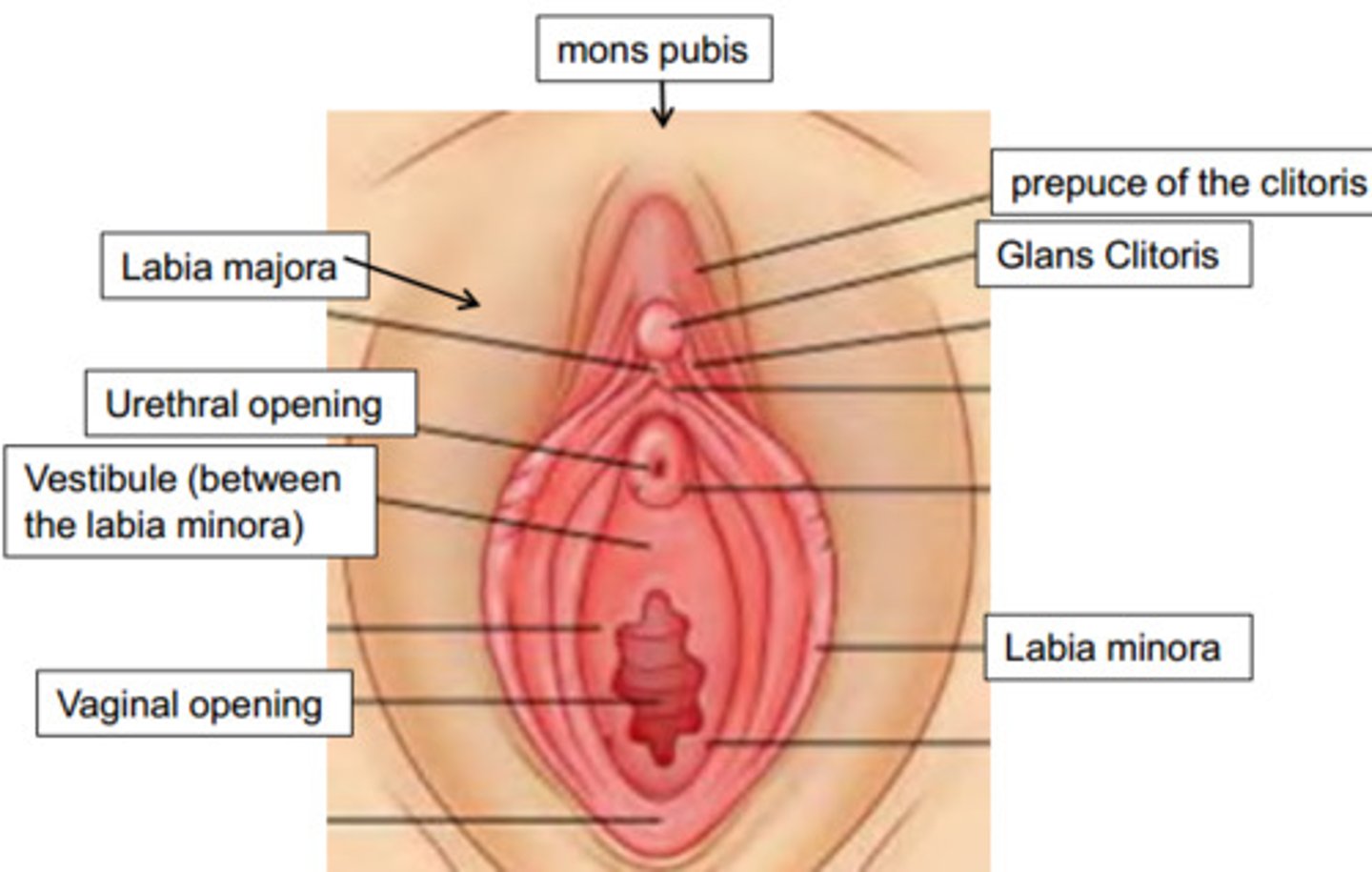
labia minora
the smaller inner folds of the vulva.
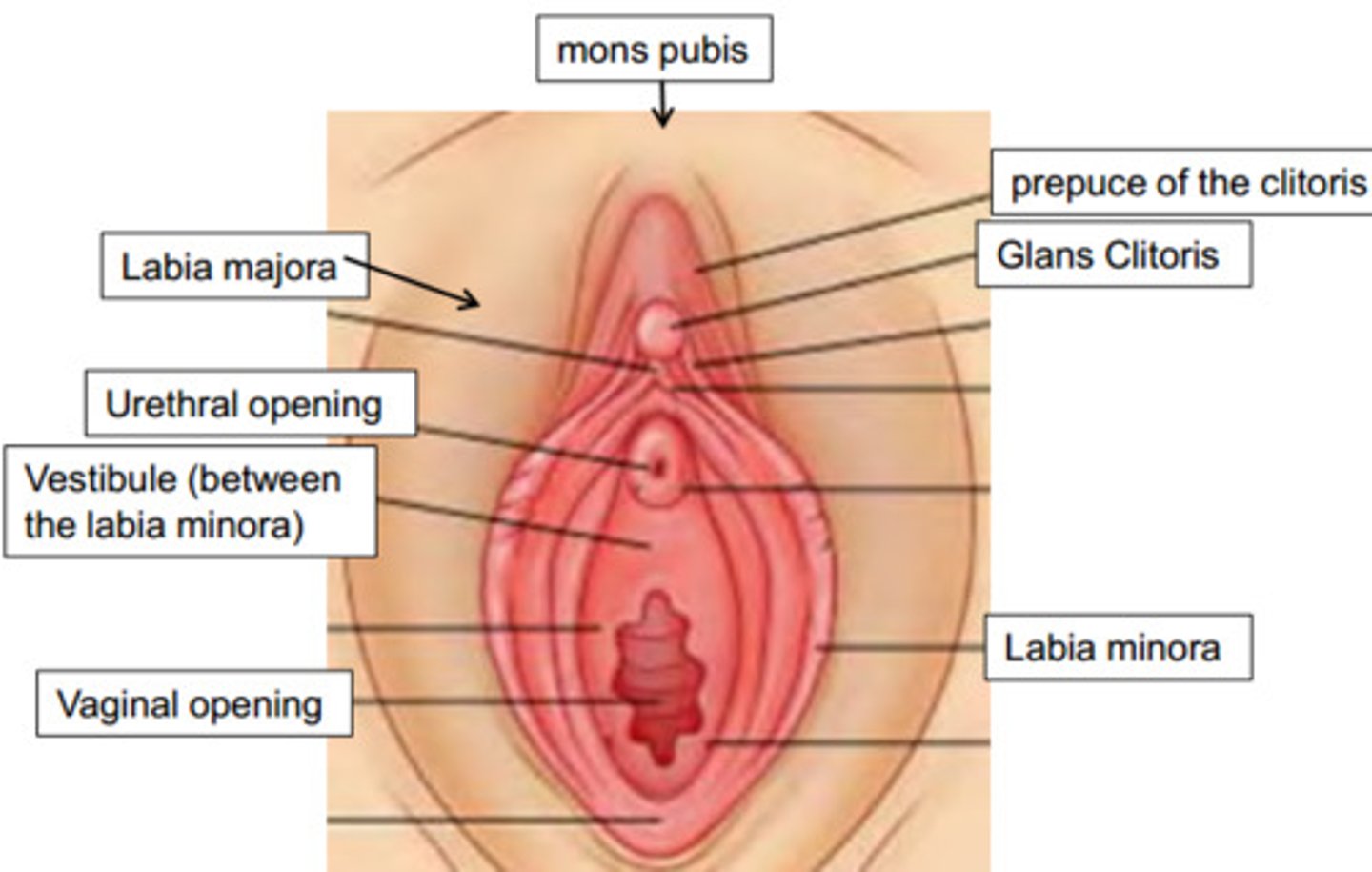
mons pubis
a mound of fatty tissue covering the pubic area in women
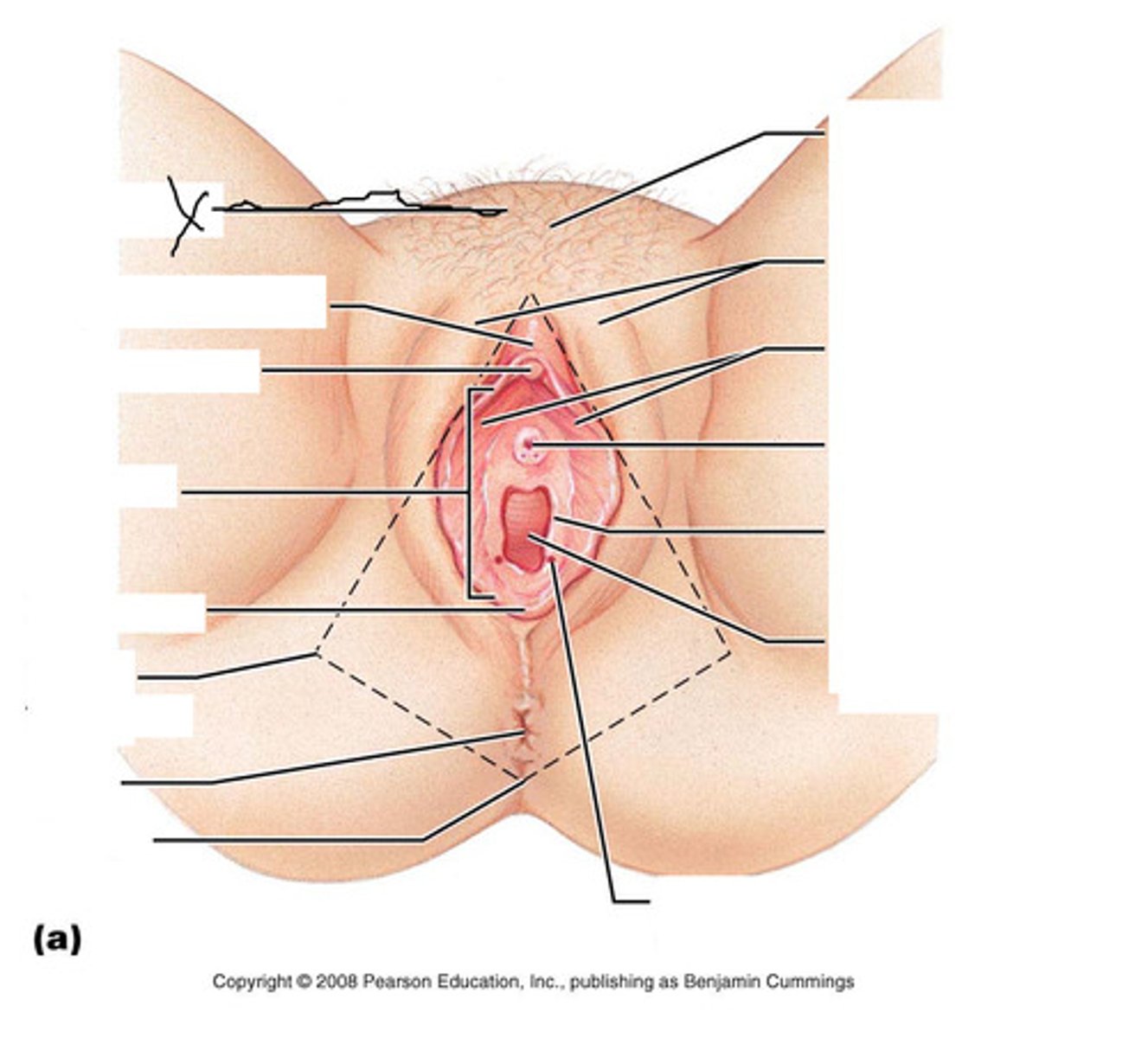
clitoris
organ of sensitive erectile tissue anterior to the opening of the female urethra
seminiferous tubules/testes
highly coiled
produce sperm
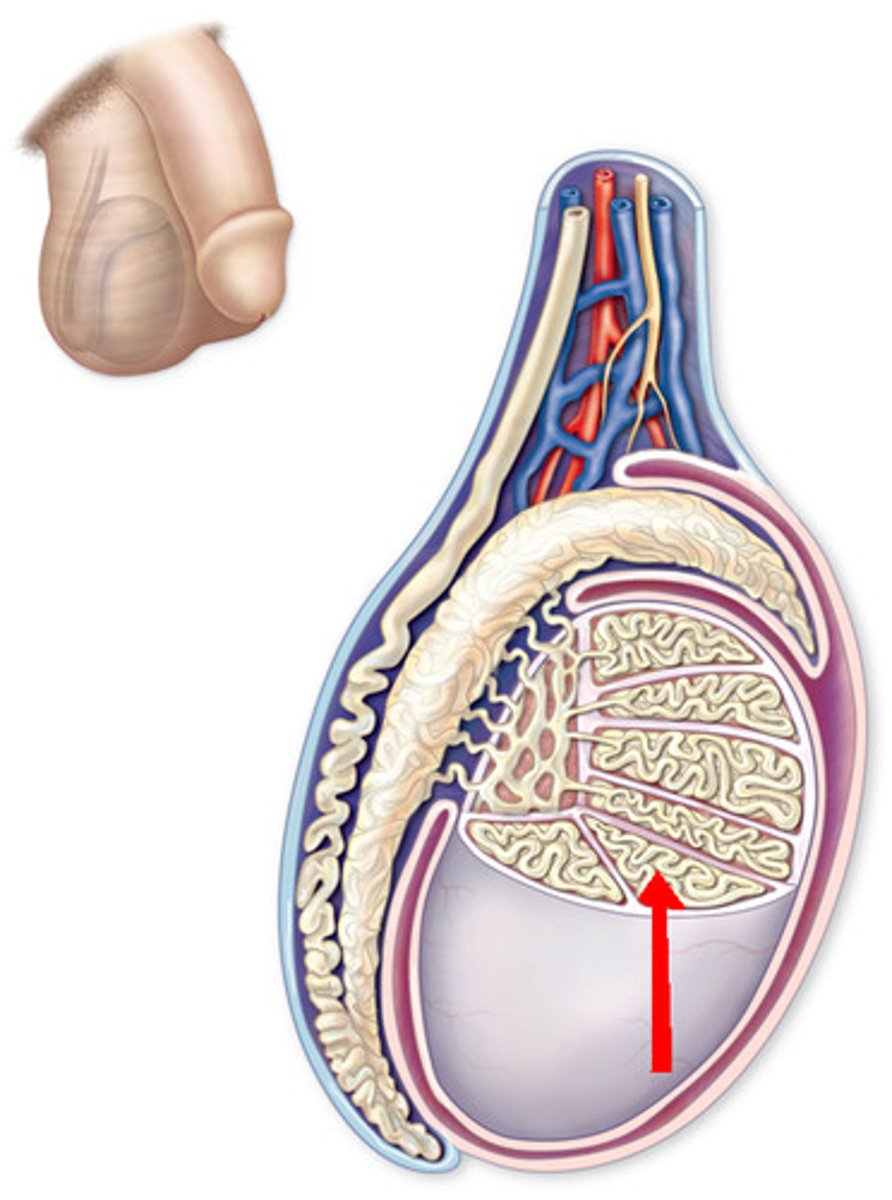
head of epididymis
contains efferent ductules and is located on superior aspect of testis
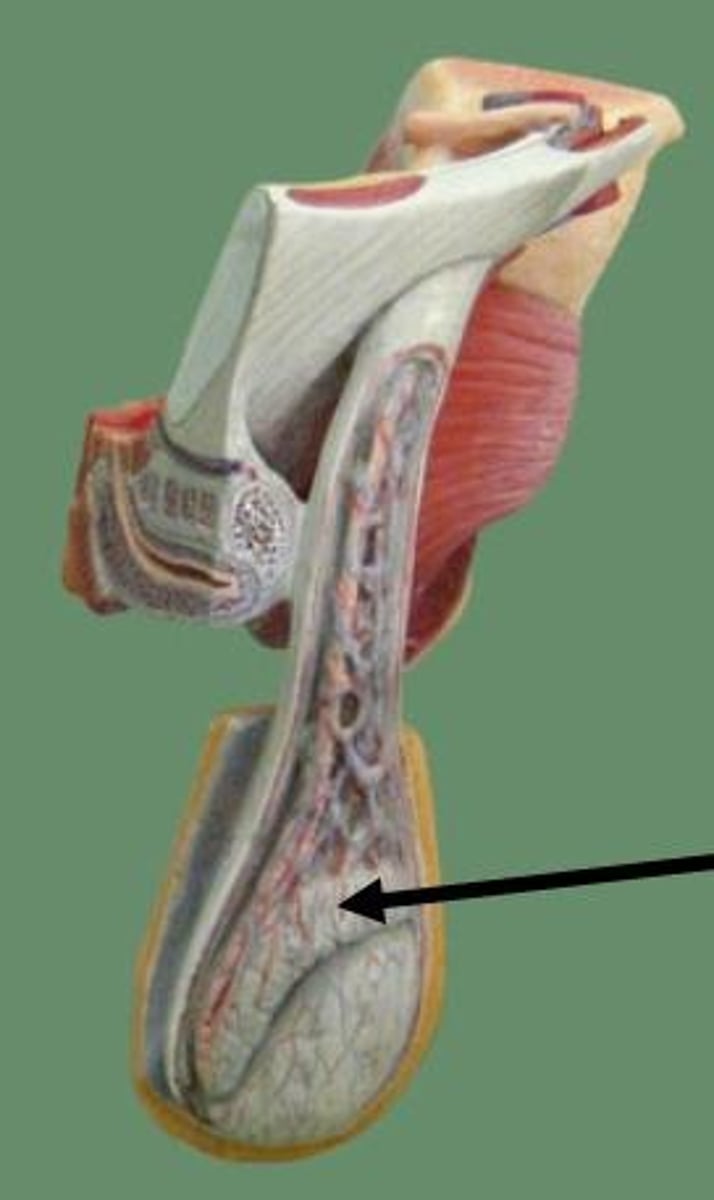
body of epididymis
(K) coiled tubes pass through the body
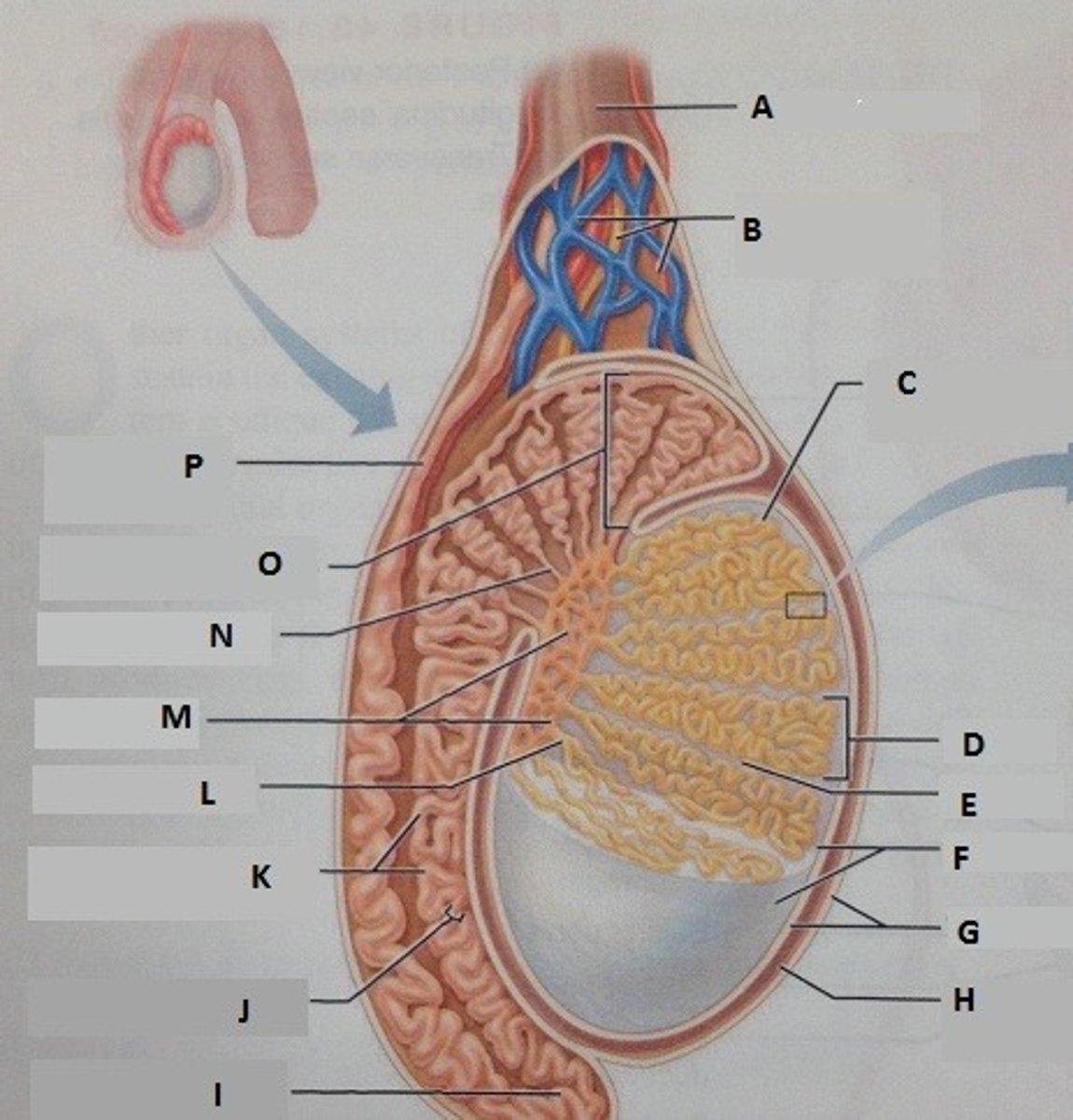
tail of epididymis
(I) tubes begin to uncoil to become a single tube called the ductus deferens
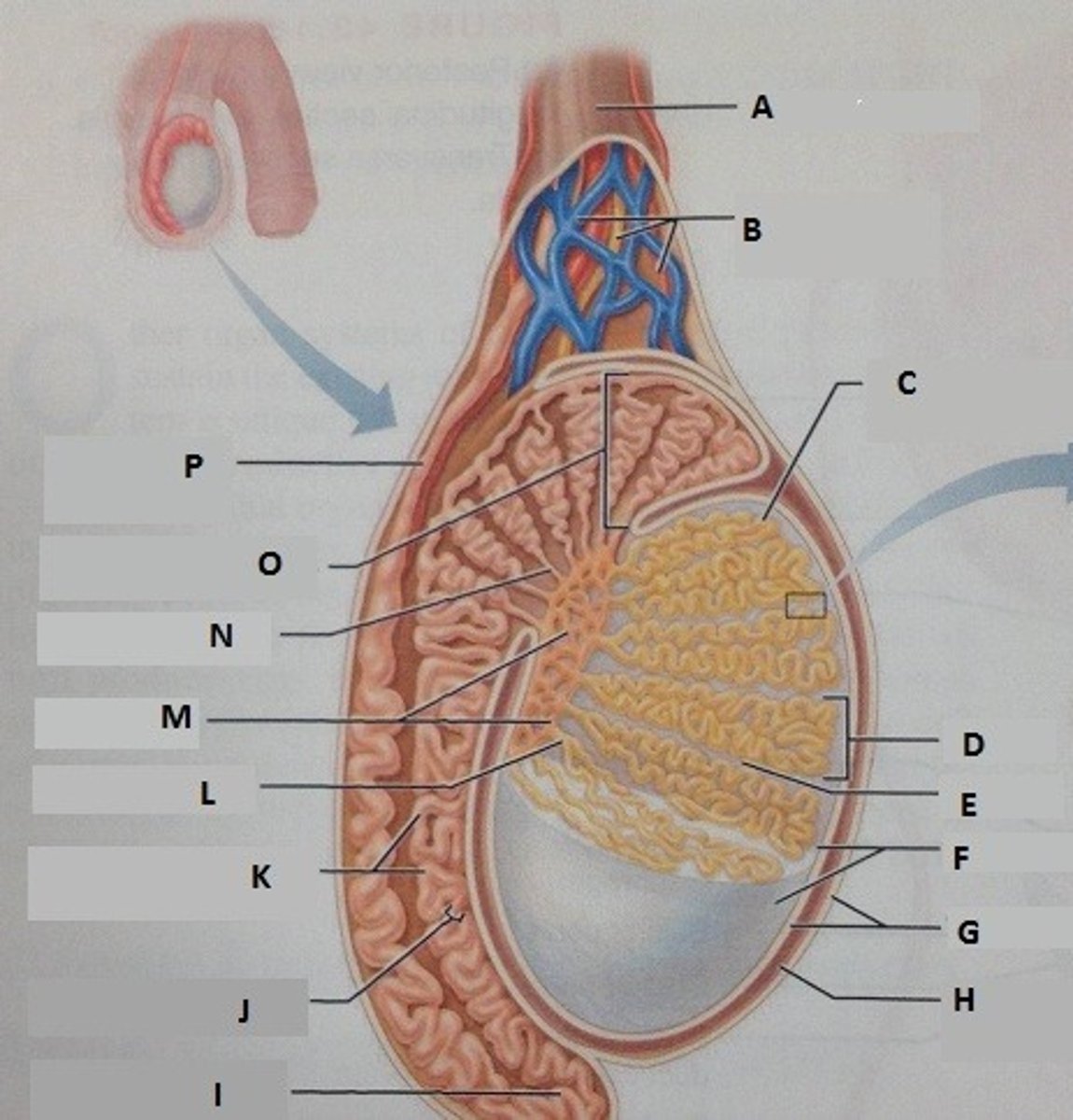
vas deferens/ductus deferens
the duct that conveys sperm from the testicle to the urethra
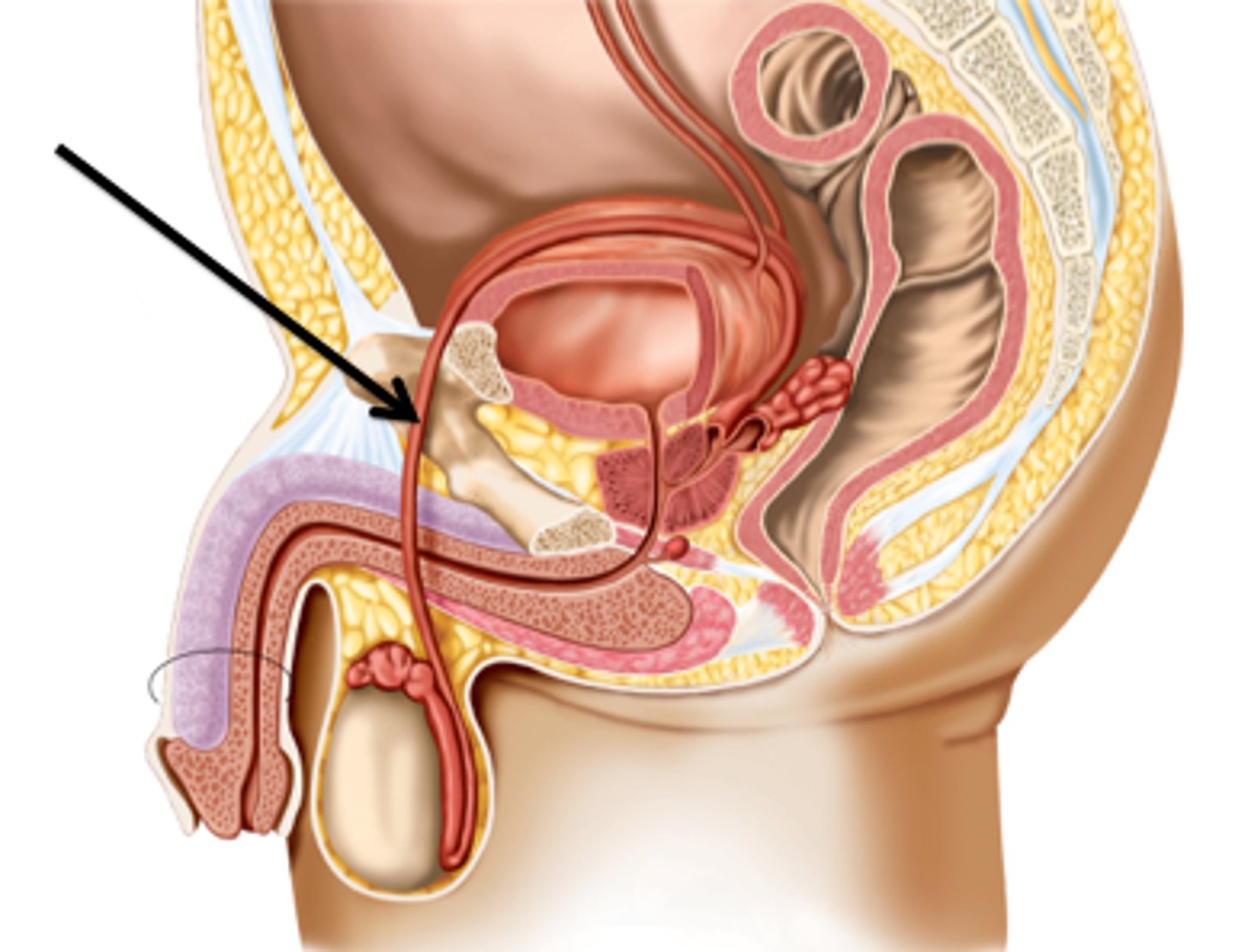
ejaculatory duct
small duct that connects the vas deferens to the urethra
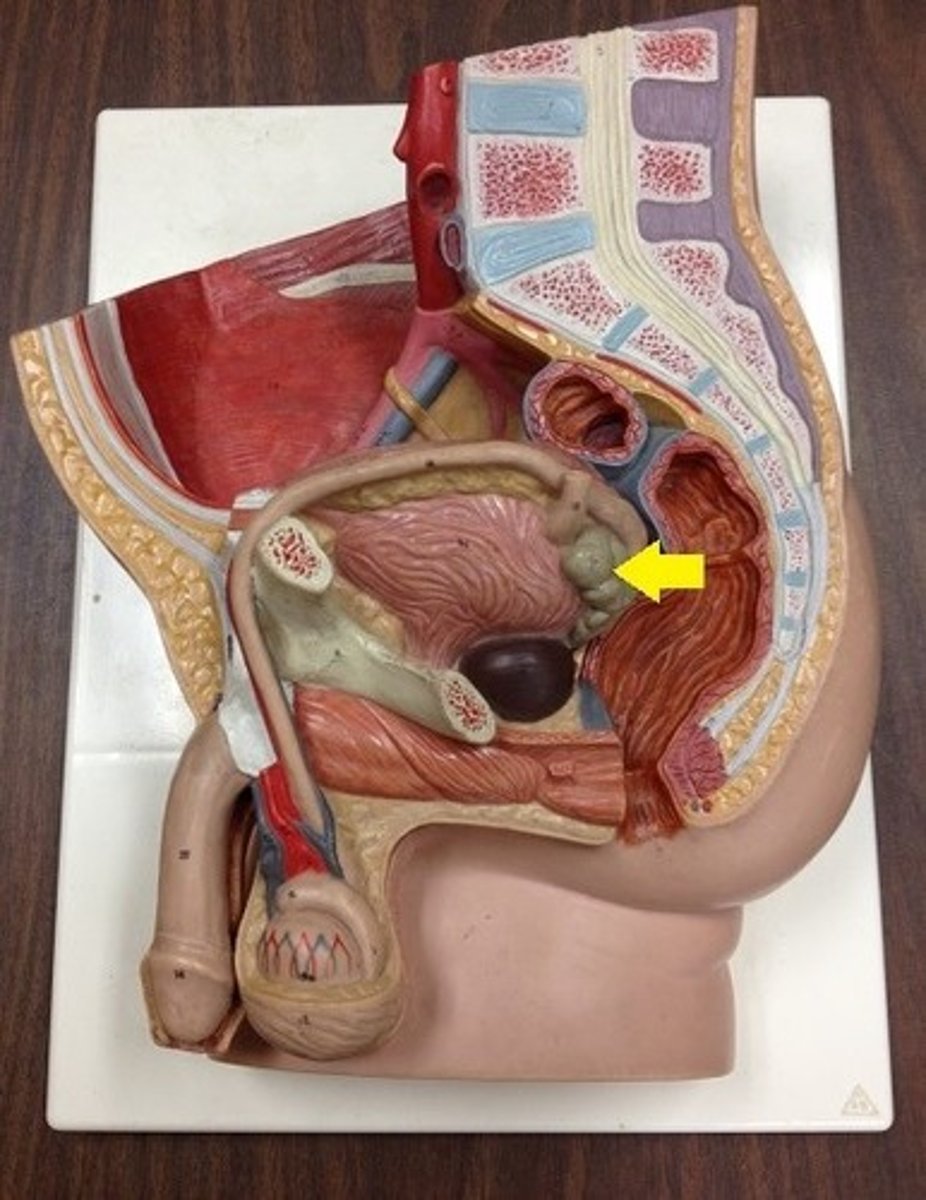
seminal vesicle/seminal gland
-each of a pair of glands that open into the vas deferens near its junction with the urethra
-secrete prostaglandins
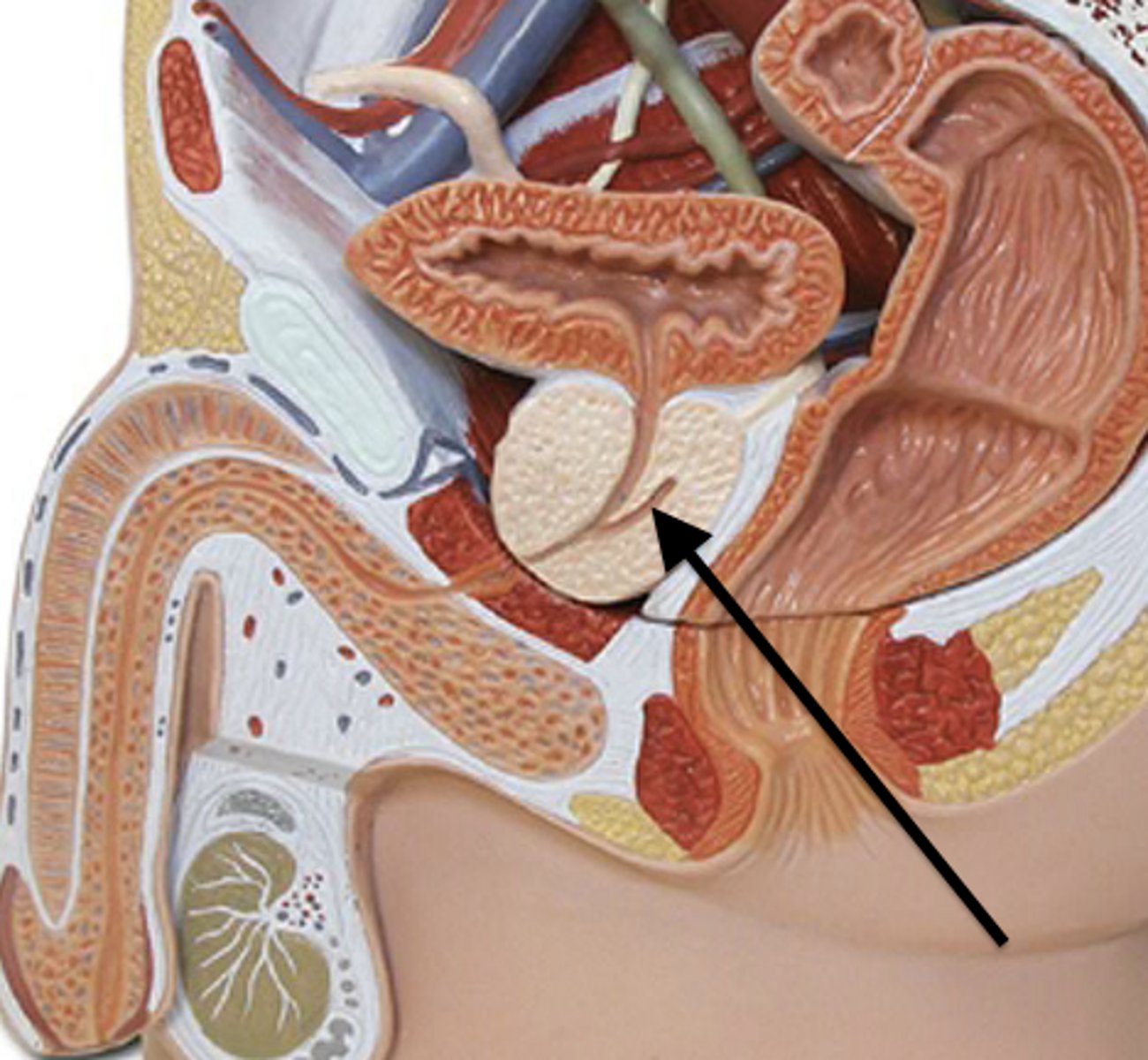
prostate gland
adds a chemical fluid to the semen
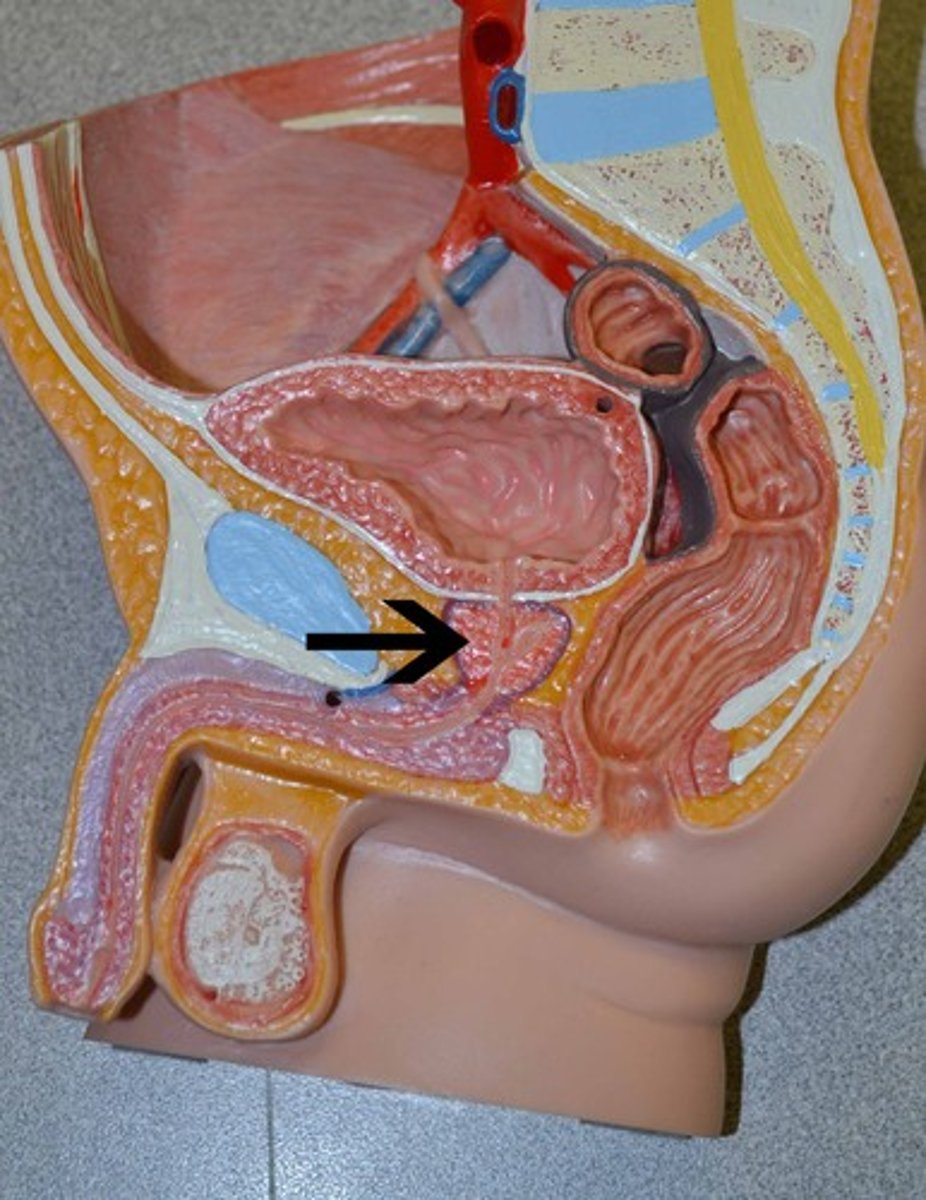
bulbourethral glands
-a pair of exocrine glands near the male urethra
-secrete a thick, alkaline mucus important in neutralizing acids into the urethra
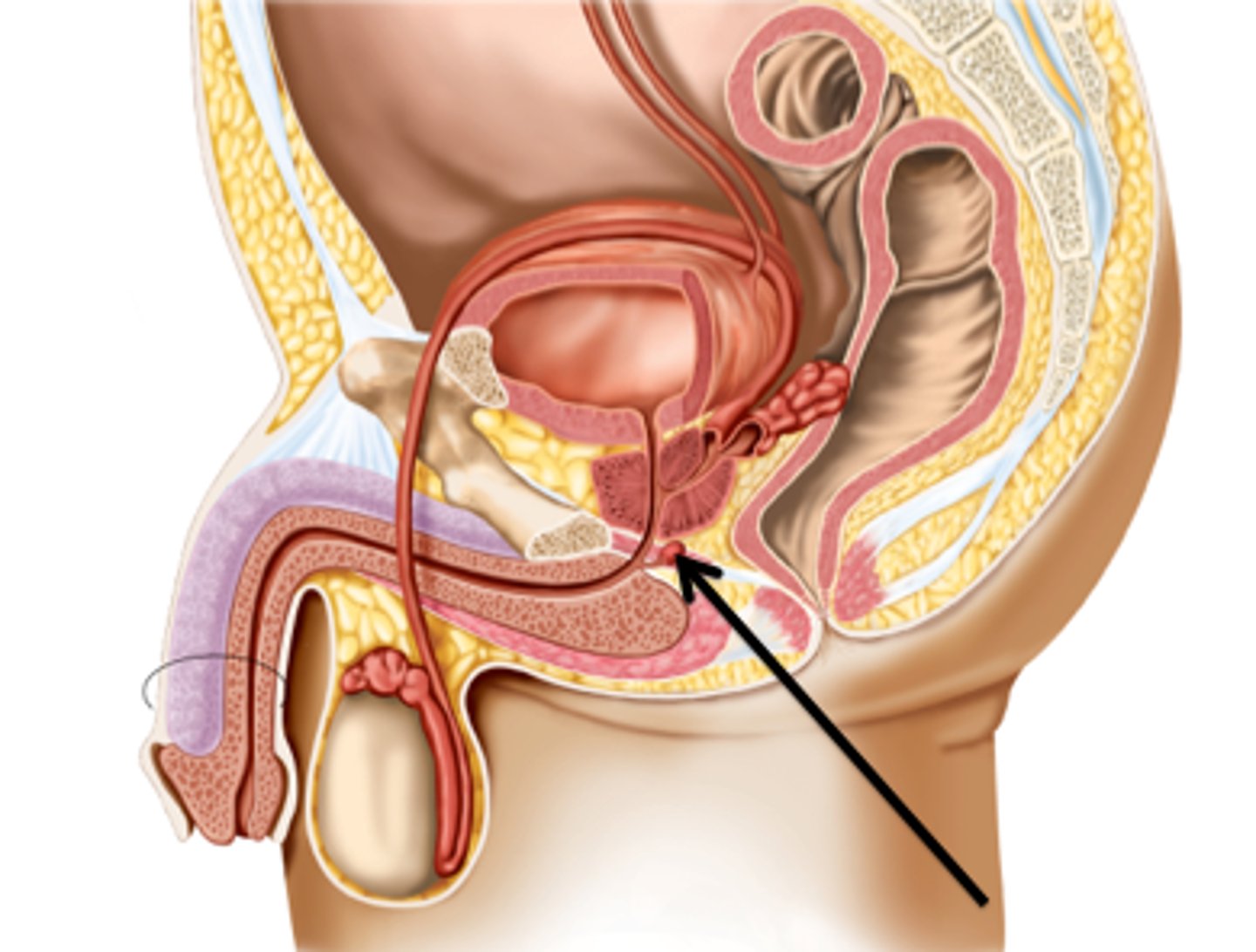
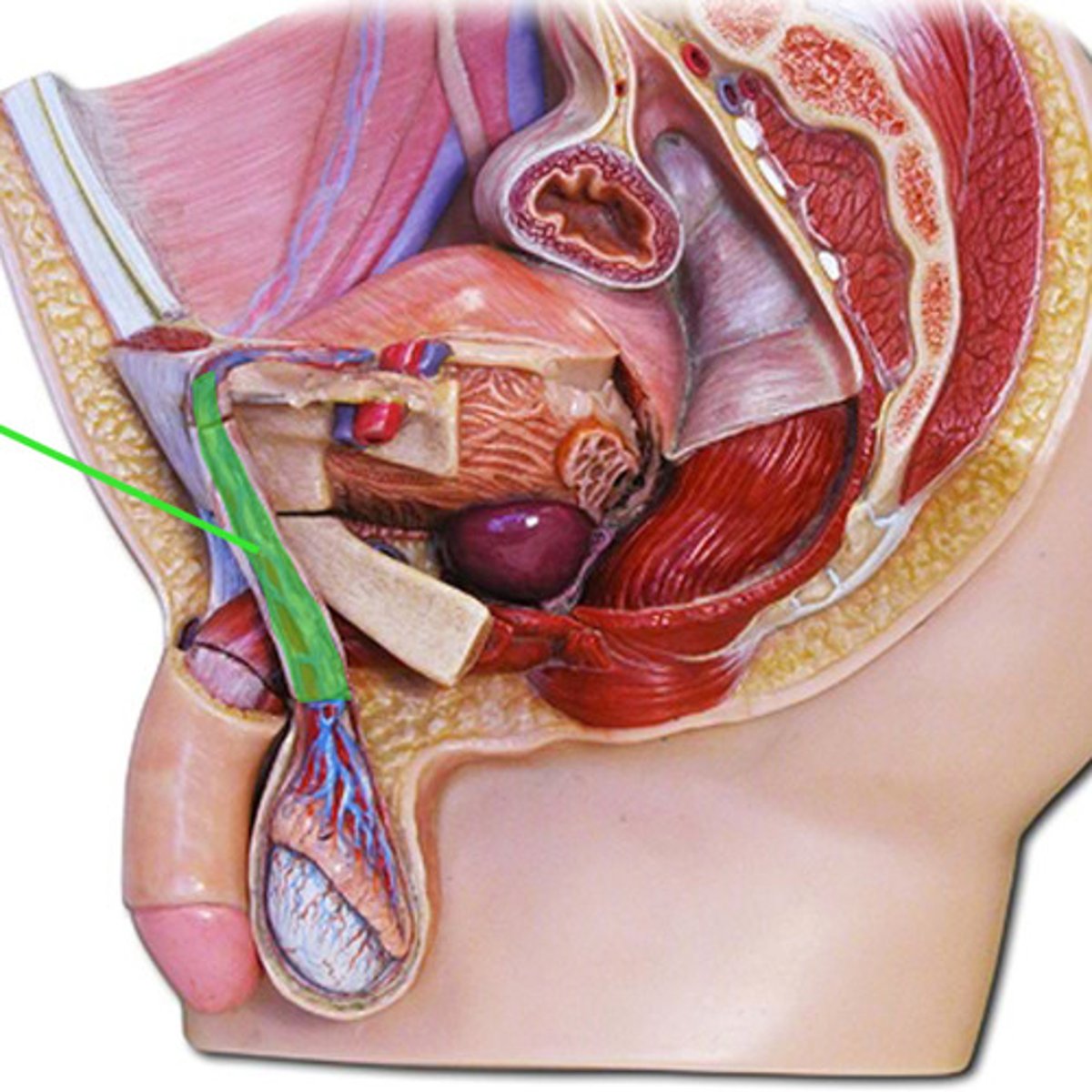
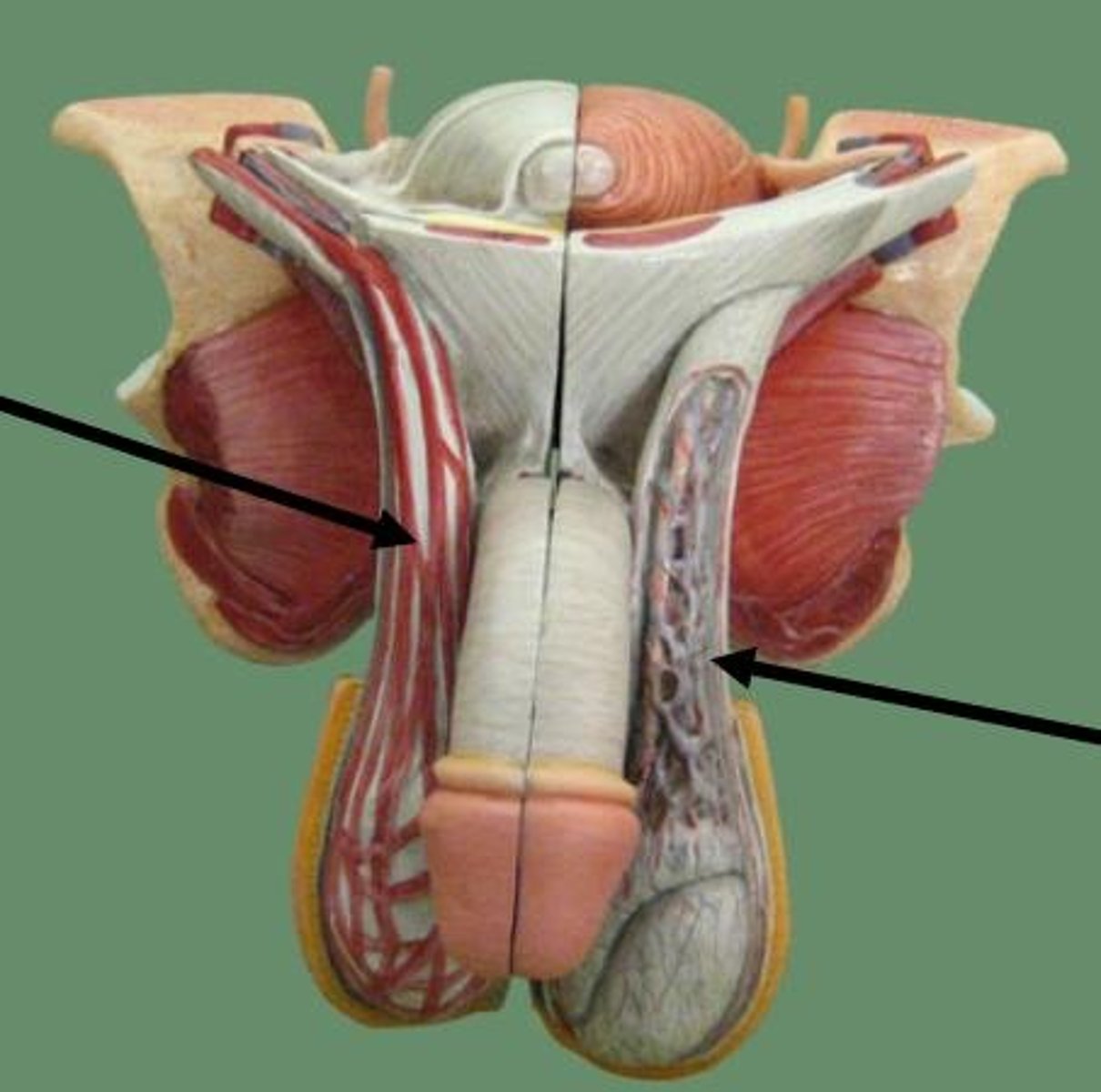
spermatic cord
extends upward from the epididymis and is attached to each testicle
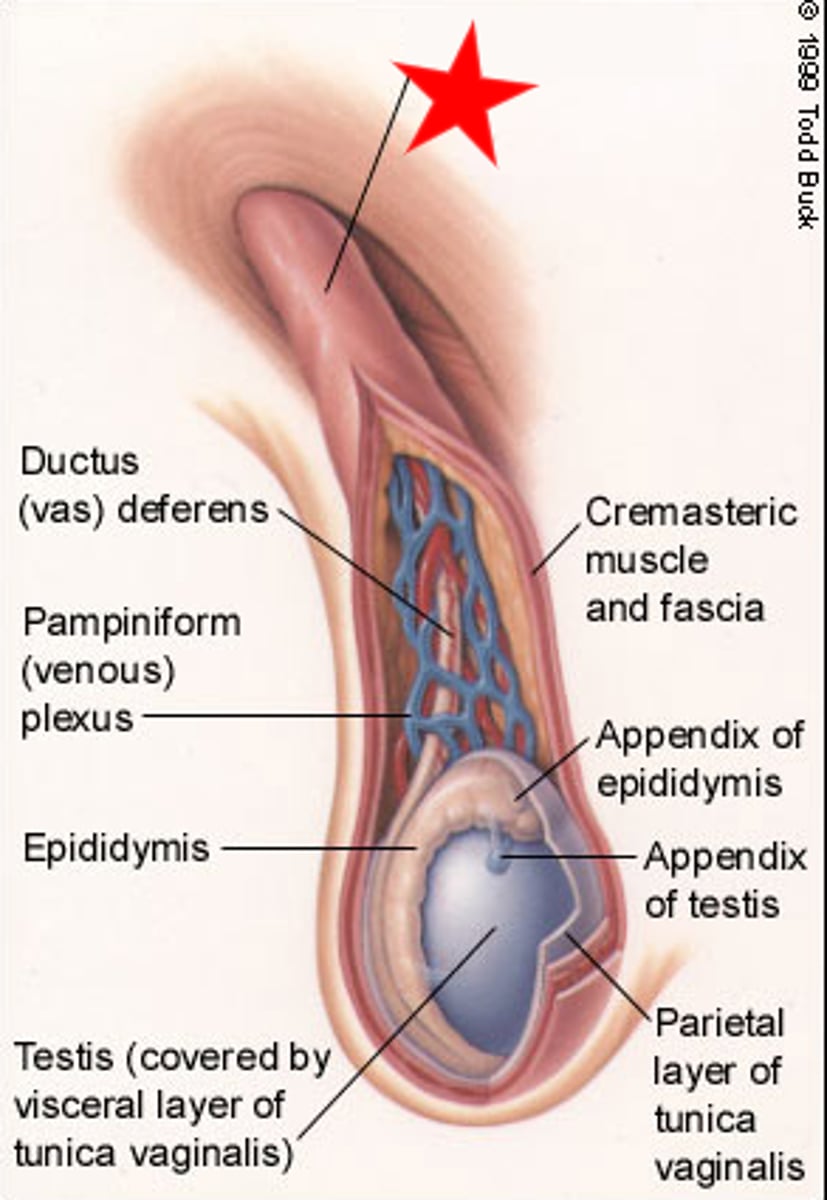
pampiniform plexus
a network of testicular veins that drain the testes and absorb body heat from the testes and scrotum
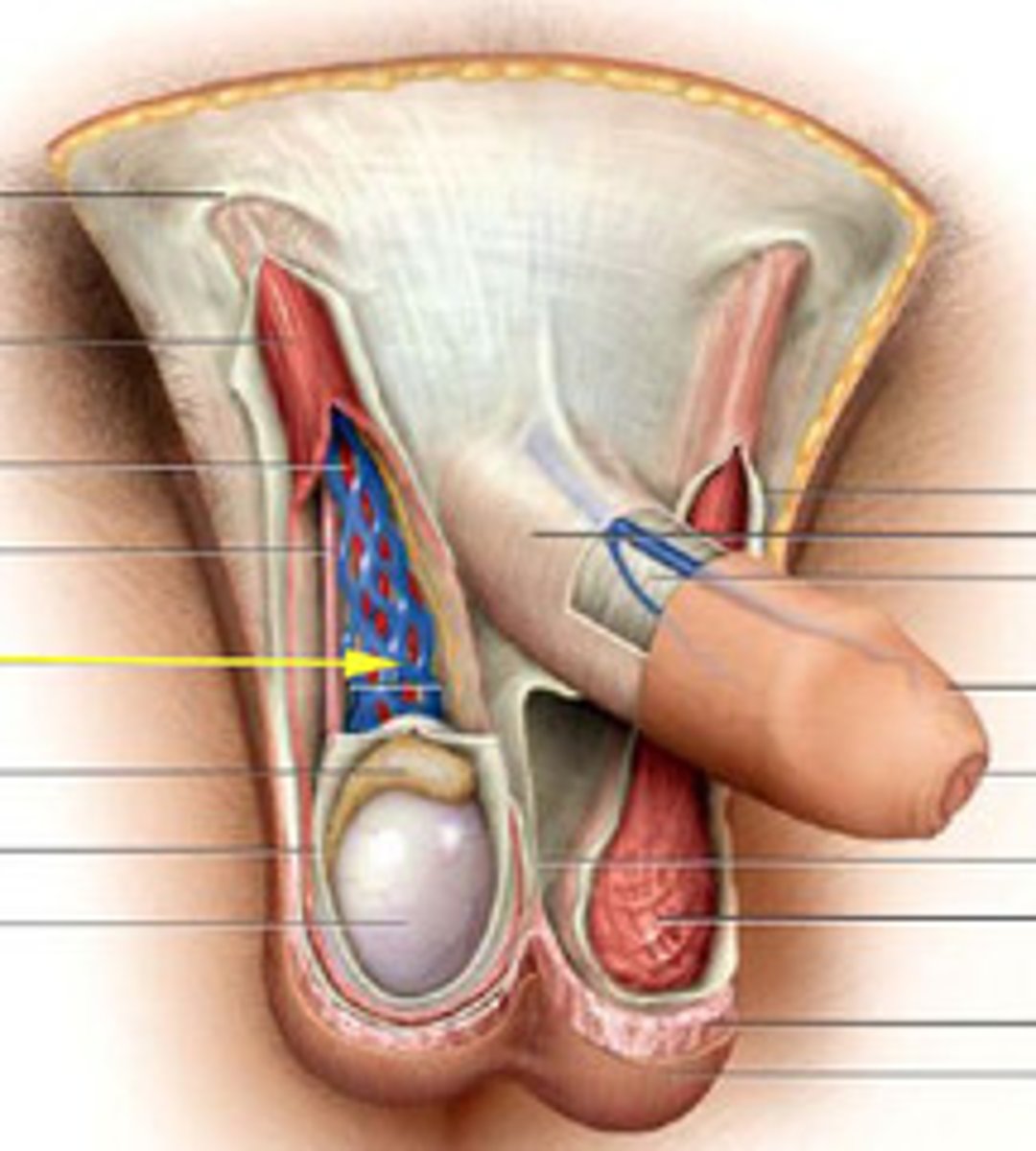
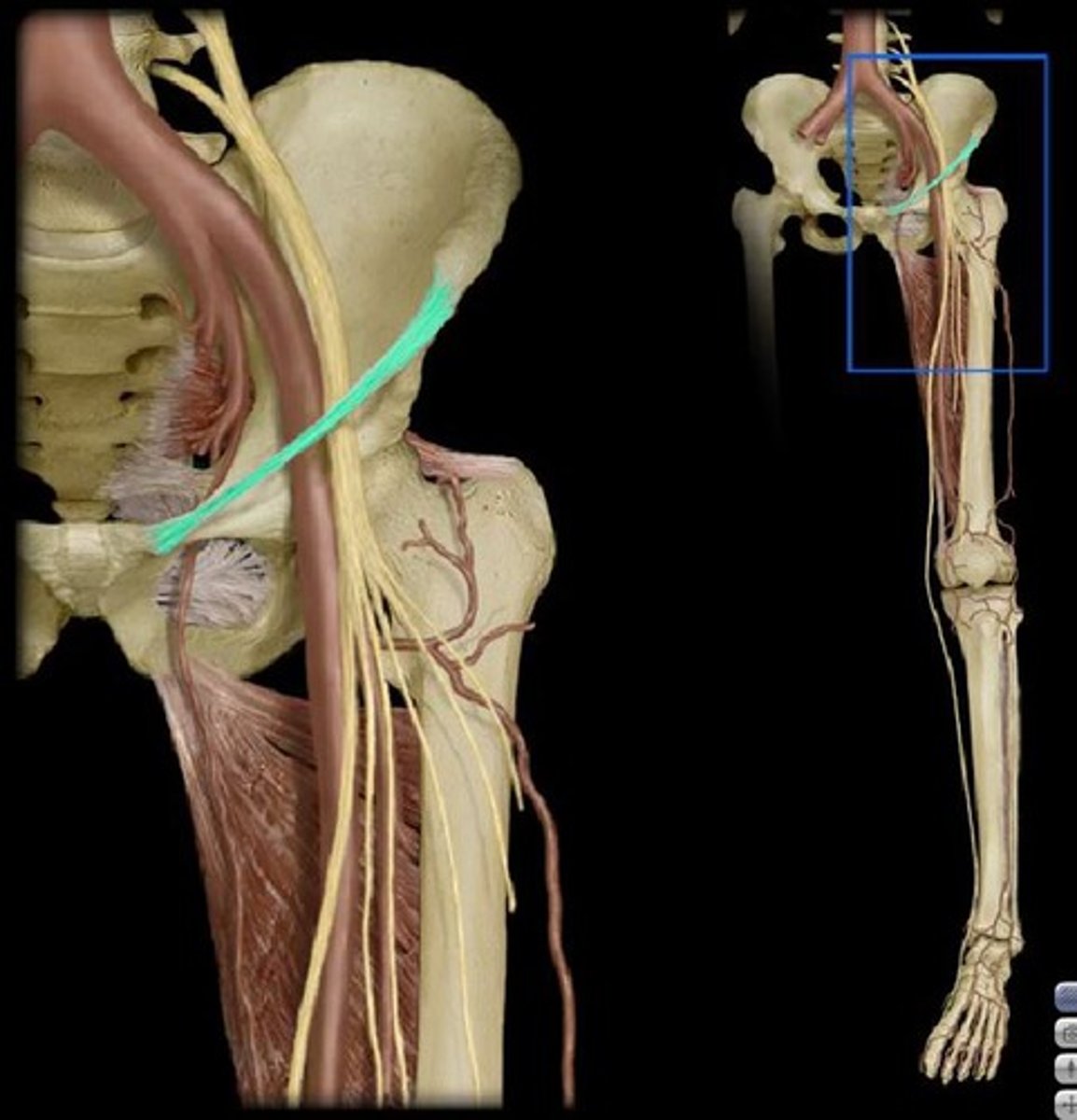
inguinal ligament
-anatomical structure forming the base of the femoral triangle
-extends from the anterior superior iliac spine to the pubic tubercle
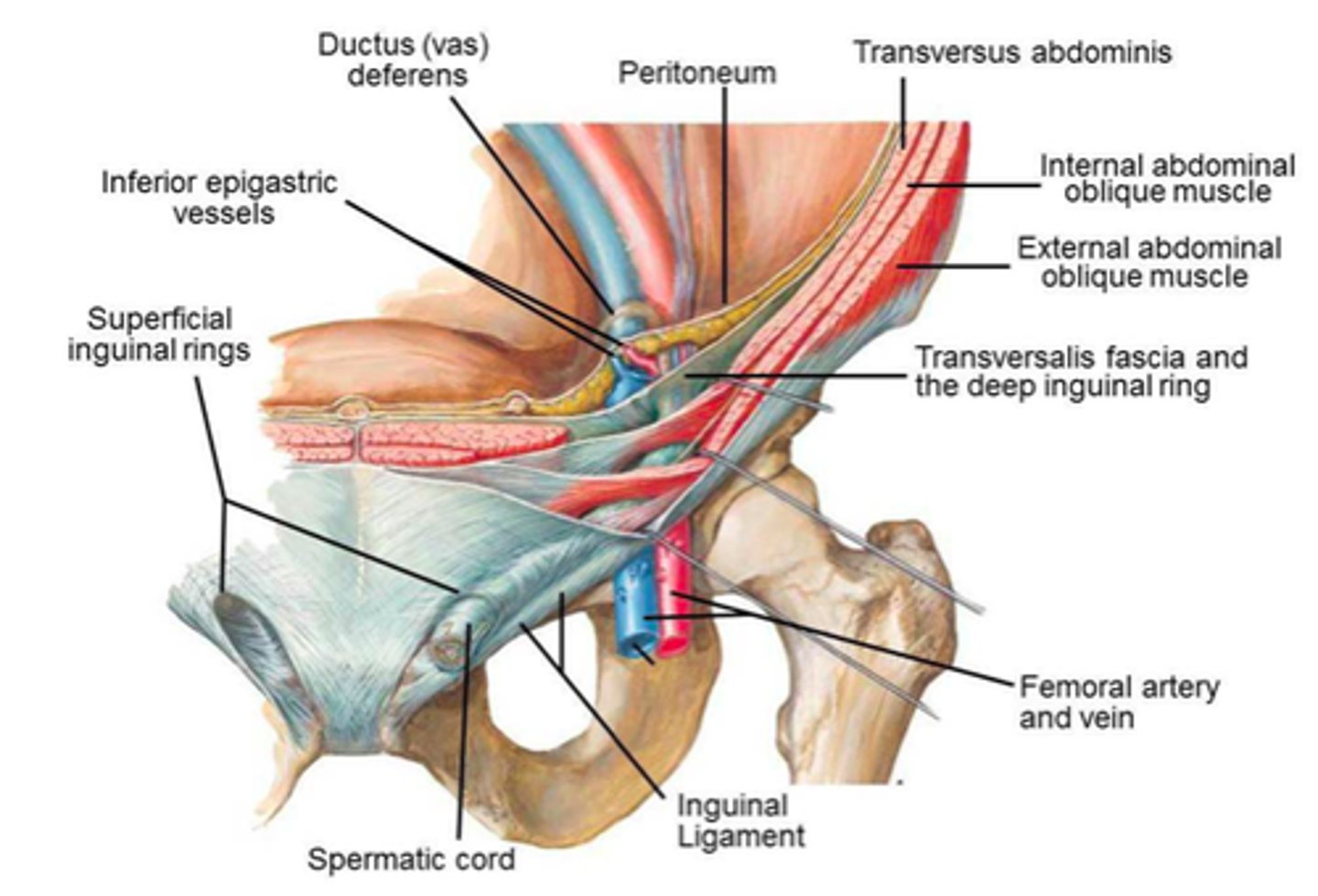
superficial inguinal rings
triangular openings in the external oblique aponeurosis
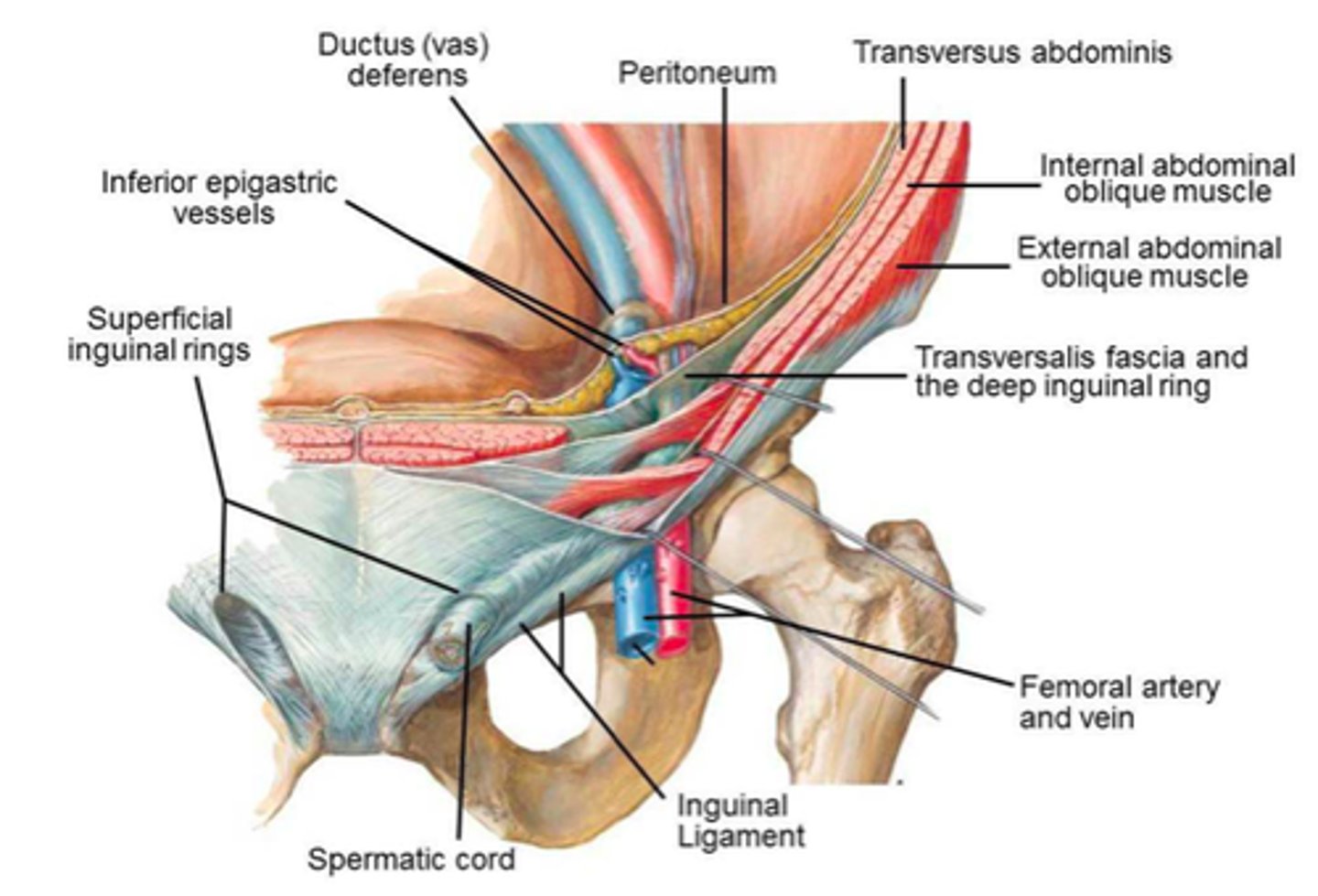
deep inguinal rings
-interior openings of the inguinal canals
bulb of penis
the expanded end of the spongy body
HeAd
glans penis
the conical mass of erectile tissue that forms the head of the penis
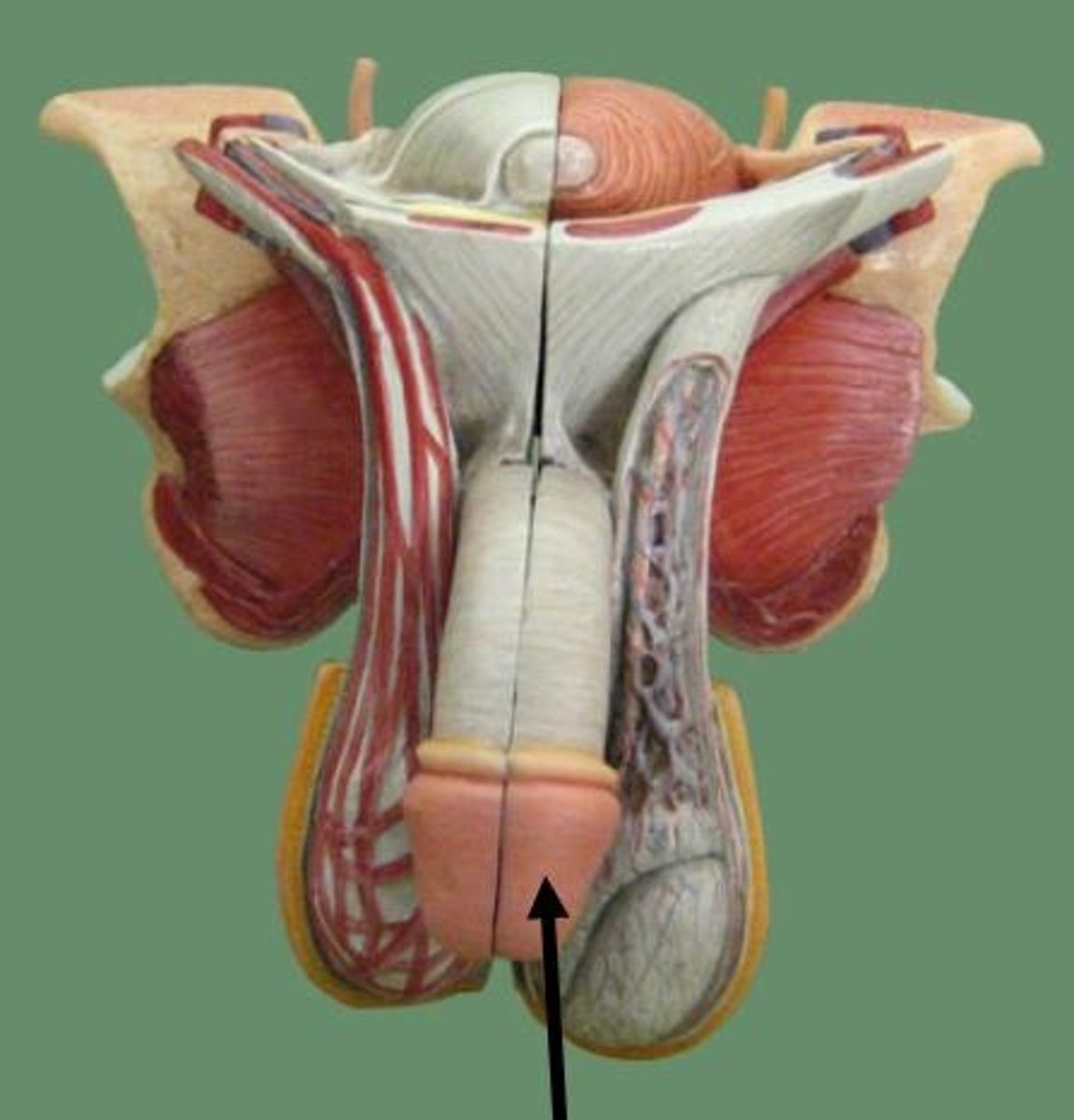
prepuce
foreskin; loose casing that covers the glans penis; removed by circumcision
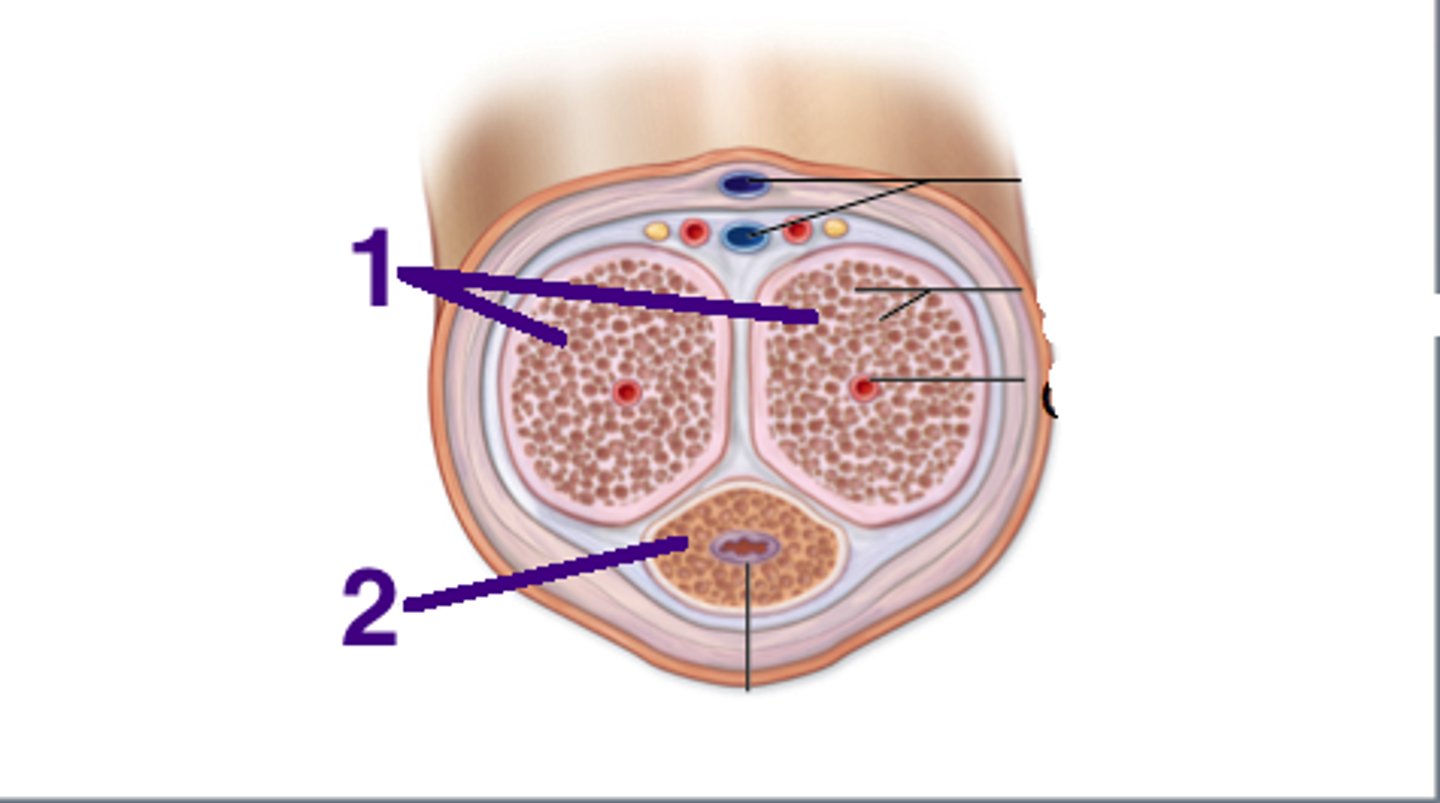
corpus spongiosum
(2) surrounds urethra and expands to form glans and bulb
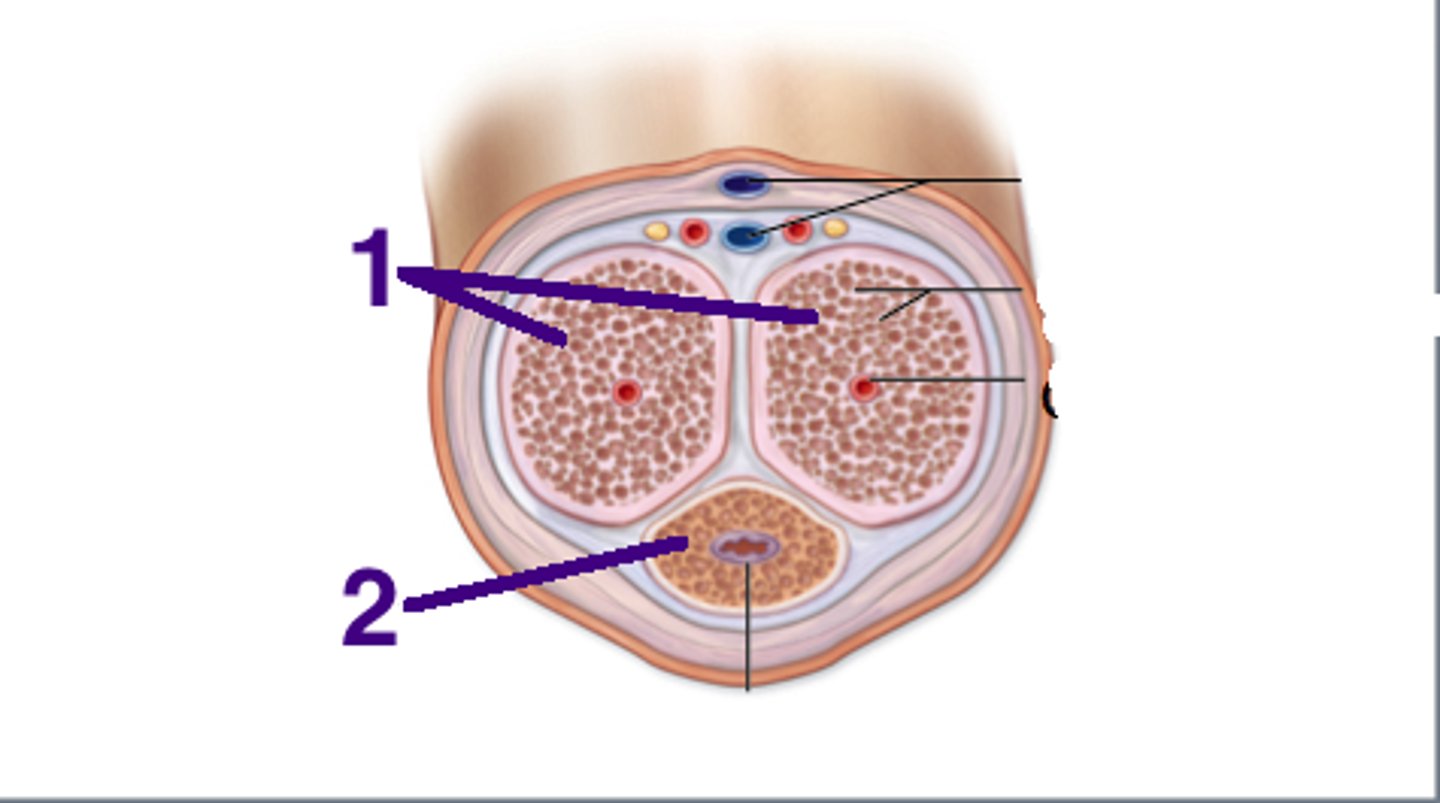
corpora cavernosa
(1) either of two masses of erectile tissue forming the bulk of the penis and the clitoris
primary spermatocytes
(A/B) Diploid cells that undergo meiosis I to form two haploid secondary spermatocytes.
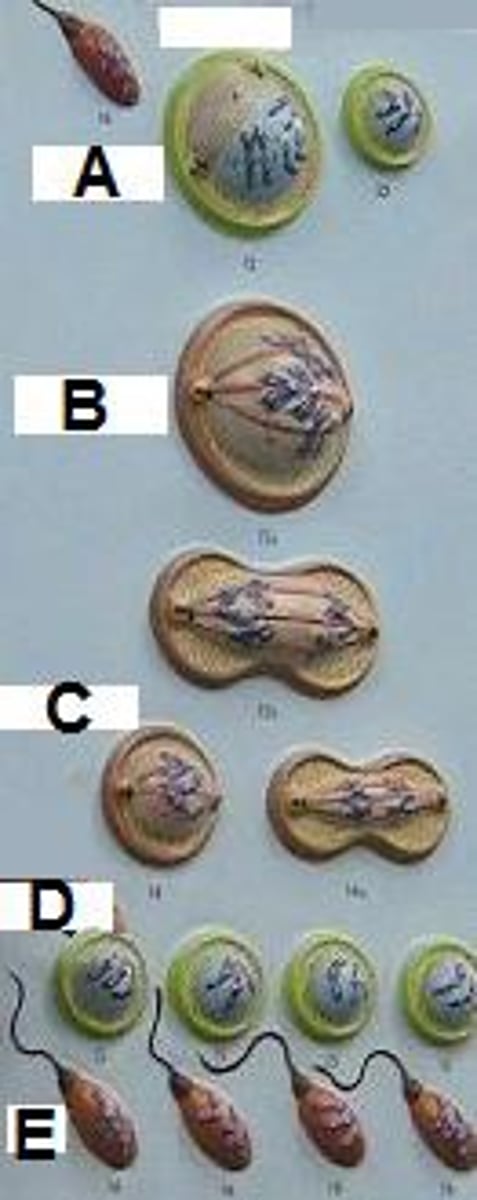
secondary spermatocytes
-haploid cells resulting from the first meiotic division of spermatogenesis
-ready to enter meiosis II
spermatids
(4) four haploid cells that are formed when a diploid reproductive cell divides meiotically
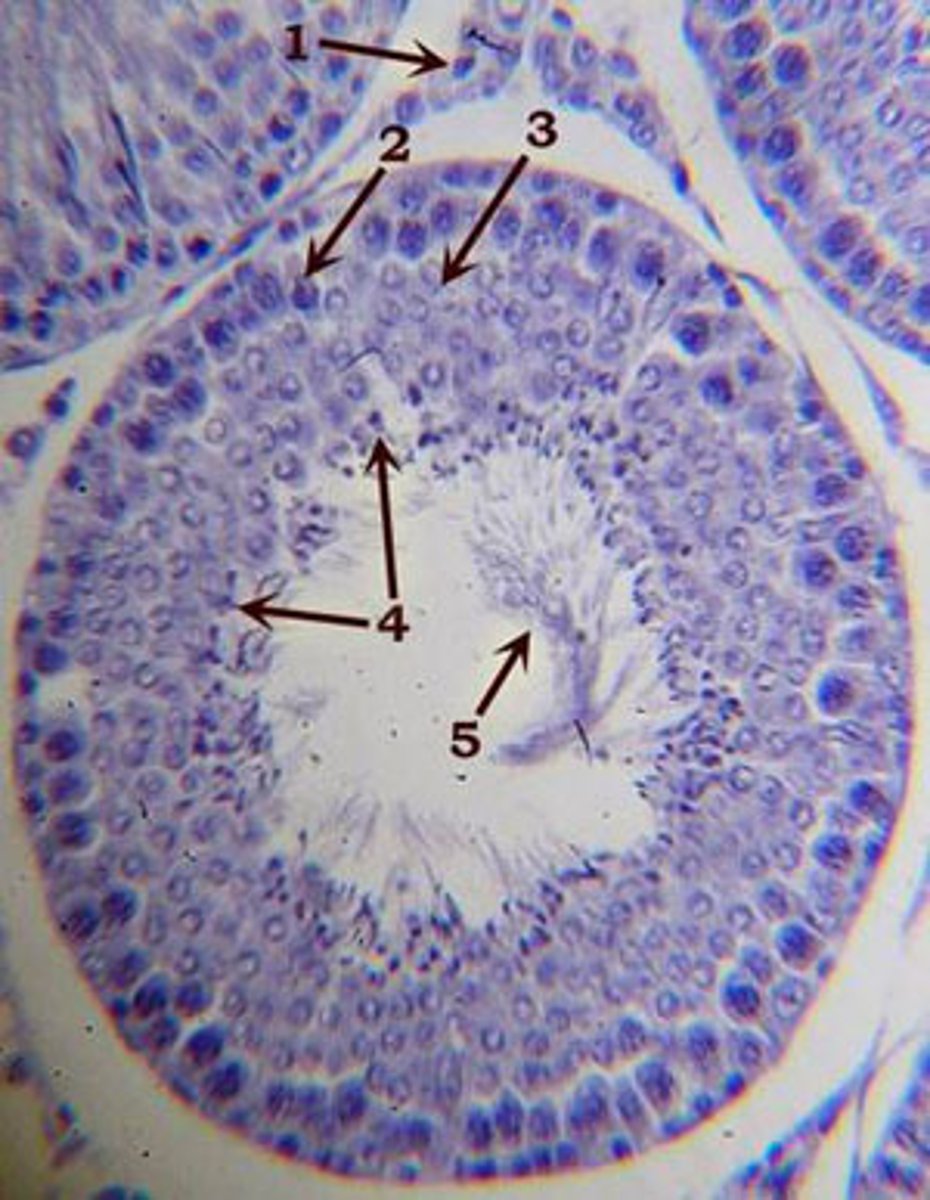
spermatic cord
Nerves and blood supply to the scrotum is by way of the __________________.
fallopian tubes (oviduct)/uterine tubes
Where in a woman's reproductive tract does fertilization most often take place?
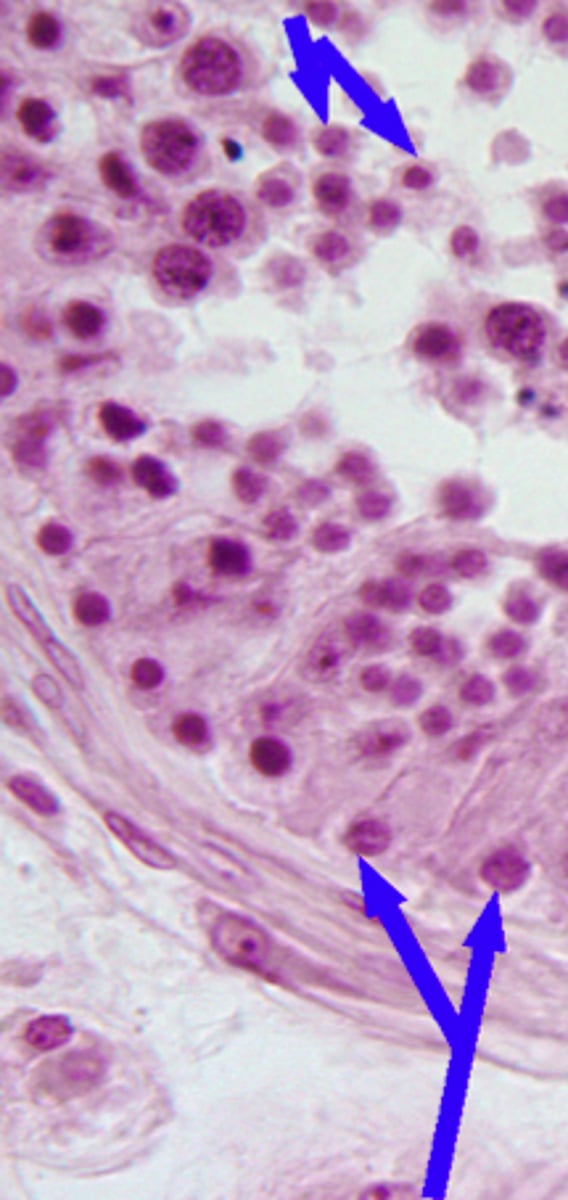
spermatogonia
Stem cells in the testes involved in sperm production are the __________________, which are found in the outermost portion of seminiferous tubules.
dartos muscle
cremaster muscle
(C, D) the 2 muscles that help to elevate or lower scrotum and testes to ensure sperm survival
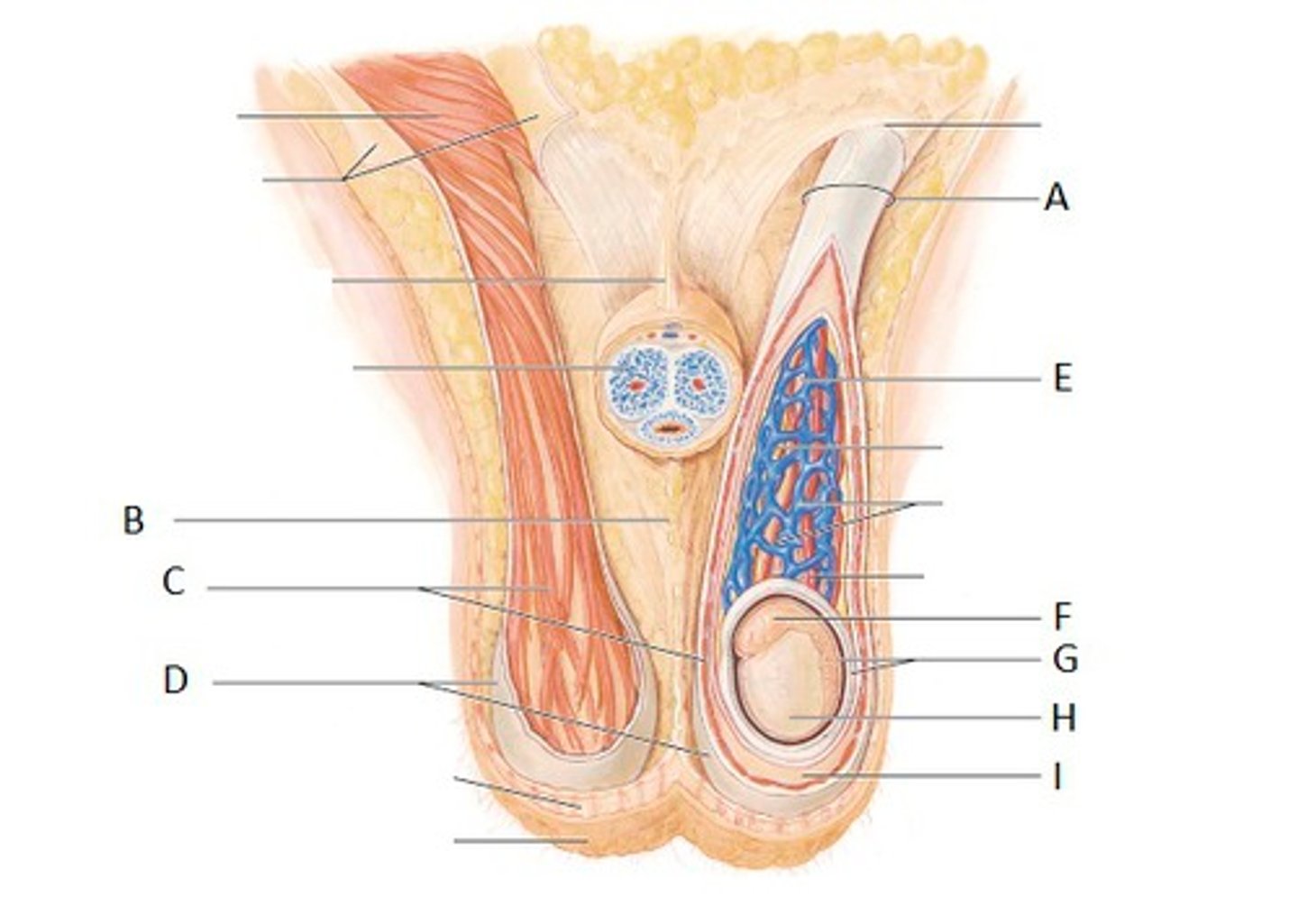
tunica vaginalis
The tunica albuginea is covered by a delicate serous membrane called the ___________________.
vulva
external female genitalia; includes the labia, hymen, clitoris, and vaginal orifice
inguinal canal
the channel through which the testis descends into the scrotum in the male