Etruscans
0.0(0)
Studied by 1 person View linked note
 Call Kai
 Learn
Learn Practice Test
 Spaced Repetition
 Match
Match Flashcards
 Knowt Play
Card Sorting
1/24

Earn XP
Description and Tags
Last updated 3:19 AM on 11/13/22
Name | Mastery | Learn | Test | Matching | Spaced | Call with Kai |
|---|
No analytics yet
Send a link to your students to track their progress
25 Terms
1
New cards
Veii
________: one of Romes first cities, southern most city of Etruria.
2
New cards
Main 3 Etruscan Gods
Jupiter, Juno, Minerva
3
New cards
Augur
Etruscan Priest
4
New cards
staff
Lituus (wooden w/ a curved end)
5
New cards
Veii
one of Romes first cities, southern most city of Etruria
6
New cards
Vulca of Veii
One of the most famous Etruscan artist
7
New cards
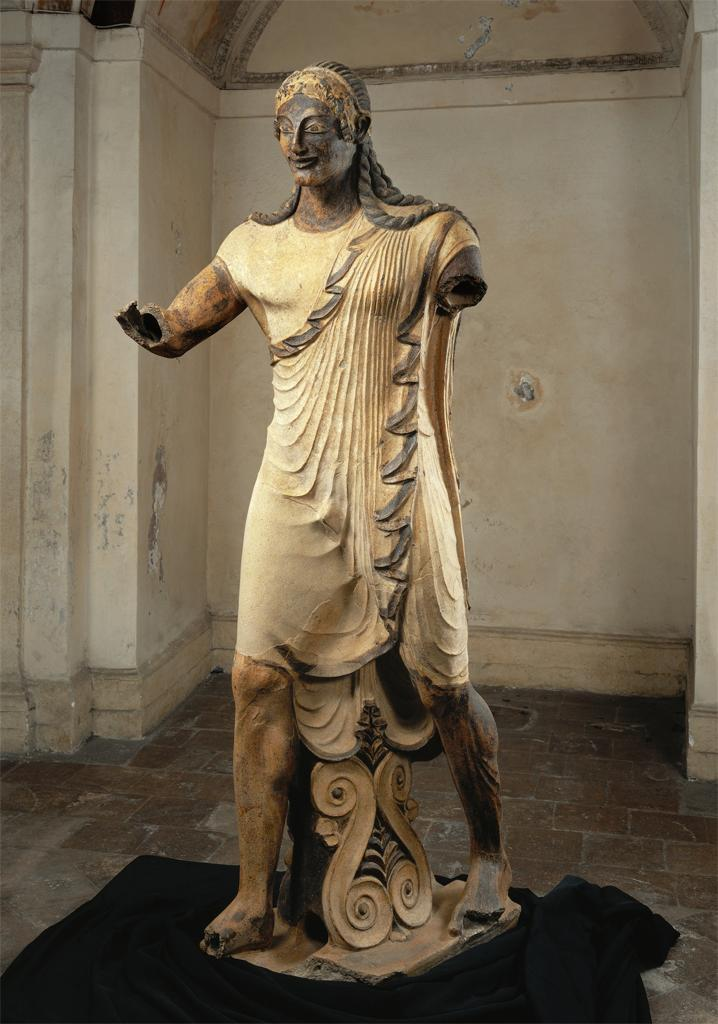
Apollo from Portonaccio Temple, 510-500 BC by Vulca
Terracotta, Archaic facial features, more movement, clothed*Etruscan
8
New cards
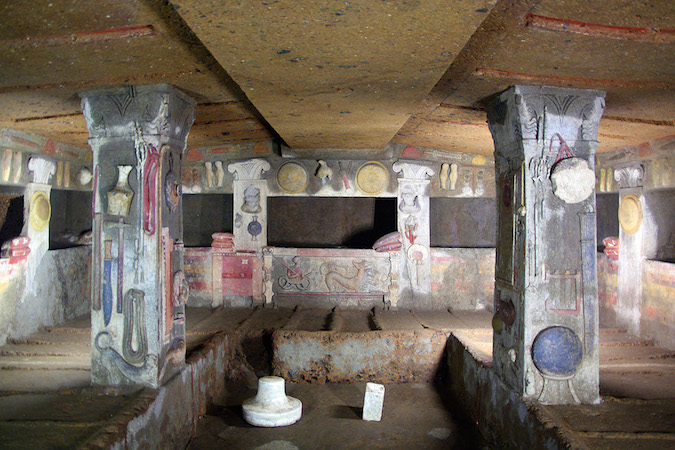
Tomb of the Reliefs, Cerveteri, 3rd Century BC
9
New cards
Main Etruscan building Material
Tufa
10
New cards
Tufa
limestone, becomes hard due to contact with air, blue/green/gray/brown
11
New cards
Trompe L'oeil
Objects that appear to be real but aren't, "to deceive the eye"
12
New cards
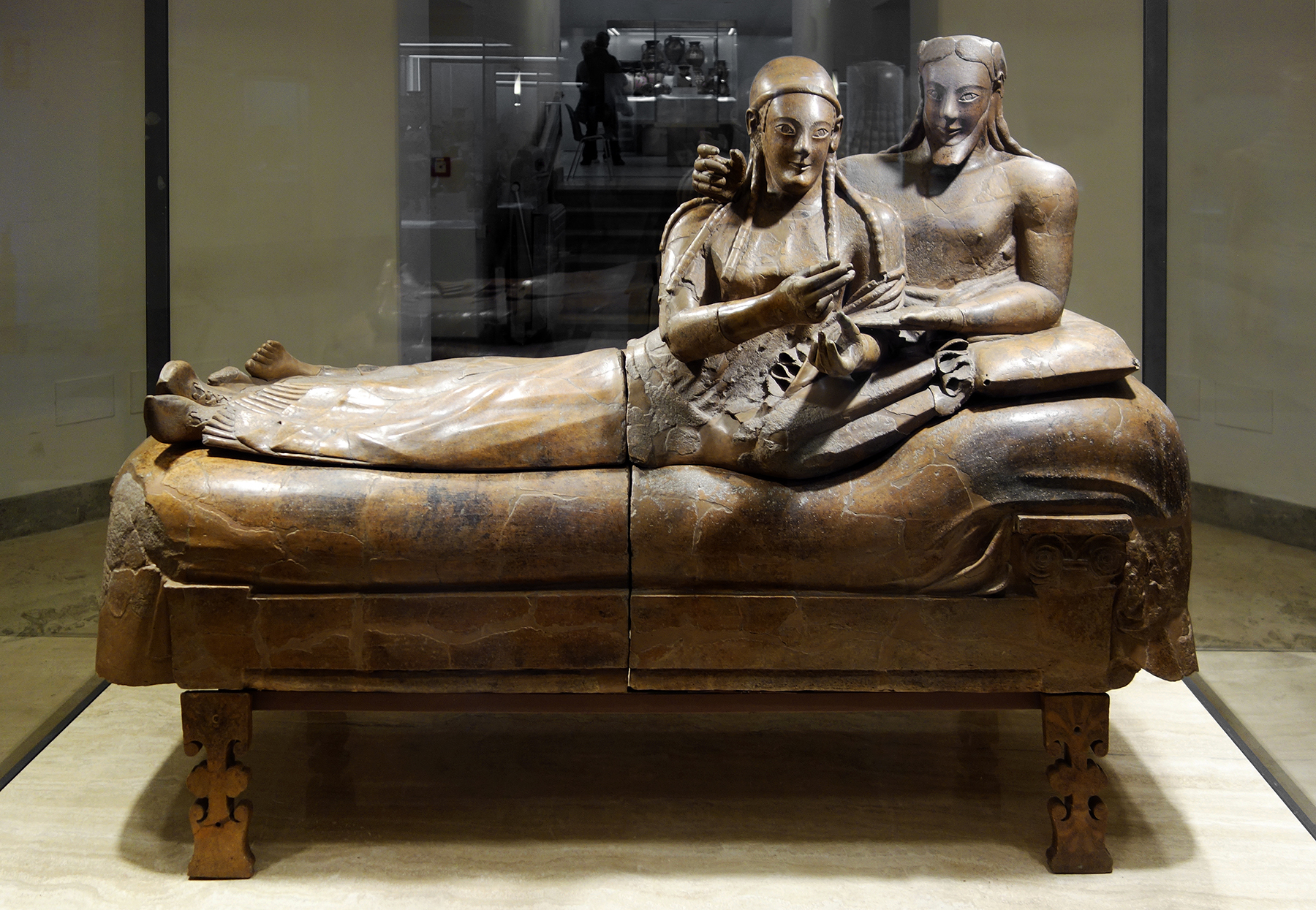
Sarcophagus from Cerveteri, ca 520 BC
banqueting piece, not much care of realistic proportions/naturality
13
New cards
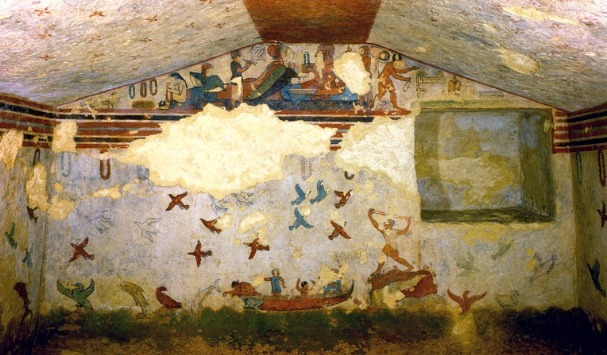
Tomb of Hunting & Fishing, ca 530-520 BC
2 chambers: main and anti, Many frescoes, no real sadness depicted
14
New cards
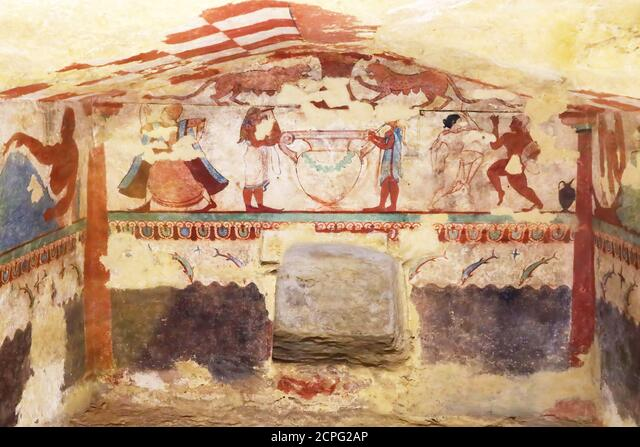
Tomb of the Lionesses, Tarquinia, ca 520 BC
trompe l'oeil pillars painted in, naked dancers using Apotropaic hand signs
15
New cards
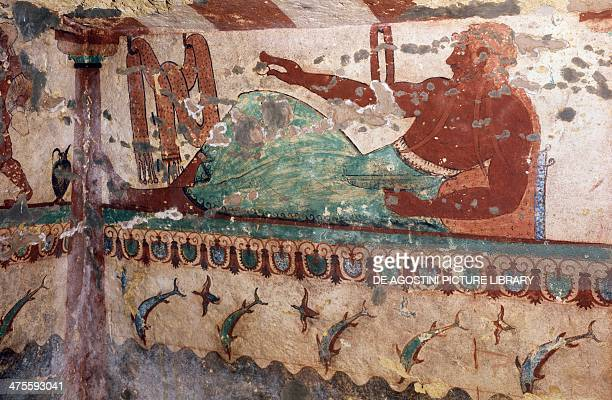
Why were Eggs depicted so often
Eggs were used to show the beginning for life, making Etruscan culture seem to be more optimistic
16
New cards
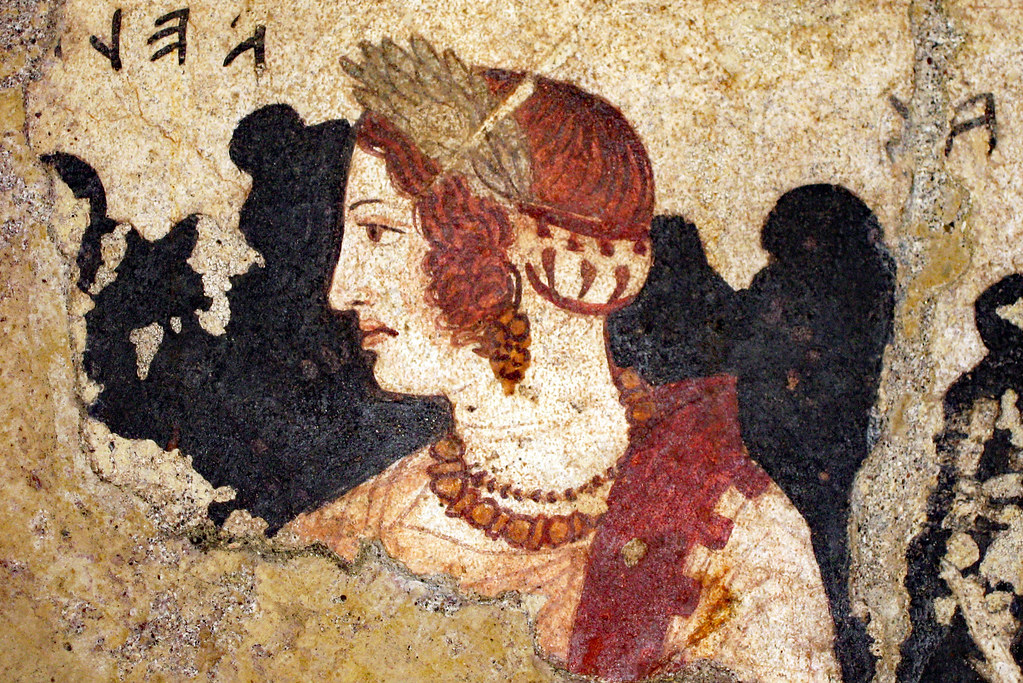
Tomb of Orcus, 4th Century BC
17
New cards
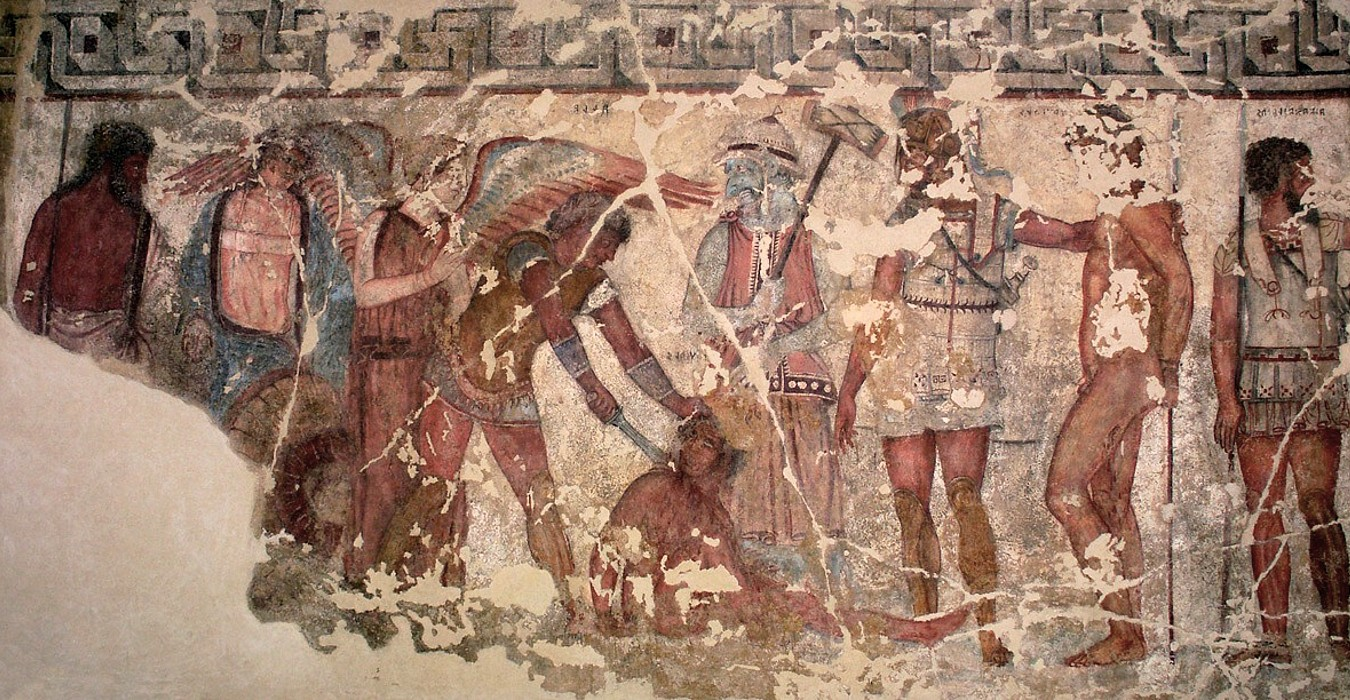
Achilles and Trojan Captives, Francois Tomb, Vulci, 4th-1st Century BC
Achilles slays Hector, and sacrifices captives to the shade of Patroclus
18
New cards
Charun
Etruscan God of Death, blue skin, bringer of Death
19
New cards
Capitoline Wolf, Rome, ca 500-400 BC
Romulus and Remus added later, true creation date debated

20
New cards
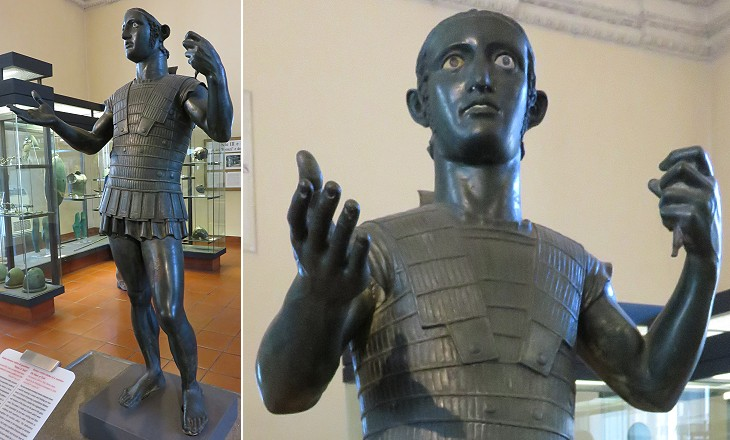
Mars of Todi, Early 4th Century BC
not contrapposto, clothed, pouring bowl to seal a prayer, aloof, made of bronze
21
New cards
Etruscans preferred sculpture material
Bronze
22
New cards
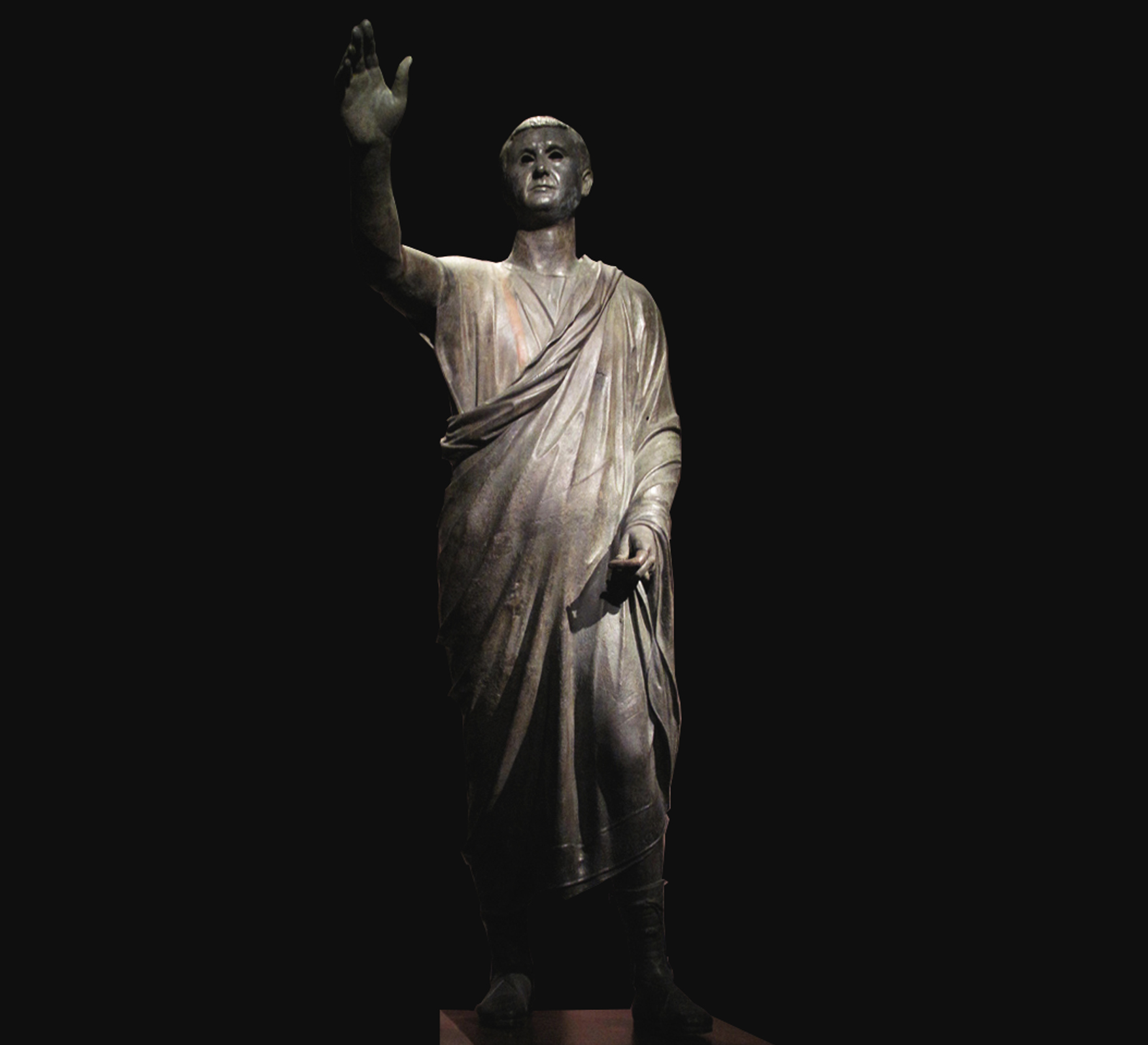
Aule Metele ( Arringatore ), Cortona, early 1st century BC
Etruscan by birth but becoming Roman, iconic Roman hand out pose, piece signifies a transition in culture
23
New cards
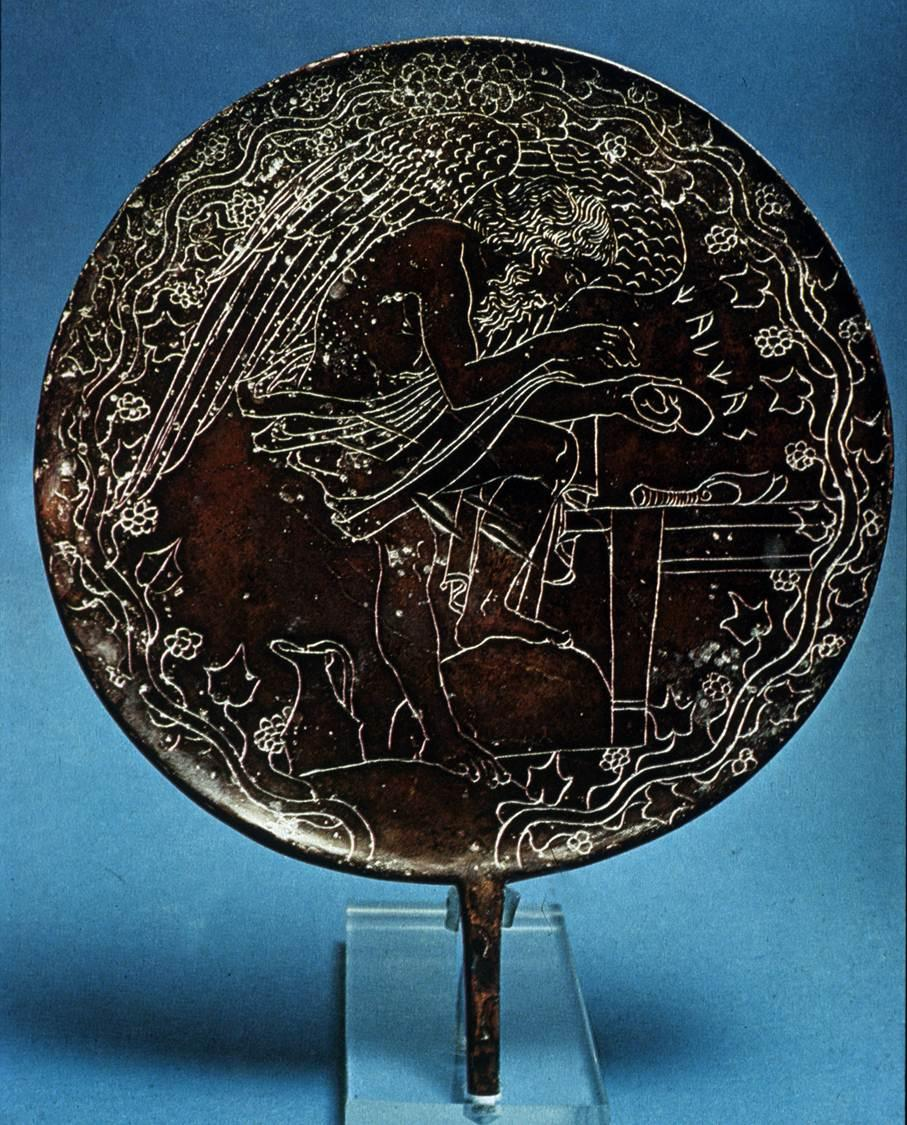
Mirror with Calchas, Praeneste, ca 400 BC
Hand mirror, Convex surface for reflection, Greek seer Calchas etched into the back
24
New cards
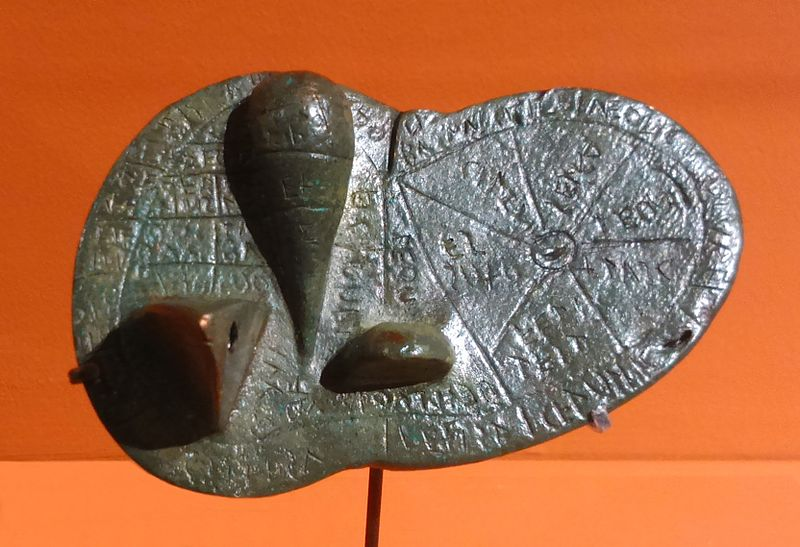
Bronze Liver Model, Piacenza, 3rd Century BC
4 quadrants, each in respect to 1 god
25
New cards
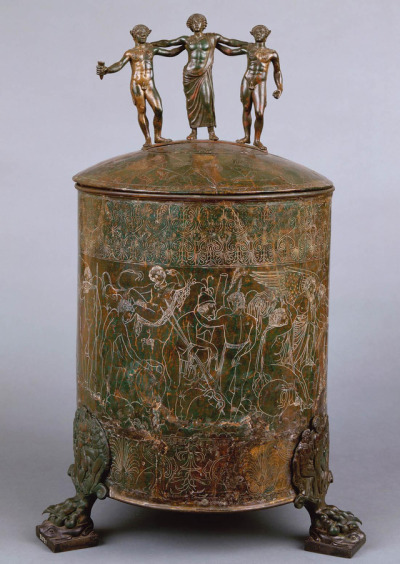
Novios Plautios (artist), Ficoroni Cista, Praeneste, late 4th Century BC
Made in Rome, frieze derived from Greek painting, Jason's quest to fetch the golden fleece