Biology Unit 3 9th grade
 Note
Note Call Kai
 Learn
Learn Practice Test
 Spaced Repetition
 Match
Match Flashcards
 Knowt Play
1/15

There's no tags or description
Looks like no tags are added yet.
Name | Mastery | Learn | Test | Matching | Spaced | Call with Kai | Chat |
|---|
No analytics yet
Send a link to your students to track their progress
16 Terms
Monomers
Monomers are the building blocks of polymers and can be repeated to create complex molecular structures.
Polymers
Large molecules made up of repeating subunits called monomers.
They have high molecular weights and are formed through polymerization.
Polymers can be natural or synthetic, and they have diverse applications in various industries, including plastics, textiles, and medicine. Examples include polyethylene, PVC, and DNA.
Sugar molecules
Sugar molecules (saccharides) are organic compounds composed of carbon, hydrogen, and oxygen.
They are commonly known as sugar molecules and serve as a major source of energy in living organisms.
Saccharides can be classified into three types: monosaccharides (simple sugars), disaccharides (two sugar units), and polysaccharides (complex carbohydrates).
Saccharides
They are made up of carbon, hydrogen, and oxygen atoms. Carbohydrates are categorized into three types:
monosaccharides (single sugar units), disaccharides (two sugar units), and polysaccharides (multiple sugar units).
Examples of carbohydrates include glucose, fructose, sucrose, and starch.
Benedict solution (biology)
Chemical reagent used to test for reducing sugars. Changes color when heated with reducing sugar.
The monomers for Lipids, Proteins, and Nucleic Acids.
Lipids: Fatty acids and glycerol.
Proteins: Amino acids.
Nucleic Acids: Nucleotides.
The polymers for Lipids, Proteins, and Nucleic Acids.
Macromolecules are formed by polymerizing smaller subunits.
Lipids are hydrophobic molecules used for energy storage and structure.
Proteins are made of amino acids and have diverse functions.
Nucleic acids store and transmit genetic information.
The functions for Lipids, Proteins, and Nucleic Acids.
Functions of Lipids: Energy storage, insulation, cushioning, hormone production, and cell membrane structure.
Functions of Proteins: Enzymes, structural support, transport, communication, and immune defense.
Functions of Nucleic Acids: Store and transmit genetic information, protein synthesis, and regulation of cellular processes.
Examples for Lipids, Proteins, and Nucleic Acids.
Flashcard: Examples of Lipids, Proteins, and Nucleic Acids
Lipids: Fats, oils, waxes, cholesterol
Proteins: Enzymes, antibodies, hemoglobin, collagen
Nucleic Acids: DNA, RNA, ATP, nucleotides
Simple Atom Model
A representation of an atom with a nucleus containing protons and neutrons, surrounded by electron shells.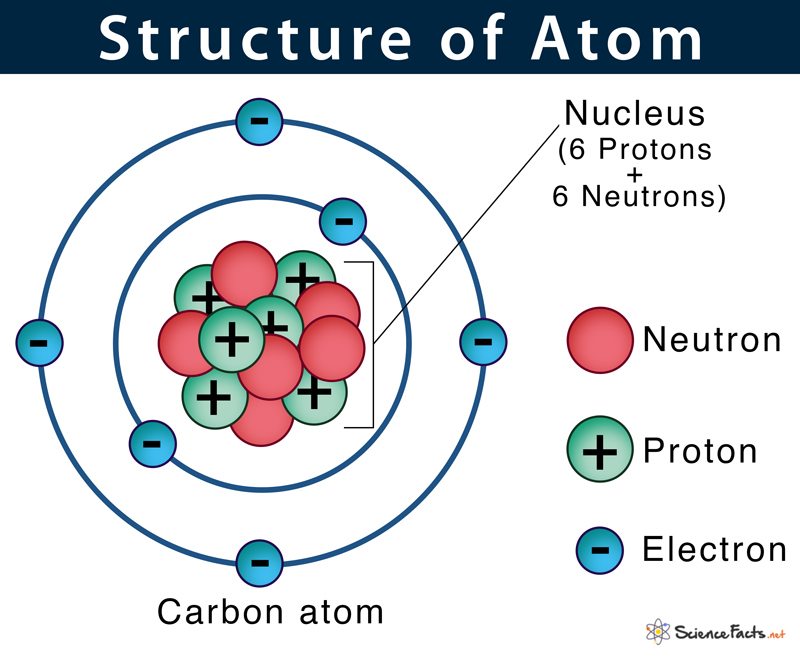
Molecular Structure
It is represented by a structural formula or 3D model, showing atom connectivity and spatial orientation. It influences chemical reactivity, bonding, and interactions with other molecules.
Introduction to macromolecules (biology)
Large organic molecules are essential for life processes.
Four types: carbohydrates, lipids, proteins, and nucleic acids. Carbs provide energy, lipids store energy, proteins perform various functions, and nucleic acids store genetic information.