CFA Level 1: Economics
 Call Kai
 Learn
Learn Practice Test
 Spaced Repetition
 Match
Match Flashcards
 Knowt Play
1/150

Earn XP
Name | Mastery | Learn | Test | Matching | Spaced | Call with Kai |
|---|
No analytics yet
Send a link to your students to track their progress
151 Terms
Quota (L6)
A trade restriction tool that places a limit on imports.
Domestic Consumer: Harmed
Domestic Producer: Benefits
Foreign Exporter: Harmed
Domestic Government: Benefits
National Welfare: Decrease/Increase
Voluntary Export Restraint (VER) (L6)
An agreement by a nation to limit exports to avoid tarrifs and quotas.
Domestic Consumer: Harmed
Domestic Producer: Benefits
Foreign Exporter: Harmed
Domestic Government: None
National Welfare: Decrease
Tariff (L6)
A tax on imported goods, and collected by the government.
Domestic Consumer: Harmed
Domestic Producer: Benefits
Foreign Exporter: Harmed
Domestic Government: Benefits
National Welfare: Decrease/Increase
Export Subsidies (L6)
Payments by government to domestic exporter to boost export rates.
Domestic Consumer: Harmed
Domestic Producer: Benefits
Foreign Exporter: N/A
Domestic Government: Harmed
National Welfare: Decrease
Capital Restriction on Financial Capital (L6)
Outright prohibition on financial capital.
Prohibition or tax on foreign investments.
Restriction on any earnings of foreign entities.
Short Term Benefits of Capital Restriction (L6)
Reduce volatile capital inflows & outflows.
Long Term Costs of Capital Restriction on Financial Capital (L6)
Isolation from global capital markets.
Trade Creation (L6)
Replacement of a high cost domestic product with lower cost import.
Trade Diversion (L6)
Lower cost imports from non-members replaced with higher cost imports from members.
Regional Trade Agreements (RTA) (L6)
Economic welfare is improved by reducing trade restrictions. Gains from reducing such restrictions from member countries are offset by losses if a bloc increases restrictions on non-member nations.
Free Trade Area (L6)
A trade bloc that removes all barriers to trade between member states.
Example: NAFTA/USMCA
Customs Union (L6)
A trading bloc that combines features of a free trade area and common trade restrictions with non members.
Common Markets (L6)
A trading bloc that combines features of a customs union, and removes barriers to movement of labour and capital among members.
Economic Union (L6)
A trading bloc that combines features of common market, and the establishment of common institutions & economic policy among member states.
Example: European Union
Monetary Policy Union (L6)
A trading bloc that combines features of an economic union and the adoption of a common currency.
Example: Eurozone
Monopolistic Competition (L1)
Number of Sellers: Multiple Firms
Barriers to Entry: Low
Pricing Power: Some
Nature of Competition: Price & Market Features
Number of Substitute: Goods substitute but differentiated
More product differentiation offers more elasticity in prices.
The increase in product differentiation offers a more elastic demand curve.
Oligopoly (L1)
Number of Sellers: Few Firms
Barriers to Entry: High
Pricing power is some to significant
Nature of Competition: Price & Market Features
Number of Substitute: Very Good substitute or differentiated
Products may be same or differentiated
Has a downward sloping demand curve
Perfect Competition (L1)
Number of Sellers: Multiple Firms
Barriers to Entry: Very Low
Pricing Power: None
Nature of Competition: Price Only
Number of Substitutes: Very Good Substitutes
Homogenous product
Have no influence on market price therefore they have perfectly elastic demand curve (Vertical)
Monopoly (L1)
Number of Sellers: Single
Barriers to Entry: Very High
Pricing Power: Significant
Nature of Competition: Advertising
Number of Substitutes: Significant
When regulated corporations make a normal profit. (Price= Average Total Cost)
Law of Diminishing Returns (L1)
After a certain point, adding 1 more unit of a variable input such as labor, or a fixed input such land will result in smaller outputs long term. This is mainly due to an increase in marginal costs.
Average Variable Cost (AVC) (L1)
Total Variable Cost / Quantity
Price Elasticity of Demand (L1)
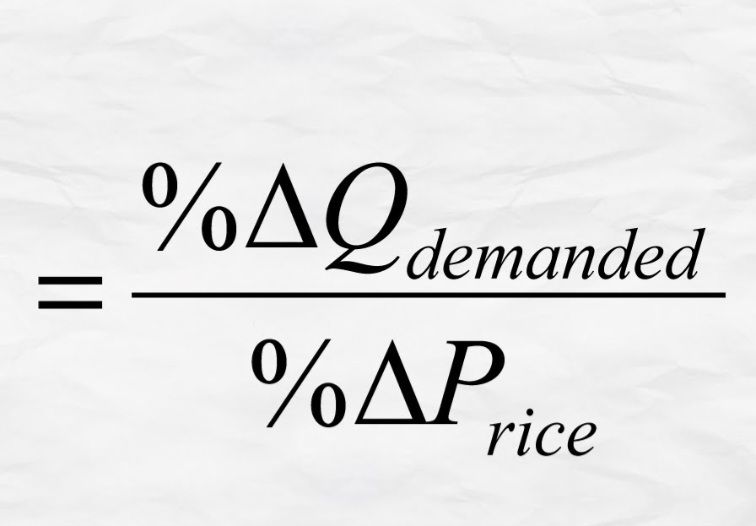
Measures how sensitive the quantity demanded of a good is to a change in its price.
Determined by % change in quantity / % change in price.
Elastic Demand (L1)
When the price elasticity of demand is greater than 1, consumers are very responsive to price changes.
Inelastic Demand (L1)
When the price elasticity of demand is less than 1, consumers are not very responsive
Diseconomies of Scale (L1)
The harm of producing 1 extra unit; and as a result the company's average cost per unit increases as its production output grows. The result is leading to inefficiencies and higher costs. Caused mainly by bureaucracy & rising input costs. Slope is positive on LRAC curve.
Economies of Scale (L1)
The benefit of producing 1 extra unit ;and the cost advantage gained from the production increase, such as labor specialization, or discounts on inputs. The result is larger businesses can lower their average cost per unit. Slope is negative on LRAC curve.
Cartels (L1)
when collusion lead to an increase in price in a oligopoly system
Price Takers (L1)
Have no influence over market price, and results in a vertical (perfectly elastic) demand curve.
Short Term Shutdown Decision (L1)
Focuses solely on variable costs.
Triggered if negative contribution, from calculation of difference between Revenue - Variable Costs.
Long Term Shutdown Decisions (L1)
Focuses on fixed & variable costs.
Triggered if negative profit & loss, from calculation of difference between contribution margin and fixed costs .
Kinkead Demand Curve (L1)
An oligopoly model that involves competitor match price decisions do not match with price increase.
Nash Equilibrium (L1)
An oligopoly model that uses choices of all firms are made that no other choices are better off.
Cournot Model (L1)
An oligopoly model that same products, both firms are making simultaneous decisions. Used a lot in a duopoly system.
Stackelberg Model (L1)
An oligopoly model that states decisions are sequential by a leader, with other firms following on the leader’s decision.
Fiscal Policy Lags (L3)
Anything that can cause fiscal policy to be destabilizing rather than stabilizing.
World Trade Organization (WTO) (L5)
An organization that aims to harmonize and promote trade with restriction & uncooperation.
World Bank (L5)
An organization that aims to serve as a source of financial & technical assistance to foreign countries, granting loans, for infrastructure and development.
International Monetary Fund (IMF) (L5)
An organization that aims to promote exchange rate stability, international monetary cooperation, establishment of multilateral payment system, facilitate the expansion & growth of international trade, make resources available to members that are experiencing difficulty.
Factors that Impact Cooperation (L5)
I Geographical Resource endowments.
II Standardization of rules & engagement.
III Cultural Consideration
Globalization (L5)
Long term world wide integration of trade, culture, and economy.
Nationalism (L5)
Pursue of national interests, economy, culture, and independence of other nations.
Hierarchy Interests (L5)
National interests, factors essential for survival of top needs of hierarchy are prioritized. Dependent on resources goals, leadership & politics.
State Actors (L5)
A geopolitical factor that are political figures and government.
Non-state Actors (L5)
A geopolitical factor that involves individuals, companies, & organizations.
Geopolitics (L5)
How geography impacts international relationships with respect to economics, financial, and political activities.
Hegemony (L5)
State actors that focuses on globalization and non-cooperation.
Multilateralism (L5)
State actors that focuses on globalization and cooperation.
Autarky (L5)
State actors that focuses on nationalism and non-cooperation.
Bilateralism (L5)
State actors that focuses on nationalism and cooperation.
Key Elements of Geopolitical Risk (L5)
I Probability
II Magnitude
III Velocity
Tools used by State Actors (L5)
I National
II Economic
III Financial
Absolute Advantage (L6)
Lowest cost producer
Comparative Advantage (L6)
Lowest opportunity cost (the ability to produce by using less resources) to produce.
Ricardian Equivalence (L3)
An increase in government spending will have no increase in aggregate demand. The money the government spends that is obtained by either raising taxes now or by borrowing will not matter due to people adjusting savings & spendings.
Herfindahl-Hirschman Index (HHI) (L1)
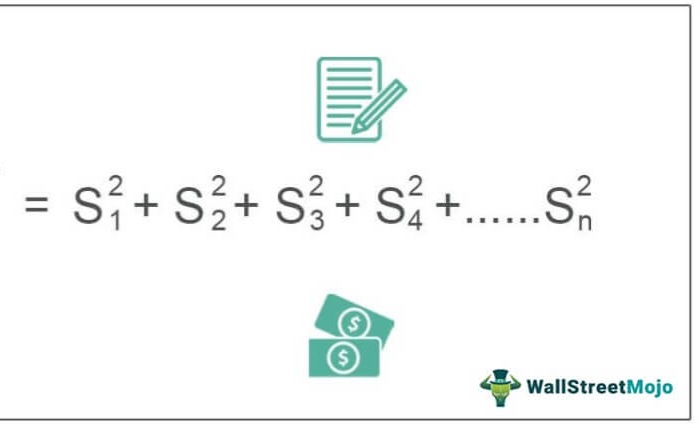
A measure of the size of firms in relation to the industry they are in and is an indicator of the amount of competition among them.
Conducted by squaring each firm's market share (as a whole number percentage) and summing them up.
Limitation: Ignores price elasticity, barriers to entry, and tight definitions of market.
Advantage: Has more takes in very sensitive mergers.
Direct Quote (L7)
The amount of domestic currency needed to buy one unit of foreign currency.
Format: (Domestic/ Foreign)
Indirect Quote (L7)
The amount of foreign currency needed to buy one unit of domestic currency.
Format (Foreign/Domestic)
Spot (L7)
A type of transaction with currency for immediate delivery. (Settlement T+1)
Forward (L7)
A type of transaction with an agreement to exchange a specific amount of one currency for another at a predetermined exchange rate on a future date.
FX Swap (L7)
A type of transaction that involves a short term contract that is used for speculation & hedging. Combination of spot & forward.
Currency Swaps (L7)
Exchange of a principal at start & end periodic exchange of interest over multiple settlement dates.
Options (L7)
Right to buy or sell a fixed amount of one currency for another at a predetermined exchange rate on a future date.
Nominal Exchange Rate (L7)
The quote rate at any point in time.
Real Exchange Rate (L7)
Exchange rate is the nominal exchange rate adjusted for inflation in each country compared to a base period.
Bid (L7)
The price at which market maker buys the base
Ask (L7)
The offer price at which market sells the base.
Currency Board System (L7)
An exchange rate regime that focuses on an explicit commitment to fix an exchange rate.
Conventional Fixed Peg (L7)
An exchange rate regime that occurs when a nation pegs its currency to within margins of ±1% to another currency or a basket of currencies.
Direct Intervention (L7)
A type of conventional fixed peg, in which monetary authority maintains the peg by buying and selling currencies in the FX Markets.
Indirect Intervention (L7)
A type of conventional fixed peg, in which monetary policy, local regulation of FX.
Managed Floating Exchange Rates (L7)
A type of exchange rate regime that uses economic indicators such as inflation rates, balance of payments, unemployment data; intervention may be direct or indirect.
Independent Floating Currency (L7)
A type of exchange rate regime in which the market determines the exchange rate, and foreign market intervention is only used to slow the rate of change and reduce short-term fluctuations; no specific target level for exchange rates.
Crawling Bands (L7)
A type of exchange rate regime in which the width of the bands identify permissible exchange rates over time; the wider the band, the greater the flexibility of monetary policy.
Pegged Exchange Rates in a Target Zone (L7)
A type of exchange rate regime in which the permitted currency fluctuations are wider.
Crawling Peg (L7)
A type of exchange rate regime in which a passive crawling peg adjusts the FX periodically to allow for inflation, and an active crawling peg announces a series of adjustments in advance.
Business Cycle (L2)
The repeating expansions & contractions in economic activity.
Trough (L2)
When real GDP is recorded below average.
Peak (L2)
When real GDP is recorded above average.
Recovery (L2)
When the real GDP returns from below average to average.
Risky assets are priced upward.
High unemployment rate.
Increase use of overtime and temporary workers.
A moderate or decreasing inflation rate.
Spending on consumer durable goods and housing rises.
Expansion (L2)
When the real GDP rises from average to the peak.
GDP growth rate increase.
Unemployment rate decrease as hiring accelerates, wages rise.
Inflation rate may increase.
Investments increase in equipment and construction.
Imports increase as domestic growth accelerates.
Slowdown (L2)
When the real GDP declines from peak to average.
GDP growth rate decreases.
Unemployment rate, decreases, but hiring slows.
Inflation rate increases.
Consumer spending and business investments grow at slower rats.
Low-risk assets are in low demand,
Bond price are lower with high yields.
Contraction (L2)
When the real GDP declines from average to the trough.
Inflation rate decreases with a lag.
Imports decrease as domestic income growth slows.
Unemployment rises, with work hours decreasing.
Consumer spending, home construction, and business investments decrease.
Safe assets increase in price.
Recession (L2)
2 consecutive quarters of negative GDP growth.
Data is collected through time series, one disadvantage is lag.
Use employment data, industrial production & sales, and inflation.
Collected by a business cycle dating committee.
Trade Deficit (L7)
Value of Imports > Value of Exports
Trade Surplus (L7)
Value of Imports < Value Exports
Automatic Stabilizers (L3)
Built in fiscal devices that are triggered by the state of the economy.
Impact Lag (L3)
A fiscal policy lag caused by the ability of the policy to have the intended effect.
Recognition Lag (L3)
A fiscal policy lag caused by the ability to identify the need for fiscal policy change.
Action Lag (L3)
A fiscal policy lag caused by the ability to enact legislation
Desirable Attributes of Taxes (L3)
I Simplicity
II Efficiency
III Fairness
IV Revenue Sufficiency
Direct Taxes (L3)
Levied on income, wealth, inheritance, & corporate profits. Slow to implement.
Discretionary Fiscal Policy (L3)
Government is actively managing fiscal policy.
Crowding Out Effect (L3)
A macroeconomic issue that is caused by greater government borrowing tends to increase rates, which decreases private investment.
Menu Cost (L4)
The hassle and expense of changing prices because of inflation.
Shoe Leather Cost (L4)
The wasted time & effort into managing money during inflation.
Exchange Rate Target (L4)
When developing countries target a currency exchange rate with a developed country.
Aggregate Demand (L3)
Consumer Spending + Investments+ Government Spending +(Exports-Imports)
Event Risk (L5)
A type of geopolitical risk in which risks from known and scheduled occurrences with uncertain outcomes, like elections, policy changes, or referendums
Exogenous Risk (L5)
A type of geopolitical risk in which sudden, unexpected, external shocks (like natural disasters, sudden wars, revolutions) that originate outside the financial system and impact investments.
Thematic Risk (L5)
A type of geopolitical risk that is known to investors and evolves or expands over time. It is a long-term factor that contrasts with sudden or date-specific risks.
Explore top notes

