CH. 16 PT 2. Thyroid & Parathyroid Gland
 Call Kai
 Learn
Learn Practice Test
 Spaced Repetition
 Match
Match Flashcards
 Knowt Play
1/51

There's no tags or description
Looks like no tags are added yet.
Name | Mastery | Learn | Test | Matching | Spaced | Call with Kai | Chat |
|---|
No analytics yet
Send a link to your students to track their progress
52 Terms

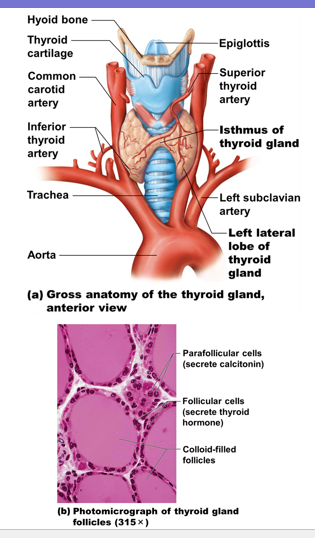
thyroid gland
butterfly-shaped gland in anterior neck on the trachea, just inferior to larynx
isthmus
median mass connecting two lateral lobes

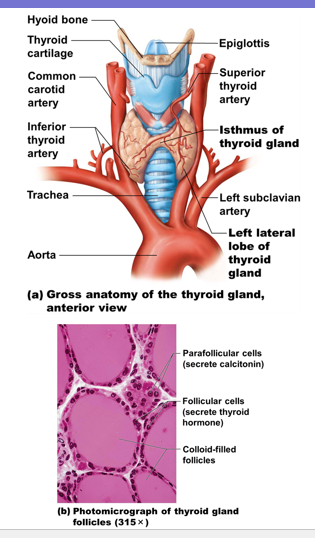
follicles
hollow sphere of epithelial follicular cells that produce glycoprotein THYROGLOBULIN

colloid
fluid of follicle lumen containing thyroglobulin plus iodine and is precursor to thyroid hormone
parafollicular cells
produce hormone calcitonin
thyroid hormone (TH)
body’s major metabollic hormone
found in two forms (T3 and T4)
affects every cell in body
enters target cell and binds to intracellular receptors within nucleus
effects of thyroid hormone (TH)
increases basal metabollic rate and heat production
regulate tissue growth and development
maintains blood pressure
T4
thyroxine
major form that consists of two tyosine molecules with four bound iodine atoms
inactive form of thyroid hormone
T3
triiodothyronine
from that has two tyrosines with three bound iodine atoms
active form of thyroid hormone
thyroid hormone storage and stimulus
thyroid gland stores hormone extracellularly in follicle lumen until triggered by TSH to release
7 steps involved in synthesis of thyroid hormone (TH)- see WS for reference
thyroglobulin is synthesized and discharged into follicle lumen
iodide is trapped: iodide ions (I-) are actively taken into cell and released into lumen
iodide oxidized; electrons are removed, converting it to iodine (I2)
iodine is attached to tyrosine: mediated by peroxidase enzymes (monoiodotyrosine/MIT) forms if only one iodine attaches, and (diiodotyrosine/DIT) forms if two iodines attach
iodinated tyrosines link together to form T3 and T4 (if one MIT and one DIT link, T3 is formed, if two DITs link T4 is formed)
colloid is endocytosed by follicular cells (vesicle is then combined with a lysosome)
lysosomal enzymes cleave T3 and T4 from thyroglobulin, then hormones are secreted into bloodstream (mostly T4 secreted, T3 is also secreted, but T4 must be converted to T3 at tissue level)
how is thyroid hormone transported and regulated
by thyroxine-binding globulins (TBGs), both T3 and T4 bind to target receptors
TH release is regulated by negative feedback (falling TH levels stimulate release of thyroid-stimulating hormone (TSH)
rising TH levels provide negative feedback inhibition on TSH
TSH can be inhibited by GHIH, dopamine, and increased levels of cortisol and iodide
hypothalamic thyropin-releasing hormone (TRH) can overcome negative feedback during pregnancy or exposure to cold, especially in infants
thyroid hormone effects on BMR
promotes normal oxygen use and BMR, calorigenesis, enhances effects of sympathetic nervous system
effects of thyroid hormone hyposecretion on BMR
BMR below normal
decreased body temp
cold intolerance
decreased appetite
weight gain
reduced sensitivity to catecholamines
effects of thyroid hypersecretion on BMR
BMR above normal
increased body temperature
heat intolerance
increased appetite
weight loss
effects of thyroid hormone on carbohydrate/lipid/protein metabolism
promotes glucose catabolism
mobilizes fats
essential for protein synthesis
enhances liver’s synthesis of cholesterol
effects of thyroid hormone hyposecretion on carbohydrate/lipid/protein metabolism
decreased glucose metabolism
elevated cholesterol/tryglyceride levels in blood
decreased protein synthesis
edema
effects of thyroid hormone hypersecretion on carbohydrate/lipid/protein metabolism
enhanced catabolism of glucose, proteins, and fats
weight loss
loss of muscle mass
effects of thyroid hormone on nervous system
promotes normal development of nervous system in fetus and infant
promotes normal adult nervous system function
effects for thyroid hormone hyposecretion on nervous system
in infant, slowed brain development
intellectual disability
in adult, mental dulling, depression, memory impairment
hypoactive reflexes
effects of thyroid hormone hypersecretion on nervous system
irritability
restlessness
insomnia
personality changes
exophtalmos in graves disease
effects of thyroid hormone on cardiovascular system
promotes normal functioning of the heart
effects of thyroid hormone hyposecretion on cardiovascular system
decreased efficeiency of heart’s pumping action
low heart rate and BP
effects of thyroid hormone hypersecretion on cardiovascular system
increased sensitivity to catecholamines can lead to rapid heart rate, palpitations, high blood pressure, and heart failure
effects of thyroid hormone on muscular system
promotes normal muscular development and function
effects of thyroid hormone hyposecretion in the muscular system
sluggish muscle action
muscle cramps
myalgia
effects of thyroid hormone hypersecretion on muscular system
muscle atrophy and weakness
effects of thyroid hormone on skeletal system
promotes normal growth and maturation or the skeleton
effects of thyroid hormone hyposecretion on skeletal system
in child, growth retaradation, skeletal stunting and retention of child’s body proportions
in adult, joint pain
effects of thyroid hormone hypersecretion on skeletal system
in child, excessive skeletal growth initially, followed by early epiphyseal closure and short stature
in adult, demineralization of skeleton
effects of thyroid hormone in GI system
promotes normal GI motility and tone, increases secretion of digestive juices
effects of thyroid hormone hyposecretion on GI system
depressed GI motility, tone, and secretory activity, constipation
effects of thyroid hormone hypersecretion on GI system
excessive GI motility, diarrhea
effects of thyroid hormone on reproductive system
promotes normal female reproductive ability and lactation
effects of thyroid hormone hyposecretion on reproductive system
depressed ovarian function
sterility
depressed lactation
effects of thyroid hormone hypersecretion on reproductive system
in females, depressed ovarian function
in males, impotence
effects if thyroid hormone on integumentary system
promotes hormal hydration and secretory activity of skin
effects of thyroid hormone hyposecretion on integumentary system
skin pale, thick, and dry
facial edema
hair coarse and thick
effects of thyroid hormone hypersecretion on integumentary system
skin flushed, thin and moist
hair fine and soft
nails soft and thin
hyposecretion of TH in adults and lead to
myxedema
symptoms: low metabolic rate, thick or dry skin, puffy eyes, feeling chilled, constipation, edema, mental sluggishness, lethargy
what happens when hyposecretion of TH is caused by lack of iodine
a goiter may develop.
lack of iodine decreases TH levels, which triggers increased TSH secretion, triggering thyroid to synthesize more and more unusable thyroglobulin
thyroid enlarges
hyposecretion of TH in infants leads to
cretinism.
symptoms: intellectual diseases, short and disproportionately sized body, thick tongue and neck
most common type of hypersecretion of TH
Graves’ disease
what is graves disease
autoimmune disease, body makes abnormal antibodies directed against thyroid follicular cells
antibodies mimic TSH, stimulating TH release
symptoms: elevated metabolic rate, sweating, rapid/irregular heartbeats, nervousness, and weight loss despite adequate food
exophtalamos may result: eyes bludge as tissue behind eyes becomes edematous and fibrous
treatment: surgical removal of thyroid or radioactive iodine to destory active thyroid cells
calcitonin
produced by parafollicular (C) cells in response to high Ca2+ levels
antagonist to parathyroid hormone (PTH)
no known physiological role in humans, but at elevated doses: can inhibit osteoclast activity and prevent release of Ca2+ from bone matrix, or stimulates Ca2+ uptake and incorportation into bone matrix

parathyroid gland
four to eight tiny yellow-brown glands embedded in posterior aspect of thyroid
contain parathyroid cells that secrete parathyroid hormone (PTH)
PTH is the most important hormone in Ca2+ homeostasis
secreted in response to low blood levels of Ca2+
inhibited by rising levels of Ca2+

target organs of parathyroid gland
skeleton
kidneys
intestine

parathyroid gland functioning
stimulate osteoclasts to digest bone matrix and release Ca2+ to blood
enhances reabsorbtion of Ca2+ and secretion of phosphate (PO4³) by kidneys
promotes activation of vitamin D by kidneys, which leads to increased absorption of Ca2+ by intestinal mucosa

what happens when there is a parathyroid gland tumor
hyperparathyroidism
what is hyperparathyroidism
caused by parathyroid tumor
calcium leaches from bones, causing them to soften and deform
elevated Ca2+ depresses nervous system and contributes to formation of kidney stones
osteitis fibrosa cystica: easily fractured bones
what happens following parathyroid gland trauma or removal
hypoparathyroidusm
hypoparathyroidism results in
hypocalcemia (low calcium)
results in tetany (sustained muscular contraction)
respiratory paralysis
death