Genome structure and the language of genetics
 Call Kai
 Learn
Learn Practice Test
 Spaced Repetition
 Match
Match Flashcards
 Knowt Play
1/25

There's no tags or description
Looks like no tags are added yet.
Name | Mastery | Learn | Test | Matching | Spaced | Call with Kai | Chat |
|---|
No analytics yet
Send a link to your students to track their progress
26 Terms
Viruses
infectious particles comprised of a genome surrounded by a protein coat
Viral genomes
2000 bp to 1 million bp of RNA or DNA
Circular, linear or segmented
Single stranded, double stranded
invade the genomes of other organisms

RNA viruses
have RNA genomes (single or double-stranded)
They use host machinery to translate their genes and further infection

DNA viruses
have DNA genomes (single or double-stranded)
They use host machinery to transcribe and translate their genes
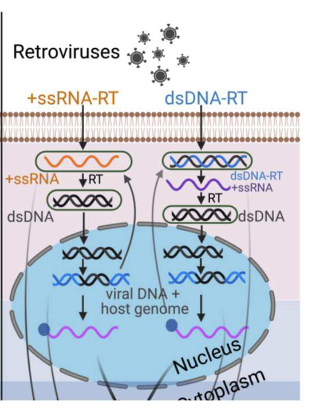
Retroviruses
have RNA or DNA genomes
They insert their genome into the host genome and use host machinery to transcribe and translate genesc
Types of viruses: RNA viruses, DNA viruses, and retroviruses
Which viral group is most oncogenic (causes cancer)?
A) DNA viruses
B) RNA viruses
C)Retroviruses
A) DNA viruses
C)Retroviruses
Genes
are DNA sequences that encode information for functional* products.
Intron splice signals
have known function in
the regulation of genescontain the regulatory information for their own splicing, guides excising the intron from the mRNA is located in the intron itself
Second, serve as sites for cis-regulatory evolution by slowing down translation
What organisms contain introns?
A) Eukaryotes
B) Archea
C) Bacteria
D) Viruses
E) All of the above
E) All of the above
Non-spliceosomal introns
are technically self-splicing ribozymes: RNA molecules that can catalyze their own excision
found throughout all domains of life and viruses
Neither Group I or Group II introns rely on ribonuclearproteins
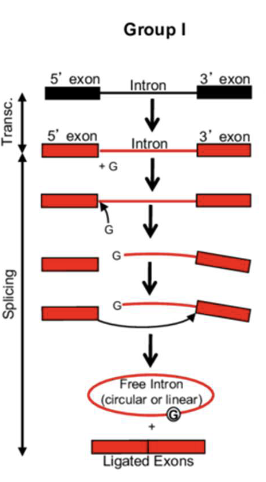
Group I introns
require GTP for the energy to do their splicing
differ in their specific splicing mechanism which results in a linear or circular intron
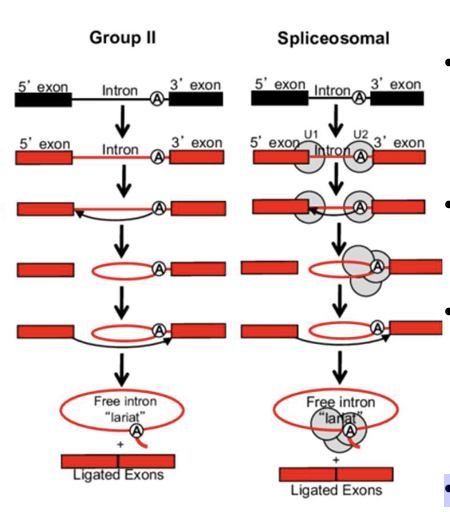
Group II introns and spliceosomal introns
require the adenine at the 3’ end and form a lariat
Because of the similarities in mechanism, it is assumed that spliceosomal introns evolved from this intron

Cis-regulatory sequences (promoter)
located on the same DNA (chromosome) as the DNA they are controlling
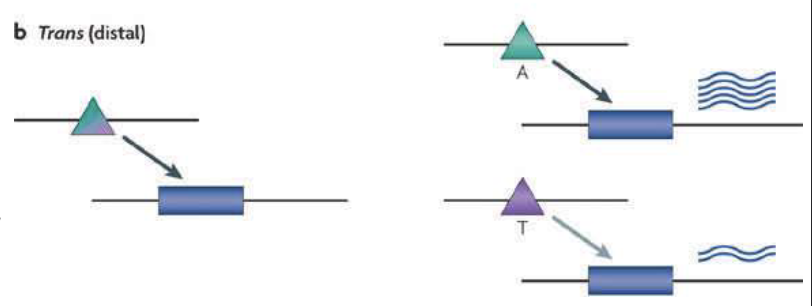
Trans-regulatory sequences (enhancer)
located on a different chromosome/piece of DNA, typically proteins
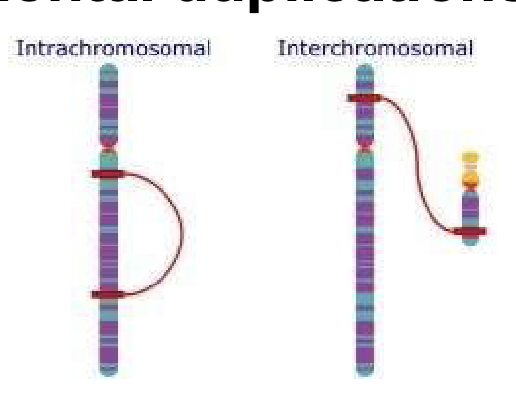
Long segmental duplications
can be on the same or different chromosomes
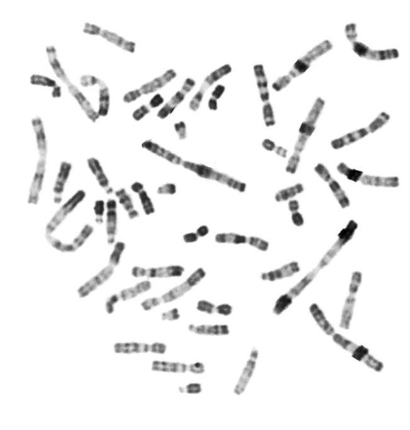
short segmental duplications
sequential repeats like Simple repeats (SSRs), simple tandem repeats (STRs), Satellites

Satellite DNA
are relatively small tandemly repeating sequences that can repeat for millions of base pairs
expands typically though complex local chemical interactions in the DNA, repeating the same sequence often causes strange self interactions that can lead to either deletion or duplication
make up the telomeric repeats, centromeric repeats, and other important chromosome structures
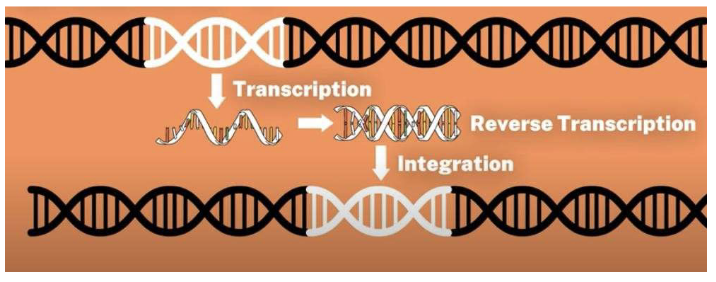
Class 1: Retrotransposons (TE DNA)
“Copy and paste”
transcribed into mRNA, reverse transcribed into DNA, then integrated back into the genome elsewhere, creating a new copy
related and can evolve into one another, the only real difference is the viral protein coat is missing here

Class 2:DNA transposons (TE DNA)
“Cut and paste”
Transposons
can be ‘domesticated’ by the host genome to serve new functions
neutral to the host genome they reside in

Do 2 different individuals from the same species have the same banding patterns on their chromosomes?
a) Yes
b) No
c) I don’t know
a) Yes
What percentage of our genomes differ?
a. ~ <0.5%
b. ~ 1.5%
c. ~ 17%
d. ~ 50%
e. ~ 85%
b. ~ 1.5%
Single Nucleotide Polymorphisms (SNPs)
sometimes called SNV (variant))
Typically caused by errors in DNA replication ( differ by 1 base pairs)
Sometimes by environmental damage
Copy Number Variants (CNVs)
Some are very short (eg. Trinucleotide repeat).
Most are very long, containing >1 gene (Average size in humans is ~20Kbp)
Typically caused by errors in recombination (meiosis and DNA repair or in mitosis and die)
What type of mutation is likely to lead to a LOF (or null) allele?
An allele that prevents the activity of a gene is referred to as a LOSS OF FUNCTION (LOF) allele.
a. Intergenic (between gene) SNP
b. Intergenic CNV
c. Intergenic indel
d. Intragenic (within gene) SNP
e. Intragenic indel
c. Intergenic indel
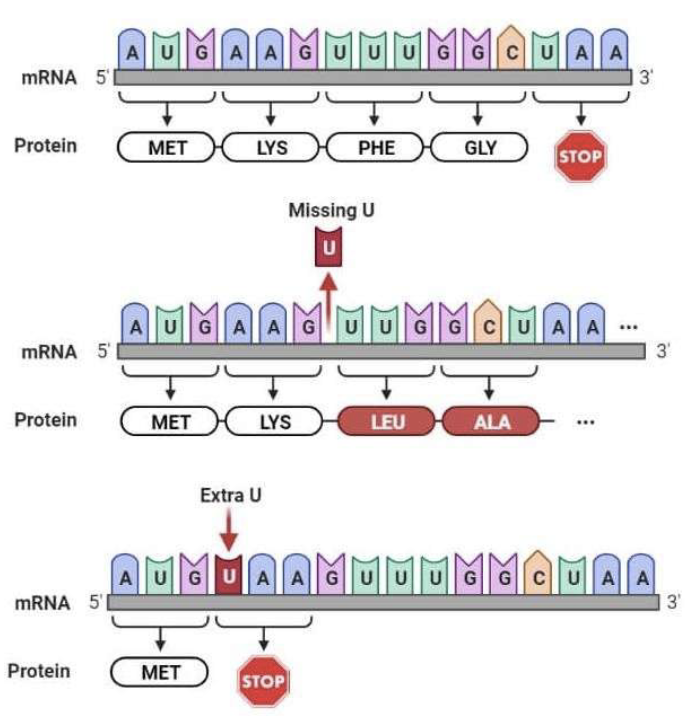
Frameshifts
caused by Indels in coding sequences that results in altered protein reading frames, or introduce a stop codon